

Kirjailija
Stefan Zweig
Kirjat ja teokset yhdessä paikassa: 1 065 kirjaa, julkaisuja vuosilta 1922–2027, suosituimpiin kuuluu Paul Verlaine. Vertaile teosten hintoja ja tarkista saatavuus suomalaisista kirjakaupoista.
1 065 kirjaa
Kirjojen julkaisuvuodet: 1922–2027.
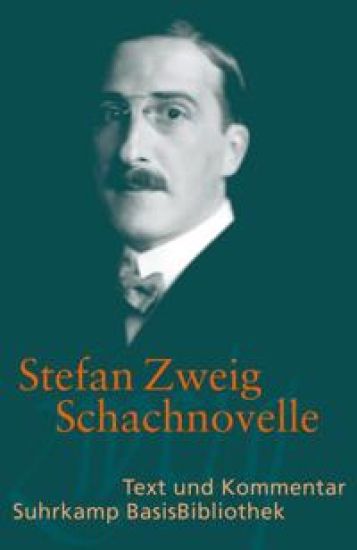
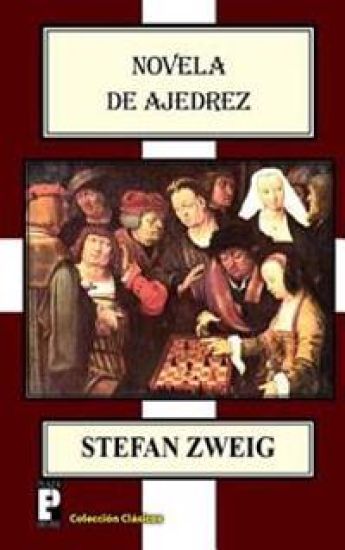
Novela de ajedrez est considerada la obra maestra del escritor austriaco Stefan Zweig. Es su ltima novela, escrita poco antes de su suicidio. El relato es una cr tica clara contra el nazismo y los m todos de la Gestapo, la incomunicaci n y el exilio forzado, experimentado por Zweig, qui n jam s regresar a a su Austria natal.
:Der Stern über dem Walde9 - :Die Liebe der Erika Ewald9 - :Vergessene Träume9 - :Geschichte in der Dämmerung9 - :Die gleich-ungleichen Schwestem9 - :Untergang eines Herzens9 - :Verwirrung der Gefühle9 - :Angst9 Liebes- und Gefühlserfahrungen unterschiedlichster Menschen, die diesem sie verwirrenden Rausch gar nicht oder nur schwer widerstehen können, und die Wirkung ihres Verhaltens auf andere hat Stefan Zweig mit großer sprachlicher Suggestivkraft geschildert. Zentrales Thema dieses Bandes ist die Steigerung von langsam erwachenden Gefühlen zu unerwarteten Leidenschaften. Sind Handlung und Zeichnung der Figuren in der frühesten Schaffensperiode Stefan Zweigs eher noch von einem empfindungsvollen Psychologisieren bestimmt, so gewinnt die Charakterisierung mit dem Wachsen seiner eigenen Erfahrung an Kontur, der erzählerische Zugriff wird energischer und die Handlungsführung straffer. Er distanziert sich zunehmend vom eigenen Empfinden und gestaltet immer mehr frei erdachte Beziehungen und Situationen, wenn dabei auch gelegentlich unmittelbares Erleben wie von selbst mit einfließt. Die hier gewählte Ordnung entspricht, ohne streng chronologisch zu sein, dieser Entwicklung.
Sternstunden der Menschheit
Stefan Zweig
FISCHER Taschenbuch
2012
sidottu
Halvin toimitettuna 22,40 €
Confusion: The Private Papers of Privy Councillor R. Von D.
Stefan Zweig
New York Review of Books
2012
nidottu
Stefan Zweig was particularly drawn to the novella, and Confusion, a rigorous and yet transporting dramatization of the conflict between the heart and the mind, is among his supreme achievements in the form. A young man who is rapidly going to the dogs in Berlin is packed off by his father to a university in a sleepy provincial town. There a brilliant lecture awakens in him a wild passion for learning--as well as a peculiarly intense fascination with the graying professor who gave the talk. The student grows close to the professor, becoming a regular visitor to the apartment he shares with his much younger wife. He takes it upon himself to urge his teacher to finish the great work of scholarship that he has been laboring at for years and even offers to help him in any way he can. The professor welcomes the young man's attentions, at least on some days. On others, he rages without apparent reason or turns away from his disciple with cold scorn. The young man is baffled, wounded. He cannot understand. But the wife understands. She understands perfectly. And one way or another she will help him to understand too.
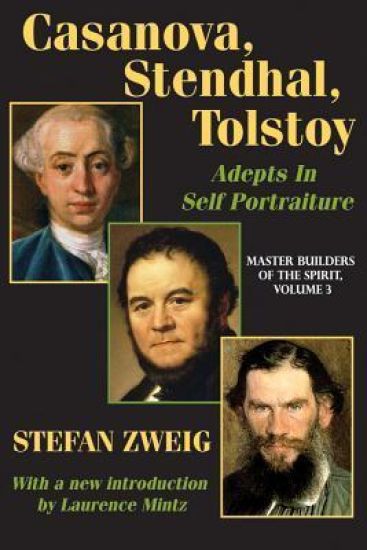
Casanova, Stendhal, Tolstoy: Adepts in Self-Portraiture, the final volume of Stefan Zweig's masterful Master Builders of the Spirit trilogy, discloses the smaller version of a writer's own ego. Unconscious though it is, no reality is as important to the writer as the reality of their own life. Giacomo Casanova, Stendhal (Marie-Henri Beyle), and Leo Tolstoy have different approaches to self-portraiture, but Zweig shows that together they symbolize three levels which represent successively ascending gradations of the same creative function. Casanova is depicted as having a primitive gradation; he simply records deeds and happenings, without any attempt to appraise them or to study the deeper working of the self. Stendhal's self-portraiture is depicted as psychological; he observes himself and investigates his own feelings. Tolstoy has the highest level; he describes his own life, records what led him to his own actions, and focuses on self-reflection in a completely unexaggerated manner. At first glance it might seem as if self-portraiture is an artist's easiest task. With no further trouble than a probing of memory and a description of the facts of life, "the truth" is revealed. The history of literature shows that ordinary autobiographers are no more than commonplace witnesses testifying to facts that chance has brought to their knowledge. A practiced artist is needed to discern the innermost happenings of the soul; few who have attempted autobiography have been successful in this difficult task. The present volume expounds the characteristics of these subjectively minded artists, and of autobiography as their typical method of personal expression.
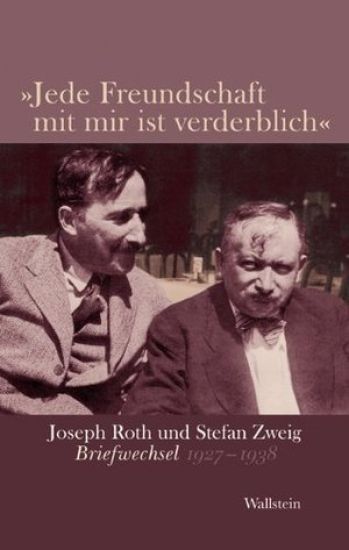
»Jede Freundschaft mit mir ist verderblich«
Joseph Roth; Stefan Zweig
Wallstein Verlag GmbH
2011
sidottu
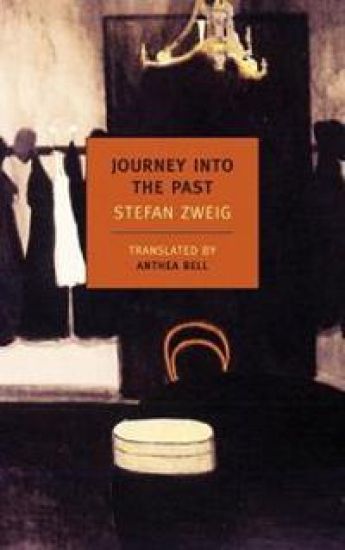
A deep study of the uneasy heart by one of the masters of the psychological novel, Journey into the Past, published here for the first time in America, is a novella that was found among Zweig's papers after his death. Investigating the strange ways in which love, in spite of everything--time, war, betrayal--can last, Zweig tells the story of Ludwig, an ambitious young man from a modest background who falls in love with the wife of his rich employer. His love is returned, and the couple vow to live together, but then Ludwig is dispatched on business to Mexico, and while he is there the First World War breaks out. With travel and even communication across the Atlantic shut down, Ludwig makes a new life in the New World. Years later, however, he returns to Germany to find his beloved a widow and their mutual attraction as strong as ever. But is it possible for love to survive precisely as the impossible?

Stefan and Lotte Zweig's South American Letters
Stefan Zweig; Lotte Zweig
Continuum Publishing Corporation
2010
nidottu
This title presents the previously unpublished letters of a major twentieth-century writer and his wife. Born in Vienna in 1881, Stefan Zweig was one of the most respected authors of his time. Foreseeing Nazi Germany's domination of Europe, Zweig left Austria in 1933. In 1941, following a successful lecture tour of South America and several months in New York, Stefan Zweig and his wife Lotte emigrated to Brazil. Despairing at Europe's future and feeling increasingly isolated, the Zweigs committed suicide together in 1942. Stefan Zweig was an incessant correspondent but as the 1930s progressed, it became difficult for him to maintain contact with friends and colleagues. As Zweig's correspondence all but ceased with the outbreak of World War II, little is known about his final years. Even less is known about Lotte Zweig, his second-wife, secretary and travel-companion. This book provides an analysis of the Zweigs' time together and for the first time reproduces personal letters, written by the couple in Argentina and Brazil, along with editorial commentary. Furthermore, Lotte finally emerges from her husband's shadows, with the letters offering significant insights into their relationship and her experience of exile.