Kirjojen hintavertailu – 12 859 818 kirjaa ja 27 kauppaa

Kirjailija

Stefan Zweig

Kirjat ja teokset yhdessä paikassa: 1 065 kirjaa, julkaisuja vuosilta 1922–2027, suosituimpiin kuuluu Paul Verlaine. Vertaile teosten hintoja ja tarkista saatavuus suomalaisista kirjakaupoista.

1 065 kirjaa

Kirjojen julkaisuvuodet: 1922–2027.

Stefan and Lotte Zweig's South American Letters

Stefan and Lotte Zweig's South American Letters

Stefan Zweig; Lotte Zweig

Continuum Publishing Corporation
2010
sidottu
This title includes the previously unpublished letters of a major twentieth-century writer and his wife. Born in Vienna in 1881, Stefan Zweig was one of the most respected authors of his time. Foreseeing Nazi Germany's domination of Europe, Zweig left Austria in 1933. In 1941, following a successful lecture tour of South America and several months in New York, Stefan Zweig and his wife Lotte emigrated to Brazil. Despairing at Europe's future and feeling increasingly isolated, the Zweigs committed suicide together in 1942. Stefan Zweig was an incessant correspondent but as the 1930s progressed, it became difficult for him to maintain contact with friends and colleagues. As Zweig's correspondence all but ceased with the outbreak of World War II, little is known about his final years. Even less is known about Lotte Zweig, his second-wife, secretary and travel-companion. This book provides an analysis of the Zweigs' time together and for the first time reproduces personal letters, written by the couple in Argentina and Brazil, along with editorial commentary. Furthermore, Lotte finally emerges from her husband's shadows, with the letters offering significant insights into their relationship and her experience of exile.
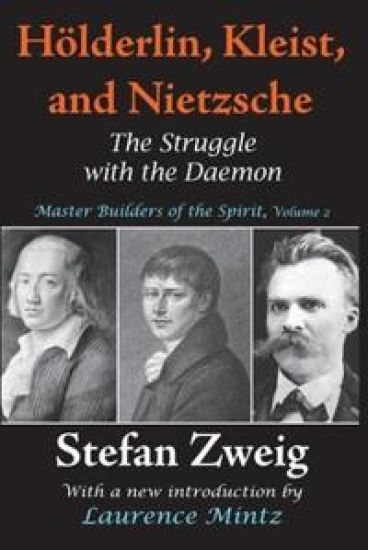
Holderlin, Kleist, and Nietzsche

Holderlin, Kleist, and Nietzsche

Stefan Zweig

AldineTransaction
2010
nidottu
This is the second volume in a trilogy in which Stefan Zweig builds a composite picture of the European mind through intellectual portraits selected from among its most representative and influential figures. In Hölderlin, Kleist, and Nietzsche, Zweig concentrates on three giants of German literature to portray the artist and thinker as a figure possessed by a powerful inner vision at odds with the materialism and scientific positivism of his time, in this case, the nineteenth century. Zweig's subjects here are respectively a lyric poet, a dramatist and writer of novellas, and a philosopher. Each led an unstable life ending in madness and/or suicide and not until the twentieth century did each make their full impact. Whereas the nineteenth-century novel is socially capacious in terms of subject and audience, the three figures treated here are prophets or forerunners of modernist ideas of alienation and exile. Hölderlin and Kleist consciously opposed the worldly harmoniousness of Goethe's classicism in favor of a visionary inwardness and dramatization of the subjective psyche. Nietzsche set himself as a destroyer and rebuilder of philosophy and critic of the degradation of the German spirit through nationalism and militarism. Zweig's choice of subjects reflects a division in his own soul. The image of Goethe recurs here as the ultimate upholder of Zweig's own ideals: scientist and artist, receptive to world culture, supremely rational and prudent. Yet Zweig was aware that Hölderlin, Kleist, and Nietzsche were more daring explorers of the dangerous and destructive aspects of man that needed to be seen and comprehended in the clarifying light of poetry and philosophy.
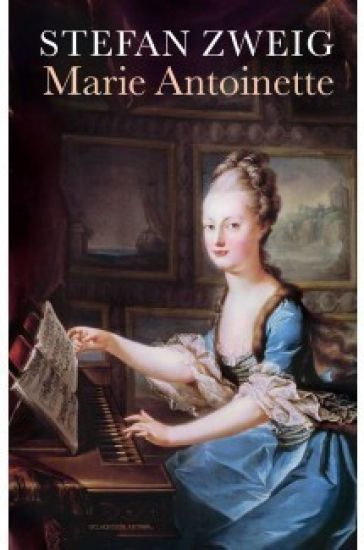
Marie Antoinette

Marie Antoinette

Stefan Zweig

Pushkin Press
2010
nidottu

Halvin toimitettuna 23,70 €

'Excellent biography' New York Times Bringing to life one of the most complex characters in European history Stefan Zweig's definitive biography gives us Marie Antoinette in the King's bedroom, in the enchanted and extravagant worlds of the Trianon and Versailles, and with her children. And in his account of 'The Revolution', he describes her resolve during the failed escape to Varennes, her imprisonment in the Conciergerie and her final tragic destiny under the guillotine. Sensitively and acutely, Zweig analyzes the chemistry of a woman's soul from her intimate pleasures to her public suffering as a Queen under the weight of misfortune and history. Zweig based his biography of Marie Antoinette, who became the Queen of France at the age of fifteen, on the correspondence between her and her mother, and her great love the Count Axel von Fersen. His account has become the definitive biography of Marie Antoinette since its publication, inspiring Antonia Fraser and Sofia Coppola's film adaptation. Part of the Pushkin Press Classics series: timeless storytelling by icons of literature, hand-picked from around the globe. Translated by Eden and Cedar Paul. Stefan Zweig (1881-1942) was born in Vienna, into a wealthy Austrian-Jewish family. He studied in Berlin and Vienna and was first known as a poet and translator, then as a biographer. Zweig travelled widely, living in Salzburg between the wars, and was an international bestseller with a string of hugely popular novellas including Letter from an Unknown Woman, Amok and Fear. In 1934, with the rise of Nazism, he moved to London, where he wrote his only novel Beware of Pity. He later moved on to Bath, taking British citizenship after the outbreak of the Second World War. With the fall of France in 1940 Zweig left Britain for New York, before settling in Brazil, where in 1942 he and his wife were found dead in an apparent double suicide. Much of his work is available from Pushkin Press.
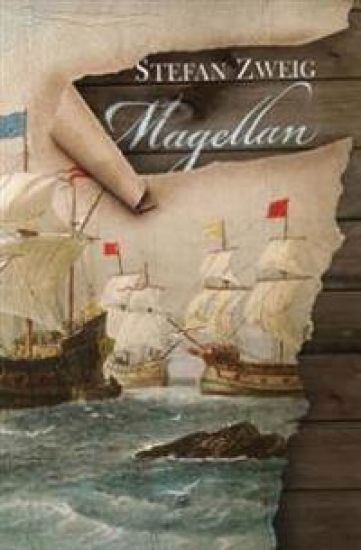
Magellan

Magellan

Stefan Zweig

Pushkin Press
2010
nidottu
'Zweig's accumulated historical and cultural studies remain a body of achievement almost too impressive to take in' Clive James The life of the great Portuguese explorer who dared to sail beyond the horizon The Portuguese explorer Ferdinand Magellan (1480-1521) is one of the most famous navigators in history-he was the first man to sail from the Atlantic to the Pacific Ocean, and led the first voyage to circumnavigate the globe, although he was killed en route in a battle with natives in the Philippines. In this biography, Zweig brings to life the Age of Discovery by telling the tale of one of the era's most daring adventurers. In typically flowing and elegant prose he takes us on a fascinating journey of discovery ourselves. Part of the Pushkin Press Classics series: timeless storytelling by icons of literature, hand-picked from around the globe. Translated by Eden and Cedar Paul. Stefan Zweig (1881-1942) was born in Vienna, into a wealthy Austrian-Jewish family. He studied in Berlin and Vienna and was first known as a poet and translator, then as a biographer. Zweig travelled widely, living in Salzburg between the wars, and was an international bestseller with a string of hugely popular novellas including Letter from an Unknown Woman, Amok and Fear. In 1934, with the rise of Nazism, he moved to London, where he wrote his only novel Beware of Pity. He later moved on to Bath, taking British citizenship after the outbreak of the Second World War. With the fall of France in 1940 Zweig left Britain for New York, before settling in Brazil, where in 1942 he and his wife were found dead in an apparent double suicide. Much of his work is available from Pushkin Press.
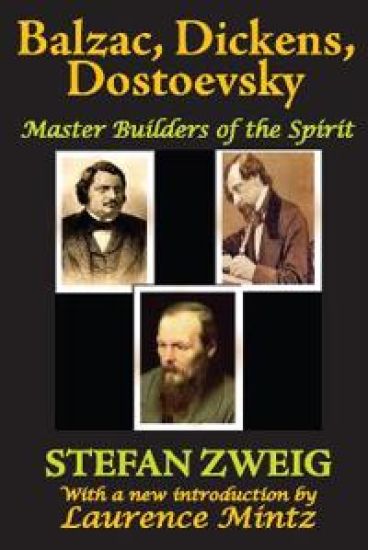
Balzac, Dickens, Dostoevsky

Balzac, Dickens, Dostoevsky

Stefan Zweig

AldineTransaction
2009
nidottu
Written over a period of twenty-five years, this first volume in a trilogy is intended to depict in the life and work of writers of different nationalities--Balzac, Dickens, and Dostoevsky--the world-portraying novelist. Though these essays were composed at fairly long intervals, their essential uniformity has prompted Zweig to bring these three great novelists of the nineteenth century together; to show them as writers who, for the very reason that they contrast with each other, also complete one another in ways which makes them round our concept of the epic portrayers of the world. Zweig considers Balzac, Dickens, and Dostoevsky the supremely great novelists of the nineteenth century. He draws between the writer of one outstanding novel, and what he terms a true novelist--an epic master, the creator of an almost unending series of pre-eminent romances. The novelist in this higher sense is endowed with encyclopedic genius, is a universal artist, who constructs a cosmos, peopling it with types of his own making, giving it laws of gravity that are unique to these fi gures. Each of the novelists featured in Zweig's book has created his own sphere: Balzac, the world of society; Dickens, the world of the family; Dostoevsky, the world of the One and of the All. A comparison of these spheres serves to prove their diff erences. Zweig does not put a valuation on the differences, or emphasize the national element in the artist, whether in a spirit of sympathy or antipathy. Every great creator is a unity in himself, with its own boundaries and specifi c gravity. There is only one specifi c gravity possible within a single work, and no absolute criterion in the sales of justice. This is the measure of Zweig, and the message of this book.
Sternstunden der Menschheit

Sternstunden der Menschheit

Stefan Zweig

FISCHER Taschenbuch
2009
pokkari
Manchmal ist die Geschichte selbst spannender als jedes Drama und lebendiger als jeder Roman. Stefan Zweig versammelt in diesen historischen Miniaturen vierzehn große, schicksalhafte Augenblicke in der Geschichte der Menschheit: von der Schlacht bei Waterloo über die Entstehung von Goethes berühmter Marienbader Elegie bis hin zur tragischen Südpolexpedition von Sir Robert Falcon Scott. Dabei zeigt sich: Es sind oft gerade die kurzen, vom Zufall bestimmten Augenblicke, die prägend für die Zukunft sind.
Novellen

Novellen

Stefan Zweig

Manesse Verlag
2009
sidottu
Stefan Zweigs Prosa ist unverwechselbar. Sie weiß Intimität mit Dezenz zu verbinden, die leidenschaftliche Beschreibung kleinster psychischer Regungen mit hoher formaler Eleganz. Diese Anthologie versammelt die sieben schönsten Novellen des verständigen Seelenkenners und Weltliteraten aus Wien.
Schachnovelle

Schachnovelle

Stefan Zweig

Argon Verlag GmbH
2009
cd
Auf einem Passagierdampfer, der von New York nach Buenos Aires unterwegs ist, fordert ein Millionär gegen Honorar den mit einer Art mechanischer Präzision spielenden Schachweltmeister Mirko Czentovic zu einer Partie heraus. Der mitreisende Dr. B., ein österreichischer Emigrant, greift beratend ein und erreicht so ein Remis für den Herausforderer. Er hat sich, von der Gestapo, die ihn verhaftete, in ein Hotelzimmer gesperrt und von der Außenwelt hermetisch abgeschlossen, monatelang mit dem blinden Spiel von 150 Partien beschäftigt, um sich so seine intellektuelle Widerstandskraft zu erhalten. Durch diese einseitige geistige Anstrengung ergriff ihn ein Nervenfieber, dessentwegen man ihn entließ. Jetzt spielt Dr. B. zum ersten Mal wieder gegen einen tatsächlichen, freilich roboterhaft reagierenden Gegner. Es geht ihm bei dieser Partie lediglich darum, festzustellen, ob sein Tun damals während seiner Haft noch Spiel oder bereits Wahnsinn gewesen ist. Er schlägt den Weltmeister in der ersten Partie souverän, läßt sich aber, eigentlich gegen seinen Willen, auf eine Revanche ein. Während dieser zweiten Partie ergreift ihn wieder das Nervenfieber: er bricht die Partie ab und wird nie wieder ein Schachbrett berühren.
Brennendes Geheimnis

Brennendes Geheimnis

Stefan Zweig

S Fischer Verlag GmbH
2009
pokkari
Mit zwölf Jahren lebt Edgar am Rand seiner Kindheit. Die Menschen in der Welt der Erwachsenen erscheinen ihm als "lose Puppen und totes Spielzeug", und so lebt er "hart hinter den Träumen, dem Unwirklichen und Unerreichbaren", bis er sich gerade von denjenigen, denen er bislang mit Vertrauen, Liebe, Gläubigkeit, Respekt begegnet ist, verraten fühlt. Sie zwingen ihn geradezu, den Riegel seiner Kindheit wegzuschieben, hinter ihr Geheimnis zu kommen, das er sich nicht zu deuten weiß. Er ist mit der Mutter, seiner Gesundheit wegen, auf den Semmering gefahren und glaubt dort unverhofft in einem jungen Baron einen Freund gefunden zu haben - doch er muß sehr schnell erkennen, daß dessen Freundlichkeit nicht ihm, Edgar, sondern der Mutter gilt. Mehr und mehr fühlt er sich zurückgesetzt, mehr und mehr spürt er, wie die Erwachsenen ihn belügen, wenn sie sich auf das konzentrieren, was ihm noch verschlossen bliebt und um so stärker als Geheimnis in ihm brennt. Es wird ihm schmerzlich - aber er muß diesen Weg einschlagen, die Vorstellungswelt des Kindseins allmählich verlassen und in die Fremdheit des Unbekannten hineinschauen, auch wenn es sich für den Augenblick noch mit einem ahnungslosen Vorgefühl begnügen darf.
The Post Office Girl

The Post Office Girl

Stefan Zweig

Sort of Books
2009
pokkari

Halvin toimitettuna 17,60 €

It's the 1930s. Christine, A young Austrian woman whose family has been impoverished by the war, toils away in a provincial post office. Out of the blue, a telegram arrives from an American aunt she's never known, inviting her to spend two weeks in a Grand Hotel in a fashionable Swiss resort. She accepts and is swept up into a world of almost inconceivable wealth and unleashed desire, where she allows herself to be utterly transformed. Then, just as abruptly, her aunt cuts her loose and she has to return to the post office, where - yes - nothing will ever be the same.
I følelsenes vold

I følelsenes vold

Stefan Zweig

Solum
2009
pokkari
Boka skildrer en universitetsprofessor og hans kaotiske følelsesliv. Boka viser Zweig som en talsmann for toleranse mellom mennesker og nasjoner, og den vakte oppsikt da den for første gang kom ut i 1927 fordi forfatteren berørte et av tidens tabutemaer: homoseksualitet.
Das Geheimnis des künstlerischen Schaffens
"Alles Dichterische erinnert mich immer an den Process eines Entwickelns von Photografien - zuerst die leere Platte, dann setzen wir einen Schleier Linien an, werden deutlicher, sichtbarer, schärfer." Das so entstehende Abbild einer real geschauten Welt in neuer Dimension fördert oft zunächst nicht beachtete Details, vor allem aber einen Gesamteindruck zutage, wie er bei der Konzentration auf Einzelnes von vorneherein nicht selbstverständlich ist. Die Texte dieses Bandes, der zusammen mit :Phantastische Nacht9 (1982), :Verwirrung der Gefühle9 (1983), :Der Amokläufer9 (1984), :Buchmendel9 und den Romanen die erzählerischen Schriften Stefan Zweigs innerhalb der Gesammelten Werke unter Einbeziehung des Nachlasses neu ordnet, gruppieren sich wesentlich um diesen Aspekt; sie führen wie durch eine Lebensspanne: vom zwölfjährigen Knaben über den Studenten zum in Leben und Beruf erfahrenen Mann, in der Großstadt wie in der Provinz. Mit den Begriffen Eifersucht, Sehnsucht, Neugier und Abenteuerlust würde über die einzelnen Stücke dieses Bandes ein Grobraster gelegt - tatsächlich sind es psychologisch-literarische Studien, die die Erfahrung des Autors weder ausklammern können noch wollen. Es wäre andererseits sicher nicht richtig, wollte man zu jeder dieser vorgestellten Verhaltensweisen nach einem Analogen in Stefan Zweigs äußerer Biographie suchen. Doch dieser oder jener Ansatzpunkt mag zu einem intensiveren, vielleicht sogar persönlicheren Verständnis dieser Erzählungen führen.
The Post-Office Girl

The Post-Office Girl

Stefan Zweig

NYRB Classics
2008
nidottu

Halvin toimitettuna 19,70 €

Wes Anderson on Stefan Zweig: "I had never heard of Zweig...when I just more or less by chance bought a copy of "Beware of Pity." I loved this first book. I also read the "The Post-Office""Girl." "The Grand Budapest Hotel" has elements that were sort of stolen from both these books. Two characters in our story are vaguely meant to represent Zweig himself -- our "Author" character, played by Tom Wilkinson, and the theoretically fictionalised version of himself, played by Jude Law. But, in fact, M. Gustave, the main character who is played by Ralph Fiennes, is modelled significantly on Zweig as well." The post-office girl is Christine, who looks after her ailing mother and toils in a provincial Austrian post office in the years just after the Great War. One afternoon, as she is dozing among the official forms and stamps, a telegraph arrives addressed to her. It is from her rich aunt, who lives in America and writes requesting that Christine join her and her husband in a Swiss Alpine resort. After a dizzying train ride, Christine finds herself at the top of the world, enjoying a life of privilege that she had never imagined. But Christine's aunt drops her as abruptly as she picked her up, and soon the young woman is back at the provincial post office, consumed with disappointment and bitterness. Then she meets Ferdinand, a wounded but eloquent war veteran who is able to give voice to the disaffection of his generation. Christine's and Ferdinand's lives spiral downward, before Ferdinand comes up with a plan which will be either their salvation or their doom. Never before published in English, this extraordinary book is an unexpected and haunting foray into noir fiction by one of the masters of the psychological novel.
Der Kampf mit Damon Holderlin Kleist Nietzsche

Der Kampf mit Damon Holderlin Kleist Nietzsche

Stefan Zweig

S Fischer Verlag GmbH
2007
pokkari
Hölderlin, Kleist, Nietzsche - drei Außerordentliche, denen sich Stefan Zweig als ? Psychologe aus Leidenschaft, Gestalter aus gestaltendem Willen? zutiefst verbunden fühlte. Unverstanden von ihrer Generation, enden alle drei ?vorzeitig in einer furchtbaren Verstörung des Geistes, einer tödlichen Trunkenheit der Sinne, in Wahnsinn oder Selbstmord.? Sigmund Freud rühmte Stefan Zweigs ? Vollkommenheit der Einfühlung? in Wesen, Charakter und Gedankenwelt schöpferischer Menschen.