Kirjojen hintavertailu – 12 859 819 kirjaa ja 27 kauppaa

Kirjailija

Strategic Studies Institute

Kirjat ja teokset yhdessä paikassa: 574 kirjaa, julkaisuja vuosilta 2010–2024, suosituimpiin kuuluu The Challenge of Drug Trafficking to Democratic Governance and Human Security in West Africa (Enlarged Edition). Vertaile teosten hintoja ja tarkista saatavuus suomalaisista kirjakaupoista.

574 kirjaa

Kirjojen julkaisuvuodet: 2010–2024.

Space-Based Solar Power: A Technical, Economic, and Operational Assessment

Space-Based Solar Power: A Technical, Economic, and Operational Assessment

Jeffrey L. Caton; Strategic Studies Institute; U.S. Army War College

Lulu.com
2015
nidottu
With growing international awareness of energy security challenges, the promise of space-based solar power for clean and unlimited energy for all humankind is certainly appealing. While significant progress continues in the enabling technologies of such systems, is there compelling evidence that space-based solar power systems will provide the best energy solution? How does the Army's current approach to incorporating a diverse portfolio of renewable energy sources in distributed locations compare with the potential of enterprise ventures that beam energy from solar collectors in space? For more than 4 decades, many credible organizations in government and industry have explored the concept of space-based solar power. But their serious studies often conclude that such systems remain on the future horizon, usually at least 10 years away from practical application.
Confidence-Building in Cyberspace: A Comparison of Territorial and Weapons-Based Regimes

Confidence-Building in Cyberspace: A Comparison of Territorial and Weapons-Based Regimes

Mary Manjikian; Strategic Studies Institute; U.S. Army War College

Lulu.com
2015
nidottu
The term "confidence-building measures" is not new. The idea that international actors can come together to share information about their activities in order to establish trust, prevent misunderstandings and misperceptions and de-escalate conflicts is one that has a long pedigree. The development of confidence- building measures in the areas of biological and chemical warfare date back to the beginning of the 20th century. Confidence-building measures aimed at de-escalating conflicts along the Indo-Pakistan border date back to the 1970s. But what do these diverse events have to offer us as lessons as we think about confidence-building measures in cyberspace? Dr. Mary Manjikian's insightful analysis suggests that both territorially based and weapons-based confidence-building measures can provide models for the ways in which states can learn to cooperate and share information in regard to cyberspace and cyber weapons.
From Frozen Ties to Strategic Engagement: U.S.-Iranian Relationship in 2030

From Frozen Ties to Strategic Engagement: U.S.-Iranian Relationship in 2030

Roman Muzalevsky; Strategic Studies Institute; U.S. Army War College

Lulu.com
2015
nidottu
Locked in a confrontational stance lasting more than 3 decades, the United States and Iran have failed repeatedly to transform their hostile relationship. The ongoing nuclear talks, however, offer better prospects of not only addressing Iran's nuclear program challenges, but also developing a mutually beneficial strategic relationship between the United States and Iran in the long term. Why are these prospects better today? According to Mr. Roman Muzalevsky, the coming to power of new presidential administrations in both countries, the additional sanctions under the Barack Obama administration, game-changing regional trends, as well as U. S.-Iranian economic and security cooperation imperatives, have all facilitated an interim nuclear deal, prompting talks of a promising start in U. S.-Iranian ties that, if cultivated, could turn into a strategic detente by 2030.
Another Brick in the Wall: the Israeli Experience in Missile Defense

Another Brick in the Wall: the Israeli Experience in Missile Defense

Jean-Loup Samaan; Strategic Studies Institute; U.S. Army War College

Lulu.com
2015
nidottu
Over the last years, missile defense has resurfaced as a major feature of the strategic debate in the United States and among its close allies. In 2010, the North Atlantic Treaty Organization Summit of Heads of State saw intense discussions among transatlantic partners on the strategic value of missile defense alongside the traditional deterrence means of the Alliance. But if these transatlantic debates are for the most part still speculative, for many years, one close American ally has already faced the concrete and immediate challenge of defending its territory against missiles and rockets-Israel. As demonstrated during the last clashes between the Israeli Defense Forces and Palestinian factions (2012 and 2014), missile defense is now a pillar of Israel's strategic culture. Understanding this evolution demands an in-depth look at its political, military, and technical ramifications. That is the very purpose of this new monograph by Dr. Jean-Loup Samaan.
The Gulf Moment: Arab Relations Since 2011

The Gulf Moment: Arab Relations Since 2011

Florence Gaub; Strategic Studies Institute; U.S. Army War College

Lulu.com
2015
nidottu
What began in 2011 as a series of demonstrations against domestic circumstances has since evolved into a decidedly regional and therefore strategic matter. The changing of regimes in Tunis, Cairo, and Tripoli has also changed the way Arab leaders engage with each other, and the way the region as a whole orchestrates its interstate relations. Often overlooked during debates about what began 4 years ago, the Arab Spring has spilled over from the national to the regional level, paralyzing some traditionally strong actors while empowering others. As Dr. Florence Gaub writes in this monograph, the region has therefore entered its "Gulf Moment"-a time in its political relations defined no longer by Cairo, Damascus, or Baghdad, but by Riyadh, Abu Dhabi, and Doha. For the longest time, the Arab Gulf States were seen as political bystanders in the region, managing rather than shaping events.
Always Strategic: Jointly Essential Landpower

Always Strategic: Jointly Essential Landpower

Colin S. Gray; Strategic Studies Institute; U.S. Army War College

Lulu.com
2015
nidottu
The strategic quality of Landpower is widely known, but not widely understood. In this monograph, Dr. Colin S. Gray explores and explains the meaning of strategic Landpower. He is concerned particularly to argue that, although Landpower today must function in a joint environment, typically it is the dominant element in the team for U. S. national security. The monograph lays emphasis upon the place of the human domain that leads in the role played by ground forces in strategy. Because of some widespread conceptual misuse, many people are not used to thinking of Landpower as a strategic instrument for American security policy. Dr. Gray aspires to help reduce the popularity of this important misconception. It is necessary for good policy that American Landpower should be considered and debated properly, which is to say in appropriate strategic terms.
Stand Up and Fight! the Creation of U.S. Security Organizations, 1942-2005

Stand Up and Fight! the Creation of U.S. Security Organizations, 1942-2005

Ty Seidule; Jacqueline Whitt; U.S. Army War College; Strategic Studies Institute

Lulu.com
2015
nidottu
From the National Security Act of 1947 to the intelligence and security restructuring after September 11, 2001 (9/11), our nation has stood up new security organizations to meet new challenges. On October 10, 2010, my team and I helped give life to a new U. S. security organization when I assumed command of the United States Army Cyber Command. As its first commander, I was more than "present at the creation;" I was responsible for it. In a crowded, yet resource-constrained defense establishment, Army Cyber was responsible for all Army cyber efforts-not only in relation to U. S. Cyber Command, but also the Department of Defense and U. S. Intelligence Community. A single-page General Order from the Secretary of the Army served as the command's founding document and mission statement. Army Cyber Command was designated the lead for Army missions, actions, and functions related to cyberspace.
Lying to Ourselves: Dishonesty in the Army Profession

Lying to Ourselves: Dishonesty in the Army Profession

Leonard Wong; Stephen J. Gerras; Strategic Studies Institute; U.S. Army War College

Lulu.com
2015
nidottu
One of the hallmarks of a true profession is its ability to assess and regulate itself, especially with respect to adherence to its foundational ethos. Such self-examination is difficult and often causes discomfort within the profession. Nonetheless, it is absolutely necessary to enable members of the profession to render the service for which the profession exists. U. S. military professionals have never shied away from this responsibility, and they do not today, as evidenced by this riveting monograph. Discussing dishonesty in the Army profession is a topic that will undoubtedly make many readers uneasy. It is, however, a concern that must be addressed to better the Army profession. Through extensive discussions with officers and thorough and sound analysis, Drs. Leonard Wong and Stephen Gerras make a compelling argument for the Army to introspectively examine how it might be inadvertently encouraging the very behavior it deems unacceptable.
A Hard Look at Hard Power: Assessing the Defense Capabilities of Key U.S. Allies and Security Partners

A Hard Look at Hard Power: Assessing the Defense Capabilities of Key U.S. Allies and Security Partners

U.S. Army War College; Strategic Studies Institute; Gary J. Schmitt

Lulu.com
2015
nidottu
Since the end of World War II, the United States has made maintaining a favorable balance of power in Eurasia a core element of its national security strategy. It did so in good measure by maintaining a large conventional military force that was based not only at home, but also in bases spread across Europe and Asia. That strategy was buttressed by developing security ties and alliances with key powers and front-line states. The implicit bargain was that the United States would help keep the peace on their door front if they would provide access from which American forces could operate and, in turn, maintain credible forces themselves to reinforce and support U. S. efforts at keeping the great power peace.
Do Fewer Resources Mean Less Influence? A Comparative Historical Case Study of Military Influence in A Time of Austerity
In the 2014 Quadrennial Defense Review, military planners speak at great length about the importance of rebalancing our armed forces. As a result of the Budget Control Act of 2011, our U. S. Armed Forces have absorbed significant budget cuts, which are projected to continue into 2016. Not surprisingly, a major theme of the Quadrennial Defense Review is the necessity of making tough choices in a period of fiscal austerity.1 As Dr. Manjikian's analysis points out, however, many of the themes raised by policymakers, military analysts and the general public in relation to this new politics of austerity are not actually new. Rather, such conversations have taken place at the end of U. S. military actions after the Korean War, in Vietnam, and at the end of the Cold War.
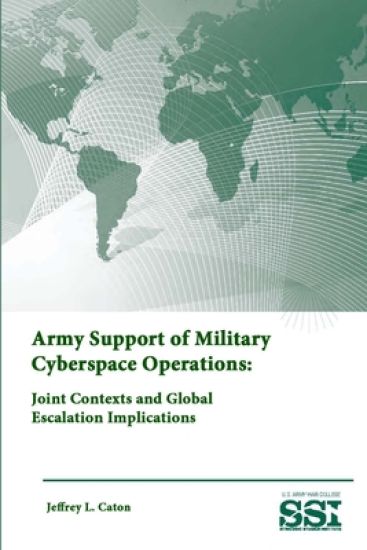
Army Support of Military Cyberspace Operations: Joint Contexts and Global Escalation Implications

Army Support of Military Cyberspace Operations: Joint Contexts and Global Escalation Implications

Strategic Studies Institute; U.S. Army War College; Jeffrey L. Caton

Lulu.com
2015
nidottu
Military cyberspace operations have been ongoing since before the advent of the Internet, and their influence on traditional military operations continues to increase. What are the significant changes in mission and structure of Department of Defense offensive and defensive cyberspace activities over the past decade? How do joint and Army cyberspace military operations fit into the complex and dynamic sphere of daily network defense as well as international deterrence and escalation?
Getting to the Left of Sharp: Lessons Learned from West Point's Efforts to Combat Sexual Harassment and Assault

Getting to the Left of Sharp: Lessons Learned from West Point's Efforts to Combat Sexual Harassment and Assault

U.S. Army War College; Strategic Studies Institute; Jr. Robert L. Caslen; Colonel Cindy R. Jebb; Lieutenant Colonel Daniel Gade; Cadet Hope C. Landsem

Lulu.com
2015
nidottu
The U. S. Army has been and is struggling with sexual harassment, assault, and rape in its ranks, but the future can be different. In this monograph, three seasoned officers and one cadet propose a series of steps-based on West Point's experiences-to "get to the left" of these incidents by changing the cultural structures that allow them to occur. This will only become more critical as the Army works on the policies that will fully integrate women into the combat arms, introducing women to sub-cultures that have, for years, equated martial virtues with masculine ones.
The Effective Use of Reserve Personnel in the U.S. Military: Lessons from the United Kingdom Reserve Model

The Effective Use of Reserve Personnel in the U.S. Military: Lessons from the United Kingdom Reserve Model

Strategic Studies Institute; U.S. Army War College; Shima D. Keene

Lulu.com
2015
nidottu
The U. S. Army and the British Army are undergoing similar processes of rebalancing between regular and reserve personnel. The British armed forces are currently at a more advanced stage of this change than the United States, and consequently there are useful lessons to be drawn from their experience to date. This is particularly the case in a time of growing defense austerity; in addition to their smaller scale, the United Kingdom's (UK) armed forces have great familiarity with undertaking missions and maintaining close to full-spectrum capability while subject to severe and apparently insurmountable resource constraints. Studying how this is made possible may also provide valuable pointers for a U. S. defense force in an era of sequestration and budget cuts.
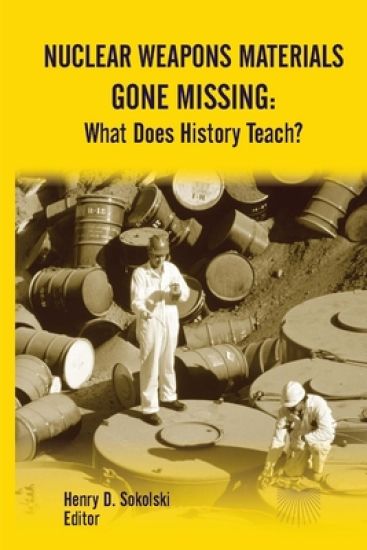
Nuclear Weapons Materials Gone Missing: What Does History Teach?

Nuclear Weapons Materials Gone Missing: What Does History Teach?

Strategic Studies Institute; U.S. Army War College; Henry D. Sokolski

Lulu.com
2015
nidottu
In 2009, the President of the United States spotlighted nuclear terrorism as one of the top threats to international security and launched an international effort to identify, secure, and dispose of global stocks of weapons-usable nuclear materials-namely highly enriched uranium and weapons-grade plutonium. Since that time, three nuclear security summits have been held, along with scores of studies and workshops (official and unofficial), drawing sustained high-level attention to the threat posed by these materials. However, little attention has been given to incidences where sensitive nuclear materials actually went missing. This volume seeks to correct this deficiency, examining incidences of material unaccounted for (MUF) arising from U. S. and South African nuclear weapons programs, plutonium gone missing from Japanese and British civilian production facilities, and a theft of highly enriched uranium from a U. S. military contractor in the 1960s that was used to help fuel Israel's nuclear weapons program.
Central Asia's Shrinking Connectivity Gap: Implications for U.S. Strategy

Central Asia's Shrinking Connectivity Gap: Implications for U.S. Strategy

Strategic Studies Institute; U.S. Army War College; Roman Muzalevsky

Lulu.com
2015
nidottu
Once sealed off from the rest of the world during the Soviet times, the states of Central Asia today are rapidly integrating with the global economy. The opening up of China in the 1980s, the demise of the Soviet Union a decade later, and the ongoing globalization have all served as grand forces facilitating this highly monumental development. The U. S. regional military involvement after September 11, 2001, and engagement by other actors have further enabled these countries to reconnect with the world, this time as sovereign units. Today, more than 2 decades after they gained their independence, the Central Asian countries, along with the rest of the world, face a great challenge and an opportunity-the rise of China, India, and resurgence of Russia. These neighboring powers are investing and facilitating internal and external links of the region and profoundly shaping the region's external connectivity at the very time as the United States withdraws its troops from Afghanistan...
Stepping Up: Burden Sharing by Nato's Newest Members

Stepping Up: Burden Sharing by Nato's Newest Members

Strategic Studies Institute; U.S. Army War College; Joel R. Hillison

Lulu.com
2015
nidottu
Burden sharing is back. Indeed many observers of the North Atlantic Treaty Organization (NATO) Alliance would claim that it never went away. This is because, from its inception in 1949, NATO has never been an alliance of equals. The United States has always made the overwhelmingly larger contribution, not only for the defense of Europe under Article 5 of the NATO Treaty, but also in the numerous operations that the Alliance has carried out beyond Europe since the end of the Cold War. At one stage in the late-1950s, the United States had nearly 400,000 troops and 7,000 nuclear weapons deployed in Western Europe. It also maintained large stocks of pre-positioned equipment and sent thousands of more troops back to Europe every year for reinforcement and exercises.
Regionalizing East Mediterranean Gas: Energy Security, Stability, and the U.S. Role

Regionalizing East Mediterranean Gas: Energy Security, Stability, and the U.S. Role

Mohammed El-Katiri; Strategic Studies Institute; U.S. Army War College; Laura El-Katiri

Lulu.com
2015
nidottu
In recent years the distribution of the world's exploitable energy reserves has shifted markedly. One major change is the discovery of substantial gas deposits offshore the Levant. But while these deposits have the potential to revolutionize the economies of the net energy importers, Cyprus, Lebanon, and Israel, they also bring into sharp focus long-running disputes over maritime boundaries and sovereignty. In short, these deposits provide yet another cause for conflict in an already deeply troubled region. This monograph explores both the positive and negative implications of the Eastern Mediterranean's new gas reserves for the region, and the implications of both for U. S. interests. It combines the recognized expertise of two researchers with long experience in regional and energy studies, respectively.
Government Contracting Should be A Core Competence for U.S. Military Personnel

Government Contracting Should be A Core Competence for U.S. Military Personnel

Strategic Studies Institute; U.S. Army War College; USAR White

Lulu.com
2015
nidottu
The Wars in Iraq and Afghanistan mark an era of unprecedented outsourcing in contingency operations. Although signiicant outsourcing occurred in prior wars, never has the scale been so large for so long. Counterintuitively, as outsourcing increased, the number of government acquisition personnel decreased. This led to waste, fraud, and abuse. The Commission on Wartime Contracting made several indings and recommendations to prevent future contract administration problems in contingency operations. A principal concern is that the U. S. military needs to increase the number of acquisition experts, change its culture, and treat government contracting as a core competency. In response to outsourcing concerns, the Ofice of Federal Procurement Policy issued Policy Letter 11-01 on the Performance of Inherently Governmental and Critical Functions. The Letter provides strategic-level guidance to federal agencies to assess risk and accountability when outsourcing.
Creating an Effective Regional Alignment Strategy for the U.S. Army

Creating an Effective Regional Alignment Strategy for the U.S. Army

David S. Lyle; Strategic Studies Institute; U.S. Army War College; Michael J. Colarusso; Raven Bukowski; John Childress

Lulu.com
2015
nidottu
This monograph focuses upon "regional alignment," viewed by many as critical if the Army is to remain both relevant and effective in the 21st century security environment. Despite its title, the monograph is part of the Strategic Studies Institute's ongoing "talent management" series. In fact, the authors argue that world class talent management is a necessary pre-condition to creating an effective regional alignment strategy for the Army. They identify several serious challenges to creating a workable regional alignment of Army units, most of which hinge upon understanding and liberating the unique talents of individual soldiers and civilians. They also argue that the Army's current Force Generation Model is not conducive to creating and maintaining regionally expert units and must be adjusted accordingly.