Kirjojen hintavertailu – 12 859 819 kirjaa ja 27 kauppaa
Kirjailija
Strategic Studies Institute
Kirjat ja teokset yhdessä paikassa: 574 kirjaa, julkaisuja vuosilta 2010–2024, suosituimpiin kuuluu The Challenge of Drug Trafficking to Democratic Governance and Human Security in West Africa (Enlarged Edition). Vertaile teosten hintoja ja tarkista saatavuus suomalaisista kirjakaupoista.
Terrorists are known to use the Internet for communications, planning, recruitment, propaganda, and reconnaissance. They have shown interest in carrying out cyberattacks on U. S. critical infrastructures, although no such serious attacks are known publicly to have occurred. The discovery of the Stuxnet malware in July 2010, and its analysis over the next several months, was widely believed to have been a landmark event in cybersecurity, because it showed that cyberattacks against industrial control systems, hypothesized for a long time, are actually possible. After Stuxnet, there were public concerns that terrorists might be encouraged to acquire capabilities for similar cyberattacks. This book examines cyberterrorism before and after Stuxnet by addressing questions of:1. Motive-Are terrorists interested in launching cyberattacks against U. S. critical infrastructures?2. Means-Are terrorists building capabilities and skills for cyberattacks?3. Opportunity-How vulnerable are U. S. critical infrastructures? It is noted that no serious cyberterrorism attacks have occurred after Stuxnet. This can be explained from a cost-benefit perspective that has not changed since Stuxnet. It can be argued that U. S. policies can really address vulnerabilities only by strengthening defenses of critical infrastructures.
Over the past 2 decades, the global system has been subject to a range of forces which have reconfigured relationships among individuals, organizations, and nation-states. As an aspect of that changing structure and rising interdependence, many security challenges which confront today's strategic leaders are grounded in concerns about economic, social, and environmental sustainability, and, in turn, about political stability. Furthermore, with increasing frequency, many observers are concluding that those types of challenges cannot be addressed by stakeholders from any single sector. That insight has prompted calls for collaborative efforts involving citizen groups; for-profit and not-for-profit companies; local, regional, and national governments; and intergovernmental organizations. Nevertheless, initiating and managing a cross-sector collaborative initiative is a difficult undertaking. It requires a broad range of skill sets, including the ability to think in system terms; help various participants articulate their respective interests and find common ground; marshal resources; create processes and structures that will enable collaboration; establish baselines; and celebrate progress. Acquiring those types of skills is relevant to strategic leaders in all professions, including those in the defense and security communities. This volume reflects the proceedings of a workshop held in Carlisle, PA, in March 2013, that brought together a diverse group of scholars and practitioners from India and the United States who were both deeply knowledgeable and highly experienced in their respective fields; who regarded sustainable development as a critical challenge for the future; and who, at some level, had begun to experience the challenges of participating in cross-sector collaborations. The purpose of this volume is to summarize the ideas shared by those professionals, in hope they will serve as a stimulus to further conversation and research about an increasingly important set of matters.
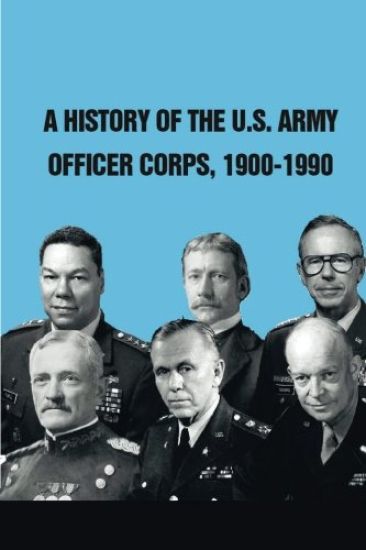
With the assistance of the Strategic Studies Institute of the U. S. Army War College, the Army's Office of Economic and Manpower Analysis published a series of monographs that were intended to provide a theoretical and conceptual framework for the development of an Army Officer Corps Strategy. These monographs consider the creation and maintenance of a highly skilled Officer Corps in the context of the nation's continuing commitment to an all-volunteer military, its far flung international interests, and ongoing changes in its domestic labor market. The authors of the various monographs believe that the confluence of these factors demands a comprehensive Officer Corps strategy that recognizes the interdependency of accessing, developing, retaining, and employing talent. In their view, building a talent-focused strategy around this four-activity human capital model would best enable the Army to match individual officer competencies to specific competency requirements. Dr. Arthur Coumbe of the Office of Economic and Manpower Analysis has prepared a monograph that provides a historical overview of the Army Officer Corps and its management in the modern era. Like the earlier monographs, this volume is organized around what the Office of Economic and Manpower analysis see as the functionally interdependent concepts of accessing, developing, retaining, and employing talent. This book is a prologue to the earlier monographs that begin their story in the late-1980s.
The Strategic Studies Institute has published a 6-part Officer Corps Strategy Series analyzing the development of an officer corps strategy. This book, the first in the series, highlightsthe importance of accessing, developing, retaining, and employing talented leaders. Creating and maintaining a highly competent U. S. Army Officer Corps has always been the cornerstone of the nation's defense. Colonel Casey Wardynski, Major David S. Lyle, and Lieutenant Colonel (Ret.) Michael J. Colarusso consider America's continuing commitment to an all-volunteer military, its global engagement inan era of persistent conflict, and evolving changes in its domestic labor market. They argue that the intersection of these factors demands a comprehensive Officer Corps strategy recognizing the interdependency of accessing, developing, retaining and employing talent. In their view, building a talent-focused strategy around this four-activity human capital model will best posturethe Army to match individual officer competencies to specific competency requirements. Such a strategy will enable the thoughtful anddeliberate integration of resources, policies, andorganizations to employ "the right talent in the right job at the right time." The authors conclude that without such a talent-focused strategy, the Army and its Officer Corps confront the increasing likelihood that they will be unequal to future American national security demands.
The East Mediterranean has been witnessing an unparalleled natural resource boom since the late-2000s, when Israel, followed by Cyprus, made its first significant offshore hydrocarbon discoveries in many years. These discoveries have since proven to be substantially larger than any other resources previously explored in the East Mediterranean Sea. A 2010 U. S. Geological Survey suggests the Levant basin-the area including Cyprus and Israel's offshore zones, and the offshore and some onshore territories of Syria, Lebanon, and the Palestinian Territories-could hold as many as 1.7 billion barrels of oil and up to 122 trillion cubic feet (tcf) of natural gas, leaving as much as two thirds of the region's potential resource base still undiscovered. This book provides an overview of recent hydrocarbon discoveries and their significance for the region's resource holders; it also explores the possible implications of these resources for the region's security landscape, their potential to fuel conflict, and options to foster closer regional cooperation and trade integration. It discusses the role U. S. diplomacy and military support could play to ensure continued stability, security, and regional support within the East Mediterranean's shifting geoeconomic framework.
There is a vast literature on the potential for newtechnologies to create a Revolution in Military Affairs or "networked warfare," but that is a discussion of the impact of military technology on the way the force itself can be used. Today there is a question regarding the impact of new communication and information technologies in the hands of civilians-some of whom are combatants-on the environment in which the force will be used. This book argues that the impact of these technologies has been, and will be, great enough that the way they are shaping the battlefield needs to be understood. Waging war against terrorists (or insurgents using a terrorist playbook) is a qualitatively different enterprise from earlier wars. By definition, terrorists are too weak to fight successful conventional battles. They fight to shape the perceptions and attitudes of the public-abattle over the public's will to continue fighting, whether that is the indigenous public insurgents seek to intimidate or the domestic American public they seek to influence so as to force counterinsurgents to withdraw from the battlefield prematurely. And in the modern world, this will be a battle to shape media coverage
When U. S. President Barack Obama cancelled ascheduled September 2013 summit meeting with his Russian counterpart, Vladimir Putin, "lack of progress on issues such as missile defense" was cited as the primary justification. Despite widespread and well founded assumption that the real trigger for the cancellation was the Russian decision to offer temporary asylum to Edward Snowden, the citing of missile defense was indicative. The comment marked one of theperiodic plateaus of mutual frustration between theUnited States and Russia over U. S. attitudes to missile defense capability, stemming from a continued failure to achieve meaningful dialogue over U. S. plans and Russian fears. Russia's vehement objections to U. S. plans for missile defense installations in Europe, and the range of unfriendly actions promised in response, are often portrayed as irrational, the arguments technically flawed, the behavior deliberately obstructive, and the underlying threat perception hopelessly out of date. Yet an examination of the missile defense relationship between Russia and the United States over time shows that the fundamental Russian concerns stem from ideas of state security which, while discounted elsewhere, remain valid in the Russian security calculus. The fundamentally different weight and importanceattached by Russia to nuclear weapons as botha guarantee and a symbol of statehood can be challenging for U. S. observers to grasp, but it is critical to understanding those Russian statements that do not, at first sight, make rational sense to U. S. policymakers. Furthermore, while the current Russian proposals for compromise-at least those stated in public-are wholly unrealistic, bear in mind that some of the security considerations behind them, at various times, have been both shared and voiced by the United States. This book will examine the historical precedents for the current missile defense impasse, in order to explain the Russian attitude, and draw conclusions about both the most recent developments in the conversation between the United States and Russia and its likely further progress and prospects, if any, for a resolution.
The relative rise of China is likely to lead a majorshift in the world's strategic architecture, which theUnited States will need to accommodate. For the outcome to be generally beneficial, China needs to be dissuaded from hegemonic aspirations and retained as a cooperative partner in the world system. This will require a range of potentially conflicting thrusts in U. S. policy. Since the Asia-Pacific Region is primarily a maritime theater, the U. S. Navy, Marines, and Air Force will need to play a leading role. The U. S. Army, nonetheless, will have a substantial supporting and facilitating role.
The U. S. Army has made significant investmentsin its future, especially in its leadership. In particular, the Army has devoted billions of dollars to officer undergraduate-level education, world class training, and developmental experiences. Since the late 1980s, however, prospects for the Officer Corps' future have been darkened by an ever-diminishing return on this investment, as evidenced by plummeting company gradeofficer retention rates. Significantly, this leakageincludes a large share of high-performing officers, many of them developed via a fully-funded undergraduate education. In the last few years, the Army has responded to this challenge with unprecedented retention incentives, to include broadly offered cash payments. The objective has been to retain as many junior officers on active duty as possible. However, such quantity-focused incentive programs run counter to a talent-focusedOfficer Corps strategy. The objective should not bemerely to retain all officers, but to retain talentedofficers while simultaneously culling out those lacking distributions of skills, knowledge, and behaviors in demand across the force. Retaining sufficient rather than optimally performing officers may have dire consequences for the Army'sfuture. New officer cohorts of high-potential talentmay be driven away by the prospects of serving under lackluster leadership, while those continuing their service may experience stunted development due to a dearth of talented mentors
The U. S. Army has always touted itself as a capstone developmental experience and still does so today- You made them strong-we'll make them Army Strong. The Army is almost universally acknowledged as an organization that powerfully develops talent in areas such as leadership, teamwork behavior, work ethics, adaptability, fitness, and many others. Yet despite thiswell-earned reputation, the Army must remain vigilant. Authorized strength and inventory mismatches, aninverse relationship between responsibility and formal developmental time, and sparse non-operational development opportunities are serious challenges that the Army must address. Developing talent is important in all high performing organizations, but it is particularly critical to the Army for several reasons. First, the mission of fighting and winning wars requires truly championship-level talent-America's national security depends on it. Second, Americans entrust the very lives of their sons and daughters to the Army-they deserve to be led by superstars. And third, limited lateral entry into midcareer and senior level officer positions means the Army cannot rely upon poaching talent from outside organizations as corporate America does. Instead, the Army must retain and continuously develop its entry leveltalent to meet present and future demands.
Accessing Talent: The Foundation of a U. S. Army Officer Corps Strategy, is the fourth of six books focused upon officer talent management in the U. S. Army. In it, Colonel Casey Wardynski, Major David S. Lyle, and Lieutenant Colonel (Ret.) Michael J. Colarusso continue their examination of how the U. S. Army accesses, develops, retains, and employs officer talent. In particular, they focus upon the ways in which dynamic labor market conditions and generational preferences have shaped service propensity among potential officer prospects. As in the previous volumes of this series, the authors first articulate a theoretical framework for improvement and then demonstrate how the appli-cation of those theories can yield desired results. In sum, they explain why a proper talent accessions strategy can create a "positive sum game" for the Army as perhaps nothing else can. Since the officer accessions process presents the Army with a dramatic opportunity to leverage talent investments made by others, the theories and programs discussed in this book merit thoughtful consideration.
U. S. military leaders, planners, and decision makers face a new security environment in the 21st century, characterized by its complex networked nature, which has emerged as a result of globalization accompanied by the ever increasing speed of technological advancements. This in turn has created a new set of security dynamics that is increasingly spawning a varietyof asymmetric threats, changing the very natureof conflict. The result is a complex and untidy security environment, where even attempting to define the nature of the threat has become difficult. Historically, adversaries were well-defined, allowing a relatively clear course of action to be chosen against them. This is no longer the case, as nonstate actors forming a global network of terrorist organizations, associated criminal groups, corrupt governments, and indifferent or uninformed individuals or corporations, increasingly take center stage. The state now faces an enemy whose asymmetry is such that concepts such as "civilian" and "military" or even "legality" have become obsolete. The consequence is that the traditional approach ofattempting to find a solution for a particular security problem has become ineffective. In fact, it is no longer appropriate to look for a single solution as such. In the new networked world, most problems are multidimensional in nature making them difficult or impossible to solve due to their incomplete, contradictory, and constantly evolving nature. These are generally referred to as "wicked" problems, characterized by their complex interdependencies where action takento address one aspect of the problem may reveal or create additional problems. This must be avoided at all costs. This book therefore provides recommendations for addressing a specific area where the capability of the United States and allied militaries can be augmented for the purpose of targeted action against adversaries: that of threat finance, and effective counter threat finance strategies.
According to most political observers, the globalpolitical architecture is undergoing a transformation with power increasingly shifting from the West to the East, in what has been called the Asian Century. The two most populous nations on the earth, China and India, are on their way to becoming economic powerhouses and are shedding their reticence in asserting their global profiles, all of which makes their relationshipof still greater importance for the internationalsystem. The future of this Asian Century will, to alarge extent, depend upon the relationship between these two regional giants, and the bilateral relationship between them will define the contours of the new international political architecture in Asia and the world at large. This book examines the evolution of Sino-Indian ties over the last few decades and the constraints that continue to inhibit this relationship from achieving its full potential before delineating the implications of this for the United States and the wider international system.
This book is the second in a series of six that analyze the development of an Officer Corps Strategy. Of course, talent management is a means to an end, not an end in itself. An officer strategy focused upon talent has but one purpose: to help the Army achieve its overall objectives. It does this by mitigating the greatest risks: the cost of a mismatch between numbers of officers and requirements; and the cost of losing talented officers to the civilian labor market. Whether it likes it or not, the Army is competing with the private sector for the best talent America hasto offer. The domestic labor market is dynamic, and in the last 25 years it has increasingly demanded employees who can create information, provide service, or add knowledge. The Army cannot insulate itself from these market forces. It must change the relationship between its officers and their strength managers from one that is relatively closed, information-starved, low-moving, and inefficient, to one that is increasingly open, rich in information, faster moving, and thus far more efficient.
In the current age of economic austerity, there is increasing pressure for the military in the United States and the United Kingdom (UK) to be streamlined, so as to be able to deliver more for less cost. This requires a whole new approach to warfare supported by additional skill sets, many of which are not currently readily or widely available within the military. These skills have become even more vital in the current security environment of networked global insecurities. As such, there is a need for the military not only tore-establish lost skills, but to develop new skills to enhance its ability to tackle the emerging security threats of the 21st century. One way in which such skills shortages can be addressed is by accessing existing skill sets within the civilian workforce, which can be achieved through the recruitment of reservists. Reservists have been utilized not only by the U. S. Army, but also by numerous armies around the world, including the UK, where the reliance on Reservists has increased significantly in recent years. However, recent reviews carried out by the UK Ministry of Defence (MoD) identified a range of deficiencies highlighting the need for UK Reserve Forces to be modernized so that they can be utilized in a manner that is efficient, cost effective, and sustainable. Consequently, this book explores the various types of reservist roles and deployment options, as well as factors that are both detrimental and beneficial to the recruitment, retention, and use of Reservists, highlighting areas where the UK experience is of potential relevance to the U. S. Army's future options.