Kirjojen hintavertailu – 12 859 819 kirjaa ja 27 kauppaa
Kirjailija
Swami Vivekananda
Kirjat ja teokset yhdessä paikassa: 338 kirjaa, julkaisuja vuosilta 1947–2026, suosituimpiin kuuluu Gyan Ka Marg: Gyan Ka Maarg. Vertaile teosten hintoja ja tarkista saatavuus suomalaisista kirjakaupoista.
Nimi esiintyy myös muodoissa: Swâmi Vivekânanda, Swâmi Vivekananda, Swami. Vivekananda
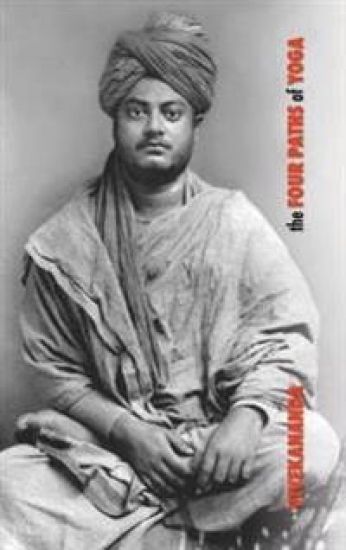
From ancient times, people of India have practiced spiritual disciplines designed to clear the mind and support a state of serene, detached awareness. The practices for developing this desired state of balance, purity, wisdom, and peacefulness of mind are known collectively as "yoga.""Yoga" means "yoke" or "union" - referring to union with the true Self, the goal described in the Upanishads. The sages distinguished four basic types of people and developed practices that are particularly suitable for each type, in order that each man can attain the desired union with the Self. For rational people, there is the path of Knowledge. For meditative people, there is the path of Self-Knowledge. For naturally active people, there is the path of Selfless Action. For emotional people, there is the Path of Devotion. Editor's Note: In order to be more enjoyable during reading, this book is in 6" x 9" format. In the same spirit, the paper is cream-colored, which causes less fatigue to the eyes than white paper. All our publications are carefully handled both in terms of typography and design.
From ancient times, people of India have practiced spiritual disciplines designed to clear the mind and support a state of serene, detached awareness. The practices for developing this desired state of balance, purity, wisdom, and peacefulness of mind are known collectively as "yoga.""Yoga" means "yoke" or "union" - referring to union with the true Self, the goal described in the Upanishads. The sages distinguished four basic types of people and developed practices that are particularly suitable for each type, in order that each man can attain the desired union with the Self. For rational people, there is the path of Knowledge. For meditative people, there is the path of Self-Knowledge. For naturally active people, there is the path of Selfless Action. For emotional people, there is the Path of Devotion. Editor's Note: In order to be more enjoyable during reading, this book is in 6" x 9" format. In the same spirit, the paper is cream-colored, which causes less fatigue to the eyes than white paper. All our publications are carefully handled both in terms of typography and design. 462 pages.
Karma yoga, also called Karma marga, is one of the several spiritual paths in Hinduism, one based on the yoga of action. Karma yogi believe that right work done well is a form of prayer. It is one of the paths in the spiritual practices of Hindus. Of the paths to spiritual liberation in Hinduism, karma yoga is the path of unselfish action. Swami Vivekananda was an Indian Hindu monk, a chief disciple of the 19th-century Indian mystic Ramakrishna. He was a key figure in the introduction of the Indian philosophies of Vedanta and Yoga to the Western world and is credited with raising interfaith awareness, bringing Hinduism to the status of a major world religion during the late 19th century.
Karma Yoga, or the path of selfless action, seeks to face the problem of ignorance by eradicating the ego. Swami Vivekananda argues that it is the ego, born of ignorance, that binds us to this world through attachment. The ego creates a dreamland of separative existence that disclaims the rights of others. It wants to achieve the impossible, and it desires the undesirable. Swami Vivekananda says that our egotistic, selfish actions have created walls around us. These walls not only set us apart from others, but they divide us from our true Self within. By performing actions in a selfless manner, we can break down the walls that separate us from the Self. The key message of Karma Yoga is: "Beat the inexorable law of karma by Karma Yoga. Release yourself from the chains of attachment by practicing non-attachment to the results of action."
Jnana Yoga est le yoga de la connaissance. Il ne s'agit pas ici de la connaissance dans son sens intellectuel, mais de la connaissance du Soi, ainsi que de la prise de conscience de l'Unicit . L o le d vot de Dieu suit son coeur avec une foi in branlable, le jnani, quant lui, coute et d veloppe sa raison pour faire la distinction entre le r el et l'irr el, l'immuable et le transitoire afin de percer les Grands Myst res.« Vous n'avez pas besoin de chercher l'ext rieur de vous-m mes pour trouver la divinit nous sommes d j divins. Qu'est-ce qui nous emp che de r aliser notre v ritable nature ainsi que celle du monde qui nous entoure ? C'est le voile du M y . , affirme Swami Vivekananda. Jnana Yoga est le processus qui d chire le voile de l'ignorance, celui de M y .
Karma Yoga, o el camino de la acci n desinteresada, busca combatir el problema de la ignorancia mediante la erradicaci n del ego. Swami Vivekananda afirma que es el ego, nacido de la ignorancia, el que nos encadena a este mundo por medio de la atadura. El ego crea un enga oso mundo de existencia separativa que niega los derechos de los dem s, quiere llevar a cabo lo imposible y desea lo indeseable. Swami Vivekananda nos dice que nuestras acciones ego stas e interesadas nos han encerrado entre cuatro paredes. Estas paredes no solo nos separan de los dem s, sino que tambi n nos hacen romper con nuestro verdadero Yo interior. Al actuar de una manera desinteresada, altruista, podemos derrumbar las paredes que nos separan de nuestro Yo. El mensaje clave del karma yoga es: «Experimenta la inexorable ley del karma mediante el karma yoga. Lib rate de las cadenas de la atadura a trav s de la pr ctica de la no atadura a los resultados de nuestras acciones .
Bhakti Yoga, o el camino de la devoci n est basado en una doctrina «Amor es Dios y Dios es amor . El Bhakti yogi experimenta la separaci n y anhela conocer o vislumbrar a su amada. Nada le atrae, nadie llama su atenci n y todo lo dem s carece de sentido. Swami Vivekananda sostiene el Bhakti Yoga es la forma m s directa y la m s breve para experimentar lo divino. No hay nada m s que amor y el Bhakti Yoga es la religi n del amor. Bhakti Yoga atrae particularmente a aquellos de naturaleza emocional. El Bhakti yogi est motivado principalmente por el poder del amor y ve a Dios como la encarnaci n del amor. A trav s de la oraci n, adoraci n y ritual l se entrega a Dios, canalizando y transmutando sus emociones en amor incondicional o devoci n. Al corear o cantar las alabanzas de Dios se forma una parte substancial del Bhakti Yoga.
Le Karma Yoga, dit la voie de l'abn gation, cherche r soudre le probl me de l'ignorance en radiquant l'ego. Swami Vivekananda soutient que l'ego, n de l'ignorance, nous lie ce monde par le biais de l'attachement. L'ego cr e un monde idyllique d'existence ind pendante o les droits des autres individus sont rejet s. L'ego veut r ussir l'impossible et par cons quent d sire ce qu'il ne pourra jamais obtenir. Swami Vivekananda nous explique que ce sont nos actions ego stes qui l vent des murs autour de nous. Ces murs nous isolent non seulement des autres individus, mais ils nous s parent int rieurement de notre r el Soi. Ce sont par des actions altruistes que nous r ussirons abattre ces murs qui nous loigne du Soi. La notion cl du Karma Yoga est alors la suivante: « Surpassez la loi inexorable du Karma en pratiquant le Karma Yoga. Brisez les cha nes de l'attachement en exer ant le d sint ressement aux fruits de vos actions.
Bhakti Yoga, ou la voie de la d votion, repose sur la doctrine suivante: « L'Amour est Dieu et Dieu est Amour . Le yogi qui pratique Bhakti fait l'exp rience de la s paration et languit l'id e de rencontrer ou m me de simplement apercevoir sa Bien-Aim e. Rien d'autre ne l'attire, rien d'autre ne retient son attention, tout le reste est d nu de sens. Bhakti Yoga pla t particuli rement ceux qui sont sensibles de nature. Le yogi qui pratique Bhakti trouve sa motivation principale dans le pouvoir de l'amour et voit Dieu comme l'incarnation de l'amour. travers la pri re, l'adoration et les rituels, il se livre Dieu, canalisant et transformant ses motions en un amour et une d votion inconditionnelle. Scander ou chanter les louanges de Dieu fait partie int grante du Bhakti Yoga. Selon Swami Vivekananda, Bhakti Yoga est la voie la plus directe et la plus courte pour vivre l'exp rience du divin. Il n'y a rien de plus noble que l'amour, et Bhakti Yoga, est la religion de l'amour.
Il Karma Yoga, o sentiero dell'altruista, affronta il problema dell'ignoranza cercando di sradicare l'ego, l'amor proprio. Swami Vivekananda sostiene che l'ego, nato dall'ignoranza, ci vincola a questo mondo attraverso il materialismo. Ne consegue un mondo dei sogni di esseri separati che negano i diritti degli altri. Si vuole ottenere l'impossibile e desiderare l'indesiderabile. Swami Vivekananda aggiunge che il nostro egoismo, ossia le nostre azioni egoisti hanno eretto muri intorno a noi. Questi muri non solo ci allontanano l'uno dell'altro ma ci separano dal nostro vero io. Solo adottando comportamenti altruisti, possiamo abbattere questi muri che ci separano dal nostro vero io. La parole chiave del Karma Yoga «Batti l'inesorabile legge del karma attraverso il Karma Yoga, il sentiero dell'altruista. Liberati dalle catene dell'attaccamento attraverso la pratica del non-attaccamento .
Karma Yoga, o el camino de la acci n desinteresada, busca combatir el problema de la ignorancia mediante la erradicaci n del ego. Swami Vivekananda afirma que es el ego, nacido de la ignorancia, el que nos encadena a este mundo por medio de la atadura. El ego crea un enga oso mundo de existencia separativa que niega los derechos de los dem s, quiere llevar a cabo lo imposible y desea lo indeseable. Swami Vivekananda nos dice que nuestras acciones ego stas e interesadas nos han encerrado entre cuatro paredes. Estas paredes no solo nos separan de los dem s, sino que tambi n nos hacen romper con nuestro verdadero Yo interior. Al actuar de una manera desinteresada, altruista, podemos derrumbar las paredes que nos separan de nuestro Yo. El mensaje clave del karma yoga es: «Experimenta la inexorable ley del karma mediante el karma yoga. Lib rate de las cadenas de la atadura a trav s de la pr ctica de la no atadura a los resultados de nuestras acciones .
Bhakti Yoga, or the path of devotion, is based on the doctrine "Love is God and God is Love." The Bhakti yogi experiences separation and longs to meet or even just glimpse his beloved, God. Nothing else attracts him, nothing else holds his attention, all else is meaningless. Bhakti Yoga appeals particularly to those of an emotional nature. The Bhakti yogi is motivated chiefly by the power of love and sees God as the embodiment of love. Through prayer, worship and ritual he surrenders himself to God, channelling and transmuting his emotions into unconditional love or devotion. Chanting or singing the praises of God form a substantial part of Bhakti Yoga. Swami Vivekananda argues that Bhakti Yoga is the most direct and shortest way to experience the divine. There is nothing higher than love and Bhakti Yoga is the religion of love.
Jnana Yoga is the yoga of knowledge-not knowledge in the intellectual sense-but the knowledge of Brahman and Atman and the realization of their unity. Where the devotee of God follows the promptings of the heart, the jnani uses the powers of the mind to discriminate between the real and the unreal, the permanent and the transitory. Jnanis, followers of nondualistic or advaita Vedanta, can also be called monists for they affirm the sole reality of Brahman. Of course, all followers of Vedanta are monists: all Vedantins affirm the sole reality of Brahman. The distinction here is in spiritual practice: while all Vedantins are philosophically monistic, in practice those who are devotees of God prefer to think of God as distinct from themselves in order to enjoy the sweetness of a relationship. Jnanis, by contrast, know that all duality is ignorance. There is no need to look outside ourselves for divinity: we ourselves already are divine. What is it that prevents us from knowing our real nature and the nature of the world around us? The veil of maya. Jnana Yoga is the process of directly rending that veil, tearing it through a two-pronged approach.