Kirjailija
Tacitus
Kirjat ja teokset yhdessä paikassa: 95 kirjaa, julkaisuja vuosilta 1864–2025, suosituimpiin kuuluu Agricola. Vertaile teosten hintoja ja tarkista saatavuus suomalaisista kirjakaupoista.
95 kirjaa
Kirjojen julkaisuvuodet: 1864–2025.
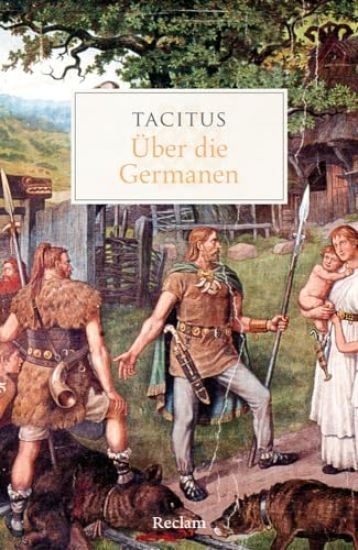

The Germany and the Agricola of Tacitus is a collection of two influential works by the Roman historian Tacitus. Composed in the 1st century AD, these works provide invaluable insights into the history, culture, and geography of the Germanic tribes and the Roman conquest of Britain. In "The Germany," Tacitus offers a detailed account of the Germanic tribes that lived beyond the borders of the Roman Empire. He describes their customs, political structures, warfare strategies, and their stark contrast with Roman society. This work serves as one of the earliest and most comprehensive sources of information about the Germanic peoples. Both works showcase Tacitus' sharp observations, eloquent prose, and critical analysis of political and military affairs. They offer a glimpse into the Roman worldview and their encounters with foreign cultures.
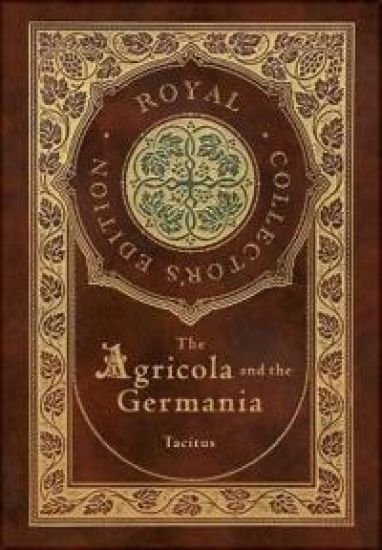
The Agricola and Germania (Royal Collector's Edition) (Annotated) (Case Laminate Hardcover with Jacket)
Tacitus
Royal Classics
2021
sidottu
The Agricola and the Germania were written by the Roman historian Tacitus around 98 AD. The Germania describes the lands, laws, and customs of individual Germanic tribes. The Agricola, recounts the life of Tacitus' father-in-law Gnaeus Julius Agricola, an eminent Roman general and Governor of Britain. It also covers, briefly, the geography and ethnography of ancient Britain. As in the Germania, Tacitus favorably contrasts the liberty of the native Britons to the corruption and tyranny of the Empire; the book also contains eloquent and forceful polemics against the rapacity and greed of Rome. Tacitus's writings are known for their dense prose that seldom glosses the facts, in contrast to the style of some of his contemporaries. In most of his writings he keeps to a chronological narrative order, only seldom outlining the bigger picture, leaving the readers to construct that picture for themselves. Tacitus's historical style offers penetrating-often pessimistic-insights into the psychology of power politics, blending straightforward descriptions of events, moral lessons, and tightly focused dramatic accounts. This case laminate collector's edition includes a Victorian inspired dust-jacket.
Book 11, the first of the later books of the Annals to survive, narrates two years in the reign of Claudius, AD 47–8. While Claudius is busy with the duties of his censorship, his wife Messalina is having a very public love affair with the young aristocrat Silius that eventually ruins her. In a book that also treats German, eastern, and other Roman internal affairs, a third of the surviving narrative is devoted to the destruction of Messalina. Here we encounter the classic portrayal of a Claudius ignorant and manipulated by those around him in an extended narrative that shows Tacitus at his dramatic and cynical best. This edition of Book 11, the first scholarly one in English in over a hundred years, contains a full introduction, a newly-edited Latin text with apparatus, and a comprehensive commentary that illuminates historical, historiographical, textual, linguistic, and literary issues that arise from the narrative.
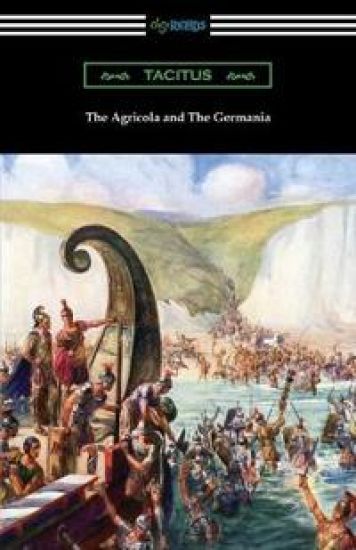
"The Agricola" and "The Germania" are two important historical works by Cornelius Tacitus, an ancient Roman Senator and historian who lived from 56 AD to 120 AD. Tacitus lived in what historians call the Silver Age of Latin literature and his contributions to the histories of these tumultuous times are considered significant and illuminating. "The Agricola" is a biography of the Roman general Gnaeus Julius Agricola, who was Tacitus's father-in-law. It is also a geographic and ethnographic history of Ancient Britain. Tacitus draws an unfavorable comparison between the liberty enjoyed by the Britons to the corruption and cruelty of Rome and offers a biting and insightful commentary on the Roman greed that justified the oppression and exploitation of the British people. "The Germania" is an ethnographic study of the peoples believed by Tacitus to be part of the ancient Germanic tribes, including their laws, lands and customs. While these works are not as well-known as Tacitus' other classics, such as the "Annals", or the "Histories", "The Agricola" and "The Germania" remain important first-hand documents of ancient history and people lost to time. This edition is printed on premium acid-free paper.
Books 5 and 6 of Tacitus' Annals cover the last years of the emperor Tiberius. Although most of Book 5 is lost, Book 6 survives complete and offers a vivid narrative of the increasingly tyrannical princeps, secluded on the island of Capri; the book ends with his death and obituary notice, one of the most celebrated passages of classical literature. This volume presents a new text of Books 5 and 6, restoring the division between them which was proposed by Lipsius, as well as a full commentary on the text, covering textual, literary, linguistic and historical matters. An Appendix discusses 'The Tacitean Tiberius'. The volume rounds off the sequence which began with commentary on Books 1 and 2 of Tacitus' Annals by F. R. D. Goodyear (1972, 1981) and was continued by commentary on Book 3 by A. J. Woodman and R. H. Martin (1996).
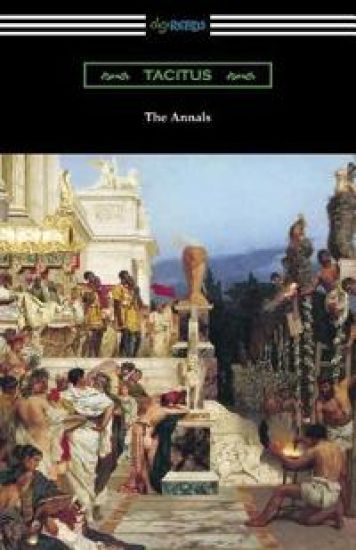
One of the most important historical records from classical antiquity, "The Annals of Imperial Rome" chronicles the history of the Roman Empire from the reign of Tiberius beginning in 14 A. D. to the end of the reign of Nero in 68 A. D. Written by Cornelius Tacitus, a Roman Senator during the second century A. D., it is a detailed first-hand account of the early Roman Empire and an important source for a modern understanding of that time. It is believed that as a Senator, Tacitus had access to the records of the Roman Senate and thus had a very accurate basis for his history. The work begins with the death of Caesar in 14 A. D. and in brutal and unflinching detail Tacitus describes the decadence and corruption of the Roman Emperors, as well as the equally corrupt Senatorial aristocracy, who Tacitus saw as being too servile to the Emperors. The reigns of Tiberius, Claudius, and Nero were a fascinating and bloody time, full of violence, treasonous plots, murders, suicides, and uprisings. Included are vivid descriptions of the great fire of Rome, the persecution of the Christians, and the suppression of the revolt in Britain led by Boudicca. Presented in this volume is the classic translation of Alfred John Church and William Jackson Brodribb. This edition is printed on premium acid-free paper.
The Histories is a Roman historical chronicle by Tacitus and it covers the Year of Four Emperors following the downfall of Nero in 68 AD, a year in the history of the Roman Empire in which four emperors ruled in succession: Galba, Otho, Vitellius, and Vespasian. The mode of their accession showed that because imperial power was based on the support of the legions, an emperor could now be chosen not only at Rome, but anywhere in the empire where sufficient legions were amassed. The style of narration is rapid, reflecting the speed of the events. The narrative rhythm leaves no space to slow down or digress. To write effectively in this style, Tacitus had to summarize substantial information from his sources. Along with The Annals, The Histories provide a key source for modern understanding of the history of the Roman Empire during the 1st century AD.
The Annals by Roman historian and senator Tacitus is a history of the Roman Empire from the death of Augustus to that of Nero, the years AD 14-68, covering the reigns of Tiberius, Caligula, Claudius and Nero. As a senator, Tacitus had access to Acta Senatus, the Roman senate's records, thus providing a solid basis for his work. The Annals provide a key source for modern understanding of the history of the Roman Empire during the 1st century AD.
"The Annals" is a history of the Roman Empire from the death of Augustus to that of Nero, the years AD 14-68, covering the reigns of Tiberius, Caligula, Claudius and Nero. As a senator, Tacitus had access to Acta Senatus, the Roman senate's records, thus providing a solid basis for his work. Along with The Histories, The Annals provide a key source for modern understanding of the history of the Roman Empire during the 1st century AD. "The Histories" is a Roman historical chronicle and it covers the Year of Four Emperors following the downfall of Nero in 68 AD, a year in the history of the Roman Empire in which four emperors ruled in succession: Galba, Otho, Vitellius, and Vespasian. The mode of their accession showed that because imperial power was based on the support of the legions, an emperor could now be chosen not only at Rome, but anywhere in the empire where sufficient legions were amassed. The style of narration is rapid, reflecting the speed of the events. The narrative rhythm leaves no space to slow down or digress. To write effectively in this style, Tacitus had to summarize substantial information from his sources.