Kirjojen hintavertailu – 12 859 818 kirjaa ja 27 kauppaa

Kirjailija

Thomas Hobbes

Kirjat ja teokset yhdessä paikassa: 275 kirjaa, julkaisuja vuosilta 1967–2026, suosituimpiin kuuluu Leviatán. Vertaile teosten hintoja ja tarkista saatavuus suomalaisista kirjakaupoista.

275 kirjaa

Kirjojen julkaisuvuodet: 1967–2026.

Objections Aux Meditations - Reponses

Objections Aux Meditations - Reponses

Rene Descartes; Thomas Hobbes

Librarie Philosophique J. Vrin
2019
nidottu
Entre novembre 1640 et avril 1641, Hobbes et Descartes debattent d'optique et de philosophie via Mersenne, leur ami commun. Le debat tourne court. Descartes refuse la discussion avec un materialiste; Hobbes est etranger a l'experience spirituelle des Meditations - refonder tout l'edifice du savoir en rendant manifeste l'existence de realites, l'esprit humain et Dieu, qui ne relevent pas de la nouvelle physique mecaniste. Les Objections de Hobbes aux Meditations et les Reponses de Descartes n'ont connu qu'une seule traduction en francais depuis 1647, celle de Clerselier. Jean Terrel en presente ici une nouvelle, a laquelle il joint le texte latin ainsi qu'un commentaire que rendent necessaire la concision des objections et l'exasperation qui croit au fil des reponses. Une lettre envoyee par Mersenne le 16 mai 1641 et les reponses de Descartes completent le dossier de ce debat impossible.

The Elements of Law

The Elements of Law

Thomas Hobbes

Routledge
2019
sidottu
Originally published in 1889, Ferdinand Tonnies published versions of two works by Thomas Hobbes. His editions of The Elements of Law: Natural and Politic and of Behemoth: or The Long Parliament were the first modern critical editions, based on manuscripts of works by Hobbes. Completed in 1640, The Elements of Law was Hobbes's first systematic political work. The book helps us see Hobbes's mind at work, for it is the first version of his later political works.
Leviathan

Leviathan

Thomas Hobbes

Ancient Wisdom Publications
2019
sidottu
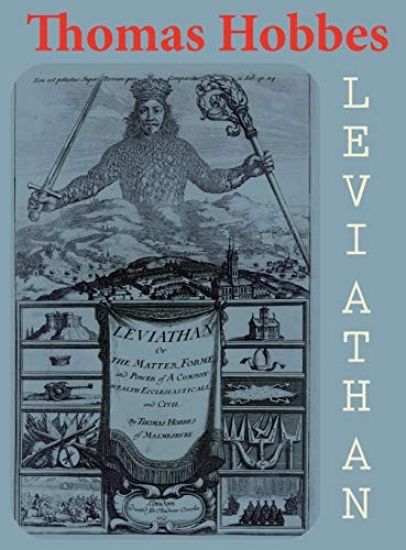
The book discusses the structure of society and legitimate government, and is regarded as one of the earliest and most influential examples of social contract theory. Leviathan ranks as a classic Western work on statecraft comparable to Machiavelli's The Prince.
Leviathan

Leviathan

Thomas Hobbes

Simon Brown
2018
pokkari
CHAPTER I. OF SENSE Concerning the Thoughts of man, I will consider them first Singly, and afterwards in Trayne, or dependance upon one another. Singly, they are every one a Representation or Apparence, of some quality, or other Accident of a body without us; which is commonly called an Object. Which Object worketh on the Eyes, Eares, and other parts of mans body; and by diversity of working, produceth diversity of Apparences. The Originall of them all, is that which we call Sense; (For there is no conception in a mans mind, which hath not at first, totally, or by parts, been begotten upon the organs of Sense.) The rest are derived from that originall. To know the naturall cause of Sense, is not very necessary to the business now in hand; and I have els-where written of the same at large. Nevertheless, to fill each part of my present method, I will briefly deliver the same in this place. The cause of Sense, is the Externall Body, or Object, which presseth the organ proper to each Sense, either immediatly, as in the Tast and Touch; or mediately, as in Seeing, Hearing, and Smelling: which pressure, by the mediation of Nerves, and other strings, and membranes of the body, continued inwards to the Brain, and Heart, causeth there a resistance, or counter-pressure, or endeavour of the heart, to deliver it self: which endeavour because Outward, seemeth to be some matter without. And this Seeming, or Fancy, is that which men call sense; and consisteth,
Leviathan

Leviathan

Thomas Hobbes

Createspace Independent Publishing Platform
2018
nidottu
The work concerns the structure of society and legitimate government, and is regarded as one of the earliest and most influential examples of social contract theory. Leviathan ranks as a classic western work on statecraft comparable to Machiavelli's The Prince. Written during the English Civil War (1642-1651), Leviathan argues for a social contract and rule by an absolute sovereign. Hobbes wrote that civil war and the brute situation of a state of nature ("the war of all against all") could only be avoided by strong, undivided government. Hobbes begins his treatise on politics with an account of human nature. He presents an image of man as matter in motion, attempting to show through example how everything about humanity can be explained materialistically, that is, without recourse to an incorporeal, immaterial soul or a faculty for understanding ideas that are external to the human mind. Hobbes proceeds by defining terms clearly and unsentimentally. Good and evil are nothing more than terms used to denote an individual's appetites and desires, while these appetites and desires are nothing more than the tendency to move toward or away from an object. Hope is nothing more than an appetite for a thing combined with opinion that it can be had. He suggests the dominant political theology of the time, Scholasticism, thrives on confused definitions of everyday words, such as incorporeal substance, which for Hobbes is a contradiction in terms. Leviathan or The Matter, Forme and Power of a Common-Wealth Ecclesiasticall and Civil-commonly referred to as Leviathan-is a book written by Thomas Hobbes (1588-1679) and published in 1651 (revised Latin edition 1668).
Leviathan

Leviathan

Mathematics Mathematics; Thomas Hobbes

Dover Publications Inc.
2018
nidottu
Written during a moment in English history when the political and social structures as well as methods of science were in flux and open to interpretation, Leviathan played an essential role in the development of the modern world. Thomas Hobbes, an outspoken royalist, fled to France during the English Civil War. There he wrote this polemic, in which he calls for a powerful sovereign -- a "Leviathan" -- to act as an enforcer of peace and justice. Hobbes's articulation of this long-contemplated philosophy of political and natural science was finally published in 1651, two years after the overthrow and execution of King Charles I. It met with a firestorm of controversy that included charges of treason and sedition, but survived to rank among the greatest works in the history of ideas. This edition of Hobbes's landmark work is based on the original text, offering both flavorful authenticity and the utmost clarity of expression.
Leviathan

Leviathan

Thomas Hobbes

Createspace Independent Publishing Platform
2018
nidottu
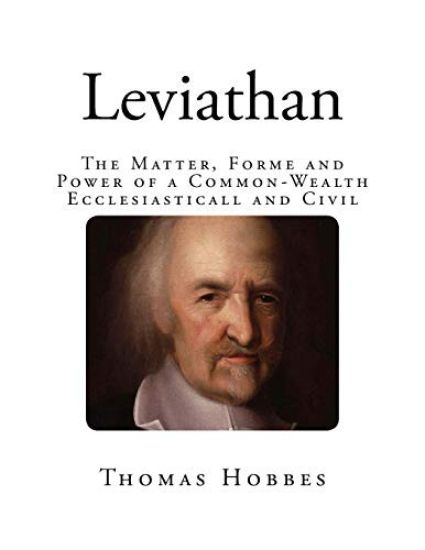
Leviathan or The Matter, Forme and Power of a Common-Wealth Ecclesiasticall and Civil-commonly referred to as Leviathan-is a book written by Thomas Hobbes (1588-1679) and published in 1651 (revised Latinedition 1668). Its name derives from the biblical Leviathan. The work concerns the structure of society and legitimate government, and is regarded as one of the earliest and most influential examples of social contract theory. Leviathan ranks as a classic western work on statecraft comparable to Machiavelli's The Prince. Written during the English Civil War (1642-1651), Leviathan argues for a social contract and rule by an absolute sovereign. Hobbes wrote that civil war and the brute situation of a state of nature ("the war of all against all") could only be avoided by strong, undivided government.
Leviathan

Leviathan

Thomas Hobbes

Classic Books Library
2018
pokkari
Classic Books Library presents this brand new edition of "Leviathan," a political treatise written by Thomas Hobbes in 1651. Hobbes (1588-1679) was an English philosopher known for establishing the social contract theory through this text, which legitimises the need for state authority governing the individual in society. However, Hobbes is also acknowledged for his contributions in developing liberalism, a concept that values individual rights. Published in the aftermath of the English Civil War (1642-1651), the book was met with controversy due to the challenging ideals it advocated and the state of social unrest in which they were presented. As part of our Classic Books Library, we are republishing this vintage work in a beautiful, high quality and affordable edition.
de Homine

de Homine

Thomas Hobbes

Librarie Philosophique J. Vrin
2018
nidottu
Les Elements de philosophie de Thomas Hobbes se divisent en trois parties ou sections (De corpore, De homine, De cive) qui ne parurent ni dans l'ordre prevu, ni dans un laps de temps relativement court. La deuxieme section des Elements de philosophie, le De homine, comporte, outre des developpements sur l'homme, ses facultes et ses affections, une breve histoire naturelle, un traite d'optique sur la vision et quelques chapitres sur la constitution morale, religieuse et sociale de l'etre humain. Le De homine devait fournir le lien entre la physique du De corpore et la politique du De cive, mais le fosse est tellement evident que, dans l'epitre dedicatoire, Hobbes s'excuse de la precipitation avec laquelle il passe d'une optique complexe, qui occupe plus de la moitie du livre, a une reflexion sur le discours et la science, les passions, les coutumes, la religion et, enfin, la notion de personnalite juridique. L'edition critique etablie ici a pris pour texte de base l'edition publiee en 1668, sans toutefois omettre aucune des divergences avec la premiere edition de 1658 ou avec les fragments du manuscrit qui ont ete conserves. Ces divergences sont indiquees en notes.
Behemoth

Behemoth

Thomas Hobbes

Hounskull Publishing
2018
sidottu
Written in the form of a dialogue between a witness and a student, Behemoth is Thomas Hobbes' angry, causal account of the English Civil War, the events of which created the context for his political philosophy, as elaborated in his seminal works, De Cive (1642) and Leviathan (1651). The narrative spans from the beginning of the Scottish revolution in 1637 until the Restoration of the monarchy in 1660. In his discussion of sedition, rebellion, the disintegration of authority, and his countrymen's false notions about liberty, government, property, and religion, Hobbes describes the catastrophic outcome of government abuse and agitation by the univesities, the latter having proven to the nation 'as the wooden horse had been to the Trojans'. Although completed in 1668, Charles II, Hobbes' former pupil, flatly refused to licence it, not caring for a direct discussion on these controversial topics, and not least because, although a proponent on rational grounds of the sovereign's absolute power, Hobbes was, at the same time, an ambiguous royalist. The manuscript thus remained unpublished until the final year of Hobbes' life, when several pirate editions appeared abroad. Hobbes' regular publisher, William Crooke, responded in 1682 by publishing a corrective version, on which subsequent editions were based. Ferdinand T nnies at last discovered the original manuscript in the late 19th century, enabling him to restore numerous passages later deleted by the author, thereby supplying, in 1889, the closest thing there is to a faithful rendition of the original text.
Leviathan

Leviathan

Thomas Hobbes

Createspace Independent Publishing Platform
2018
nidottu
Thomas Hobbes' Leviathan, from 1651, is one of the first and most influential arguments towards social contract. Written in the midst of the English Civil War, it concerns the structure of government and society and argues for strong central governance and the rule of an absolute sovereign as the way to avoid civil war and chaos.
Leviathan

Leviathan

Thomas Hobbes

Createspace Independent Publishing Platform
2018
nidottu
Thomas Hobbes argues for a social contract and rule by an absolute sovereign. Influenced by the English Civil War, Hobbes wrote that chaos or civil war-situations identified with a state of nature and the famous motto Bellum omnium contra omnes ("the war of all against all")-could only be averted by strong central government. He thus denied any right of rebellion toward the social contract, which would be later added by John Locke and conserved by Jean-Jacques Rousseau. (However, Hobbes did discuss the possible dissolution of the State. Since the social contract was made to institute a state that would provide for the "peace and defense" of the people, the contract would become void as soon as the government no longer protected its citizens. By virtue of this fact, man would automatically return to the state of nature until a new contract is made).
A True Ecclesiastical History, From Moses to the Time of Martin Luther, in Verse. By Thomas Hobbes of Malmesbury. Made English From the Latin Original
The 18th century was a wealth of knowledge, exploration and rapidly growing technology and expanding record-keeping made possible by advances in the printing press. In its determination to preserve the century of revolution, Gale initiated a revolution of its own: digitization of epic proportions to preserve these invaluable works in the largest archive of its kind. Now for the first time these high-quality digital copies of original 18th century manuscripts are available in print, making them highly accessible to libraries, undergraduate students, and independent scholars. The Age of Enlightenment profoundly enriched religious and philosophical understanding and continues to influence present-day thinking. Works collected here include masterpieces by David Hume, Immanuel Kant, and Jean-Jacques Rousseau, as well as religious sermons and moral debates on the issues of the day, such as the slave trade. The Age of Reason saw conflict between Protestantism and Catholicism transformed into one between faith and logic -- a debate that continues in the twenty-first century.]+++The below data was compiled from various identification fields in the bibliographic record of this title. This data is provided as an additional tool in helping to insure edition identification: ++++British LibraryT078309Translated by John Rooke. With an index. London: printed for E. Curll, 1722. 8],187, 5]p.; 8
The Moral and Political Works of Thomas Hobbes of Malmesbury. Never Before Collected Together. To Which is Prefixed, the Author's Life,
The 18th century was a wealth of knowledge, exploration and rapidly growing technology and expanding record-keeping made possible by advances in the printing press. In its determination to preserve the century of revolution, Gale initiated a revolution of its own: digitization of epic proportions to preserve these invaluable works in the largest archive of its kind. Now for the first time these high-quality digital copies of original 18th century manuscripts are available in print, making them highly accessible to libraries, undergraduate students, and independent scholars. The Age of Enlightenment profoundly enriched religious and philosophical understanding and continues to influence present-day thinking. Works collected here include masterpieces by David Hume, Immanuel Kant, and Jean-Jacques Rousseau, as well as religious sermons and moral debates on the issues of the day, such as the slave trade. The Age of Reason saw conflict between Protestantism and Catholicism transformed into one between faith and logic -- a debate that continues in the twenty-first century.++++The below data was compiled from various identification fields in the bibliographic record of this title. This data is provided as an additional tool in helping to insure edition identification: ++++British LibraryT112688With an additional titlepage, engraved: 'Leviathan: or the matter, form, and power of a common wealth ecclesiastical and civil.'. The preliminaries have horizontal chain lines. London: printed in the year, 1750. xxviii, 2], ii,697, 3]p., plates: port.; 2
Leviathan

Leviathan

Thomas Hobbes

Wilder Publications
2018
sidottu
Thomas Hobbes argues for a social contract and rule by an absolute sovereign. Influenced by the English Civil War, Hobbes wrote that chaos or civil war-situations identified with a state of nature and the famous motto Bellum omnium contra omnes ("the war of all against all")-could only be averted by strong central government. He thus denied any right of rebellion toward the social contract, which would be later added by John Locke and conserved by Jean-Jacques Rousseau.