Kirjojen hintavertailu – 12 859 818 kirjaa ja 27 kauppaa
Kirjailija
Thomas Johansson
Kirjat ja teokset yhdessä paikassa: 59 kirjaa, julkaisuja vuosilta 2003–2025, suosituimpiin kuuluu Stödjande samtal, möten och relationer i socialt arbete. Vertaile teosten hintoja ja tarkista saatavuus suomalaisista kirjakaupoista.
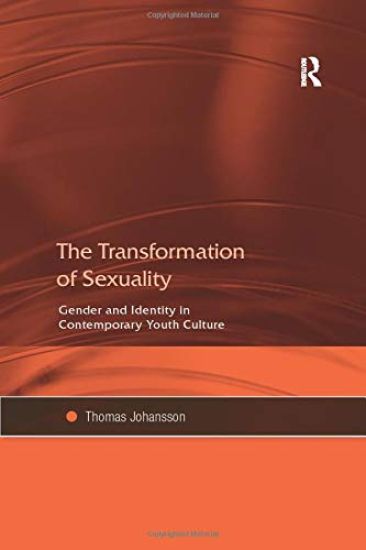
How do contemporary young people construct their sexual identities? Are young people sexually liberated, or is human sexuality increasingly controlled and manipulated by commercial forces? Thomas Johansson explores the construction of sexual identities by young people as part of a wider process of identity construction, combining the work of key authors such as Elias and Foucault with original and revealing empirical material drawn from an extensive survey of the views of 1300 sixteen to nineteen year olds, combined with a number of qualitative in-depth interviews with different sexual subcultures. Topics covered include fidelity and infidelity, love, homosexuality, pornography and beauty ideals. Designed to look beyond media images and popular prejudices the book illustrates how young people of both genders, of different nationalities and of different group allegiances view and relate to their own sexuality.
Anne Leonora Blaakilde; Johannes Andersen; Kirsten Drotner; Niels Rosendal Jensen; Anders Petersen; Bolette Moldenhawer; Gunnar Lind Haase Svendsen; Inge Kryger Pedersen; Michael Hviid Jacobsen; Richard Jenkins; Sara Malou Strandvad; Sigtona Halrynjo; Svend Brinkmann; Christian Stenbak Larsen; Bjørn Schiermer Andersen; Thomas Johansson; Lotte Bloksgaard; Pernille Tanggaard Andersen; Lilli Zeuner; Carsten Bak; Eva Ladekjær Larsen; Marie Bruvik Heinskou; Jesper Strandgaard Pedersen; Orvar Löfgren; Billy Ehn; Rasmus Christian Elling
Kultur er et mangfoldigt begreb og dækker vidt forskellige ting som kunstgenstande, sociale omgangsformer og forskellige landes karaktertræk. Samtidig er kultur et uomgængeligt begreb i samfundsvidenskaben, hvor kultur kan forklare mange sociale fænomener. Denne bog giver en bred introduktion til kultursociologi og kulturens betydning for det sociale liv under tre temaer: - Kulturbegrebet i teori og praksis - Kultur som samfundsindretning - Kultur, sundhed og det hele liv Bogen er redigeret af Michael Hviid Jacobsen, professor på AAU, og Pernille Tanggaard Andersen, lektor på SDU, og rummer bidrag fra sociologer i Danmark, Norge, Sverige og England.
The two 'Moulding Masculinities' volumes represent the first major publication in English of Northern European studies on masculinities. They focus on men’s relationships towards each other and their bodies, primarily from psycho-dynamic and social constructionist perspectives. The contributors are drawn from disciplines as diverse as sociology, social anthropology, media studies and sports sciences, and include scholars from Denmark, Sweden, Norway, Finland, The Netherlands, Germany, Australia, the UK and the USA. Investigating the relational aspects of masculinity, this volume describes how different masculinities are moulded within diverse structures and settings. It explores how men interact with each other and how they collectively react to and embody changing concepts of masculinity. By centering on the struggle and negotiation between different groups and discourses of masculinity and investigating the origin of dominant images and ideals of masculinity, these two volumes will widen international understanding of how historic forms of masculinity are interpreted, revived and combined in the process of moulding masculinities.
In all periods of time, there is a perceived shortage of qualified, credible, and robust leadership skills. At the same time, what is regarded as skilled leadership is contingent on economic, political, institutional, and cultural conditions specific for a period of time or a local setting. Leadership in the era of managerial capitalism was focused on planning and administration, and was seated in large-scale, divisionalized corporations. In the 1970s, this economic model started to wane and leadership was advanced as the solution to a series of economic and social concerns, now being a matter of meaning-making in the face of uncertainty and ambiguity. With the expansion of the finance industry and the deregulation of finance markets in the 1990s and in the new millennium, yet another leadership model increasingly prioritized economic value creation. In parallel to the economic, political and institutional changes, the idea of leadership has been strongly informed by new ideas about individualism and masculinity, adding to the understanding of leadership as what is anchored in widespread social beliefs about for example healthy life styles, the virtues of physical exercise, and novel gender relations. Aimed at scholars, researchers, students and policy makers in the fields of Leadership, Management History and Organizational Theory; Leadership Varieties examines predominant ideas about the qualities and virtues of leadership in a historical and cultural perspective.
Klyftan mellan de bäst bemedlade och de mest utsatta fortsätter att öka i Sverige och får bland annat tydliga rumsliga konsekvenser i städerna ? somliga områden anses åtråvärda, andra inte. Den som är hänvisad till en stigmatiserad adress riskerar att bli stämplad som en förlorare från första början, medan de resursstarka kan välja var de vill bo och med vilka deras barn ska gå i skola. På detta sätt förstärks och reproduceras social ojämlikhet från generation till generation. Denna antologi undersöker de konsekvenser som denna samhällsomvandling och stadsutveckling har haft för skolan och för elevernas upplevelse av det urbana rummet. Hur har skolorna hanterat de marknadsvillkor som i allt högre grad bestämmer deras verksamhet? Vilka följder får glappet mellan den officiella valfrihetsretoriken och den dagliga skolverksamhetens ekonomiska och sociala villkor? Hur påverkas skolorna av den symboliska laddning som själva stadsrummet numera har kommit att få? Och hur ser eleverna på sig själva och sin skolgång i ljuset av denna ojämlikhetens geografi?
Hur står det till med dagens ungdom? Under senare år har alltmer intresse riktats mot barns och ungas uppväxtvillkor, livssituation, rättigheter och agentskap. En rad frågor diskuteras i dag, bland annat:den ökade psykiska ohälsan bland barn och ungamedieanvändningens positiva och negativa sidoridentitetsskapande och genusfrågorungdomsarbetslöshet och bostadsbristbarns och ungas rättigheter och möjligheter att påverka sina villkor, och i förlängningen samhälle och kulturförskolans, skolans och familjens roll i de lärandeprocesser som skapas av ovanståendeDen här boken tar ett samlat grepp om barns och ungdomars uppväxtvillkor i det samtida Sverige, med en del utblickar mot andra europeiska länder. Författarna vill visa hur globala och sociala förändringar sätter avtryck i det konkreta och levda vardagslivet. Boken är främst avsedd för högskole- och universitetsutbildningar inom pedagogiska och sociala områden. Men den är även lämplig för politiska beslutsfattare, som vill få en god bild av forskningsläget när det gäller barn och unga – för att tänka kring och skapa goda villkor för den nya generationen. Sagt om boken”Genom att beskriva ungas uppväxtvillkor i en såväl historisk, politisk, social som kulturell kontext skildras en bild av ungdomar i ett föränderligt samhälle. […] Social utsatthet, ökad psykisk ohälsa bland barn och unga, det moderna föräldraskapet samt nya risker och möjligheter för unga är några centrala teman, som diskuteras på ett lättfattligt och pedagogiskt sätt. Boken vänder sig framför allt till högskole- och universitetsstudenter inom pedagogiska och sociala discipliner.” Maria Fridstjerna, lektör, BTJ häfte 13111173. Om författarnaThomas Johansson är professor i pedagogik med inriktning mot barn- och ungdomsvetenskap. Han är verksam vid Göteborgs universitet, Institutionen för pedagogik, kommunikation och lärande. Simon Lindgren är professor i sociologi vid Umeå universitet. Anette Hellman är fil. dr och verksam vid Göteborgs universitet, Institutionen för pedagogik, kommunikation och lärande.
Michael Hviid Jacobsen; Erik Laursen; Jan Brødslev Olsen; Harriet Bjerrum Nielsen; Charlotte Bloch; Inger Glavind Bo; Christian Borch; Nicolai Jørgensgaard Graakjær; Peter Gundelach; Allan Holmgren; Thomas Johansson; Søren Kristiansen; Thorkil Molly-Søholm; Anders Petersen; Palle Rasmussen; Nikolaj Stegeager; Lene Tanggaard Pedersen; Morten Ziethen; Gunnar Colbjørnsen Aakvaag
Socialpsykologi – en grundbog til et fag omhandler en række klassiske som nyere socialpsykologiske teorier, temaer og undersøgelser. Bogen fremstiller socialpsykologien som et bredt favnende felt, der rummer en række indbyrdes ganske forskellige måder at beskæftiger sig med forholdet mellem individ og samfund på. Samlende for de forskellige tilgange er det fælles formål at beskrive, forstå og forklare samspillet mellem psykologiske aspekter ved mennesket og den sociale kontekst indenfor hvilken det lever og virker. Bogen præsenterer både sociologisk som psykologisk orienterede bidrag til socialpsykologien, og sammenligningen og vekselvirkningen mellem de to tilgange er en af dens gennemgående ledetråde. Bogen er opdelt i to hoveddele. I første del lægges der vægt på at introducere til socialpsykologiens traditioner, persongalleri og paradigmer. I bogens anden del er der udvalgt en række konkrete temaer, hvor specifikke teorier, begreber og empiriske resultater bliver præsenteret. Socialpsykologi – en grundbog til et fag er redigeret af Michael Hviid Jacobsen, professor i sociologi, Erik Laursen, professor i pædagogisk sociologi og læringsforskning samt Jan Brødslev Olsen, lektor i socialpsykologi, alle ved Aalborg Universitet. Bogens øvrige bidragydere har alle tilknytning til universitetsmiljøer i Danmark og andre nordiske lande og beskæftiger sig teoretisk, empirisk og praktisk med socialpsykologiske temaer.
Michael Hviid Jacobsen; Gunnar Aakvaag; Gunnar C. Aakvaag; Thomas Johansson; Willy Guneriussen; Johanna Esseveld; Mai Ottosen; Nihad Bunar; Rickard Jonsson; Sara Eldén; Thomas Eriksen; Simon Lindgren; Fredrik Engelstad; Inger Hagen; Bjørn Schiermer; Philip Lalander; Søren Kristiansen; Marko Valenta; Ola Sigurdson; Thomas Boje
Sociology is a constantly changing scientific endeavour, adventure and practice that was born with the advent of modernity. One of the main reasons for the rise of sociology was modern societys wish to understand itself. In this introduction to sociology, the authors emphasize the importance and centrality of the idea of the sociological imagination, as it was conceived by sociologist C. Wright Mills. This book will enhance and further develop your sociological imagination with a sensibility that has its breeding ground in the Scandinavian countries; this is the first comprehensive attempt to write an international/Nordic text book and introductory text to sociology. This book is aimed primarily at first year students in sociology but will be of interest to anyone who is looking for a comprehensive guide to the exciting field of sociology. Contents Introduction The legacy of the sociological imagination Scandinavian sensibility Structure and content of the book Summary Think for yourself Further reading Chapter 1. What is society? Contested concepts and shifting metaphors Willy Guneriussen, University of Tromsø Introduction Individualism vs holism: methodological and ontological controversies Sociology – an explanatory or interpretive science? Structure or action? Society – a material or symbolic reality? The symbolic turn Combining distinctions The theoretical landscape of sociology Several theories – one reality? Beyond traditions – towards a minimalist model of society Biology and society Combining traditions The first synthesis: Talcott Parsons’ sociology Modifying Parsons’ theory of society Metaphors, science and sociological imagination Metaphors Changing conceptions or changing realities? Concluding reflections Summary Think for yourself Further reading Chapter 2. The sociology of work Inger Marie Hagen, Fafo Introduction The labour contract – labour as commodity in the market From work to labour Modern labour – work as commodity The two parties to the contract: labour and managerial prerogative The labour contract and the social context – different models The collective agreement Labour and self-expression Working conditions Other answers to `why work?’ Motivation and management The work organisation From command to self-management? An example – the modern work organisation – the three different company systems Employer and employee – equal partners Management as superior to employees Employee and management as parties in an ongoing dialogue Working life and distribution – industrial democracy Norms of distribution and norms of democracy Three notions of industrial democracy Industrial democracy and participation – individual and representative participation The Nordic labour market The Nordic model of labour relations When contemporary labour is a part of the past . . . Summary Think for yourself Further reading Chapter 3. The sociology of power Fredrik Engelstad, University of Oslo Introduction The interpretation of `power’ Power as concept Dimensions in social action Expectations and legitimacy From micro to macro State, democracy, politics State, rights and informal power relations Shaping and articulation of interests Political participation on a broad scale Fragmentation and globalisation: abdication of politics? Civil society Networks and organising capacity Gender power and attitudes toward gender Encounters with welfare state institutions Economy and working life Business life, markets and power Management and leadership in enterprises Participation and industrial democracy Ideas and communication Power in the public sphere Aesthetics, culture and national values Social elites: who governs? Power and democratisation Summary Think for yourself Further reading Chapter 4. The sociology of the family Mai Heide Ottosen, The Danish National Centre for Social Research Introduction What is a family? Sociological perspectives on the family Kinship vs family studies The family as a social institution The family as a social group Family as social practice Demographic trends The `bean-pole’ family The crisis of the patriarchal family Structuring family networks Family policies Inside the family: marriage, parenthood and childhood The de-institutionalisation of marriage From fatherhood and motherhood to parenthood Childhood Summary Think for yourself Further reading Chapter 5. The sociology of education Nihad Bunar and Rickard Jonsson, Stockholm University Introduction Sociological perspectives on education The functionalist approach Education and socialisation Social integration Education and gatekeeping: screening and selecting Education as an agent of social change The conflict approach The correspondence principle Reproduction through expectations and opposition Subjective expectation of objective probability Restricted and elaborated codes The subjective-interpretative approach Education and the market The market-oriented position The market-sceptical position The market-ambivalent position Education and ethnicity Urban schools Refugee and migrant students Education and gender Gender and school achievement Summary Think for yourself Further reading Chapter 6. The sociology of religion Ola Sigurdson, University of Gothenburg Introduction What is the sociology of religion? Sociology, the secularisation thesis and the return of religion Religion in the Scandinavian nation-states: an example The continuities and discontinuities of secularised religion The future of religion: towards a post-secular society? Summary Think for yourself Further reading Chapter 7. The sociology of media and information technologies Simon Lindgren, UmeS University Introduction Constructions and representations The media `effects’ model Media, ideology and struggles over hegemony New media and participatory culture Summary Think for yourself Further reading Chapter 8. The sociology of health Thomas Johansson, University of Gothenburg Introduction Historical perspectives Health inequalities Gender and health Lifestyles, risks and health The face of health Global health Summary Think for yourself Further reading Chapter 9. The sociology of class and social stratification Gunnar C. Aakvaag, University of Oslo Introduction Marx’s definition of class The class structure of modern capitalism Max Weber: a multidimensional approach to stratification and class Weber’s general approach to social stratification: class, status and party Weber’s class theory Contemporary class analysis A neo-Marxian approach: Erik Olin Wright and exploitation Wright’s class schema A neo-Weberian approach: John H. Goldthorpe and life chances Service and labour contracts Goldthorpe’s class schema Pierre Bourdieu: classes and lifestyles The social space Bourdieu’s class schema Habitus and class Class, habitus and lifestyle Class and social mobility Social relationships Intergenerational mobility Summary Think for yourself Further reading Chapter 10. The sociology of deviance Philip Lalander, Malmö University Introduction Labelling, ambivalence and counter-labelling Different types of deviance Diagnosis and identity Indulgence at the margins of society Escape from everyday life/escaping everyday life Summary Think for yourself Further reading Chapter 11. The sociology of gender Johanna Esseveld and Sara Eldén, Lund University Introduction Gender and sex Beyond dichotomies A sociological definition of gender Theorising gender Classical texts Men’s and women’s roles Gender oppression and structural inequality New themes in the sociology of gender Gender as a social practice Intersectionality Scandinavian sociology of gender today Conclusions Summary Think for yourself Further reading Chapter 12. The sociology of micro-social interaction and everyday life Søren Kristiansen and Michael Hviid Jacobsen, Aalborg University Introduction Everyday life as a social domain Micro-social interaction The basis of micro-social interaction: common sense, meaning and intersubjectivity Phenomenological sociology Symbolic interactionism Ethnomethodology The syntax of interaction: rules, rituals and ceremonies Goffman and dramaturgical sociology Conversation analysis Summary Think for yourself Further reading Chapter 13. The sociology of globalisation Thomas Hylland Eriksen, University of Oslo Introduction Origins of contemporary globalisation Globalisation today Globalisers and sceptics Dimensions of globalisation Disembedding, including de-localisation Standardisation Interconnectedness Mobility Mixing Vulnerability Re-embedding Central questions about globalisation The dialectics of globalisation Summary Think for yourself Further reading Chapter 14. The sociology of culture Bjorn Schiermer, University of Copenhagen Introduction Sociology of culture and popular culture The Frankfurt School: the critique and the potential of modern mass culture Siegfried Kracauer: the dialectics of commodified culture Theodor W. Adorno: the critical potential of autonomous art Walter Benjamin: art and politics The Birmingham School: culture as `a way of life’ Poststructuralism and semiotics: culture as `text’ The `material turn’: re-extending the shortened concept of culture Cultural studies: leaving the high/low dichotomy behind Ironic sensibilities: kitsch and camp and new ways of being together Summary Think for yourself Further reading Chapter 15. The sociology of ethnicity Nihad Bunar and Marko Valenta, Stockholm University and NTNU Introduction Defining ethnicity Theoretical approaches to ethnicity Primordialism Instrumentalism New ethnicities The importance of ethnic networks Symbolic ethnicity Theories and policies for managing ethnic diversity Ethnicity and other sociologically relevant concepts of categorisation Ethnicity and class Ethnicity and gender Ethnicity and race Ethnicity, racism and discrimination Ethnicity and nation Ethnicity and citizenship Summary Think for yourself Further reading Chapter 16. The sociology of the self Thomas Johansson, University of Gothenburg Introduction The sociology of the body: classical texts Consuming the Other Cyborgs and transvestites Lifestyle, fashion and the body Bodybuilding, fitness and gender Plastic surgery and body modifications Summary Think for yourself Further reading Chapter 17. The sociology of social change Gunnar C. Aakvaag, University of Oslo Introduction What are the `general characteristics’ of a society? Functional differentiation Consequences for the individual: facing social complexity Institutional `colonisation’ Consequences for the individual: facing commercialisation and bureaucratisation Individualisation Industrial modernity Individualised modernity Consequences for the individual: facing the decline of standard biographies Risk society Objective side-effects Subjective perception Consequences for the individual: facing uncertainty Social change: all that is solid melts into air? Summary Think for yourself Further reading Notes References Index
Ytterst handlar boken om psykologins ställning och plats i det samtida samhället, liksom hur vi ska förstå individen i samhället och samhället i individen. Vår epok framställs ofta som en tid av mångfald, pluralism, möjligheter coh valfrihet. Individen hyllas och man efterfrågar kreativa, autentiska och unika individer. Den fria, flexibla, rörliga och väljande individen träder fram som ett kulturellt och samhälleligt ideal. Men samtidigt som vi kan välja mellan hundra tandkrämssorter, 50 tv-kanaler och mängder av produkter uppstår en känsla av ytlighet och bedräglighet: att vi ändå lever i en tid som präglas av likriktning, imitation och bristande kritisk distans. Thomas Johansson är professor i pedagogik i Göteborg, är psykolog, psykoterapeut och socialpsykolog och författare till en rad viktiga böcker.
Utveckling. Lärande. Socialisation. Kärnbegrepp inom pedagogiken och så väl använda att de är närmast trådslitna. Men i den här boken knyts de ihop på nya sätt. Författaren presenterar ett stort antal teorier om lärande, individ och samhälle, och visar hur man genom att låta dessa teorier korsbefrukta varandra kan kasta nytt ljus över de ständigt aktuella frågorna:Vad är relevant lärande i dagens samhälle, och hur går det till? Hur blir man en fungerande samhällsmedborgare? Hur kan vi som pedagoger, som lärare och forskare, stimulera till en gynnsam och lustfylld utveckling? Bokens syfte är alltså inte bara att redovisa och återge olika teorier och perspektiv, utan att sätta tankar i rörelse, visa på nya sätt att arbeta teoretiskt och gjuta energi och liv i dagens diskussioner om ungas lärande och samhällsblivande. Om författarenThomas Johansson är professor i pedagogik med inriktning mot barn- och ungdomsvetenskap. Han är verksam vid Göteborgs universitet, Institutionen för pedagogik, kommunikation och lärande. Han har tidigare skrivit ett stort antal böcker och artiklar, främst inom områdena ungdomsforskning, mansforskning samt kultur- och socialpsykologi.
Europas förortsområden präglas i allt högre grad av marginalisering, segregation och territoriell stigmatisering. Hur förhåller sig skolan till detta? Förmår den bjuda motstånd mot sådana smygande och destruktiva processer och stärka elevernas självständighet och självkänsla eller legitimerar den i själva verket bara goda intentioner, pedagogiska specialsatsningar och ekonomiska extraresurser till trots rådande sociala strukturer och hierarkier? Hur ser elevernas konkreta och existentiella valmöjligheter ut? Fostrar förortsskolarna oavsiktligt eleverna till ett liv som andra klassens medborgare? Och vilken roll spelar de kulturer och gemenskaper som ungdomarna själva skapar i förorten? Kan de ge ungdomarna den mänskliga och sociala plattform som samhället och skolan inte lyckas ge dem? Antologin Förorten, skolan och ungdomskulturen diskuterar förortstillvarons och för- ortsungdomarnas villkor med två skolar i förortsområdet Olleryd som konkret ut- gångspunkt. De båda skolarna är instruktiva jämförelseobjekt eftersom de i samband med 1990-talets pedagogiska systemskifte i Sverige valde tämligen olika förhållningssätt och arbetsstrategier. Antologin problematiserar många aspekter av skolans verksamhet i förorten, från managementkulturens inträde i skolvärlden till retoriken om den goda mångfalden. Men den diskuterar också hur skolan kan ta vara på den kreativitet som finns i förorten. Det handlar om frågor som kommer att påverka hela vårt samhälle framöver. Ove Sernhede är professor vid Centrum för urbana studier vid Göteborgs universitet och har tidigare publicerat ett flertal böcker på Daidalos. Också de övriga bidragsgivarna Johannes Lunneblad, Thomas Johansson, Ulf Borelius, Anneli Schwartz, Jan Gustafsson och Åsa Möller är verksamma vid Göteborgs universitet. Köp
Are you one of those e4-players who absolutely hate to face the French Defence? And when it occurs, do you get the feeling that black has all the fun, whether he's pressuring your d-pawn, breaking down your pawn centre, rounding up your a-pawn or boring you to tears with the Rubinstein? - Then the Reti Gambit may be the solution for you too! After having written two popular books on the King's Gambit for white (The King's Gambit for the Creative Aggressor in 1998 and The Fascinating King's Gambit in 2004/5) Thomas Johansson devotes his third chess opening book to a little known gambit that definitely spices up the French Defence! I can't guarantee that white always gets an advantage in the RG - after all, even the theoretical main lines after 2.d4 tend to end up equal after about 20 moves - but the positions that arise are usually so interesting and fun that once you've learned how to play it, I think you will soon be looking forward to your next encounter with the French Defence!
How do contemporary young people construct their sexual identities? Are young people sexually liberated, or is human sexuality increasingly controlled and manipulated by commercial forces? Thomas Johansson explores the construction of sexual identities by young people as part of a wider process of identity construction, combining the work of key authors such as Elias and Foucault with original and revealing empirical material drawn from an extensive survey of the views of 1300 sixteen to nineteen year olds, combined with a number of qualitative in-depth interviews with different sexual subcultures. Topics covered include fidelity and infidelity, love, homosexuality, pornography and beauty ideals. Designed to look beyond media images and popular prejudices the book illustrates how young people of both genders, of different nationalities and of different group allegiances view and relate to their own sexuality.
Thomas Johansson; Ove Sernhede; Bo Öhrström; André Jansson; Ingrid Martins Holmberg; Joakim Forsemalm; Per-Markku Ristilammi; Åsa Andersson; Philip Lalander; Catharina Thörn
Denna bok handlar om de omvandlingar som två storstäder, Göteborg och Malmö, genomgått under de senaste decennierna. Den framhåller tre förhållanden: postindustrialism, globalisering och migration. Den postindustriella utvecklingen har inte bara förändrat städernas ekonomiska liv utan också stadslandskapet. Denna utveckling är i sin tur sammanflätad med den ekonomiska globaliseringen. På folkhemmets tid var Göteborg och Malmö infogade i nationella politiska mål. För de två städerna handlar det idag om anpassning till den globaliserade marknaden. Samtidigt har den globala omflyttningen av männi-skor gjort städerna mångkulturella. Även om Göteborg och Malmö inte direkt kan jämföras med Los Angeles eller andra »globala städer» kan liknande konfliktmönster, med bas i etnisk, social och kulturell särbehandling, skönjas också här. Boken ingår i Skriftserien STUDIER AV SAMTIDSKULTUR som utges av Centrum för Kulturstudier vid Göteborgs universitet. Ove Sernhede är professor i socialt arbete och Thomas Johansson i socialpsykologi. Båda är verksamma vid Centrum för kulturstudier vid Göteborgs universitet.
The two 'Moulding Masculinities' volumes represent the first major publication in English of Northern European studies on masculinities. They focus on men’s relationships towards each other and their bodies, primarily from psycho-dynamic and social constructionist perspectives. The contributors are drawn from disciplines as diverse as sociology, social anthropology, media studies and sports sciences, and include scholars from Denmark, Sweden, Norway, Finland, The Netherlands, Germany, Australia, the UK and the USA. Investigating the relational aspects of masculinity, this volume describes how different masculinities are moulded within diverse structures and settings. It explores how men interact with each other and how they collectively react to and embody changing concepts of masculinity. By centering on the struggle and negotiation between different groups and discourses of masculinity and investigating the origin of dominant images and ideals of masculinity, these two volumes will widen international understanding of how historic forms of masculinity are interpreted, revived and combined in the process of moulding masculinities.