Kirjojen hintavertailu – 12 903 724 kirjaa ja 27 kauppaa

Kirjailija

U. S. Air Force

Kirjat ja teokset yhdessä paikassa: 263 kirjaa, julkaisuja vuosilta 1968–2019, suosituimpiin kuuluu Pearl to V-J Day: World War II in the Pacific. Vertaile teosten hintoja ja tarkista saatavuus suomalaisista kirjakaupoista.

Nimi esiintyy myös muodoissa: U S Air Force, U.S. Air Force

263 kirjaa

Kirjojen julkaisuvuodet: 1968–2019.

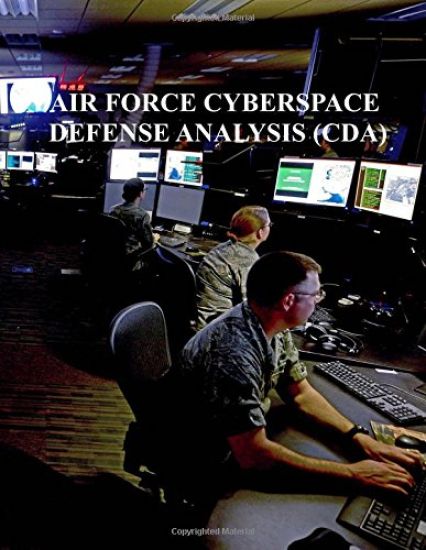
Cyberspace Defense Analysis (CDA): AFi 17-2CDA

Cyberspace Defense Analysis (CDA): AFi 17-2CDA

U. S. Air Force

Createspace Independent Publishing Platform
2017
nidottu
This book pulls together 5 key Air Force publications on Cyberspace Defense Analysis (CDA), Risk Management Framework (RMF), and Information Dominance and Management. These publications cover guidelines for planning and conducting cyberspace operations to support the warfighter and achieve national security objectives. AFI 17-2CDA outlines Initial Qualification Training (IQT) requirements for all crewmember personnel, Mission Qualification Training (MQT) and Upgrade and Specialized Training as well as Continuation Training. It provides procedures, evaluation and grading criteria used during performance evaluations on operational cyberspace weapon systems. It provides governing directives and prescribes procedures for operating the CDA weapon system. AFM 17-101 provides implementation instructions for the Risk Management Framework (RMF) methodology for Air Force Information Technology according to AFPD 17-1, and AFI 17-130. AFPD 17-1 provides a means by which the AF will cross-functionally align cyberspace programs and capabilities to effectively and efficiently deliver capabilities to users. Cyberspace is defined as a global domain within the information environment consisting of the interdependent network of IT infrastructures and resident data, including the Internet, telecommunications networks, computer systems, and embedded processors and controllers. Why buy a book you can download for free? We print this so you don't have to. When a new standard is released, an engineer prints it out, punches holes and puts it in a 3-ring binder. While this is not a big deal for a 5 or 10-page document, many cyber documents are over 100 pages and printing a large document is a time-consuming effort. So, an engineer that's paid $75 an hour is spending hours simply printing out the tools needed to do the job. That's time that could be better spent doing engineering. We publish these documents so engineers can focus on what they were hired to do - engineering. Other related titles we publish: Network Attack System (NAS) Vol. 1, 2 & 3 Air Force Cyberspace Defense (ACD) Vol. 1, 2 & 3 Air Force Cyberspace Training Publications Vol. 1, 2 & 3 Air Force Cyberspace Security and Control System (CSCS)

Air Force Cyberspace Defense (ACD) Weapon System: AFI 17-2ACD 27 Apr 2017

Air Force Cyberspace Defense (ACD) Weapon System: AFI 17-2ACD 27 Apr 2017

U. S. Air Force

Createspace Independent Publishing Platform
2017
nidottu
This publication pulls together the 3 volumes of AFI 17-2ACD, the Air Force Cyberspace Defense (ACD) weapon system. AFI 17-2ACD was developed in conjunction with other governing directives, and it prescribes procedures for the Air Force Cyberspace Defense (ACD) weapon system. It covers cybercrew Initial Qualification Training (IQT), through Mission Qualification Training (MQT), to annual Continuation Training (CT). Requalification Training (RT), and certification requirements. It covers standard operating procedures, crew manning, crew duties, operational objectives, mission planning and preparation, mission go/no-go criteria, sortie duration, maintaining mission and Master Station Logs, required equipment, communications and crew coordination, and debrief guidance. Also discussed is the evaluation criteria for qualifying cybercrew members in the ACD weapon system. These documents establish procedures for developing, distributing, evaluating and using Air Force training products for qualification training. They provide procedures for crew position evaluation criteria and grading used during performance evaluations on operational cyberspace weapon systems. Topics covered include mission management, mission checks/checklist procedures, crew coordination, emergency procedures and equipment, communications and post-mission activity. Why buy a book you can download for free? We print this so you don't have to. Other related titles we publish: Network Attack System (NAS) Vol. 1, 2 & 3 Air Force Cyberspace Operations Air Force Cyberspace Training Publications Vol. 1, 2 & 3 Air Force Cyberspace Security and Control System (CSCS) Vol. 1, 2 & 3
Air Force Cyberspace Operations

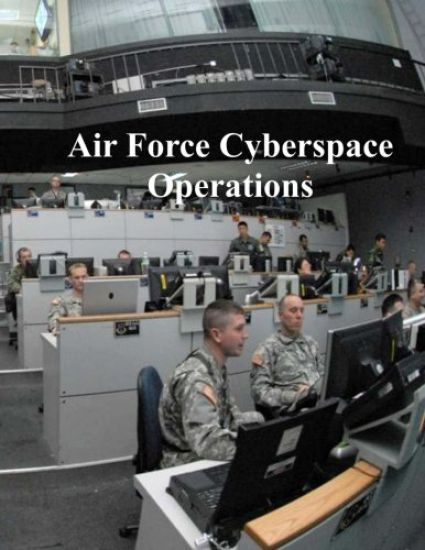
Air Force Cyberspace Operations

U. S. Air Force

Createspace Independent Publishing Platform
2017
nidottu
This book pulls together 4 key Air Force pubs that cover guidelines for planning and conducting cyberspace operations to support the warfighter and achieve national security objectives. AFPD 17-2 CYBERSPACE OPERATIONS 12 Apr 2016 AFI 10-1701 COMMAND AND CONTROL (C2) FOR CYBERSPACE OPERATIONS 5 Mar 2014 AFI 33-200 AIR FORCE CYBERSECURITY PROGRAM MANAGEMENT 16 Feb 2016 AFI 33-150 MANAGEMENT OF CYBERSPACE SUPPORT ACTIVITIES 30 Nov 2011 AFPD 17-2 and the Unified Command Plan in AFI 10-1701 provide guidance required to operate and defend the DoDIN and direct other cyberspace operations. AFI 33-200 establishes the AF Cybersecurity Program and Risk Management Framework (RMF) as an essential element to accomplishing the Air Force mission. AFI 33-150 provides guidance intended to assist Air Force personnel in identifying activities required to support Air Force communications. Why buy a book you can download for free? We print this book so you don't have to. First you gotta find a good clean (legible) copy and make sure it's the latest version (not always easy). Some documents found on the web are missing some pages or the image quality is so poor, they are difficult to read. We look over each document carefully and replace poor quality images by going back to the original source document. We proof each document to make sure it's all there - including all changes. If you find a good copy, you could print it using a network printer you share with 100 other people (typically its either out of paper or toner). If it's just a 10-page document, no problem, but if it's 250-pages, you will need to punch 3 holes in all those pages and put it in a 3-ring binder. Takes at least an hour. It's much more cost-effective to just order the latest version from Amazon.com This book is published by 4th Watch Publishing Co. and includes copyright material. We publish compact, tightly-bound, full-size books (8 1/2 by 11 inches), with large text and glossy covers. 4th Watch Publishing Co. is a Service Disabled Veteran-Owned Small Business (SDVOSB). If you like the service we provide, please leave positive review on Amazon.com. Without positive feedback from the community, we may discontinue the service and y'all can go back to printing these books manually yourselves. A full copy of over 300 cybersecurity standards is loaded on our CyberSecurity Standards Library DVD which is available at Amazon.com. Other related titles we publish: Network Attack System (NAS) Vol. 1, 2 & 3 Air Force Cyberspace Defense (ACD) Vol. 1, 2 & 3 Air Force Cyberspace Training Publications Vol. 1, 2 & 3
Network Attack System: AFi 17-2NAS

Network Attack System: AFi 17-2NAS

U. S. Air Force

Createspace Independent Publishing Platform
2017
nidottu
AFI 17-2NAS Volumes 1, 2 & 3. Feb 2017 There is a reason the U. S. Air Force has one of the best cyberwarfare weapon system programs. The Network Attack System (NAS) covers cybercrew training and certification requirements, standard operating procedures, crew manning, crew duties, operational objectives, mission planning and preparation, mission go/no-go criteria, sortie duration, maintaining mission and Master Station Logs, required equipment, communications and crew coordination, and debrief guidance. Also discussed is the evaluation criteria for qualifying cybercrew members in the Network Attack System. This publication pulls together the 3 volumes of AFI 17-2NAS Network Attack System (NAS). These documents establish procedures for developing, distributing, evaluating and using Air Force training products for qualification training. They provide DoD approved baseline cybersecurity certifications requirements and workforce metrics for all levels of the military and civilian occupational series - Basic Cyber Qualified (BCQ), Basic Mission Capable (BMC), Mission Ready (MR)/Combat Mission Ready (CMR) - as well as continuation training requirements. Topics covered include network security and control systems training, network defense and defense analysis training, and network attack training. Why buy a book you can download for free? We print this so you don't have to. Buy the paperback, get Kindle eBook FREE using MATCHBOOK. go to www.usgovpub.com to learn more Other related titles we publish: Air Force Cyberspace Defense (ACD) Vol. 1, 2 & 3 Air Force Cyberspace Operations Air Force Cyberspace Training Publications Vol. 1, 2 & 3 Air Force Cyberspace Security and Control System (CSCS) Vol. 1, 2 & 3 For more titles, visit www.usgovpub.com

Air Force Cyberspace Security and Control System (CSCS)

Air Force Cyberspace Security and Control System (CSCS)
U. S. Air Force

Createspace Independent Publishing Platform
2017
nidottu
This book pulls together 5 key Air Force publications on Cyberspace Security and Control System (CSCS). AFI 17-2CSCS, VOL. 1 CYBERSPACE SECURITY AND CONTROL SYSTEM (CSCS) CYBERCREW TRAINING 11 May 2017 AFI 17-2CSCS, VOL. 2 CYBERSPACE SECURITY AND CONTROL SYSTEM (CSCS) STANDARDIZATION AND EVALUATIONS 11 Mar 2017 AFI 17-2CSCS, VOL. 3 CYBERSPACE SECURITY AND CONTROL SYSTEM (CSCS) OPERATIONS AND PROCEDURES 16 May 2017 AFM 17-1301 COMPUTER SECURITY (COMPUSEC) 10 Feb 2017 AFI 17-203 CYBER INCIDENT HANDLING 16 Mar 2017 These publications cover guidelines for planning and conducting cyberspace operations to support the warfighter and achieve national security objectives AFI 17-2CSCS outlines Initial Qualification Training (IQT) requirements for all crewmember personnel, Mission Qualification Training (MQT) and Upgrade and Specialized Training as well as Continuation Training. It provides procedures, evaluation and grading criteria used during performance evaluations on operational cyberspace weapon systems. AFM 17-1301 establishes the Cybersecurity workforce security certification requirements relative to the function, category (technical or managerial), and level of the position. It covers Information Technology asset procurement stressing Unified Capabilities (UC) when modernizing IT and aligning with joint solutions, including the purchase of foreign-made commercial technology. It covers information systems access control, end point security, data spillage, data encryption, whitelisting, collaborative computing and teleworking. AFI 17-203 provides broad guidance for implementing the Air Force (AF) and DoD Cyber Incident Handling Program. It provides a succinct description of the Categories of Events (0, 3, 5, 6, 8, and 9) and Incidents (1, 2, 4, and 7) for the 6 CSAF -approved cyberspace weapon systems. Why buy a book you can download for free? We print this book so you don't have to. First you gotta find a good clean (legible) copy and make sure it's the latest version (not always easy). Some documents found on the web are missing some pages or the image quality is so poor, they are difficult to read. We look over each document carefully and replace poor quality images by going back to the original source document. We proof each document to make sure it's all there - including all changes. If you find a good copy, you could print it using a network printer you share with 100 other people (typically its either out of paper or toner). If it's just a 10-page document, no problem, but if it's 250-pages, you will need to punch 3 holes in all those pages and put it in a 3-ring binder. Takes at least an hour. It's much more cost-effective to just order the latest version from Amazon.com This book is published by 4th Watch Publishing Co. and includes copyright material. We publish compact, tightly-bound, full-size books (8 1/2 by 11 inches), with large text and glossy covers. 4th Watch Publishing Co. is a Service Disabled Veteran-Owned Small Business (SDVOSB). If you like the service we provide, please leave positive review on Amazon.com. Without positive feedback from the community, we may discontinue the service and y'all can go back to printing these books manually yourselves. A full copy of over 300 cybersecurity standards is loaded on our CyberSecurity Standards Library DVD which is available at Amazon.com. For more titles published by 4th Watch Publishing Co., please visit: cybah.webplus.net Other related titles we publish: Network Attack System (NAS) Vol. 1, 2 & 3 Air Force Cyberspace Defense Vol. 1, 2 & 3 Air Force Cyberspace Training Publications Vol. 1, 2 & 3 Air Force Cyberspace Operations
Intranet Network Control: AFi 17-2AFINC AFI 33-115

Intranet Network Control: AFi 17-2AFINC AFI 33-115

U. S. Air Force

Createspace Independent Publishing Platform
2017
nidottu
This book pulls together 4 key Air Force publications on the Air Force Intranet Network Control (AFINC). AFI 17-2AFINC, VOL. 1 AIR FORCE INTRANET NETWORK CONTROL (AFINC) TRAINING 23 May 2017 AFI 17-2AFINC, VOL. 2 AIR FORCE INTRANET NETWORK CONTROL (AFINC) STANDARDIZATION AND EVALUATION PROGRAM 23 May 2017 AFI 17-2AFINC, VOL. 3 AIR FORCE INTRANET NETWORK CONTROL (AFINC) OPERATIONS AND PROCEDURES 23 May 2017 AFI33-115 AIR FORCE INFORMATION TECHNOLOGY (IT) SERVICE MANAGEMENT 16 Sep 2014 AFI 17-2AFINC prescribes basic policy and guidance for training United States Air Force Intranet Network Control (AFINC) crewmembers. Mission readiness and effective employment are achieved through the development and mastery of core competencies for AFINC crewmembers. It provides cyberspace operations examiners and cybercrew members with procedures and evaluation criteria used during performance evaluations on the Air Force Intranet Control weapon system. This AFI provides specific information and grading criteria for each crew position, special mission qualification (SMQ), instructor upgrade qualification, and Stan/Eval examiner objectivity evaluations. All evaluations fall under the Qualification (QUAL), Mission (MSN) or Spot (SPOT) categories. It prescribes procedures for operating the AFINC weapon system by providing mission planning guidelines, standard operating procedures, minimum forces, terrain, communication plan, vulnerability/operating window, deconfliction plan, abort criteria and contingency plan and weapon system health/status. If your organization is not using this information as a general guide for developing your own tactics and procedures, then you are at a severe disadvantage. Air Force has been doing this for a while and they provide defensive and operational guidance that can be followed universally to protect critical computer networks. Why buy a book you can download for free? We print this book so you don't have to. First you gotta find a good clean (legible) copy and make sure it's the latest version (not always easy). Some documents found on the web are missing some pages or the image quality is so poor, they are difficult to read. We look over each document carefully and replace poor quality images by going back to the original source document. We proof each document to make sure it's all there - including all changes. If you find a good copy, you could print it using a network printer you share with 100 other people (typically its either out of paper or toner). If it's just a 10-page document, no problem, but if it's 250-pages, you will need to punch 3 holes in all those pages and put it in a 3-ring binder. Takes at least an hour. It's much more cost-effective to just order the latest version from Amazon.com This book is published by 4th Watch Publishing Co. and includes copyright material. We publish compact, tightly-bound, full-size books (8 1/2 by 11 inches), with large text and glossy covers. 4th Watch Publishing Co. is a Service Disabled Veteran-Owned Small Business (SDVOSB). If you like the service we provide, please leave positive review on Amazon.com. Without positive feedback from the community, we may discontinue the service and y'all can go back to printing these books manually yourselves. A full copy of over 300 cybersecurity standards is loaded on our CyberSecurity Standards Library DVD which is available at Amazon.com. Other related titles we publish: Network Attack System (NAS) Vol. 1, 2 & 3 Air Force Cyberspace Defense (ACD) Vol. 1, 2 & 3 Air Force Cyberspace Training Publications Vol. 1, 2 & 3 Air Force Cyberspace Operations Air Force Cyberspace Security and Control Systems (CSCS) Vol. 1, 2 & 3 Air Force Cyberspace Defense Analysis (CDA) Vol. 1, 2 & 3
Tongue and Quill - AFH 33-337 (Certified Current 27 July 2016)
The Tongue and Quill has been a valued Air Force resource for decades and many Airmen from our Total Force of uniformed and civilian members have contributed their talents to various editions over the years. This revision is built upon the foundation of governing directives and user's inputs from the unit level all the way up to Headquarters Air Force. A small team of Total Force Airmen from the Air University, the United States Air Force Academy, Headquarters Air Education and Training Command (AETC), the Air Force Reserve Command (AFRC), Air National Guard (ANG), and Headquarters Air Force compiled inputs from the field and rebuilt The Tongue and Quill to meet the needs of today's Airmen. The team put many hours into this effort over a span of almost two years to improve the content, relevance, and organization of material throughout this handbook. As the final files go to press it is the desire of The Tongue and Quill team to say thank you to every Airman who assisted in making this edition better.
Airpower and the Airlift Evacuation of Kham Duc

Airpower and the Airlift Evacuation of Kham Duc

U. S. Air Force; Office of Air Force History

Createspace Independent Publishing Platform
2015
nidottu
THIS slender volume has value for both the general reader and the aviation specialist. For the latter there are lessons regarding command andcontrol and combined-unit operations that need to be learned to achieve battlefield success. For the former there is a straightforward narrative aboutAmerican aviators of all four services struggling in the most difficult of conditions to try to rescue more than 1,500 American and Vietnamese military and civilians. Not all the Americans moving through the events recounted in this monograph acted heroically, but most did, and it was their heroism that gave the evacuation the success it had. Airpower and the Airlift Evacuation of Kham Duc is fully documented so that readers wishing to look deeper into this incident may do so. Those who study the battle will see that it was something of a microcosm of the entire Vietnam War in the relationship of airpower to tactical ground efforts. Kham Duc sat at the bottom of a small green mountain bowl, and during most of 12 May 1968 the sky was full of helicopters, forward air controller aircraft, transports, and fighters, all striving to succeed and to avoid running into each other in what were most trying"circumstances. In the end they carried the day, though by the narrowest of margins and with heavy losses.
Training to Fly: Military Flight Training 1907-1945

Training to Fly: Military Flight Training 1907-1945

U. S. Air Force; Office of Air Force History

Createspace Independent Publishing Platform
2015
nidottu
The volume at hand, Training to Fly: Military Flight Training, 1907-1945, is an institutional history of flight training by the predecessor organizations of the United States Air Force. The U. S. Army purchased its first airplane, built and successfully flown by Orville and Wilbur Wright, in 1909, and placed both lighter- and heavier-than-air aeronautics in the Division of Military Aeronauticsof the Signal Corps. As pilots and observers in the Air Service of the American Expeditionary Forces, Americans flew combat missions in France during the Great War. In the first postwar decade, airmen achieved a measure of recognition with the establishment of the Air Corps and, during World War II, the Army Air Forces attained equal status with the Army Ground Forces. During this first era of military aviation, as described by Rebecca Cameron in Training to Fly, the groundwork was laid for the independent United States Air Force. Those were extraordinarily fertile years of invention and innovation in aircraft, engine, and avionics technologies. It was a period in which an air force culture was created, one that was a product of individual personalities, of the demands of a technologically oriented officer corps who served as the fighting force, and of patterns of professional development and identity unique to airmen. Most critical, a flight training system was established on firm footing, whose effective test came in combat in World War II, and whoseorganization and methods continue virtually intact to the present day. This volume is based primarily on official documents that are housed in the National Archives and Records Administration. Some, dating from World War II, remained unconsulted and languishing in dust-covered boxes until theauthor's research required that they be declassified. She has relied upon memoirs and other first-person accounts to give a human face to training policies as found in those dry, official records. Training to Fly is the first definitive study of this important subject. Training is often overlooked because operations, especially descriptions ofaerial combat, have attracted the greatest attention of scholars and the popular press. Yet the success of any military action, as we have learned over and over, is inevitably based upon the quality of training. That training is furtherenhanced by an understanding of its history, of what has failed, and what has worked.
Linebacker II: A View from the Rock

Linebacker II: A View from the Rock

U. S. Air Force; Office of Air Force History

Createspace Independent Publishing Platform
2015
nidottu
This is a narrative drawn from the era of the Southeast Asian conflict, detailing a unique event in that lengthy struggle. The event was calledLINEBACKER II, a nickname like thousands of others, used to identify an operation, project, or mission associated with military affairs. It so differed from the many others, however, in its execution and outcome, that it stands alone. For the first time in contemporary warfare, heavy jet bombers were employed in their designed role to conduct extended strategic operations against the warmaking capacity of a hostile nation. This monograph tells part of the story of Strategic Air Command's participation in LINEBACKER II. In so doing, it addresses the efforts of a complex mixture of Air Force and sister service operations, with all services working in concert towards a common goal. Rather than develop a completechronology or blow-by-blow account, which are matters of record in other works, the campaign is pursued more from the personal perspective. Herein is described the impact of LINEBACKER II on those in command, plus those in operations, maintenance and support who undergirded the effort, and the crewmembers. The narrative tells how they successfully met a staggering challenge. There was no book to follow. In only eleven days of intense combat operations they wrote their own book as they supported and flew the missions. That book revealed an across-the-board ability to radically change complex procedures and tactics on short notice, and a commensurate ability of aircrew and support personnel to execute them to near perfection. In reviewing their story we find insight as to why the nation and the military need this caliber of people, who stepped forward when the need arose, demonstrated superior leadership, determination, and resiliency, did the job, and then dispersed into the more normal patterns of life. Many have since retired or separated from active service. Yet, it is clear that the ultimatewell-being of our military structure in society must hinge on the continuing presence of this breed of people. Theirs was an achievement born of greatability and courage, and deserving of great honor.
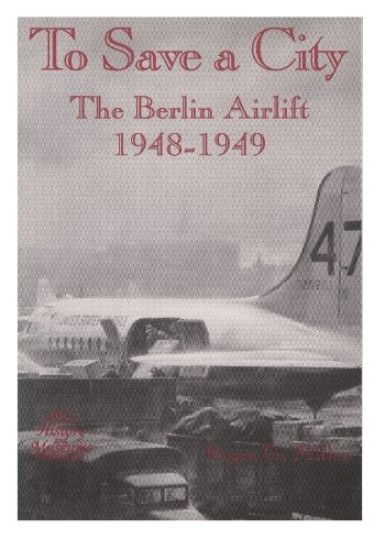
To Save a City: The Berlin Airlift, 1948-1949

To Save a City: The Berlin Airlift, 1948-1949

U. S. Air Force; Office of Air Force History

Createspace Independent Publishing Platform
2015
nidottu
The Berlin Crisis of 1948 had its origins in the dark mind of Joseph Stalin. Plans to interfere with Western access to Berlin were already hatched andharassment had begun by March 19, 1948, when the dictator met with German leaders of the Soviet-controlled Party of Socialist German Unity (SED). During the subsequent discussion, German communist leader Wilhelm Pieck warned that the elections scheduled for Berlin in October threatened a disaster for the SED. But, he argued, that humiliation could be prevented if, somehow, the Western powers could be removed from the city
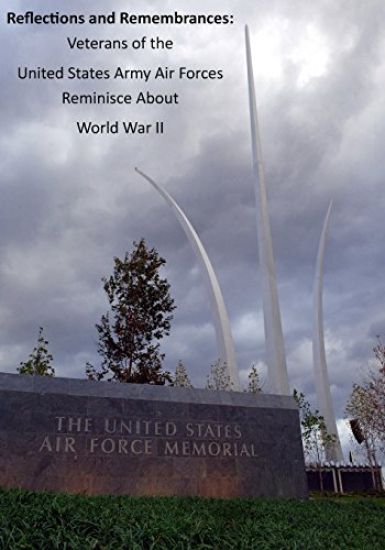
Reflections and Remembrances: Veterans of the United States Army Air Forces Reminisce About World War II

Reflections and Remembrances: Veterans of the United States Army Air Forces Reminisce About World War II

U. S. Air Force; Office of Air Force History

Createspace Independent Publishing Platform
2015
nidottu
An anniversary gives us the opportunity to recognize the deeds of our predecessors, take pride in our heritage, show gratitude for our victories, reflect on our losses, and review the past with the benefit of the longer perspective of history. Each generation tends to see the past in terms of its own experience. History both illuminates what has lain hidden and reinforces what we know. For its 1995 observance of the fiftieth anniversary of the end of World War II, the Air Force History and Museums Program sponsored a series of commemorative events. One, a National Day of Recognition for Veterans of the United States Army Air Forces (USAAF), held on August 7th in the Washington, D. C. area, was celebrated at three locations. First, at the Pentagon's center court, Secretary of the Air Force Sheila E. Widnall and Chief of Staff of the Air Force General RonaldR. Fogleman, praised the veterans' numberless contributions to Allied victory in the war. The Air Force Historian, Richard P. Hallion, read a congressional resolution marking the day and then Lieutenant Colonel Donald S. Lopez, USAF, retired, spoke on behalf of all World War II airmen. A flyover by vintage USAAF aircraft capped the festivities. During the afternoon in a symposium at the National Archives and Records Administration, eleven USAAF veterans, in separate sessionscovering the conflicts in Europe and Asia, reflected on their own wartime experiences of half a century ago. They spoke with clarity and authority and in remarkable detail on such topics as military preparedness, leadership, training, racial segregation, the treatment of American prisoners of war, military technology, the Allied invasion ofJapan, and the use of atomic weapons. Historians Richard G. Davis and William T. Y'Blood presented overviews at the respective sessions. That evening, the Daughters of the American Revolution gave a reception in honor of the symposium participants and opened ConstitutionHall for an outstanding musical tribute, which was performed before a packed house by the United States Air Force Band. Dr. Hallion, joined by General Bryce Poe, II, president of the Air Force Historical Foundation, hosted the symposium. Reminiscences and remarks are faithfully preserved herein.
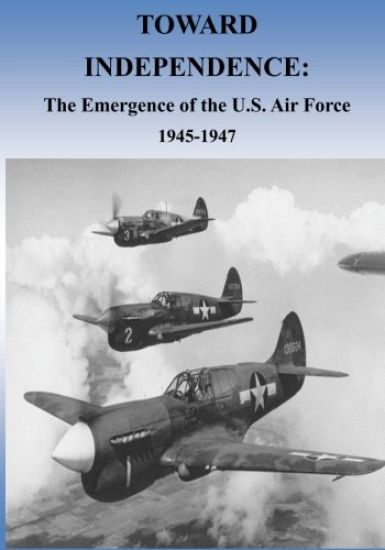
Toward Independence: The Emergence of the U.S. Air Force, 1943-1947

Toward Independence: The Emergence of the U.S. Air Force, 1943-1947

U. S. Air Force; Office of Air Force History

Createspace Independent Publishing Platform
2015
nidottu
From the Wright Brothers' first flight, a long, convoluted road led to the creation of the modernindependent United States Air Force. Despitefrustrating bureaucratic delays and political maneuvering, the ultimate goal was clear. Two world wars had devastated whole continents and threatened long-term global peace. Only a well-prepared American military establishment, fully utilizing its Air Force, could provide a strong national defense and help ensure world peace. As aerospace technology took off, an independent Air Force would lead the way into the atomic age, and a new military structure would be required. Just asimportant as technology, however, would be thevision and energy of air power advocates. Overfive decades, Air Force people would build theworld's finest air organization by following a simple creed: putting service above self
Plans and Policies for the Ballistic Missile Initial Operational Capability Program

Plans and Policies for the Ballistic Missile Initial Operational Capability Program

U. S. Air Force; Office of Air Force History

Createspace Independent Publishing Platform
2015
nidottu
The development, production, and operational deployment of intermediate-range and intercontinental ballistic missiles probably constitutes the most intensive, complex, and expensive military program ever undertaken in American history. Certainly, it far exceeds in scope any other program attempted during a peacetime period. The objective of the program was far more than just the attainment of operational weapon systems. The continuance of peace, an uneasy one to be sure, and the very future and well-being of the "free world" depended in large measure upon a successful and energetic prosecution of the ballistic missile program. The United States Air Force, apprised through the media of several special studies of both the urgent requirement for rocket-propelled missiles and of recent major technological advances and possibilities, responded in 1954 with the establishment of a unique organization and management structure to carry out the importantjob. The structure was designed to harness the composite skills, knowledge, and facilities of the military service, the scientific world, and American industry in a major, concerted effort. No less important, the Air Force expected the new approach to compress the development-production-operation cycle by eliminating much of the inherent "red tape" so characteristic of the coordinating and decision-making processes at the various echelons of command and control. The Secretary of Defense and the President took special measures at their levels. They established special units and instituted special procedures--all for the purpose of easing the management task. They assigned the highest priority ratings to the program and removed likely areas of administrative impediments. Finally, they kept themselves intimately informed on each step of progress during the course of the program.
The Air Force in Space 1959-1960

The Air Force in Space 1959-1960

U. S. Air Force; Office of Air Force History

Createspace Independent Publishing Platform
2015
nidottu
This is the second in a series or historical studies on the role or the Air Force in space activities, prepared by the USAF Historical Division Liaison Office. The first study, The Threshold of Space 1945-1959, described the evolution of the nationalspace program with emphasis on the responsibilities or the Air Force. For the present study, the author adopted a broad approach that permitted timely coverage or USAF space policies, plans, and programs within the context or both the national space program and USAF strategic objectives. This office will also prepare comprehensive studies on particular portions or the space program. The Air Force in Space, 1959-1960 is part of the History of Headquarters USAF, Fiscal Year 1960. This document is classified SECRET to conform with the classification assigned to sources of information used herein.
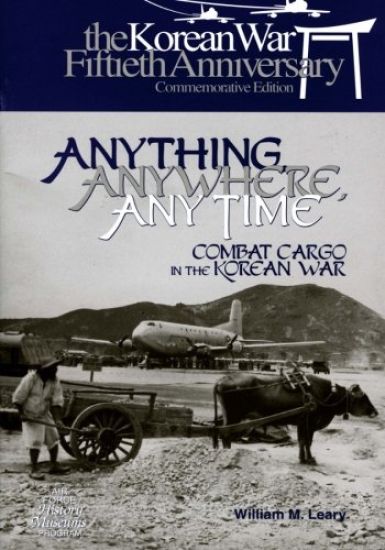
Anything, Anywhere, Any Time: Combat Cargo in the Korean War

Anything, Anywhere, Any Time: Combat Cargo in the Korean War

U. S. Air Force; Office of Air Force History

Createspace Independent Publishing Platform
2015
nidottu
On June 25, 1950, North Korean troops, supported by Soviet-supplied tanks and artillery, advanced across the 38th parallel, routing the lightly armed South Koreans. The immediate tasks facing General of the Army Douglas MacArthur's Far East Command and its air component, the Far East Air Forces, were to provide equipment for the embattled South Koreans and to evacuate the American noncombatants caught in the path of the Communist offensive. Fighters and bombers of the Far East Air Forces contributed to the evacuation by protecting the ships and aircraft carrying the refugees to Japan. While covering the evacuation, 1st Lt. William G. Hudson, the pilot of an F-82 Twin Mustang, scored the first aerial victory of the Korean War by shooting down a Soviet-built fighter. The Korean War consisted of four distinct phases. Initially, the Communist army advanced against increasing resistance as it forced the United Nations defenders into the Pusan perimeter in the most southeastern part of South Korea. In September, however, the second phase began when the North Koreans suffered a complete reversal of fortune when the UN forces landed at Inchon, far beyond the battle line; burst from the Pusan perimeter; shattered the North Korean Army; and pursued its remnants northward. The third phase began when China intervened in force in November 1950, surprising the scattered UN armies as they approached North Korea's northern border and driving them back to the vicinity of the 38th parallel. Finally, the fourth phase was a stalemate, during which neither side would risk vast casualties in an attempt to gain a complete victory. Truce talks began in July 1951, but the fighting continued until July 1953, when the negotiations at last bore fruit and the conflict ended in a cease-fire agreement.
Reflections on Air Force Independence

Reflections on Air Force Independence

U. S. Air Force; Office of Air Force History

Createspace Independent Publishing Platform
2015
nidottu
Almost twenty-five years after publishing Planning and Organizing the Postwar Air Force, 1943-1947, and a decade after publishing his definitive work, The Struggle for Air Force Independence, 1943-1947, Herman S. Wolk, retired Air Force senior historian, returns to the subject that capped his nearly fifty-year career with the Air Force history program. As Wolk explains, this briefwork is a reflective analysis. The United States Army's air arm waged a frustrating and uncertain battle during the interwar years to gain greater autonomy from the War Department. For the air arm, the key transition was the establishment in 1935 of the General Headquarters (GHQ) Air Force under Brig. Gen. Frank M. Andrews. The GHQ Air Force was the first American air force that consolidated all striking forces. For several years before the Japanese attack on Pearl Harbor, which triggered U. S. entry into World War II, President Franklin D. Roosevelt foresaw the major role that air power would play in the conflict, and he called for a massive buildup. The president wanted the major share of aircraft produced to go to the Allies. Consequently, he was sometimes at cross purposes with his Air Corps chief, Maj. Gen. Henry H. "Hap" Arnold, who was hard at work trying toincrease the Army's air capability. The formation in June 1944 of the Twentieth Air Force was a landmark event in the Army air arm's drive for independence. With B-29s to send against the Japanese home islands, the Twentieth gave the Army Air Forces (AAF) what Arnold termed "a Global Air Force." Its formation set the precedent for that of the postwar Strategic Air Command, which provided the United States with its nuclear deterrence force in the Cold War. The lessons of World War II were many. Many also were the significant contributions of the AAF-tactical, strategic, support, humanitarian-that convinced President Harry S. Truman, Congress, and the American people that the creation of the United States Air Force (USAF) was necessary in the postwar era. Wolk makes the pivotal connections between politics and the searing experience of war to explain how and why the USAF was established. His analysis addresses not only technology, bureaucracy, and politics, but also people. The service's founding airmen were more than flyers and technologists; they were, above all, men of faith who believed in what they were doing. For many years they fought against long odds. The nation owes them a great debt.
The Advisory Years in Southeast Asia, to 1965

The Advisory Years in Southeast Asia, to 1965

U. S. Air Force; Office of Air Force History

Createspace Independent Publishing Platform
2015
nidottu
This publication is the first of a series titled The United States Air Force in Southeast Asia. It tells the story of the Air Force's involvement in the region from the end of the second World War until the major infusion of American troops into Vietnam in 1965. During these years, and most noticeably after 1961, the Air Force's principal role in Southeast Asia was to advise the Vietnamese Air Force in its struggle against insurgents seeking the collapse of the Saigon government. This story includes some issues of universal applicability to the Air Force: the role of air power in an insurgency, the most effective way to advise a foreign ally, and how to coordinate with other American agencies (both military and civilian) which are doing the same thing. It also deals with issues unique to the Vietnamese conflict: how to coordinate a centralized, technological modern airforce with a feudal, decentralized, indigenous one without overwhelming it, and how best to adapt fighter, reconnaissance, airlift, and liaison planes to a jungle environment. Additional volumes in this series will tell the story of the Air Force in South Vietnam, in Laos, and over North Vietnam until the cessation of the Air Force's direct role in 1973.
A History of The Civil Reserve Air Fleet

A History of The Civil Reserve Air Fleet

U. S. Air Force; Office of Air Force History

Createspace Independent Publishing Platform
2015
nidottu
This is the second in a series of research studies-historical works that were not published for various reasons. Yet, the material contained therein was deemed to be of enduring value to Air Force members and scholars. These works were minimally edited and printed in a limited edition to reach a small audience that may find them useful. We invite readers to provide feedback to the Air Force History and Museums Program. Dr. Theodore Joseph Crackel, completed this history in 1993, under contract to the Military Airlift Command History Office. Contract management was under the purview of the Center for Air Force History (now the Air Force History Support Office). MAC historian Dr. John Leland researched and wrote Chapter IX, "CRAF in Operation Desert Shield." Rooted in the late 1930s, the CRAF story revolved about two points: the military requirements and the economics of civil air transportation. Subsequently, the CRAF concept crept along for more than fifty years with little to show for the effort, except for a series of agreements and planning documents. The tortured route of defining and redefining of the concept forms the nucleus of the this history. Unremarkable as it appears, the process of coordination with other governmental agencies, the Congress, aviation organizations, and individual airlines was both necessary and unavoidable; there are lessons to be learned from this experience. Although this story appears terribly short on action, it is worth studying to understand how, when, and why the concept failed and finally succeeded. The payoff came during the Persian Gulf War, over the period from August 1990 until January 1991, when the CRAF flew in support of Operation Desert Shield. The CRAF provided the "greatest airlift in history," eclipsing in some aspects even the 1948-1949 Berlin Airlift. The statistics were staggering: during those 165 days the CRAF transported some 400,000 troops and 355,000 tons of cargo from the U. S. east coast to the Arabian Peninsula, an average distance of 7,000 miles. By May 1991 CRAF aircraft had transported 60 percent of the troops and 25 percent of the cargo.
USAF, FAC Operations in Southeast Asia, 1961-1965

USAF, FAC Operations in Southeast Asia, 1961-1965

U. S. Air Force; Office of Air Force History

Createspace Independent Publishing Platform
2015
nidottu
This study is the first of a two-part history of Air Force forward air control operations in Southeast Asia. Part II currently in preparation, will take the story through the years 1965-1970, a period which witnessed many thousands of air control missions flown in support of U. S., South Vietnamese and Allied ground combat units during operations against enemy forces. In this narrative, Major Rowley describes the manyproblems which faced the first air controllers after their arrival in South Vietnam in early 1962. He discusses their efforts to overcome the language barrier and help train Vietnamese Air Force personnel, their role in establishing a centralized air control system, and the tactics and techniques they developed during the years prior to President Lyndon B. Johnson's decision in 1965 to dispatch large U. S. ground forces to Southeast Asia to help thwart the attempted conquest of South Vietnam by the North Vietnamese. Major Rowley's study is one of a series of historical works currently being written by Air Force historians on air operations in Southeast Asia. His account is based on primary source materials in the Office of Air Force History; the USAF Historical Archives at Maxwell AFB. Ala.; the Air University Library; and the records of the Air Staff and the Office of the Secretary of the Air Force. The author has examined official correspondence- - letters, memoranda, and working papers- -plus a variety of historical studies and reports, including organizational histories. Interviews with forward air controllers and other key personnel-conducted both by the author and other military historians- -also were drawn upon. Transcripts of these are available in the Office of Air Force History or in the collections of the Historical Archives at Maxwell AFB. Ala.