Kirjojen hintavertailu – 12 903 724 kirjaa ja 27 kauppaa

Kirjailija

U. S. Air Force

Kirjat ja teokset yhdessä paikassa: 263 kirjaa, julkaisuja vuosilta 1968–2019, suosituimpiin kuuluu Pearl to V-J Day: World War II in the Pacific. Vertaile teosten hintoja ja tarkista saatavuus suomalaisista kirjakaupoista.

Nimi esiintyy myös muodoissa: U S Air Force, U.S. Air Force

263 kirjaa

Kirjojen julkaisuvuodet: 1968–2019.

Military Planning in the Twentieth Century: Proceedings of the Eleventh Military History Symposium, 10-12 October 1984

Military Planning in the Twentieth Century: Proceedings of the Eleventh Military History Symposium, 10-12 October 1984

U. S. Air Force; Office of Air Force History

Createspace Independent Publishing Platform
2015
nidottu
How well commanders can react and adapt to the unfolding of unforeseen events is itself a dimension of good planning; flexibility rests with clearly knowing the options for handling various eventualities. Obviously the list of considerations is a long one. Since military historians strive to understand their subject better and military professionals constantly work to expand their knowledge of military art, both struggle with the difficultiessurrounding military planning. It is natural, therefore, for them to address the topic jointly in a professional meeting. The best way to accomplish these aims, however, is not clear because the problems inherent in military planning are many and involved. This volumefeatures one approach taken by those participating in the 1984 Eleventh Military History Symposium and makes no pretension toexhaustive treatment. It does, however, strive to provide key insights into recent military planning experiences that will be of value to planners. If it serves to stimulate and inform those entrusted with the difficult burden of planning, it will have succeeded in the real sense.
The Military and Society: The Proceedings of the Fifth Military History Symposium, United States Air Force Academy 5-6 Oct. 1972

The Military and Society: The Proceedings of the Fifth Military History Symposium, United States Air Force Academy 5-6 Oct. 1972

U. S. Air Force; Office of Air Force History

Createspace Independent Publishing Platform
2015
nidottu
By January of 1971, when planning got underway for the symposium whose proceedings are reproduced in this volume, many Americans-inuniform as well as out of uniform-weren't liking what they were seeing in the mirror. The war in Vietnam was taking its toll, reminding one of thestatement attributed to General George C. Marshall to the effect that "a democracy cannot stand a Seven Years' War." The younger generation -loosely defined as those born after Hiroshima-was "turned off' on the war and the military establishment alike. Those attending college led the fight on many campuses to disestablish R. O. T. C. programs. The implicationsof the Morrill Act of 1862 (let alone its terms) were not what was bothering them: it was the war, My Lai, and The Draft. In their classroomsthey listened to the revisionist, New Left historians and political scientists call into question the entire basis of American foreign policy since 1945, in some cases since the founding of the Republic. The middle generation-those born during the Great Depression and with sharply etched memories of life in this country during World WarII-was not immune to the general feeling of despondency. The older generation-those who were adults at the time of the Munich settlement--seemed least affected, if only because it was they who were being blamed for everything that seemed to have happened. Within the professional, long service officer corps there was more hard thinking going on than most civilians would have thought
Makers of the United States Air Force

Makers of the United States Air Force

U. S. Air Force; Office of Air Force History

Createspace Independent Publishing Platform
2015
nidottu
The fiftieth anniversary of the United States Air Force offers us an opportunity to recognize and appreciate the role that a number of giftedmilitary and aviation pioneers played in shaping the world's only global air and space force. This book, a joint product of the Air Force History and Museums Program and the Air Force Historical Foundation, was first published in 1987. It has proven an indispensable reference work for anyone interested in the history of the service and, particularly, in the role that key individualshave played in its evolution. Many of the individuals profiled in this book are well-known to students of air and space power. Most had notablecombat careers. Others were organizers, men who shaped the service according to far-seeing vision. They are a diverse bunch of over-achievers, many of whom were strongly opinionated, even about each other. But all of them were dedicated to an ideal: to produce a new form of military force, a force that would achieve victory in war by exploitation and dominance of the third dimension. In this, they were totally and uncompromisingly unified, a band of brothers who took this vision from the ground and brought it, with devastating force, to the skies of America's enemies. On this, the Air Force's Golden Anniversary, all Americans owe them our grateful appreciation.
A Fit, Fighting Force: The Air Force Nursing Services Chronology

A Fit, Fighting Force: The Air Force Nursing Services Chronology

U. S. Air Force; Office of Air Force History

Createspace Independent Publishing Platform
2015
nidottu
Since the Air Force Nurse Corps emerged from the Army Nurse Corps in July 1949, Air Force nursing service personnel have excelled in providing dedicated care to their customers. At first these customers were our own Air Force members, families, and retirees. Today we often provide nursing care to other federal employees, Americans in the private sector, and patients in countries around the world. Nevertheless, over the last fifty-five years the mission of the Air Force Medical Service has basically remained the same, "to provide medical support necessary to maintain the highest degree of combat readiness and effectiveness of the USAF," or in today's words, "to maintain a fit, fighting force." Air Force nurses have contributed to this mission in both wartime and peacetime, providing leadership, caring, and quality care. Air Force nurses think of their customer- focused mission as a combination of "Global Nursing" and "Precision Care." As we enter the new millennium, this chronology reminds us of our past and recognizes the tremendous milestones and accomplishments of those who came before us-role models who provided the mentorship and guidance thathelped shape today's Air Force nurses. We are also inspired by our vision for the future-the Total Nursing Force, a seamless interaction of Regular Air Force, Air Force Reserve, Air National Guard, and civilian nurses to provide the best in nursing care. In the future our Total Nursing Force will face many challenges and great opportunities. I am certain we will add exciting new chapters to our story and continue our legacy of devoted service to our nation.
Foundation of the Force: Air Force Enlisted Personnel Policy 1907-1956

Foundation of the Force: Air Force Enlisted Personnel Policy 1907-1956

U. S. Air Force; Office of Air Force History

Createspace Independent Publishing Platform
2015
nidottu
THE UNITED STATES AIR FORCE is a diverse military organization, composed of officers, enlisted members, and civilians. One characteristicdefining it is that of professionalism in all three of its personnel components. Though professionalism has been recognized as an important part of military culture and organization over the centuries, it has become critically important in the twentieth century, the century of flight. For the Air Force, the weapons systems that the service employs are maintained, supported, and operated by members of the enlisted force. Inheritors of a proud tradition of service dating to the earliest days of American military aviation, enlisted members have fought-and too often died-in hostile skies around the world, in every conflictin which American aviators have participated. Organizing and training Air Force enlisted personnel have been among the greatest challenges to the service's leadership, as well as among its greatest accomplishments. Young men and women from varied social, cultural, andeducational backgrounds enter the service; are introduced to its culture, heritage, and traditions; are trained to fulfill myriad tasks; and then alreadyimbued with a sense of service before self, go forth to their first assignments. Ongoing career training and professionalization continue throughout their careers. That the Air Force has met the challenge of training its enlisted forcewell is evidenced by its members' record of accomplishments in America's wars and other times of national emergencies. This work traces how the service built its enlisted cadre in the key, early years of the service when the Air Force was itself a new and unsettledorganization. The lessons offered in this book present valuable perspective to decision-makers today as they grapple with force drawdown and maintaining appropriate standards of training and professionalism even as America's Air Force is called upon to serve in new and increasingly more demanding roles.
Airpower in Three Wars

Airpower in Three Wars

U. S. Air Force; Office of Air Force History

Createspace Independent Publishing Platform
2015
nidottu
I began working on this book some months ago when a number of colleagues asked me to record my thoughts about the employment of airpower, especially tactical airpower, after 35 years in the profession. I hadn't any illusions of being blessed with special wisdom, but, as they said, no one else shared exactly my perspective on tactical airpower, and other professional airmen might find it useful to know how I saw things, particularly during the Vietnam years, whether they happened to approve of my perceptions or not. Very soon I realized that my perspective was in fact several perspectives, and none of them could be maintained in perfect isolation from the others. I had watched strategy, tactics, and technology evolve, and all three of these evolutions fascinated me in recollection. I had seen tactical airpower from the viewpoints of the greenest fighter pilot (in 1939), the senior air commander in our longest war, and almost every position in between: dozens of perspectives there, and all of them seemed valid and important to me. So my problem became one of choosing from among my many perspectives the few that seemed likely to offer the most to other airmen. Although I take most delight in recalling my experiences as a young fighter pilot, I had to admit that there's probably nothing unique about that perspective. Hundreds of others shared about the same experiences and could describe them as well or better than I. Thus I turned away (fellow fighter pilots will understand how difficult this was) from the temptation to spin stories about those days.
On Target: Organizing and Executing the Strategic Air Campaign Against Iraq

On Target: Organizing and Executing the Strategic Air Campaign Against Iraq

U. S. Air Force; Office of Air Force History

Createspace Independent Publishing Platform
2015
nidottu
The war in the Persian Gulf in 1991 capped an era of USAF modernization and enhanced readiness begun in the late 1970s and that continued through the 1980s. The long lead-time weapons acquisition and training programs, begun adecade or more earlier, came to fruition against a far different opponent and in an unforeseen locale than that envisioned by their creators. The force designed to counter the superpower foe of the Cold War, the USSR, never fought a direct battle against that enemy during the existence of the Soviet Union. Instead, the USAF fought the first war of the so-called New World Order, a war that had as much in common with the colonial wars of the late nineteenth century as it had with the high-technology wars of the late twentieth century. The USAF shouldered the bulk of the fighting for the first thirty-nine of the conflict's forty-two days. This volume covers the air offensive against strategic military and economic targets within the pre-August 1990 borders of Iraq. The offensive air plan once again displayed the ability of the U. S. military to turn the necessity of improvisation into a virtue when, in mid-August 1990, an elementof the Air Staff in the Pentagon wrote the basis of the offensive plan in ten days. The plan was founded upon the precepts of Col. John A. Warden III's air power theories-centers of gravity, shock effect, and the importance of leadership-related targets. Once the outline plan reached the arena of operations, the U. S. CentralAir Forces (CENTAF), under the able leadership of Lt. Gen. Charles A. Horner, adopted the targeting philosophy of the plan and, after many modifications owing to new targets and an increased force structure, employed it with devastating effect. The author describes not only the outstanding performance of USAF men and machines but also the difficulties and complexities of coordinating the many elements of air and staff operations. Among these were the complex coordination of the fighters with their tankers, the speedy transmission of data from the allseeing eyes of AWACS and JSTARS aircraft, the multiple bomb runs over chemical and biological warfare bunkers, and the shortcomings of certain types ofintelligence. All these factors impacted on mission effectiveness. The author also diagrams how outside influences-political pressure from neutrals, such as the Israelis, and from public news media-can affect the direction of the bombing effort.
Gulf War Air Power Survey: Operations and Effects and Effectiveness (Volume 2 of 6)

Gulf War Air Power Survey: Operations and Effects and Effectiveness (Volume 2 of 6)

U. S. Air Force; Office of Air Force History

Createspace Independent Publishing Platform
2015
nidottu
In many ways "Desert Storm" represents a watershed in history; for much of the war, it consisted entirely of the application of massive doses of air power to the economic and bureaucratic infrastructure of Iraq and its military forces. How the Coalition applied air power differed greatly from previous wars in which air forces had played major roles. In this case, air power proved itself capable of use as both a rapier-like instrument and as a bludgeon. By itself, the air campaign achieved considerable effects on the Iraqi military, its infrastructure, its command and control, and even the political stability of the Bathist tyranny. Yet many things remain unclear about the campaign's impact on Iraq. Even the question of how many tanks, armored personnel carriers, artillery pieces, and other numerical indices of military power the campaign destroyed or damaged is open to dispute. As for the impact of air power on Iraq's military system, its military industrial complex, and even the regime itself, much of that remains opaque. Nevertheless, even with the imponderables the air campaign suggests that the military balance between air and ground has changed in fundamental ways. Bernard Trainor, the former Marine Corps general, former New York Times military correspondent and current professor at the JFK School of Government at Harvard, underlined that shift in a lecture to the Naval War College in October 1991. He noted that for the first time in history the ground campaign had supported the air campaign. This study focuses on the air war's operational conduct against Iraq and its military forces. For our purposes, the USAF's 1992 basic doctrinalmanual provides a useful definition of "operational art," the focus of this report: Operational art. The employment of military forces to attain strategic or operational objectives in a theater of war or in a theater of operationsthrough the design, organization, and conduct of campaigns and major operations: Operational art translates theater strategy into operational and, ultimately, tactical action. This report, consequently, focuses on the employment of air power as a part of Coalition military efforts to destroy Iraq's military forces andpotential, and to liberate Kuwait. Within that framework, the air campaign attempted a wide variety of objectives. This apparent diversion ofeffort reflected both the enonnous resources mobilized in the Gulf by the Coalition and fears of military commanders that the Iraqis would exit thewar at an early point, thereby preserving much of their military power.
Gulf War Air Power Survey: Weapons, Tactics, and Training and Space Operations (Volume 4 of 6)

Gulf War Air Power Survey: Weapons, Tactics, and Training and Space Operations (Volume 4 of 6)

U. S. Air Force; Office of Air Force History

Createspace Independent Publishing Platform
2015
nidottu
This report brings together analyses of three crucial determinants of an armed force's overall capability: * weapons-the tools used by the soldier, sailor, and airman, * tactics-the ways in which the tools are used to produce desired effects and, *training-the way in which the individual soldier, sailor, and airman acquires the skills required to combine weapons and tactics into the operational art of warfare. The report focuses on the impact of these three elements on the application of air power projected by the U. S. and Coalition forces in the Gulf War. The information and conclusions presented provide background essential to a more complete understanding of the facts, principles, andprecepts developed and discussed in other volumes of this study. The research to support this report was drawn from several sources. First and foremost, the extensive operational and technical expertise ofthe principal authors and contributors served as a reservoir of knowledge and background. Their primary search for information focused onintelligence estimates, unit reports, flight data bases, and earlier studies pertinent to the task. Additionally, the authors interviewed Gulf Warparticipants from the United States and Coalition countries and obtained volumes of supporting documents and information now resting within theGWAPS archive. Because of time constraints and the ambitious scope of the task, some issues and topics within this report are either addressedonly at the surface or not addressed at all. These issues are usually identified as areas for future study
Gulf War Air Power Survey: Logistics And Support (Volume 3 of 6)

Gulf War Air Power Survey: Logistics And Support (Volume 3 of 6)

U. S. Air Force; Office of Air Force History

Createspace Independent Publishing Platform
2015
nidottu
This report discusses logistics in the Persian Gulf War as it applies to all military operations and in particular to air operations. Simply put, how did the United States equip its forces for Desert Shieldand Desert Storm? Logistics also includes functions for maintaining an air base and support services. These aspects of logistics will be coveredin the two parts of this volume. One of the simpler, but nonetheless comprehensive, definitions of logistics was documented by Baron Antoine Henri Jomini subsequent to the Napoleonic Wars, when he defined logistics as the "practical art of moving armies."' A Joint Chiefs of Staff definition expands on Jomini's version, expressing logistics asThe science of planning and carrying out the movement and maintenance of forces. In its most comprehensive sense, those aspects of military operations which deal with: a. design anddevelopment, acquisition, storage, movement, distribution, maintenance, evacuation, and disposition of materiel; b. movement, evacuation, and hospitalization of personnel; c. acquisition, or construction, maintenance, operation, and disposition of facilities; and d. acquisition or furnishing of services. *The Gulf War encompassed all of these aspects of logistics, and did so on a grand scale. One of the main reasons for success in this conflict was the ability of the U. S. military to respond logistically-tomove, beddown, and sustain the combat forces. The primary focus of our survey was to examine airpower application in a theater devoid of prioroperational presence. This unique environment presented airpower managers with severe challenges to assure efficient and effective application of combat force. We examine the state of logistics prior to the conflict, the characteristics of planning, the efforts to put combat and supportelements in place, the support of air operations during combat; and in particular, how planners envisioned the role of logistics in supporting airforces to achieve Coalition objectives and execute military strategy.
Guideposts for the United States Military in the Twenty-first Century

Guideposts for the United States Military in the Twenty-first Century

U. S. Air Force; Office of Air Force History

Createspace Independent Publishing Platform
2015
nidottu
Arguably, the rise of air power has been the most significant change in warfare during the twentieth century. While World War II demonstrated the tremendous effect and potential of air power, its proper application was misplaced during theVietnam War. There, instead of adhering to the basic tenet of air poweremploying it as an indivisible weapon-political and military leaders parceled out air power among various loosely connected campaigns. The indivisibility ofair power theory also fell victim to doctrinal battles among the services. Fortunately, the United States military relearned the proper applications of air power during the Persian Gulf War and more recently confirmed it in Operation Allied Force, the American-led North Atlantic Treaty Organization (NATO) campaign over Kosovo. Kosovo demonstrated that the services had bridged the doctrinal divide and progressed toward doctrinal cohesion. Over the past thirty years, the application of air power has received greater emphasis with respect toits purpose, execution, and lower cost. The results have been most beneficial to the security and freedom of the United States and its friends.. Superior technology has enabled the United States to emphasize quality over quantity, talent over mass, firepower over manpower, and innovation over tradition. We have learned that the complacency of our successes threatens our technological superiority. We have also seen our weapons systems acquisition suffer from aponderous, nonproductive process that emphasizes cost over value, administrationover output, and the separation of operators from engineers. To defeat complacency and regain superiority in acquisition, the Department of Defense implemented a series of management reforms that supported continuous competition, concentrated research and development on high-leverage militarily unique technologies, and broke down the barriers between operators and engineers. The accelerating hardware and software revolutions of the 1990s greatly impact the operational aspects of information management and information warfare. To make them integral elements of the same overall system will requirecultural and structural changes as well as significant technology development. The new technology contributes knowledge and speed to the problems of warfare. It answers the basic questions: Where am I? Where are my subordinates? Where is the enemy? Our major difficulties are with information overload andinformation processing. In addition, because American business and commerce are so heavily dependent on computerized information processing, the nation is highly vulnerable to information warfare. Fortunately, our younger generation is fully up to these demands.
Fueling the Fires of Resistance: Army Air Forces Special Operations in the Balkans during World War II

Fueling the Fires of Resistance: Army Air Forces Special Operations in the Balkans during World War II

U. S. Air Force; Office of Air Force History

Createspace Independent Publishing Platform
2015
nidottu
Of all the Army Air Forces' many operations inthe Second World War, none was more demandingor important than those supporting the activity of resistance groups fighting the Axis powers. The special operations supporting the Yugoslavianpartisans fighting the forces of Nazism in theBalkans required particular dedication and expertise. Balkan flying conditions demanded the best of flying skills, and the tenacious German defenses in that troubled region complicated this challenge even further. In this study, Professor William Leary examines what might fairly be considered one of the most important early experiencesin the history of Air Force special operations. It is ironic that, fifty years after these activities, the Air Force today is heavily involved in Balkan operations, including night air drops of supplies. But this time, the supplies are for humanitarianrelief, not war. The airlifters committed to relieving misery in that part of the world follow in the wake of their predecessors who, fifty years ago, flew the night skies with courage and skill to help bring an end to Nazi tyranny.
Foulois and the U.S. Army Air Corps 1931-1935

Foulois and the U.S. Army Air Corps 1931-1935

U. S. Air Force; Office of Air Force History

Createspace Independent Publishing Platform
2015
nidottu
Few nations in modern times have been prepared for war. Even the aggressors who have initiated conflicts have not been fully ready, for they could never be certain how their victims would react or what the clash of arms would bring. Nor, since the industrial revolution of the 19th century accelerated the pace of technological change, could a nation predict the impact of new weapons on battle and decide upon new tactics and strategies necessary for victory. For most of its history, the United States did not trouble itself deeply with problems of preparing for war. With wide oceans separating it from the major powers of the world, and with a tradition isolating it from the balance of power system which governed international relations, this country could afford a military policy predicated on mobilizing after hostilities had begun. Its small peacetime military and naval establishment was designed for border security, for patrol of distant seas and a vast continental interior, for exploration, and after the dawn of the 20th century, for a cadre and training base which would absorb the manpower and materiel of the nation for wartime armed forces. Beginning late in the 19th century, however, technology began to render such a policy increasingly dangerous. The introduction of steeland steam in ship construction and improvements in naval weaponry pushed the nation into overhauling and expanding the peacetime Navy. While the oceans would still provide a barrier and afford an interval for mobilization, defeat at sea would transform the barrier into a highwayfor invasion. To surrender the command of the sea was perceived by the early 20th century to offer an enemy the opportunity to defeat the United States. Similarly, air power shrank the world and promised as much danger as opportunity to the country in defending itself. Proponents of airpower realized that command of the air by an enemy could lay the nation open to bombardment and perhaps defeat. To prevent such a catastropherequired extensive preparation and much practice, thus prompting the expenditure of considerable resources in peacetime. And yet the nation, in the aftermath of World War I - the "war to end all wars"- saw little need for much spending on the implements of war. And in the 1930s, with the onset of the worst depression in American history, economic theory called for reduced government expenditure. For the pioneers of the American air forces, these were difficult years in a struggleas part of the army to forge the air weapons they believed so strongly would decide future warfare.
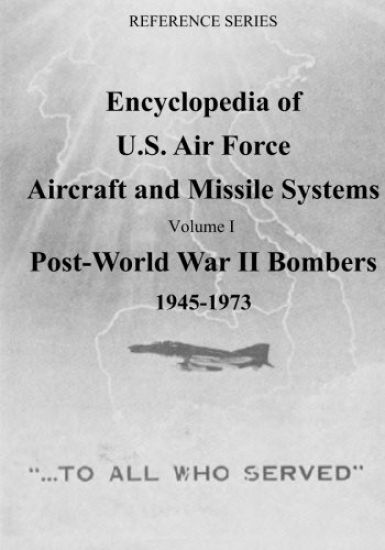
Encyclopedia of U.S. Air Force Aircraft and Missile Systems: Post-World War II Bombers 1945-1973

Encyclopedia of U.S. Air Force Aircraft and Missile Systems: Post-World War II Bombers 1945-1973

U. S. Air Force; Office of Air Force History

Createspace Independent Publishing Platform
2015
nidottu
The second in a series of encyclopedias of U. S. Air Force aircraft and missile systems, this volume covers the development and fielding of bomber aircraft between 1945 and 1973, commencing with the Convair B-36 Peacemaker and ending with the development of the Rockwell International B-1A. Marcelle Knaack's detailed and comprehensive discussion of each bomber type provides a wealth of technical material painstakingly extracted from official Air Force sources. The researcher will find the informationreadily available and easy to use. Equally critical to our understanding of bomber development, however, is the author's treatment of the policy issues and the technological decisionsthat molded each bomber program. During the postwar years, the nation's emerging nuclear capabilities placed new emphasis on developing bombers capable of delivering the atomic weapon. Subsequent military needs in Korea and Southeast Asia, however, required a return to conventional weapons. New technologies continually spawned modifications in the weapons systems. And throughout, the Air Force adapted developmental programs and modified production aircraft to fit new roles, from strategicreconnaissance to tactical operations for the Southeast Asia theater. These pages contain essential data for a wide spectrum of audiences inside and outside the U. S. Air Force. Mrs. Knaack's exacting research and her ability to translate difficult and often conflicting documentation into clear and concise capsule histories will enable planners and those engaged in the research and development of aircraft to benefit from the Air Force's experience. As she points out, the success of the postwar bomber program has been the result of the Air Force's willingness to consider several different developmental pathways simultaneously, to modify existing aircraft astechnology permits, and above all, to assume continually the development risks required to keep the service at the forefront of technology.
Encyclopedia of U.S. Air Force Aircraft and Missile Systems: Post-World War II Bombers 1945-1973: Volume I

Encyclopedia of U.S. Air Force Aircraft and Missile Systems: Post-World War II Bombers 1945-1973: Volume I

U. S. Air Force; Office of Air Force History

Createspace Independent Publishing Platform
2015
nidottu
This publication is the first of a multi-volume Encyclopedia of U. S. Air Force Aircraft and Missile Systems. Volume I deals with the development, deployment, and operations of fighter aircraft between 1945 and 1973, commencing with theF-80 Shooting Star and ending with the development of the F-15 Eagle. Many of these aircraft were employed during the Korean War, the war in Southeast Asia, and during cold war crises throughout the world. Additional volumes to be published in this series will cover Air Force bombers, transports, trainers, other military aircraft, and missile systems.
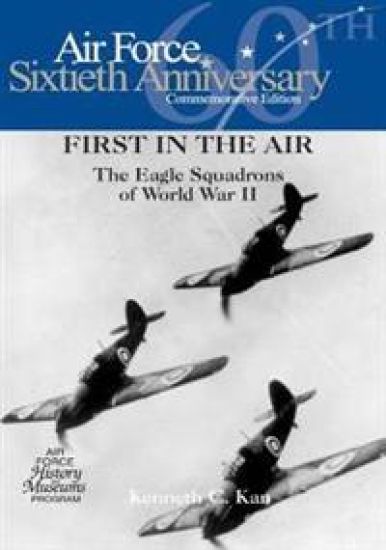
First in the Air: The Eagle Squadrons of World War II

First in the Air: The Eagle Squadrons of World War II

U. S. Air Force; Office of Air Force History

Createspace Independent Publishing Platform
2015
nidottu
During the perilous years of 1940-1941, a small band of Americans joined the Royal Air Force to help England resist Nazi Germany. They did so while the United States remained a neutral power and overcame significant obstacles to accomplish their objective. Over time, the RAF formed three fighter units, known collectively as the Eagle Squadrons, around these volunteer pilots. TheseAmericans flew alongside their British comrades in fighter and bomber escort missions until 1942, when they transferred into the United States Army Air Forces. The Eagle Squadron pilots made noteworthy contributions to the RAF, assisting them in their transition from fighting a defensive war to waging an offensive campaign against the German Luftwaffe and helping pave the way to aneventual Allied victory.
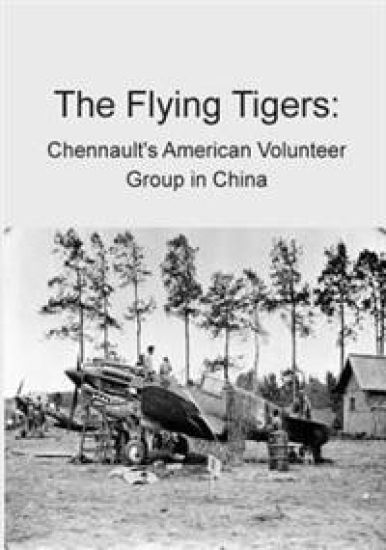
The Flying Tigers: Chennault's American Volunteer Group in China

The Flying Tigers: Chennault's American Volunteer Group in China

U. S. Air Force; Office of Air Force History

Createspace Independent Publishing Platform
2015
nidottu
They volunteered. For a variety of reasons-patriotic, altruistic, mercenary, or just "for the hell of it"-nearly three hundred U. S. servicemen and a couple of female nurses volunteered to fight a war in a place they knew little about. Recruited at military bases around the country, the members of the American Volunteer Group (AVG) set off for the unknown in the summer and fall of 1941. While U. S. support for the Allied cause was growing at a steady pace, mostAmericans still felt distanced from the conflict enveloping Europe and Asia and did not want to go to war. At the highest levels of the government, however, entering thewar appeared inevitable. The AVG was one way of gaining experience in this vicious war, while increasing support for the nations fighting the Axis powers. Despite incredible odds against them from numerically superior Japanese forces and a near complete lack of supply and replacement parts, they took the first successful fight to the Japanese during a time of Japan's unrelenting successes. Itwas not pretty, and their legend has eclipsed the reality, but the reality of the AVG is still an amazing story. Led by Claire Lee Chennault, they made history.
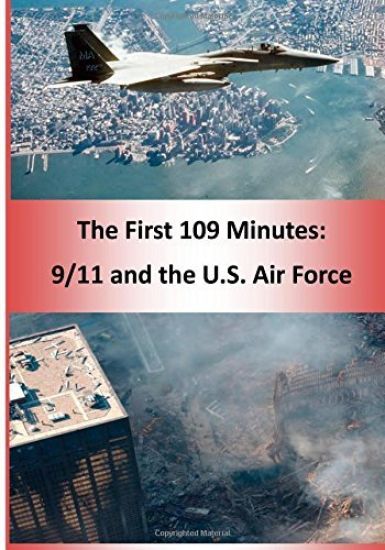
The First 109 Minutes: 9/11 and the U.S. Air Force (Color)

The First 109 Minutes: 9/11 and the U.S. Air Force (Color)

U. S. Air Force; Office of Air Force History

Createspace Independent Publishing Platform
2015
nidottu
On September 11, 2001, the North American Aerospace Defense Command, based at Peterson Air Force Base, Colorado, under the command of Gen. Ralph E. Eberhart, oversaw three air defense regions, which were responsible for protecting the airspace over Alaska, Canada, and the continental United States. The last of these, the Continental United States NORAD Region (CONR), under the command of the dual-hatted commander of First Air Force, Maj. Gen. Larry K. Arnold, oversaw the Northeast, the Western, and the Southeast Air Defense Sectors. The locations of the departures, flight paths, and crash sites of the four aircraft hijacked on September 11, 2001, were all in the Northeast Air Defense Sector, commanded by Col. Robert K. Marr (see Diagram, NORAD Air DefenseStructure on 9/11, p 53). On September 11, 2001, the responsibility for defending continental U. S. airspace rested with only fourteen fighter aircraft at seven air defense alert sites across the country. Based in Rome, New York, the Northeast Air Defense Sector had only two alert sites on which to call-Otis Air National Guard Base in Cape Cod, Massachusetts, and Langley Air Force Base in Hampton, Virginia. Each site had two designated alert fighters on duty twenty-four hours a day, seven days a week. Many other fighter aircraft were based across the country, but they were not NORAD assets, and it would take time to arm them and organize their crews.
Generations of Service

Generations of Service

U. S. Air Force; Office of Air Force History

Createspace Independent Publishing Platform
2015
nidottu
In this short study you will meet several such families, and you will learn about their relationships and the reasons some have seen a clear path that has been forged by the generations ahead of them. Myriad reasons motivate these multiple generations of Airmen, some of which are clearly expressed, while others are just felt: honor, pride, responsibility, patriotism, courage. The author herself is experiencing the family tie of common service: she served as an active duty, now reserve, officer; her husband served as an active duty enlisted man and officer and is now an Air Force civilian. Her grandfathers served during World War II, Korea, and Vietnam; and as of the writing of this foreword, her brother-in-law is in the process of enlisting. Generational succession, legacies if you will, are certainly not unusual in the Air Force, or the other services for that matter. The twenty-one families you will meet in the pamphlet only scratch the surface. They represent a much larger body-one that serves the nation, subordinates its personal desires to the greater good, and makes history every day. We are confident you will find their stories interesting and uplifting.
Great Game to 9/11: A Concise History of Afghanistan's International Relations

Great Game to 9/11: A Concise History of Afghanistan's International Relations

U. S. Air Force; Office of Air Force History

Createspace Independent Publishing Platform
2015
nidottu
Great Game to 9/11 was initially begun as an introduction for a larger work on U. S./coalition involvement in Afghanistan. It provides essential information for an understanding of how thisisolated country has, over centuries, become a battleground for world powers. Although an overview, this study draws on primary sourcematerial to present a detailed examination of U. S.-Afghan relations prior to Operation Enduring Freedom.