Kirjojen hintavertailu – 12 859 829 kirjaa ja 27 kauppaa

Kirjailija

U. S. Army War College Press

Kirjat ja teokset yhdessä paikassa: 69 kirjaa, julkaisuja vuosilta 2014–2017, suosituimpiin kuuluu Islamism and Security in Bosnia-Herzegovina. Vertaile teosten hintoja ja tarkista saatavuus suomalaisista kirjakaupoista.

Nimi esiintyy myös muodoissa: U.S. Army War College Press

69 kirjaa

Kirjojen julkaisuvuodet: 2014–2017.

Preparing for War? Moscow Facing an Arc of Crisis

Preparing for War? Moscow Facing an Arc of Crisis

Strategic Studies Institute; U. S. Army War College Press; Andrew Monaghan

Createspace Independent Publishing Platform
2017
nidottu
Russia is once again at the front and center of the security agenda of the United States. With many now seeing Russia as one of the most important threats, if not the number one threat to the United States and its allies, there is much debate about how to counter possible threats, where Russia might strike next, and how to deter Russian aggression. The war in Ukraine and Russia's intervention in Syria, combined with its extensive program of exercising for war, lends policy urgency to this debate. In this Letort Paper, Dr. Andrew Monaghan, a Brit¬ish academic and long-term scholar of Russia based at Chatham House in London, reflects on the view from Moscow. In so doing, he illustrates the increasingly obvious gulf in how security is perceived in Western capitals and in Moscow. Importantly, he emphasizes that the Russian leadership faces numerous doubts and difficulties-to include doubting that, in Clause¬witzian terms, Russia is able to withstand the test of war. This is both the root of the emergency measures that the Russian leadership is implementing across the system, from the economy to the political system and the military, and the root of the major investment pro¬gram to modernize the military that was under way even before the Ukraine crisis erupted in 2014 and led to a sharp deterioration in Russia's relations with the United States and the West more broadly. This Letort Paper also serves to complement and even supersede the debate in the West about Russian "hybrid" war by looking at Russian actions through the lens of state mobilization, drawing attention to important features of Russia's evolving conventional warfighting capacity.
Female Suicide Bombers

Female Suicide Bombers

Strategic Studies Institute; U. S. Army War College Press

Createspace Independent Publishing Platform
2015
nidottu
Suicide bombers are today's weapon of choice. Terrorists are using suicide bombers because theyare a low cost, low technology, and low risk weapon. Suicide bombers are readily available, require little training, leave no trace behind, and strike fear into the general population. The success of suicide bombers depends upon an element of surprise, as well as accessibility to targeted areas or populations. Both of these required elements have been enjoyed by women suicide bombers. Female suicide bombers were used in the past; however, the recent spate of them in different venues, in different countries, and for different terrorist organizations forces us to study this terrorist method. This book reviews historical female suicide bombers, focuses on female suicide bombercharacteristics, analyzes recent changes in application by various terrorist organizations, and provides implications of change within a strategic assessment of future female suicide bombings.
Strategic Implications of the Evolving Shanghai Cooperation Organization

Strategic Implications of the Evolving Shanghai Cooperation Organization

Strategic Studies Institute; U. S. Army War College Press

Createspace Independent Publishing Platform
2015
nidottu
Key points from this analysis include: - The Shanghai Cooperation Organization (SCO)is an enduring association which was originallybrought together by the short-term border securityinterests of its first five members.- Russia believes it plays a leading role in the SCO;in fact, however, the organization is and alwayshas been driven by China, and Moscow's role isvital but secondary. The other member states, former Central Asian Soviet republics with nohistory of modern statehood or governance, arenot equal partners-but their geostrategic locationand, in some cases, natural resources makethem potentially valuable allies for the UnitedStates and other major powers.- The SCO is unlikely to enlarge further. Sinceits inception, the SCO has received several applications for membership. However, any enlargement of the organization could be fraughtwith difficulties, mainly because of conflicts ofinterest between China and Russia and the fearby member states that some new candidates arepotential international liabilities and may createfurther conflict within the organization.
Russia's Contribution as a Partner in the War on Terrorism

Russia's Contribution as a Partner in the War on Terrorism

U. S. Army War College Press; Strategic Studies Institute

Createspace Independent Publishing Platform
2015
nidottu
Until the end of the Cold War, terrorism wasa phenomenon practically unknown in the SovietUnion. The chaotic disappearance of theUnion of Soviet Socialist Republics (USSR)resulted, among other developments, in twowars in North Caucasus and subsequent wavesof terrorism in the region and terrorist attacksin Moscow. The demise of the USSR also weakenedthe organizations responsible for the securityand law and order of Russia-a phenomenonrarely understood in the West.- Russia and the United States are the prioritytargets for many radical Islamic groups. Thetwo countries should be able, in theory at least, to cooperate closely against many terroristgroups. However, several issues, which eachcountry sees as important, make this cooperationvery difficult and occasionally impossible.- In the post-communist, unipolar world, theUnited States was the dominant power, whichpaid little attention to the views and opinionsof other countries. This attitude was particularlystrongly resented in Russia, accustomedto its status of an equal security and militarypower. The United States failed to appreciatethe changes in the Russian Federation and stilldoes not always accept that repetitive publiccriticism of Russia's democratic deficit can becounterproductive.(NOTE: This monograph was written before the 2014 Winter Games at Sochi, Russia.)
Visual Propaganda and Extremism in the Online Environment

Visual Propaganda and Extremism in the Online Environment

Strategic Studies Institute; U. S. Army War College Press

Createspace Independent Publishing Platform
2015
nidottu
Most of the papers included in this volume, except for the editor's introduction, come from the conference on Visual Propaganda and Online Radicalization hosted in 2012 by Georgia State University in conjunction with the U. S. Army War College. They all speak to the power of visual images, particularly in the online environment, and the sophistication with which a variety of extremist and terrorist groups have adapted to the online environment, particularly through the use of powerful visual images. The strategic point made in these essays, and which serves as a unifying theme throughout the collection, is that weaker forces use these materials to great effect, and to even greater effect when we either underestimate the power of visual images or fail to develop effective counters. The unique value offered by these essays is to lay out clearly the ways in which images work for extremist groups, and to begin the process of developing effective strategies for responding. As the editors make clear, there is an extensive literature available establishing that when compared to text (or words heard over an audio track), images are remembered better, over a longer period of time, and with greater emotional power, having commanded more attention initially. This is true for moving and still images.
Cyberterrorism After Stuxnet

Cyberterrorism After Stuxnet

Strategic Studies Institute; U. S. Army War College Press

Createspace Independent Publishing Platform
2015
nidottu
Terrorists are known to use the Internet for communications, planning, recruitment, propaganda, and reconnaissance. They have shown interest in carrying out cyberattacks on U. S. critical infrastructures, although no such serious attacks are known publicly to have occurred. The discovery of the Stuxnet malware in July 2010, and its analysis over the next several months, was widely believed to have been a landmark event in cybersecurity, because it showed that cyberattacks against industrial control systems, hypothesized for a long time, are actually possible. After Stuxnet, there were public concerns that terrorists might be encouraged to acquire capabilities for similar cyberattacks. This book examines cyberterrorism before and after Stuxnet by addressing questions of:1. Motive-Are terrorists interested in launching cyberattacks against U. S. critical infrastructures?2. Means-Are terrorists building capabilities and skills for cyberattacks?3. Opportunity-How vulnerable are U. S. critical infrastructures? It is noted that no serious cyberterrorism attacks have occurred after Stuxnet. This can be explained from a cost-benefit perspective that has not changed since Stuxnet. It can be argued that U. S. policies can really address vulnerabilities only by strengthening defenses of critical infrastructures.
The U.S. - India Relationships: Cross-Sector Collaboration to Promote Sustainable Development

The U.S. - India Relationships: Cross-Sector Collaboration to Promote Sustainable Development

Strategic Studies Institute; U. S. Army War College Press

Createspace Independent Publishing Platform
2015
nidottu
Over the past 2 decades, the global system has been subject to a range of forces which have reconfigured relationships among individuals, organizations, and nation-states. As an aspect of that changing structure and rising interdependence, many security challenges which confront today's strategic leaders are grounded in concerns about economic, social, and environmental sustainability, and, in turn, about political stability. Furthermore, with increasing frequency, many observers are concluding that those types of challenges cannot be addressed by stakeholders from any single sector. That insight has prompted calls for collaborative efforts involving citizen groups; for-profit and not-for-profit companies; local, regional, and national governments; and intergovernmental organizations. Nevertheless, initiating and managing a cross-sector collaborative initiative is a difficult undertaking. It requires a broad range of skill sets, including the ability to think in system terms; help various participants articulate their respective interests and find common ground; marshal resources; create processes and structures that will enable collaboration; establish baselines; and celebrate progress. Acquiring those types of skills is relevant to strategic leaders in all professions, including those in the defense and security communities. This volume reflects the proceedings of a workshop held in Carlisle, PA, in March 2013, that brought together a diverse group of scholars and practitioners from India and the United States who were both deeply knowledgeable and highly experienced in their respective fields; who regarded sustainable development as a critical challenge for the future; and who, at some level, had begun to experience the challenges of participating in cross-sector collaborations. The purpose of this volume is to summarize the ideas shared by those professionals, in hope they will serve as a stimulus to further conversation and research about an increasingly important set of matters.
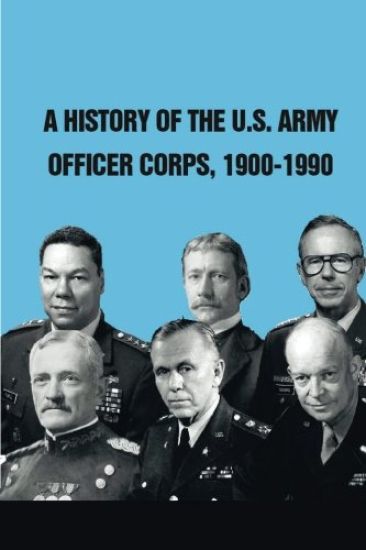
A History of The U.S. Army Officer Corps, 1900-1990

A History of The U.S. Army Officer Corps, 1900-1990

U. S. Army War College Press; Strategic Studies Institute

Createspace Independent Publishing Platform
2015
nidottu
With the assistance of the Strategic Studies Institute of the U. S. Army War College, the Army's Office of Economic and Manpower Analysis published a series of monographs that were intended to provide a theoretical and conceptual framework for the development of an Army Officer Corps Strategy. These monographs consider the creation and maintenance of a highly skilled Officer Corps in the context of the nation's continuing commitment to an all-volunteer military, its far flung international interests, and ongoing changes in its domestic labor market. The authors of the various monographs believe that the confluence of these factors demands a comprehensive Officer Corps strategy that recognizes the interdependency of accessing, developing, retaining, and employing talent. In their view, building a talent-focused strategy around this four-activity human capital model would best enable the Army to match individual officer competencies to specific competency requirements. Dr. Arthur Coumbe of the Office of Economic and Manpower Analysis has prepared a monograph that provides a historical overview of the Army Officer Corps and its management in the modern era. Like the earlier monographs, this volume is organized around what the Office of Economic and Manpower analysis see as the functionally interdependent concepts of accessing, developing, retaining, and employing talent. This book is a prologue to the earlier monographs that begin their story in the late-1980s.
Towards A U.S. Army Officer Corps Strategy for Success: A Proposed Human Capital Model Focused Upon Talent

Towards A U.S. Army Officer Corps Strategy for Success: A Proposed Human Capital Model Focused Upon Talent

Strategic Studies Institute; U. S. Army War College Press

Createspace Independent Publishing Platform
2015
nidottu
The Strategic Studies Institute has published a 6-part Officer Corps Strategy Series analyzing the development of an officer corps strategy. This book, the first in the series, highlightsthe importance of accessing, developing, retaining, and employing talented leaders. Creating and maintaining a highly competent U. S. Army Officer Corps has always been the cornerstone of the nation's defense. Colonel Casey Wardynski, Major David S. Lyle, and Lieutenant Colonel (Ret.) Michael J. Colarusso consider America's continuing commitment to an all-volunteer military, its global engagement inan era of persistent conflict, and evolving changes in its domestic labor market. They argue that the intersection of these factors demands a comprehensive Officer Corps strategy recognizing the interdependency of accessing, developing, retaining and employing talent. In their view, building a talent-focused strategy around this four-activity human capital model will best posturethe Army to match individual officer competencies to specific competency requirements. Such a strategy will enable the thoughtful anddeliberate integration of resources, policies, andorganizations to employ "the right talent in the right job at the right time." The authors conclude that without such a talent-focused strategy, the Army and its Officer Corps confront the increasing likelihood that they will be unequal to future American national security demands.
Regionalizing East Mediterranean Gas: Energy Security, Stability, and the U.S. Role

Regionalizing East Mediterranean Gas: Energy Security, Stability, and the U.S. Role

U. S. Army War College Press; Strategic Studies Institute

Createspace Independent Publishing Platform
2015
nidottu
The East Mediterranean has been witnessing an unparalleled natural resource boom since the late-2000s, when Israel, followed by Cyprus, made its first significant offshore hydrocarbon discoveries in many years. These discoveries have since proven to be substantially larger than any other resources previously explored in the East Mediterranean Sea. A 2010 U. S. Geological Survey suggests the Levant basin-the area including Cyprus and Israel's offshore zones, and the offshore and some onshore territories of Syria, Lebanon, and the Palestinian Territories-could hold as many as 1.7 billion barrels of oil and up to 122 trillion cubic feet (tcf) of natural gas, leaving as much as two thirds of the region's potential resource base still undiscovered. This book provides an overview of recent hydrocarbon discoveries and their significance for the region's resource holders; it also explores the possible implications of these resources for the region's security landscape, their potential to fuel conflict, and options to foster closer regional cooperation and trade integration. It discusses the role U. S. diplomacy and military support could play to ensure continued stability, security, and regional support within the East Mediterranean's shifting geoeconomic framework.
Youtube War: Fighting in a World of Cameras in every Cell Phone and Photoshop on every Computer

Youtube War: Fighting in a World of Cameras in every Cell Phone and Photoshop on every Computer

Strategic Studies Institute; U. S. Army War College Press

Createspace Independent Publishing Platform
2015
nidottu
There is a vast literature on the potential for newtechnologies to create a Revolution in Military Affairs or "networked warfare," but that is a discussion of the impact of military technology on the way the force itself can be used. Today there is a question regarding the impact of new communication and information technologies in the hands of civilians-some of whom are combatants-on the environment in which the force will be used. This book argues that the impact of these technologies has been, and will be, great enough that the way they are shaping the battlefield needs to be understood. Waging war against terrorists (or insurgents using a terrorist playbook) is a qualitatively different enterprise from earlier wars. By definition, terrorists are too weak to fight successful conventional battles. They fight to shape the perceptions and attitudes of the public-abattle over the public's will to continue fighting, whether that is the indigenous public insurgents seek to intimidate or the domestic American public they seek to influence so as to force counterinsurgents to withdraw from the battlefield prematurely. And in the modern world, this will be a battle to shape media coverage
European Missile Defense and Russia

European Missile Defense and Russia

Strategic Studies Institute; U. S. Army War College Press

Createspace Independent Publishing Platform
2015
nidottu
When U. S. President Barack Obama cancelled ascheduled September 2013 summit meeting with his Russian counterpart, Vladimir Putin, "lack of progress on issues such as missile defense" was cited as the primary justification. Despite widespread and well founded assumption that the real trigger for the cancellation was the Russian decision to offer temporary asylum to Edward Snowden, the citing of missile defense was indicative. The comment marked one of theperiodic plateaus of mutual frustration between theUnited States and Russia over U. S. attitudes to missile defense capability, stemming from a continued failure to achieve meaningful dialogue over U. S. plans and Russian fears. Russia's vehement objections to U. S. plans for missile defense installations in Europe, and the range of unfriendly actions promised in response, are often portrayed as irrational, the arguments technically flawed, the behavior deliberately obstructive, and the underlying threat perception hopelessly out of date. Yet an examination of the missile defense relationship between Russia and the United States over time shows that the fundamental Russian concerns stem from ideas of state security which, while discounted elsewhere, remain valid in the Russian security calculus. The fundamentally different weight and importanceattached by Russia to nuclear weapons as botha guarantee and a symbol of statehood can be challenging for U. S. observers to grasp, but it is critical to understanding those Russian statements that do not, at first sight, make rational sense to U. S. policymakers. Furthermore, while the current Russian proposals for compromise-at least those stated in public-are wholly unrealistic, bear in mind that some of the security considerations behind them, at various times, have been both shared and voiced by the United States. This book will examine the historical precedents for the current missile defense impasse, in order to explain the Russian attitude, and draw conclusions about both the most recent developments in the conversation between the United States and Russia and its likely further progress and prospects, if any, for a resolution.
A New Type of Great Power Relationship between the United States and China: The Military Dimension

A New Type of Great Power Relationship between the United States and China: The Military Dimension

Strategic Studies Institute; U. S. Army War College Press

Createspace Independent Publishing Platform
2015
nidottu
The relative rise of China is likely to lead a majorshift in the world's strategic architecture, which theUnited States will need to accommodate. For the outcome to be generally beneficial, China needs to be dissuaded from hegemonic aspirations and retained as a cooperative partner in the world system. This will require a range of potentially conflicting thrusts in U. S. policy. Since the Asia-Pacific Region is primarily a maritime theater, the U. S. Navy, Marines, and Air Force will need to play a leading role. The U. S. Army, nonetheless, will have a substantial supporting and facilitating role.
Towards A U.S. Army Officer Corps Strategy for Success: Retaining Talent

Towards A U.S. Army Officer Corps Strategy for Success: Retaining Talent

U. S. Army War College Press; Strategic Studies Institute

Createspace Independent Publishing Platform
2015
nidottu
The U. S. Army has made significant investmentsin its future, especially in its leadership. In particular, the Army has devoted billions of dollars to officer undergraduate-level education, world class training, and developmental experiences. Since the late 1980s, however, prospects for the Officer Corps' future have been darkened by an ever-diminishing return on this investment, as evidenced by plummeting company gradeofficer retention rates. Significantly, this leakageincludes a large share of high-performing officers, many of them developed via a fully-funded undergraduate education. In the last few years, the Army has responded to this challenge with unprecedented retention incentives, to include broadly offered cash payments. The objective has been to retain as many junior officers on active duty as possible. However, such quantity-focused incentive programs run counter to a talent-focusedOfficer Corps strategy. The objective should not bemerely to retain all officers, but to retain talentedofficers while simultaneously culling out those lacking distributions of skills, knowledge, and behaviors in demand across the force. Retaining sufficient rather than optimally performing officers may have dire consequences for the Army'sfuture. New officer cohorts of high-potential talentmay be driven away by the prospects of serving under lackluster leadership, while those continuing their service may experience stunted development due to a dearth of talented mentors