Kirjojen hintavertailu – 12 903 724 kirjaa ja 27 kauppaa

Kirjailija

U. S. Department of Homeland Security

Kirjat ja teokset yhdessä paikassa: 302 kirjaa, julkaisuja vuosilta 2008–2019, suosituimpiin kuuluu Wildlands Fire Management: Federal Policies and Their Implications for Local Fire Departments. Vertaile teosten hintoja ja tarkista saatavuus suomalaisista kirjakaupoista.

Nimi esiintyy myös muodoissa: U.S. Department of Homeland Security, U S Department of Homeland Security

302 kirjaa

Kirjojen julkaisuvuodet: 2008–2019.

Small Vessel Security Strategy

Small Vessel Security Strategy

U. S. Department of Homeland Security

Createspace Independent Publishing Platform
2014
nidottu
Since the terrorist attacks of September 11, 2001, maritime security efforts have focused primarily on large commercial vessels, cargoes, and crew. Efforts to address the small vessel environment have largely been limited to traditional safety and basic law enforcement concerns. Small vessels are, however, readily vulnerable to potential exploitation by terrorists, smugglers of weapons of mass destruction (WMDs), narcotics, aliens, and other contraband, and other criminals. Small vessels have also been successfully employed overseas by terrorists to deliver Waterborne Improvised Explosive Devices (WBIEDs). Law enforcement agencies face the challenge of distinguishing between the vast number of legitimate vessel operators and the relatively few individuals engaged in illicit activities. The challenge is immense, as it involves nearly 13 million registered U. S. recreational vessels, 82,000 fishing vessels, and 100,000 other commercial small vessels. On any given day, a considerable number of these boats share waterways with commercial and military traffic, operating at hundreds of U. S. ports and in the immediate vicinity of critical maritime infrastructure, including bridges and waterfront facilities such as petrochemical plants. More information concerning small vessels is needed to improve the proper assessment of the risk posed by these vessels. The challenge is to balance the collection of requisite information necessary for proper assessment of risk posed by these vessels, with the freedom of the seas expected by the small boating community.
Guide for Developing High-Quality School Emergency Operations Plans

Guide for Developing High-Quality School Emergency Operations Plans

U. S. Department of Justice; U. S. Department of Homeland Security; U. S. Department of Education

Createspace Independent Publishing Platform
2014
nidottu
Each school day, our nation's schools are entrusted to provide a safe and healthy learning environment for approximately 55 million elementary and secondary school students in public and nonpublic schools. Families and communities expect schools to keep their children and youths safe from threats (human-caused emergencies such as crime and violence) and hazards (natural disasters, disease outbreaks, and accidents). In collaboration with their local government and community partners, schools can take steps to plan for these potential emergencies through the creation of a school Emergency Operations Plan (school EOP). Lessons learned from school emergencies highlight the importance of preparing school officials and first responders to implement emergency operations plans. By having plans in place to keep students and staff safe, schools play a key role in taking preventative and protective measures to stop an emergency from occurring or reduce the impact of an incident. Although schools are not traditional response organizations, when a school-based emergency occurs, school personnel respond immediately. They provide first aid, notify response partners, and provide instructions before first responders arrive. They also work with their community partners, i.e., governmental organizations that have a responsibility in the school emergency operations plan to provide a cohesive, coordinated response. Community partners include first responders (law enforcement officers, fire officials, and emergency medical services personnel) as well as public and mental health entities. We recommend that planning teams responsible for developing and revising school EOPs use this document to guide their efforts. It is recommended that districts and individual schools compare existing plans and processes against the content and processes outlined in this guide. To gain the most from it, users should read through the entire document prior to initiating their planning efforts and then refer back to it throughout the planning process.
Public Assistance Applicant Handbook

Public Assistance Applicant Handbook

U. S. Department of Homeland Security

Createspace Independent Publishing Platform
2014
nidottu
When disasters and emergencies occur, the magnitude of work can seem overwhelming. Often, the work is different from the work you usually accomplish, and there is a tremendous amount of it. You must address these events whether Federal assistance is available or not. While FEMA is not able to help you with all of your costs in a Presidentially declared major disaster or emergency, FEMA is able to help with some of them. The most immediate source to help with response and recovery is your own force account labor, materials, and equipment. They are within your authority and available to you. In a Presidentially declared event, some of your labor, materials, and equipment costs will be eligible for cost-shared FEMA assistance. Your State may provide labor, materials, equipment, and funds for your response and recovery efforts under State Emergency Plans whether Federal assistance is available or not. Other jurisdictions and agencies may also come to your aid under mutual aid agreements whether Federal assistance is available or not. If the purpose and provisions of the mutual aid agreements comply with FEMA policy, reasonable costs generally will be eligible for cost-shared FEMA assistance in a Presidentially declared event. If your needs exceed your local capabilities, you may use contracts to get the work done. Consider Federal, State, and local procurement requirements when procuring goods and services through contracts. If the work is reasonable and necessary and if contracts are awarded according to FEMA requirements, the costs generally are eligible for cost-shared FEMA assistance. Donations of labor, materials, and equipment can also help with emergency work. If you keep records (hours worked, the work site, description of work, etc.) of what was donated, you may also use such donations toward your portion of any cost-share for other emergency work.
Know Before You Go: Regulations for International Travel by U.S. Residents

Know Before You Go: Regulations for International Travel by U.S. Residents

U. S. Department of Homeland Security

Createspace Independent Publishing Platform
2014
nidottu
All persons including citizens of the United States traveling by air between the U. S., Canada, Mexico, the Caribbean and Bermuda will have to present a passport, Merchant Mariner Document (presented by U. S. citizen merchant mariners traveling on official business) or NEXUS Card, NEXUS enrollment is limited to citizens of the United States and Canada, and lawful permanent residents of the United States and Canada. Children will be required to present their own passport. Beginning June 1, 2009, ages 16 and older will be required to present documents from one of the options below when entering the United States at land or sea ports of entry. Children under may present an original or copy of his or her birth certificate, a Consular Report of Birth Abroad, or a Naturalization Certificate.
National Incident Management System: Intelligence/Investigations Function Guidance

National Incident Management System: Intelligence/Investigations Function Guidance

U. S. Department of Homeland Security

Createspace Independent Publishing Platform
2014
nidottu
The National Incident Management System (NIMS) represents a core set of doctrine, concepts, principles, terminology, and organizational processes that enables effective, efficient, and collaborative incident management. The Incident Command System (ICS), as a component of NIMS, establishes a consistent operational framework that enables government, private sector, and nongovernmental organizations to work together to manage incidents, regardless of cause, size, location, or complexity. This consistency provides the foundation for the use of ICS for all incidents, ranging from daily occurrences to incidents requiring a coordinated Federal response. Many domestic incidents, such as natural disasters or industrial accidents, have an obvious cause and origin. However, other domestic incidents, such as large-scale fires, public health emergencies, explosions, transportation incidents (e.g., train derailments, airplane crashes, bridge collapses), active shooters, terrorist attacks, or other incidents causing mass injuries or fatalities, require an intelligence or investigative component to determine the cause and origin of the incident and/or support incident/disaster operations. The scalability and flexibility of NIMS allows the Intelligence/Investigations (I/I) Function to be seamlessly integrated with the other functions of ICS. The I/I Function within ICS provides a framework that allows for the integration of intelligence and information collection, analysis, and sharing, as well as investigations that identify the cause and origin of an incident regardless of source. If the incident is determined to be a criminal event, the I/I Function leads to the identification, apprehension, and prosecution of the perpetrator. The I/I Function can be used for planned events as well as incidents. This document includes guidance on how various disciplines can use and integrate the I/I Function while adhering to NIMS concepts and principles. It includes information intended for the NIMS practitioner (including the Incident Commander/Unified Command IC/UC]) that assists in the placement of the I/I Function within the command structure; provides guidance that may be used while implementing the I/I Function; and has an accompanying Intelligence/ Investigations Function Field Operations Guide (I/I FFOG). While this document provides an example of the I/I Function at the Section level, the IC/UC has the final determination of the scope and placement of the I/I Function within the command structure. The guidance provided in this document is applicable for both domestic incidents that use conventional unclassified information (e.g., open source information, criminal histories, medical records, or educational records)1 and terrorism incidents where information is often classified and requires the use of national intelligence capabilities.
The Citizen's Almanac

The Citizen's Almanac

U. S. Citizenship and Immigration Servic; U. S. Department of Homeland Security

Createspace Independent Publishing Platform
2014
nidottu
Publication highlighting prominent foreign-born Americans, presidential quotes on citizenship, patriotic songs and poems, and several of our essential founding documents.
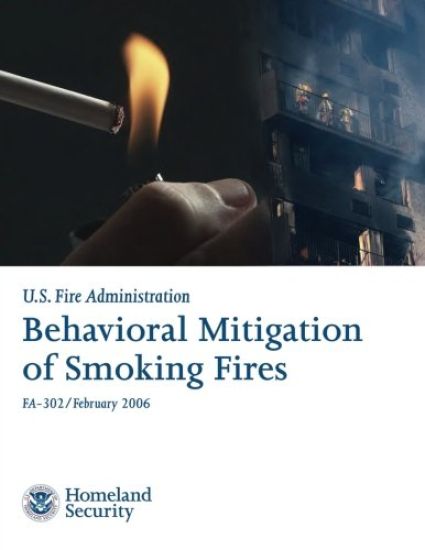
Behavioral Mitigation of Smoking Fires

Behavioral Mitigation of Smoking Fires

U. S. Fire Administration; U. S. Department of Homeland Security

Createspace Independent Publishing Platform
2013
nidottu
Fires started by lighted tobacco products, principally cigarettes, constitute the leading cause of residential fire deaths. The U. S. Fire Administration (USFA) has partnered with the National Fire Protection Association (NFPA) "to research what types of behaviors cause smoking fire fatalities and develop sound recommendations for behavioral mitigation strategies to reduce smoking fire fatalities in the United States...." The scope of the study included all lighted tobacco products, but cigarettes account for nearly all consumption and fires. Lighting implements such as matches and lighters were not included. Most fires involving these objects occur during incendiarism or fireplay. An extensive literature review on behaviors related to smoking, or to fires or fatalities due to smoking-material fires was conducted to provide the broadest possible fact base for recommendations. In addition, data were collected from: - analysis of the 1980 to 2001 U. S. smoking-material fire problem, using The National Fire Incident Reporting System (NFIRS) national estimates; - analysis of several hundred 1997 to 1998 fatal smoking-material fires, not necessarily representative but documented in greater detail in NFPA's major fires database called the Fire Incident Data Organization (FIDO); - analysis of other risk factors correlated with smoking, based on the U. S. Centers for Disease Control and Prevention (CDC) Behavioral Risk Factor database for 2002.
Attacking the Violent Crime of Arson: A Report on America's Fire Investigation Units

Attacking the Violent Crime of Arson: A Report on America's Fire Investigation Units

U. S. Fire Administration; U. S. Department of Homeland Security

Createspace Independent Publishing Platform
2013
nidottu
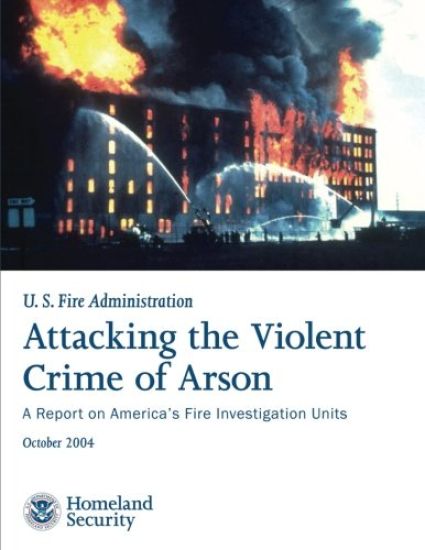
This report compiles the best practices and common problems of fire protection and criminal justice agencies in identifying, investigating, prosecuting, and preventing arson. Commonly, the crime of arson is motivated by spite and revenge. Perpetrators strike with fire at buildings where people live, work, or socialize-causing injury, property loss, and death. Civilians and firefighters alike die in arson fires every year. Thirty years ago, arson captured media attention because so-called arson-for-profit rings were burning down decaying urban neighborhoods that had ceased to be profitable, and then rebuilding them at a substantial profit. Other high-profile cases involved arsonists who were connected to gangs and drug lords, and who set fires to intimidate their rivals or as retribution for deals gone bad. Some of the most publicized cases occurred in the cities of New York, Boston, Houston, Los Angeles, Miami, Baltimore, and others. There even were situations where neighborhood vigilantes, who were frustrated with crime and run-down buildings, took it upon themselves to torch structures to rid the neighborhood of vagrants, prostitutes, and drug dealers. Insurance companies were perceived as the main victims from intentional fires. As a crime com¬mitted against property, the economics of arson played center stage to the less well-defined statistics on injuries and deaths. Since arson fires do, on average, cause proportionately higher losses than fires from other causes, insurance companies committed many resources toward investigation and control. From establishing tip reward programs, training accelerant detection canines (ADC's), supporting arson reporting immunity legislation, and establishing the property insurance loss register (PILR), the insurance industry was a strong partner at that time. There is a dichotomy between arson as a property crime and arson as a crime against people, and that lies at the heart of today's challenges with cases of arson. As a crime, arson's long-standing definition as the willful and malicious burning of property does not do justice to the fact that today arson is usually a personal crime that is directed intentionally against specific victims. It is time for arson to be dealt with as a violent crime against persons, not just a crime against property. Today, spite and revenge dominate as the motives in intentional property fires, especially where there are casualties. Revenge-minded arsonists torch nightclubs, occupied residences, hotels, and other settings where their intended victims, and often other innocent people, are injured and killed. First responders get injured or die battling these blazes and trying to save others. Even though a portion of incendiary fires are motivated by other reasons (e.g., excitement, economic relief, peer pressure, a cry for help, and so forth) most set fires happen because someone wanted to inflict harm on another person using fire as the weapon of choice. Fire investigation units from The U. S. Fire Administration's (USFA's) project indicated that spite and revenge were the most common motives behind incendiary fires. Among project sites from the past 5 years, spite and revenge ranked as the highest leading motives, when investigation units were queried about prevailing motives.
Special Report: Arson and Juveniles: Responding to the Violence

Special Report: Arson and Juveniles: Responding to the Violence

U. S. Fire Administration; U. S. Department of Homeland Security

Createspace Independent Publishing Platform
2013
nidottu
The purpose of this U. S. Fire Administration special report is to document the problem of older chil¬dren who set fires resulting in serious or potentially serious consequences. The report also examines the factors that commonly are associated with intentional firesetting by teenagers and discusses a number of community programs that intervene to control arson. Historically, the term "juvenile firesetting" has been viewed as a "curious" kids' problem. Fires set by youngsters playing with matches and lighters tend to be categorized as "accidental" or "children playing." However, juvenile firesetting also includes the deliberate destruction of property by juveniles through fire, which sometimes results in casualties. This is an increasingly serious problem in most U. S. cities. Information from a 10-year U. S. Fire Administration project of direct technical assistance to over 60 jurisdictions verifies the high rate of juvenile-set fires. This report focuses on adolescent firesetters between 14 and 18 years of age. Several case studies are presented to demonstrate the impact of these arson fires and to outline the family circumstances of the youth who were involved. The report also covers how the criminal justice system has been handling teen arson and reviews and compares several treatment and intervention programs.
America at Risk: America Burning Recommissioned (FA-223)

America at Risk: America Burning Recommissioned (FA-223)

Federal Emergency Management Agency; U. S. Department of Homeland Security

Createspace Independent Publishing Platform
2013
nidottu
This report, America at Risk, builds on the meetings of America Burning, Recommissioned, and is based on statements, discussions and recommendations that were issued on May 3rd by the Commission as the "Principal Findings and Recommendations". One hundred years ago, American cities faced a devastating challenge from the threat of urban fires. Whole cities had become the victims of these events. Entire neighborhoods lived with the very real threat that an ignited fire would take everything, including their lives. Today, the threat of fires is still with us. But we have done a lot to address the risk, minimize the incidence and severity of losses, and prevent fires from spreading. Our states and localities have an improving system of codes and standards; most of us are aware of the risks; our communities have everyday heroes who provide the first response to emergency calls; some of our homes and buildings have alarms or sprinkler systems; and our water distribution system for fire suppression stretches further than many imagined in 1900. We have accomplished a lot, but we have much more to do. Our community fire departments and firefighters are at the vanguard of the long-term effort to address our fire risks. Not only are they the first responders to fire and other natural and man-made disasters, but also they have been strong advocates of effective codes and standards; they visited our schools and neighborhoods with educational material on fire risks, and they have put their lives on the line countless times. They will continue to do so. There is ample proof that the word hero is a correct attribute of our Nation's firefighters. As this report very clearly indicates, the success of America's fire services over the past 100 years is instructive for the strength and sustainability of America's communities for the next 100 years as well. Today, we must not only continue and reinvigorate our successes, but also expand them to include the natural and man-made threats that each of our counties, cities, towns and villages face every day - floods, earthquakes, hurricanes, hazardous material spills, highway accidents, acts of terrorism, and so much more. As the Federal Emergency Management Agency's Project Impact: Building Disaster Resistant Communities has shown, community-based partnerships among local government, public safety services, businesses and residents will provide us the best set of priorities and implementation strategies, as well as the longest lasting commitments with respect to disaster prevention. That is why FEMA and national fire service organizations have formed a Project Impact partnership to support communities' efforts to become disaster resistant. Project Impact depends on our first responders, our neighborhood fire departments, and without them, our communities would all be more vulnerable to disaster losses.