Kirjojen hintavertailu – 12 859 827 kirjaa ja 27 kauppaa
Kirjailija
W. E. B. Du Bois
Kirjat ja teokset yhdessä paikassa: 286 kirjaa, julkaisuja vuosilta 1899–2026, suosituimpiin kuuluu The Souls of Black Folk: Introduction by Arnold Rampersad. Vertaile teosten hintoja ja tarkista saatavuus suomalaisista kirjakaupoista.
Nimi esiintyy myös muodoissa: W E B Du Bois, W.E.B. Du Bois, W.E.B Du Bois
These essays by the prolific historian and civil rights activist W. E. B. Du Bois focus on some of the African-American author's lesser-known writings. They include "Strivings of the Negro People," "A Negro Schoolmaster in the New South," "The Talented Tenth," "Address to the Nation: The Niagara Movement Speech," "Evolution of the Race Problem," and more.
The Suppression Of The Slave Trade To The United States Of America 1638-1870 is a historical book written by W. E. B. Du Bois. The book provides a comprehensive account of the suppression of the transatlantic slave trade to the United States of America. The author delves into the history of the slave trade, tracing its origins from the early years of colonization to the Civil War era. Du Bois examines the various factors that led to the suppression of the slave trade, including the rise of abolitionism, the economic impact of slavery, and the political pressures exerted by European powers. He also explores the role of key figures in the abolitionist movement, such as William Lloyd Garrison and Frederick Douglass, and their efforts to end the slave trade. The book offers a detailed analysis of the legal and diplomatic efforts to suppress the slave trade, including the passage of the Slave Trade Act of 1807 and the role of the British navy in enforcing the law. Du Bois also discusses the impact of the suppression of the slave trade on American society, including the rise of the domestic slave trade and the continued exploitation of enslaved people. Overall, The Suppression Of The Slave Trade To The United States Of America 1638-1870 is an important and insightful historical work that sheds light on a crucial period in American history. It is a must-read for anyone interested in the history of slavery and the struggle for freedom and equality in the United States. This Is A New Release Of The Original 1896 Edition. This scarce antiquarian book is a facsimile reprint of the old original and may contain some imperfections such as library marks and notations. Because we believe this work is culturally important, we have made it available as part of our commitment for protecting, preserving, and promoting the world's literature in affordable, high quality, modern editions, that are true to their original work.
The Souls of Black Folk is a classic work of American literature by W. E. B. Du Bois. It is a seminal work in the history of sociology, and a cornerstone of African-American literary history. The book, published in 1903, contains several essays on race, some of which had been previously published in the Atlantic Monthly magazine. To develop this groundbreaking work, Du Bois drew from his own experiences as an African-American in the American society. Outside of its notable relevance in African-American history, The Souls of Black Folk also holds an important place in social science as one of the early works in the field of sociology. Critical reception In Living Black History, Du Bois biographer Manning Marable observes: Few books make history and fewer still become foundational texts for the movements and struggles of an entire people. The Souls of Black Folk occupies this rare position. It helped to create the intellectual argument for the black freedom struggle in the twentieth century. "Souls" justified the pursuit of higher education for Negroes and thus contributed to the rise of the black middle class. By describing a global color-line, Du Bois anticipated pan-Africanism and colonial revolutions in the Third World. Moreover, this stunning critique of how 'race' is lived through the normal aspects of daily life is central to what would become known as 'whiteness studies' a century later. Each chapter in The Souls of Black Folk begins with a lyric epigraph, complete with a musical score of the melody. Along with traditional spirituals and African-American poetry, white European and American poets such as Schiller, Fitzgerald, Whittier and Byron are also represented. These lyrics deal with sorrow, suffering, hope, and liberation. Du Bois says of these slave songs: "I know that these songs are the articulate message of the slave to the world."
W. E. B. Du Bois was a public intellectual, sociologist, and activist on behalf of the African American community. He profoundly shaped black political culture in the United States through his founding role in the NAACP, as well as internationally through the Pan-African movement. Du Bois's sociological and historical research on African-American communities and culture broke ground in many areas, including the history of the post-Civil War Reconstruction period. Du Bois was also a prolific author of novels, autobiographical accounts, innumerable editorials and journalistic pieces, and several works of history. Du Bois called his epic Black Flame trilogy a fiction of interpretation. It acts as a representative biography of African American history by following one man, Manuel Mansart, from his birth in 1876 until his death. The Black Flame attempts to use this historical fiction of interpretation to recast and revisit the African American experience. Readers will appreciate The Black Flame trilogy as a clear articulation of Du Bois's perspective at the end of his life. The second book in this profound trilogy, Mansart Builds a School, opens with Mansart's election to superintendent of Negro schools in Atlanta and follows him as he ascends to the position of president of Georgia State A&M College. The book provides a damning portrait of the state of education for African Americans in the south. Building upon the drama and intrigue of The Ordeal of Mansart in Du Bois's signature lyrical style, Mansart Builds a School delves into the realities of the ordinary southern black experience of the early twentieth century. With a series introduction by editor Henry Louis Gates, Jr., and an introduction by Brent Hayes Edwards, this edition is essential for anyone interested in African American literature.
W. E. B. Du Bois was a public intellectual, sociologist, and activist on behalf of the African American community. He profoundly shaped black political culture in the United States through his founding role in the NAACP, as well as internationally through the Pan-African movement. Du Bois's sociological and historical research on African-American communities and culture broke ground in many areas, including the history of the post-Civil War Reconstruction period. Du Bois was also a prolific author of novels, autobiographical accounts, innumerable editorials and journalistic pieces, and several works of history. Arguably a contender for the Great American Novel, The Quest of the Silver Fleece is W. E. B. Du Bois's powerful first novel about Zora, a determined, strong Southern black woman who seeks to transcend race and social class in the late nineteenth century. Following the same path of the Greek myth after which it was named, Du Bois's novel confronts not only economic and political circumstances, but also racial and social issues of the time. Over a century after its original publication, we return to The Quest again and again for its political boldness about sexual, gender, and economic institutions. Zora, a breakthrough in the portrayal of black women, stands as a model of courage in a volatile moment in history. The novel portrays not only a story of economics but also of love, gender, and race. With a series introduction by editor Henry Louis Gates, Jr., and an introduction by William L. Andrews, this edition is essential for anyone interested in African American history.
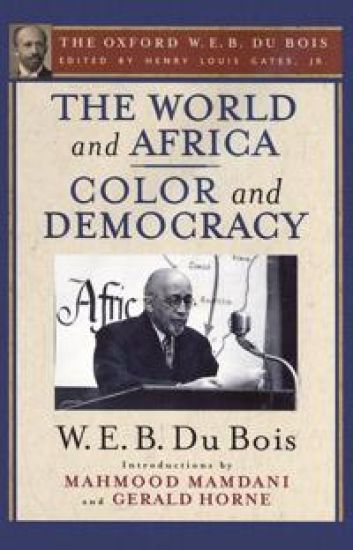
W. E. B. Du Bois was a public intellectual, sociologist, and activist on behalf of the African American community. He profoundly shaped black political culture in the United States through his founding role in the NAACP, as well as internationally through the Pan-African movement. Du Bois's sociological and historical research on African-American communities and culture broke ground in many areas, including the history of the post-Civil War Reconstruction period. Du Bois was also a prolific author of novels, autobiographical accounts, innumerable editorials and journalistic pieces, and several works of history. Collected in one volume for the first time, The World and Africa and Color and Democracy are two of W E. B. Du Bois's most powerful essays on race. He explores how to tell the story of those left out of recorded history, the evils of colonialism worldwide, and Africa's and African's contributions to, and neglect from, world history. More than six decades after W. E. B. Du Bois wrote The World and Africa and Color and Democracy, they remain worthy guides for the twenty-first century. With a series introduction by editor Henry Louis Gates, Jr., and two introductions by top African scholars, this edition is essential for anyone interested in world history.
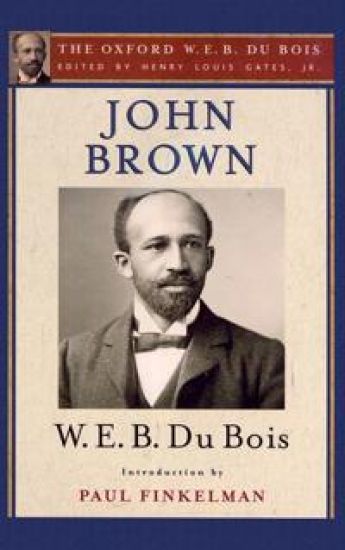
W. E. B. Du Bois was a public intellectual, sociologist, and activist on behalf of the African American community. He profoundly shaped black political culture in the United States through his founding role in the NAACP, as well as internationally through the Pan-African movement. Du Bois's sociological and historical research on African-American communities and culture broke ground in many areas, including the history of the post-Civil War Reconstruction period. Du Bois was also a prolific author of novels, autobiographical accounts, innumerable editorials and journalistic pieces, and several works of history. John Brown is W. E. B. Du Bois's groundbreaking political biography that paved the way for his transition from academia to a lifelong career in social activism. This biography is unlike Du Bois's earlier work; it is intended as a work of consciousness-raising on the politics of race. Less important are the historical events of John Brown's life than the political revelations found within the pages of this biography. At the time that he wrote it in 1909, Du Bois had begun his transformation into the most influential civil rights leader of his time. With a series introduction by editor Henry Louis Gates, Jr., and an introduction by Paul Finkelman, this edition is essential for anyone interested in African American history.
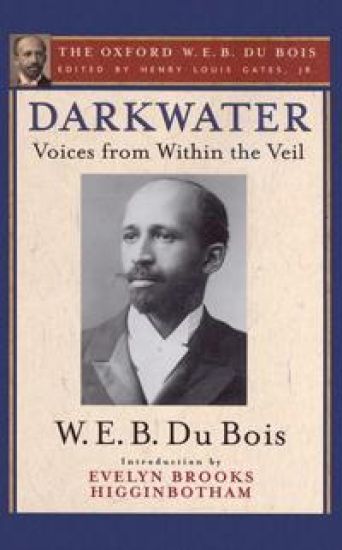
W. E. B. Du Bois was a public intellectual, sociologist, and activist on behalf of the African American community. He profoundly shaped black political culture in the United States through his founding role in the NAACP, as well as internationally through the Pan-African movement. Du Bois's sociological and historical research on African-American communities and culture broke ground in many areas, including the history of the post-Civil War Reconstruction period. Du Bois was also a prolific author of novels, autobiographical accounts, innumerable editorials and journalistic pieces, and several works of history. Considered a sequel to Du Bois's wildly popular The Souls of Black Folks, Darkwater revisits many of the same themes with a more militant edge, even revising previously published essays and poems to include in this newer volume. Published in 1920, Darkwater focuses on the political climate following World War I. In ten carefully crafted chapters, Du Bois explores the important issues of that period- labor, capital, politics, gender, education, and international relations-in tandem with an overarching theme of race. Blending lyrical autobiography with political thoughts and even poetry, Du Bois makes a powerful, forceful argument regarding race and the color line. With a series introduction by editor Henry Louis Gates, Jr., and an introduction by Evelyn Brooks Higginbotham, this edition is essential for anyone interested in African American history.
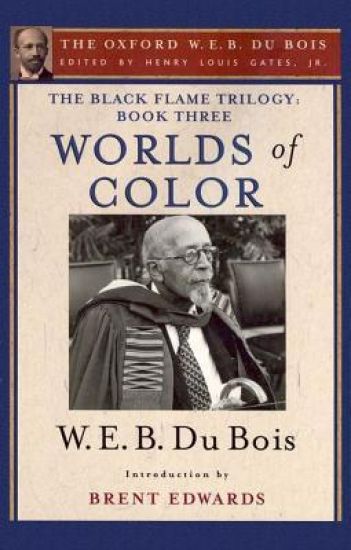
W. E. B. Du Bois was a public intellectual, sociologist, and activist on behalf of the African American community. He profoundly shaped black political culture in the United States through his founding role in the NAACP, as well as internationally through the Pan-African movement. Du Bois's sociological and historical research on African-American communities and culture broke ground in many areas, including the history of the post-Civil War Reconstruction period. Du Bois was also a prolific author of novels, autobiographical accounts, innumerable editorials and journalistic pieces, and several works of history. Du Bois called his epic Black Flame trilogy a fiction of interpretation. It acts as a representative biography of African American history by following one man, Manuel Mansart, from his birth in 1876 until his death. The Black Flame attempts to use this historical fiction of interpretation to recast and revisit the African American experience. Readers will appreciate The Black Flame trilogy as a clear articulation of Du Bois's perspective at the end of his life. The last book in this profound trilogy, Worlds of Color, opens when Mansart is sixty and a successful and established college president. Packed with political intrigue, romance, and social commentary, the book provides a dark, cynical view of the world and its relationship to the "Black Flame," or the potential of black civilization. Building upon the drama of the previous two books, Worlds of Color delves into a more sinister, bleak, and doubtful future. With a series introduction by editor Henry Louis Gates, Jr., and an introduction by Brent Hayes Edwards, this edition is essential for anyone interested in African American literature.
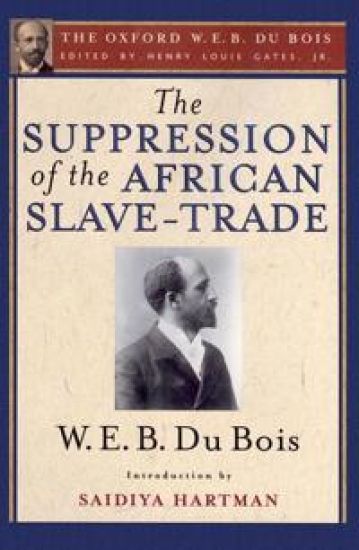
W. E. B. Du Bois was a public intellectual, sociologist, and activist on behalf of the African American community. He profoundly shaped black political culture in the United States through his founding role in the NAACP, as well as internationally through the Pan-African movement. DuBois's sociological and historical research on African-American communities and culture broke ground in many areas, including the history of the post-Civil War Reconstruction period. Du Bois was also a prolific author of novels, autobiographical accounts, innumerable editorials and journalistic pieces, and several works of history. The Suppression of the African Slave Trade to the United States of America, 1638-1870, W. E. B. Du Bois's groundbreaking monograph, recounts the moral failures and missed opportunities of the American Revolution and the consequences of compromising with slavery. As Du Bois's first published work and doctoral dissertation, Suppression lays the groundwork for his early commitment to the study of the African American experience. At the time of its publication in 1896, Du Bois's monograph was at the forefront of developments in historiography, embodying a new, empirical approach to history. Suppression is integral to understanding Du Bois's early theories and his evolution into a leading scholar and activist. With a series introduction by editor Henry Louis Gates, Jr., and an introduction by Saidiya Hartman, this edition is essential for anyone interested in African American history.
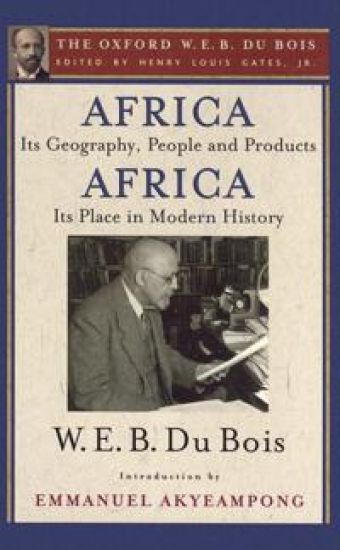
W. E. B. Du Bois was a public intellectual, sociologist, and activist on behalf of the African American community. He profoundly shaped black political culture in the United States through his founding role in the NAACP, as well as internationally through the Pan-African movement. Du Bois's sociological and historical research on African-American communities and culture broke ground in many areas, including the history of the post-Civil War Reconstruction period. Du Bois was also a prolific author of novels, autobiographical accounts, innumerable editorials and journalistic pieces, and several works of history. Written in very accessible prose, these two booklets, originally published in 1930, allowed W. E. B. Du Bois to reach a wide audience with an interest in Africa. What is so incredible about the two Africa booklets is their lasting relevance and value to the study of Africa today. Coupling Du Bois's breadth of scholarship with his passion for the subjects, the analyses in these booklets are integral to the study of Africa. Many of his arguments foreshadowed the issues and debates regarding Africa in the twentieth century. Expertly synthesized in an introduction by Emmanuel Akyeampong, this edition of the two Africa booklets is essential for anyone interested in African history.
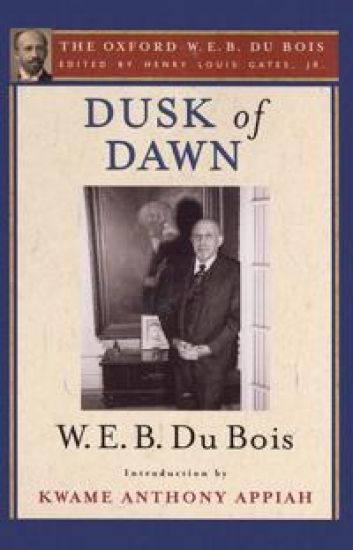
W. E. B. Du Bois was a public intellectual, sociologist, and activist on behalf of the African American community. He profoundly shaped black political culture in the United States through his founding role in the NAACP, as well as internationally through the Pan-African movement. Du Bois's sociological and historical research on African-American communities and culture broke ground in many areas, including the history of the post-Civil War Reconstruction period. Du Bois was also a prolific author of novels, autobiographical accounts, innumerable editorials and journalistic pieces, and several works of history. Dusk of Dawn, published in 1940, is an explosive autobiography of the foremost African American scholar of his time. Du Bois writes movingly of his own life, using personal experience to elucidate the systemic problem of race. He reflects on his childhood, his education, and his intellectual life, including the formation of the NAACP. Though his views eventually got him expelled from the association, Du Bois continues to develop his thoughts on separate black economic and social institutions in Dusk of Dawn. Readers will find energetic essays within these pages, including insight into his developing Pan-African consciousness. With a series introduction by editor Henry Louis Gates, Jr., and an introduction by Kwame Anthony Appiah, this edition is essential for anyone interested in African American history.
W. E. B. Du Bois was a public intellectual, sociologist, and activist on behalf of the African American community. He profoundly shaped black political culture in the United States through his founding role in the NAACP, as well as internationally through the Pan-African movement. Du Bois's sociological and historical research on African-American communities and culture broke ground in many areas, including the history of the post-Civil War Reconstruction period. Du Bois was also a prolific author of novels, autobiographical accounts, innumerable editorials and journalistic pieces, and several works of history. The Dark Princess is a story of magical love and radical politics, a romance facing obstacles in a white-dominated world. Du Bois's allegorical tale follows Mathew Townes from his political disillusionment to his association with a powerful and seductive revolutionary leader, Kautilya, the princess of the Tibetan Kingdom of Bwodpur. With Dark Princess, Du Bois explores the color line from a fantastical angle while inserting his signature sociological style. With a series introduction by editor Henry Louis Gates, Jr., and an introduction by Homi Bhahba, this edition is essential for anyone interested in African American history.
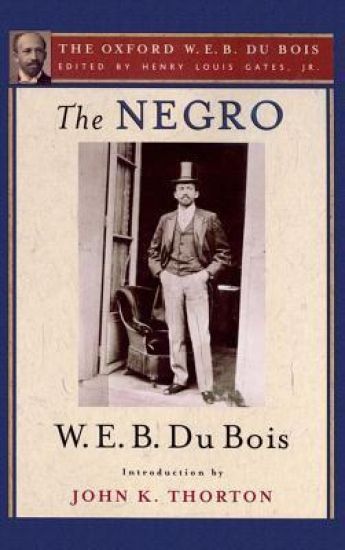
W. E. B. Du Bois was a public intellectual, sociologist, and activist on behalf of the African American community. He profoundly shaped black political culture in the United States through his founding role in the NAACP, as well as internationally through the Pan-African movement. Du Bois's sociological and historical research on African-American communities and culture broke ground in many areas, including the history of the post-Civil War Reconstruction period. Du Bois was also a prolific author of novels, autobiographical accounts, innumerable editorials and journalistic pieces, and several works of history. Intended as an accessible, up-to-date introduction to African American history by its 1915 publisher, The Negro was much more to W. E. B. Du Bois. The chance to write on African American History for a wide audience became his chance to write a manifesto on African history worldwide. Du Bois focuses on the continent of Africa, giving justice to its oft-neglected positive history. Drawing on anthropological and linguistic literature of the time, Du Bois captures a succinct portrait of African and African American history ready for any reader no matter their prior knowledge. His argument enters the narrative fully, revealing his quest for the vindication of black history. With a series introduction by editor Henry Louis Gates, Jr., and an introduction by John K. Thornton, this edition is essential for anyone interested in African American history.
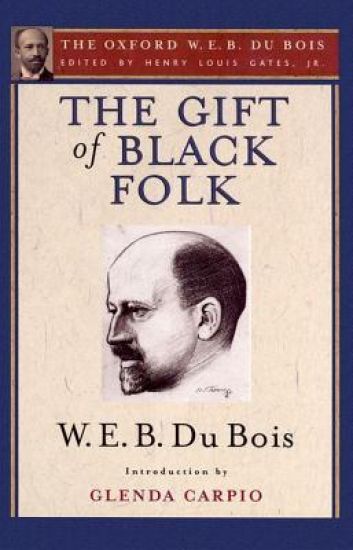
W. E. B. Du Bois was a public intellectual, sociologist, and activist on behalf of the African American community. He profoundly shaped black political culture in the United States through his founding role in the NAACP, as well as internationally through the Pan-African movement. Du Bois's sociological and historical research on African-American communities and culture broke ground in many areas, including the history of the post-Civil War Reconstruction period. Du Bois was also a prolific author of novels, autobiographical accounts, innumerable editorials and journalistic pieces, and several works of history. Published in 1924 in response to growing racial tensions, W. E. B. Du Bois's The Gift of Black Folk explores the contributions African Americans have made to American society, detailing the importance of racial diversity to the United States. Writing for a general audience, Du Bois employs a sweeping scope for his argument, covering the European discovery of America to the twentieth century. In doing so he works to prove that through African Americans' struggle for freedom and equality, they have most fully realized the goal of democracy. With a series introduction by editor Henry Louis Gates, Jr., and an introduction by Glenda Carpio, this edition is essential for anyone interested in African American history.
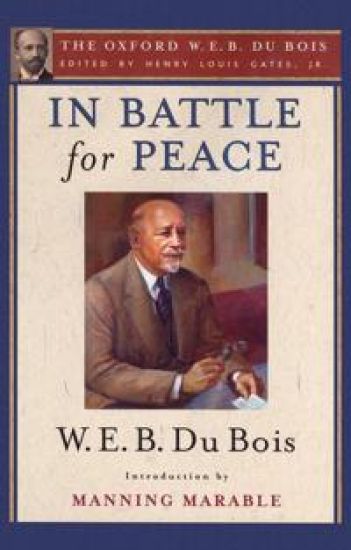
W. E. B. Du Bois was a public intellectual, sociologist, and activist on behalf of the African American community. He profoundly shaped black political culture in the United States through his founding role in the NAACP, as well as internationally through the Pan-African movement. Du Bois's sociological and historical research on African-American communities and culture broke ground in many areas, including the history of the post-Civil War Reconstruction period. Du Bois was also a prolific author of novels, autobiographical accounts, innumerable editorials and journalistic pieces, and several works of history. One of the most neglected and obscure books by W. E. B. Du Bois, In Battle for Peace frankly documents Du Bois's experiences following his attempts to mobilize Americans against the emerging conflict between the United States and the Soviet Union. A victim of McCarthyism, Du Bois endured a humiliating trial-he was later acquitted-and faced political persecution for over a decade. Part autobiography and part political statement, In Battle for Peace remains today a powerful analysis of race in America. With a series introduction by editor Henry Louis Gates, Jr., and an introduction by Manning Marable, this edition is essential for anyone interested in African American history.
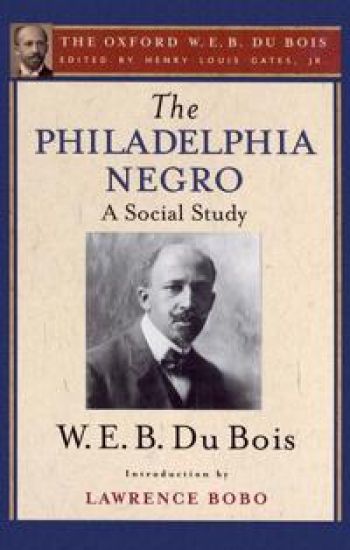
W. E. B. Du Bois was a public intellectual, sociologist, and activist on behalf of the African American community. He profoundly shaped black political culture in the United States through his founding role in the NAACP, as well as internationally through the Pan-African movement. Du Bois's sociological and historical research on African-American communities and culture broke ground in many areas, including the history of the post-Civil War Reconstruction period. Du Bois was also a prolific author of novels, autobiographical accounts, innumerable editorials and journalistic pieces, and several works of history. First published in 1899 at the dawn of sociology, The Philadelphia Negro: A Social Study is a landmark in empirical sociological research. Du Bois was the first sociologist to document the living circumstances of urban Black Americans. The Philadelphia Negro provides a framework for studying black communities, and it has steadily grown in importance since its original publication. Today, it is an indispensable model for sociologists, historians, political scientists, anthropologists, educators, philosophers, and urban studies scholars. With a series introduction by editor Henry Louis Gates, Jr., and an introduction by Lawrence Bobo, this edition is essential for anyone interested in African American history and sociology.