
Kirjailija
W. E. B. Du Bois
Kirjat ja teokset yhdessä paikassa: 286 kirjaa, julkaisuja vuosilta 1899–2026, suosituimpiin kuuluu The Souls of Black Folk: Introduction by Arnold Rampersad. Vertaile teosten hintoja ja tarkista saatavuus suomalaisista kirjakaupoista.
Nimi esiintyy myös muodoissa: W E B Du Bois, W.E.B. Du Bois, W.E.B Du Bois
286 kirjaa
Kirjojen julkaisuvuodet: 1899–2026.



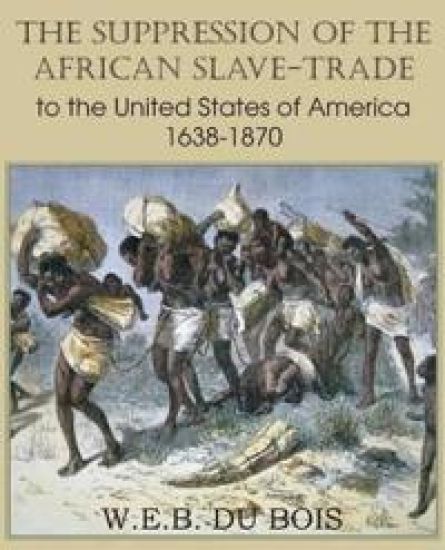
The Suppression of the African Slave-Trade to the United States of America 1638-1870 Volume I
W E B Du Bois
Classics Press
2013
pokkari

In Battle for Peace: The Story of My Eighty-Third Birthday
W. E. B. Du Bois
Literary Licensing, LLC
2012
nidottu
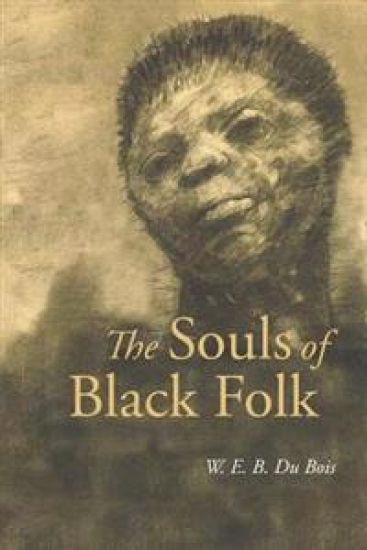
First published in 1903, this extraordinary work not only recorded and explained history--it helped alter its course. Written after Du Bois had earned his Ph. D. from Harvard and studied in Berlin, these fourteen essays contain both the academic language of sociology and the rich lyricism of African spirituals, which Du Bois called "sorrow songs." Often revealingly autobiographical, DuBois explores topics as diverse as the death of his infant son and the politics of Booker T. Washington. In every essay, he shows the consequences of both a political color line and an internal one, as he grapples with the contradictions of being black and being American. One of our country's most influential books, The Souls of Black Folk reflects the mind of a visionary who inspired generations of readers to remember the past, question the status quo, and fight for a just tomorrow. With an Introduction by Randall Kenanand an Afterword by Cheryl Townsend Gilkes
The Souls of Black Folk is a classic work of American literature by W. E. B. Du Bois. It is a seminal work in the history of sociology, and a cornerstone of African-American literary history. The book, published in 1903, contains several essays on race, some of which had been previously published in Atlantic Monthly magazine. Du Bois drew from his own experiences to develop this groundbreaking work on being African-American in American society. Outside of its notable place in African-American history, The Souls of Black Folk also holds an important place in social science as one of the early works to deal with sociology. Chapter I lays out an overview of Du Bois's thesis for the book: that the blacks of South need the right to vote, a good education, and to be treated with equality and justice. The first chapter also introduces Du Bois' famous metaphor of the veil. According to Du Bois, this veil is worn by all African-Americans because their view of the world and its potential economic, political, and social opportunities is so vastly different from that of white people. The veil is a visual manifestation of the color line, a problem Du Bois worked his whole life to remedy. Du Bois sublimates the function of the veil when he refers to it as a gift of second sight for African-Americans, thus simultaneously characterizing the veil as both a blessing and a curse. 1] The second chapter, "The Dawn of Freedom" covers the history of the Freedman's Bureau during reconstruction. Chapters III through VI focus on education. Du Bois argues against Booker T. Washington's idea of focusing solely on industrial education for black men, and advocates the addition of a classical education to establish leaders and educators in the black community. Chapters VII through X are sociological studies of the black community. Du Bois investigates the influence that segregation and discrimination have had on the black people. He argues that much of the negative stereotypes of blacks as lazy, violent, and simple-minded are results of the treatment from white people. In "Chapter X: Of the Faith of the Fathers", Du Bois describes the rise of the Black church, and examines the history and contemporary state of religion and spiritualism among African-Americans. The final chapters of the book are devoted to narratives of individuals. "Chapter XI: Of the Passing of the First-Born" tells the story of Du Bois's own son and his untimely death. In the next chapter, the life of Alexander Crummell is a short biography of a black priest in the Episcopal Church. "Chapter XIII: Of the Coming of John" is the fictional account of a boy from Georgia who goes off to college and, on his return is rejected by both his black community and the white patricians of his town. The last chapter is about Negro music and makes reference to the short musical passages at the beginning of each of the other chapters. In Living Black History, Du Bois biographer Manning Marable observes: Few books make history and fewer still become foundational texts for the movements and struggles of an entire people. The Souls of Black Folk occupies this rare position. It helped to create the intellectual argument for the black freedom struggle in the twentieth century. Souls justified the pursuit of higher education for Negroes and thus contributed to the rise of the black middle class. By describing a global color-line, Du Bois anticipated pan-Africanism and colonial revolutions in the Third World. Moreover, this stunning critique of how 'race' is lived through the normal aspects of daily life is central to what would become known as 'whiteness studies' a century later.
This is a pioneering work on African-American history by the noted activist and scholar, W. E. B. Du Bois. Born in 1868, three years after the end of the Civil War, Du Bois lived until 1963, one year before the March on Washington. He was a founder of the NAACP, and worked his entire life to lift what he called "the Veil", or segregation. While some minor items in this book have been disproven, the vast majority of it still stands as one of the best books ever written on the subject, and an ideal supplement for any curriculum in world history. Du Bois covers a vast swath of African history, including the indigenous high sub-Saharan civilizations such as Zimbabwe, Ghana, and Songhai, the disasterous impact of centuries of the slave trade, and an overveiw of Black history in the Caribbean and the United States.


The Negro: Black History and the African Diaspora
W. E. B. Du Bois
Createspace Independent Publishing Platform
2010
nidottu
A true classic by early civil rights activist, intellectual, and head of the NAACP, William Edward Burghardt Du Bois. W. E. B. Du Bois earned his first degree in 1888 at Fisk University, and went on the receive degrees from Harvard and the University of Berlin in Germany. Du Bois became the first African American to earn a Ph. D. from Harvard. In "The Negro", Du Bois traces the origins of the African race, it's influence in world history, studies the history of race relations throughout the ages, and the African Diaspora to the Americas during the slave trade of previous centuries. He also studies the lasting impact of slavery on the African American mindset, and also provided a role model for future generations.