
Kirjailija
W. E. B. Du Bois
Kirjat ja teokset yhdessä paikassa: 286 kirjaa, julkaisuja vuosilta 1899–2026, suosituimpiin kuuluu The Souls of Black Folk: Introduction by Arnold Rampersad. Vertaile teosten hintoja ja tarkista saatavuus suomalaisista kirjakaupoista.
Nimi esiintyy myös muodoissa: W E B Du Bois, W.E.B. Du Bois, W.E.B Du Bois
286 kirjaa
Kirjojen julkaisuvuodet: 1899–2026.

Darkwater: Voices From Within The Veil
W. E. B. Du Bois
Createspace Independent Publishing Platform
2016
nidottu


The Quest of the Silver Fleece
W. E. B. Du Bois
Createspace Independent Publishing Platform
2015
nidottu

Darkwater: Voices from Within the Veil
W. E. B. Du Bois
Createspace Independent Publishing Platform
2015
nidottu

The Negro in the South
Booker T. Washington; W. E. B. Du Bois
Createspace Independent Publishing Platform
2015
nidottu

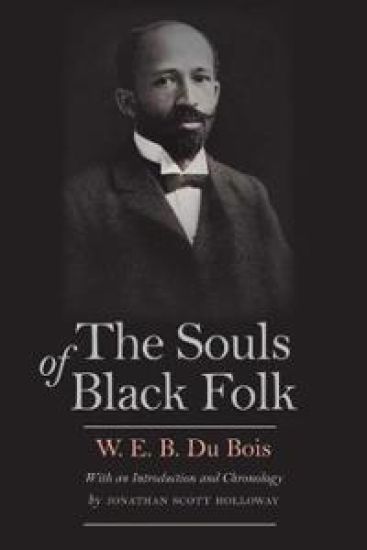
The Souls of Black Folk
W. E. B. Du Bois
Yale University Press
2015
pokkari
Halvin toimitettuna 20,50 €
W. E. B. Du Bois' insightful commentary on Black history, racism, and the struggles of Black Americans following emancipation—a masterpiece in the African-American canon"Jonathan Holloway introduces W. E. B. Du Bois' 1903 classic for our time, when visions of a 'post-racial' America clash with the enduring centrality of what Du Bois termed 'the problem of the color-line.' We need Du Bois now more than ever."—Adam Bradley, University of Colorado, Boulder This collection of essays by scholar-activist W. E. B. Du Bois is a masterpiece in the African American canon. Du Bois, arguably the most influential African American leader of the early twentieth century, offers insightful commentary on Black history, racism, and the struggles of Black Americans following emancipation. In his groundbreaking work, the author presciently writes that “the problem of the twentieth century is the problem of the color line,” and offers powerful arguments for the absolute necessity of moral, social, political, and economic equality. These essays on the black experience in America range from sociological studies of the African American community to illuminating discourses on religion and “Negro music,” and remain essential reading in our so-called “post-racial age.” A new introduction by Jonathan Scott Holloway explores Du Bois’s signature accomplishments while helping readers to better understand his writings in the context of his time as well as ours.

The time has not yet come for a complete history of the Negro peoples. Arch ological research in Africa has just begun, and many sources of information in Arabian, Portuguese, and other tongues are not fully at our command; and, too, it must frankly be confessed, racial prejudice against darker peoples is still too strong in so-called civilized centers for judicial appraisement of the peoples of Africa. Much intensive monographic work in history and science is needed to clear mooted points and quiet the controversialist who mistakes present personal desire for scientific proof.




The Problem of the Color Line at the Turn of the Twentieth Century
W. E. B. Du Bois
Fordham University Press
2014
pokkari
This volume assembles essential essays—some published only posthumously, others obscure, another only recently translated—by W. E. B. Du Bois from 1894 to early 1906. They show the first formulations of some of his most famous ideas, namely, "the veil," "double-consciousness," and the "problem of the color line." Moreover, the deep historical sense of the formation of the modern world that informs Du Bois's thought and gave rise to his understanding of "the problem of the color line" is on display here. Indeed, the essays constitute an essential companion to Du Bois's masterpiece published in 1903 as The Souls of Black Folk. The collection is based on two editorial principles: presenting the essays in their entirety and in strict chronological order. Copious annotation affords both student and mature scholar an unprecedented grasp of the range and depth of Du Bois's everyday intellectual and scholarly reference. These essays commence at the moment of Du Bois's return to the United States from two years of graduate-level study in Europe at the University of Berlin. At their center is the moment of Du Bois's first full, self-reflexive formulation of a sense of vocation: as a student and scholar in the pursuit of the human sciences (in their still-nascent disciplinary organization—that is, the institutionalization of a generalized "sociology" or general "ethnology"), as they could be brought to bear on the study of the situation of the so-called Negro question in the United States in all of its multiply refracting dimensions. They close with Du Bois's realization that the commitments orienting his work and intellectual practice demanded that he move beyond the institutional frames for the practice of the human sciences. The ideas developed in these early essays remained the fundamental matrix for the ongoing development of Du Bois's thought. The essays gathered here will therefore serve as the essential reference for those seeking to understand the most profound registers of this major American thinker.

The Problem of the Color Line at the Turn of the Twentieth Century
W. E. B. Du Bois
Fordham University Press
2014
sidottu
This volume assembles essential essays—some published only posthumously, others obscure, another only recently translated—by W. E. B. Du Bois from 1894 to early 1906. They show the first formulations of some of his most famous ideas, namely, "the veil," "double-consciousness," and the "problem of the color line." Moreover, the deep historical sense of the formation of the modern world that informs Du Bois's thought and gave rise to his understanding of "the problem of the color line" is on display here. Indeed, the essays constitute an essential companion to Du Bois's masterpiece published in 1903 as The Souls of Black Folk. The collection is based on two editorial principles: presenting the essays in their entirety and in strict chronological order. Copious annotation affords both student and mature scholar an unprecedented grasp of the range and depth of Du Bois's everyday intellectual and scholarly reference. These essays commence at the moment of Du Bois's return to the United States from two years of graduate-level study in Europe at the University of Berlin. At their center is the moment of Du Bois's first full, self-reflexive formulation of a sense of vocation: as a student and scholar in the pursuit of the human sciences (in their still-nascent disciplinary organization—that is, the institutionalization of a generalized "sociology" or general "ethnology"), as they could be brought to bear on the study of the situation of the so-called Negro question in the United States in all of its multiply refracting dimensions. They close with Du Bois's realization that the commitments orienting his work and intellectual practice demanded that he move beyond the institutional frames for the practice of the human sciences. The ideas developed in these early essays remained the fundamental matrix for the ongoing development of Du Bois's thought. The essays gathered here will therefore serve as the essential reference for those seeking to understand the most profound registers of this major American thinker.

The Souls of Black Folk is a classic work of American literature by W. E. B. Du Bois. It is a seminal work in the history of sociology, and a cornerstone of African-American literary history. To develop this groundbreaking work, Du Bois drew from his own experiences as an African-American in the American society. Outside of its notable relevance in African-American history, The Souls of Black Folk also holds an important place in social science as one of the early works in the field of sociology.

The Negro in the South: His Economic Progress in Relation to His Moral and Religious Development
Booker T. Washington; W. E. B. Du Bois
Literary Licensing, LLC
2014
sidottu
The book ""The Negro In The South: His Economic Progress In Relation To His Moral And Religious Development"" by Booker T. Washington provides an in-depth analysis of the economic, moral, and religious status of African Americans in the Southern United States during the late 19th and early 20th centuries. Washington, a prominent African American leader and educator, argues that the economic progress of Black Americans is closely tied to their moral and religious development. The book is divided into several chapters, each of which focuses on a different aspect of the African American experience in the South. Washington discusses topics such as the history of slavery, the impact of Reconstruction on Black Americans, and the role of education in promoting economic and social progress. He also examines the role of religion in the lives of African Americans, arguing that it can serve as a source of moral guidance and strength. Throughout the book, Washington emphasizes the importance of self-reliance and hard work in achieving economic progress. He also acknowledges the challenges faced by African Americans in the South, including discrimination and limited access to resources. However, he remains optimistic about the potential for Black Americans to achieve success and make meaningful contributions to society. Overall, ""The Negro In The South"" is a thought-provoking and insightful examination of the African American experience in the Southern United States. Washington's analysis of the relationship between economic progress, moral development, and religious faith provides a valuable perspective on the challenges and opportunities faced by Black Americans during this period of history. This Is A New Release Of The Original 1907 Edition. This scarce antiquarian book is a facsimile reprint of the old original and may contain some imperfections such as library marks and notations. Because we believe this work is culturally important, we have made it available as part of our commitment for protecting, preserving, and promoting the world's literature in affordable, high quality, modern editions, that are true to their original work.


The Negro in the South: His Economic Progress in Relation to His Moral and Religious Development
Booker T. Washington; W. E. B. Du Bois
Literary Licensing, LLC
2014
nidottu