Kirjojen hintavertailu – 12 859 827 kirjaa ja 27 kauppaa

Kirjailija

W. E. B. Du Bois

Kirjat ja teokset yhdessä paikassa: 286 kirjaa, julkaisuja vuosilta 1899–2026, suosituimpiin kuuluu The Souls of Black Folk: Introduction by Arnold Rampersad. Vertaile teosten hintoja ja tarkista saatavuus suomalaisista kirjakaupoista.

Nimi esiintyy myös muodoissa: W E B Du Bois, W.E.B. Du Bois, W.E.B Du Bois

286 kirjaa

Kirjojen julkaisuvuodet: 1899–2026.

The Souls of Black Folk

The Souls of Black Folk

W. E. B. Du Bois

Double 9 Books LLP
2023
nidottu
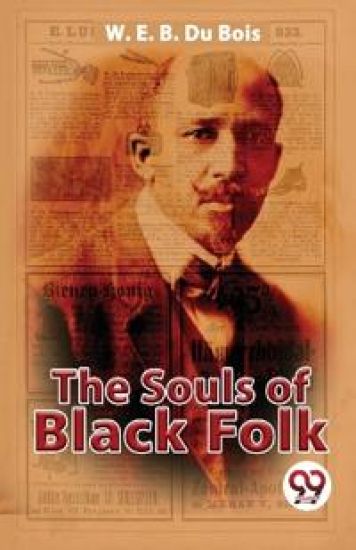
The famous piece of American literature "The Souls of Black Folk" was written by W. E. B. Du Bois. The book is made up of a selection of pieces that examine African Americans' experiences in the US during the Civil War and throughout the Reconstruction period. Du Bois explores a range of topics of black life in America, such as racial, educational, political, and cultural concerns. The book is structured into fourteen chapters, each of which presents an alternative viewpoint on African Americans' experiences. Du Bois introduces the idea of "double consciousness" in the first chapter, which relates to how African Americans perceive having two identities: one as Americans and one as Black people. He contends that this dualism results from the prejudice and discrimination that black people experience in American culture. The obstacles of voting and political representation, the effects of racism on black culture, and the importance of education in empowering black Americans are all topics covered by Du Bois in later chapters. Additionally, he looks at the history of black people in America, including the effects of slavery and the emancipation movement. A key classic in the history of racial relations in America, "The Souls of Black Folk" is generally considered as a foundational piece of African American literature. Readers are still moved by its insightful descriptions of black Americans' lives today.
The Souls of Black Folk

The Souls of Black Folk

W E B Du Bois

INDOEUROPEANPUBLISHING.COM
2023
pokkari
The Souls of Black Folk is a classic work of American literature by W. E. B. Du Bois. It is a seminal work in the history of sociology, and a cornerstone of African-American literary history. The book, published in 1903, contains several essays on race, some of which had been previously published in Atlantic Monthly magazine. Du Bois drew from his own experiences to develop this groundbreaking work on being African American in American society. Outside of its notable place in African-American history, The Souls of Black Folk also holds an important place in social science as one of the early works to deal with sociology. BIO: William Edward Burghardt Du Bois (February 23, 1868 - August 27, 1963) was an American civil rights activist, Pan-Africanist, sociologist, historian, author, and editor. Historian David Levering Lewis wrote, "In the course of his long, turbulent career, W. E. B. Du Bois attempted virtually every possible solution to the problem of twentieth-century racism- scholarship, propaganda, integration, national self-determination, human rights, cultural and economic separatism, politics, international communism, expatriation, third world solidarity." The first African-American graduate of Harvard University, where he earned his Ph. D in History, Du Bois later became a professor of history and economics at Atlanta University. He became the head of the National Association for the Advancement of Colored People (NAACP) in 1910, becoming founder and editor of the NAACP's journal The Crisis. Du Bois rose to national attention in his opposition of Booker T. Washington's ideas of social integration between whites and blacks, campaigning instead for increased political representation for blacks in order to guarantee civil rights, and the formation of a Black elite that would work for the progress of the African American race.
The Negro in the South; His Economic Progress in Relation to his Moral and Religious Development
The Negro in the South; His Economic Progress in Relation to his Moral and Religious Development, has been considered an important book throughout the human history. So that this work is never forgotten we have made efforts in its preservation by republishing this book in a modern format for present and future generations. The whole book has been reformatted, retyped and designed. This book is not made of scanned copies and hence the text is clear and readable.
The Souls Of Black Folk

The Souls Of Black Folk

W.E.B. Du Bois

West Margin Press
2022
nidottu
LARGE PRINT EDITION. Sweeping across African American history and culture in the shadow of slavery and ongoing racism, The Souls of Black Folk laid bare challenging issues sadly still relevant more than 100 years after its first publication. This collection of 14 essays is a cornerstone work of African-American literature. The author examines history and the social conditions of his era, balancing his observations with philosophical asides and autobiographical insights. He describes the central issue of the 20th century as “the problem of the color line" --a divide both visible and invisible, a veil between blacks and the white world that needs to be broken through before those on either side of it can truly know one another. He describes the tension arising from being both black and American as a dual consciousness, a unique identity which had long been a disadvantage but could conceivably become a source of strength. First published in 1903, this profoundly influential text is an acclamation of human rights, a condemnation of the systems that infringe upon them, and one of the most significant books to contribute to the cause of racial equality in US history. With an eye-catching new cover, and professionally typeset manuscript, this edition of The Souls of Black Folk is both modern and readable.
Philadelphia Negro: A Social Study and History of Pennsylvania's Black American Population; their Education, Environment and Work
W. E. B. Du Bois's groundbreaking social study of black Americans living in Philadelphia at the end of the 1800s remains an outstanding and thorough example of sociology. Using knowledge gained from research of black neighborhoods during his time at the University of Pennsylvania, Du Bois was determined to create an all-embracing profile of urban black American society. Some three years of intensive research, interviews, and statistical gathering went into The Philadelphia Negro; it revealed endemic social prejudices and the abject poverty which many black Americans endured. The area studied was the Seventh Ward - a borough of Philadelphia which included the impoverished black ghetto, the striving middle-classes, and even affluent whites. For Du Bois, the root causes of the social divide were ingrained negative perceptions towards black Americans, such as the notion that black workers are innately dishonest or indolent. Incidents of racial discrimination, whereby blacks in a line of business or seeking employ are turned aside on the basis of skin color, are numerous. More positively, the author unearthed multiple appraisals from those who had employed black workers - some only as a last resort - who became very impressed at their employee's diligence, ability and passion. Spanning the education, recreation, work, housing and environment conditions, and much more besides, The Philadelphia Negro remains a landmark text of sociology.
The Autobiography of W. E. B. Du Bois

The Autobiography of W. E. B. Du Bois

W E B Du Bois

Berkshire Publishing Group
2022
sidottu
This edition of The Autobiography of W. E. B. Du Bois is the first to be arranged and dedicated in accordance with Du Bois's manuscript notes. It begins with these words: "I was born by a golden river and in the shadow of two great hills, five years after the Emancipation Proclamation which began the freeing of American Negro Slaves." Du Bois was born in the town where Berkshire Publishing Group is located. His autobiography tells the story of a little boy, the only Black boy in his school, who became the first African American PhD at Harvard, an educator, editor, and activist, and a writer of expressive, lyrical, and accessible prose. In this book, he explains why he chose to become a communist. While the communism he praised did not turn out to offer the utopia so many hoped for, the problems he identified are still with us. His reasoning will resonant with modern readers who share his frustration with the continued inequities in our society. The Autobiography is a fascinating and often horrifying look at the experience of a Black man in America. Literary critic Irving Howe called it "a classic of American narrative, . . . packed with information and opinion about the early years of Negro protest." But, like many, he found the later chapters, in which Du Bois reflects the official Communist views of the times, to read "as if they came from the very heart of a mimeograph machine." But these chapters, too, are part of US history. The short essay on Communism is especially worth reading it speaks to issues on our minds today, and puts Du Bois's communism in context. His reasoning, and emotion, will resonant with modern readers who share his frustration with the continued inequities in our society. While the Communism he praised did not turn out to offer the utopia so many hoped for, the problems he identified are still with us. And now that the chapters about his early life are in their proper place, we hope readers will note the personal and revelatory tone of the chapter "My Character." Along with an analysis of his own character, not always favorable, he discusses his sexual experience, including early ignorance, being raped as a young man by an unhappy landlady, and never convincing his wife that sexual relations were "the most beautiful of human experiences." Berkshire Publishing Group was founded in Great Barrington, the small western Massachusetts town where Du Bois was born and educated. He wrote eloquently about the town and its people, and he is remembered today as the most influential graduate of the town's schools. Berkshire is known for its focus on international issues, especially world history. We were thrilled when we learned that Du Bois had wanted to create an Encyclopedia Africana since we have specialized in similar projects. Equally relevant was hearing from Thomas Bender, a leading scholar of transnational history, that Du Bois's Harvard dissertation on the Atlantic slave trade was one of the first publications that could truly be called transnational history.

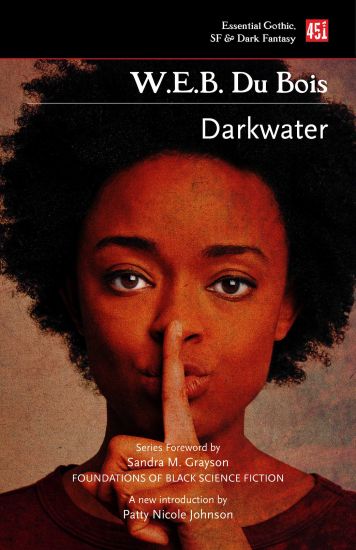
Darkwater

Darkwater

W.E.B. Du Bois; Sandra M. Grayson

FLAME TREE PUBLISHING
2022
pokkari

Halvin toimitettuna 14,50 €

A new edition with a new introduction, Du Bois' radical text is a rare statement of values formed around the vision of a collective life, where the humanity of black women and men is treated with dignity and equality. He expresses his themes through a series of literary forms: polemic essay, spirituals, poetry and short science fiction, each of which forms a pulse of social justice from a time when a true understanding of intersections between poverty, work, racism and feminism was rare. A new title in the Foundations of Black Science Fiction series. FLAME TREE 451: From mystery to crime, supernatural to horror and myth, fantasy and science fiction, Flame Tree 451 offers a healthy diet of werewolves and robots, mad scientists, secret worlds, lost civilizations and escapist fantasies. Discover a storehouse of tales, ancient and modern gathered specifically for the reader of the fantastic. The Foundations titles also explore the roots of modern fiction and brings together neglected works which deserve a wider readership as part of a series of classic, essential books.
The Autobiography of W. E. B. Du Bois: Great Barrington Edition

The Autobiography of W. E. B. Du Bois: Great Barrington Edition

W. E. B. Du Bois

Berkshire Publishing Group LLC
2022
nidottu
This edition of The Autobiography of W. E. B. Du Bois is the first to be arranged and dedicated in accordance with Du Bois's manuscript notes. It begins with these words: "I was born by a golden river and in the shadow of two great hills, five years after the Emancipation Proclamation which began the freeing of American Negro Slaves." Du Bois was born in the town where Berkshire Publishing Group is located. His autobiography tells the story of a little boy, the only Black boy in his school, who became the first African American PhD at Harvard, an educator, editor, and activist, and a writer of expressive, lyrical, and accessible prose. In this book, he explains why he chose to become a communist. While the communism he praised did not turn out to offer the utopia so many hoped for, the problems he identified are still with us. His reasoning will resonant with modern readers who share his frustration with the continued inequities in our society. The Autobiography is a fascinating and often horrifying look at the experience of a Black man in America. Literary critic Irving Howe called it "a classic of American narrative, . . . packed with information and opinion about the early years of Negro protest." But, like many, he found the later chapters, in which Du Bois reflects the official Communist views of the times, to read "as if they came from the very heart of a mimeograph machine." But these chapters, too, are part of US history. The short essay on Communism is especially worth reading it speaks to issues on our minds today, and puts Du Bois's communism in context. His reasoning, and emotion, will resonant with modern readers who share his frustration with the continued inequities in our society. While the Communism he praised did not turn out to offer the utopia so many hoped for, the problems he identified are still with us. And now that the chapters about his early life are in their proper place, we hope readers will note the personal and revelatory tone of the chapter "My Character." Along with an analysis of his own character, not always favorable, he discusses his sexual experience, including early ignorance, being raped as a young man by an unhappy landlady, and never convincing his wife that sexual relations were "the most beautiful of human experiences." Berkshire Publishing Group was founded in Great Barrington, the small western Massachusetts town where Du Bois was born and educated. He wrote eloquently about the town and its people, and he is remembered today as the most influential graduate of the town's schools. Berkshire is known for its focus on international issues, especially world history. We were thrilled when we learned that Du Bois had wanted to create an Encyclopedia Africana since we have specialized in similar projects. Equally relevant was hearing from Thomas Bender, a leading scholar of transnational history, that Du Bois's Harvard dissertation on the Atlantic slave trade was one of the first publications that could truly be called transnational history.
Of Our Spiritual Strivings

Of Our Spiritual Strivings

Christina Quarles; W.E.B. Du Bois

VERLAG DER BUCHHANDLUNG WALTHER KONIG
2022
nidottu
An affordable edition of a seminal African American text, illustrated by Christina QuarlesUpon its publication in 1903, W. E. B. Du Bois' classic The Souls of Black Folk made history as a work of sociological thought, and would go on to become a cornerstone of African American literature. In it, Du Bois combined history and memoir to advance a vital message of resistance in the dehumanizing context of the Jim Crow era. It was in this book that Du Bois, in the essay "Of Our Spiritual Strivings," wrote of the "double consciousness" experienced by the Black subject--"a sense of always looking at one's self through the eyes of others, of measuring one's soul by the tape of a world that looks on in amused contempt and pity." Refusing this fate, Du Bois passionately and creatively makes the case for the rights of Black people of the South to be treated with equality and justice. Over a century later, Los Angeles-based artist Christina Quarles (born 1985) brings new energy to Du Bois' unfinished project, speaking to his melodious text with her own distinctive vibrancies of color and line, testing and inverting the "double consciousness" idea. Like Du Bois, the central focus of her practice is to find political power in categories used to undermine particular populations.
The Gift of Black Folk

The Gift of Black Folk

W. E. B. Du Bois

West Margin Press
2022
sidottu
The Gift of Black Folk (1924) is a book of essays by W. E. B. Du Bois. Written while the author was using his role at The Crisis, the official magazine of the NAACP, to publish emerging Black artists of the Harlem Renaissance, The Gift of Black Folk is a purposeful work of history which revises the narrative of European and British influence and emphasizes the outsized role of African Americans in building the nation and establishing its definitive culture. “[Despite] slavery, war and caste, and despite our present Negro problem, the American Negro is and has been a distinct asset to this country and has brought a contribution without which America could not have been.” This thesis could not be stated clearly enough. Recognizing, in the words of Dr. King, “that the keystone in the arch of oppression was the myth of inferiority,” Du Bois set out to revise American history to properly tell the story of his people. As he does in his magnum opus Black Reconstruction in America (1935), Du Bois recognizes that the failures of the Reconstruction era were due in large part to an unwillingness to accept Black people, enslaved or free, as human. In these essays, he emphasizes the role of African Americans as workers, soldiers, and explorers, situates them in the movement for women’s rights, and celebrates their contribution to the arts and culture of the nation. With a beautifully designed cover and professionally typeset manuscript, this edition of W. E. B. Du Bois’ The Gift of Black Folk is a classic of African American literature reimagined for modern readers.
The Gift of Black Folk

The Gift of Black Folk

W E B Du Bois

Purple House Press
2022
pokkari
New foreword written by HeritageMom, Amber O'Neal Johnston." During a time when the United States needed to be reminded of the contributions Black people have made to its democracy, freedom, music, literature, and more, W. E. B. Du Bois took on the task of enumerating the gifts that we've provided to our country." When I began reading The Gift of Black Folk...the story that unfolded was one that I had never anticipated. We the People of the United States, all of us, have left our indelible mark on America the Beautiful."-Amber O'Neal JohnstonIn 1924, William Edward Burghardt (W. E. B.) Du Bois (1868-1963) penned The Gift of Black Folk in response to systemic racism in the United States, showing that "...the American spirit is a new and interesting result of diverse threads of thought and feeling coming not only from America but from Europe and Asia and indeed from Africa." Du Bois was the first African American to earn a Ph. D. from Harvard University, and later became a professor of history, sociology, and economics at Atlanta University. In 1909 he co-founded the NAACP. Du Bois was a lifelong leader and proponent of civil rights. Amber O'Neal Johnston is a writer, speaker, and home educator who blends life-giving books with a culturally-rich environment for her four children and others. She's the author of A Place to Belong, a guide for families of all backgrounds to celebrate cultural heritage and embrace inclusivity in the home and beyond, and she's known for sharing literary "mirrors and windows" on HeritageMom.com.
Du Bois: Essays

Du Bois: Essays

W.E.B. Du Bois

OK Publishing
2022
nidottu
This book edition of Du Bois: Essays has been formatted to the highest digital standards and adjusted for readability on all devices. William Edward Burghardt ""W. E. B."" Du Bois (1868-1963) was an American sociologist, historian, civil rights activist, Pan-Africanist, author, writer and editor. Born in Great Barrington, Massachusetts, Du Bois grew up in a relatively tolerant and integrated community. After completing graduate work at the University of Berlin and Harvard, where he was the first African American to earn a doctorate, he became a professor of history, sociology and economics at Atlanta University. Du Bois was one of the co-founders of the National Association for the Advancement of Colored People in 1909.
Darkwater

Darkwater

W. E. B. Du Bois

Verso Books
2021
nidottu
"I have been in the world, but not of it," W. E. B. Du Bois begins this book, a continuation of the project he began in his celebrated work The Souls of Black Folk, describing the devastation of segregation, slavery, and the global color line that veiled half the world's people in shadow. First published in 1920, Darkwater gives voice to the rising power of "the darker races" around the world, and includes Africa's blistering indictment of Europe, a study of the curious and twisted souls of white folk, and his landmark essay "The Damnation of Women," in which he most seriously explores women's oppression and the double burdens forced onto black women. Combining essays and analysis with poetry, allegory, and short fiction, Darkwater is an angry and eloquent argument that, as Du Bois writes, "a belief in humanity is a belief in colored men." With a new introduction from award-winning poet and novelist Honorée Fanonne Jeffers, and a historical preface by Manning Marable.
John Brown

John Brown

W. E. B. Du Bois

Digireads.com
2021
nidottu
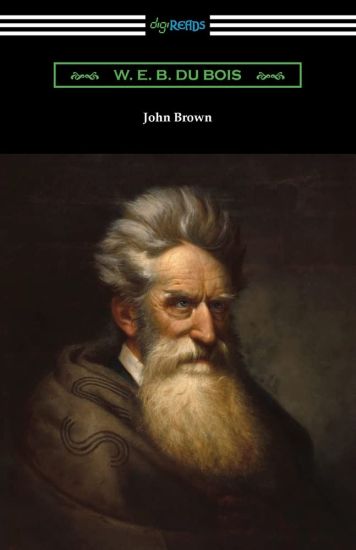
Few figures are more seminal in the abolitionist movement in America than John Brown. His firebrand approach to the movement arose out of his religiously inspired and deep-seated belief that slavery was not only morally unjust but that its removal from American society could only be achieved through armed insurrection. Following his capture in 1859 during an unsuccessful raid on the federal armory at Harpers Ferry and his subsequent hanging he became an electrifying and symbolical figure for the abolitionist movement. Many historians argue that the incident at Harpers Ferry was the breaking point between pro and anti-slavery forces that led to the secession of the southern states and the subsequent Civil War. Prominent African American W. E. B. Du Bois chronicles the life of John Brown in this 1909 biography. In the words of Du Bois, John Brown was "a man whose leadership lay not in his office, wealth or influence, but in the white flame of his utter devotion to an ideal." This edition is printed on premium acid-free paper.