

Kirjailija
W. E. B. Du Bois
Kirjat ja teokset yhdessä paikassa: 286 kirjaa, julkaisuja vuosilta 1899–2026, suosituimpiin kuuluu The Souls of Black Folk: Introduction by Arnold Rampersad. Vertaile teosten hintoja ja tarkista saatavuus suomalaisista kirjakaupoista.
Nimi esiintyy myös muodoissa: W E B Du Bois, W.E.B. Du Bois, W.E.B Du Bois
286 kirjaa
Kirjojen julkaisuvuodet: 1899–2026.
One of the preeminent Black scholars of his era traces the life and bold aspirations of a man who devoted his life to opposing slavery at any cost. W. E. B. Du Bois examines John Brown as a man as well as a motive force behind the abolitionist sympathies that helped lead to the Civil War. He traces Brown’s sympathy for slaves to an incident in his youth when he was warmly received by a family that treated their slave with casual brutality. At the time it was written, John Brown was widely considered a fanatic at best, a lunatic at worst, but here he is seen clearly as a man driven by his Christianity and his personal morals to oppose what he clearly perceived as a tremendous wrong in society, and to do so regardless of whatever toll it might take upon him. The author examines Brown’s impact on the minds of those who understood that the abolitionist cause was supported primarily by Blacks, on the lives of Blacks who discovered a white man willing to fight and die for their freedom, and by the masses who found that slavery was not only an actionable moral issue, but one of deadly urgency. Originally published in 1909, on the 50th anniversary of Brown’s execution, this is W. E. B. Du Bois’s only work of biography. Although less known than the author’s The Souls of Black Folk or Black Reconstruction in America, John Brown remains a classic distinguished by its author’s deep understanding and eloquence. With an eye-catching new cover, and professionally typeset manuscript, this edition of John Brown is both modern and readable.

The suppression of the African slave-trade to the United States of America, 1638-1870
W E B Du Bois
Alpha Edition
2020
pokkari
This book has been considered by academicians and scholars of great significance and value to literature. This forms a part of the knowledge base for future generations. So that the book is never forgotten we have represented this book in a print format as the same form as it was originally first published. Hence any marks or annotations seen are left intentionally to preserve its true nature.

The suppression of the African slave-trade to the United States of America, 1638-1870
W E B Du Bois
Alpha Edition
2020
sidottu
This book has been considered by academicians and scholars of great significance and value to literature. This forms a part of the knowledge base for future generations. So that the book is never forgotten we have represented this book in a print format as the same form as it was originally first published. Hence any marks or annotations seen are left intentionally to preserve its true nature.


A powerful, eloquent, passionate and poetic autobiographical document from one of the 20th century's most influential leaders in the fight for racial equality.

This edition of The Souls of Black Folk by W. E. B. Du Bois is given by Ashed Phoenix - Million Book Edition
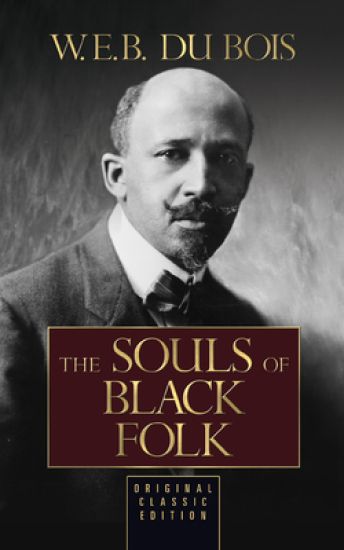
The Souls of Black Folk (Original Classic Edition)
W.E.B. Du Bois
GD Media
2019
pokkari
Halvin toimitettuna 25,00 €

Black Lives 1900: W.E.B. Du Bois at the Paris Exposition
W E B Du Bois; David Adjaye
Distributed Art Publishers
2019
nidottu



The Suppression of the African Slave-Trade to the United States of America, 1638 - 1870
W. E. B. Du Bois
Lulu.com
2019
nidottu
This historical account of the transatlantic slave trade between Africa and the United States is filled with a wealth of records, details and analyses of its attempted suppression. The various moral, economic and religious arguments against slavery were clear from the outset of the practice in the early 16th century. The ownership of a human life as an economic commodity was decried from religious circles from the earliest days as an immoral affront to basic human dignity. However the practice of gaining lifelong labor in exchange only for a basic degree of care meant slavery persisted for centuries across the New World as a lucrative endeavor. The colonial United States would, from the early 17th century, receive many thousands of slaves from Africa. Many of the slaves transported were sent to work on plantations and farms which steadily spread across the warmer southern states of the nation. Others would do manual work on the docks, for instance moving goods in the fledgling trading colonies.

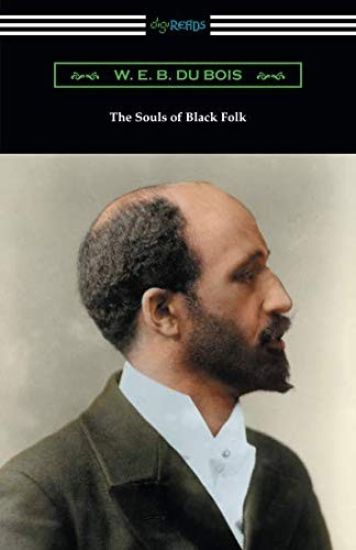
One of the most widely read and influential works in African American literature, "The Souls of Black Folk" is W. E. B. Du Bois's classic collection of essays in which he details the state of racism and black culture at the beginning of the 20th century. First published in 1903, "The Souls of Black Folk" takes the reader on a history lesson of race relations from the emancipation proclamation to the early part of the 20th century. Principal to Du Bois's exposition is the idea that African Americans live in a state of "double-consciousness" meaning that they have a "sense of always looking at one's self through the eyes of others, of measuring one's soul by the tape of a world that looks on in amused contempt and pity." A founding member of the NAACP, Du Bois helped to lay the foundation for the debate that would become the civil rights movement. As Du Bois's biographer, Manning Marable, observes, "Few books make history and fewer still become foundational texts for the movements and struggles of an entire people. 'The Souls of Black Folk' occupies this rare position." This edition is printed on premium acid-free paper.
The Souls of Black Folk is a work of American literature by W. E. B. Du Bois. It is a seminal work in the history of sociology, and a cornerstone of African-American literary history.

The Quest of the Silver Fleece
W. E. B. Du Bois
Createspace Independent Publishing Platform
2018
nidottu
A controversial title of its time, the novel chronicles the complex interactions between Northern financing and Southern politics as it follows the story of free-spirited Zora, child of a Southern swamp, and her romance with Yankee-educated Bles, who will eventually face the opportunity to claim political power through corrupt means. In the middle of it all is the silver fleece, a crop of cotton rich with meaning and symbolism. In the tradition of other incendiary novels that explore market forces at the turn of the century, such as Frank Norris's The Pit and Upton Sinclair's The Jungle, The Quest of the Silver Fleece was seen as an 'economic study' by Du Bois, yet it was also a romantic and otherwordly saga, loosely based on the Greek myth from which it takes its name. Using literary conventions to expose and oppose America's views on race, Du Bois presents a sprawling and provocative work that continues to engage readers and inspire debate among literary scholars today

The Suppression of the African Slave-Trade to the United States of America, 1638 - 1870 (Hardcover)
W E B Du Bois
Lulu.com
2018
sidottu
This historical account of the transatlantic slave trade between Africa and the United States is filled with a wealth of records, details and analyses of its attempted suppression. The various moral, economic and religious arguments against slavery were clear from the outset of the practice in the early 16th century. The ownership of a human life as an economic commodity was decried from religious circles from the earliest days as an immoral affront to basic human dignity. However the practice of gaining lifelong labor in exchange only for a basic degree of care meant slavery persisted for centuries across the New World as a lucrative endeavor. The colonial United States would, from the early 17th century, receive many thousands of slaves from Africa. Many of the slaves transported were sent to work on plantations and farms which steadily spread across the warmer southern states of the nation. Others would do manual work on the docks, for instance moving goods in the fledgling trading colonies.
William Edward Burghardt Du Bois (1868-1963) is the greatest of African American intellectuals--a sociologist, historian, novelist, and activist whose astounding career spanned the nation's history from Reconstruction to the civil rights movement. Born in Massachusetts and educated at Fisk, Harvard, and the University of Berlin, Du Bois penned his epochal masterpiece, The Souls of Black Folk, in 1903. It remains his most studied and popular work; its insights into life at the turn of the 20th century still ring true.
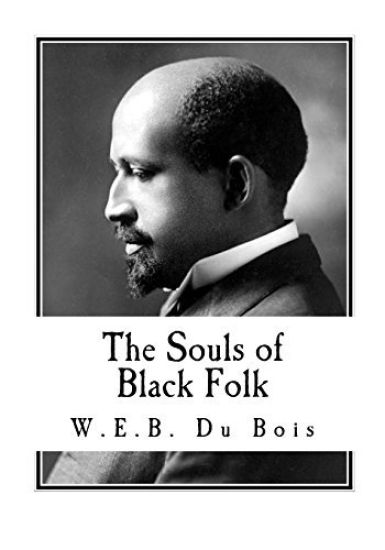
The Souls of Black Folk by W. E. B. Du Bois. The Souls of Black Folk is a classic work of American literature by W. E. B. Du Bois. It is a seminal work in the history of sociology, and a cornerstone of African-American literary history. The book, published in 1903, contains several essays on race, some of which the magazine Atlantic Monthly had previously published. To develop this work, Du Bois drew from his own experiences as an African American in the American society. Outside of its notable relevance in African-American history, The Souls of Black Folk also holds an important place in social science as one of the early works in the field of sociology.