Kirjojen hintavertailu – 12 859 819 kirjaa ja 27 kauppaa

Kirjailija

Wilkie Collins

Kirjat ja teokset yhdessä paikassa: 2 039 kirjaa, julkaisuja vuosilta 1985–2026, suosituimpiin kuuluu Basil. Vertaile teosten hintoja ja tarkista saatavuus suomalaisista kirjakaupoista.

2 039 kirjaa

Kirjojen julkaisuvuodet: 1985–2026.

Man and Wife

Man and Wife

Wilkie Collins

Bibliotech Press
2022
pokkari
Man and Wife was Wilkie Collins's ninth published novel. It is the second of his novels (after No Name) in which social questions provide the main impetus of the plot. Collins increasingly used his novels to explore social abuses, which according to critics tends to detract from their qualities as fiction. The social issue which drives the plot is the state of Scots marriage law; at the time the novel was written, any couple who were legally entitled to marry and who asserted that they were married, either before witnesses or in writing, were regarded in Scotland as being legally married. The novel, the next in sequence after Collins's highly successful The Moonstone, was a commercial success. Among modern critics, Peters holds a low opinion of its plot and characterisation, but Page argues that it should be classed with Collins's acclaimed 1860s fiction rather than with his later, and inferior, polemical novels. The novel has proved enduringly popular and remains in print. (wikipedia.org)
Man and Wife

Man and Wife

Wilkie Collins

Bibliotech Press
2022
sidottu
Man and Wife was Wilkie Collins's ninth published novel. It is the second of his novels (after No Name) in which social questions provide the main impetus of the plot. Collins increasingly used his novels to explore social abuses, which according to critics tends to detract from their qualities as fiction. The social issue which drives the plot is the state of Scots marriage law; at the time the novel was written, any couple who were legally entitled to marry and who asserted that they were married, either before witnesses or in writing, were regarded in Scotland as being legally married. The novel, the next in sequence after Collins's highly successful The Moonstone, was a commercial success. Among modern critics, Peters holds a low opinion of its plot and characterisation, but Page argues that it should be classed with Collins's acclaimed 1860s fiction rather than with his later, and inferior, polemical novels. The novel has proved enduringly popular and remains in print. (wikipedia.org)
Miss or Mrs.?

Miss or Mrs.?

Wilkie Collins

Bibliotech Press
2022
pokkari
Another crisp short novel from Wilkie Collins. As one who distrusts the institution of matrimony, he gives us another example of the somewhat strange Victorian marriage laws. The heroine of Miss or Mrs.?, Natalie, is fifteen years old. Her family wants her to wed Richard Turlington, a failing businessman who wants access to Natalie's father's fortune to save his hide. Natalie hates Turlington and secretly marries Launcelot Linzie, her cousin, who is unable to legally elope with her until her sixteenth birthday. Collins is a past master of knowing how to milk a complicated plot to good effect. Well worth reading. (Jim)
My Lady's Money

My Lady's Money

Wilkie Collins

Bibliotech Press
2022
pokkari
My Lady's Money is a social comedy about theft. A bank note is stolen from Lady Lydiard, and the wrong person is suspected. In order to discover the real thief, Robert Moody, who is in love with Lady Lydiard's adopted daughter Isabel, engages a sloppy investigator, Old Sharon. The novel blends detective fiction with social comedy. BIOWilliam Wilkie Collins (8 January 1824 - 23 September 1889) was an English novelist and playwright known for The Woman in White (1859) and The Moonstone (1868). The last has been called the first modern English detective novel. Born to a London painter, William Collins, and his wife, the family moved to Italy when Collins was twelve, living there and in France for two years, so that he learned Italian and French. He worked at first as a tea merchant. On publishing his first novel, Antonina, in 1850, Collins met Charles Dickens, who became a friend and mentor. Some Collins works appeared first in Dickens's journals Household Words and All the Year Round. The two also collaborated on drama and fiction. Collins reached financial stability and an international following in the 1860s from his best-known works, but began to suffer from gout. He took opium for the pain, but became addicted to it. His health and his writing quality declined in the 1870s and 1880s. Collins was critical of the institution of marriage: he later split his time between widow Caroline Graves, with whom he had lived most of his adult life, treating her daughter as his, and the younger Martha Rudd, by whom he had three children. Collins's works were classified at the time as "sensation novels", a genre seen nowadays as the precursor to detective and suspense fiction. He also wrote penetratingly on the plight of women and on the social and domestic issues of his time. For example, his 1854 Hide and Seek contained one of the first portrayals of a deaf character in English literature. As did many writers of his time, Collins first published most of his novels as serials in magazines such as Dickens's All the Year Round, and was known as a master of the form, creating just the right degree of suspense to keep his audience reading from week to week. ... Collins died at 82 Wimpole Street, following a paralytic stroke. He is buried in Kensal Green Cemetery, West London. His headstone describes him as the author of The Woman in White. (wikipedia.org)

The Dead Secret

The Dead Secret

Wilkie Collins

Bibliotech Press
2022
pokkari
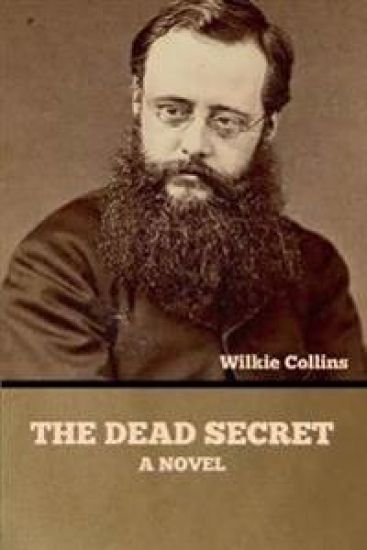
The Dead Secret was Wilkie Collins's fourth published novel. Like its predecessor Hide and Seek, the "secret" and the mystery are made clear to the reader, though not to the novel's characters, at an early stage. The obsessed and arguably deranged Sarah prefigures the character of Hester Dethridge in Collins's Man and Wife, and more distantly those of Lydia Gwilt in Armadale and the female protagonist of his late novel, The Haunted Hotel. The blind Leonard is another of Collins's disabled characters. He plays only a small part in the novel, but Collins drew another and more significant blind character in Lucilla, the heroine of his 1872 novel Poor Miss Finch. Much of the novel is set in Cornwall, one of Collins's favourite English counties, which also features in his early melodrama Basil. Contemporary critics held mixed opinions, some seeing an advance on Collins's previous Hide and Seek, and some less enthusiastic. Peters regards the handling of the "secret" as a weakness in construction, and does not rate the novel highly within Collins's oeuvre. Nadel's description of it as the last of Collins's "apprentice novels" emphasises the gap between it and Collins's next novel, the acclaimed The Woman in White. Nevertheless it has proved enduringly popular and remains in print. (wikipedia.org)
The Evil Genius

The Evil Genius

Wilkie Collins

Bibliotech Press
2022
pokkari
William Wilkie Collins (8 January 1824 - 23 September 1889) was an English novelist and playwright known for The Woman in White (1859) and The Moonstone (1868). The last has been called the first modern English detective novel. Born to a London painter, William Collins, and his wife, the family moved to Italy when Collins was twelve, living there and in France for two years, so that he learned Italian and French. He worked at first as a tea merchant. On publishing his first novel, Antonina, in 1850, Collins met Charles Dickens, who became a friend and mentor. Some Collins works appeared first in Dickens's journals Household Words and All the Year Round. The two also collaborated on drama and fiction. Collins reached financial stability and an international following in the 1860s from his best-known works, but began to suffer from gout. He took opium for the pain, but became addicted to it. His health and his writing quality declined in the 1870s and 1880s. Collins was critical of the institution of marriage: he later split his time between widow Caroline Graves, with whom he had lived most of his adult life, treating her daughter as his, and the younger Martha Rudd, by whom he had three children. Collins's works were classified at the time as "sensation novels", a genre seen nowadays as the precursor to detective and suspense fiction. He also wrote penetratingly on the plight of women and on the social and domestic issues of his time. For example, his 1854 Hide and Seek contained one of the first portrayals of a deaf character in English literature. As did many writers of his time, Collins first published most of his novels as serials in magazines such as Dickens's All the Year Round, and was known as a master of the form, creating just the right degree of suspense to keep his audience reading from week to week. ... Collins died at 82 Wimpole Street, following a paralytic stroke. He is buried in Kensal Green Cemetery, West London. His headstone describes him as the author of The Woman in White. (wikipedia.org)
The Law and the Lady

The Law and the Lady

Wilkie Collins

Bibliotech Press
2022
pokkari
William Wilkie Collins (8 January 1824 - 23 September 1889) was an English novelist and playwright known for The Woman in White (1859) and The Moonstone (1868). The last has been called the first modern English detective novel. Born to a London painter, William Collins, and his wife, the family moved to Italy when Collins was twelve, living there and in France for two years, so that he learned Italian and French. He worked at first as a tea merchant. On publishing his first novel, Antonina, in 1850, Collins met Charles Dickens, who became a friend and mentor. Some Collins works appeared first in Dickens's journals Household Words and All the Year Round. The two also collaborated on drama and fiction. Collins reached financial stability and an international following in the 1860s from his best-known works, but began to suffer from gout. He took opium for the pain, but became addicted to it. His health and his writing quality declined in the 1870s and 1880s. Collins was critical of the institution of marriage: he later split his time between widow Caroline Graves, with whom he had lived most of his adult life, treating her daughter as his, and the younger Martha Rudd, by whom he had three children. Collins's works were classified at the time as "sensation novels", a genre seen nowadays as the precursor to detective and suspense fiction. He also wrote penetratingly on the plight of women and on the social and domestic issues of his time. For example, his 1854 Hide and Seek contained one of the first portrayals of a deaf character in English literature. As did many writers of his time, Collins first published most of his novels as serials in magazines such as Dickens's All the Year Round, and was known as a master of the form, creating just the right degree of suspense to keep his audience reading from week to week. ... Collins died at 82 Wimpole Street, following a paralytic stroke. He is buried in Kensal Green Cemetery, West London. His headstone describes him as the author of The Woman in White. (wikipedia.org)
The New Magdalen

The New Magdalen

Wilkie Collins

Bibliotech Press
2022
pokkari
At first glance, a piece of sentimental Victorian melodrama with added social commentary and criticism of the Victorian class system. Not surprising, considering Wilkie Collins close relationship with Charles Dickens. The novel has some modern relevance, as it deals with identity theft. Strong female characters are a Wilkie Collins trait, and of the five main characters, three are strong motivated women, whilst the two men seem a little two dimensional. An enjoyable, if undemanding read for all interested in Victorian fiction. (Robert Hepple)
The New Magdalen

The New Magdalen

Wilkie Collins

Bibliotech Press
2022
sidottu
At first glance, a piece of sentimental Victorian melodrama with added social commentary and criticism of the Victorian class system. Not surprising, considering Wilkie Collins close relationship with Charles Dickens. The novel has some modern relevance, as it deals with identity theft. Strong female characters are a Wilkie Collins trait, and of the five main characters, three are strong motivated women, whilst the two men seem a little two dimensional. An enjoyable, if undemanding read for all interested in Victorian fiction. (Robert Hepple)
The Frozen Deep

The Frozen Deep

Wilkie Collins

Bibliotech Press
2022
pokkari
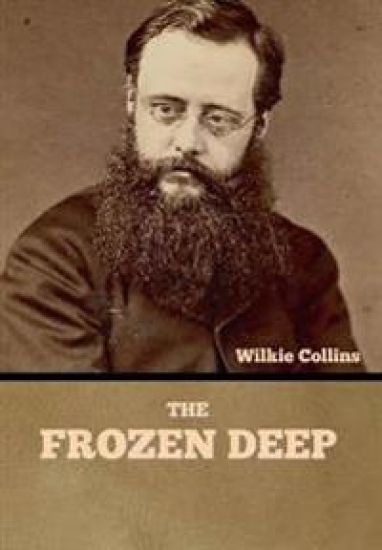
The Frozen Deep is an 1856 play, originally staged as an amateur theatrical, written by Wilkie Collins under the substantial guidance of Charles Dickens. Dickens's hand was so prominent-beside acting in the play for several performances, he added a preface, altered lines, and attended to most of the props and sets-that the principal edition of the play is entitled "Under the Management of Charles Dickens". John C. Eckel wrote: "As usual with a play which passed into rehearsal under Dickens' auspices it came out improved. This was the case with The Frozen Deep. The changes were so numerous that the drama almost may be ascribed to Dickens". Dickens himself took the part of Richard Wardour and was stage-manager during its modest original staging in Dickens's home Tavistock House. The play, however, grew in influence through a series of outside performances, including one before Queen Victoria at the Royal Gallery of Illustration, and a three-performance run at the Manchester Free Trade Hall for the benefit of the Douglas Jerrold Fund to benefit the widow of Dickens's old friend, Douglas Jerrold. There, night after night, everyone-including, by some accounts, the carpenters and the stage-hands-was moved to tears by the play. It also brought Dickens together with Ellen Ternan, an actress he hired to play one of the parts, and for whom he would later leave his wife Catherine. The play remained unpublished until a private printing appeared sometime in 1866. The Frozen Deep was not again produced under the aegis of Dickens. It was briefly revived in a revised version with Wilkie Collins's blessing in 1866, but was a relative flop, leaving Collins convinced that it should no longer be staged. Instead, he undertook a rewriting of the entire play as a novella, which was published in book form and became a regular text for his successful public readings both in Britain and the United States. Its only other revival was in 2005 at the Edinburgh Festival, when a completely new dramatic version, adapted in turn from Collins's prose version, was staged by the Ironduke company. Described as "dark and moody" by reviewers, it was not a particular success, although in the wake of its appearance Collins's novella came back into print for the first time in many decades. (wikipedia.org)
Jezebel's Daughter

Jezebel's Daughter

Wilkie Collins

Bibliotech Press
2022
pokkari
Fantastic sensationalism It's got the lot Lunatics, poison, murder, Bedlam, a Deadhouse. A really well paced ride of a read. BIOWilliam Wilkie Collins (8 January 1824 - 23 September 1889) was an English novelist and playwright known for The Woman in White (1859) and The Moonstone (1868). The last has been called the first modern English detective novel. Born to a London painter, William Collins, and his wife, the family moved to Italy when Collins was twelve, living there and in France for two years, so that he learned Italian and French. He worked at first as a tea merchant. On publishing his first novel, Antonina, in 1850, Collins met Charles Dickens, who became a friend and mentor. Some Collins works appeared first in Dickens's journals Household Words and All the Year Round. The two also collaborated on drama and fiction. Collins reached financial stability and an international following in the 1860s from his best-known works, but began to suffer from gout. He took opium for the pain, but became addicted to it. His health and his writing quality declined in the 1870s and 1880s. Collins was critical of the institution of marriage: he later split his time between widow Caroline Graves, with whom he had lived most of his adult life, treating her daughter as his, and the younger Martha Rudd, by whom he had three children. Collins's works were classified at the time as "sensation novels", a genre seen nowadays as the precursor to detective and suspense fiction. He also wrote penetratingly on the plight of women and on the social and domestic issues of his time. For example, his 1854 Hide and Seek contained one of the first portrayals of a deaf character in English literature. As did many writers of his time, Collins first published most of his novels as serials in magazines such as Dickens's All the Year Round, and was known as a master of the form, creating just the right degree of suspense to keep his audience reading from week to week. ... Collins died at 82 Wimpole Street, following a paralytic stroke. He is buried in Kensal Green Cemetery, West London. His headstone describes him as the author of The Woman in White. (wikipedia.org)