
Kirjailija
Wilkie Collins
Kirjat ja teokset yhdessä paikassa: 2 039 kirjaa, julkaisuja vuosilta 1985–2026, suosituimpiin kuuluu Basil. Vertaile teosten hintoja ja tarkista saatavuus suomalaisista kirjakaupoista.
2 039 kirjaa
Kirjojen julkaisuvuodet: 1985–2026.

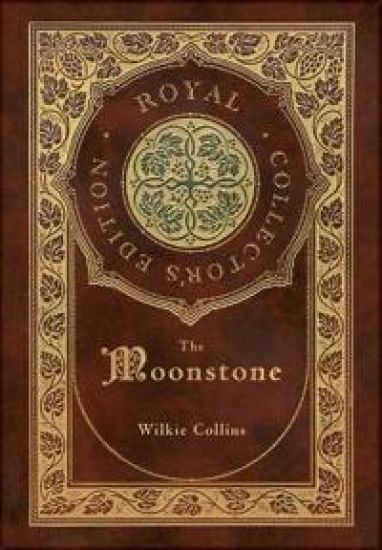
The Moonstone (Royal Collector's Edition) (Case Laminate Hardcover with Jacket)
Wilkie Collins
Engage Books
2022
sidottu
Rachel Verinder, a young English woman, inherits a large Indian diamond on her eighteenth birthday. The diamond is of great religious significance and extremely valuable, and three Hindu priests have dedicated their lives to recovering it. At her eighteenth birthday party, she wears the Moonstone, and later that night the diamond is stolen from Rachel's bedroom. A period of turmoil, unhappiness, misunderstandings, and ill luck ensues. The Moonstone is an early example of the modern detective novel and established many of the ground rules of the modern genre. The Moonstone of the title is a diamond (not to be confused with the semi-precious moonstone gem). It gained its name from its association with the Hindu god of the Moon, Chandra. It is protected by three hereditary guardians on the orders of Vishnu, and waxes and wanes in brilliance along with the light of the Moon. This case laminate collector's edition includes a Victorian-inspired dust jacket.
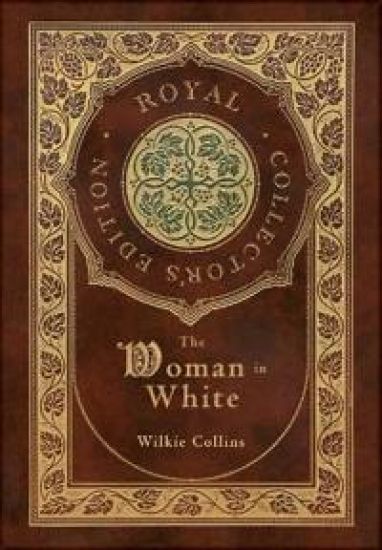
The Woman in White (Royal Collector's Edition) (Case Laminate Hardcover with Jacket)
Wilkie Collins
Engage Books
2022
sidottu
This is a charming and very readable novel written in the mid 19th century by a contemporary of Charles Darwin. Written around the time of Voltaire's Candide and Flaubert's A Sentimental Education, this novel also mixes the adventure and unexpected turns of a picaresque work with the protagonist being from a mildly upper class lineage. Like those others, A Rogue's Life trades on the main character's one foot in the noble's world and one foot in the workingman/adventurer's world to shed light on the inconsistencies and moral hazards that appear when those two spheres meet. A Rogue's Life also includes a 'lifelong' love story as well, although this one, fortunately, rewards the reader heaps more than the other works mentioned. ... (Avel Rudenko)
After Dark is a collection of six short stories by Wilkie Collins, first published in 1856. It was the author's first collection of short stories. Five of the stories were previously published in Household Words, a magazine edited by Charles Dickens. The stories are linked by a narrative framework. At the beginning and end of the book are "Leaves from Leah's Diary" William Kerby, a travelling portrait-painter, is in danger of losing his sight, and is required by his doctor to cease painting for a while. His wife Leah realizes that destitution threatens. He is a good story-teller, and Leah has the idea of writing down his stories and publishing them. Each story has a prologue, which was added to the original story that appeared in Household Words. (wikipedia.org)
This is a charming and very readable novel written in the mid 19th century by a contemporary of Charles Darwin. Written around the time of Voltaire's Candide and Flaubert's A Sentimental Education, this novel also mixes the adventure and unexpected turns of a picaresque work with the protagonist being from a mildly upper class lineage. Like those others, A Rogue's Life trades on the main character's one foot in the noble's world and one foot in the workingman/adventurer's world to shed light on the inconsistencies and moral hazards that appear when those two spheres meet. A Rogue's Life also includes a 'lifelong' love story as well, although this one, fortunately, rewards the reader heaps more than the other works mentioned. ... (Avel Rudenko)
Blind Love was an unfinished novel by Wilkie Collins, which he left behind on his death in 1889. It was completed by historian and novelist Sir Walter Besant. Collins's novel had already begun serialization in The Illustrated London News, even though the author had not yet completed it. (It ran from 6 July to 28 December of that year.) When it was published in book form on 1890, the volume included Besant's preface explaining the circumstances of the collaboration. Collins had started writing the novel in 1887, when newspapers were full of stories about Fenian violence in the wake of the previous year's defeat of the First Irish Home Rule Bill. Collins frequented Ye Olde Cheshire Cheese off London's Fleet Street and borrowed some traits for his male protagonist from John O'Connor Power who was also well known in the convivial tavern. Collins links the Irish Question to the Woman Question. The novel recounts the story of Lord Harry Norland, a member of a squad of political assassins; the book's heroine is Iris Henley, a bold and nonconformist Englishwoman who falls in love with the Irish Norland despite his criminal activities (the "blind love" of the title). The title was originally to have been Lord Harry, the colloquial name for the devil. (wikipedia.org)
Blind Love was an unfinished novel by Wilkie Collins, which he left behind on his death in 1889. It was completed by historian and novelist Sir Walter Besant. Collins's novel had already begun serialization in The Illustrated London News, even though the author had not yet completed it. (It ran from 6 July to 28 December of that year.) When it was published in book form on 1890, the volume included Besant's preface explaining the circumstances of the collaboration. Collins had started writing the novel in 1887, when newspapers were full of stories about Fenian violence in the wake of the previous year's defeat of the First Irish Home Rule Bill. Collins frequented Ye Olde Cheshire Cheese off London's Fleet Street and borrowed some traits for his male protagonist from John O'Connor Power who was also well known in the convivial tavern. Collins links the Irish Question to the Woman Question. The novel recounts the story of Lord Harry Norland, a member of a squad of political assassins; the book's heroine is Iris Henley, a bold and nonconformist Englishwoman who falls in love with the Irish Norland despite his criminal activities (the "blind love" of the title). The title was originally to have been Lord Harry, the colloquial name for the devil. (wikipedia.org)
Wilkie Collins is an amazing author and a favourite of mine, with a knack for spinning the happiest possible endings from his dark and integrating murder plots. This book will have you suspecting everything but the truth and smiling by the end. It is well written true to form and as usual for Mr Collins has some kind and loveable servants to round out the the sad stories. (Rebecca Williams)
Hide and Seek was Wilkie Collins' third published novel. It is the first of his novels involving the solution of a mystery, the elements of which are clearer to the reader than to the novel's characters. Suspense is created from the reader's uncertainty as to which characters will find out the truth, when and how. Hide and Seek was hailed by both contemporary and modern critics to be an advance on his previous work, the sensational melodrama Basil, though inferior to The Woman in White and other novels of his mature period. (wikipedia.org)
Wilkie Collins is an amazing author and a favourite of mine, with a knack for spinning the happiest possible endings from his dark and integrating murder plots. This book will have you suspecting everything but the truth and smiling by the end. It is well written true to form and as usual for Mr Collins has some kind and loveable servants to round out the the sad stories. (Rebecca Williams)
Fantastic sensationalism It's got the lot Lunatics, poison, murder, Bedlam, a Deadhouse. A really well paced ride of a read. BIOWilliam Wilkie Collins (8 January 1824 - 23 September 1889) was an English novelist and playwright known for The Woman in White (1859) and The Moonstone (1868). The last has been called the first modern English detective novel. Born to a London painter, William Collins, and his wife, the family moved to Italy when Collins was twelve, living there and in France for two years, so that he learned Italian and French. He worked at first as a tea merchant. On publishing his first novel, Antonina, in 1850, Collins met Charles Dickens, who became a friend and mentor. Some Collins works appeared first in Dickens's journals Household Words and All the Year Round. The two also collaborated on drama and fiction. Collins reached financial stability and an international following in the 1860s from his best-known works, but began to suffer from gout. He took opium for the pain, but became addicted to it. His health and his writing quality declined in the 1870s and 1880s. Collins was critical of the institution of marriage: he later split his time between widow Caroline Graves, with whom he had lived most of his adult life, treating her daughter as his, and the younger Martha Rudd, by whom he had three children. Collins's works were classified at the time as "sensation novels", a genre seen nowadays as the precursor to detective and suspense fiction. He also wrote penetratingly on the plight of women and on the social and domestic issues of his time. For example, his 1854 Hide and Seek contained one of the first portrayals of a deaf character in English literature. As did many writers of his time, Collins first published most of his novels as serials in magazines such as Dickens's All the Year Round, and was known as a master of the form, creating just the right degree of suspense to keep his audience reading from week to week. ... Collins died at 82 Wimpole Street, following a paralytic stroke. He is buried in Kensal Green Cemetery, West London. His headstone describes him as the author of The Woman in White. (wikipedia.org)
William Wilkie Collins (8 January 1824 - 23 September 1889) was an English novelist and playwright known for The Woman in White (1859) and The Moonstone (1868). The last has been called the first modern English detective novel. Born to a London painter, William Collins, and his wife, the family moved to Italy when Collins was twelve, living there and in France for two years, so that he learned Italian and French. He worked at first as a tea merchant. On publishing his first novel, Antonina, in 1850, Collins met Charles Dickens, who became a friend and mentor. Some Collins works appeared first in Dickens's journals Household Words and All the Year Round. The two also collaborated on drama and fiction. Collins reached financial stability and an international following in the 1860s from his best-known works, but began to suffer from gout. He took opium for the pain, but became addicted to it. His health and his writing quality declined in the 1870s and 1880s. Collins was critical of the institution of marriage: he later split his time between widow Caroline Graves, with whom he had lived most of his adult life, treating her daughter as his, and the younger Martha Rudd, by whom he had three children. Collins's works were classified at the time as "sensation novels", a genre seen nowadays as the precursor to detective and suspense fiction. He also wrote penetratingly on the plight of women and on the social and domestic issues of his time. For example, his 1854 Hide and Seek contained one of the first portrayals of a deaf character in English literature. As did many writers of his time, Collins first published most of his novels as serials in magazines such as Dickens's All the Year Round, and was known as a master of the form, creating just the right degree of suspense to keep his audience reading from week to week. ... Collins died at 82 Wimpole Street, following a paralytic stroke. He is buried in Kensal Green Cemetery, West London. His headstone describes him as the author of The Woman in White. (wikipedia.org)
Another crisp short novel from Wilkie Collins. As one who distrusts the institution of matrimony, he gives us another example of the somewhat strange Victorian marriage laws. The heroine of Miss or Mrs.?, Natalie, is fifteen years old. Her family wants her to wed Richard Turlington, a failing businessman who wants access to Natalie's father's fortune to save his hide. Natalie hates Turlington and secretly marries Launcelot Linzie, her cousin, who is unable to legally elope with her until her sixteenth birthday. Collins is a past master of knowing how to milk a complicated plot to good effect. Well worth reading. (Jim)
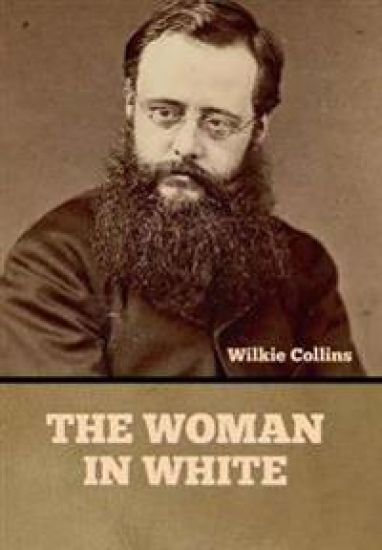
The Woman in White is Wilkie Collins's fifth published novel, written in 1859. It is considered to be among the first mystery novels and is widely regarded as one of the first (and finest) in the genre of "sensation novels". The story is sometimes considered an early example of detective fiction with protagonist Walter Hartright employing many of the sleuthing techniques of later private detectives. The use of multiple narrators (including nearly all the principal characters) draws on Collins's legal training, and as he points out in his preamble: "the story here presented will be told by more than one pen, as the story of an offence against the laws is told in Court by more than one witness". In 2003, Robert McCrum writing for The Observer listed The Woman in White number 23 in "the top 100 greatest novels of all time", and the novel was listed at number 77 on the BBC's survey The Big Read. (wikipedia.org)
William Wilkie Collins (8 January 1824 - 23 September 1889) was an English novelist and playwright known for The Woman in White (1859) and The Moonstone (1868). The last has been called the first modern English detective novel. Born to a London painter, William Collins, and his wife, the family moved to Italy when Collins was twelve, living there and in France for two years, so that he learned Italian and French. He worked at first as a tea merchant. On publishing his first novel, Antonina, in 1850, Collins met Charles Dickens, who became a friend and mentor. Some Collins works appeared first in Dickens's journals Household Words and All the Year Round. The two also collaborated on drama and fiction. Collins reached financial stability and an international following in the 1860s from his best-known works, but began to suffer from gout. He took opium for the pain, but became addicted to it. His health and his writing quality declined in the 1870s and 1880s. Collins was critical of the institution of marriage: he later split his time between widow Caroline Graves, with whom he had lived most of his adult life, treating her daughter as his, and the younger Martha Rudd, by whom he had three children. Collins's works were classified at the time as "sensation novels", a genre seen nowadays as the precursor to detective and suspense fiction. He also wrote penetratingly on the plight of women and on the social and domestic issues of his time. For example, his 1854 Hide and Seek contained one of the first portrayals of a deaf character in English literature. As did many writers of his time, Collins first published most of his novels as serials in magazines such as Dickens's All the Year Round, and was known as a master of the form, creating just the right degree of suspense to keep his audience reading from week to week. ... Collins died at 82 Wimpole Street, following a paralytic stroke. He is buried in Kensal Green Cemetery, West London. His headstone describes him as the author of The Woman in White. (wikipedia.org)