Kirjojen hintavertailu – 12 859 819 kirjaa ja 27 kauppaa
Kirjailija
Wilkie Collins
Kirjat ja teokset yhdessä paikassa: 2 039 kirjaa, julkaisuja vuosilta 1985–2026, suosituimpiin kuuluu Basil. Vertaile teosten hintoja ja tarkista saatavuus suomalaisista kirjakaupoista.
Namenlos - Roman - 3. Band ist ein unver nderter, hochwertiger Nachdruck der Originalausgabe aus dem Jahr 1862. Hansebooks ist Herausgeber von Literatur zu unterschiedlichen Themengebieten wie Forschung und Wissenschaft, Reisen und Expeditionen, Kochen und Ern hrung, Medizin und weiteren Genres. Der Schwerpunkt des Verlages liegt auf dem Erhalt historischer Literatur. Viele Werke historischer Schriftsteller und Wissenschaftler sind heute nur noch als Antiquit ten erh ltlich. Hansebooks verlegt diese B cher neu und tr gt damit zum Erhalt selten gewordener Literatur und historischem Wissen auch f r die Zukunft bei.
Namenlos - Roman - 2. Band ist ein unver nderter, hochwertiger Nachdruck der Originalausgabe aus dem Jahr 1862. Hansebooks ist Herausgeber von Literatur zu unterschiedlichen Themengebieten wie Forschung und Wissenschaft, Reisen und Expeditionen, Kochen und Ern hrung, Medizin und weiteren Genres. Der Schwerpunkt des Verlages liegt auf dem Erhalt historischer Literatur. Viele Werke historischer Schriftsteller und Wissenschaftler sind heute nur noch als Antiquit ten erh ltlich. Hansebooks verlegt diese B cher neu und tr gt damit zum Erhalt selten gewordener Literatur und historischem Wissen auch f r die Zukunft bei.
Ausgew hlte Werke von Wilkie Collins - Aus dem Englischen ist ein unver nderter, hochwertiger Nachdruck der Originalausgabe aus dem Jahr 1862. Hansebooks ist Herausgeber von Literatur zu unterschiedlichen Themengebieten wie Forschung und Wissenschaft, Reisen und Expeditionen, Kochen und Ern hrung, Medizin und weiteren Genres. Der Schwerpunkt des Verlages liegt auf dem Erhalt historischer Literatur. Viele Werke historischer Schriftsteller und Wissenschaftler sind heute nur noch als Antiquit ten erh ltlich. Hansebooks verlegt diese B cher neu und tr gt damit zum Erhalt selten gewordener Literatur und historischem Wissen auch f r die Zukunft bei.
No Name (1862) by Wilkie Collins is a 19th-century novel revolving around the issue of illegitimacy. The story begins in 1846, at Combe-Raven in West Somersetshire, the country residence of the happy Vanstone family. When Andrew Vanstone is killed suddenly in an accident and his wife follows shortly thereafter, it is revealed that they were not married at the time of their daughters' births, making their daughters "Nobody's Children" in the eyes of English law and robbing them of their inheritance.
Valeria Woodville's first act as a married woman is to sign her name in the marriage register incorrectly, and this slip is followed by the gradual disclosure of a series of secrets about her husband's earlier life, each of which leads on to another set of questions and enigmas. Her discoveries prompt her to defy her husband's authority, to take the law into into a labyrinthine maze of false clues and deceptive identities, in which the exploration of the tangled...
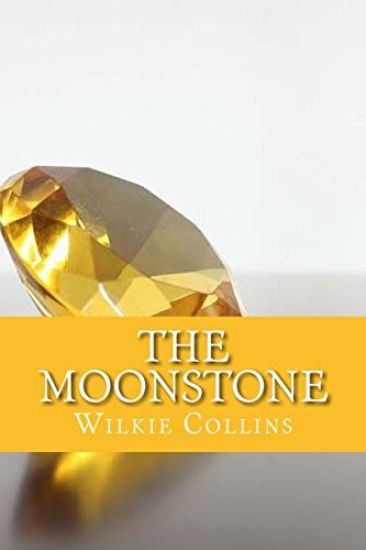
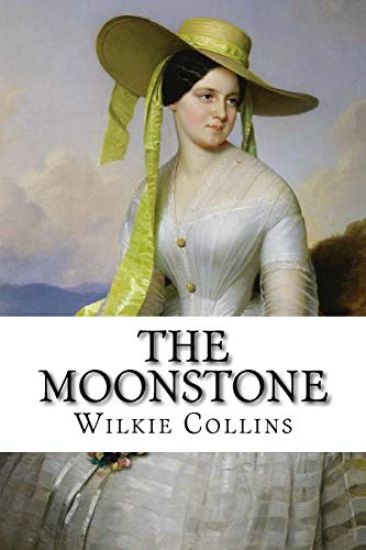
Widely regarded as the precursor of the modern mystery and suspense novels, The Moonstone tells of the events surrounding the disappearance of a mysterious (and cursed) yellow diamond. T. S. Eliot called it 'the first, the longest, and the best of modern English detective novels'. It contains a number of ideas which became common tropes of the genre, including a crime being investigated by talented amateurs who happen to be present when it is committed, and two police.
Colonel Herncastle, an unpleasant former soldier, brings the Moonstone back with him from India where he acquired it by theft and murder during the Siege of Seringapatam. Angry at his family, who shun him, he leaves it in his will as a birthday gift to his niece Rachel, thus exposing her to attack by the stone's hereditary guardians, who, legend says, will stop at nothing to retrieve it. Rachel wears the stone to her birthday party, but that night it disappears from her room. Suspicion falls on three Indian jugglers who have been near the house; on Rosanna Spearman, a maidservant who begins to act oddly and who then drowns herself in a local quicksand; and on Rachel herself, who also behaves suspiciously and is suddenly furious with Franklin Blake, with whom she has previously appeared to be enamoured, when he directs attempts to find it. Despite the efforts of Sergeant Cuff, a renowned detective, the house party ends with the mystery unsolved, and the protagonists disperse.
Widely regarded as the precursor of the modern mystery and suspense novels, The Moonstone tells of the events surrounding the disappearance of a mysterious (and cursed) yellow diamond. T. S. Eliot called it 'the first, the longest, and the best of modern English detective novels'. It contains a number of ideas which became common tropes of the genre, including a crime being investigated by talented amateurs who happen to be present when it is committed, and two police officers who exemplify respectively the 'Scotland Yard bungler' and the skilled, professional detective.
Collins's third novel, published in 1854; dedicated to Charles Dickens 'As a token of admiration and affection'. The artist Valentine Blyth has a very generous heart. He lovingly cares for his invalid wife, rescues a deaf orphan girl from maltreatment in a traveling circus and adopts her, and mentors a young man who gets in trouble with his tyrannical father. The girl, who received the nickname 'Madonna', falls in love with the young man, Zack. Because one of Valentine's biggest fears is that Madonna's blood relations will one day trace her and take her away from his home, he keeps the little that he knows of her origins a strict secret. One day, Zack befriends a mysterious stranger, who has just returned from years of rough life in the American wilderness. From that moment, the plot thickens, in mid-19th century dramatic style.
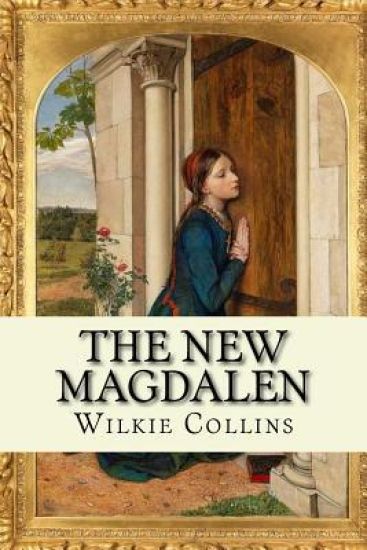
The New Magdalen (1873) by Wilkie Collins (1824-1889) is a story of identity-theft and battle with a bad conscience, complicated by social etiquette and tremors of strong emotion. It has been criticized as Wilkie Collins's most polemical book with a mission and has remained one of his more obscure works. It belongs to the latter period of his career when, it is often argued, his creative genius had runs it course and been replaced by an enthusiasm to lecture on social ills - this time on the miserable lot of the 'fallen woman' and the hypocrisy of the polite society. PLOT SUMMARY Mercy Merrick has been tricked into the tragic life of a woman of the streets, after a childhood with strolling players and gypsies. She struggles to rehabilitate herself, inspired by a sermon given by a young clergyman, Julian Gray, in the refuge where she was living. Working as a volunteer nurse in the Franco-German war of 1870, she meets Grace Roseberry, a penniless but well-connected and respectable young woman. When Grace is apparently killed by a German shell, Mercy assumes her identity. Armed with a letter of introduction to Grace's relation by marriage, Lady Janet Roy, she is helped to reach England by Horace Holmcroft, a war correspondent and acquaintance of Lady Roy. Mercy is warmly welcomed and becomes her companion and adopted daughter. With Lady Roy's approval, she becomes engaged to Horace. Grace is not dead, however, since her life has been saved by a German brain surgeon. She returns to England and is introduced to Lady Roy by Julian Gray, but lacking the evidence to back up her claim, is rejected as an imposter. Mercy is about to confess but is antagonised by Grace's vengeful, unforgiving nature. Grace is deemed insane and is about to be confined in an asylum when Mercy once more comes under the influence of Julian Gray, who falls in love with her, and she finally admits her deception. Horace breaks off their engagement while Grace accepts 500 as a bribe for her silence and leaves for Canada. Lady Roy, genuinely fond of Mercy, tries unsuccessfully to persuade her to remain as companion. At first Mercy refuses to marry Julian, in order not to ruin his career and social position. However, he becomes seriously ill and when he recovers Mercy finally agrees to marry him. Rejected by society, they sail to the New World to start life afresh.