Kirjojen hintavertailu – 12 859 819 kirjaa ja 27 kauppaa
Kirjailija
Wilkie Collins
Kirjat ja teokset yhdessä paikassa: 2 039 kirjaa, julkaisuja vuosilta 1985–2026, suosituimpiin kuuluu Basil. Vertaile teosten hintoja ja tarkista saatavuus suomalaisista kirjakaupoista.
A 500 bank note is stolen from Lady Lydiard. Present in the household are Isabel Miller, her adopted daughter; Felix Sweetsir, her nephew; Robert Moody, the steward; and Alfred Hardyman who has come to advise about Tommie, the ailing Scotch Terrier. Suspicion rests on Isabel who goes to stay with her aunt until her name is cleared. Moody, in love with Isabel, engages the slovenly detective, Old Sharon, to find the real thief. In the country at South Mordern, Isabel once again meets Hardyman who proposes marriage. She accepts on condition that Hardyman's family and friends will accept her. On the day of a celebratory luncheon they cancel because Felix, the real thief, has leaked the news that Isabel is suspected. In fact Felix stole the bank note to repay a gambling debt to Hardyman. The note is in Hardyman's missing pocket book, discovered by the gallant Tommie playing canine detective. Felix makes a lame excuse to Lady Lydiard before escaping to the continent. Isabel agrees to marry the faithful Moody.
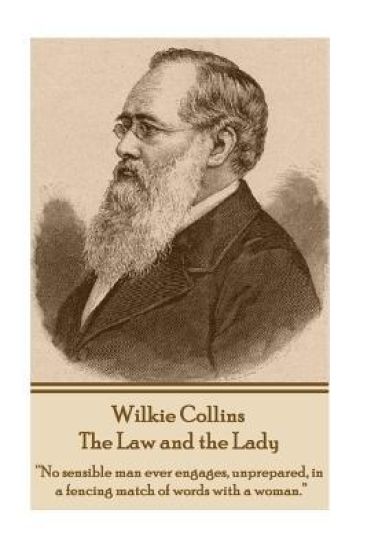
The tone in which those words were spoken was an insult in itself. Mercy suddenly lifted her head; the angry answer was on her lips. She checked it, and submitted in silence. "I will be worthy of Julian Gray's confidence in me," she thought, as she stood patiently by the chair. "I will bear anything from the woman whom I have wronged." William Wilkie Collins (8 January 1824 - 23 September 1889) was an English novelist, playwright, and short story writer. His best-known works are The Woman in White (1859), No Name (1862), Armadale (1866) and The Moonstone (1868). The last is considered the first modern English detective novel. Born into the family of painter William Collins in London, he lived with his family in Italy and France as a child and learned French and Italian. He worked as a clerk for a tea merchant. After his first novel, Antonina, was published in 1850, he met Charles Dickens, who became a close friend, mentor and collaborator. Some of Collins's works were first published in Dickens' journals All the Year Round and Household Words and the two collaborated on drama and fiction. Collins published his best known works in the 1860s, achieved financial stability and an international reputation. During that time he began suffering from gout. After taking opium for the pain, he developed an addiction. During the 1870s and 1880s the quality of his writing declined along with his health. Collins was critical of the institution of marriage and never married; he split his time between Caroline Graves, except for a two-year separation, and his common-law wife Martha Rudd, with whom he had three children. Collins was born at 11 New Cavendish Street, Marylebone, London, the son of a well-known Royal Academician landscape painter, William Collins and his wife, Harriet Geddes. Named after his father, he swiftly became known by his middle name, which honoured his godfather, David Wilkie. The family moved to Pond Street, Hampstead, in 1826. In 1828 Collins's brother Charles Allston Collins was born. Between 1829 and 1830, the Collins family moved twice, first to Hampstead Square and then to Porchester Terrace, Bayswater. Wilkie and Charles received their early education from their mother at home. The Collins family were deeply religious, and Collins's mother enforced strict church attendance on her sons, which Wilkie disliked. In 1835, Collins began attending school at the Maida Vale academy. From 1836 to 1838, he lived with his parents in Italy and France, which made a great impression on him. He learned Italian while the family was in Italy and began learning French, in which he would eventually become fluent. From 1838 to 1840, he attended the Reverend Cole's private boarding school in Highbury, where he was bullied by a boy who would force Collins to tell him a story before allowing him to go to sleep. "It was this brute who first awakened in me, his poor little victim, a power of which but for him I might never have been aware... When I left school I continued story telling for my own pleasure", Collins later said. In 1840 the family moved to 85 Oxford Terrace, Bayswater. In late 1840, he left school and was apprenticed as a clerk to the firm of tea merchants Antrobus & Co, owned by a friend of Wilkie's father. He disliked his clerical work but remained employed by the company for more than five years. Collins's first story The Last Stage Coachman, was published in the Illuminated Magazine in August 1843. In 1844 he travelled to Paris with Charles Ward. That same year he wrote his first novel, Iolani, or Tahiti as It Was; a Romance, which was submitted to Chapman and Hall but rejected in 1845.... To the memory By: Charles Allston Collins (London 25 January 1828 - 9 April 1873) was a British painter, writer and illustrator associated with the Pre-Raphaelite Brotherhood.....
La piste du crime. Tome 1er / Wilkie Collins.; trad. de l'anglais par Camille de CendreyDate de l'edition originale: 1893Ce livre est la reproduction fidele d'une oeuvre publiee avant 1920 et fait partie d'une collection de livres reimprimes a la demande editee par Hachette Livre, dans le cadre d'un partenariat avec la Bibliotheque nationale de France, offrant l'opportunite d'acceder a des ouvrages anciens et souvent rares issus des fonds patrimoniaux de la BnF. Les oeuvres faisant partie de cette collection ont ete numerisees par la BnF et sont presentes sur Gallica, sa bibliotheque numerique. En entreprenant de redonner vie a ces ouvrages au travers d'une collection de livres reimprimes a la demande, nous leur donnons la possibilite de rencontrer un public elargi et participons a la transmission de connaissances et de savoirs parfois difficilement accessibles. Nous avons cherche a concilier la reproduction fidele d'un livre ancien a partir de sa version numerisee avec le souci d'un confort de lecture optimal. Nous esperons que les ouvrages de cette nouvelle collection vous apporteront entiere satisfaction. Pour plus d'informations, rendez-vous sur www.hachettebnf.fr
After Dark is a collection of six short stories by Wilkie Collins, first published in 1856. It was the author's first collection of short stories. Five of the stories were previously published in Household Words, a magazine edited by Charles Dickens.... William Wilkie Collins (8 January 1824 - 23 September 1889) was an English novelist, playwright, and short story writer. His best-known works are The Woman in White (1859), No Name (1862), Armadale (1866) and The Moonstone (1868). The last is considered the first modern English detective novel. Born into the family of painter William Collins in London, he lived with his family in Italy and France as a child and learned French and Italian. He worked as a clerk for a tea merchant. After his first novel, Antonina, was published in 1850, he met Charles Dickens, who became a close friend, mentor and collaborator. Some of Collins's works were first published in Dickens' journals All the Year Round and Household Words and the two collaborated on drama and fiction. Collins published his best known works in the 1860s, achieved financial stability and an international reputation. During that time he began suffering from gout. After taking opium for the pain, he developed an addiction. During the 1870s and 1880s the quality of his writing declined along with his health. Collins was critical of the institution of marriage and never married; he split his time between Caroline Graves, except for a two-year separation, and his common-law wife Martha Rudd, with whom he had three children. Collins was born at 11 New Cavendish Street, Marylebone, London, the son of a well-known Royal Academician landscape painter, William Collins and his wife, Harriet Geddes. Named after his father, he swiftly became known by his middle name, which honoured his godfather, David Wilkie. The family moved to Pond Street, Hampstead, in 1826. In 1828 Collins's brother Charles Allston Collins was born. Between 1829 and 1830, the Collins family moved twice, first to Hampstead Square and then to Porchester Terrace, Bayswater. Wilkie and Charles received their early education from their mother at home. The Collins family were deeply religious, and Collins's mother enforced strict church attendance on her sons, which Wilkie disliked. In 1835, Collins began attending school at the Maida Vale academy. From 1836 to 1838, he lived with his parents in Italy and France, which made a great impression on him. He learned Italian while the family was in Italy and began learning French, in which he would eventually become fluent. From 1838 to 1840, he attended the Reverend Cole's private boarding school in Highbury, where he was bullied by a boy who would force Collins to tell him a story before allowing him to go to sleep. "It was this brute who first awakened in me, his poor little victim, a power of which but for him I might never have been aware... When I left school I continued story telling for my own pleasure", Collins later said. In 1840 the family moved to 85 Oxford Terrace, Bayswater. In late 1840, he left school and was apprenticed as a clerk to the firm of tea merchants Antrobus & Co, owned by a friend of Wilkie's father. He disliked his clerical work but remained employed by the company for more than five years. Collins's first story The Last Stage Coachman, was published in the Illuminated Magazine in August 1843. In 1844 he travelled to Paris with Charles Ward. That same year he wrote his first novel, Iolani, or Tahiti as It Was; a Romance, which was submitted to Chapman and Hall but rejected in 1845. The novel remained unpublished during his lifetime. Collins said of it: "My youthful imagination ran riot among the noble savages, in scenes which caused the respectable British publisher to declare that it was impossible to put his name on the title page of such a novel."
The Woman in White, published in 1860, is one of the earliest and most-beloved mystery novels, but at the time, critics were not exactly so positive. Novelist and critic Edward Bulwer-Lytton, for example, called the novel 'great trash.'On the other hand, the public loved the mystery and intrigue behind the identity of the mysterious Woman in White and anxiously waited to read the continuation of the story each week as a new chapter showed up in the weekly publication All the Year Round. The story still intrigues people; it was turned into a PBS Mystery presentation and an Andrew Lloyd Webber musical in the last 15 years
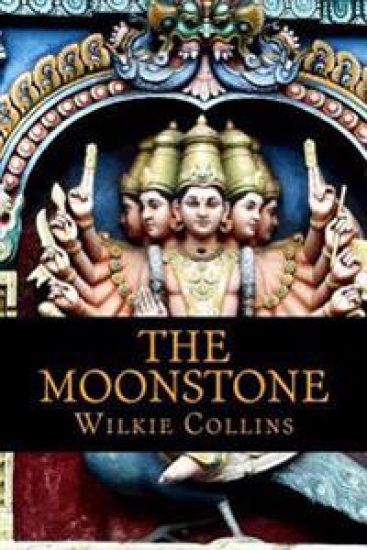
Colonel Herncastle, an unpleasant former soldier, brings the Moonstone back with him from India where he acquired it by theft and murder during the Siege of Seringapatam. Angry at his family, who shun him, he leaves it in his will as a birthday gift to his niece Rachel, thus exposing her to attack by the stone's hereditary guardians, who, legend says, will stop at nothing to retrieve it. Rachel wears the stone to her birthday party, but that night it disappears from her room. Suspicion falls on three Indian jugglers who have been near the house; on Rosanna Spearman, a maidservant who begins to act oddly and who then drowns herself in a local quicksand; and on Rachel herself, who also behaves suspiciously and is suddenly furious with Franklin Blake, with whom she has previously appeared to be enamoured, when he directs attempts to find it. Despite the efforts of Sergeant Cuff, a renowned detective, the house party ends with the mystery unsolved, and the protagonists disperse.