Kirjojen hintavertailu – 12 859 819 kirjaa ja 27 kauppaa
Kirjailija
Wilkie Collins
Kirjat ja teokset yhdessä paikassa: 2 039 kirjaa, julkaisuja vuosilta 1985–2026, suosituimpiin kuuluu Basil. Vertaile teosten hintoja ja tarkista saatavuus suomalaisista kirjakaupoista.
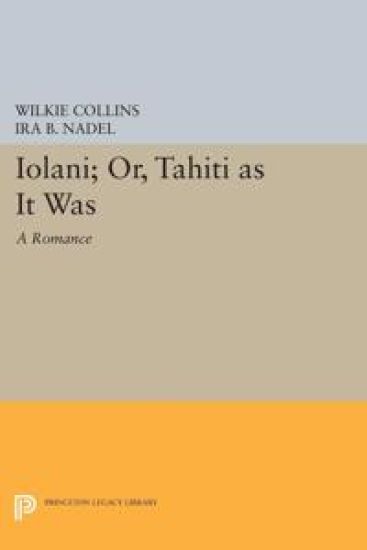
Written 150 years ago, never published, and presumed lost for nearly a century, Wilkie Collins's earliest novel now appears in print for the first time. Iolani is a sensational romance--a tale of terror and suspense, bravery and betrayal, set against the lush backdrop of Tahiti. The book's complicated history is worthy of a writer famous for intricate plots hinging on long-kept secrets. Collins wrote the book as a young man in the early 1840s, twenty years before The Moonstone and The Woman in White made his name among Victorian novelists. He failed to find a publisher for the work, shelved the manuscript for years, and eventually gave it to an acquaintance. It disappeared into the hands of private collectors and remained there--acquiring mythical status as a lost novel--from the turn of the century until its sudden appearance on the rare book market in New York in 1991. This first edition appears with the permission of the new owners, who keep the mystery alive by remaining anonymous. The novel is set in Tahiti prior to European contact. It tells the story of the diabolical high priest, Iolani , and the heroic young woman, Idua, who bears his child. Determined to defy the Tahitian custom of killing firstborn children, Idua and her friend Aimata flee with the baby and take refuge among Iolani's enemies. The vengeful priest pursues them, setting into motion a plot that features civil war, sorcery, sacrificial rites, wild madmen, treachery, and love. Collins explores themes that he would return to again and again in his career: oppression by sinister, patriarchal figures; the bravery of forceful, unorthodox women; the psychology of the criminal mind; the hypocrisy of moralists; and Victorian ideas of the exotic. As Ira Nadel shows in his introduction, the novel casts new light on Collins's development as a writer and on the creation of his later masterpieces. A sample page from the manuscript appears as the frontispiece to this edition. The publication of Iolani is a major literary event: a century and half late, Wilkie Collins makes his literary debut. Originally published in 1999. The Princeton Legacy Library uses the latest print-on-demand technology to again make available previously out-of-print books from the distinguished backlist of Princeton University Press. These editions preserve the original texts of these important books while presenting them in durable paperback and hardcover editions. The goal of the Princeton Legacy Library is to vastly increase access to the rich scholarly heritage found in the thousands of books published by Princeton University Press since its founding in 1905.
The Woman in White is Wilkie Collins' fifth published novel, written in 1859. It is considered to be among the first mystery novels and is widely regarded as one of the first (and finest) in the genre of "sensation novels". The story is sometimes considered an early example of detective fiction with protagonist Walter Hartright employing many of the sleuthing techniques of later private detectives. The use of multiple narrators (including nearly all the principal characters) draws on Collins's legal training, and as he points out in his Preamble: "the story here presented will be told by more than one pen, as the story of an offence against the laws is told in Court by more than one witness".
Man and Wife was Wilkie Collins' ninth published novel. It is the second of his novels (after No Name) in which social questions provide the main impetus of the plot. Collins increasingly used his novels to explore social abuses, which according to critics tends to detract from their qualities as fiction. The social issue which drives the plot is the state of Scots marriage law; at the time the novel was written, any couple who were legally entitled to marry and who asserted that they were married before witnesses, or in writing, were regarded in Scotland as being married in law. The novel has a complex plot, common in Collins' work. In a Prologue, a selfish and ambitious man casts off his wife in order to marry a wealthier and better-connected woman, by taking advantage of a loophole in the marriage laws of Ireland. The initial action takes place in the widowed Lady Lundie's house in Scotland. Geoffrey Delamayn has promised marriage to his lover Anne Silvester (governess to Lady Lundie's stepdaughter Blanche), who has incurred the enmity of her employer. The spendthrift Geoffrey is about to be disinherited, and wishes to escape from his promise and marry a wealthy wife. Nevertheless he is obliged to arrange a rendezvous with Anne, in the character of his wife, at an inn, and documents this in an exchange of notes with her. Subsequently, urgent matters force him to send his friend Arnold Brinkworth, Blanche's fianc , to Anne in his place. To gain access to her, Arnold must ask for "his wife". Although nothing improper passes between them, they appear to the landlady and to Bishopriggs, a waiter, to be man and wife. Thus both Geoffrey and Arnold might be deemed to be married to Anne, depending on the weight put on the spoken and written evidence. Most of the novel concerns Anne's, Geoffrey's and Arnold's attempts to clarify their marital status: Anne needs to be married to save her reputation Geoffrey wishes to cast off Anne by asserting that she is married to Arnold Arnold wishes to marry Blanche, but fears he has accidentally already married Anne under Scots law. In subsequent chapters Geoffrey, a keen athlete, courts Mrs Glenarm, a wealthy young widow, while Anne consults lawyers who give her conflicting advice about her position, and later tries to explain the situation to Mrs Glenarm, who rebuffs her. Arnold seeks the advice of Lady Lundie's brother-in-law Sir Patrick Lundie, a retired lawyer. Sir Patrick approaches the problem with energy, but owing to various mishaps, Geoffrey's determination that his scheme shall succeed, and the unsatisfactory state of the law, is not immediately successful. However he ascertains that the correspondence linking Geoffrey and Anne exists and was stolen at the inn by Bishopriggs, who tries to extort money for it. Anne, who strongly wishes to remove any impediment to Blanche and Arnold's marriage, comes to the same conclusion and forces Bishopriggs to give her the letter by threatening to reveal its contents, which would make it worthless for blackmail. Eventually Anne offers to reveal her relations with Geoffrey, even at the cost of her reputation - impressing Sir Patrick with her courageous and honourable behaviour. At a meeting of all the parties and their lawyers, she makes her revelations. Geoffrey can no longer avoid honouring his promise to her and acknowledges her as his wife. A sub-plot concerns Geoffrey's athleticism. While training for an important race, Geoffrey is discovered to have a serious physical ailment rendering him liable to a paralytic stroke. In the race itself, in which Geoffrey represents the South of England against the North, he collapses near the end, leaving his opponent the victor. His "friends" desert him, having lost their bets placed on him.
Heart and Science turns on the fate of the orphaned Carmina Graywell, who is left in the charge of her aunt and guardian Mrs. Gallilee when her fianc is forced to take an extended trip to Canada's drier climes in order to recover his health. Over the issue of her inheritance Mrs. Gallilee schemes to manipulate, control and ultimately destroy the na ve but strong-willed Carmina. The story is complicated by the machinations of Dr. Benjulia, a dark genius whose passionate devotion to the study of diseases of the brain leads him to encourage the progress of Carmina's life-threatening brain illness for the sake of scientific observation; the narrative builds to a pair of spectacularly lurid climactic scenes.
This book is a result of an effort made by us towards making a contribution to the preservation and repair of original classic literature. In an attempt to preserve, improve and recreate the original content, we have worked towards: 1. Type-setting & Reformatting: The complete work has been re-designed via professional layout, formatting and type-setting tools to re-create the same edition with rich typography, graphics, high quality images, and table elements, giving our readers the feel of holding a 'fresh and newly' reprinted and/or revised edition, as opposed to other scanned & printed (Optical Character Recognition - OCR) reproductions. 2. Correction of imperfections: As the work was re-created from the scratch, therefore, it was vetted to rectify certain conventional norms with regard to typographical mistakes, hyphenations, punctuations, blurred images, missing content/pages, and/or other related subject matters, upon our consideration. Every attempt was made to rectify the imperfections related to omitted constructs in the original edition via other references. However, a few of such imperfections which could not be rectified due to intentional\unintentional omission of content in the original edition, were inherited and preserved from the original work to maintain the authenticity and construct, relevant to the work. We believe that this work holds historical, cultural and/or intellectual importance in the literary works community, therefore despite the oddities, we accounted the work for print as a part of our continuing effort towards preservation of literary work and our contribution towards the development of the society as a whole, driven by our beliefs. We are grateful to our readers for putting their faith in us and accepting our imperfections with regard to preservation of the historical content. HAPPY READING