Kirjojen hintavertailu – 12 859 829 kirjaa ja 27 kauppaa
Kirjailija
William James
Kirjat ja teokset yhdessä paikassa: 603 kirjaa, julkaisuja vuosilta 1896–2026, suosituimpiin kuuluu Pragmatism a New Name for Some Old Ways of Thinking. Vertaile teosten hintoja ja tarkista saatavuus suomalaisista kirjakaupoista.
William James (January 11, 1842 - August 26, 1910) was an American philosopher and psychologist who was also trained as a physician. The first educator to offer a psychology course in the United States, James was one of the leading thinkers of the late nineteenth century and is believed by many to be one of the most influential philosophers the United States has ever produced, while others have labeled him the "Father of American psychology".
William James (January 11, 1842 - August 26, 1910) was an American philosopher and psychologist who was also trained as a physician. The first educator to offer a psychology course in the United States, James was one of the leading thinkers of the late nineteenth century and is believed by many to be one of the most influential philosophers the United States has ever produced, while others have labeled him the "Father of American psychology". Along with Charles Sanders Peirce and John Dewey, James is considered to be one of the major figures associated with the philosophical school known as pragmatism, and is also cited as one of the founders of functional psychology. A Review of General Psychology survey, published in 2002, ranked James as the 14th most cited psychologist of the 20th century. He also developed the philosophical perspective known as radical empiricism. James' work has influenced intellectuals such as mile Durkheim, W. E. B. Du Bois, Edmund Husserl, Bertrand Russell, Ludwig Wittgenstein, Hilary Putnam, and Richard Rorty, and has even influenced Presidents, such as Jimmy Carter.
William James (January 11, 1842 - August 26, 1910) was an American philosopher and psychologist who was also trained as a physician. The first educator to offer a psychology course in the United States, James was one of the leading thinkers of the late nineteenth century and is believed by many to be one of the most influential philosophers the United States has ever produced, while others have labeled him the "Father of American psychology." Along with Charles Sanders Peirce and John Dewey, James is considered to be one of the major figures associated with the philosophical school known as pragmatism, and is also cited as one of the founders of functional psychology. A Review of General Psychology survey, published in 2002, ranked James as the 14th most cited psychologist of the 20th century. He also developed the philosophical perspective known as radical empiricism. James' work has influenced intellectuals such as mile Durkheim, W. E. B. Du Bois, Edmund Husserl, Bertrand Russell, Ludwig Wittgenstein, Hilary Putnam, and Richard Rorty, and has even influenced Presidents, such as Jimmy Carter.
William James (January 11, 1842 - August 26, 1910) was an American philosopher and psychologist who was also trained as a physician. The first educator to offer a psychology course in the United States, James was one of the leading thinkers of the late nineteenth century and is believed by many to be one of the most influential philosophers the United States has ever produced, while others have labeled him the "Father of American psychology". Along with Charles Sanders Peirce and John Dewey, James is considered to be one of the major figures associated with the philosophical school known as pragmatism, and is also cited as one of the founders of functional psychology. A Review of General Psychology analysis, published in 2002, ranked James as the 14th most eminent psychologist of the 20th century. He also developed the philosophical perspective known as radical empiricism. James' work has influenced intellectuals such as mile Durkheim, W. E. B. Du Bois, Edmund Husserl, Bertrand Russell, Ludwig Wittgenstein, Hilary Putnam, and Richard Rorty, and has even influenced Presidents, such as Jimmy Carter. Born into a wealthy family, James was the son of the Swedenborgian theologian Henry James Sr. and the brother of both the prominent novelist Henry James, and the diarist Alice James. James wrote widely on many topics, including epistemology, education, metaphysics, psychology, religion, and mysticism. Among his most influential books are The Principles of Psychology, which was a groundbreaking text in the field of psychology, Essays in Radical Empiricism, an important text in philosophy, and The Varieties of Religious Experience, which investigated different forms of religious experience, which also included the then theories on mind-cure. Philosophy of religion James did important work in philosophy of religion. In his Gifford Lectures at the University of Edinburgh he provided a wide-ranging account of The Varieties of Religious Experience (1902) and interpreted them according to his pragmatic leanings. Some of the important claims he makes in this regard: Religious genius (experience) should be the primary topic in the study of religion, rather than religious institutions-since institutions are merely the social descendant of genius. The intense, even pathological varieties of experience (religious or otherwise) should be sought by psychologists, because they represent the closest thing to a microscope of the mind-that is, they show us in drastically enlarged form the normal processes of things. In order to usefully interpret the realm of common, shared experience and history, we must each make certain "over-beliefs" in things which, while they cannot be proven on the basis of experience, help us to live fuller and better lives. Religious Mysticism is only one half of mysticism, the other half is composed of the insane and both of these are co-located in the 'great subliminal or transmarginal region'. James investigated mystical experiences throughout his life, leading him to experiment with chloral hydrate (1870), amyl nitrite (1875), nitrous oxide (1882), and peyote (1896). James claimed that it was only when he was under the influence of nitrous oxide that he was able to understand Hegel. He concluded that while the revelations of the mystic hold true, they hold true only for the mystic; for others, they are certainly ideas to be considered, but can hold no claim to truth without personal experience of such. American Philosophy: An Encyclopedia classes him as one of several figures who "took a more pantheist or pandeist approach by rejecting views of God as separate from the world."
William James (January 11, 1842 - August 26, 1910) was an American philosopher and psychologist who was also trained as a physician. The first educator to offer a psychology course in the United States, James was one of the leading thinkers of the late nineteenth century and is believed by many to be one of the most influential philosophers the United States has ever produced, while others have labeled him the "Father of American psychology". Along with Charles Sanders Peirce and John Dewey, James is considered to be one of the major figures associated with the philosophical school known as pragmatism, and is also cited as one of the founders of functional psychology. A Review of General Psychology analysis, published in 2002, ranked James as the 14th most eminent psychologist of the 20th century. He also developed the philosophical perspective known as radical empiricism. James' work has influenced intellectuals such as mile Durkheim, W. E. B. Du Bois, Edmund Husserl, Bertrand Russell, Ludwig Wittgenstein, Hilary Putnam, and Richard Rorty, and has even influenced Presidents, such as Jimmy Carter. Born into a wealthy family, James was the son of the Swedenborgian theologian Henry James Sr. and the brother of both the prominent novelist Henry James, and the diarist Alice James. James wrote widely on many topics, including epistemology, education, metaphysics, psychology, religion, and mysticism. Among his most influential books are The Principles of Psychology, which was a groundbreaking text in the field of psychology, Essays in Radical Empiricism, an important text in philosophy, and The Varieties of Religious Experience, which investigated different forms of religious experience, which also included the then theories on mind-cure. Philosophy of religion James did important work in philosophy of religion. In his Gifford Lectures at the University of Edinburgh he provided a wide-ranging account of The Varieties of Religious Experience (1902) and interpreted them according to his pragmatic leanings. Some of the important claims he makes in this regard: Religious genius (experience) should be the primary topic in the study of religion, rather than religious institutions-since institutions are merely the social descendant of genius. The intense, even pathological varieties of experience (religious or otherwise) should be sought by psychologists, because they represent the closest thing to a microscope of the mind-that is, they show us in drastically enlarged form the normal processes of things. In order to usefully interpret the realm of common, shared experience and history, we must each make certain "over-beliefs" in things which, while they cannot be proven on the basis of experience, help us to live fuller and better lives. Religious Mysticism is only one half of mysticism, the other half is composed of the insane and both of these are co-located in the 'great subliminal or transmarginal region'. James investigated mystical experiences throughout his life, leading him to experiment with chloral hydrate (1870), amyl nitrite (1875), nitrous oxide (1882), and peyote (1896). James claimed that it was only when he was under the influence of nitrous oxide that he was able to understand Hegel. He concluded that while the revelations of the mystic hold true, they hold true only for the mystic; for others, they are certainly ideas to be considered, but can hold no claim to truth without personal experience of such. American Philosophy: An Encyclopedia classes him as one of several figures who "took a more pantheist or pandeist approach by rejecting views of God as separate from the world."
William James (January 11, 1842 - August 26, 1910) was an American philosopher and psychologist who was also trained as a physician. The first educator to offer a psychology course in the United States, James was one of the leading thinkers of the late nineteenth century and is believed by many to be one of the most influential philosophers the United States has ever produced, while others have labeled him the "Father of American psychology". Along with Charles Sanders Peirce and John Dewey, James is considered to be one of the major figures associated with the philosophical school known as pragmatism, and is also cited as one of the founders of functional psychology. A Review of General Psychology analysis, published in 2002, ranked James as the 14th most eminent psychologist of the 20th century. He also developed the philosophical perspective known as radical empiricism. James' work has influenced intellectuals such as mile Durkheim, W. E. B. Du Bois, Edmund Husserl, Bertrand Russell, Ludwig Wittgenstein, Hilary Putnam, and Richard Rorty, and has even influenced Presidents, such as Jimmy Carter. Born into a wealthy family, James was the son of the Swedenborgian theologian Henry James Sr. and the brother of both the prominent novelist Henry James, and the diarist Alice James. James wrote widely on many topics, including epistemology, education, metaphysics, psychology, religion, and mysticism. Among his most influential books are The Principles of Psychology, which was a groundbreaking text in the field of psychology, Essays in Radical Empiricism, an important text in philosophy, and The Varieties of Religious Experience, which investigated different forms of religious experience, which also included the then theories on mind-cure. William James was born at the Astor House in New Hampshire. He was the son of Henry James Sr., a noted and independently wealthy Swedenborgian theologian well acquainted with the literary and intellectual elites of his day. The intellectual brilliance of the James family milieu and the remarkable epistolary talents of several of its members have made them a subject of continuing interest to historians, biographers, and critics. William James received an eclectic trans-Atlantic education, developing fluency in both German and French. Education in the James household encouraged cosmopolitanism. The family made two trips to Europe while William James was still a child, setting a pattern that resulted in thirteen more European journeys during his life. His early artistic bent led to an apprenticeship in the studio of William Morris Hunt in Newport, Rhode Island, but he switched in 1861 to scientific studies at the Lawrence Scientific School of Harvard University. In his early adulthood, James suffered from a variety of physical ailments, including those of the eyes, back, stomach, and skin. He was also tone deaf. He was subject to a variety of psychological symptoms which were diagnosed at the time as neurasthenia, and which included periods of depression during which he contemplated suicide for months on end. Two younger brothers, Garth Wilkinson (Wilky) and Robertson (Bob), fought in the Civil War. The other three siblings (William, Henry, and Alice James) all suffered from periods of invalidism. He took up medical studies at Harvard Medical School in 1864 (according to his brother Henry James). He took a break in the spring of 1865 to join naturalist Louis Agassiz on a scientific expedition up the Amazon River, but aborted his trip after eight months, as he suffered bouts of severe seasickness and mild smallpox. His studies were interrupted once again due to illness in April 1867. He traveled to Germany in search of a cure and remained there until November 1868; at that time he was 26 years old. During this period, he began to publish; reviews of his works appeared in literary periodicals such as the North American Review....
William James (January 11, 1842 - August 26, 1910) was an American philosopher and psychologist who was also trained as a physician. The first educator to offer a psychology course in the United States, James was one of the leading thinkers of the late nineteenth century and is believed by many to be one of the most influential philosophers the United States has ever produced, while others have labeled him the "Father of American psychology".
Part of theLongman Library of Primary Sources in Philosophy, this edition of the William James' Selected Essays is framed by a pedagogical structure designed to make this important work of philosophy more accessible and meaningful for undergraduates.
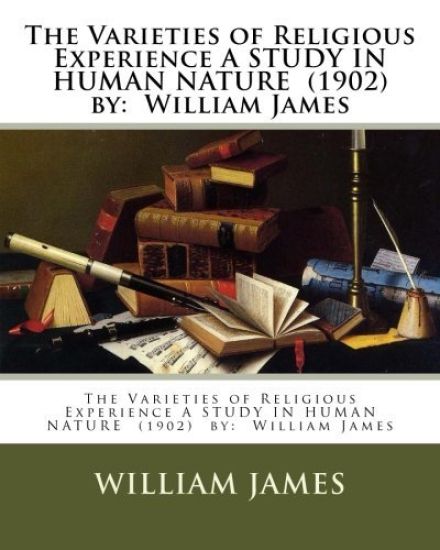
The Varieties of Religious Experience: A Study in Human Nature *is a book by the Harvard psychologist and philosopher William James comprising 20 lectures given at the University of Edinburgh in Scotland. These lectures concerned the nature of religion and the neglect of science, in James' view, in the academic study of religion. Soon after its publication, the book found its way into the canon of psychology and philosophy, and has remained in print for over a century. James was most interested in direct religious experiences. Theology and the organizational aspects of religion were of secondary interest. He believed that religious experiences were simply human experiences: "Religious happiness is happiness. Religious trance is trance." He believed that religious experiences can have "morbid origins" in brain pathology and can be irrational but nevertheless are largely positive. Get Your Copy Now.