Kirjojen hintavertailu – 12 859 829 kirjaa ja 27 kauppaa

Kirjailija

William James

Kirjat ja teokset yhdessä paikassa: 603 kirjaa, julkaisuja vuosilta 1896–2026, suosituimpiin kuuluu Pragmatism a New Name for Some Old Ways of Thinking. Vertaile teosten hintoja ja tarkista saatavuus suomalaisista kirjakaupoista.

603 kirjaa

Kirjojen julkaisuvuodet: 1896–2026.

The Letters of Charlotte, During her Connexion With Werter. [Two Lines of Quotation in Italian] Vol. I[-II]. of 2; Volume 1
The 18th century was a wealth of knowledge, exploration and rapidly growing technology and expanding record-keeping made possible by advances in the printing press. In its determination to preserve the century of revolution, Gale initiated a revolution of its own: digitization of epic proportions to preserve these invaluable works in the largest archive of its kind. Now for the first time these high-quality digital copies of original 18th century manuscripts are available in print, making them highly accessible to libraries, undergraduate students, and independent scholars. Western literary study flows out of eighteenth-century works by Alexander Pope, Daniel Defoe, Henry Fielding, Frances Burney, Denis Diderot, Johann Gottfried Herder, Johann Wolfgang von Goethe, and others. Experience the birth of the modern novel, or compare the development of language using dictionaries and grammar discourses. ++++The below data was compiled from various identification fields in the bibliographic record of this title. This data is provided as an additional tool in helping to insure edition identification: ++++British LibraryW020676Written in imitation of Goethe's Sorrows of Werter, and intended to counter the dangerous ideas of that work. Attributed to William James on the basis of a letter, now part of the Speck Collection of Goetheana at Yale University, from James to the London New York: Printed by William A. Davis, for E. Duyckinck & Co. T. Allen, T. & J. Swords, T. Greenleaf, and J. Tiebout, 1797. xii, 1],14-240p., 1]leaf of plates: ill.; 12

The Letters of Charlotte, During her Connexion With Werter. [Two Lines of Quotation in Italian] Vol. I[-II]. of 2; Volume 2
The 18th century was a wealth of knowledge, exploration and rapidly growing technology and expanding record-keeping made possible by advances in the printing press. In its determination to preserve the century of revolution, Gale initiated a revolution of its own: digitization of epic proportions to preserve these invaluable works in the largest archive of its kind. Now for the first time these high-quality digital copies of original 18th century manuscripts are available in print, making them highly accessible to libraries, undergraduate students, and independent scholars. Western literary study flows out of eighteenth-century works by Alexander Pope, Daniel Defoe, Henry Fielding, Frances Burney, Denis Diderot, Johann Gottfried Herder, Johann Wolfgang von Goethe, and others. Experience the birth of the modern novel, or compare the development of language using dictionaries and grammar discourses. ++++The below data was compiled from various identification fields in the bibliographic record of this title. This data is provided as an additional tool in helping to insure edition identification: ++++British LibraryW020676Written in imitation of Goethe's Sorrows of Werter, and intended to counter the dangerous ideas of that work. Attributed to William James on the basis of a letter, now part of the Speck Collection of Goetheana at Yale University, from James to the London New York: Printed by William A. Davis, for E. Duyckinck & Co. T. Allen, T. & J. Swords, T. Greenleaf, and J. Tiebout, 1797. xii, 1],14-240p., 1]leaf of plates: ill.; 12
The Varieties of Religious Experience

The Varieties of Religious Experience

William James

Digireads.com
2018
pokkari

Halvin toimitettuna 25,70 €

First published in 1902, "The Varieties of Religious Experience" is William James' philosophical and psychological examination of the nature of religion in human civilization. Based on James's own Gifford Lectures given at the University of Edinburgh in Scotland between 1901 and 1902, James argues that "Scientific theories are organically conditioned just as much as religious emotions are; and if we only knew the facts intimately enough, we should doubtless see 'the liver' determining the dicta of the sturdy atheist as decisively as it does those of the Methodist under conviction anxious about his soul. When it alters in one way the blood that percolates it, we get the Methodist, when in another way, we get the atheist form of mind." William James' examination of the psychology of religion in this work arose out of a perceived need for the academic study of the subject. The concepts put forth here would later be developed into James' philosophy of pragmatism, which he expounded upon in his 1907 work "Pragmatism." "The Varieties of Religious Experience" has been acknowledged as a monumental work of modern psychology ever since its original publication. This edition is printed on premium acid-free paper.
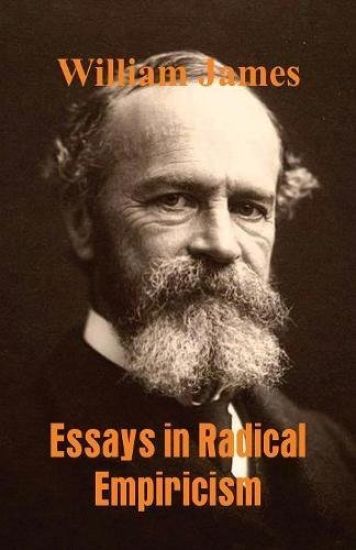
Essays in Radical Empiricism

Essays in Radical Empiricism

William James

Wilder Publications
2018
sidottu
Essays in Radical Empiricism William James Essays in Radical Empiricism (ERE) by William James is a collection edited and published posthumously by his colleague and biographer Ralph Barton Perry in 1912. It was assembled from ten out of a collection of twelve reprinted journal articles published from 1904-1905 which James had deposited in August, 1906, at the Harvard University Library and the Harvard Department of Philosophy for supplemental use by his students. Perry replaced two essays from the original list with two others, one of which didn't exist at the earlier time. We are delighted to publish this classic book as part of our extensive Classic Library collection. Many of the books in our collection have been out of print for decades, and therefore have not been accessible to the general public. The aim of our publishing program is to facilitate rapid access to this vast reservoir of literature, and our view is that this is a significant literary work, which deserves to be brought back into print after many decades. The contents of the vast majority of titles in the Classic Library have been scanned from the original works. To ensure a high quality product, each title has been meticulously hand curated by our staff. Our philosophy has been guided by a desire to provide the reader with a book that is as close as possible to ownership of the original work. We hope that you will enjoy this wonderful classic work, and that for you it becomes an enriching experience. william james psychology william james philosophy william james ap psychology a pluralistic universe william james pdf
Memories and Studies

Memories and Studies

William James

Createspace Independent Publishing Platform
2018
nidottu
Thank you for checking out this book by Theophania Publishing. We appreciate your business and look forward to serving you soon. We have thousands of titles available, and we invite you to search for us by name, contact us via our website, or download our most recent catalogues. It would be unnatural to have such an assemblage as this meet in the Museum and Faculty Room of this University and yet have no public word spoken in honor of a name which must be silently present to the minds of all our visitors. At some near future day, it is to be hoped some one of you who is well acquainted with Agassiz's scientific career will discourse here concerning it, -I could not now, even if I would, speak to you of that of which you have far more intimate knowledge than I. On this social occasion it has seemed that what Agassiz stood for in the way of character and influence is the more fitting thing to commemorate, and to that agreeable task I have been called. He made an impression that was unrivalled. He left a sort of popular myth-the Agassiz legend, as one might say-behind him in the air about us; and life comes kindlier to all of us, we get more recognition from the world, because we call ourselves naturalists, -and that was the class to which he also belonged.
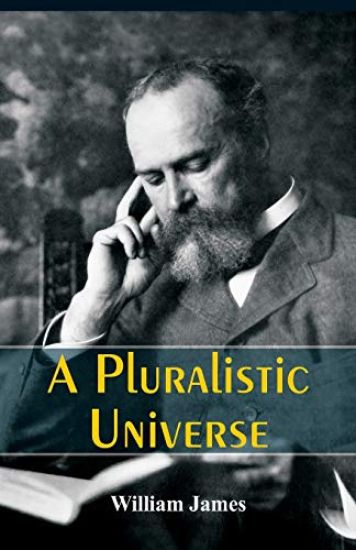
A Pluralistic Universe

A Pluralistic Universe

William James

Alpha Edition
2017
pokkari
Craving an intellectually stimulating read? Dive into A Pluralistic Universe by William James, an influential thinker and psychologist who also happened to be the brother of acclaimed novelist Henry James. This lucid, gripping account outlines some of James' critiques of standard methods of reasoning. It's definitely challenging, but much more appealing to a general audience than most philosophical tracts.
Midnight Musings

Midnight Musings

William James

William James Company
2017
sidottu
Is there a reason for being? Why are we so often fearful? How can we know our Destiny? What is the cure for racism and hate? Is there such a thing as a "Happy Place" to be found in our lives? What is Life and am I giving it my best? When it is said that "I will give you beauty for your ashes," what does that mean exactly? And if I were a dog, what kind of dog would I be? These are questions that we all have and wonder about, yes? Ok, perhaps not that last one reflected here. But we humans do wonder, ponder and muse. It is in us to do so. And contained within these pages are some thoughts and ideas on these questions and more, along with perhaps even some answers to things that we think upon. Come walk with me a bit down this Road of Thought and let us see what lies along the way of Contemplation and Discovery. I will see you inside, my good friend
Midnight Musings

Midnight Musings

William James

William J. Thompson
2017
pokkari
Is there a reason for being? Why are we so often fearful? How can we know our Destiny? What is the cure for racism and hate? Is there such a thing as a "Happy Place" to be found in our lives? What is Life and am I giving it my best? When it is said that "I will give you beauty for your ashes," what does that mean exactly? And if I were a dog, what kind of dog would I be? These are questions that we all have and wonder about, yes? Ok, perhaps not that last one reflected here. But we humans do wonder, ponder and muse. It is in us to do so. And contained within these pages are some thoughts and ideas on these questions and more, along with perhaps even some answers to things that we think upon. Come walk with me a bit down this Road of Thought and let us see what lies along the way of Contemplation and Discovery. I will see you inside, my good friend
Human Immortality

Human Immortality

William James

Hansebooks
2017
pokkari
Human Immortality - Two supposed objections to the doctrine. Second Edition is an unchanged, high-quality reprint of the original edition of 1899. Hansebooks is editor of the literature on different topic areas such as research and science, travel and expeditions, cooking and nutrition, medicine, and other genres. As a publisher we focus on the preservation of historical literature. Many works of historical writers and scientists are available today as antiques only. Hansebooks newly publishes these books and contributes to the preservation of literature which has become rare and historical knowledge for the future.
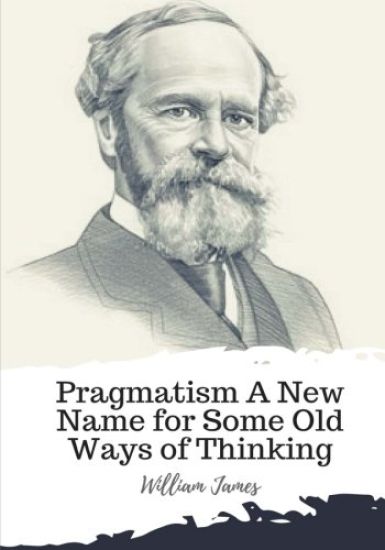
Pragmatism, a new name for some old ways of thinking; popular lectures on philosophy (1907). By: William James: William James (January 11, 1842 - Augu
William James (January 11, 1842 - August 26, 1910) was an American philosopher and psychologist who was also trained as a physician. The first educator to offer a psychology course in the United States, James was one of the leading thinkers of the late nineteenth century and is believed by many to be one of the most influential philosophers the United States has ever produced, while others have labeled him the "Father of American psychology". Along with Charles Sanders Peirce and John Dewey, James is considered to be one of the major figures associated with the philosophical school known as pragmatism, and is also cited as one of the founders of functional psychology. A Review of General Psychology analysis, published in 2002, ranked James as the 14th most eminent psychologist of the 20th century. He also developed the philosophical perspective known as radical empiricism. James' work has influenced intellectuals such as mile Durkheim, W. E. B. Du Bois, Edmund Husserl, Bertrand Russell, Ludwig Wittgenstein, Hilary Putnam, and Richard Rorty, and has even influenced Presidents, such as Jimmy Carter. Born into a wealthy family, James was the son of the Swedenborgian theologian Henry James Sr. and the brother of both the prominent novelist Henry James, and the diarist Alice James. James wrote widely on many topics, including epistemology, education, metaphysics, psychology, religion, and mysticism. Among his most influential books are The Principles of Psychology, which was a groundbreaking text in the field of psychology, Essays in Radical Empiricism, an important text in philosophy, and The Varieties of Religious Experience, which investigated different forms of religious experience, which also included the then theories on mind-cure. Philosophy of religion James did important work in philosophy of religion. In his Gifford Lectures at the University of Edinburgh he provided a wide-ranging account of The Varieties of Religious Experience (1902) and interpreted them according to his pragmatic leanings. Some of the important claims he makes in this regard: Religious genius (experience) should be the primary topic in the study of religion, rather than religious institutions-since institutions are merely the social descendant of genius. The intense, even pathological varieties of experience (religious or otherwise) should be sought by psychologists, because they represent the closest thing to a microscope of the mind-that is, they show us in drastically enlarged form the normal processes of things. In order to usefully interpret the realm of common, shared experience and history, we must each make certain "over-beliefs" in things which, while they cannot be proven on the basis of experience, help us to live fuller and better lives. Religious Mysticism is only one half of mysticism, the other half is composed of the insane and both of these are co-located in the 'great subliminal or transmarginal region'. James investigated mystical experiences throughout his life, leading him to experiment with chloral hydrate (1870), amyl nitrite (1875), nitrous oxide (1882), and peyote (1896). James claimed that it was only when he was under the influence of nitrous oxide that he was able to understand Hegel. He concluded that while the revelations of the mystic hold true, they hold true only for the mystic; for others, they are certainly ideas to be considered, but can hold no claim to truth without personal experience of such. American Philosophy: An Encyclopedia classes him as one of several figures who "took a more pantheist or pandeist approach by rejecting views of God as separate from the world."
The principles of psychology (1890). By: William James (Volume 1): William James (January 11, 1842 - August 26, 1910) was an American philosopher and
William James (January 11, 1842 - August 26, 1910) was an American philosopher and psychologist who was also trained as a physician. The first educator to offer a psychology course in the United States, James was one of the leading thinkers of the late nineteenth century and is believed by many to be one of the most influential philosophers the United States has ever produced, while others have labeled him the "Father of American psychology". Along with Charles Sanders Peirce and John Dewey, James is considered to be one of the major figures associated with the philosophical school known as pragmatism, and is also cited as one of the founders of functional psychology. A Review of General Psychology analysis, published in 2002, ranked James as the 14th most eminent psychologist of the 20th century. He also developed the philosophical perspective known as radical empiricism. James' work has influenced intellectuals such as mile Durkheim, W. E. B. Du Bois, Edmund Husserl, Bertrand Russell, Ludwig Wittgenstein, Hilary Putnam, and Richard Rorty, and has even influenced Presidents, such as Jimmy Carter. Born into a wealthy family, James was the son of the Swedenborgian theologian Henry James Sr. and the brother of both the prominent novelist Henry James, and the diarist Alice James. James wrote widely on many topics, including epistemology, education, metaphysics, psychology, religion, and mysticism. Among his most influential books are The Principles of Psychology, which was a groundbreaking text in the field of psychology, Essays in Radical Empiricism, an important text in philosophy, and The Varieties of Religious Experience, which investigated different forms of religious experience, which also included the then theories on mind-cure. Philosophy: James did important work in philosophy of religion. In his Gifford Lectures at the University of Edinburgh he provided a wide-ranging account of The Varieties of Religious Experience (1902) and interpreted them according to his pragmatic leanings. Some of the important claims he makes in this regard: Religious genius (experience) should be the primary topic in the study of religion, rather than religious institutions-since institutions are merely the social descendant of genius. The intense, even pathological varieties of experience (religious or otherwise) should be sought by psychologists, because they represent the closest thing to a microscope of the mind-that is, they show us in drastically enlarged form the normal processes of things. In order to usefully interpret the realm of common, shared experience and history, we must each make certain "over-beliefs" in things which, while they cannot be proven on the basis of experience, help us to live fuller and better lives. Religious Mysticism is only one half of mysticism, the other half is composed of the insane and both of these are co-located in the 'great subliminal or transmarginal region'. 32] James investigated mystical experiences throughout his life, leading him to experiment with chloral hydrate (1870), amyl nitrite (1875), nitrous oxide (1882), and peyote (1896). citation needed] James claimed that it was only when he was under the influence of nitrous oxide that he was able to understand Hegel. 33] He concluded that while the revelations of the mystic hold true, they hold true only for the mystic; for others, they are certainly ideas to be considered, but can hold no claim to truth without personal experience of such. American Philosophy: An Encyclopedia classes him as one of several figures who "took a more pantheist or pandeist approach by rejecting views of God as separate from the world."...