Kirjojen hintavertailu – 12 859 828 kirjaa ja 27 kauppaa
Kirjailija
William Shakespeare
Kirjat ja teokset yhdessä paikassa: 4 976 kirjaa, julkaisuja vuosilta 1798–2027, suosituimpiin kuuluu Hamlet. Vertaile teosten hintoja ja tarkista saatavuus suomalaisista kirjakaupoista.
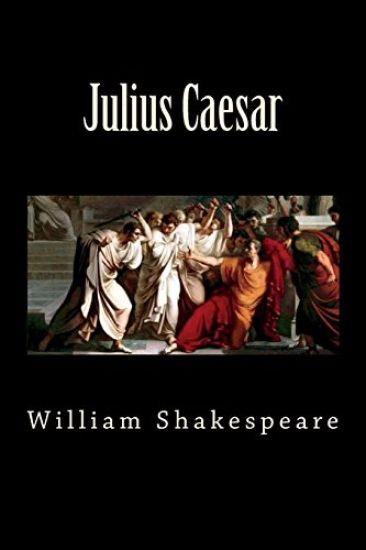
A tragedy by William Shakespeare, one of several plays written by Shakespeare based on true events from Roman history. The play opens with the commoners of Rome celebrating Caesar's triumphant return from defeating Pompey's sons at the battle of Munda. Two tribunes, Flavius and Marrullus, discover the commoners celebrating, insult them for their change in loyalty from Pompey to Caesar, and break up the crowd.
Henry VIII is a collaborative history play, written by William Shakespeare and John Fletcher, based on the life of King Henry VIII of England. An alternative title, All Is True, is recorded in contemporary documents, the title Henry VIII not appearing until the play's publication in the First Folio of 1623. Stylistic evidence indicates that individual scenes were written by either Shakespeare or his collaborator and successor, John Fletcher. It is also somewhat characteristic of the late romances in its structure. It is noted for having more stage directions than any of Shakespeare's other plays. During a performance of Henry VIII at the Globe Theatre in 1613, a cannon shot employed for special effects ignited the theatre's thatched roof (and the beams), burning the original Globe building to the ground.
As You Like It is a pastoral comedy by William Shakespeare believed to have been written in 1599 and first published in the First Folio in 1623. The play's first performance is uncertain, though a performance at Wilton House in 1603 has been suggested as a possibility. As You Like It follows its heroine Rosalind as she flees persecution in her uncle's court, accompanied by her cousin Celia to find safety and, eventually, love, in the Forest of Arden. In the forest, they encounter a variety of memorable characters, notably the melancholy traveller Jaques who speaks many of Shakespeare's most famous speeches (such as "All the world's a stage," "too much of a good thing" and "A fool A fool I met a fool in the forest"). Jaques provides a sharp contrast to the other characters in the play, always observing and disputing the hardships of life in the country. Historically, critical response has varied, with some critics finding the play a work of great merit and some finding the work of lesser quality than other Shakespearean works. The play remains a favourite among audiences and has been adapted for radio, film, and musical theatre. The piece has been a favorite of famous actors on stage and screen, notably Vanessa Redgrave, Juliet Stevenson, Maggie Smith, Rebecca Hall, Helen Mirren, and Patti LuPone in the role of Rosalind and Alan Rickman, Stephen Spinella, Kevin Kline, Stephen Dillane, and Ellen Burstyn in the role of Jaques.
In Messina, a messenger brings news that Don Pedro, a prince from Aragon, will return that night from a successful battle, Claudio being among his soldiers. Beatrice, Leonato's niece, asks the messenger about Benedick, Don Pedro's companion, and makes sarcastic remarks about his ineptitude as a soldier. Leonato explains that "There is a kind of merry war betwixt Signor Benedick and her." Upon the arrival of the soldiers, Leonato welcomes Don Pedro and invites him to stay for a month, Benedick and Beatrice resume their "merry war " and Pedro's illegitimate brother Don John is introduced. Claudio's feelings for Hero, Leonato's only daughter, are rekindled upon seeing her, and Claudio soon announces to Benedick his intention to court her. Benedick, who openly despises marriage, tries to dissuade his friend but Don Pedro encourages the marriage. Benedick swears that he will never get married. Don Pedro laughs at him and tells him that when he has found the right person he shall get married. A masquerade ball is planned in celebration of the end of the war, giving a disguised Don Pedro the opportunity to woo Hero on Claudio's behalf. Don John uses this situation to get revenge on his brother Don Pedro by telling young Claudio that Don Pedro is wooing Hero for himself. A furious Claudio confronts Don Pedro, but the misunderstanding is quickly resolved and Claudio wins Hero's hand in marriage.
The Tragedy of Julius Caesar is a history play and tragedy by William Shakespeare, believed to have been written in 1599. It is one of several plays written by Shakespeare based on true events from Roman history, which also include Coriolanus and Antony and Cleopatra. Although the play is named Julius Caesar, Brutus speaks more than four times as many lines as the title character; and the central psychological drama of the play focuses on Brutus' struggle between the conflicting demands of honour, patriotism, and friendship.
All's Well That Ends Well by William Shakespeare. All's Well That Ends Well is a play by William Shakespeare. Some academics believe it to have been written between 1604 and 1605. It was published in the First Folio in 1623. Though originally the play was classified as one of Shakespeare's comedies, the play is now considered by some critics to be one of his problem plays, so named because they cannot be neatly classified as tragedy or comedy. It is not among the playwright's most esteemed plays, with literary critic Harold Bloom writing that no one, "except George Bernard Shaw, ever has expressed much enthusiasm for All's Well That Ends Well."
King Lear is a tragedy written by William Shakespeare. It depicts the gradual descent into madness of the title character, after he disposes of his kingdom by giving bequests to two of his three daughters egged on by their continual flattery, bringing tragic consequences for all. Derived from the legend of Leir of Britain, a mythological pre-Roman Celtic king, the play has been widely adapted for the stage and motion pictures, with the title role coveted by many of the world's most accomplished actors. The first attribution to Shakespeare of this play, originally drafted in 1605 or 1606 at the latest with its first known performance on St. Stephen's Day in 1606, was a 1608 publication in a quarto of uncertain provenance, in which the play is listed as a history; it may be an early draft or simply reflect the first performance text. The Tragedy of King Lear, a more theatrical revision, was included in the 1623 First Folio. Modern editors usually conflate the two, though some insist that each version has its own individual integrity that should be preserved. After the English Restoration, the play was often revised with a happy, non-tragic ending for audiences who disliked its dark and depressing tone, but since the 19th century Shakespeare's original version has been regarded as one of his supreme achievements. The tragedy is particularly noted for its probing observations on the nature of human suffering and kinship. George Bernard Shaw wrote, "No man will ever write a better tragedy than Lear."
Henry V is a history play by William Shakespeare, believed to have been written near 1599. It tells the story of King Henry V of England, focusing on events immediately before and after the Battle of Agincourt (1415) during the Hundred Years' War. In the First Quarto text, it was titled The Cronicle History of Henry the fift, 1]: p.6 which became The Life of Henry the Fifth in the First Folio text. The play is the final part of a tetralogy, preceded by Richard II, Henry IV, Part 1, and Henry IV, Part 2. The original audiences would thus have already been familiar with the title character, who was depicted in the Henry IV plays as a wild, undisciplined young man. In Henry V, the young prince has matured. He embarks on an expedition to France and, his army badly outnumbered, defeats the French at Agincourt
Hamlet (Large Print) "To be, or not to be, that is the question: Whether 'tis nobler in the mind to suffer The slings and arrows of outrageous fortune Or to take arms against a sea of troubles, And by opposing end them?" --Hamlet by William Shakespeare
Henry VI is a series of three history plays by William Shakespeare, set during the lifetime of King Henry VI of England. Henry VI, Part 1 deals with the loss of England's French territories and the political machinations leading up to the Wars of the Roses, as the English political system is torn apart by personal squabbles and petty jealousy; Henry VI, Part 2 depicts the King's inability to quell the bickering of his nobles, and the inevitability of armed conflict; and Henry VI, Part 3 deals with the horrors of that conflict. In 2016, scholars working on the New Oxford Shakespeare editions, announced that they were crediting Shakespeare's colleague and some time rival, Christopher Marlowe, as the co-author of the trilogy. It had long been suspected that the plays had co-authors. The Oxford scholars drew their conclusions by using "big data" techniques, using computer software to identify signature language patterns for an author, then checking the texts against those signatures. Although the Henry VI trilogy may not have been written in chronological order, the three plays are often grouped together with Richard III to form a tetralogy, the "minor tetralogy", covering the entire Wars of the Roses saga, from the death of Henry V in 1422 to the rise to power of Henry VII in 1485. It was the success of this sequence of plays which firmly established Shakespeare's reputation as a playwright. The "major tetralogy" or Henriad, covering the previous reigns, were written later. The three plays were published separately, and have often been performed separately, although they have also been combined in various adaptions into a single play or two plays. Further details about performances and adaptations appear in the articles about the individual plays.
Helena, the low-born ward of a French-Spanish countess, is in love with the countess's son Bertram, who is indifferent to her. Bertram goes to Paris to replace his late father as attendant to the ailing King of France. Helena, the daughter of a recently deceased doctor, follows Bertram, ostensibly to offer the King her services as a healer. The King is sceptical, and she guarantees the cure with her life: if he dies, she will be put to death, but if he lives, she may choose a husband from the court. The King is cured and Helena chooses Bertram, who rejects her, owing to her poverty and low status. The King forces him to marry her, but after the ceremony Bertram immediately goes to war in Italy without so much as a goodbye kiss. He says that he will only marry her after she has borne his child and wears his family ring. In Italy, Bertram is a successful warrior and also a successful seducer of local virgins. Helena follows him to Italy, befriends Diana, a virgin with whom Bertram is infatuated, and they arrange for Helena to take Diana's place in bed. Diana obtains Bertram's ring in exchange for one of Helena's. In this way Helena, without Bertram's knowledge, consummates their marriage and wears his ring. Helena returns home to the countess, who is horrified at what her son has done, and claims Helena as her child in Bertram's place. Helena fakes her own death. Bertram, thinking he is free of her, comes home. He tries to marry a local lord's daughter, but Diana shows up and breaks up the engagement. Helena appears and explains the ring swap, announcing that she has fulfilled Bertram's challenge; Bertram, impressed by all she has done to win him, swears his love to her. Thus all ends well. There is a subplot about Parolles - a disloyal associate of Bertram's. A recurring theme throughout the play is the similarity between love and war: conquering, seducing, betraying, outmaneuvering.
The Tragedy of Hamlet, Prince of Denmark, often shortened to Hamlet, is a tragedy written by William Shakespeare at an uncertain date between 1599 and 1602. Set in Denmark, the play dramatises the revenge Prince Hamlet is called to wreak upon his uncle, Claudius, by the ghost of Hamlet's father, King Hamlet. Claudius had murdered his own brother and seized the throne, also marrying his deceased brother's widow. Hamlet is Shakespeare's longest play, and is considered among the most powerful and influential works of world literature, with a story capable of "seemingly endless retelling and adaptation by others". It was probably one of Shakespeare's most popular works during his lifetime, and still ranks among his most performed, topping the performance list of the Royal Shakespeare Company and its predecessors in Stratford-upon-Avon since 1879. It has inspired many other writers-from Johann Wolfgang von Goethe and Charles Dickens to James Joyce and Iris Murdoch-and has been described as "the world's most filmed story after Cinderella". The story of Shakespeare's Hamlet was derived from the legend of Amleth, preserved by 13th-century chronicler Saxo Grammaticus in his Gesta Danorum, as subsequently retold by the 16th-century scholar Fran ois de Belleforest. Shakespeare may also have drawn on an earlier Elizabethan play known today as the Ur-Hamlet, though some scholars believe he himself wrote the Ur-Hamlet, later revising it to create the version of Hamlet we now have. He almost certainly wrote his version of the title role for his fellow actor, Richard Burbage, the leading tragedian of Shakespeare's time. In the 400 years since its inception, the role has been performed by numerous highly acclaimed actors in each successive century. Three different early versions of the play are extant: the First Quarto (Q1, 1603); the Second Quarto (Q2, 1604); and the First Folio (F1, 1623). Each version includes lines and entire scenes missing from the others. The play's structure and depth of characterisation have inspired much critical scrutiny. One such example is the centuries-old debate about Hamlet's hesitation to kill his uncle, which some see as merely a plot device to prolong the action, but which others argue is a dramatisation of the complex philosophical and ethical issues that surround cold-blooded murder, calculated revenge, and thwarted desire. More recently, psychoanalytic critics have examined Hamlet's unconscious desires, while feminist critics have re-evaluated and attempted to rehabilitate the often maligned characters of Ophelia and Gertrude.
The Bastard proposes that England and France unite to punish the rebellious citizens of Angiers, at which point they propose an alternative: Philip's son, Louis the Dauphin, should marry John's niece Blanche, a scheme that gives John a stronger claim to the throne, while Louis gains territory for France. Though a furious Constance accuses Philip of abandoning Arthur, Louis and Blanche are married.
Cymbeline, the Roman Empire's vassal king of Britain, once had two sons, Guiderius and Arvirargus, but they were stolen twenty years earlier as infants by an exiled traitor named Belarius. Cymbeline now discovers that his only child left, his daughter Imogen (or Innogen), has secretly married her lover Posthumus Leonatus, an otherwise honourable man of Cymbeline's court. The lovers have exchanged jewellery as tokens: Imogen now with a bracelet, and Posthumus with a ring. Cymbeline dismisses the marriage and banishes Posthumus, since Imogen, as Cymbeline's only child, must produce a fully royal-blooded heir to succeed to the British throne. In the meantime, Cymbeline's Queen is conspiring to have Cloten, her cloddish and arrogant son by an earlier marriage, married to Imogen, to secure her bloodline. The Queen is also plotting to murder both Imogen and Cymbeline, procuring what she believes to be deadly poison from the court doctor, Cornelius, who, suspicious, switches the poison with a harmless sleeping potion. The Queen passes the "poison" along to Pisanio, Posthumus and Imogen's loving servant, who is led to believe it is a medicinal drug. No longer able to be with her banished Posthumus, Imogen secludes herself in her chambers, away from Cloten's aggressive advances.
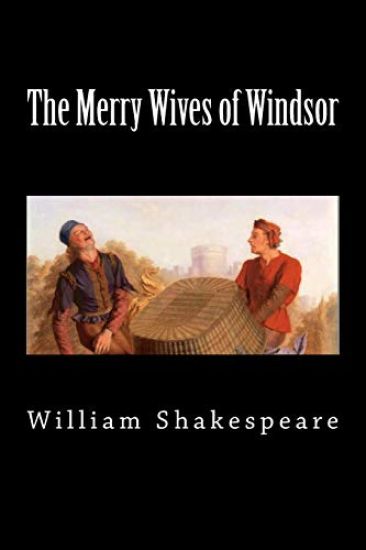
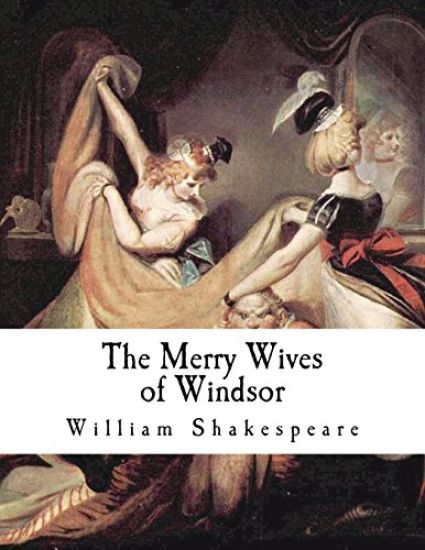
The Merry Wives of Windsor by William Shakespeare. The Merry Wives of Windsor is a comedy by William Shakespeare first published in 1602, though believed to have been written in or before 1597. The Windsor of the play's title is a reference to the town of Windsor, also the location of Windsor Castle, in Berkshire, England. Though nominally set in the reign of Henry IV, the play makes no pretense to exist outside contemporary Elizabethan era English middle class life. It features the character Sir John Falstaff, the fat knight who had previously been featured in Henry IV, Part 1 and Part 2. It has been adapted for the opera on several occasions. The play is one of Shakespeare's lesser-regarded works among literary critics. William Shakespeare was an English poet, playwright and actor, widely regarded as both the greatest writer in the English language, and the world's pre-eminent dramatist. He is often called England's national poet, and the "Bard of Avon." His extant works, including collaborations, consist of approximately 39 plays, 154 sonnets, two long narrative poems, and a few other verses, some of uncertain authorship.
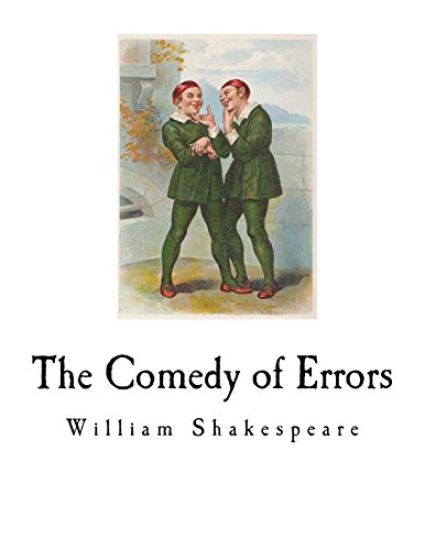
The Comedy of Errors by William Shakespeare. The Comedy of Errors is one of William Shakespeare's early plays. It is his shortest and one of his most farcical comedies, with a major part of the humour coming from slapstick and mistaken identity, in addition to puns and word play. The Comedy of Errors (along with The Tempest) is one of only two of Shakespeare's plays to observe the Unity of Time (classical unities). It has been adapted for opera, stage, screen and musical theatre numerous times worldwide. In the centuries following its premiere, the play's title has entered the popular English lexicon as an idiom for "an event or series of events made ridiculous by the number of errors that were made throughout". William Shakespeare was an English poet, playwright and actor, widely regarded as both the greatest writer in the English language, and the world's pre-eminent dramatist. He is often called England's national poet, and the "Bard of Avon". His extant works, including collaborations, consist of approximately 39 plays, 154 sonnets, two long narrative poems, and a few other verses, some of uncertain authorship.