Kirjojen hintavertailu – 12 859 828 kirjaa ja 27 kauppaa
Kirjailija
William Shakespeare
Kirjat ja teokset yhdessä paikassa: 4 976 kirjaa, julkaisuja vuosilta 1798–2027, suosituimpiin kuuluu Hamlet. Vertaile teosten hintoja ja tarkista saatavuus suomalaisista kirjakaupoista.
Classic Books Library presents this new beautiful edition of William Shakespeare's play, "The Comedy of Errors," featuring a specially commissioned new biography of William Shakespeare. Set in the city of Ephesus, the comedy is about the reunion of two sets of long-lost identical twins who were separated in a stormy shipwreck as infants. Each set of twins happens to share the names of the other, giving us two called Antipholus and two Dromio. The play follows the mistaken identities and misadventures encountered on their paths to finding each other. It is Shakespeare's shortest play and considered the most farcical of all his tales. William Shakespeare (1564 - 1616) was an English playwright, poet, and actor. He is considered to be the greatest writer in the English language and is celebrated as the world's most famous dramatist.
The Tragedy of Antony and Cleopatra (Signet Classics) Mass Market Paperback - October 1, 1998 by William Shakespeare A magnificent drama of passion and war, this riveting play presents the complicated relationship between the seductive, cunning Egyptian queen Cleopatra and the Roman leader Mark Antony, a man torn between an empire and love. This revised Signet Classics edition includes unique features such as: - An overview of Shakespeare's life, world, and theater - A special introduction to the play by the editor, Sylvan Barnet - A selection from Plutarch's Lives of Noble Grecians and Romans, the source from which Shakespeare derived Antony and Cleopatra - Dramatic criticism from Samuel Johnson, A. C. Bradley, John F. Danby, and others - A comprehensive stage and screen history of notable actors, directors, and productions - Text, notes, and commentaries printed in the clearest, most readable text We are delighted to publish this classic book as part of our extensive Classic Library collection. Many of the books in our collection have been out of print for decades, and therefore have not been accessible to the general public. The aim of our publishing program is to facilitate rapid access to this vast reservoir of literature, and our view is that this is a significant literary work, which deserves to be brought back into print after many decades. The contents of the vast majority of titles in the Classic Library have been scanned from the original works. To ensure a high quality product, each title has been meticulously hand curated by our staff. Our philosophy has been guided by a desire to provide the reader with a book that is as close as possible to ownership of the original work. We hope that you will enjoy this wonderful classic work, and that for you it becomes an enriching experience.
This book is a Arabic language translation of the Shakespeare's Macbeth. Macbeth is a tragedy by William Shakespeare; it is thought to have been first performed in 1606. It dramatises the damaging physical and psychological effects of political ambition on those who seek power for its own sake. Of all the plays that Shakespeare wrote during the reign of James I, who was patron of Shakespeare's acting company, Macbeth most clearly reflects the playwright's relationship with his sovereign. It was first published in the Folio of 1623, possibly from a prompt book, and is Shakespeare's shortest tragedy.
Venus and Adonis by William Shakespeare. Venus and Adonis is a narrative poem by William Shakespeare published in 1593. It is probably Shakespeare's first publication. The poem tells the story of Venus, who is the goddess of Love, of her unrequited love, and of her attempted seduction of Adonis, an extremely handsome young man, who would rather go hunting. The poem is pastoral, and at times erotic, comic, and tragic. It contains discourses on the nature of love, and brilliantly described observations of nature. It is written in a verse form known as sesta rima, which is a quatrain followed by a couplet (ABABCC). This form was also used by Edmund Spenser and Thomas Lodge. The poem consists of 199 stanzas or 1,194 lines of iambic pentameter.
King Richard lll by William Shakespeare. Richard III is a historical play by William Shakespeare believed to have been written around 1593. It depicts the Machiavellian rise to power and subsequent short reign of King Richard III of England. The play is grouped among the histories in the First Folio and is most often classified as such. Occasionally, however, as in the quarto edition, it is termed a tragedy. Richard III concludes Shakespeare's first tetralogy (also containing Henry VI parts 1-3). It is the second longest play in the canon after Hamlet and is the longest of the First Folio, whose version of Hamlet is shorter than its Quarto counterpart. The play is often abridged; for example, certain peripheral characters are removed entirely.
The Taming of the Shrew by William Shakespeare. The Taming of the Shrew is a comedy by William Shakespeare, believed to have been written between 1590 and 1592. The play begins with a framing device, often referred to as the induction, in which a mischievous nobleman tricks a drunken tinker named Christopher Sly into believing he is actually a nobleman himself. The nobleman then has the play performed for Sly's diversion. The main plot depicts the courtship of Petruchio and Katherina, the headstrong, obdurate shrew. Initially, Katherina is an unwilling participant in the relationship; however, Petruchio "tames" her with various psychological torments, such as keeping her from eating and drinking, until she becomes a desirable, compliant, and obedient bride. The subplot features a competition between the suitors of Katherina's younger sister, Bianca, who is seen as the "ideal" woman.
Twelfth Night or, What You Will by William Shakespeare. Twelfth Night, or What You Will is a comedy by William Shakespeare, believed to have been written around 1601-1602 as a Twelfth Night's entertainment for the close of the Christmas season. The play centres on the twins Viola and Sebastian, who are separated in a shipwreck. Viola (who is disguised as Cesario) falls in love with Duke Orsino, who in turn is in love with the Countess Olivia. Upon meeting Viola, Countess Olivia falls in love with her thinking she is a man.
The Sonnets by William Shakespeare. Shakespeare's sonnets are poems that William Shakespeare wrote on a variety of themes. When discussing or referring to Shakespeare's sonnets, it is almost always a reference to the 154 sonnets that were first published all together in a quarto in 1609; however there are a few additional sonnets that Shakespeare wrote and included in the plays Romeo and Juliet and Love's Labour's Lost. The primary source of Shakespeare's sonnets is a quarto published in 1609 titled SHAKE-SPEARES SONNETS.
A Midsummer Night's Dream by William Shakespeare. A Midsummer Night's Dream is a comedy written by William Shakespeare in 1595/96. It portrays the events surrounding the marriage of Theseus, the Duke of Athens, to Hippolyta, the former queen of the Amazons. These include the adventures of four young Athenian lovers and a group of six amateur actors (the mechanicals) who are controlled and manipulated by the fairies who inhabit the forest in which most of the play is set. The play is one of Shakespeare's most popular works for the stage and is widely performed across the world.
Hamlet: Prince of Denmark by William Shakespeare. Hamlet, Prince of Denmark, is a tragedy written by William Shakespeare at an uncertain date between 1599 and 1602. Set in Denmark, the play dramatises the revenge Prince Hamlet is called to wreak upon his uncle, Claudius, by the ghost of Hamlet's father, King Hamlet. Claudius had murdered his own brother and seized the throne, also marrying his deceased brother's widow. Hamlet is Shakespeare's longest play, and is considered among the most powerful and influential works of world literature, with a story capable of "seemingly endless retelling and adaptation by others". It was probably one of Shakespeare's most popular works during his lifetime, and still ranks among his most performed, topping the performance list of the Royal Shakespeare Company and its predecessors in Stratford-upon-Avon since 1879.
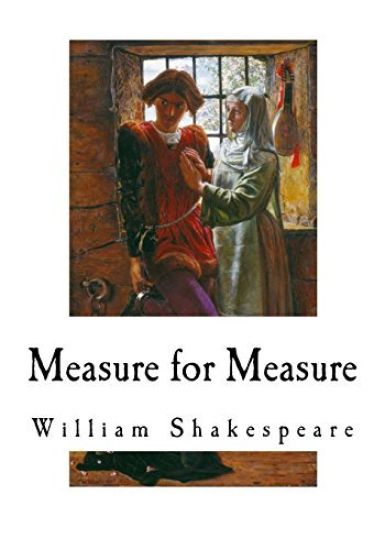
Measure for Measure by William Shakespeare. Measure for Measure is a play by William Shakespeare, believed to have been written in 1603 or 1604. Originally published in the First Folio of 1623, where it was listed as a comedy, the play's first recorded performance occurred in 1604. The play's main themes include justice, "mortality and mercy in Vienna," and the dichotomy between corruption and purity: "some rise by sin, and some by virtue fall." Mercy and virtue prevail, as the play does not end tragically, with virtues such as compassion and forgiveness being exercised at the end of the production. While the play focuses on justice overall, the final scene illustrates that Shakespeare intended for moral justice to temper strict civil justice: a number of the characters receive understanding and leniency, instead of the harsh punishment to which they, according to the law, could have been sentenced.
The Winter's Tale by William Shakespeare. The Winter's Tale is a play by William Shakespeare originally published in the First Folio of 1623. Although it was grouped among the comedies, some modern editors have relabelled the play as one of Shakespeare's late romances. Some critics consider it to be one of Shakespeare's "problem plays" because the first three acts are filled with intense psychological drama, while the last two acts are comedic and supply a happy ending. The play has been intermittently popular, revived in productions in various forms and adaptations by some of the leading theatre practitioners in Shakespearean performance history, beginning after a long interval with David Garrick in his adaptation Florizel and Perdita (first performed in 1753 and published in 1756). The Winter's Tale was revived again in the 19th century, when the fourth "pastoral" act was widely popular. In the second half of the 20th century, The Winter's Tale in its entirety, and drawn largely from the First Folio text, was often performed, with varying degrees of success.
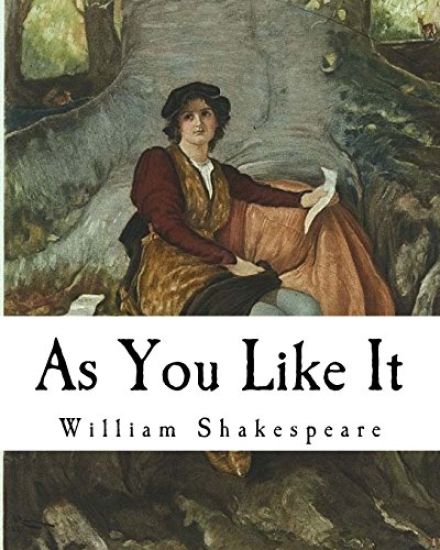
As You Like It by William Shakespeare. As You Like It is a pastoral comedy by William Shakespeare believed to have been written in 1599 and first published in the First Folio in 1623. The play's first performance is uncertain, though a performance at Wilton House in 1603 has been suggested as a possibility. As You Like It follows its heroine Rosalind as she flees persecution in her uncle's court, accompanied by her cousin Celia to find safety and, eventually, love, in the Forest of Arden. In the forest, they encounter a variety of memorable characters, notably the melancholy traveller Jaques who speaks many of Shakespeare's most famous speeches (such as "All the world's a stage," "too much of a good thing" and "A fool A fool I met a fool in the forest"). Jaques provides a sharp contrast to the other characters in the play, always observing and disputing the hardships of life in the country.
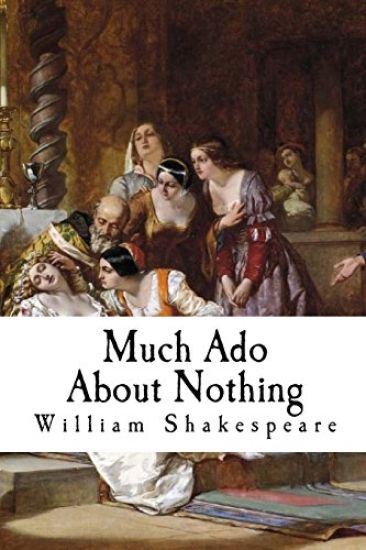
Much Ado About Nothing by William Shakespeare. Much Ado About Nothing is a comedy by William Shakespeare thought to have been written in 1598 and 1599, as Shakespeare was approaching the middle of his career. The play was included in the First Folio, published in 1623. By means of "noting" (which, in Shakespeare's day, sounded similar to "nothing" as in the play's title, and which means gossip, rumour, and overhearing), Benedick and Beatrice are tricked into confessing their love for each other, and Claudio is tricked into rejecting Hero at the altar on the erroneous belief that she has been unfaithful. At the end, Benedick and Beatrice join forces to set things right, and the others join in a dance celebrating the marriages of the two couples.
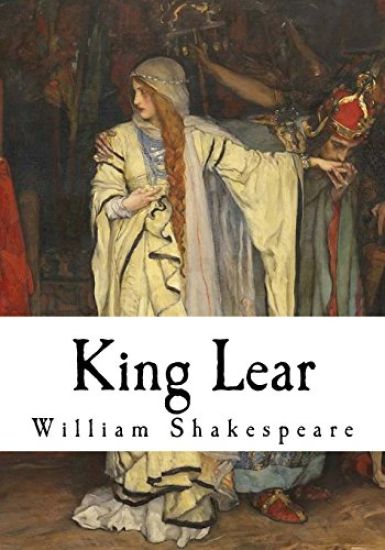
King Lear by William Shakespeare. King Lear is a tragedy written by William Shakespeare. It depicts the gradual descent into madness of the title character, after he disposes of his kingdom by giving bequests to two of his three daughters egged on by their continual flattery, bringing tragic consequences for all. Derived from the legend of Leir of Britain, a mythological pre-Roman Celtic king. King Lear of Britain, elderly and wanting to retire from the duties of the monarchy, decides to divide his realm among his three daughters, and declares he will offer the largest share to the one who loves him most. The eldest, Goneril, speaks first, declaring her love for her father in fulsome terms. Moved by her flattery Lear proceeds to grant to Goneril her share as soon as she has finished her declaration, before Regan and Cordelia have a chance to speak. He then awards to Regan her share as soon as she has spoken.
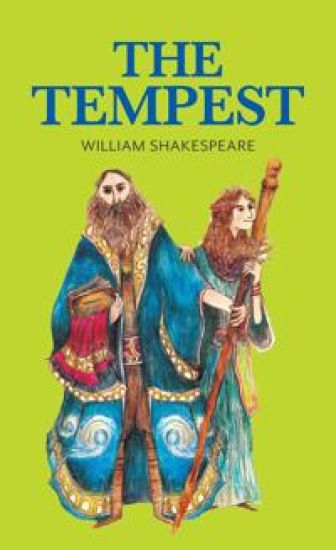
The Tempest by William Shakespeare. The Tempest is a play by William Shakespeare, believed to have been written in 1610-1611, and thought by many critics to be the last play that Shakespeare wrote alone. It is set on a remote island, where the sorcerer Prospero, rightful Duke of Milan, plots to restore his daughter Miranda to her rightful place using illusion and skillful manipulation. He conjures up a storm, the eponymous tempest, to cause his usurping brother Antonio and the complicit King Alonso of Naples to believe they are shipwrecked and marooned on the island. There, his machinations bring about the revelation of Antonio's lowly nature, the redemption of the King, and the marriage of Miranda to Alonso's son, Ferdinand.
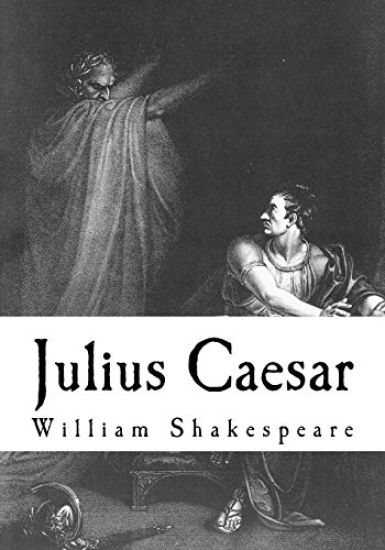
Julius Caesar by William Shakespeare. The Tragedy of Julius Caesar is a history play and tragedy by William Shakespeare, believed to have been written in 1599. It is one of several plays written by Shakespeare based on true events from Roman history, which also include Coriolanus and Antony and Cleopatra. Although the play is named Julius Caesar, Brutus speaks more than four times as many lines as the title character; and the central psychological drama of the play focuses on Brutus' struggle between the conflicting demands of honour, patriotism, and friendship. Julius Caesar was originally published in the First Folio of 1623, but a performance was mentioned by Thomas Platter the Younger in his diary in September 1599. The play is not mentioned in the list of Shakespeare's plays published by Francis Meres in 1598. Based on these two points, as well as a number of contemporary allusions, and the belief that the play is similar to Hamlet in vocabulary, and to Henry V and As You Like It in metre, scholars have suggested 1599 as a probable date.
A violent storm shipwrecks the King of Naples and his noblemen on what appears to be an uninhabited island. What the king doesn’t know is that they have been brought here by powerful magic. Prospero, the mysterious ruler of the island, has a plan, but will he use his magic for good or bad against the castaways? His daughter, Miranda, has never seen another man except her father. What will she think of the stranger who stumbles into her life? Prospero’s monstrous servant, Caliban, sees a chance to overthrow his master. Will he succeed? Enchantment and treachery are everywhere on the island – which will prove the stronger?