Kirjojen hintavertailu – 12 859 829 kirjaa ja 27 kauppaa

Kirjailija

World Bank

Kirjat ja teokset yhdessä paikassa: 131 kirjaa, julkaisuja vuosilta 1985–2025, suosituimpiin kuuluu Farm Sector Restructuring in Belarus. Vertaile teosten hintoja ja tarkista saatavuus suomalaisista kirjakaupoista.

131 kirjaa

Kirjojen julkaisuvuodet: 1985–2025.

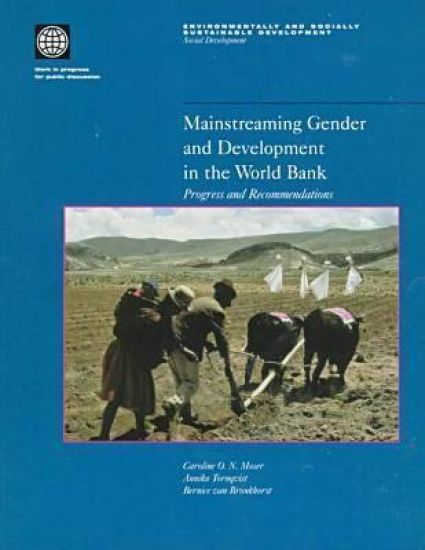
Mainstreaming Gender and Development in the World Bank
This report presents the main findings of a completed desk study undertaken for the Social Development Family in the World Bank's Environmentally and Socially Sustainable Development (ESSD) Network. The primary objective of the review is to identify the current rationale, language, and underlying policy approach to Gender and Development (GAD) adopted by the World Bank; to evaluate the extent to which these are Bank-wide, that is, shared across the institution; and, based on its findings, to make recommendations concerning needs specifically identified by ESSD. The issues raised go beyond social development and, regardless of network, are of relevance to all Bank staff concerned with mainstreaming gender and development into World Bank lending and non-lending operations at the policy, program and project levels.
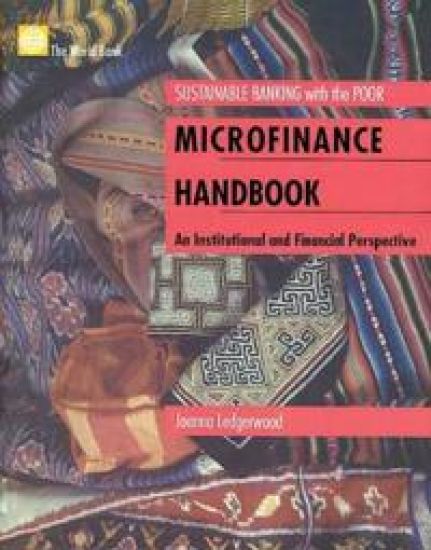
Microfinance Handbook

Microfinance Handbook

World Bank

World Bank Publications
1998
nidottu
Microfinance is not simply banking; it is a development tool. It has been estimated that there are 500 million economically active poor people in the world operating microenterprises and small businesses. Most of them do not have access to adequate financial services. The purpose of this Handbook is to bring together in a single source guiding principles and tools that will promote sustainable microfinance and create viable institutions. The Handbook takes a global perspective, drawing on lessons learned from the experiences of microfinance practitioners, donors, and others throughout the world. This volume covers extensively matters pertaining to the regulatory and policy framework and the essential components of institutional capacity building, such as product design, performance measuring and monitoring, and management of microfinance institutions. The handbook has three parts. 'Issues in Microfinance Provision' - Part I, takes a macroeconomic perspective toward general microfinance issues and is primarily nontechnical. 'Designing and Monitoring Financial Products and Services' - Part II, narrows its focus to the provision of financial intermediation, taking a more technical approach and moving progressively toward more specific (or micro) issues. 'Measuring Performance and Managing Viability' - Part III, is the most technical part of the handbook, focusing primarily on assessing the viability of microfinance institutions.
Assessing Development Effectiveness

Assessing Development Effectiveness

World Bank

World Bank Publications
1998
sidottu
To succeed in its mission to reduce poverty, the World Bank continually adapts its policies and practices to a rapidly changing world. To do this, it seeks reliable and objective information on the effectiveness of its operations. This volume presents an overview of the World Bank Group operations and evaluation criteria and strategies for assistance. The World Bank's new evaluation strategy emphasizes achieving results in the field. Evaluation is a key tool to support results-based management, the purpose of which is to provide a framework for strategic planning and management based on the principles of learning and shared responsibility. This publication will appeal to anyone interested in the operations of the World Bank Group and the International Finance Corporation.
A Framework for the Design and Implementation of Competition Law and Policy
A dynamic and competitive environment, underpinned by competition law policy, is an essential characteristic of successful market economies. To satisfy the growing demand for information on current approaches and practices in competition law policy, the project 'Framework for the Design and Implementation of Competition Law-Policy' was initiated by the World Bank, with participation by OECD. This ensuing volume reflects the main issues that arise in design and implementation of competition law and policy in order to assist countries in developing an approach that suits their own needs and conditions. The views articulated in this publication suggest that the administration and enforcement of competition law policy should assign the greatest importance to fostering economic efficiency and consumer welfare.
Determinants of Crime Rates in Latin America and the World
A growing concern in most regions of the world is the heightened incidence of criminal and violent behavior, especially in the Latin American and Caribbean Region. This study uses a new data set of crime rates for a large sample of countries to analyze the determinants of national homicide and robbery rates. The authors describe a simple model of "incentives to commit crimes" by estimating several econometric models and utilizing empirical models to draw their conclusions.
Financial Incentives for Renewable Energy Development
The World Bank is providing assistance to the Government of China to help develop recommendations for changes to China's present system of financial incentives for commercial renewable energy development. This book reports on a Bank workshop that examined international experience with financial incentives for grid-connected wind power systems and off-grid photovoltaic systems in the United Kingdom, Germany, the Netherlands, Denmark, the United States (California), India, and China. The collective experiences of the countries were further examined to indicate other directions for developing financial incentives for market-based renewable energy development, as well as the underlying reasons for these tendencies.
Enhancing the Role of Government in the Pacific Island Economies
Following the East Asian financial crisis, the Pacific Island Member Countries (PMC) appear to be headed toward recession. The governments are increasingly aware that state-led growth, based upon high levels of public investment and financial aid, has not substantially increased per capita income or the quality of life. Building a more resilient economic base has become a matter of political urgency. This report discusses how the PMC's development agenda could be implemented and emphasizes interlinking themes about enhancing the role of government.
Rethinking Decentralization in Developing Countries
Political pressure drives the majority of decentralization efforts in developing countries. Regardless of its origins, decentralization can have significant repercussions for resource mobilization and allocation, and ultimately macroeconomic stability, service delivery, and equity. This volume describes the complexity of the decentralization process, presents the lessons learned about the design of decentralization, and draws implications from this analysis for future research agendas.
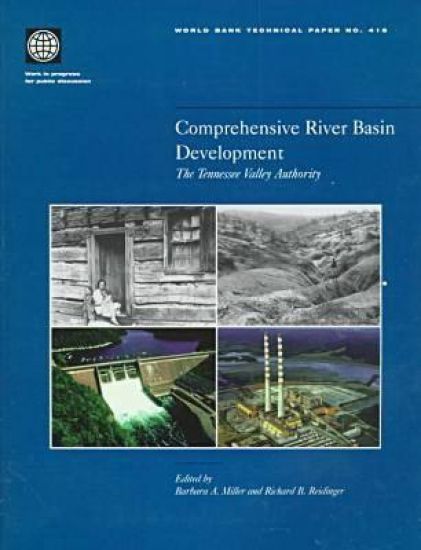
Comprehensive River Basin Development

Comprehensive River Basin Development

World Bank; Barbara A. Miller; Richard B. Reidinger

World Bank Publications
1998
nidottu
The Tennessee Valley Authority (TVA) in the United States represents one of the few successful examples of comprehensive river basin development. Established to guide the development of the resources within the Tennessee River Basin, TVA operates a wide variety of water, power, economic development, and environmental programs within the region. This report presents an overview of TVA's growth and development, its institutions, and its operational programs.
Welfare and the Labor Market in Poland

Welfare and the Labor Market in Poland

World Bank

World Bank Publications
1998
nidottu
This report assesses the changes in social welfare and policy that have taken place in Poland during the economic transition. It tests the main hypotheses concerning changes in the role of the welfare state, workings of the labor market, the distributional consequences of transition, and more generally about the winners and losers in transition. Chapter one examines trends in social expenditure during economic transition. Chapter two focuses on changes in the labor market, including emerging risks and opportunities. Chapter three explores distributional consequences of transition.
School Enrollment Decline in Sub-Saharan Africa

School Enrollment Decline in Sub-Saharan Africa

Joseph W.B. Bredie; Girindre K. Beeharry; World Bank

World Bank Publications
1998
nidottu
The overarching objective of the World Bank's assistance to Sub-Saharan African countries is poverty reduction through sustained economic growth at a high level and improved social services. Past experience shows that a minimum level of educational attainment has been a prerequisite for the success of such a strategy. The current level of education development has been low, and the development of primary education has stagnated and even declined in some countries since the early 1980s. This paper examines the likely causes for deteriorating enrollment rates in Africa. It looks at the constraints in the demand for schooling and gives possible reasons for stagnation.
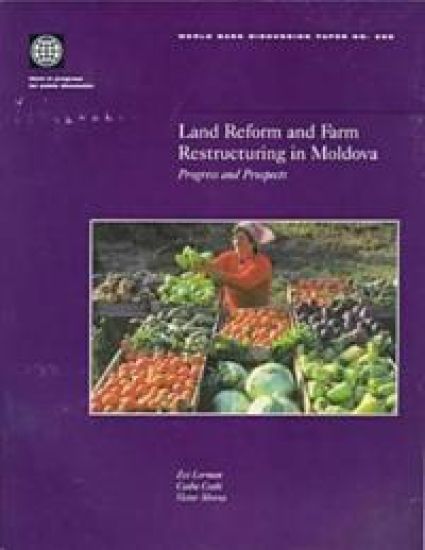
Land Reform and Farm Restructuring in Moldova

Land Reform and Farm Restructuring in Moldova

World Bank

World Bank Publications
1998
nidottu
Agricultural reforms, including privatization of land and farm restructuring, are an important cornerstone for overall transformation of the economies of the former socialist world. This paper summarizes the current status of land reform in Moldova and shows how there has been clear progress in creating a market-based agriculture and food sector in Moldova. The results of this study indicate that genuine restructuring and transition to full-fledged private farming have resulted in improved profitability and higher incomes for private farmers than those achieved by traditional collectives.
Ethiopia

Ethiopia

World Bank

World Bank Publications
1998
nidottu
After being immersed in almost three decades of civil conflict, the prevailing peace and political stability in Ethiopia allowed its government to focus on rebuilding its economy. As an integral part of this undertaking, the Federal Democratic Republic of Ethiopia is seeking to overhaul the landscape of human capital development in the country. This report discusses the situation and trends in education, health, nutrition, and population. It also examines the barriers to improvement from the points of view of Ethiopian households and public and private suppliers of services. It also attempts to identify the means by which the government can use public resources more effectively.
Restructuring and Managing the Enterprise in Transition
A wide gap still exists between Western concepts and their application in the ex-socialist countries during transition. Most Western models in financial management make assumptions about the efficiency and stability of markets and the signals that can be obtained and also assume that traditional accounting information is available and can be used for management purposes. A new paradigm is needed to manage the finance function in a transition economy experiencing hyperinflation since stamdard assumptions are not valid in most ex-socialist countries. This book describes the adaptations of financial techniques as it reviews standard financial concepts and tools, adjusts them when necessary to the unique conditions in the ex-socialist enterprises, and then presents the restructuring context and some strategies that are based on the application of these tools.
African Art

African Art

World Bank

World Bank Publications
1998
nidottu
African artistic expression has helped to construct culture, form social identity, and support spiritual communication. The choice of the World Bank's African collection for a catalogue stems from the recognition by many art experts that the Bank is home to a rich and valuable collection that deserves to be better known by staff, representatives from member countries, and the public at large. The book displays African art from past to present, African art at the World Bank, and African art and society.
Poverty Lines in Theory and Practice

Poverty Lines in Theory and Practice

World Bank

World Bank Publications
1998
nidottu
A poverty line helps focus the attention of governments and civil society on the living conditions of the poor. This paper offers a critical overview of alternative approaches to setting poverty lines. In reviewing the methods found in practice, the paper tries to throw light on, and go some way toward resolving, ongoing debates about poverty measurement, emphasizing those debates which would appear to have greatest bearing on policy discussions.
Social Assistance in Albania

Social Assistance in Albania

Harold G. Alderman; World Bank

World Bank Publications
1998
nidottu
Albania provides a small amount of social assistance to nearly 20% of its population through a system which allows a degree of community discretion in determining distribution. This study investigates the poverty targeting of this program. It indicates that relative to other safety net programs in low income countries, social assistance in Albania is fairly well targeted to the poor.
Options for Managing and Financing Rural Transport Infrastructure
In Sub-Saharan Africa, ineffective rural transport services present a major obstacle to economic and social development. Deciding who owns the roads, who finances the maintenance, and who manages them is a fundamental requirement. This volume proposes a framework for improving management and financing of local government roads and community roads and paths based on two distinct owner categories and a redefined partnership between the public and private sectors.
Environmental Action Programme for Central and Eastern Europe
Despite efforts by Central and Eastern European (CEE) countries to tackle environmental problems, there are still a number of serious environmental problems that require immediate and urgent action. The Environmental Action Programme (EAP) provides a framework and guide for identifying the highest priority problems and for developing realistic, efficient and cost-effective solutions. This book describes the features of the broad strategy and action framework that EAP represents. Annexes provide summaries of topics such as human health problems and pollution 'hot-spots'; the impact of economic reform and industrial restructuring; and priorities for environmental expenditure. Boxes discuss nitrates in drinking water in Romania, short-term threats to the environment in Russia, and debt-for-environment swaps in Poland.