Kirjojen hintavertailu – 12 859 829 kirjaa ja 27 kauppaa

Kirjailija

World Bank

Kirjat ja teokset yhdessä paikassa: 131 kirjaa, julkaisuja vuosilta 1985–2025, suosituimpiin kuuluu Farm Sector Restructuring in Belarus. Vertaile teosten hintoja ja tarkista saatavuus suomalaisista kirjakaupoista.

131 kirjaa

Kirjojen julkaisuvuodet: 1985–2025.

Resolution of Financial Distress

Resolution of Financial Distress

World Bank

World Bank Publications
2001
nidottu
This book focuses on the principles of and practical approaches to addressing the public policy trade-off involved in systemic corporate and financial sector crises and the lessons learned from the changes taking place in bankruptcy frameworks around the world. It includes research on recent public policy initiatives for distress resolution or market-based restructuring.
Cultural Heritage and Development

Cultural Heritage and Development

Michael M. Cernea; World Bank

World Bank Publications
2001
nidottu
This book analyzes the cultural heritage sector in the Middle East and North Africa region and the World Bank's policy and operational experiences in this sector over the past six years--1996 to 2001. It also provides a description and an analysis of the experience of the Middle East and North Africa region in supporting patrimony preservation and outlines its strategy and options for future activities in this area. This volume offers operational suggestions for addressing some of the cultural, economic, institutional and financial problems of integrating patrimony management within development frameworks.
The Economics of Gender in Mexico

The Economics of Gender in Mexico

World Bank

World Bank Publications
2001
nidottu
Mexico is experiencing significant demographic, social, and economic changes, and the distinct roles of women and men in the Mexican economy are changing as well. In both urban and rural areas, large numbers of young Mexican women are entering the labor force, and as girls' education reaches parity with boys, this trend will intensify. However, women continue to face special constraints on their economic activities which are largely related to their household roles and responsibilities. Macroeconomic change affects Mexican men, who must deal with shifting labor market opportunities and government policies. 'The Economics of Gender in Mexico' examines gender differences in the Mexican economy, with a specific focus on labor markets. Gender differences are reviewed over the course of a life cycle, beginning with education and child labor, and on through adult urban and rural labor force participation. This book also considers the situation of the elderly women and men in Mexico. Each chapter uses different data sources and analytical methodologies but the volume in its entirety is guided by a gender perspective that looks at the situation of both men and women as distinct groups and in relationship to one another. The chapters contain detailed quantitative analysis drawing on national labor force statistics, specialized regional household surveys, and firm-level data. This volume is based on the commissioning of a series of technical papers by the World Bank, in collaboration with several Mexican government agencies.
Social Cohesion and Conflict Prevention in Asia

Social Cohesion and Conflict Prevention in Asia

World Bank

World Bank Publications
2001
nidottu
The papers included in this volume cite a multiplicity of traditional obstacles to social cohesion and integration in the region, ranging from xenophobic nationalism to poverty, socioeconomic disparities, gender inequality, and ethnic, religious, and cultural discrimination. This book is based on discussions from the Asian Regional Consultation on Social Cohesion and Conflict Management which was sponsored by the World Bank and the Asian Development Bank. The outcome of this consultation formed the basis of this book. Participants, speaking in their personal capacity, included representatives from government, civil society, and donor organizations allowing for an open and unencumbered discussion of the issues.
Design and Appraisal of Rural Transport Infrastructure

Design and Appraisal of Rural Transport Infrastructure

Jerry Lebo; Dieter Schelling; World Bank

World Bank Publications
2001
nidottu
This paper is part of a four-volume series of publications on rural transport promoted by the World Bank's Rural Transport Thematic Group under the aegis of its knowledge management activities. The four volumes are - 'Options for Managing and Financing Rural Transport Infrastructure' - 'Improving Rural Mobility' - 'Developing Rural Transport Policies and Strategies', and - this paper on 'Design and Appraisal of Rural Transport Infrastructure'.
Mexico

Mexico

World Bank

World Bank Publications
2001
nidottu
This book is a compendium of Mexico's development process, one that recognizes its comprehensive and multi-faceted nature. It focuses on five overarching themes including fiscal sustainability, growth and competitiveness, poverty and inequality, sustainable future, and good government.
Aid and Reform in Africa

Aid and Reform in Africa

World Bank

World Bank Publications
2001
nidottu
Winner of Choice magazine's Outstanding Academic Title award! Since the early 1980s, virtually every African country has received large amounts of aid to stimulate policy reform. The results have varied enormously. Ghana and Uganda were successful reformers that grew rapidly and reduced poverty. Ethiopia and Cote d'Ivoire have shown significant reform in recent years, but it remains to be seen whether it will be sustainable. 'Aid and Reform in Africa' summarizes the findings from case studies that investigate whether, when, and how foreign aid has affected economic policy in Africa. The main findings are: - Policy formation is primarily driven by domestic political economy. - Large amounts of aid to countries with poor policies sustain those policies. - Overall, donors have not discriminated effectively among different countries and different phases of the reform process. The book concludes that donors have three basic instruments that they can use to encourage adoption of good economic policies in developing countries: money, conditionality, and technical assistance/policy dialog. The case studies in this project show examples in which each of these instruments helped countries' improve their policies.
Adult Literacy Programs in Uganda

Adult Literacy Programs in Uganda

World Bank

World Bank Publications
2001
nidottu
The Government of Uganda believes that illiteracy and inadequate basic education deprive people of the opportunity to fulfill their potential and effectively participate in decisionmaking and other development objectives. In order to achieve these objectives, the Ugandan government started a pilot project in eight districts using the functional literacy approach. This publication suggests that the track record of an adult basic education program need not be poor. Of particular interest, is the finding that government programs and those delivered by non-government agencies can be equally effective. However, the manner and the quality of the implementation do influence the outcomes. The purpose of this evaluation is to compare and contrast the resource requirements and the effectiveness of the Functional Adult Literacy (FAL) programme and Regenerated Freirean Literacy through Empowering Community Techniques (REFLECT). The book assesses the implementation of adult literacy education and recommends future policy on the development of adult literacy education.
Uganda's Recovery

Uganda's Recovery

World Bank; Paul Collier; Ritva Reinikka

World Bank Publications
2001
nidottu
Uganda's recovery over the past 15 years from economic decline, conflict, and repressive government to macroeconomic stability, high growth, and considerable political freedom signifies a major turnaround in Africa. What makes Uganda's postconflict recovery significant is that it coincides with one of the most ambitious programs of economic liberalization on the African continent. This book focuses on postconflict recovery and economic liberalization. This book also provides a detailed discussion of the many issues policymakers have to consider when they try to guide a country out of a tragic past. It highlights the complexity of the interconnections and tradeoffs involved. The responses of a wide range of actors in the economy, namely, households, firms, and the government are analyzed. This book brings together a number of mostly microeconomic studies on the Ugandan experience of postconflict recovery and economic liberalization. The individual studies incorporate the most recent thinking, theory, and analytical techniques in a number of areas and apply them to one country.
Historic Cities and Sacred Sites

Historic Cities and Sacred Sites

World Bank

World Bank Publications
2001
nidottu
A large proportion of the 100 historic cities and nearly 200 sacred sites on the World Heritage List are located in the developing world. Of key concern is how historic cities fare against the population pressures, crumbling infrastructure, and eroding economic base of the developing world. This text investigates the effects of overpopulation and poverty on historic cities and sacred sites. It demonstrates that taking care of humanity's cultural heritage can regenerate self-esteem and self-identities of disempowered peoples and revive moribund economies. Consequently, cultural heritage preservation and poverty reduction are closely related.
Czech Republic

Czech Republic

World Bank

World Bank Publications
2001
nidottu
The Czech Republic arrived at the end of the 1990s with an unfinished transformation agenda. Especially apparent were the lingering problems in the major banks and large segments of the corporate sector which led to an unsatisfactory economic performance. The root cause for the poor performance stems from the weak internal and external mechanisms of corporate governance. While the Czech government has made efforts to improve the situation, there are still elements of the restructuring agenda that remain largely absent. This report aims to assist the Czech authorities in their ongoing efforts to improve the overall institutional and legal framework for the restructuring of distressed enterprises and for new lending as well. It examines the present status, reviews the progress made, and provides recommendations for improvement.
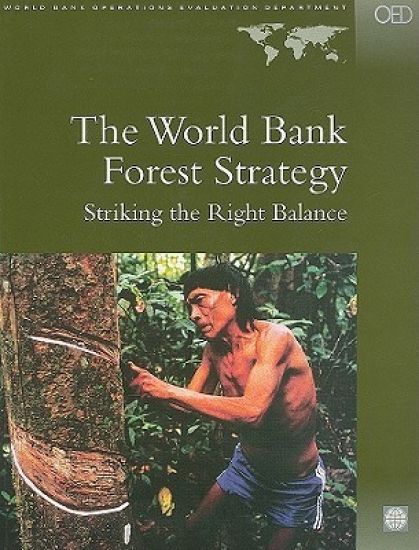
The World Bank Forest Strategy

The World Bank Forest Strategy

Uma Lele; World Bank; M.V. Kelly

World Bank Publications
2000
nidottu
'The World Bank Forest Strategy: Striking the Right Balance' identifies seven factors that would make the World Bank forest strategy more pertinent as well as strengthen the World Bank's ability to achieve its strategic objectives in the forest sector. The report recommends that the World Bank use its global reach to address both mechanisms and finances for international resource mobilization on concessional terms outside its normal lending activities. It also advises the World Bank to be proactive in establishing partnerships with all relevant stakeholders, governments, the private sector, and civil society to meet both its country and global roles. The focus on primary tropical moist forests should be broadened to include all types of natural forests of national and global value. The book suggests that illegal logging needs to be reduced through the promotion of improved governance and enforcement. Other recommendations are to give consideration to forest issues in all relevant sector activity and macroeconomic work, address the employment needs of all poor people while continuing to protect the rights of indigenous people, and to realign the World Bank resources with their objectives in the forest sector. This report assesses progress since the World Bank first issued its comprehensive Forest Strategy in 1991. The earlier document sent a strong message about changed objectives in the forest sector and provided a new focus on conservation. In examining implementation over the past decade, the new report finds that the effectiveness of the strategy has been modest, and the sustainability of its impact is uncertain.
Violence in a Post-conflict Context

Violence in a Post-conflict Context

Caroline O.N. Moser; Cathy McIlwaine; World Bank

World Bank Publications
2000
nidottu
In 1996, the Government of Guatemala and the guerrilla army known as the Guatemalan National Revolutionary Unity (URNG), signed the final Peace Accords ending both the United Nations monitored peace process and 36 years of internal conflict. This civil war caused untold internal and external displacement in the region as well as the deaths of over 150,000 people, the majority of whom were from indigenous groups. The legacy of this conflict which includes increasing urban violence, social exclusion, and weak levels of social capital, presents challenges for the country's post-conflict peace-building agenda. Violence in a Post-Conflict Context addresses the perceptions of violence by the people living in poor communities in Guatemala. It provides the results of a participatory study of violence conducted in urban low-income communities. The book identifies the categories of violence affecting poor communities, the costs of different types of violence, the effects of violence on social capital, the interventions employed by people to deal with the violence, and the causes and effects of social exclusion. Violence in a Post-Conflict Context incorporates the rarely heard voices of the poor by using the participatory appraisal methodology which emphasizes local knowledge and enables locals to make their own analysis of the problems that they face and identify their own solutions.
Reforming Public Institutions and Strengthening Governance
Poorly functioning public sector institutions and weak governance are major impediments to growth and equitable development in many developing countries. The topic is important because of its centrality to development. This strategy paper reviews the World Bank's recent work on governance, public sector institutional reform, and capacity building, particularly in core public institutions. The agenda for the next three years is to continue to foster changes through the advancement of analytic tools, new approaches to the design of lending operations, expanded emphasis on partnership with clients and other donors, and progressive shifts in staffing, incentives, and evaluation techniques.
Roma and the Transition in Central and Eastern Europe

Roma and the Transition in Central and Eastern Europe

Dena Ringold; World Bank

World Bank Publications
2000
nidottu
The situation of the Roma (or gypsies) in Central and Eastern Europe is one of the most challenging issues to emerge during the transition from socialism. As the socialist regimes collapsed and a free market economy was introduced, economic opportunities increased. However, job security and housing deteriorated. While political participation throughout the population surged, so did ethnic tension, which put the Roma, an already threatened minority, at even greater risk. Since they have always been mobile, the Romas do not constitute a large number in any one country, but as the Iron Curtain fell, their correspondence across borders swelled and attracted interest in their plight. 'Roma and the Transition in Central and Eastern Europe' discusses issues facing Roma in the countries of Central and Eastern Europe, particularly in Hungary, Bulgaria, Romania, the Czech and Slovak Republics. It provides the historical context and background, presents the available evidence on welfare status and living conditions, looks at issues surrounding access to social services, and discusses the policy implications concerning Roma.

The Determinants of Enterprise Restructuring in Transition

The Determinants of Enterprise Restructuring in Transition

Simeon Djankov; Peter Murrell; World Bank

World Bank Publications
2000
nidottu
Over the last decade, more than one hundred fifty thousand large enterprises in twenty seven transition countries have encountered revolutionary changes in every aspect of their political and economic environments. Some enterprises have responded to the challenge, entering world markets with great dynamism and becoming indistinguishable from their competitors in mature market economies. Others remain mired in their past, undergoing protracted deaths, delayed at times by their slippage into a netherworld of barter and ersatz money. Thus the revolutionary changes in transition countries have been matched by great variation in the degree to which enterprises have responded successfully to events. To assess the effectiveness of the different reform and privatization strategies, empirical research on transition countries has examined enterprise level data to ascertain whether enterprises have responded productively to changes in ownership and to other reform measures. This volume provides a general assessment of the evidence generated by these studies. In providing the assessment, it: discusses the general context of the studies; assesses the evidence on whether state-owned or privatized firms undertake more economic restructuring; studies the effects of restructuring on different types of owners; focuses on the role of managers; analyzes the effect of greater discipline in the government's reaction to enterprises in distress; examines how variations in product market competition affect enterprise restructuring; and examines the role of the institutional and legal framework. This publication will be of interest to policy makers and readers interested in gaining an overview of the current state of the evidence.
From Commissars to Mayors

From Commissars to Mayors

Robert M. Buckley; Federico Mini; World Bank

World Bank Publications
2000
nidottu
While the economies of Europe and Central Asia (ECA) have spiraled downward over the past decade, they have made some progress in other spheres. Civil liberties and democracy are taking root in many of the ECA countries, and new opportunities are being created and exploited as the region opens to the global economy. For most ECA countries, however, the transition process remains fragile. The urban areas have been hit hardest. The closing of state industries and excessive urbanization have left cities impoverished in many of the former socialist countries. This phenomenon contrasts sharply with developing countries where poverty predominates in the rural areas. With poverty reduction as the Bank's main mission, focus on urban poverty in transition economies is imperative. 'From Commissars to Mayors' examines the effects of the past socialist policies on the way the cities in transition economies function today. It considers the principal concerns for city management and proposes action plans to achieve a more equitable, sustainable economic environment. It also identifies priorities and strategies for the region and for the World Bank.
Moving from Residential Institutions to Community-based Social Services in Central and Eastern Europe and the Former Soviet Union
One of the most harmful, costly, and intractable legacies of the command economies of Central and Eastern Europe and the former Soviet Union is the reliance on residential institutions for the care of children, the elderly, and the people with disabilities. As a result, there are almost no community-based alternatives to care for large and growing numbers of vulnerable individuals. Other industrial nations have experienced similar periods of economic and social upheaval and also relied on residential institutions to care for vulnerable and marginalized groups. However, most of these nations have switched from residential care to community-based social services. The question for the countries of Central and Eastern Europe and the former Soviet Union is how they can make the same transition. 'Moving from Residential Institutions to Community-Based Social Services in Central and Eastern Europe and the Former Soviet Union' examines the use of residential institutions for vulnerable groups, past and present, and proposes strategies for the future. The study focuses on five countries, Albania, Armenia, Latvia, Lithuania, and Romania, where the World Bank is helping develop community-based social services to reduce the reliance on residential institutions.
Cleaner Transport Fuels for Cleaner Air in Central Asia and the Caucasus

Cleaner Transport Fuels for Cleaner Air in Central Asia and the Caucasus

Masami Kojima; World Bank

World Bank Publications
2000
nidottu
Urban air pollution is a matter of increasing concern in many of the newly independent states (NIS). Traffic is burgeoning in cities, but vehicle registration, inspection, and maintenance lag behind what is needed to support efforts to improve air quality. Poor fuel quality worsens the emissions problems. Although certain emissions, such as greenhouse gases, are of global concern, the greatest costs of air pollution at the local level are to human health. This study examines the obstacles to improving air quality in the countries of Central Asia and the Caucasus and makes observations about the present air quality and monitoring systems and recommendations for improvement.