Kirjojen hintavertailu – 12 859 829 kirjaa ja 27 kauppaa

Kirjailija

World Bank

Kirjat ja teokset yhdessä paikassa: 131 kirjaa, julkaisuja vuosilta 1985–2025, suosituimpiin kuuluu Farm Sector Restructuring in Belarus. Vertaile teosten hintoja ja tarkista saatavuus suomalaisista kirjakaupoista.

131 kirjaa

Kirjojen julkaisuvuodet: 1985–2025.

Ready for Europe

Ready for Europe

Barbara Nunberg; World Bank

World Bank Publications
2000
nidottu
As the ongoing political and economic transition in the Central and Eastern Europe countries (CEE) moves into the next century, the most advanced countries in the region are preparing to deal with their prospective entry into the European Union. More a process than an event, joining the EU is likely to place heightened demands on public administrations throughout the region. To assist these countries with their efforts, the Bank conducted a study of the regions. The results of that study are included in this volume. 'Ready for Europe' specifies and clarifies the administrative requirements of accession. The author uses in-depth case studies for three pre-accession countries, Estonia, Hungary, and the Czech Republic to make these specifications. The book defines the performance level countries will need to attain for a range of administrative tasks so the countries may reach a minimal threshold for EU membership. It applies selected standards to determine each country's readiness for accession and for the longer-term transition agenda. The author focuses on these three critical areas of administrative performance in the context of EU accession: - How advanced is the development of a politically neutral, professional human resource cadre in the civil service? - Do countries have the necessary institutional infrastructure at the government's core (that is, cabinet level) to formulate and coordinate policymaking in an efficient and democratic manner? - How well are the dedicated institutional structures and processes established to shepherd countries through the accession process working?
Bosnia and Herzegovina

Bosnia and Herzegovina

Alcira Kreimer; World Bank

World Bank Publications
2000
nidottu
Post-conflict reconstruction is not new to the World Bank. In fact, the Bank's first loan was to the Government of France to rebuild the country after World War II. What is new, is the rapidly increasing number of post-conflict areas, and the enormity and complexity of rebuilding in each case. To better assist post-conflict areas in the future, the Bank is studying past experiences in dealing with post-conflict reconstruction. This volume represents one in a series. The other volumes discuss post-conflict reform in Uganda and El Salvador. The Bosnia and Herzegovina case is unique within the Bank's post-conflict reconstruction experience in terms of regional characteristics, political complexity, and structure of economic governance. This study examines the evolution of the conflict and the Bank's role before, during, and after the conflict. It also analyzes which efforts were successful and which could be improved.
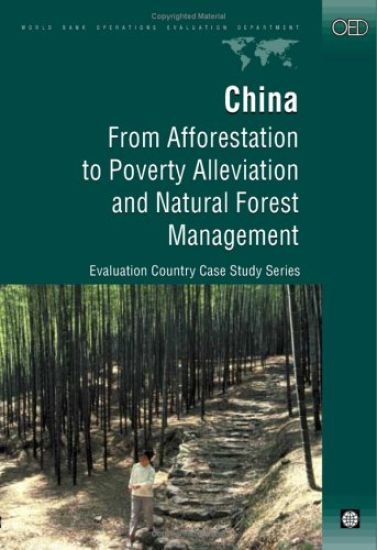
China

China

Scott Rozelle; World Bank

World Bank Publications
2000
nidottu
Although the involvement of the World Bank in the forest sector has a relatively short history, starting in 1988, the impact of Bank projects dates back much further. The Bank's 1991 forest strategy stressed a multi-sectoral approach. Accordingly, this review looked at the Bank's projects in the forest sector, projects with forest sector components, and projects with potential impacts on forests, as well as the Bank's non-lending services. These studies seek to judge whether the Bank has 'done the right things' and 'done things right'.
Liquefied Natural Gas in China

Liquefied Natural Gas in China

Dean Girdis; Stratos Tavoulareas; Ray Tomkins; World Bank

World Bank Publications
2000
nidottu
'Aware of the increased demand for energy, the Chinese government is striving to develop a comprehensive strategy to ensure that continued economic growth is sustained by sufficient energy supplies. Energy and environmental security are driving forces of national energy policy.' In an effort to meet the continuing demand of the power sector and ensure stability of fuel supply sources, the State Power Corporation asked for World Bank assistance to assess the viability of imported liquefied natural gas (LNG) as a fuel source for coastal provinces. In response to their request, the Bank undertook a detailed economic assessment of LNG as an alternative fuel source, and reviewed the steps necessary to support its introduction. This report is a result of that study. The report provides a general overview of energy demand in East China and the potential market for gas. It also assesses the fuel and gas supply options and reviews key factors for the successful introduction of LNG, including institutional, regulatory and financing issues. This report will be of interest to external banks, private companies, Chinese organizations, and Bank staff.
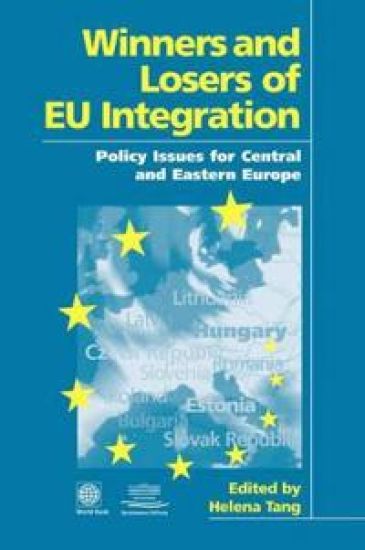
Winners and Losers of EU Integration

Winners and Losers of EU Integration

World Bank

World Bank Publications
2000
nidottu
The Czech capital market has not played an important role in the development of the Czech economy thus far. On the other hand... it has been used and often abused as a tool of wealth redistribution in the CR [Czech Republic], and has influenced the outcome of winners and losers of the transformation process to date. Ten countries in Central and Eastern European (CEECs) have applied for membership in the European Union (EU). They could gain from exchanging lessons of experiences and best practices with each other as they address the common set of challenges in their preparation for EU accession. The 'EU Integration' network of research institutes in the ten CEECs provides a valuable forum for such exchanges on key economic, social and political issues related to EU membership. This volume contains the papers presented at the first meeting of the EU integration network, as well as some background papers. The papers seek to identify the main economic, social and political groups that would gain or lose from accession, and highlight the policy adjustments on the parts of both the EU and the CEECs to ease the accession process. The contributors include researchers from the ten CEECs, as well as from current EU member countries. This publication will be of interest ot research institutions, governments, and nongovernmental organizations.
Integrated Coastal Zone Management of Coral Reefs

Integrated Coastal Zone Management of Coral Reefs

World Bank

World Bank Publications
2000
nidottu
'The applied research indicates that, to improve awareness, park education programs should be targeted specifically to the user groups primarily through outreach programs. Further, the Park's management programs should be highlighted, particularly the beneficial, tangible products and services (benefits) the Park provides to each user group... The closer the tie between reef conditions and business earnings, the greater the users' support for reef conservation.' Coral reefs are sometimes referred to as 'canaries of the sea' because of their early warning ability to show near-shore oceanic stress. Because of their biological diversity, they are also called 'rainforests of the sea'. Coral reefs are vital to the well being of millions of people. Coral reef managers and government officials trying to save their valuable national resources have turned to research on coral reefs for help. The research presented in this publication merits a great deal of notice because the output is useful for decision support and training tools in integrated coastal zone management (ICZM). The work on cost-effectiveness analysis has developed integrated economic and ecological models, relying extensively on fuzzy logic procedures to model impacts and effects of interventions within the reef environment. By contrast, the marine system valuation work provides economic valuations of coral reefs, demonstrating the use of different modeling methods and treating key policy issues within this context. This publication will interest coastal zone experts and managers worldwide
Management and Resolution of Banking Crises

Management and Resolution of Banking Crises

Jose De Luna-Martinez; World Bank

World Bank Publications
2000
nidottu
What can be done to rapidly and effectively contain systemic risks, restore the solvency and profitability of financial institutions, minimize the impact of financial sector distress on the economy and limit the fiscal costs of a crisis? What set of policies contribute to a rapid and successful resolution of a banking crisis and under what conditions? Can a model of bank restructuring that proved to be successful in one country be easily implemented in others? The resolution of a banking crisis is not an event, but a long and complex process. This paper analyzes and compares the causes of the banking crises in Korea and Mexico, as well as the policies and tools utilized for managing and resolving them. The banking crises of Korea and Mexico pose important similarities. Both crises were triggered by sudden currency devaluations. There were other similarities as well, but there were major differences in how each country resolved its crisis. This report identifies and explains the main differences in crisis management and resolution used in both countries. The management of both banking crises are assessed in terms of decisionmaking transparency, speed and sequencing of reforms, and social and political obstacles faced for banking crisis resolution. This report will be of interest to research institutes, central banks, ministries of finance, and multilateral institutions.
The Road to Stability and Prosperity in South Eastern Europe
'There is no denying that achieving social and political stability and sustainable development will take years for most countries. Nor will progress towards these goals be smooth or automatic. Several factors indicate how difficult this road will be.' The past decade of transition and conflict has left the South East European region with a legacy of inadequate growth and declining living standards. In the past several years, overall growth has declined, increasing the gap between these economies and the rest of Europe. More alarming is that there has been a deterioration in living standards, as evidenced by higher poverty, inequality, and unemployment. The reasons for the poor economic performance are varied. The most destabilizing factor, of course, has been the regional conflicts, which have devastated the area, undermined structural reform policies, and discouraged foreign investment. Much of the economic development, social inclusion, regional stability in South Eastern Europe will depend on strengthening of institutions, governance, and a lowering of the level of corruption. This report, prepared in response to the mandate given to the World Bank and the European Commission under Article 41 of the Stability Pact to coordinate a regional approach to South Eastern Europe, outlines four broad thrusts for action. These actions are intended to support the achievement of the goals of peace, stability, and prosperity. They include moving rapidly towards trade integration with the EU and within the region, fostering social inclusion and social change to reduce tensions, improving institution capacity and governance structures, and investing in regional infrastructure to integrate the region physically within Europe.
Costa Rica

Costa Rica

World Bank

World Bank Publications
2000
nidottu
'Early retirement and lax eligibility for disability are bad for the economy because they reduce labor productivity and the supply of experienced workers, and they are bad for the system because they impose a heavy financial burden that makes it nonsustainable.' Costa Rica is at a turning point with respect to its social security system. While half the work force is covered and beneficiaries have fared well in the past, the pay-as-you-go (PAYG) pension system is unsustainable for the future. This publication describes the present pension system, its shortcomings, and defends the need for urgent reform. It also makes recommendations on how to reform the system, what should be changed first, and exactly what areas of the pension system should be modified.
Assessing Aid

Assessing Aid

World Bank

World Bank Publications
2000
nidottu
In different times and places, foreign aid has been highly effective, totally ineffective, and everything in between. It assisted growth in the Republic of Korea and Botswana in the 1960s, Bolivia and Ghana in the late 1980s, and Uganda and Vietnam in the 1990s. It still plays a critical role in supporting institutional and policy reform in developing countries, which is crucial for alleviating poverty. However, foreign aid has also failed spectacularly. Incompetence, corruption, and misguided policies persisted for many years in the former Zaire, for example, where there was a steady flow of aid. And in Tanzania, despite $2 billion in aid over twenty years, lack of provision for maintaining roads meant the roads often deteriorated faster than they could be built. 'Assessing Aid' includes important research such as: - analyzing aid's nonfinancial role--its impact as a transfer of technology or ideas; - investigating how foreign aid is declining sharply at a time when reforms in developing countries have made it most effective; - examining whether foreign aid is 'fungible'; - documenting that effective assistance demands that donors be selective, innovative, coordinated, and self-critical; - examining the overall effect of assistance on the countries' per capita income growth. Foreign aid has proved to be effective in increasing the rate of growth, reducing the poverty level, and lowering infant mortality rates in many countries. Yet more than 1 billion people still live in extreme poverty on less than $1 per day. Properly managed foreign aid can make a big contribution to improving the lives of millions. 'Assessing Aid' sets the pace for improving the effectiveness of foreign aid in promoting growth and reducing poverty worldwide.
Ukraine

Ukraine

World Bank

World Bank Publications
2000
nidottu
'Restructuring has produced a definite favorable impact on labor relations and workers behavior in the reorganized farms. Managers of reorganized farm enterprises give a much more positive assessment of the behavioral patterns of their workers than managers of non-reorganized farms.' Agriculture remains the main source of employment and livelihood for the large rural population of many transition countries, especially among the former Soviet republics. Accordingly the World Bank continuously monitors the progress of land reform and farm restructuring in the region because of the potential impact of these processes on rural development and poverty alleviation in rural areas. The present study on Ukraine is the latest addition to a long and growing series of World Bank publications on land reform and farm restructuring in the former socialist countries of Europe and Central Asia. The unique feature of all these publications is their reliance on first-hand empirical information collected through extensive farm surveys of various rural constituencies. Farm surveys have been conducted by the World Bank in many countries of the CIS (Russia, Ukraine, Moldova, Armenia, Georgia, Turkmenistan, Belarus) and Central and Eastern Europe (Poland, Romania, Bulgaria, Hungary, Albania). Analysis of survey findings enables the World Bank to base its policy dialogue with governments in the region on solid empirical facts, making the Bank's recommendation much more credible and relevant. The new findings for Ukraine will similarly provide a platform for useful policy discussions with this country's government and supply the many international donors active on the local scene with essential information for the design of their strategic programs.
Changing Perceptions and Altered Reality

Changing Perceptions and Altered Reality

Shahid Javed Burki; World Bank

World Bank Publications
2000
nidottu
There was the economic development 'miracle' in the East Asia Region, then the great crash. In the Latin American and Caribbean region, there remain question marks, little increased growth, and no 'miracle' in sight. Given the opportunity to observe both of these regions first hand over a 25-year period, Shahid Javed Burki, relates his observations, perceptions, and comparisons of these diverse emerging economies. As he departs the World Bank, Mr. Burki leaves this contribution to the store of Bank knowledge for future reference. It is both a professional and personal narrative of two dynamic regions undergoing tremendous change. Mr. Burki shares his unique insight into these economies and his own changing perceptions during his work in the Latin American and Caribbean region.
Groundwater

Groundwater

World Bank

World Bank Publications
1999
nidottu
Water is becoming an increasingly scarce resource for most of the world's citizens. The current trends indicate that the overall situation is likely to deteriorate further, at least for the next decade, unless the water profession eschews 'business as usual' practices, which can only allow incremental changes to occur. Groundwater is the least understood and least appreciated, yet the most important, natural resource available to mankind. Groundwater represents about 97% of the existing fresh water resources, excluding the resources locked in polar ice. More than one and a half billion people in the urban parts of the world today depend on groundwater. Groundwater supply is more reliable than the seasonal, and sometimes erratic, surface water and provides the main line of defense against drought. Moreover, the quality of groundwater is, by and large, superior to surface water and cheaper to develop. However, when available, data on groundwater is very scanty. As a result, the World Bank is now paying increasing attention to this valuable resource, through both operations and sector work. This publication represents the proceeding of the seminar 'Groundwater: Legal and Policy Perspectives' that was organized by the Legal Vice Presidency of the World Bank. It explains some basic technical aspects of groundwater, surveys the regulatory framework for it, and discusses the World Bank experience and international law regarding this precious resource. It is a timely publication and should also assist in a better understanding and appreciation of this valuable source. It will be of interest to Bank staff, borrowing country officials, international agencies and research organizations working on groundwater.
Transferring Irrigation Management to Farmers in Andhra Pradesh, India
'It has been my cherished desire to usher in a SMART government, which will be simple, moral, accountable, responsive and transparent. I am very keen that the capabilities of the people should be harnessed and enhanced. Involvement of the people and stakeholders in delivery of public services through self-help and collective action should take place in all important sectors such as irrigation, education, health and welfare, civic amenities, for a better quality of life.' - Nara Chandrababu Naidu, Chief Minister, Andhra Pradesh While the Irrigation Department in Andhra Pradesh was preoccupied with the contractor-oriented works in new projects, there was practically no flow of funds for the maintenance of the existing systems. Most of the schemes had then fallen into disrepair. The Government of Andhra Pradesh undertook a series of bold reform measures in quick succession to mitigate this plight. These included formulating a clear irrigation sector reforms policy, enacting legislation to create farmers organizations to manage and maintain all the irrigation systems, increasing water charges to restore sector viability, launching massive training programs for farmers and the irrigation bureaucracy to improve efficiency, and thereafter allocating resources to the farmers organizations to assume repair and maintenance of the irrigation and drainage systems to improve conveyance of water and bridging the gap between the potential created and actual utilization. The encouraging initial impacts of the program have garnered worldwide attention. This report brings out the legal, economic, social and political processes through which this reform program has gone so far. It considers the further progress of the program that would ultimately create a "virtuous circle". Study of Andhra Pradesh's successes and failures with this program can provide a design for a similar or modified reform program in other developing countries which would be suited to their circumstances.
Ghana

Ghana

World Bank

World Bank Publications
1999
nidottu
'Ghana is an extremely diverse country-ethnically, culturally, ecologically, and economically. Women and men play different roles, undertake different activities, and face different constraints. Gender-based differences in their activities and practices result from... existing gender inequalities. Because these gender differences are often fundamental to men and women's livelihoods, understanding them is essential to designing policies and projects that will effectively reduce gender inequalities and promote sustainable development.' A growing body of literature indicates that reducing gender inequalities and increasing women's access to productive resources greatly improves both welfare and economic productivity. Despite recent gains in some areas, significant gender inequalities continue to limit women's capabilities and constrain their ability to participate in and contribute to Ghana's economy. This report examines key gender inequalities and gender-based differences in economic activities, opportunities, and constraints, focusing on two broad areas: the links between gender, economic productivity and poverty, and the development of human capital. It is the result of the World Bank's recognition of the need to understand gender issues in order to develop strategies to deal with them and support the government's program to develop a gender strategy. In addition, it is intended to further the dialogue between the Bank, the government, other donors, and nongovernmental organizations (NGOs) on how to reduce or eliminate gender-specific constraints on economic development in Ghana.
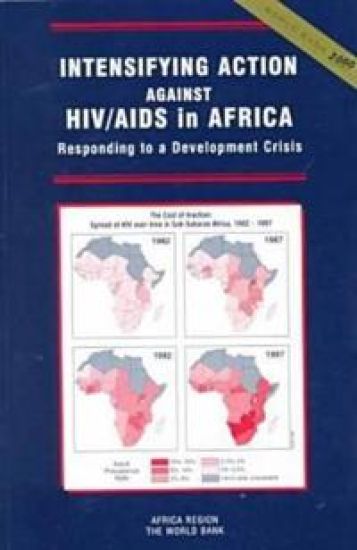
Intensifying Action Against HIV/AIDS in Africa

Intensifying Action Against HIV/AIDS in Africa

World Bank

World Bank Publications
1999
sidottu
Tragically, mass killers are nothing new in Africa. Malaria still claims about as many African lives as AIDS, and preventable childhood diseases kill millions of others. What sets AIDS apart, however, is its unprecedented impact on regional development. Because it kills so many adults in the prime of their working and parenting lives, it decimates the workforce, fractures and impoverishes families, orphans millions, and shreds the fabric of communities. The costs it imposes force countries to make heartbreaking choices between today's and future lives, and between health and dozens of other vital investments for development. Given these realities, African governments and their partners must act now to prevent further HIV infections and to care for and support the millions of Africans already infected and affected. As part of the World Bank's effort to play a stronger role, the first part of this publication introduces the Bank's new strategy to combat the epidemic in partnership with African governments and the Joint United Nations Programme on HIV/AIDS (UNAIDS). The second part documents the growing epidemic, its impact on various sectors, and the imperative of urgent action. Additional sections define building blocks for an effective response, delineate the strategic plan for intensifying the actions against AIDS in Africa, discuss the implementation of the suggested measures, and outline further steps that will be necessary after the strategies have been inculcated.
Evaluating Water Institutions and Water Sector Performance
Physical limits to fresh water expansion--an emerging reality in many parts of the world--make absolute water scarcity inevitable. The inability of the already developed water supply to meet an ever-growing demand for fresh water also makes the emergence of relative water scarcity unavoidable. Water scarcity--both in its absolute and relative forms--gets accentuated further by an increasing premium attached to water quality and ecological sustainability. The water sector has undergone remarkable changes in recent years. While past achievements were associated mainly with investment in new physical structures, recent developments in the water sector are associated to a greater extent with improved management and institutional changes. Although both the nature and direction of these institutional changes vary by country-specific economic, political, cultural and resource realities, there are clearly identifiable trends and patterns. This report suggests a new methodology to shed light on the process of institution-performance interaction. It demonstrates the use of the methodology by applying it to an extensive cross-country data set, and by deriving policy guidance based on the results. The authors aim to stimulate thought and debate about methodologies and strategies to be used in order to evaluate institutional change and institution-performance interactions in the water sector.
Beyond the Center

Beyond the Center

World Bank

World Bank Publications
1999
nidottu
'Decentralization is transforming the structure of governance in Latin America. Since 1983, all but one of the largest countries in the region have seen a transfer of power, resources, and responsibilities to subnational units of government.' This dispersion of power is a global trend due to many different political, economic, and social factors. However, as this trend continues, the importance of accountability, deciding who is responsible for what, and giving those held accountable the authority to deliver results. In light of these important issues, this report examines the impact of decentralization and its effect on the efficiency of public services, on equity, and on macroeconomic stability. It also addresses the issue of politics and notes that successful decentralization requires more than good rules. Those rules must be compatible with incentives. Therefore, the report looks at the broader set of rules that affect political behavior, focusing particularly on electoral systems and political parties.
Do Investment Regulations Compromise Pension Fund Performance?
'Draconian' regulations have created distortions in asset management, limited opportunities for diversification, and, as a consequence have hampered, the performance of pension funds. This volume shows that the return to retirement assets, expected replacement rates, and, hence, the net welfare gain from pension reform is lower under a draconian regulatory framework than under a more liberal pension fund investment regime. Important policy conclusions of the paper are that existing regulatory regimes should be liberalized as soon as possible to allow pension fund investments in a wider array of financial instruments and that regulations should require evaluation of pension fund performance against market benchmarks as opposed to exclusive focus on comparisons with industry averages. The paper also suggests a review of the current structure of the private pension fund industry in Latin America and an evaluation against alternatives in the light of actual performance experience.