
Kirjailija
Xenophon
Kirjat ja teokset yhdessä paikassa: 417 kirjaa, julkaisuja vuosilta 1914–2026, suosituimpiin kuuluu Second Greek Reader. Vertaile teosten hintoja ja tarkista saatavuus suomalaisista kirjakaupoista.
Nimi esiintyy myös muodoissa: Xénophon
417 kirjaa
Kirjojen julkaisuvuodet: 1914–2026.
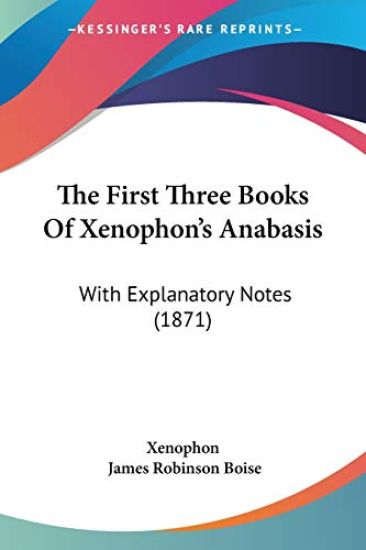
The First Three Books Of Xenophon's Anabasis: With Explanatory Notes (1871)
Xenophon; James Robinson Boise
KESSINGER PUBLISHING, LLC
2008
nidottu
Xenophon's Memorabilia Of Socrates (1847)
Xenophon; Raphael Kuhner
KESSINGER PUBLISHING CO
2008
pokkari
Easy Selections Adapted From Xenophon, Preliminary Part, Scenes From The Anabasis
Xenophon
KESSINGER PUBLISHING, LLC
2008
pokkari
Narrative Of The Expedition Of Cyrus The Younger, And Of The Retreat Of The Ten Thousand (1859)
Xenophon
KESSINGER PUBLISHING CO
2008
pokkari
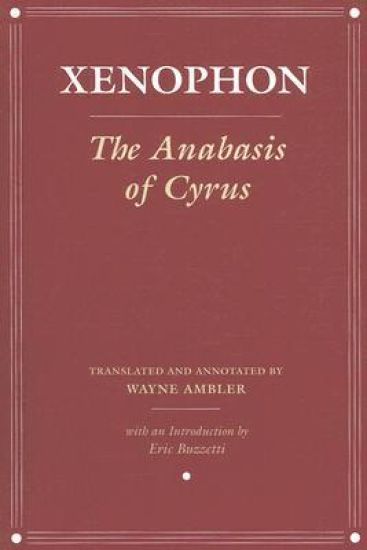
An excellent book for anyone interested in Ancient Greek warfare, or just a rattling good tale.- The NYMAS Review One of the foundational works of military history and political philosophy, and an inspiration for Alexander the Great, the Anabasis of Cyrus recounts the epic story of the Ten Thousand, a band of Greek mercenaries hired by Cyrus the Younger to overthrow his brother, Artaxerxes, king of Persia and the most powerful man on earth. It shows how Cyrus' army was assembled covertly and led from the coast of Asia Minor all the way to Babylon; how the Greeks held the field against a superior Persian force; how Cyrus was killed, leaving the Greeks stranded deep within enemy territory; and how many of them overcame countless dangers and found their way back to Greece. Their remarkable success was due especially to the wily and decisive leadership of Xenophon himself, a student of Socrates who had joined the Ten Thousand and, after most of the Greek generals had been murdered, rallied the despondent Greeks, won a position of leadership, and guided them wisely through myriad obstacles. In this new translation of the Anabasis, Wayne Ambler achieves a masterful combination of liveliness and a fidelity to the original uncommon in other versions. Accompanying Ambler's translation is a penetrating interpretive essay by Eric Buzzetti, one that shows Xenophon to be an author who wove a philosophic narrative into his dramatic tale. The translation and interpretive essay encourage renewed study of the Anabasis as a work of political philosophy. They also celebrate its high adventure and its hero's adroit decision-making under the most pressing circumstances.
Xenophon, Constitution Des Lacedemoniens, Agesilas - Hieron
Xenophon
Les Belles Lettres
2008
nidottu
Dans toutes ses oeuvres (Anabase, Helleniques, Cyropedie, etc.), Xenophon (env. 428 - env. 355 av. J.-C.), Athenien mais Spartiate de coeur, n'a cesse de poser la question de la forme et de l'exercice du pouvoir et de dessiner la figure du chef. Les trois ouvrages ici traduits (pour la premiere fois en francais depuis 1930) expriment l'admiration pour Sparte telle que le legislateur legendaire l'a organisee (Constitution des Lacedemoniens), pour un grand roi et general spartiate (Agesilas, a la fois biographie et eloge), enfin pour une eventuelle bonne tyrannie (Hieron, dialogue a la mode socratique). On a ajoute la traduction de la Constitution des Atheniens, pamphlet anti-democratique qui est joint dans la tradition manuscrite au corpus des oeuvres de Xenophon et qui, date du milieu du ve siecle av. J.-C., est en realite l'oeuvre d'un Vieil Oligarque , comme disent les historiens. Michel Casevitz, professeur emerite a l'Universite de Paris X-Nanterre, a publie, entre autres, des editions critiques, notamment de Diodore de Sicile et de Pausanias.
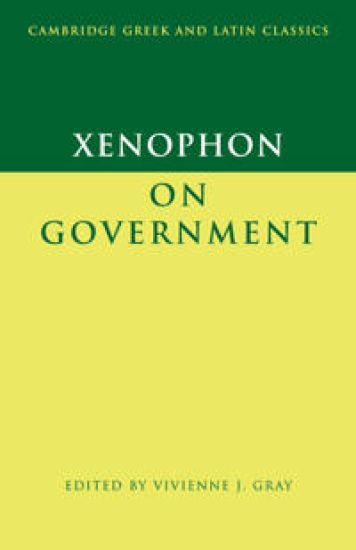
Xenophon of Athens was a pupil of Socrates and a philosopher in his own right. He wrote two of the texts included in this volume, the Hiero (On Tyranny) and the Constitution of the Spartans. The third, the Constitution of the Athenians, is found under Xenophon's name alongside the other two in the manuscripts. The works represent three distinct types of government (the rule of one man in tyranny and kingship, the rule of law in the mixed constitution of the Spartans, and the rule of the masses in the Athenian democracy), but there are common features throughout. This volume presents an introduction discussing Xenophon's views on government in the context of his general political thought, drawing particularly on his Socratic work Memorabilia, and a commentary on the Greek text of each work aimed primarily at advanced undergraduates and graduate students.

Xenophon of Athens was a pupil of Socrates and a philosopher in his own right. He wrote two of the texts included in this volume, the Hiero (On Tyranny) and the Constitution of the Spartans. The third, the Constitution of the Athenians, is found under Xenophon's name alongside the other two in the manuscripts. The works represent three distinct types of government (the rule of one man in tyranny and kingship, the rule of law in the mixed constitution of the Spartans, and the rule of the masses in the Athenian democracy), but there are common features throughout. This volume presents an introduction discussing Xenophon's views on government in the context of his general political thought, drawing particularly on his Socratic work Memorabilia, and a commentary on the Greek text of each work aimed primarily at advanced undergraduates and graduate students.