
Kirjailija
Xenophon
Kirjat ja teokset yhdessä paikassa: 417 kirjaa, julkaisuja vuosilta 1914–2026, suosituimpiin kuuluu Second Greek Reader. Vertaile teosten hintoja ja tarkista saatavuus suomalaisista kirjakaupoista.
Nimi esiintyy myös muodoissa: Xénophon
417 kirjaa
Kirjojen julkaisuvuodet: 1914–2026.
Xenophon's Anabasis is a classic tale of high adventure. An army of upwards of 10,000 Greek warriors, far from home, find themselves in hostile territory, vastly outnumbered and in great peril. Their leader, Cyrus the Great, has been killed in battle along with a number of their other generals. They must undertake an unparalleled arduous trek and make a heroic fighting retreat to save themselves from certain death. This true story, told by the man who became one of the leaders of the valiant band of warriors, was the stuff of legend. It is ingrained in the history of the Greeks as a cherished tale of overcoming hardship with courage and nearly superhuman endurance. Even Alexander the Great was said to have kept a copy of this book and to have often referred to it for inspiration. Told in the third person, as were Caesar's Commentaries, the style is simple, direct and unpretentious. Students of Greek Culture often find it a pleasure to read because of its uncomplicated style of writing in addition to being exciting story that accurately describes real people, places and times. This translation, by Professor H. G. Dakyns, retains the flavor of the original and includes embedded explanatory notes to help clarify references and unfamiliar geography.
One of Socrates' Athenian disciples in his youth, Xenophon (c. 498-354 bc) fought as a mercenary commander in Cyrus the Younger's campaign to seize the Persian throne, and later wrote a wide range of works on history, politics and philosophy. These six treatises offer his informed insights into the nature of leadership. In the dialogue between the poet Simonides and Hiero, tyrant of Syracuse, Xenophon provides a consummate consideration of the burdens of being an absolute dictator and the superior happiness of the private man. Elsewhere, his biography of King Agesilaus II of Sparta depicts the author's patron as a model of piety, justice, courage and wisdom, while other texts consider the essential qualities of the cavalry commander, analyse the skills of the horseman and the hunter, and advance a bold economic plan for democratic Athens.
This book presents translations of three dialogues Xenophon devoted to the life and thought of his teacher, Socrates. Each is accompanied by notes and an interpretative essay that will introduce new readers to Xenophon and foster further reflection in those familiar with his writing. "Apology of Socrates to the Jury" shows how Socrates conducted himself when he was tried on the capital charge of not believing in the city's gods and corrupting the young. Although Socrates did not secure his own acquittal, he profoundly impressed some listeners who then helped to shape the public perception of philosophy as a noble, if highly idiosyncratic, way of life. In "Oeconomicus," Xenophon relates the conversation Socrates had on the day he turned from the study of natural philosophy to that of moral and political matters. "Oeconomicus" is concerned most directly with the character and purpose of Socrates' political philosophy. Xenophon provides entertaining portraits of Socrates' circle of friends in the "Symposium." In the process, he conveys the source of every individual's pride in himself, thus defining for each a conception of human excellence or virtue. The dialogue concludes with Socrates' beautiful speech on love (eros) and its proper place in the good or happy life.











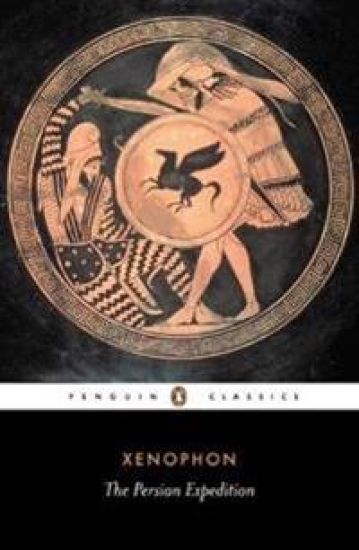
In The Persian Expedition, Xenophon, a young Athenian noble who sought his destiny abroad, provides an enthralling eyewitness account of the attempt by a Greek mercenary army - the Ten Thousand - to help Prince Cyrus overthrow his brother and take the Persian throne. When the Greeks were then betrayed by their Persian employers, they were forced to march home through hundreds of miles of difficult terrain - adrift in a hostile country and under constant attack from the unforgiving Persians and warlike tribes. In this outstanding description of endurance and individual bravery, Xenophon, one of those chosen to lead the retreating army, provides a vivid narrative of the campaign and its aftermath, and his account remains one of the best pictures we have of Greeks confronting a 'barbarian' world.
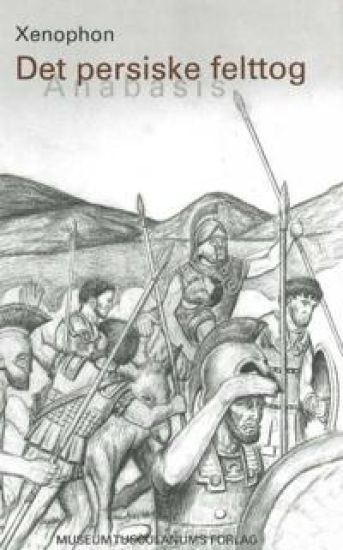
Illustrates the fate suffered by the army of 10,000 Greek mercenaries, when it was hired to support an internal attempted coup within the royal family in the mighty Persian reign 400 BC. This book provides several maps, plates and illustrations, explaining complicated passages together with a series of colour photographs of relevant landscapes.
Although present-day (like ancient Greek) opinion on "the real Socrates" diverges widely, six classic texts that any informed judgment of him must take into account appear together, for the first time, in this volume.