Kirjojen hintavertailu – 12 859 827 kirjaa ja 27 kauppaa

Kirjailija

Xenophon

Kirjat ja teokset yhdessä paikassa: 417 kirjaa, julkaisuja vuosilta 1914–2026, suosituimpiin kuuluu Second Greek Reader. Vertaile teosten hintoja ja tarkista saatavuus suomalaisista kirjakaupoista.

Nimi esiintyy myös muodoissa: Xénophon

417 kirjaa

Kirjojen julkaisuvuodet: 1914–2026.

Constitution of the Athenians

Constitution of the Athenians

Xenophon

Bryn Mawr Commentaries
2002
nidottu
Bryn Mawr Commentaries provide clear, concise, accurate, and consistent support for students making the transition from introductory and intermediate texts to the direct experience of ancient Greek and Latin literature. They assume that the student will know the basics of grammar and vocabulary and then provide the specific grammatical and lexical notes that a student requires to begin the task of interpretation. Hackett Publishing Company is the exclusive distributor of the Bryn Mawr Commentaries in North America, the United Kingdom, and Europe.
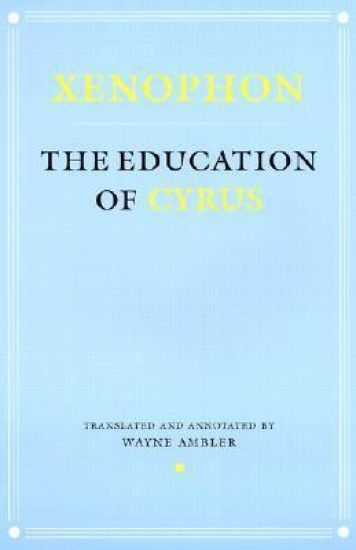
The Education of Cyrus

The Education of Cyrus

Xenophon

Cornell University Press
2001
pokkari

Halvin toimitettuna 30,10 €

"The Education of Cyrus is a major work of classical political philosophy that provides a portrait of extraordinary political ambition.... Ambler's precise translation makes it possible to engage in a close textual reading that establishes Xenophon as an important political thinker."-Translation Review Xenophon's masterpiece, The Education of Cyrus, is a work that was admired by Machiavelli for its lessons on leadership. Also known as the Cyropaedia, this philosophical novel is loosely based on the accomplishments of Cyrus the Great, founder of the vast Persian Empire that later became the archrival of the Greeks in the classical age. It offers an extraordinary portrait of political ambition, talent, and their ultimate limits. The writings of Xenophon are increasingly recognized as important works of political philosophy. In The Education of Cyrus, Xenophon confronts the vexing problem of political instability by exploring the character and behavior of the ruler. Impressive though his successes are, however, Cyrus is also examined in the larger human context, in which love, honor, greed, revenge, folly, piety, and the search for wisdom all have important parts to play. Wayne Ambler's translation captures the charm and drama of the work while also achieving great accuracy. His introduction, annotations, and glossary help the reader to appreciate both the engaging story itself and the volume's contributions to philosophy.
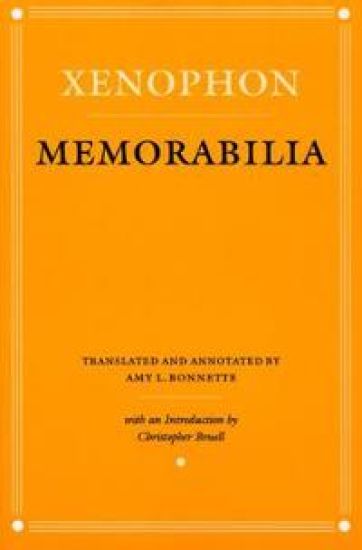
Memorabilia

Memorabilia

Xenophon

Cornell University Press
2001
pokkari
"This edition will certainly meet the needs of all scholars and students having an interest in Socrates,... in political science,... history, law, and philosophy.... If, as is implicit in the text, the intention of Bonnette is to make Xenophon's Memorabilia more accessible to a larger audience, then she certainly has succeeded."- Bryn Mawr Classical Review An essential text for understanding Socrates, Xenophon's Memorabilia is the compelling tribute of an affectionate student to his teacher, providing a rare firsthand account of Socrates' life and philosophy. The Memorabilia is invaluable both as a work of philosophy in its own right and as a complement to the study of Plato's dialogues. The longest of Xenophon's four Socratic works, it is particularly revealing about the differences between Socrates and his philosophical predecessors. Far more obviously than Plato in the dialogues, Xenophon calls attention in the Memorabilia to his own relationship with Socrates. A colorful and fully engaged writer, Xenophon aims above all to convince his readers of the greatness of Socrates thought and the disgracefulness of his conviction on a capital charge. In thirty-nine chapters, Xenophon presents Socrates as an ordinary person and as a great benefactor to those associated with him.
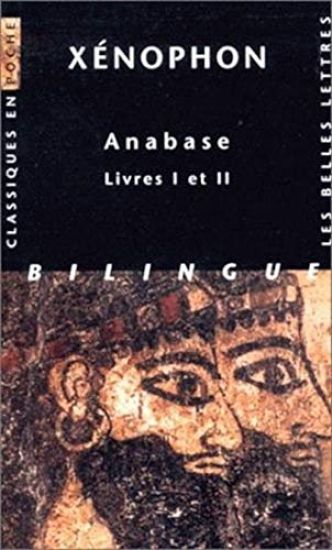
Xenophon, Anabase: Livres I-II .

Xenophon, Anabase: Livres I-II .

Xenophon

Les Belles Lettres
2000
nidottu
A la mort de Darius II, c'est Artaxerxes II qui lui succede sur le trone de Perse mais Cyrus le Jeune essaie de detroner son frere avec le concours des troupes spartiates et des mercenaires grecs, les Dix mille . Xenophon, jeune Athenien riche et de bonne famille, aimant les voyages, la guerre et la gloire, decide de suivre Cyrus dans l'espoir de rapporter de cette aventure un beau recit et sans doute de grandes richesses. Malgre la bravoure des Grecs, la guerre tourne mal et Cyrus est tue en 401 a Counaxa, pres de Babylone. Harcelee par les troupes du satrape Tissapherne, l'armee tombe dans un guet-apens et tous les generaux sont tues. Xenophon entre alors veritablement en scene. Il est elu general et contribue par son intelligence a sauver l'armee des mercenaires: groupes autour de lui, les survivants rejoindront la Thrace et passeront au service de Sparte. C'est le recit de cette retraite fameuse, au coeur de l'hiver et des montagnes, du centre de l'Armenie jusqu'a la mer Noire, que Xenophon a note dans ses carnets d'expedition et qu'il retrace dans l'Anabase.
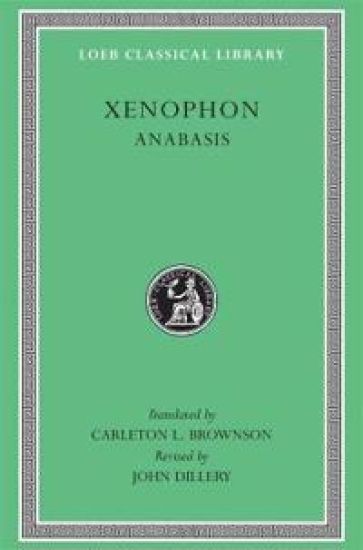
Anabasis

Anabasis

Xenophon

LOEB
1998
sidottu

Halvin toimitettuna 36,30 €

Greek mercenaries on the march. Xenophon (ca. 430 to ca. 354 BC) was a wealthy Athenian and friend of Socrates. He left Athens in 401 and joined an expedition including ten thousand Greeks led by the Persian governor Cyrus against the Persian king. After the defeat of Cyrus, it fell to Xenophon to lead the Greeks from the gates of Babylon back to the coast through inhospitable lands. Later he wrote the famous vivid account of this “March Up-Country” (Anabasis); but meanwhile he entered service under the Spartans against the Persian king, married happily, and joined the staff of the Spartan king, Agesilaus. But Athens was at war with Sparta in 394 and so exiled Xenophon. The Spartans gave him an estate near Elis where he lived for years writing and hunting and educating his sons. Reconciled to Sparta, Athens restored Xenophon to honor, but he preferred to retire to Corinth. Xenophon’s Anabasis is a true story of remarkable adventures. Hellenica, a history of Greek affairs from 411 to 362, begins as a continuation of Thucydides’ account. There are four works on Socrates (collected in LCL 168). In Memorabilia Xenophon adds to Plato’s picture of Socrates from a different viewpoint. The Apology is an interesting complement to Plato’s account of Socrates’ defense at his trial. Xenophon’s Symposium portrays a dinner party at which Socrates speaks of love; and Oeconomicus has him giving advice on household management and married life. Cyropaedia, a historical romance on the education of Cyrus (the Elder), reflects Xenophon’s ideas about rulers and government; the Loeb edition is in two volumes. We also have his Hiero, a dialogue on government; Agesilaus, in praise of that king; Constitution of Lacedaemon (on the Spartan system); Ways and Means (on the finances of Athens); Manual for a Cavalry Commander; a good manual of Horsemanship; and a lively Hunting with Hounds. The Constitution of the Athenians, though clearly not by Xenophon, is an interesting document on politics at Athens. These eight books are collected in the last of the seven volumes of the Loeb Classical Library edition of Xenophon.
Oeconomicus

Oeconomicus

Xenophon

Bristol Classical Press
1998
pokkari
This volume offers a selection (about a third of the whole) from Xenophon's Oeconomicus, his work about management of the ancient, relatively well-to-do household and estate. It probably reflects the period from the late 390s and the 380s when Xenophon lived, after his career as a mercenary general, with his wife Philesia and sons Diodoros and Gryllos at Skillos near Elis. It includes much that provides us with our best evidence for how the ancient Greeks lived from day to day, their relationships with their wives and other members of their household. In his combination of intelligence and integrity, Xenophon represents the best ancient Greece had to offer; and his writing, like the man himself, is straightforward and honest, without any hint of artifice. It offers easy access for those tackling their first Greek prose reading. In this edition notes and some running vocabulary appear on pages facing the Greek text and there is a consolidated vocabulary at the end.
Oeconomicus

Oeconomicus

Xenophon

Clarendon Press
1995
nidottu
The Oeconomicus is unique in Greek literature in combining a discussion of the proper management of an oikos (`family', `household', or `estate') and didactic material on agriculture within a Socratic dialogue. It is one of the richest primary sources for the social, economic, and intellectual history of classical Athens. It contains valuable information and raises questions of perennial interest on marriage; the innate moral, physical, and mental qualities of men and women; the functioning of domestic and public economies; rural and urban life; Greek slavery; popular religion; the role of education, and many other topics. Despite the current widespread interest in the subjects discussed in the Oeconomicus, this text has been largely neglected. In this book Professor Pomeroy provides a new translation to complement the Oxford Classical Text, and a comprehensive introduction and commentary, making the book readily accessible to those both with and without Greek. She covers a wide range of subjects including agriculture, philosophy, and social, military, intellectual, and economic history. It should be of special interest to scholars and students of classics, history, philosophy, as well as women's studies.

Conversations of Socrates

Conversations of Socrates

Xenophon

Penguin Classics
1990
pokkari

Halvin toimitettuna 18,70 €

After the execution of Socrates in 399 BC, a number of his followers wrote dialogues featuring him as the protagonist and, in so doing, transformed the great philosopher into a legendary figure. Xenophon's portrait is the only one other than Plato's to survive, and while it offers a very personal interpretation of Socratic thought, it also reveals much about the man and his philosophical views. In 'Socrates' Defence' Xenophon defends his mentor against charges of arrogance made at his trial, while the 'Memoirs of Socrates' also starts with an impassioned plea for the rehabilitation of a wronged reputation. Along with 'The Estate-Manager', a practical economic treatise, and 'The Dinner-Party', a sparkling exploration of love, Xenophon's dialogues offer fascinating insights into the Socratic world and into the intellectual atmosphere and daily life of ancient Greece.
A History of My Times

A History of My Times

Xenophon

Penguin Classics
1979
pokkari

Halvin toimitettuna 18,70 €

Xenophon's History recounts nearly fifty turbulent years of warfare in Greece between 411 and 362 BC. Continuing the story of the Peloponnesian War at the point where Thucydides finished his magisterial history, this is a fascinating chronicle of the conflicts that ultimately led to the decline of Greece, and the wars with both Thebes and the might of Persia. An Athenian by birth, Xenophon became a firm supporter of the Spartan cause, and fought against the Athenians in the battle of Coronea. Combining history and memoir, this is a brilliant account of the triumphs and failures of city-states, and a portrait of Greece at a time of crisis.
Scripta Minora

Scripta Minora

Xenophon

LOEB
1925
sidottu
A miscellany of minor works. Xenophon (ca. 430 to ca. 354 BC) was a wealthy Athenian and friend of Socrates. He left Athens in 401 and joined an expedition including ten thousand Greeks led by the Persian governor Cyrus against the Persian king. After the defeat of Cyrus, it fell to Xenophon to lead the Greeks from the gates of Babylon back to the coast through inhospitable lands. Later he wrote the famous vivid account of this “March Up-Country” (Anabasis); but meanwhile he entered service under the Spartans against the Persian king, married happily, and joined the staff of the Spartan king, Agesilaus. But Athens was at war with Sparta in 394 and so exiled Xenophon. The Spartans gave him an estate near Elis where he lived for years, writing and hunting and educating his sons. Reconciled to Sparta, Athens restored Xenophon to honor, but he preferred to retire to Corinth. Xenophon’s Anabasis is a true story of remarkable adventures. Hellenica, a history of Greek affairs from 411 to 362, begins as a continuation of Thucydides’ account. There are four works on Socrates (collected in LCL 168). In Memorabilia Xenophon adds to Plato’s picture of Socrates from a different viewpoint. The Apology is an interesting complement to Plato’s account of Socrates’ defense at his trial. Xenophon’s Symposium portrays a dinner party at which Socrates speaks of love; and Oeconomicus has him giving advice on household management and married life. Cyropaedia, a historical romance on the education of Cyrus (the Elder), reflects Xenophon’s ideas about rulers and government. We also have his Hiero, a dialogue on government; Agesilaus, in praise of that king; Constitution of Lacedaemon (on the Spartan system); Ways and Means (on the finances of Athens); Manual for a Cavalry Commander; a good manual of Horsemanship; and a lively Hunting with Hounds—mostly hare hunting. The Constitution of the Athenians, though clearly not by Xenophon, is an interesting document on politics at Athens. These eight books are collected in the present volume.
Hellenica, Volume II
A continuation of Thucydides. Xenophon (ca. 430 to ca. 354 BC) was a wealthy Athenian and friend of Socrates. He left Athens in 401 and joined an expedition including ten thousand Greeks led by the Persian governor Cyrus against the Persian king. After the defeat of Cyrus, it fell to Xenophon to lead the Greeks from the gates of Babylon back to the coast through inhospitable lands. Later he wrote the famous vivid account of this “March Up-Country” (Anabasis); but meanwhile he entered service under the Spartans against the Persian king, married happily, and joined the staff of the Spartan king, Agesilaus. But Athens was at war with Sparta in 394 and so exiled Xenophon. The Spartans gave him an estate near Elis where he lived for years writing and hunting and educating his sons. Reconciled to Sparta, Athens restored Xenophon to honor, but he preferred to retire to Corinth. Xenophon’s Anabasis is a true story of remarkable adventures. Hellenica, a history of Greek affairs from 411 to 362, begins as a continuation of Thucydides’ account. There are four works on Socrates (collected in LCL 168). In Memorabilia Xenophon adds to Plato’s picture of Socrates from a different viewpoint. The Apology is an interesting complement to Plato’s account of Socrates’ defense at his trial. Xenophon’s Symposium portrays a dinner party at which Socrates speaks of love; and Oeconomicus has him giving advice on household management and married life. Cyropaedia, a historical romance on the education of Cyrus (the Elder), reflects Xenophon’s ideas about rulers and government; the Loeb edition is in two volumes. We also have his Hiero, a dialogue on government; Agesilaus, in praise of that king; Constitution of Lacedaemon (on the Spartan system); Ways and Means (on the finances of Athens); Manual for a Cavalry Commander; a good manual of Horsemanship; and a lively Hunting with Hounds. The Constitution of the Athenians, though clearly not by Xenophon, is an interesting document on politics at Athens. These eight books are collected in the last of the seven volumes of the Loeb Classical Library edition of Xenophon.
Hellenica, Volume I

Hellenica, Volume I

Xenophon

LOEB
1918
sidottu
A continuation of Thucydides. Xenophon (ca. 430 to ca. 354 BC) was a wealthy Athenian and friend of Socrates. He left Athens in 401 and joined an expedition including ten thousand Greeks led by the Persian governor Cyrus against the Persian king. After the defeat of Cyrus, it fell to Xenophon to lead the Greeks from the gates of Babylon back to the coast through inhospitable lands. Later he wrote the famous vivid account of this “March Up-Country” (Anabasis); but meanwhile he entered service under the Spartans against the Persian king, married happily, and joined the staff of the Spartan king, Agesilaus. But Athens was at war with Sparta in 394 and so exiled Xenophon. The Spartans gave him an estate near Elis where he lived for years writing and hunting and educating his sons. Reconciled to Sparta, Athens restored Xenophon to honor, but he preferred to retire to Corinth. Xenophon’s Anabasis is a true story of remarkable adventures. Hellenica, a history of Greek affairs from 411 to 362, begins as a continuation of Thucydides’ account. There are four works on Socrates (collected in LCL 168). In Memorabilia Xenophon adds to Plato’s picture of Socrates from a different viewpoint. The Apology is an interesting complement to Plato’s account of Socrates’ defense at his trial. Xenophon’s Symposium portrays a dinner party at which Socrates speaks of love; and Oeconomicus has him giving advice on household management and married life. Cyropaedia, a historical romance on the education of Cyrus (the Elder), reflects Xenophon’s ideas about rulers and government; the Loeb edition is in two volumes. We also have his Hiero, a dialogue on government; Agesilaus, in praise of that king; Constitution of Lacedaemon (on the Spartan system); Ways and Means (on the finances of Athens); Manual for a Cavalry Commander; a good manual of Horsemanship; and a lively Hunting with Hounds. The Constitution of the Athenians, though clearly not by Xenophon, is an interesting document on politics at Athens. These eight books are collected in the last of the seven volumes of the Loeb Classical Library edition of Xenophon.
Cyropaedia, Volume II
A royal education. Xenophon (ca. 430 to ca. 354 BC) was a wealthy Athenian and friend of Socrates. He left Athens in 401 and joined an expedition including ten thousand Greeks led by the Persian governor Cyrus against the Persian king. After the defeat of Cyrus, it fell to Xenophon to lead the Greeks from the gates of Babylon back to the coast through inhospitable lands. Later he wrote the famous vivid account of this “March Up-Country” (Anabasis); but meanwhile he entered service under the Spartans against the Persian king, married happily, and joined the staff of the Spartan king, Agesilaus. But Athens was at war with Sparta in 394 and so exiled Xenophon. The Spartans gave him an estate near Elis where he lived for years writing and hunting and educating his sons. Reconciled to Sparta, Athens restored Xenophon to honor, but he preferred to retire to Corinth. Xenophon’s Anabasis is a true story of remarkable adventures. Hellenica, a history of Greek affairs from 411 to 362, begins as a continuation of Thucydides’ account. There are four works on Socrates (collected in LCL 168). In Memorabilia Xenophon adds to Plato’s picture of Socrates from a different viewpoint. The Apology is an interesting complement to Plato’s account of Socrates’ defense at his trial. Xenophon’s Symposium portrays a dinner party at which Socrates speaks of love; and Oeconomicus has him giving advice on household management and married life. Cyropaedia, a historical romance on the education of Cyrus (the Elder), reflects Xenophon’s ideas about rulers and government; the Loeb edition is in two volumes. We also have his Hiero, a dialogue on government; Agesilaus, in praise of that king; Constitution of Lacedaemon (on the Spartan system); Ways and Means (on the finances of Athens); Manual for a Cavalry Commander; a good manual of Horsemanship; and a lively Hunting with Hounds. The Constitution of the Athenians, though clearly not by Xenophon, is an interesting document on politics at Athens. These eight books are collected in the last of the seven volumes of the Loeb Classical Library edition of Xenophon.
Cyropaedia, Volume I
A royal education. Xenophon (ca. 430 to ca. 354 BC) was a wealthy Athenian and friend of Socrates. He left Athens in 401 and joined an expedition including ten thousand Greeks led by the Persian governor Cyrus against the Persian king. After the defeat of Cyrus, it fell to Xenophon to lead the Greeks from the gates of Babylon back to the coast through inhospitable lands. Later he wrote the famous vivid account of this “March Up-Country” (Anabasis); but meanwhile he entered service under the Spartans against the Persian king, married happily, and joined the staff of the Spartan king, Agesilaus. But Athens was at war with Sparta in 394 and so exiled Xenophon. The Spartans gave him an estate near Elis where he lived for years writing and hunting and educating his sons. Reconciled to Sparta, Athens restored Xenophon to honor, but he preferred to retire to Corinth. Xenophon’s Anabasis is a true story of remarkable adventures. Hellenica, a history of Greek affairs from 411 to 362, begins as a continuation of Thucydides’ account. There are four works on Socrates (collected in LCL 168). In Memorabilia Xenophon adds to Plato’s picture of Socrates from a different viewpoint. The Apology is an interesting complement to Plato’s account of Socrates’ defense at his trial. Xenophon’s Symposium portrays a dinner party at which Socrates speaks of love; and Oeconomicus has him giving advice on household management and married life. Cyropaedia, a historical romance on the education of Cyrus (the Elder), reflects Xenophon’s ideas about rulers and government; the Loeb edition is in two volumes. We also have his Hiero, a dialogue on government; Agesilaus, in praise of that king; Constitution of Lacedaemon (on the Spartan system); Ways and Means (on the finances of Athens); Manual for a Cavalry Commander; a good manual of Horsemanship; and a lively Hunting with Hounds. The Constitution of the Athenians, though clearly not by Xenophon, is an interesting document on politics at Athens. These eight books are collected in the last of the seven volumes of the Loeb Classical Library edition of Xenophon.