
Kirjailija
Xenophon
Kirjat ja teokset yhdessä paikassa: 417 kirjaa, julkaisuja vuosilta 1914–2026, suosituimpiin kuuluu Second Greek Reader. Vertaile teosten hintoja ja tarkista saatavuus suomalaisista kirjakaupoista.
Nimi esiintyy myös muodoissa: Xénophon
417 kirjaa
Kirjojen julkaisuvuodet: 1914–2026.








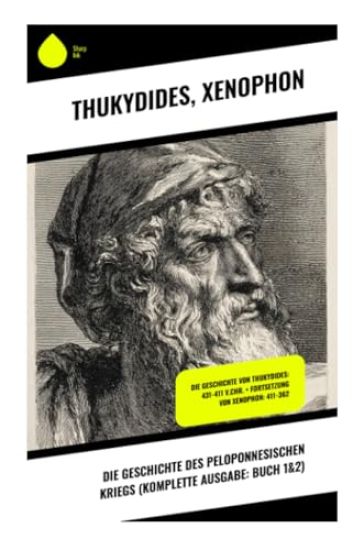
Die Geschichte des Peloponnesischen Kriegs (Komplette Ausgabe: Buch 1&2)
Thukydides; Xenophon
Copycat
2025
nidottu
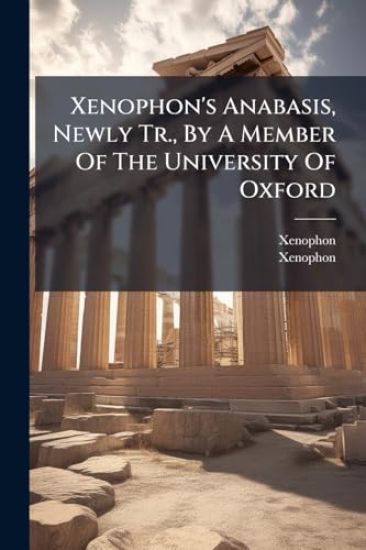
Xenophon's Anabasis, Newly Tr., By A Member Of The University Of Oxford
Xenophon; Xenophon (of Athens )
Hutson Street Press
2025
nidottu
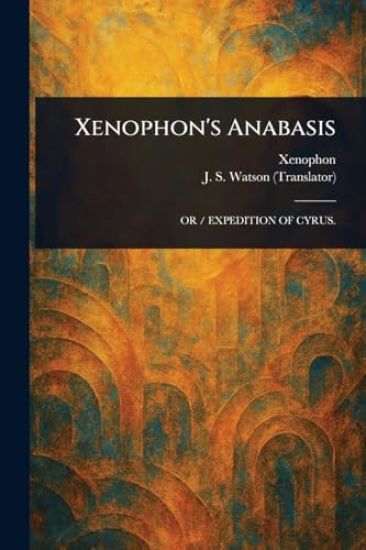
"The First Four Books of Xenophon's Anabasis" recounts a pivotal episode in ancient Greek history. Xenophon, a soldier and writer, vividly details the military campaign of Cyrus the Younger, a Persian prince, against his brother, the ruling King Artaxerxes II. This historical account offers a compelling glimpse into the strategies, challenges, and realities of warfare in ancient Greece and Persia. A testament to Xenophon's keen observational skills and narrative talent, "Anabasis" provides invaluable insights into the political and military landscape of the 5th century BC. Explore the ambitions of Cyrus, the resilience of the Greek soldiers, and the complexities of leadership in this classic work of military history and biography. This meticulously prepared edition preserves the enduring legacy of Xenophon's chronicle, inviting readers to witness a remarkable journey into the heart of the ancient world. This work has been selected by scholars as being culturally important, and is part of the knowledge base of civilization as we know it. This work is in the public domain in the United States of America, and possibly other nations. Within the United States, you may freely copy and distribute this work, as no entity (individual or corporate) has a copyright on the body of the work. Scholars believe, and we concur, that this work is important enough to be preserved, reproduced, and made generally available to the public. We appreciate your support of the preservation process, and thank you for being an important part of keeping this knowledge alive and relevant.

"Cyropaedia" by Xenophon offers a fascinating glimpse into ancient political philosophy and the art of leadership. This work of historical fiction explores the education and character of Cyrus the Great, founder of the Persian Empire. While presented as a biographical narrative, "Cyropaedia" delves into timeless questions of governance, ethics, and the qualities of an ideal ruler. Xenophon's exploration of Cyrus provides insights into strategies for building and maintaining power, managing relationships, and inspiring loyalty. Readers interested in ancient history and the dynamics of political leadership will find this work both engaging and thought-provoking. "Cyropaedia" remains a valuable resource for understanding historical perspectives on political science and the enduring challenges of leadership. This work has been selected by scholars as being culturally important, and is part of the knowledge base of civilization as we know it. This work is in the public domain in the United States of America, and possibly other nations. Within the United States, you may freely copy and distribute this work, as no entity (individual or corporate) has a copyright on the body of the work. Scholars believe, and we concur, that this work is important enough to be preserved, reproduced, and made generally available to the public. We appreciate your support of the preservation process, and thank you for being an important part of keeping this knowledge alive and relevant.

"Cyropaedia" by Xenophon offers a fascinating glimpse into ancient political philosophy and the art of leadership. This work of historical fiction explores the education and character of Cyrus the Great, founder of the Persian Empire. While presented as a biographical narrative, "Cyropaedia" delves into timeless questions of governance, ethics, and the qualities of an ideal ruler. Xenophon's exploration of Cyrus provides insights into strategies for building and maintaining power, managing relationships, and inspiring loyalty. Readers interested in ancient history and the dynamics of political leadership will find this work both engaging and thought-provoking. "Cyropaedia" remains a valuable resource for understanding historical perspectives on political science and the enduring challenges of leadership. This work has been selected by scholars as being culturally important, and is part of the knowledge base of civilization as we know it. This work is in the public domain in the United States of America, and possibly other nations. Within the United States, you may freely copy and distribute this work, as no entity (individual or corporate) has a copyright on the body of the work. Scholars believe, and we concur, that this work is important enough to be preserved, reproduced, and made generally available to the public. We appreciate your support of the preservation process, and thank you for being an important part of keeping this knowledge alive and relevant.

"The First Four Books of Xenophon's Anabasis" recounts a pivotal episode in ancient Greek history. Xenophon, a soldier and writer, vividly details the military campaign of Cyrus the Younger, a Persian prince, against his brother, the ruling King Artaxerxes II. This historical account offers a compelling glimpse into the strategies, challenges, and realities of warfare in ancient Greece and Persia. A testament to Xenophon's keen observational skills and narrative talent, "Anabasis" provides invaluable insights into the political and military landscape of the 5th century BC. Explore the ambitions of Cyrus, the resilience of the Greek soldiers, and the complexities of leadership in this classic work of military history and biography. This meticulously prepared edition preserves the enduring legacy of Xenophon's chronicle, inviting readers to witness a remarkable journey into the heart of the ancient world. This work has been selected by scholars as being culturally important, and is part of the knowledge base of civilization as we know it. This work is in the public domain in the United States of America, and possibly other nations. Within the United States, you may freely copy and distribute this work, as no entity (individual or corporate) has a copyright on the body of the work. Scholars believe, and we concur, that this work is important enough to be preserved, reproduced, and made generally available to the public. We appreciate your support of the preservation process, and thank you for being an important part of keeping this knowledge alive and relevant.


Since 1923 the Sammlung Tusculum has published authoritative editions of Greek and Latin works together with a German translation. The original texts are comprehensively annotated, and feature an introductory chapter. In the new volumes, additional essays delve into specific aspects of the works, illuminating their historical context and reception to the present day. The high academic quality of the new editions together with clearly written essays and annotations make the Sammlung Tusculum essential reading for students who are discovering an ancient author for the first time as well as professional scholars who would like to gain a deeper understanding of specific aspects of a given work. Moreover, the series is ideal for lay readers who would like to engage with antiquity through a reliable German translation. The series contains over 340 titles, available in print and eBook editions, making previously out-of-print titles and rarities available again for the first time. In order to celebrate the 90th anniversary of the series, De Gruyter is proud to present Tusculum Online, an eBook package which contains all titles that appeared between 1923 and 2013 - a fitting tribute to an important part of German publishing history.