Kirjojen hintavertailu – 12 859 827 kirjaa ja 27 kauppaa

Kirjailija

Zygmunt Bauman

Kirjat ja teokset yhdessä paikassa: 160 kirjaa, julkaisuja vuosilta 1989–2026, suosituimpiin kuuluu Trabajo, Consumismo Y Nuevos Pobres. Vertaile teosten hintoja ja tarkista saatavuus suomalaisista kirjakaupoista.

160 kirjaa

Kirjojen julkaisuvuodet: 1989–2026.

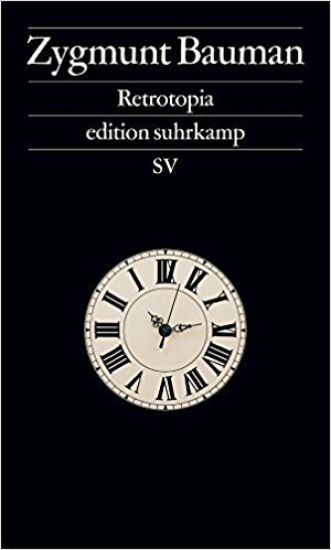
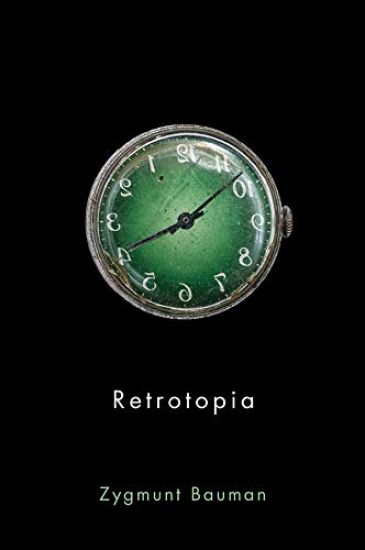
Retrotopia

Retrotopia

Zygmunt Bauman

Bokförlaget Daidalos
2018
nidottu
Vi lever i en tid som tycks vara förälskad i det förflutna, påpekar Zygmunt Bauman i denna sin sista, postumt publicerade bok, ett förflutet där tillvaron var enklare, rollerna tydligare och världen homogen. Haken är bara, menar han, att detta förflutna aldrig har existerat, det är en dagdröm, men inte precis någon oskyldig sådan. Retrotopia som Bauman kallar denna dagdröm, en utopi förlagd till det förflutna, fungerar som ett skydd mot ett svårhanterligt nu och en skrämmande framtid och bygger på en tydlig åtskillnad mellan ett idealiserat ”vi” och ett demoniserat ”dom”. Bauman tar hjälp av en rad teoretiker från Hobbes, Hegel, Marx och framåt för att förstå de retrotopiska fantasierna och sätta in dem i ett politiskt och historiskt sammanhang där inte minst nationalstatens bräcklighet och maktens och politikens allt tydligare separation har en stor betydelse. Han diskuterar i samband med detta också fenomen som konspirationsteorier, självmordsterrorism och copycat-­beteende. "Retrotopia" knyter an till de många böcker Bauman tidigare har skrivit om vår flytande modernitet. Men den är också ett försök att skönja någon sorts hopp om en bättre framtid trots allt. En bättre framtid, inte ett bättre förflutet. Zygmunt Bauman (1925–2017) var ursprungligen verksam i Polen, men från 1972 professor i sociologi vid University of Leeds. Daidalos har givit ut en lång rad av hans böcker.

Born Liquid

Born Liquid

Zygmunt Bauman; Thomas Leoncini

Polity Press
2018
sidottu
Born Liquid is the last work by the great sociologist and social theorist Zygmunt Bauman, whose brilliant analyses of liquid modernity changed the way we think about our world today. At the time of his death, Bauman was working on this short book, a conversation with the Italian journalist Thomas Leoncini, exactly sixty years his junior. In these exchanges with Leoncini, Bauman considers, for the first time, the world of those born after the early 1980s, the individuals who were ‘born liquid’ and feel at home in a society of constant flux. As always, taking his cue from contemporary issues and debates, Bauman examines this world by discussing what are often regarded as its most ephemeral features. The transformation of the body – tattoos, cosmetic surgery, hipsters – aggression, bullying, the Internet, online dating, gender transitions and changing sexual preferences are all analysed with characteristic brilliance in this concise and topical book, which will be of particular interest to young people, natives of the liquid modern world, as well as to Bauman’s many readers of all generations.
Born Liquid

Born Liquid

Zygmunt Bauman; Thomas Leoncini

Polity Press
2018
nidottu
Born Liquid is the last work by the great sociologist and social theorist Zygmunt Bauman, whose brilliant analyses of liquid modernity changed the way we think about our world today. At the time of his death, Bauman was working on this short book, a conversation with the Italian journalist Thomas Leoncini, exactly sixty years his junior. In these exchanges with Leoncini, Bauman considers, for the first time, the world of those born after the early 1980s, the individuals who were ‘born liquid’ and feel at home in a society of constant flux. As always, taking his cue from contemporary issues and debates, Bauman examines this world by discussing what are often regarded as its most ephemeral features. The transformation of the body – tattoos, cosmetic surgery, hipsters – aggression, bullying, the Internet, online dating, gender transitions and changing sexual preferences are all analysed with characteristic brilliance in this concise and topical book, which will be of particular interest to young people, natives of the liquid modern world, as well as to Bauman’s many readers of all generations.
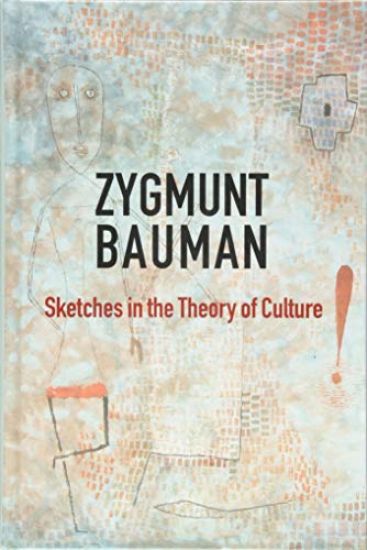
Sketches in the Theory of Culture

Sketches in the Theory of Culture

Zygmunt Bauman

Polity Press
2018
sidottu
Sketches in the Theory of Culture is a remarkable work by all measures. Written by Zygmunt Bauman when he was still a professor in Poland, and originally intended for publication in 1968, it was suppressed by the Polish government in the wave of repression following the protests in March of that year. For decades, it was thought to be lost. Astonishingly, it survived in the form of an uncorrected set of proofs which was recently discovered, and is the basis of this edition. Now published in English for the first time, this book sheds new light on Bauman’s work prior to his emigration and illuminates the intellectual climate of Poland in the late 1960s. Bauman’s pursuit of a semiotic theory of culture includes a discussion of processes of individualization and the intensification of global ties, anticipating themes that became central to his later work. Though this book stands as a testament to a historical moment, it also transcends it. ‘[W]e live in an age that seems, for the first time in human history, to acknowledge cultural multiplicity as an innate and fixed feature of the world, one which gives rise to new forms of identity that are at ease with plurality, like a fish in water’, writes Bauman – a statement that is as true today as it was when he penned it in the 1960s. Sketches in the Theory of Culture is a strikingly prescient reflection on culture and society by one of the most influential social thinkers of the late twentieth and early twenty-first centuries. It will appeal to students and scholars across the social sciences and humanities and to the many readers of Bauman’s work.
Sketches in the Theory of Culture

Sketches in the Theory of Culture

Zygmunt Bauman

Polity Press
2018
nidottu
Sketches in the Theory of Culture is a remarkable work by all measures. Written by Zygmunt Bauman when he was still a professor in Poland, and originally intended for publication in 1968, it was suppressed by the Polish government in the wave of repression following the protests in March of that year. For decades, it was thought to be lost. Astonishingly, it survived in the form of an uncorrected set of proofs which was recently discovered, and is the basis of this edition. Now published in English for the first time, this book sheds new light on Bauman’s work prior to his emigration and illuminates the intellectual climate of Poland in the late 1960s. Bauman’s pursuit of a semiotic theory of culture includes a discussion of processes of individualization and the intensification of global ties, anticipating themes that became central to his later work. Though this book stands as a testament to a historical moment, it also transcends it. ‘[W]e live in an age that seems, for the first time in human history, to acknowledge cultural multiplicity as an innate and fixed feature of the world, one which gives rise to new forms of identity that are at ease with plurality, like a fish in water’, writes Bauman – a statement that is as true today as it was when he penned it in the 1960s. Sketches in the Theory of Culture is a strikingly prescient reflection on culture and society by one of the most influential social thinkers of the late twentieth and early twenty-first centuries. It will appeal to students and scholars across the social sciences and humanities and to the many readers of Bauman’s work.
Retrotopia

Retrotopia

Zygmunt Bauman

Polity Press
2017
nidottu

Halvin toimitettuna 30,40 €

We have long since lost our faith in the idea that human beings could achieve human happiness in some future ideal state—a state that Thomas More, writing five centuries ago, tied to a topos, a fixed place, a land, an island, a sovereign state under a wise and benevolent ruler. But while we have lost our faith in utopias of all hues, the human aspiration that made this vision so compelling has not died. Instead it is re-emerging today as a vision focused not on the future but on the past, not on a future-to-be-created but on an abandoned and undead past that we could call retrotopia. The emergence of retrotopia is interwoven with the deepening gulf between power and politics that is a defining feature of our contemporary liquid-modern world—the gulf between the ability to get things done and the capability of deciding what things need to be done, a capability once vested with the territorially sovereign state. This deepening gulf has rendered nation-states unable to deliver on their promises, giving rise to a widespread disenchantment with the idea that the future will improve the human condition and a mistrust in the ability of nation-states to make this happen. True to the utopian spirit, retrotopia derives its stimulus from the urge to rectify the failings of the present human condition—though now by resurrecting the failed and forgotten potentials of the past. Imagined aspects of the past, genuine or putative, serve as the main landmarks today in drawing the road-map to a better world. Having lost all faith in the idea of building an alternative society of the future, many turn instead to the grand ideas of the past, buried but not yet dead. Such is retrotopia, the contours of which are examined by Zygmunt Bauman in this sharp dissection of our contemporary romance with the past.
Retrotopia

Retrotopia

Zygmunt Bauman

Polity Press
2017
sidottu
We have long since lost our faith in the idea that human beings could achieve human happiness in some future ideal state—a state that Thomas More, writing five centuries ago, tied to a topos, a fixed place, a land, an island, a sovereign state under a wise and benevolent ruler. But while we have lost our faith in utopias of all hues, the human aspiration that made this vision so compelling has not died. Instead it is re-emerging today as a vision focused not on the future but on the past, not on a future-to-be-created but on an abandoned and undead past that we could call retrotopia. The emergence of retrotopia is interwoven with the deepening gulf between power and politics that is a defining feature of our contemporary liquid-modern world—the gulf between the ability to get things done and the capability of deciding what things need to be done, a capability once vested with the territorially sovereign state. This deepening gulf has rendered nation-states unable to deliver on their promises, giving rise to a widespread disenchantment with the idea that the future will improve the human condition and a mistrust in the ability of nation-states to make this happen. True to the utopian spirit, retrotopia derives its stimulus from the urge to rectify the failings of the present human condition—though now by resurrecting the failed and forgotten potentials of the past. Imagined aspects of the past, genuine or putative, serve as the main landmarks today in drawing the road-map to a better world. Having lost all faith in the idea of building an alternative society of the future, many turn instead to the grand ideas of the past, buried but not yet dead. Such is retrotopia, the contours of which are examined by Zygmunt Bauman in this sharp dissection of our contemporary romance with the past.
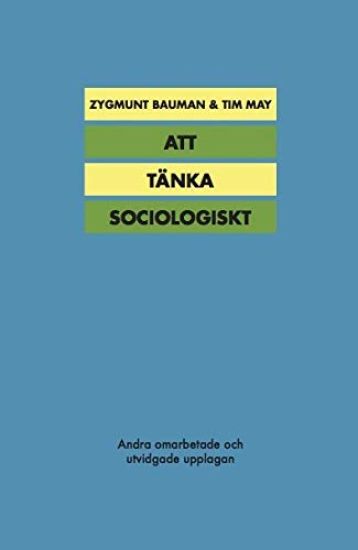
Att tänka sociologiskt

Att tänka sociologiskt

Zygmunt Bauman; Tim May

Bokförlaget Korpen
2017
nidottu
Genom diskussioner av vardagliga upplevelser ger Zygmunt Bauman och Tim May i denna bok en personlig introduktion till frågan: Vad innebär det att tänka sociologiskt? Sociologin är ett sätt att överskrida vardagstänkandets begränsningar, att se människors handlingar som aspekter av större helheter: ett hjälpmedel att leva sitt liv på ett medvetet sätt. Alla har vi känt oss delaktiga i eller uteslutna ur en viss social gemenskap. Alla har vi stått inför svårigheter att välja hur vi ska leva våra liv. Alla har vi blivit förälskade eller önskat att bli älskade. Genom diskussioner av sådana vardagliga upplevelser ger Zygmunt Bauman och Tim May i denna bok en klargörande och personlig introduktion till frågan: Vad innebär det att tänka sociologiskt? Sociologin är ett sätt att överskrida vardagstänkandets begränsningar, att se människors handlingar som aspekter av större helheter, att få ökad förståelse för andra människor och andra levnadsformer: ett hjälpmedel att leva sitt liv på ett medvetet sätt. Denna bok – den andra upplagan – är omarbetad och utvidgad, och innehåller nytt material om hälsa och fitness, intimitet, tid, rum och oordning, risk, globalisering, identitet, organisationer och nya teknologier. Boken vänder sig till både läsare utan tidigare erfarenheter av sociologin och till dem som redan är hemmastadda i ämnet.
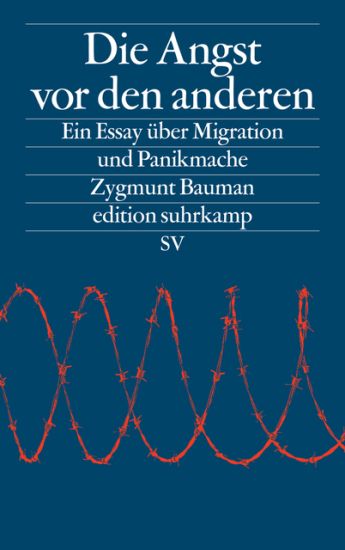
Strangers at Our Door

Strangers at Our Door

Zygmunt Bauman

Polity Press
2016
nidottu
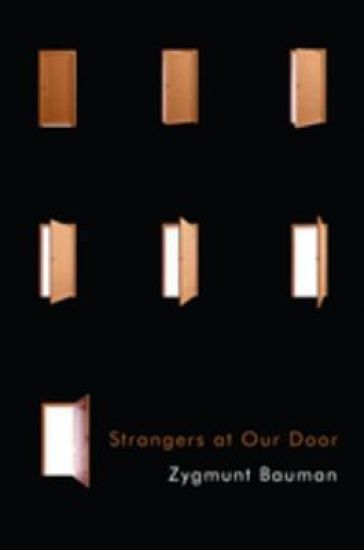
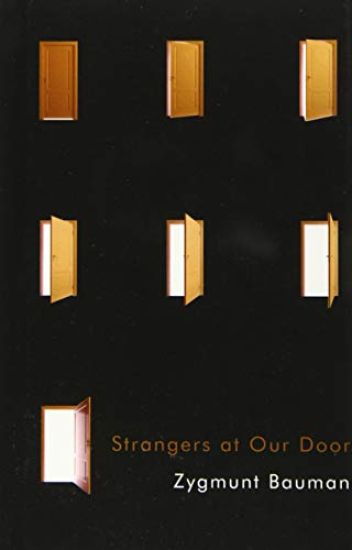
Refugees from the violence of wars and the brutality of famished lives have knocked on other people's doors since the beginning of time. For the people behind the doors, these uninvited guests were always strangers, and strangers tend to generate fear and anxiety precisely because they are unknown. Today we find ourselves confronted with an extreme form of this historical dynamic, as our TV screens and newspapers are filled with accounts of a 'migration crisis', ostensibly overwhelming Europe and portending the collapse of our way of life. This anxious debate has given rise to a veritable 'moral panic' - a feeling of fear spreading among a large number of people that some evil threatens the well-being of society. In this short book Zygmunt Bauman analyses the origins, contours and impact of this moral panic - he dissects, in short, the present-day migration panic. He shows how politicians have exploited fears and anxieties that have become widespread, especially among those who have already lost so much - the disinherited and the poor. But he argues that the policy of mutual separation, of building walls rather than bridges, is misguided. It may bring some short-term reassurance but it is doomed to fail in the long run. We are faced with a crisis of humanity, and the only exit from this crisis is to recognize our growing interdependence as a species and to find new ways to live together in solidarity and cooperation, amidst strangers who may hold opinions and preferences different from our own.
Strangers at Our Door

Strangers at Our Door

Zygmunt Bauman

Polity Press
2016
sidottu
Refugees from the violence of wars and the brutality of famished lives have knocked on other people's doors since the beginning of time. For the people behind the doors, these uninvited guests were always strangers, and strangers tend to generate fear and anxiety precisely because they are unknown. Today we find ourselves confronted with an extreme form of this historical dynamic, as our TV screens and newspapers are filled with accounts of a 'migration crisis', ostensibly overwhelming Europe and portending the collapse of our way of life. This anxious debate has given rise to a veritable 'moral panic' - a feeling of fear spreading among a large number of people that some evil threatens the well-being of society. In this short book Zygmunt Bauman analyses the origins, contours and impact of this moral panic - he dissects, in short, the present-day migration panic. He shows how politicians have exploited fears and anxieties that have become widespread, especially among those who have already lost so much - the disinherited and the poor. But he argues that the policy of mutual separation, of building walls rather than bridges, is misguided. It may bring some short-term reassurance but it is doomed to fail in the long run. We are faced with a crisis of humanity, and the only exit from this crisis is to recognize our growing interdependence as a species and to find new ways to live together in solidarity and cooperation, amidst strangers who may hold opinions and preferences different from our own.
Babel

Babel

Zygmunt Bauman; Ezio Mauro

Polity Press
2016
sidottu
We are living in an open sea, caught up in a continuous wave, with no fixed point and no instrument to measure distance and the direction of travel. Nothing appears to be in its place any more, and a great deal appears to have no place at all. The principles that have given substance to the democratic ethos, the system of rules that has guided the relationships of authority and the ways in which they are legitimized, the shared values and their hierarchy, our behaviour and our life styles, must be radically revised because they no longer seem suited to our experience and understanding of a world in flux, a world that has become both increasingly interconnected and prone to severe and persistent crises. We are living in the interregnum between what is no longer and what is not yet. None of the political movements that helped undermine the old world are ready to inherit it, and there is no new ideology, no consistent vision, promising to give shape to new institutions for the new world. It is like the Babylon referred to by Borges, the country of randomness and uncertainty in which ‘no decision is final; all branch into others’. Out of the world that had promised us modernity, what Jean Paul Sartre had summarized with sublime formula ‘le choix que je suis’ (‘the choice that I am’), we inhabit that flattened, mobile and dematerialized space, where as never before the principle of the heterogenesis of purposes is sovereign. This is Babel.
Babel

Babel

Zygmunt Bauman; Ezio Mauro

Polity Press
2016
nidottu
We are living in an open sea, caught up in a continuous wave, with no fixed point and no instrument to measure distance and the direction of travel. Nothing appears to be in its place any more, and a great deal appears to have no place at all. The principles that have given substance to the democratic ethos, the system of rules that has guided the relationships of authority and the ways in which they are legitimized, the shared values and their hierarchy, our behaviour and our life styles, must be radically revised because they no longer seem suited to our experience and understanding of a world in flux, a world that has become both increasingly interconnected and prone to severe and persistent crises. We are living in the interregnum between what is no longer and what is not yet. None of the political movements that helped undermine the old world are ready to inherit it, and there is no new ideology, no consistent vision, promising to give shape to new institutions for the new world. It is like the Babylon referred to by Borges, the country of randomness and uncertainty in which ‘no decision is final; all branch into others’. Out of the world that had promised us modernity, what Jean Paul Sartre had summarized with sublime formula ‘le choix que je suis’ (‘the choice that I am’), we inhabit that flattened, mobile and dematerialized space, where as never before the principle of the heterogenesis of purposes is sovereign. This is Babel.
In Praise of Literature

In Praise of Literature

Zygmunt Bauman; Riccardo Mazzeo

Polity Press
2016
nidottu
In this new book Zygmunt Bauman and Riccardo Mazzeo examine the contentious issue of the relation between literature (and the arts in general) and sociology (or, more generally, a branch of the humanities claiming scientific status). While many commentators see literature and sociology as radically different vocations, Bauman and Mazzeo argue that they are bound together by a common purpose and a shared subject matter. Despite the many differences in terms of their methods and their ways of presenting their findings, novels and sociological texts are not at cross-purposes. Indeed, it is precisely their differences that make them at once indispensable to each other and mutually complementary. The writers of novels and of sociological texts may explore their world from different perspectives, seeking and producing different types of ‘data’, but their products bear the unmistakable marks of their shared origin. They feed each other and depend on each other in terms of their agenda, their discoveries and the contents of their messages. In a world characterized by the continuous search for new sensations and the fetishism of consumption, they bring fundamental existential questions back to the public agenda. Literature and sociology reveal the truth of the human condition only when they stay in one another's company, remaining attentive to each other's findings and engaged in a continuous dialogue. For only together can they rise to the challenging task of untangling and laying bare the complex intertwining of biography and history as well as of individual and society that totality we are constantly shaping while being shaped by it.
In Praise of Literature

In Praise of Literature

Zygmunt Bauman; Riccardo Mazzeo

Polity Press
2016
sidottu
In this new book Zygmunt Bauman and Riccardo Mazzeo examine the contentious issue of the relation between literature (and the arts in general) and sociology (or, more generally, a branch of the humanities claiming scientific status). While many commentators see literature and sociology as radically different vocations, Bauman and Mazzeo argue that they are bound together by a common purpose and a shared subject matter. Despite the many differences in terms of their methods and their ways of presenting their findings, novels and sociological texts are not at cross-purposes. Indeed, it is precisely their differences that make them at once indispensable to each other and mutually complementary. The writers of novels and of sociological texts may explore their world from different perspectives, seeking and producing different types of ‘data’, but their products bear the unmistakable marks of their shared origin. They feed each other and depend on each other in terms of their agenda, their discoveries and the contents of their messages. In a world characterized by the continuous search for new sensations and the fetishism of consumption, they bring fundamental existential questions back to the public agenda. Literature and sociology reveal the truth of the human condition only when they stay in one another's company, remaining attentive to each other's findings and engaged in a continuous dialogue. For only together can they rise to the challenging task of untangling and laying bare the complex intertwining of biography and history as well as of individual and society that totality we are constantly shaping while being shaped by it.
Liquid Evil

Liquid Evil

Zygmunt Bauman; Leonidas Donskis

Polity Press
2016
sidottu
There is nothing new about evil; it has been with us since time immemorial. But there is something new about the kind of evil that characterizes our contemporary liquid-modern world. The evil that characterized earlier forms of solid modernity was concentrated in the hands of states claiming monopolies on the means of coercion and using the means at their disposal to pursue their ends ends that were at times horrifically brutal and barbaric. In our contemporary liquid-modern societies, by contrast, evil has become altogether more pervasive and at the same time less visible. Liquid evil hides in the seams of the canvass woven daily by the liquid-modern mode of human interaction and commerce, conceals itself in the very tissue of human cohabitation and in the course of its routine and day-to-day reproduction. Evil lurks in the countless black holes of a thoroughly deregulated and privatized social space in which cutthroat competition and mutual estrangement have replaced cooperation and solidarity, while forceful individualization erodes the adhesive power of inter-human bonds. In its present form evil is hard to spot, unmask and resist. It seduces us by its ordinariness and then jumps out without warning, striking seemingly at random. The result is a social world that is comparable to a minefield: we know it is full of explosives and that explosions will happen sooner or later but we have no idea when and where they will occur. In this new book, the sequel to their acclaimed work Moral Blindness Zygmunt Bauman and Leonidas Donskis guide the reader through this new terrain in which evil has become both more ordinary and more insidious, threatening to strip humanity of its dreams, alternative projects and powers of dissent at the very time when they are needed most.
Liquid Evil

Liquid Evil

Zygmunt Bauman; Leonidas Donskis

Polity Press
2016
nidottu
There is nothing new about evil; it has been with us since time immemorial. But there is something new about the kind of evil that characterizes our contemporary liquid-modern world. The evil that characterized earlier forms of solid modernity was concentrated in the hands of states claiming monopolies on the means of coercion and using the means at their disposal to pursue their ends ends that were at times horrifically brutal and barbaric. In our contemporary liquid-modern societies, by contrast, evil has become altogether more pervasive and at the same time less visible. Liquid evil hides in the seams of the canvass woven daily by the liquid-modern mode of human interaction and commerce, conceals itself in the very tissue of human cohabitation and in the course of its routine and day-to-day reproduction. Evil lurks in the countless black holes of a thoroughly deregulated and privatized social space in which cutthroat competition and mutual estrangement have replaced cooperation and solidarity, while forceful individualization erodes the adhesive power of inter-human bonds. In its present form evil is hard to spot, unmask and resist. It seduces us by its ordinariness and then jumps out without warning, striking seemingly at random. The result is a social world that is comparable to a minefield: we know it is full of explosives and that explosions will happen sooner or later but we have no idea when and where they will occur. In this new book, the sequel to their acclaimed work Moral Blindness Zygmunt Bauman and Leonidas Donskis guide the reader through this new terrain in which evil has become both more ordinary and more insidious, threatening to strip humanity of its dreams, alternative projects and powers of dissent at the very time when they are needed most.