Kirjailija
Zygmunt Bauman
Kirjat ja teokset yhdessä paikassa: 160 kirjaa, julkaisuja vuosilta 1989–2026, suosituimpiin kuuluu Trabajo, Consumismo Y Nuevos Pobres. Vertaile teosten hintoja ja tarkista saatavuus suomalaisista kirjakaupoista.
160 kirjaa
Kirjojen julkaisuvuodet: 1989–2026.
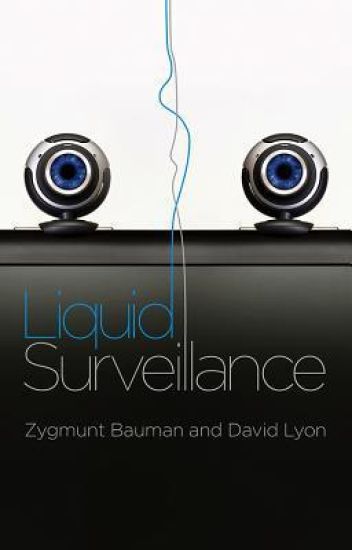
‘Today the smallest details of our daily lives are tracked and traced more closely than ever before, and those who are monitored often cooperate willingly with the monitors. From London and New York to New Delhi, Shanghai and Rio de Janeiro, video cameras are a familiar and accepted sight in public places. Air travel now commonly involves devices such as body-scanners and biometric checks that have proliferated in the wake of 9/11. And every day Google and credit-card issuers note the details of our habits, concerns and preferences, quietly prompting customized marketing strategies with our active, all too often zealous cooperation. In today’s liquid modern world, the paths of daily life are mobile and flexible. Crossing national borders is a commonplace activity and immersion in social media increasingly ubiquitous. Today’s citizens, workers, consumers and travellers are always on the move but often lacking certainty and lasting bonds. But in this world where spaces may not be fixed and time is boundless, our perpetual motion does not go unnoticed. Surveillance spreads in hitherto unimaginable ways, responding to and reproducing the slippery nature of modern life, seeping into areas where it once had only marginal sway. In this book the surveillance analysis of David Lyon meets the liquid modern world so insightfully dissected by Zygmunt Bauman. Is a dismal future of moment-by-moment monitoring closing in, or are there still spaces of freedom and hope? How do we realize our responsibility for the human beings before us, often lost in discussions of data and categorization? Dealing with questions of power, technology and morality, this book is a brilliant analysis of what it means to be watched – and watching – today.

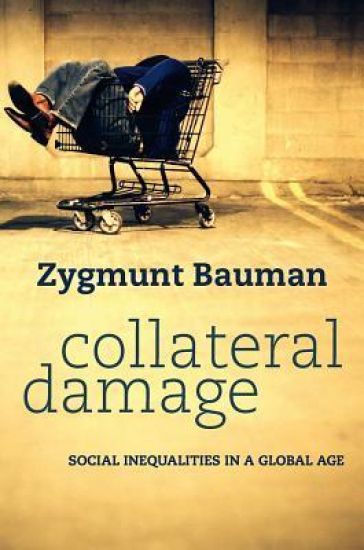
Collateral damage : social ojämlikhet i en global tidsålder
Zygmunt Bauman
Bokförlaget Daidalos
2012
nidottu
Uttrycket ?collateral damage? har ett militärt ursprung och betecknar oavsiktliga civila offer och skador. Men det beskriver också, hävdar Zygmunt Bauman i denna samling texter om den sociala ojämlikhetens utbredning och konsekvenser, en allt mer påtaglig dimension av vårt samhälle. Denna växande ojämlikhet uppfattas ofta som en fråga som har med ekonomi eller lag och ordning att göra, men inte som ett allvarligt hot mot samhället som sådant eller som ett problem som på ett eller annat sätt drabbar alla. Mycket i dagens politik, inklusive retoriken om den imaginära kategori som har fått namnet ?underklass?, går enligt Bauman att förklara som ett försök att undvika att tala om ojämlikhetens befintlighet och omkostnader. I en konsumtionsinrikad och vinstfixerad kultur är det de fattiga som är mer eller mindre självskrivna i rollen som ?oavsiktliga offer? och som stigmatiseras i dubbel bemärkelse, som oviktiga och ovärdiga. Bauman menar att den explosiva blandningen av växande ojämlikhet och ökande mänsklig utsatthet riskerar att bli ett av det här århundradets allvarligaste problem. »Bauman äger en sällsynt, närmast poetisk förmåga att slå broar mellan läsarens dagliga erfarenheter och globala misärer.» ? Maciej Zaremba i DN »Ju äldre Bauman blir, desto mer samtida blir han. Han är förkrossande à jour med nya böcker, aktuella teveprogram, dagsfärska tidningar. Mest av allt vill denne vittberömde sociolog förstå varför saker och ting är som de är ?» ?? Sara Danius i DN »Jag gillar Bauman. Han är upprörd och har en passionerad fingertoppskänsla för samtiden som yngre bara drömmer om.» ?? Per Wirtén i Expressen
What is the role of education in a world where we no longer have a clear vision of the future and where the idea of a single, universal model of humanity seems like the residue of a bygone age? What role should educators play in a world where young people find themselves faced with deep uncertainty about their future, where the prospects of securing a stable, long-term career seem increasingly remote and where intensified population movements have created more diverse communities in which different cultures find themselves living side by side, no longer bound together by the belief that the other would eventually be assimilated into ‘our' culture? Faced with the bewildering features of our liquid modern world, many young people are inclined to withdraw - in some cases into the online world of games and virtual relationships, in other cases into anorexia, depression, alcohol or even drug abuse, hoping to find shelter from a world perceived as more and more dangerous. Others launch into more violent forms of behaviour, like street gangs and the looting carried out by young people who have been excluded from the temples of consumption but are eager to participate in the ceremony. And all this happens while our politicians look on, uncomprehending and indifferent. In this short book Zygmunt Bauman - the leading social theorist of our liquid modern world, here in conversation with Riccardo Mazzeo - reflects on the predicament of young people today and on the role of education and the educator in a world where the certainties of our predecessors can no longer be taken for granted.
Hur långt räcker de traditionella åtgärderna när det gäller att bekämpa den nya fattigdom som i dag breder ut sig i västvärlden? Finns det nya, oväntade lösningar på detta växande problem? Dessa frågor står i centrum för Arbete, konsumtion och den nya fattigdomen. Zygmunt Bauman spårar den förändring som ägt rum i synen på arbetet under den moderna historien och vilka konsekvenser denna fått. Han undersöker vidare i vilken utsträckning de beprövade sätten att bekämpa den framväxande fattigdomen ännu är tillämpliga. I modernitetens gryning hoppades man kunna locka de fattiga till fast och regelbundet arbete i fabrikerna, utrota fattigdomen och säkra den sociala freden ? allt på en gång. I praktiken tjänade den moderna arbetsmoralen till att fostra och disciplinera människor. Bauman beskriver hur detta gradvis har förändrats. Moderniteten har utvecklats från ett »samhälle av producenter» till ett »samhälle av konsumenter». Arbetsetiken har ersatts av konsumtionsestetiken. Arbete, konsumtion och den nya fattigdomen mynnar ut i en plädering för ett radikalt åtskiljande mellan den enskilde individens »berättigande till en summa pengar» och »den faktiska förmågan att tjäna pengar». Genom att omvandla socialförsäkringssystemen enligt dessa principer är det möjligt, menar Bauman, att föra över välfärdsstatliga värden som frihet, jämlikhet och social rättvisa till den utvecklingsfas som de kapitalistiska staterna nu har trätt in i, en fas där målet full sysselsättning har försvunnit bortom det genomförbaras och önskvärdas horisont.
This is not a diary: while these observations were recorded in autumn 2010 and spring 2011 in the form of dated entries, they are not a personal reflection but an attempt to capture signs of our times in their movement - possibly at birth, at a stage when they are still barely perceptible, and in any case before they have matured into common, all too familiar forms, escaping our attention due to their banality. Some will perhaps settle in our daily life for a long time to come, others will fade and vanish before they would otherwise have a chance to be noted, recorded and explored in depth: in our fast-moving, protean and kaleidoscopic world, it is hardly possible to predict their future course and to decide in advance which of them will grow in volume and significance and which will prove to have been still-born. Whatever their fate, the author tried to take a leaf from William Blake's precept of seeing the universe in a grain of sand - and, having done so, alert us to what is or may be happening to our individual lives, forms of togetherness, shared prospects; to the ways we perceive and relate to each other, the forces that shape our life chances and itineraries; and to the ways we try to control, or at least influence, and sometimes even reform for the better, some or all those dimensions of our existence. These timely meditations by one of the most perceptive social thinkers of our time will appeal to a wide range of readers.
In its original formulation, ‘culture' was intended to be an agent for change, a mission undertaken with the aim of educating ‘the people' by bringing the best of human thought and creativity to them. But in our contemporary liquid-modern world, culture has lost its missionary role and has become a means of seduction: it seeks no longer to enlighten the people but to seduce them. The function of culture today is not to satisfy existing needs but to create new ones, while simultaneously ensuring that existing needs remain permanently unfulfilled. Culture today likens itself to a giant department store where the shelves are overflowing with desirable goods that are changed on a daily basis - just long enough to stimulate desires whose gratification is perpetually postponed. In this new book, Zygmunt Bauman - one of the most brilliant and influential social thinkers of our time - retraces the peregrinations of the concept of culture and examines its fate in a world marked by the powerful new forces of globalization, migration and the intermingling of populations. He argues that Europe has a particularly important role to play in revitalizing our understanding of culture, precisely because Europe, with its great diversity of peoples, languages and histories, is the space where the Other is always one's neighbour and where each is constantly called upon to learn from everyone else.
The term ‘collateral damage' has recently been added to the vocabulary of military forces to refer to the unintended consequences of armed interventions, consequences that are unplanned but nevertheless damaging and often very costly in human and personal terms. But collateral damage is not unique to the world of armed intervention - it is also one of the most salient and striking dimensions of contemporary social inequality. The inflammable mixture of growing social inequality and the rising volume of human suffering marginalized as ‘collateral' is becoming one of most cataclysmic problems of our time. For the political class, poverty is commonly seen as a problem of law and order - a matter of how to deal with individuals, such as unemployed youths, who fall foul of the law. But treating poverty as a criminal problem obscures the social roots of inequality, which lie in the combination of a consumerist life philosophy propagated and instilled by a consumer-oriented economy, on the one hand, and the rapid shrinking of life chances available to the poor, on the other. In our contemporary, liquid-modern world, the poor are the collateral damage of a profit-driven, consumer-oriented society - ‘aliens inside' who are deprived of the rights enjoyed by other members of the social order. In this new book Zygmunt Bauman - one of the most original and influential social thinkers of our time - examines the selective affinity between the growth of social inequality and the rise in the volume of ‘collateral damage' and considers its implications and its costs.
For the better part of its history sociology shared with commonsense its assumption of the ‘nature-like’ character of society – and consequently developed as the science of unfreedom. In this powerful and engaging work, first published in 1976, Professor Bauman outlines the historical roots of such a science and describes how the new trends in sociology emerging from phenomenology and existentialism do not challenge this preoccupation. Rather, he claims, they deepen and extend it by stressing the key role of commonsense, particularly the ways in which it is sustained and embedded in the routines and assumptions of everyday life.
Rather than contributing to the long-standing discussion about the characteristics of the society that socialism proposes to establish, this Routledge Revival, initially published in 1976, aims to explore the impact of the ‘living utopia’ of socialism on the development of modern society. It begins with an analysis of the role of utopia in general, and of the socialist utopia in particular; Bauman considers the opposition between ‘utopian’ and ‘scientific’ social thought; He presents socialism as the ‘counter-culture’ of capitalist society; The book finally examines the reasons for the failure of socialism in its application to the peasant revolution in Russia. It then explores some possible forms that the socialist utopia might take in the industrial societies of the late twentieth century. Professor Bauman writes for those who want to understand the logic of the historical fate of socialism in the present century, who are concerned about the validity and vitality of socialist ideas on the development of modern society, and who are interested, and perhaps confused, by the cultural and ideological conflicts of the last few decades.
First published in 1982, Professor Bauman’s discussion of the mechanism of class formation and institutionalisation of class conflict argues that our understanding of changes in social and political structure has been hindered by the freezing of concepts of class in the ice-age of industrial society. He investigates the impact of historical memory on the early transformation of rank into a class society, and on the current confusion in the analysis of the ‘crisis of late-industrial society’. The book traces the formation of a class society back to the patterns of ‘surveillance power’ and control, and shows how these patterns preceded and made possible the industrial system. Subsequently ‘economised’ into the industrial system, these same patterns of control have now proved to be inadequate under social conditions brought about by this economisation of the power conflict.
Originally in 1978, this important work, by one of the leading European social theorists, is arguably the best introduction to the hermeneutic tradition as a whole. It is designed to help students of sociology and philosophy place the problems of "understanding social science" in their historical and philosophical context. It does so by presenting the major current in sociological thought as responses to the challenge of hermeneutics. The idea that true knowledge of social life can be attained only if human conduct is seen as meaningful action whose meaning is accordingly grasped has been presented as a discovery of recent sociology. In fact its history is long and its connections plentiful, reaching beyond the boundaries of sociology itself. Yet it is in sociology that the hermeneutic tradition has attracted most interest but most misinterpretation. The debate is in full swing and there is no attempt to offer "correct" solutions - the emphasis instead is upon revealing the strengths and weaknesses of each of the main approaches. However it is Bauman's view that the theory of understanding may achieve valid results only if it treats the problem of understanding as an aspect of the ongoing process of social life.
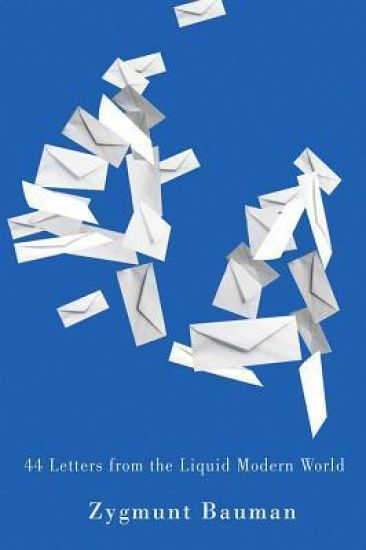
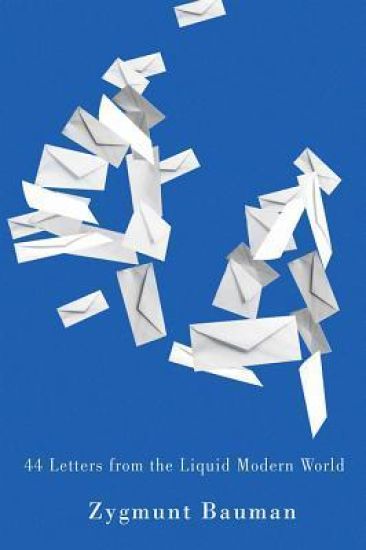
44 Letters From the Liquid Modern World
Zygmunt Bauman
Polity Press
2010
nidottu
Halvin toimitettuna 29,70 €
This liquid modern world of ours, like all liquids, cannot stand still and keep its shape for long. Everything keeps changing - the fashions we follow, the events that intermittently catch our attention, the things we dream of and things we fear. And we, the inhabitants of this world in flux, feel the need to adjust to its tempo by being ‘flexible' and constantly ready to change. We want to know what is going on and what is likely to happen, but what we get is an avalanche of information that threatens to overwhelm us. How are we to sift the information that really matters from the heaps of useless and irrelevant rubbish? How are we to derive meaningful messages from senseless noise? We face the daunting task of trying to distinguish the important from the insubstantial, distil the things that matter from false alarms and flashes in the pan. Nothing escapes scrutiny so stubbornly as the ordinary things of everyday life, hiding in the light of deceptive and misleading familiarity. To turn them into objects of attention and scrutiny, they must first be torn out from that daily routine: the apparently familiar must be made strange. This is precisely what Zygmunt Bauman seeks to do in these 44 letters: each tells a story drawn from ordinary lives, but tells it in order to reveal an extraordinariness that we might otherwise overlook. Arresting, revealing, disconcerting, these snapshots of life by the most brilliant analyst of our liquid modern world will appeal to a wide readership.
Originally published in 1978, this important work, by one of the leading European social theorists, is arguably the best introduction to the hermeneutic tradition as a whole. It is designed to help students of sociology and philosophy place the problems of "understanding social science" in their historical and philosophical context. It does so by presenting the major current in sociological thought as responses to the challenge of hermeneutics. The idea that true knowledge of social life can be attained only if human conduct is seen as meaningful action whose meaning is accordingly grasped has been presented as a discovery of recent sociology. In fact its history is long and its connections plentiful, reaching beyond the boundaries of sociology itself. Yet it is in sociology that the hermeneutic tradition has attracted most interest but most misinterpretation. The debate is in full swing and there is no attempt to offer "correct" solutions - the emphasis instead is upon revealing the strengths and weaknesses of each of the main approaches. However it is Bauman's view that the theory of understanding may achieve valid results only if it treats the problem of understanding as an aspect of the ongoing process of social life.
For the better part of its history sociology shared with commonsense its assumption of the ‘nature-like’ character of society – and consequently developed as the science of unfreedom. In this powerful and engaging work, first published in 1976, Professor Bauman outlines the historical roots of such a science and describes how the new trends in sociology emerging from phenomenology and existentialism do not challenge this preoccupation. Rather, he claims, they deepen and extend it by stressing the key role of commonsense, particularly the ways in which it is sustained and embedded in the routines and assumptions of everyday life. Professor Bauman sets out the form of a critical sociology, based on emancipatory reason. His main concerns are the `validity' of commonsense and the truth of a theory which would resolve to transcend the limitations of commonsensical evidence. Aimed at human liberation A Critical Sociology is designed to question the very same routines and assumptions of everyday life informed by commonsense.
The global financial crisis has shattered the illusion that all was well with capitalism and forced us to confront the great challenges we face today with a new sense of urgency. Few are better placed to do this than Zygmunt Bauman, a social thinker whose writings on liquid modernity have pioneered a new way of seeing the world in which we live at the dawn of the 21st Century. Our liquid modern world is characterized by the transition from a society of producers to a society of consumers, the natural extension of which is the society of perpetual debtors. The ruling idea of the society of consumers is to prevent needs from being satisfied and to create demand; its natural extension is to enable consumers to consume more by borrowing. Debt was transformed into a crucial profit-earning asset of capitalism in liquid modern times. The present-day 'credit crunch' is not the outcome of the banks' failure but rather the fruit of their success in transforming the majority of men and women, young and old, into a race of debtors. They got what they were looking for: a society of debtors whose condition of being in debt was made self-perpetuating, with more debts being offered, and more undertaken, as the only way of escaping from the debts already incurred. Starting from this reflection on the current global financial crisis and prompted by the probing questions of his interlocutor, Citlali Rovirosa-Madrazo, Bauman examines in an historical perspective some of the most pressing moral and political issues of our time, from international terrorism and the rise of religious and secular fundamentalism to the decline of the nation-state and the threats posed by global warming, issues whose seriousness and urgency attest to the fact that we are living today not only on borrowed money but also on borrowed time.