Kirjailija
Zygmunt Bauman
Kirjat ja teokset yhdessä paikassa: 160 kirjaa, julkaisuja vuosilta 1989–2026, suosituimpiin kuuluu Trabajo, Consumismo Y Nuevos Pobres. Vertaile teosten hintoja ja tarkista saatavuus suomalaisista kirjakaupoista.
160 kirjaa
Kirjojen julkaisuvuodet: 1989–2026.
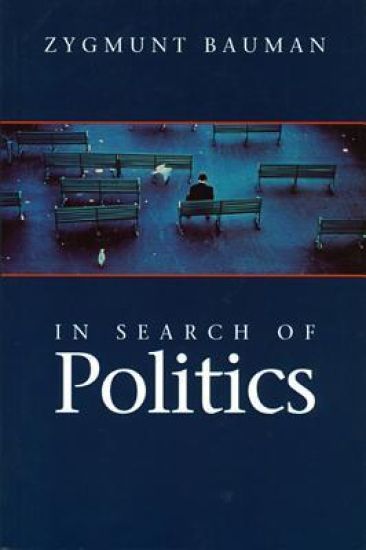
We live in a world which no longer questions itself, which lives from one day to another managing successive crises and struggling to brace itself for new ones, without knowing where it is going and without trying to plan the itinerary. And everything important in our lives - livelihood, human bonds, partnerships, neighbourhood, goals worth pursuing and dangers to avoid - feels transient, precarious, vulnerable, insecure, uncertain, risky. Is there a connection between the shape of the world we inhabit and the way we live our lives? Exploring that connection, and finding out just how close it is, is the main concern of this book. What is at stake in this inquiry is the possibility of re-building the"'private/public" space, where private troubles and public issues meet and where citizens engage in dialogue in order to govern themselves. Individual liberty can only be a product of collective work, it can only be collectively secured and guaranteed. And yet today we are moving towards a privatization of the means to secure individual liberty. If seen as a therapy for the present ills, this is bound to produce effects of a most sinister kind. The act of translating private troubles into public issues is in danger of falling into disuse and being forgotten. The argument of this book is that making the translation possible again is an urgent and vital imperative for the renewal of politics today. This new book by Zygmunt Bauman - one of the most original and creative thinkers of our time - will be of particular interest to students of sociology, politics and social and political theory.
La Globalizacion
Zygmunt Bauman
Fondo de Cultura Economica USA
1999
pokkari
Halvin toimitettuna 20,80 €
In this major work, Zygmunt Bauman seeks to classify the meanings of culture. He distinguishes between culture as a concept, culture as a structure and culture as praxis and analyzes the different ways in which culture has been used in each of these settings. For Bauman, culture is a living, changing aspect of human interaction which must be understood and studied as a universal of human life. At the heart of his approach is the proposition that culture is inherently ambivalent. With a major new introduction to this new edition, this classic work emerges as a crucial link in the development of Bauman's thought. By his own admission, it was the first of his books to grope towards a new kind of social theory, in contrast to the false certainties and gross theorems that dominated much of the post-war period. This is Bauman at his best, at his most subtle and his most searching.
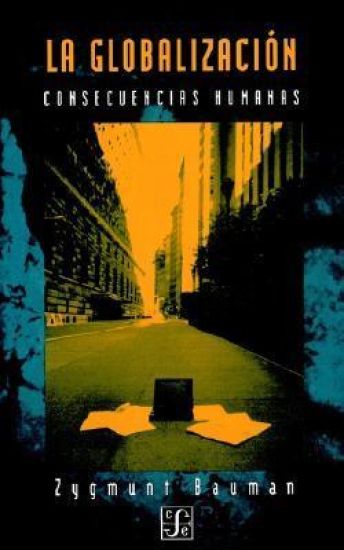
'Globalization' is a word that is currently much in use. This book is an attempt to show that there is far more to globalization than its surface manifestations. Unpacking the social roots and social consequences of globalizing processes, this book disperses some of the mist that surrounds the term. Alongside the emerging planetary dimensions of business, finance, trade and information flow, a 'localizing', space-fixing process is set in motion. What appears as globalization for some, means localization for many others; signalling new freedom for some, globalizing processes appear as uninvited and cruel fate for many others. Freedom to move, a scarce and unequally distributed commodity, quickly becomes the main stratifying factor of our times. Neo-tribal and fundamentalist tendencies are as legitimate offspring of globalization as the widely acclaimed 'hybridization' of top culture - the culture at the globalized top. A particular reason to worry is the progressive breakdown in communication between the increasingly global and extra- territorial elites and ever more 'localized' majority. The bulk of the population, the 'new middle class', bears the brunt of these problems, and suffers uncertainty, anxiety and fear as a result. This book is a major contribution to the unfolding debate about globalization, and as such will be of interest to students and professionals in sociology, human geography and cultural issues.
The most prominent anxieties in our society today, Bauman shows, derive from the removal of security. The very pursuit of individual happiness corrupts and undermines those systems of authority needed for a stable life. This book builds upon Bauman's earlier contributions to social theory.
When Freud wrote his classic Civilization and its Discontents, he was concerned with repression. Modern civilization depends upon the constraint of impulse, the limiting of self expression. Today, in the time of modernity, Bauman argues, Freud's analysis no longer holds good, if it ever did. The regulation of desire turns from an irritating necessity into an assault against individual freedom. In the postmodern era, the liberty of the individual is the overriding value, the criterion in terms of which all social rules and regulations are assessed. Postmodernity is governed by the 'will to happiness': the result, however, is a sacrificing of security. The most prominent anxieties in our society today, Bauman shows, derive from the removal of security. The world is experienced as overwhelmingly uncertain, uncontrollable and frightening. Totalitarian politics frightened by its awesome power; the new social disorder frightens by its lack of consistency and direction. The very pursuit of individual happiness corrupts and undermines those systems of authority needed for a stable life. This book builds imaginatively upon Bauman's earlier contributions to social theory. It consolidates his reputation as the interpreter of postmodernity. The book will appeal to second-year undergraduates and above in sociology, cultural studies, philosophy and anthropology.
"Baumans postmodernitet har inget att göra med estetisk diskussion. Det är i första hand ett sociologiskt, moraliskt och politiskfilosofiskt begrepp. Om moderniteten betecknar viljan och tron på att livet kan kontrolleras och administreras utifrån rationella kalkyler, så är postmoderniteten just sammanbrottet för dessa slags visioner. Men med sammanbrottet för den rationalistiska samhällsutopin följer också sammanbrottet för tron på en enhetlig moral och idé om det goda livet. Det postmoderna tillståndet kännetecknas av splittring och tvetydighet. Här står vi utan ledstjärnor, överlämnade till oss själva i en aldrig tidigare skådad utsträckning. ? I vissa av essäerna kan man få intrycket att detta är något som Bauman bejakar och hyllar. Äntligen har mänskligheten gjort sig av med sin skräck för det avvikande och tillfälliga. Äntligen står vi i beredskap att fullt ut bejaka livets kaotiska sidor, istället för att på varje punkt försöka bemästra det med våld. Men samtidigt avtecknar sig konturerna av en djupgående moralisk kris. Den ofta åberopade »adiaforiseringen» (ung. likgiltiggörande) som präglar det moderna livet, som gör det möjligt för individer att utan moraliskt ansvar administrera och bevittna de mest vedervärdiga grymheter, kvarstår efter samhällsutopiernas kollaps. Därför krävs nu en ny typ av individuell moralisk besinning. ? Ett återkommande tema i den senaste boken är också de faror som hotar i den nya ovisshetens tidsålder. I takt med att nationalstaterna nedmonteras genom inre kritik och genom avyttring av politiskt ansvar uppstår ett identitetsvakuum som snabbt fylls igen av stamtillhörighetens profeter." /Hans Ruin, DN
In this original and eye-opening study, Stefan Morawski sheds light on the often confused debate about postmodernism, postmodernity and human values. Drawing upon a wide range of evidence from the experience of everyday life in the sciences, religion, visual arts, literature, film, television and contemporary music, The Troubles with Postmodernism is an indispensable guide to our understanding and evaluation of contemporary literature.
Det verkliga ämnet för denna undersökning är det postmoderna perspektivet självt. Bokens huvudpåstående är att vår moderna tid har nått ett så självkritiskt, ofta självförringande och på många sätt självförgörande stadium (den process som begreppet »postmodernitet» är tänkt att begripa och förmedla) att många av de vägar som etiska teorier (men inte vår tids moraliska intressen) tidigare följt mer började framstå som en återvändsgränd; däremot öppnades möjligheter för en radikalt ny förståelse av moraliska problem. ...
Life in Fragments is a continuation of the themes and motifs explored in Zygmunt Bauman's acclaimed study, Postmodern Ethics (Blackwell, 1993). Described by Richard Sennett as a major event in social theory, Postmodern Ethics subverted the pieties of subversion which rule the postmodern imagination, arguing for an ethic of being with the Other, beyond the fashionable imperative of anything goes or the deconstruction of identity through difference.
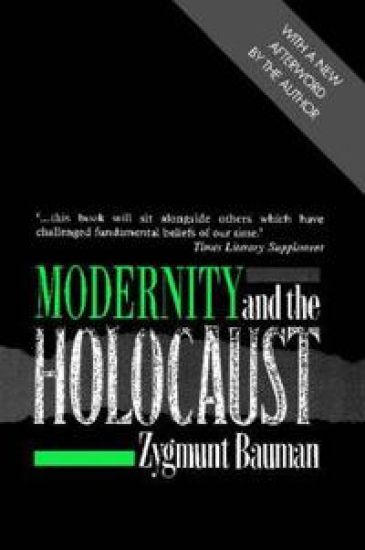
Ett modernt folkmord är inte ett uttryck för massans spontana aggressivitet. Det ingår som ett välplanerat medel i den sociala ingenjörskonst som använder sig av en rationell teknik för att nå irrationella mål. I sitt uppmärksammade och prisbelönta arbete visar Zygmunt Bauman att moderniteten var en nödvändig förutsättning för Förintelsen. Men "Auschwitz och det moderna samhället" är inte bara en av de mest genomträngande analyserna av detta mörka kapitel i Europas historia. Genom att visa hur de mekanismer som gjorde Förintelsen möjlig fortfarande är verksamma i dag utgör Baumans studie också en skrämmande diagnos av vårt moderna samhälle. Zygmunt Bauman är professor emeritus i sociologi vid Leeds Universitet och har på svenska publicerat bl.a. "Döden och odödligheten i det moderna samhället". ”Detta är en alldeles lysande bok och jag kan varmt rekommendera den till läsning.” /Peter Englund ”… en intellektuell njutning att läsa ett så gediget och genomreflekterat arbete” /Håkan Arvidsson, Judisk Krönika ”Men om Auschwitz var ett uttryck för det moderna samhällets latenta möjligheter kan vi med rätta hysa fruktan för att det kan upprepas – om vi inte inser detta, och därav drar slutsatsen att vårt samhälle måste genomgå djupgående förändringar för att förhindra att det sker igen.” /Joachim Israel, Dagens Nyheter
Zygmunt Bauman's powerful and persuasive study of the postmodern perspective on ethics is particularly welcome. For Bauman the great issues of ethics have lost none of their topicality: they simply need to be seen, and dealt with, in a wholly new way. Our era, he suggests, may actually represent a dawning, rather than a twilight, for ethics.
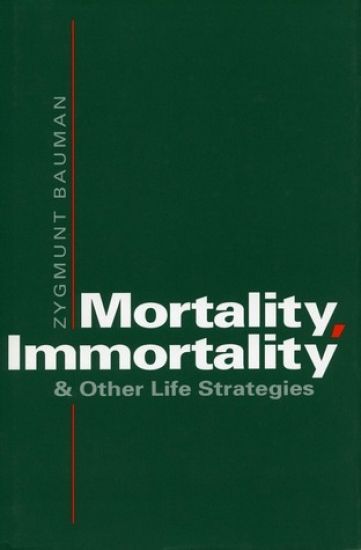
Mortality, Immortality, and Other Life Strategies
Zygmunt Bauman
Stanford University Press
1992
pokkari
Zygmunt Bauman's book is a brilliant exploration, from a sociological point of view, of the "taboo" subject in modern societies: death and dying. The book develops a new theory of the ways in which human mortality is reacted to, and dealt with, in social institutions and culture. The hypothesis explored in the book is that the necessity of human beings to live with the constant awareness of death accounts for crucial aspects of the social organization of all known societies. Two different "life strategies" are distinguished in respect of reactions to mortality. One, "the modern strategy," deconstructs mortality by translating the insoluble issue of death into many specific problems of health disease which are "soluble in principle." The "post-modern strategy," is one of deconstructing immortality: life is transformed into a constant rehearsal of "reversible death," a substitution of "temporary disappearance" for the irrevocable termination of life. This profound and provocative book will appeal to a wide audience. It will also be of particular interest to students and professionals in the areas of sociology, anthropology, theology, and philosophy.
Zygmunt Bauman's new book is a brilliant exploration, from a sociological point of view, of the 'taboo' subject in modern societies: death and dying. The book develops a new theory of the ways in which human mortality is reacted to, and dealt with, in social institutions and culture. The hypothesis explored in the book is that the necessity of human beings to live with the constant awareness of death accounts for crucial aspects of the social organization of all known societies. Two different 'life strategies' are distinguished in respect of reactions to mortality. One, 'the modern strategy', deconstructs mortality by translating the insoluble issue of death into many specific problems of health and disease which are 'soluble in principle'. The 'post-modern strategy' is one of deconstructing immortality: life is transformed into a constant rehearsal of 'reversible death', a substitution of 'temporary disappearance' for the irrevocable termination of life. This profound and provocative book will appeal to a wide audience. It will also be of particular interest to students and professionals in the areas of sociology, anthropology, theology and philosophy.
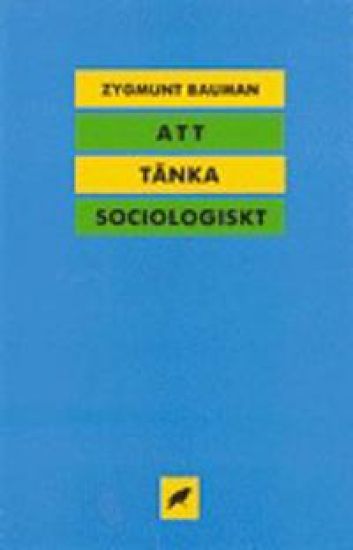
Alla har vi känt oss delaktiga i eller uteslutna ur en viss social gemenskap. Alla har vi stått inför svårigheter att välja hur vi ska leva våra liv. Genom diskussioner av sådana vardagliga upplevelser ger Zygmunt Bauman en klar, stimulerande och personlig introduktion till frågan: Vad innebär det att tänka sociologiskt? Bauman ser sociologin som ett sätt att överskrida vardagstänkandets begränsningar, att se människors handlingar som aspekter av större helheter, att få ökad förståelse för andra människor och andra levnadsformer: som ett hjälpmedel att leva sitt liv på ett medvetet sätt. Bauman är väl känd i den samhällsvetenskapliga världen, bl. a. för sina arbeten om modernitet och postmodernitet. "Denna bok har skrivits i ett bestämt syfte: att hjälpa vanliga människor som du och jag att genomskåda våra erfarenheter, och att visa hur livets synbart välbekanta aspekter kan tolkas på ett nytt sätt och ses i ett annat ljus. Varje kapitel tar upp en aspekt av vardagslivet och diskuterar dilemman och val som vi regelmässigt ställs inför samtidigt som vi har föga tid eller möjlighet att ägna dem några djupare funderingar. Varje kapitel är avsett att uppmana till sådana funderingar; inte att "korrigera" din kunskap utan att utvidga den; inte att ersätta en villfarelse med en oantastlig ´sanning´ utan att uppmuntra till en kritisk granskning av övertygelser som hittills har omfattats på ett okritiskt sätt; att befrämja en vana att analysera dig själv och ifrågasätta de åsikter som utger sig för att vara vissheter." (Ur bokens inledning.) ATT TÄNKA SOCIOLOGISKT finns nu även i en 2:a omarbetad och utvidgad upplaga författad av Zygmunt Bauman och Tim May. De två upplagorna är så pass olika att vi tillsvidare tillhandahåller båda.
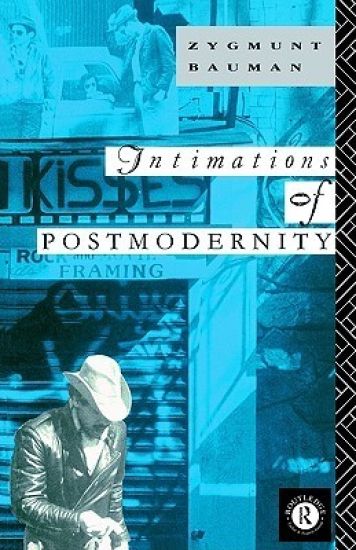
This thoughtful and illuminating book provides a major statement on the meaning and importance of postmodernity.
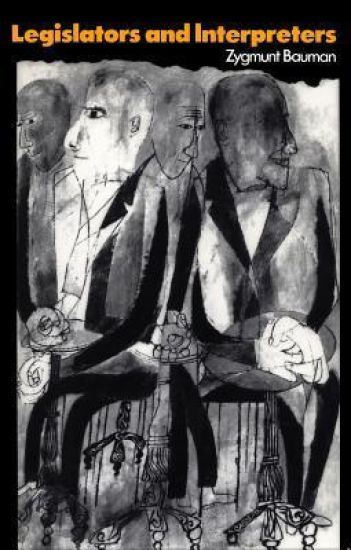
In this study the author argues that as the concept of verity has become increasingly contingent, the role of the intellectual has become interpretive rather than legislative. The book then assesses the implications of this change for today's culture.
Sociology is concerned with modern society, but has never come to terms with one of the most distinctive and horrific aspects of modernity - the Holocaust. The book examines what sociology can teach us about the Holocaust, but more particularly concentrates upon the lessons which the Holocaust has for sociology. Bauman's work demonstrates that the Holocaust has to be understood as deeply involved with the nature of modernity. There is nothing comparable to this work available in the sociological literature.