Kirjojen hintavertailu – 12 859 827 kirjaa ja 27 kauppaa

Kirjailija

Zygmunt Bauman

Kirjat ja teokset yhdessä paikassa: 160 kirjaa, julkaisuja vuosilta 1989–2026, suosituimpiin kuuluu Trabajo, Consumismo Y Nuevos Pobres. Vertaile teosten hintoja ja tarkista saatavuus suomalaisista kirjakaupoista.

160 kirjaa

Kirjojen julkaisuvuodet: 1989–2026.

Frihed

Frihed

Zygmunt Bauman

Gyldendal
2003
nidottu
”Man kan sige hvad man har lyst til. Vi lever i et frit land”. Dette udtryk bruges ofte i Vesten uden at vi standser op og funderer over dets egentlige betydning. Men hvad fortæller det os hvis vi lytter efter? Det er hvad sociologen Zygmunt Bauman undersøger i denne bog, der udkom i England for første gang i 1988. Udtrykket betyder først og fremmest at vi under frihedens betingelser kan gøre eller sige det der under andre betingelser ville være risikabelt. Det forhold siger dog ikke noget om hvilken virkning vores eventuelle udsagn eller handling vil have. ”Et frit land” er ikke i sig selv en garanti for at vores handling vil føre til det ønskede resultat, eller for at det vi siger, bliver accepteret. Det at er der er konsensus om at man frit kan sige og gøre som man vil, rummer desuden en stiltiende indrømmelse af at sandhed eller viden ikke er nødvendige forudsætninger for vores udsagn, og at en handling ikke behøver at være fornuftig for at blive accepteret. Dermed fortæller udtrykket os at det at leve i et frit land betyder at handle på eget ansvar. Det står den enkelte frit for at forfølge sine mål, men det står også en frit for at fejle. Det første følger med det andet i en slags pakkeløsning. Det er de samfundsmæssige konsekvenser heraf Bauman tager stilling til i sin bog. Bogen er oversat fra engelsk efter Freedom af Tom Havemann.
Society under Siege

Society under Siege

Zygmunt Bauman

JOHN WILEY AND SONS LTD
2002
nidottu
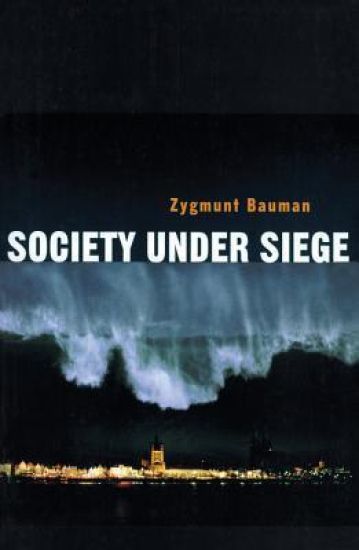
Society is under siege – under attack on two fronts: from the global frontier-land where old structures and rules do not hold and new ones are slow to take shape, and from the fluid, undefined domain of life politics. The space between these two fronts, until recently ruled by the sovereign nation-state and identified by social scientists as ‘society' is ever more difficult to conceive of as a self-enclosed entity. And this confronts the established wisdom of the social sciences with a new challenge: sovereignty and power are becoming separated from the politics of the territorial nation-state but are not becoming institutionalized in a new space. What are the consequences of this profound transformation of social life? What kind of world will it create for the twenty-first century? This remarkable book – by one of the most original social thinkers writing today – attempts to trace this transformation and to assess its consequences for the life conditions of ordinary individuals. The first part of the book is devoted to the new global arena in which, thanks to the powerful forces of globalization, there is no 'outside', no secluded place to which one can retreat and hide away, and where the territorial wars of the past have given way to a new breed of 'reconnaissance wars'. The second part deals with settings in which life politics has taken hold and flourished. Bauman argues that the great challenge facing us today is whether we can find new ways to reforge the human diversity that is our fate into the vocation of human solidarity.
Society under Siege

Society under Siege

Zygmunt Bauman

Polity Press
2002
sidottu
Society is under siege – under attack on two fronts: from the global frontier-land where old structures and rules do not hold and new ones are slow to take shape, and from the fluid, undefined domain of life politics. The space between these two fronts, until recently ruled by the sovereign nation-state and identified by social scientists as ‘society' is ever more difficult to conceive of as a self-enclosed entity. And this confronts the established wisdom of the social sciences with a new challenge: sovereignty and power are becoming separated from the politics of the territorial nation-state but are not becoming institutionalized in a new space. What are the consequences of this profound transformation of social life? What kind of world will it create for the twenty-first century? This remarkable book – by one of the most original social thinkers writing today – attempts to trace this transformation and to assess its consequences for the life conditions of ordinary individuals. The first part of the book is devoted to the new global arena in which, thanks to the powerful forces of globalization, there is no 'outside', no secluded place to which one can retreat and hide away, and where the territorial wars of the past have given way to a new breed of 'reconnaissance wars'. The second part deals with settings in which life politics has taken hold and flourished. Bauman argues that the great challenge facing us today is whether we can find new ways to reforge the human diversity that is our fate into the vocation of human solidarity.
Modernity and the Holocaust

Modernity and the Holocaust

Zygmunt Bauman

Cornell University Press
2002
pokkari
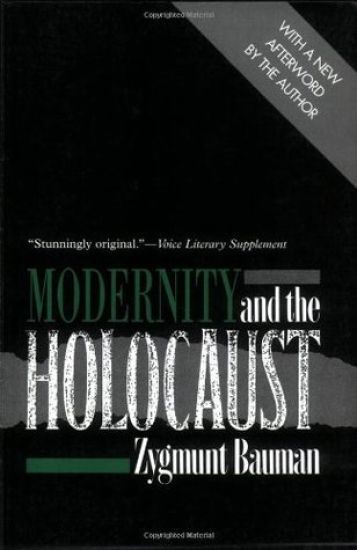
A new afterword to this edition, "The Duty to Remember—But What?" tackles difficult issues of guilt and innocence on the individual and societal levels. Zygmunt Bauman explores the silences found in debates about the Holocaust, and asks what the historical facts of the Holocaust tell us about the hidden capacities of present-day life. He finds great danger in such phenomena as the seductiveness of martyrdom; going to extremes in the name of safety; the insidious effects of tragic memory; and efficient, "scientific" implementation of the death penalty. Bauman writes, "Once the problem of the guilt of the Holocaust perpetrators has been by and large settled . . . the one big remaining question is the innocence of all the rest—not the least the innocence of ourselves." Among the conditions that made the mass extermination of the Holocaust possible, according to Bauman, the most decisive factor was modernity itself. Bauman's provocative interpretation counters the tendency to reduce the Holocaust to an episode in Jewish history, or to one that cannot be repeated in the West precisely because of the progressive triumph of modern civilization. He demonstrates, rather, that we must understand the events of the Holocaust as deeply rooted in the very nature of modern society and in the central categories of modern social thought.
Modernity and the Holocaust

Modernity and the Holocaust

Zygmunt Bauman

Cornell University Press
2002
sidottu
"Intellectually rich and provocative.... This is a text which belongs in our classrooms as well as on our shelves. Exceptionally well written."-Contemporary Sociology A new afterword to this edition, "The Duty to Remember-But What?" tackles difficult issues of guilt and innocence on the individual and societal levels. Zygmunt Bauman explores the silences found in debates about the Holocaust, and asks what the historical facts of the Holocaust tell us about the hidden capacities of present-day life. He finds great danger in such phenomena as the seductiveness of martyrdom; going to extremes in the name of safety; the insidious effects of tragic memory; and efficient, "scientific" implementation of the death penalty. Bauman writes, "Once the problem of the guilt of the Holocaust perpetrators has been by and large settled... the one big remaining question is the innocence of all the rest-not the least the innocence of ourselves." Among the conditions that made the mass extermination of the Holocaust possible, according to Bauman, the most decisive factor was modernity itself. Bauman's provocative interpretation counters the tendency to reduce the Holocaust to an episode in Jewish history, or to one that cannot be repeated in the West precisely because of the progressive triumph of modern civilization. He demonstrates, rather, that we must understand the events of the Holocaust as deeply rooted in the very nature of modern society and in the central categories of modern social thought.
Arbejde, forbrugerisme og de nye fattige
Hvad sker der, når samfundet udvikler sig fra et producentsamfund til et forbrugersamfund, og dermed fra et samfund styret af arbejdsetikken til et samfund styret af forbrugets æstetik? Hvad er konsekvenserne af overgangen fra et samfund, der har brug for hver eneste voksen som en produktiv arbejdsressource, til et samfund, der sagtens kan producere alt hvad der behøves og mere til uden deltagelse af en betydelig del af sine medlemmer? Det er denne gradvise, men ubarmhjertige overgang fra det tidlige til det seneste stadium af det moderne samfund, Zygmunt Bauman beskriver i sin vigtige og ikke så lidt provokerende bog. For også normerne og borgernes indbyrdes forhold forandres i et samfund, hvor livsprojekterne bygges op omkring forbrugsvalg snarere end arbejde, faglige færdigheder og job. Taberne i dette komplicerede spil er de arbejdsløse, samfundets fattige, der både er overflødige på arbejdsmarkedet og defekte som forbrugere. De står dermed tilbage uden nogen anvendelig social funktion – hverken nu eller i fremtiden – med vidtrækkende konsekvenser for deres sociale status og chancerne for fremskridt. Kan denne ’nye’ fattigdom og forarmelse bremses og overvindes med de ortodokse midler, der blev skræddersyet til et samfund, som ikke længere findes? Eller må der nye løsninger til? Det er på denne baggrund og gennem løsningen af bl.a. den slags problemer, at velfærdssamfundet skal stå sin prøve. Zygmunt Bauman (f. 1925) er professor emeritus ved universitet i Leeds, England, og har et stort forfatterskab bag sig. På dansk er tidligere udkommet Fællesskab (2002), Globalisering (1998) og Modernitet og Holocaust (1994). Oversat til dansk af Susanne Arends og Tom Havemann.
Individualiserade samhället

Individualiserade samhället

Zygmunt Bauman

Bokförlaget Daidalos
2002
nidottu
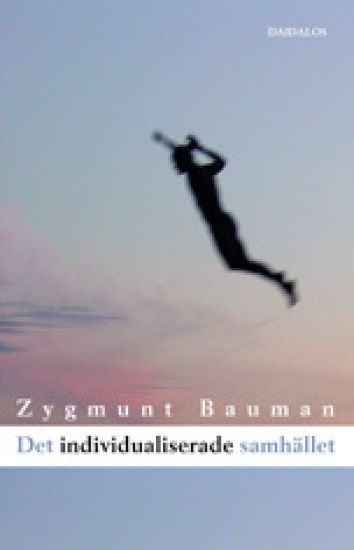
Zygmunt Bauman har under det senaste decenniet i en rad arbeten analyserat särdragen för det postmoderna tillståndet. Han har skildrat hur det moderna projektets förhoppningar har strandat, och hur vi i efterdyningarna finner människor som i allt högre grad lever från dag till dag i samhällen där allt befinner under ständig omförhandling. Uttrycken för detta kan vi se i den försvagade nationalstaten, de inte längre bärande sociala skyddsnäten, frånvaron av offentliga rum. I gengäld har vi fått en ökad individuell frihet, en frihet som skapar nya möjligheter men som också gör det svårt att hantera gemensamma, sociala frågor och problem som just sociala angelägenheter. Individualiseringen har blivit vårt öde. I Det individualiserade samhället diskuterar Zygmunt Bauman det hot som individualiseringen utgör mot möjligheterna att hantera det som gör samhället till ett samhälle, alltså det som håller oss samman. Uppsatserna i Det individualiserade samhället ger en utmärkt sammanfattande bild över mångsidigheten i Zygmunt Baumans projekt.
Modernitet og Holocaust

Modernitet og Holocaust

Zygmunt Bauman

Gyldendal
2001
nidottu
I Modernitet og Holocaust undersøger den polsk-jødiske sociolog Zygmunt Bauman, hvad Holocaust - det nazistiske regimes ombringelse af 6 millioner jøder - kan lære os om modernitetens væsen. En af hans hovedpointer er, at menneskeudryddelserne ikke blot var et irrationelt tilbagefald til barbari. De forløb tværtimod "civiliseret", ved hjælp af også i dag gængse organiseringsformer såsom bureaukrati og instrumentel rationalitet. Derfor kan selve Holocaust hverken betragtes som et isoleret jødisk problem, ej heller alende forklares med henvisning til Hitlers tvangstanker, hans tilhængeres grusomhed og det moralske forfald, som hans ideer gav anledning til. "Holocaust blev udtænkt og gennemført i vores moderne, rationelle samfund, på vores høje civilisatoriske stade, de menneskelige og kulturelle præstationeres tinde, og af denne grund udgør det også et problem for dette samfund, denne civilisation, denne kultur." Formålet med bogen er at indlemme den sociologiske, psykologiske og politiske lære, vi kan drage af Holocaust-begivenhederne, i samfundsinstitutionernes og borgernes selverkendelse og praksis. I sidste ende stiller den det centrale spørgsmål, om moral er noget, der læres, altså et socialt produkt, eller en uadskilleig del af selve den menneskelige eksistens.
Conversations with Zygmunt Bauman

Conversations with Zygmunt Bauman

Zygmunt Bauman; Keith Tester

JOHN WILEY AND SONS LTD
2001
nidottu
A set of interviews with one of the world's leading social thinkers, ranging from autobiographical reflection to guidelines for developing the reader's understanding, this text also gives important background information on the assumptions of Bauman's groundbreaking work.
Thinking Sociologically

Thinking Sociologically

Zygmunt Bauman; May Tim

Blackwell Publishers
2001
nidottu
In this lucid, stimulating and original book, Zygmunt Bauman and Tim May explore the underlying assumptions and tacit expectations which structure our view of the world. The authors elucidate key concepts in sociology: for example, individualism versus community, and privilege versus deprivation. While charting a course through sociology's main concerns, Bauman and May also examine the applicability of sociology to everyday life. Second edition.
The Individualized Society

The Individualized Society

Zygmunt Bauman

Polity Press
2000
sidottu
We are spurred into action by our troubles and fears; but all too often our action fails to address the true causes of our worries. When trying to make sense of our lives, we tend to blame our own failings and weaknesses for our discomforts and defeats. And in doing so, we make things worse rather than better. Reasonable beings that we are, how does this happen and why does it go on happening? These are the questions addressed in this new book by Zygmunt Bauman - one of the most original and perceptive social thinkers writing today. For Bauman, the task of sociology is not to censor or correct the stories we tell of our lives, but to show that there are more ways in which our life stories can be told. By bringing into view the many complex dependencies invisible from the vantage point of private experience, sociology can help us to link our individual decisions and actions to the deeper causes of our troubles and fears - to the ways we live, to the conditions under which we act, to the socially drawn limits of our imagination and ambition. Sociology can help us to understand the processes that have shaped the society in which we live today, a society in which individualization has become our fate. And sociology can also help us to see that if our individual but shared anxieties are to be effectively tackled, they need to be addressed collectively, true to their social, not individual, nature. The Individualized Society will be of great interest to students of sociology, politics and the social sciences and humanities generally. It will also appeal to a broader range of readers who are interested in the changing nature of our social and political life today.
Community

Community

Zygmunt Bauman

Polity Press
2000
sidottu
'Community' is one of those words that feels good: it is good 'to have a community', 'to be in a community'. And 'community' feels good because of the meanings which the word conveys, all of them promising pleasures, and more often than not the kind of pleasures which we would like to experience but seem to miss. 'Community' conveys the image of a warm and comfortable place, like a fireplace at which we warm our hands on a frosty day. Out there, in the street, all sorts of dangers lie in ambush; in here, in the community, we can relax and feel safe. 'Community' stands for the kind of world which we long to inhabit but which is not, regrettably, available to us. Today 'community' is another name for paradise lost - but for a paradise which we still hope to find, as we feverishly search for the roads that may lead us there. But there is a price to be paid for the privilege of being in a community. Community promises security but seems to deprive us of freedom, of the right to be ourselves. Security and freedom are two equally precious and coveted values which could be balanced to some degree, but hardly ever fully reconciled. The tension between security and freedom, and between community and individuality, is unlikely ever to be resolved. We cannot escape the dilemma but we can take stock of the opportunities and the dangers, and at least try to avoid repeating past errors. In this important new book, Zygmunt Bauman takes stock of these opportunities and dangers and, in his distinctive and brilliant fashion, offers a much-needed reappraisal of a concept that has become central to current debates about the nature and future of our societies.
Community

Community

Zygmunt Bauman

JOHN WILEY AND SONS LTD
2000
nidottu
This work takes a look at the tensions between ideas of community and individuality, and security and freedom. It offers a reappraisal of the concept of "community" - a concept that has become central to current debates about the nature and future of our societies.
The Individualized Society

The Individualized Society

Zygmunt Bauman

JOHN WILEY AND SONS LTD
2000
nidottu
We are spurred into action by our troubles and fears; but all too often our action fails to address the true causes of our worries. When trying to make sense of our lives, we tend to blame our own failings and weaknesses for our discomforts and defeats. And in doing so, we make things worse rather than better. Reasonable beings that we are, how does this happen and why does it go on happening? These are the questions addressed in this new book by Zygmunt Bauman - one of the most original and perceptive social thinkers writing today. For Bauman, the task of sociology is not to censor or correct the stories we tell of our lives, but to show that there are more ways in which our life stories can be told. By bringing into view the many complex dependencies invisible from the vantage point of private experience, sociology can help us to link our individual decisions and actions to the deeper causes of our troubles and fears - to the ways we live, to the conditions under which we act, to the socially drawn limits of our imagination and ambition. Sociology can help us to understand the processes that have shaped the society in which we live today, a society in which individualization has become our fate. And sociology can also help us to see that if our individual but shared anxieties are to be effectively tackled, they need to be addressed collectively, true to their social, not individual, nature. The Individualized Society will be of great interest to students of sociology, politics and the social sciences and humanities generally. It will also appeal to a broader range of readers who are interested in the changing nature of our social and political life today.
Globalization

Globalization

Zygmunt Bauman

Columbia University Press
2000
pokkari
The word "globalization" is used to convey the hope and determination of order-making on a worldwide scale. It is trumpeted as providing more mobility-of people, capital, and information-and as being equally beneficial for everyone. With recent technological developments-most notably the Internet-globalization seems to be the fate of the world. But no one seems to be in control. As noted sociologist Zygmunt Bauman shows in this detailed history of globalization, while human affairs now take place on a global scale, we are not able to direct events; we can only watch as boundaries, institutions, and loyalties shift in rapid and unpredictable ways. Who benefits from the new globalization? Are people in need assisted more quickly and efficiently? Or are the poor worse off than ever before? Will a globalized economy shift jobs away from traditional areas, destroying time-honored national industries? Who will enjoy access to jobs in the new hierarchy of mobility? From the way the global economy creates a class of absentee landlords to current prison designs for the criminalized underclass, Bauman dissects globalization in all its manifestations: its effects on the economy, politics, social structures, and even our perceptions of time and space. In a chilling analysis, Bauman argues that globalization divides as much as it unites, creating an ever-widening gulf between the haves and the have-nots. Rather than the hybrid culture we had hoped for, globalization is creating a more homogenous world. Drawing on the works of philosophers, social historians, architects, and theoreticians such as Michel Foucault, Claude Levi-Strauss, Alfred J. Dunlap, and Le Corbusier, Globalization presents a historical overview of the methods employed to create and define human spaces and institutions, from rural villages to sprawling urban centers. Bauman shows how the advent of the computer translates into the decline of truly public space. And he explores the dimensions of a world in which-through new technologies-time is accelerated and space is compressed, revealing how we have arrived at our current state of global thinking. Bauman's incisive methods of inquiry make Globalization an excellent antidote to the exuberance expressed by those who stand to benefit from the new pace and mobility of the modern life.
Liquid Modernity

Liquid Modernity

Zygmunt Bauman

JOHN WILEY AND SONS LTD
2000
nidottu

Halvin toimitettuna 29,80 €

In this new book, Bauman examines how we have moved away from a 'heavy' and 'solid', hardware-focused modernity to a 'light' and 'liquid', software-based modernity. This passage, he argues, has brought profound change to all aspects of the human condition. The new remoteness and un-reachability of global systemic structure coupled with the unstructured and under-defined, fluid state of the immediate setting of life-politics and human togetherness, call for the rethinking of the concepts and cognitive frames used to narrate human individual experience and their joint history. This book is dedicated to this task. Bauman selects five of the basic concepts which have served to make sense of shared human life - emancipation, individuality, time/space, work and community - and traces their successive incarnations and changes of meaning. Liquid Modernity concludes the analysis undertaken in Bauman's two previous books Globalization: The Human Consequences and In Search of Politics. Together these volumes form a brilliant analysis of the changing conditions of social and political life by one of the most original thinkers writing today.
Liquid Modernity

Liquid Modernity

Zygmunt Bauman

Polity Press
2000
sidottu
In this new book, Bauman examines how we have moved away from a 'heavy' and 'solid', hardware-focused modernity to a 'light' and 'liquid', software-based modernity. This passage, he argues, has brought profound change to all aspects of the human condition. The new remoteness and un-reachability of global systemic structure coupled with the unstructured and under-defined, fluid state of the immediate setting of life-politics and human togetherness, call for the rethinking of the concepts and cognitive frames used to narrate human individual experience and their joint history. This book is dedicated to this task. Bauman selects five of the basic concepts which have served to make sense of shared human life - emancipation, individuality, time/space, work and community - and traces their successive incarnations and changes of meaning. Liquid Modernity concludes the analysis undertaken in Bauman's two previous books Globalization: The Human Consequences and In Search of Politics. Together these volumes form a brilliant analysis of the changing conditions of social and political life by one of the most original thinkers writing today.
Spaning efter politiken

Spaning efter politiken

Zygmunt Bauman

Bokförlaget Daidalos
2000
nidottu
Vi lever i en värld som inte längre ifrågasätter sig själv. En värld som lever från dag till dag, försöker hantera de kriser som uppstår och kämpar för att skydda sig mot nya, utan att veta vart den är på väg och utan att försöka planera för eller ens föreställa sig någon bättre framtid. Samtidigt tycks allt viktigt i våra liv ? våra nära relationer, vårt kärleksliv, de mål med livet vi finner värda att sträva efter ? allt mer sårbart, ovisst, osäkert och utsatt. Finns det ett samband mellan formen på den värld vi bebor och det sätt på vilket vi lever våra liv? I På spaning efter politiken söker Zygmunt Bauman reda ut hur detta samband ser ut. Det gäller, menar Bauman, att återuppbygga det »privata/offentliga» rum där privata bekymmer och offentliga angelägenheter kan mötas och där medborgare tar del i en offentlig diskussion för att tillsammans styra sig själva. I På spaning efter politiken diskuterar Bauman brännande aktuella frågor som det republikanska stats- och medborgarbegreppet och tanken om medborgarlön. Utgångspunkt är övertygelsen att individuell frihet endast kan vara resultatet av kollektiva ansträngningar. Zygmunt Bauman vill bidra till att åter göra en översättning mellan privat och offentligt möjlig. Endast på så sätt kan politiken förnyas och bli livskraftig. Zygmunt Bauman är professor emeritus i sociologi vid universiteten i Warszawa och Leeds.
In Search of Politics

In Search of Politics

Zygmunt Bauman

Polity Press
1999
nidottu
We live in a world which no longer questions itself, which lives from one day to another managing successive crises and struggling to brace itself for new ones, without knowing where it is going and without trying to plan the itinerary. And everything important in our lives - livelihood, human bonds, partnerships, neighbourhood, goals worth pursuing and dangers to avoid - feels transient, precarious, vulnerable, insecure, uncertain, risky. Is there a connection between the shape of the world we inhabit and the way we live our lives? Exploring that connection, and finding out just how close it is, is the main concern of this book. What is at stake in this inquiry is the possibility of re-building the"'private/public" space, where private troubles and public issues meet and where citizens engage in dialogue in order to govern themselves. Individual liberty can only be a product of collective work, it can only be collectively secured and guaranteed. And yet today we are moving towards a privatization of the means to secure individual liberty. If seen as a therapy for the present ills, this is bound to produce effects of a most sinister kind. The act of translating private troubles into public issues is in danger of falling into disuse and being forgotten. The argument of this book is that making the translation possible again is an urgent and vital imperative for the renewal of politics today. This new book by Zygmunt Bauman - one of the most original and creative thinkers of our time - will be of particular interest to students of sociology, politics and social and political theory.