
Kirjailija
Bernard Shaw
Kirjat ja teokset yhdessä paikassa: 669 kirjaa, julkaisuja vuosilta 1968–2026, suosituimpiin kuuluu Herra Byronin ammatti. Vertaile teosten hintoja ja tarkista saatavuus suomalaisista kirjakaupoista.
669 kirjaa
Kirjojen julkaisuvuodet: 1968–2026.
V sbornik voshli tri pesy Bernarda Shou, raskryvajuschie raznye grani ego dramaturgicheskogo talanta. "Tsezar i Kleopatra" - absoljutnyj shedevr ego tvorcheskogo nasledija, besposchadnaja istoricheskaja satira na vechnye temy politiki, vojny i borby za vlast. V 1945 g. rezhisser Gabriel Paskal snjal po pese film, glavnye roli v kotorom ispolnili Viven Li i Klod Rejns. "Drugoj ostrov Dzhona Bullja" - obrazets dramy idej - posvjaschen probleme otnoshenij Anglii i Irlandii, kotoruju Shou, buduchi irlandtsem, vsegda prinimal blizko k serdtsu. Premera proshla s oglushitelnym uspekhom - spektakl dazhe posetil premer-ministr, a takzhe bylo zakazano spetsialnoe predstavlenie dlja korolja Eduarda VII. V zhestokoj satiricheskoj pritche "Telezhka s jablokami", kotoraja otnositsja k tak nazyvaemym "politicheskim ekstravagantsam", Shou smeetsja nad bessmyslennostju bjurokraticheskoj mashiny i nelepostju intrig vlast imuschikh.

Dramatic opinions and essays by G. Bernard Shaw; containing as well A word on the Dramatic opinions and essays, of G. Bernard Shaw (Volume II)
Bernard Shaw; James Huneker
Alpha Edition
2019
pokkari
This book has been considered by academicians and scholars of great significance and value to literature. This forms a part of the knowledge base for future generations. We have represented this book in the same form as it was first published. Hence any marks seen are left intentionally to preserve its true nature.
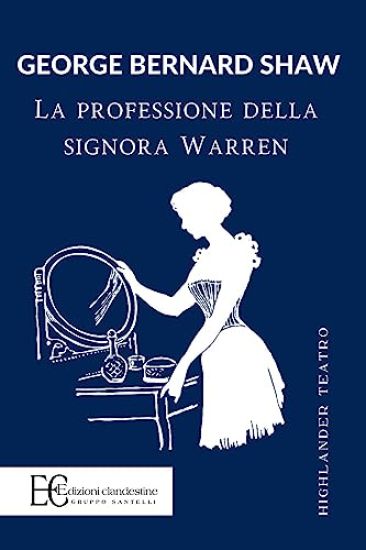
Questa commedia, scritta nel 1893 e rappresentata per la prima volta a Londra nel 1902, vede il confronto-scontro tra due figure femminili. Da un lato la signora Warren, nata in un contesto di indigenza, dove la lotta per la sopravvivenza porta a scegliere la pratica illecita ma proficua del meretricio, che le permette di divenire ricchissima proprietaria di diverse 'case'. Dall'altro, la giovane Vivie, che grazie al denaro materno, di cui ignora la provenienza, consegue una laurea in matematica. Quando ella scopre la reale professione della madre, lo scontro diviene inevitabile.

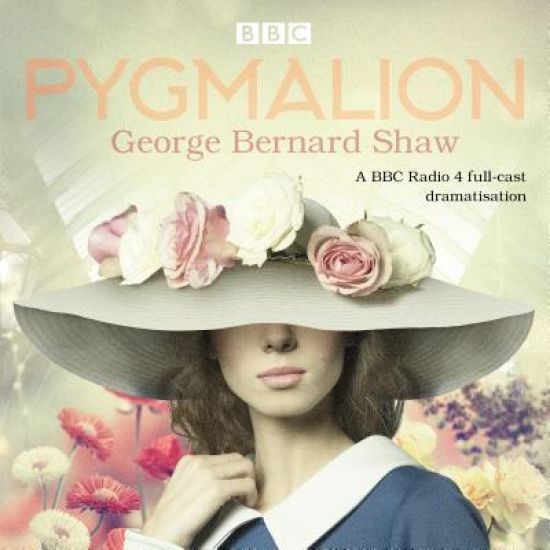
A star-studded BBC radio production of Bernard Shaw’s Pygmalion – plus bonus drama The ‘B’ Word, telling the story of the play’s scandalous opening nightIrascible phonetics professor Henry Higgins makes a bet with his friend Colonel Pickering that he can train Cockney flower girl Eliza Doolittle to talk ‘like a lady’ and pass as a duchess at the Ambassador’s Ball. As the day of reckoning approaches, can Eliza convince the assembled aristocrats that she’s one of them? And what will become of her afterwards? This effervescent radio version of Shaw’s classic comedy features a stellar cast, including award-winning comedians Alistair McGowan as Henry Higgins, Morgana Robinson as Eliza Doolittle and Al Murray as Alfred Doolittle. Also featured on this release is The ‘B’ Word, written by and starring Alistair McGowan as Bernard Shaw. Centring on the shocking opening night of Pygmalion – the first time that the word ‘bloody' was used on the British stage – it also explores the passionate love-hate relationship between Shaw; his leading man, Sir Herbert Beerbohm Tree (Richard McCabe) and his leading lady, Mrs Patrick Campbell (Charlotte Page), who played the 19-year-old Eliza Doolittle at the age of 49. Cast and creditsPygmalionHenry Higgins……………………Alistair McGowanEliza Doolittle……………………Morgana RobinsonAlfred Doolittle……………………Al MurrayColonel Pickering……………………Hugh FraserMrs Higgins……………………Siân PhillipsMrs Pearce/Maid……………………Charlotte PageMrs Eynsford-Hill……………………Georgie GlenClara Eynsford-Hill……………………Maeve Bluebell WellsFreddy Eynsford-Hill.....……………………Tom ForristerNepommuck……………………David SturzakerAmbassador……………………John DougallAmbassador's wife……………………Sarah RidgewayBystander……………………David SterneWritten by Bernard ShawProduced and directed by Emma HardingThe ‘B’ WordBernard Shaw……………………Alistair McGowanGeorge Alexander……………………David SturzakerMrs Patrick Campbell.....……………………Charlotte PageSir Herbert Beerbohm Tree……………………Richard McCabeCharlotte Shaw……………………Georgie GlenMerivale……………………Philip FoxGurney/Fishman……………………Simon LuddersBell……………………Charlie ClementsMaid……………………Sarah RidgewayWritten by Alistair McGowanProduced and directed by Emma HardingProduction Coordinator: Jenny MendezStudio Managers: Alison Craig, Caleb Knightley and Thomas GlasserDuration: 2 hours 45 mins approx.
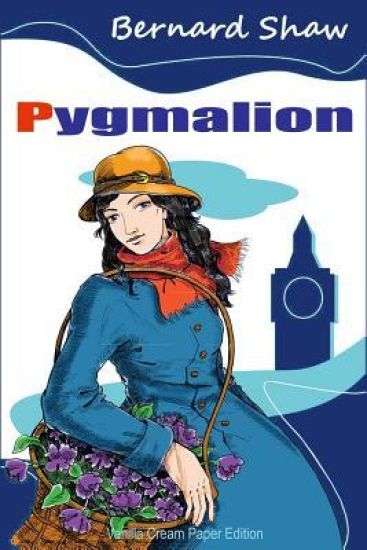
Rare edition with unique illustrations and elegant classic cream paper. This play is based on the Greek myth of Pygmalion. It tells the story of Henry Higgins, a professor of phonetics (based on phonetician Henry Sweet), who makes a bet with his friend Colonel Pickering that he can successfully pass off a Cockney flower girl, Eliza Doolittle, as a refined society lady by teaching her how to speak with an upper class accent and training her in etiquette. In the process, Higgins and Doolittle grow close, but she ultimately rejects his domineering ways and declares she will marry Freddy Eynsford-Hill - a young, poor, gentleman. Adapted for film under the title of 'My Fair Lady'. Includes unique illustrations.
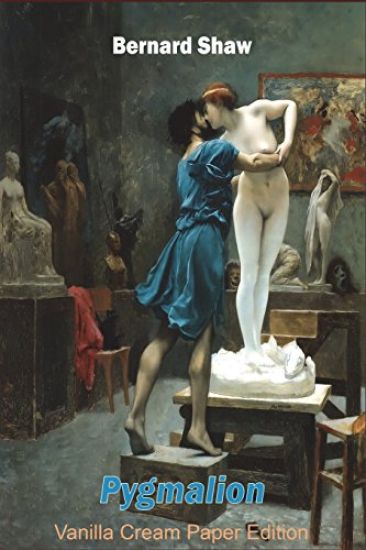
Rare edition with unique illustrations and elegant classic cream paper. This play is based on the Greek myth of Pygmalion. It tells the story of Henry Higgins, a professor of phonetics (based on phonetician Henry Sweet), who makes a bet with his friend Colonel Pickering that he can successfully pass off a Cockney flower girl, Eliza Doolittle, as a refined society lady by teaching her how to speak with an upper class accent and training her in etiquette. In the process, Higgins and Doolittle grow close, but she ultimately rejects his domineering ways and declares she will marry Freddy Eynsford-Hill - a young, poor, gentleman. Adapted for film under the title of 'My Fair Lady'. Includes unique illustrations.
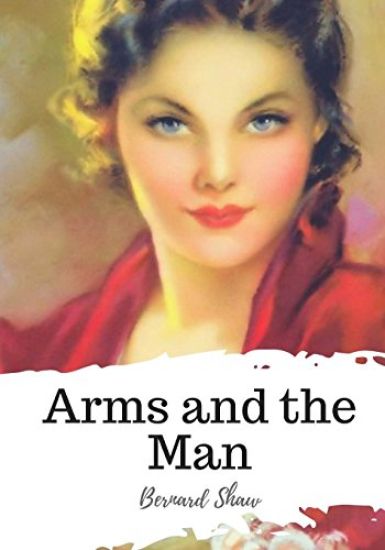
Arms and the Man was George Bernard Shaw's first commercially successful play. It is a comedy about idealized love versus true love. A young Serbian woman idealizes her war-hero fiance and thinks the Swiss soldier who begs her to hide him a terrible coward. After the war she reverses her opinions, though the tangle of relationships must be resolved before her ex-soldier can conclude the last of everyone's problems with Swiss exactitude. The play premiered to an enthusiastic reception. Only one man booed Shaw at the end, to which Shaw replied: "My dear fellow, I quite agree with you, but what are we two against so many?"
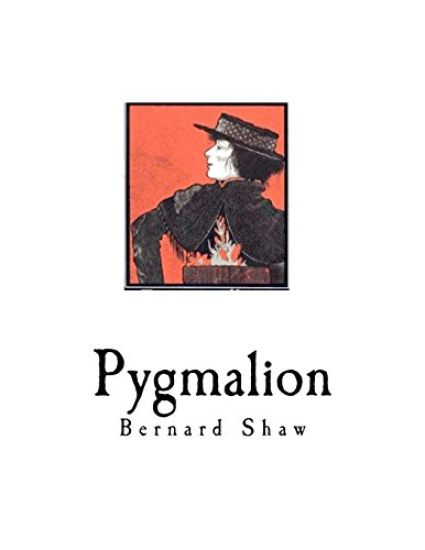
Pygmalion by Bernard Shaw. Pygmalion is a play by George Bernard Shaw, named after a Greek mythological figure. It was first presented on stage to the public in 1913. In ancient Greek mythology, Pygmalion fell in love with one of his sculptures, which then came to life. The general idea of that myth was a popular subject for Victorian era English playwrights, including one of Shaw's influences, W. S. Gilbert, who wrote a successful play based on the story called Pygmalion and Galatea that was first presented in 1871. Shaw would also have been familiar with the burlesque version, Galatea, or Pygmalion Reversed. Shaw's play has been adapted numerous times, most notably as the musical My Fair Lady and its film version. As will be seen later on, Pygmalion needs, not a preface, but a sequel, which I have supplied in its due place. The English have no respect for their language, and will not teach their children to speak it. They spell it so abominably that no man can teach himself what it sounds like. It is impossible for an Englishman to open his mouth without making some other Englishman hate or despise him. German and Spanish are accessible to foreigners: English is not accessible even to Englishmen.
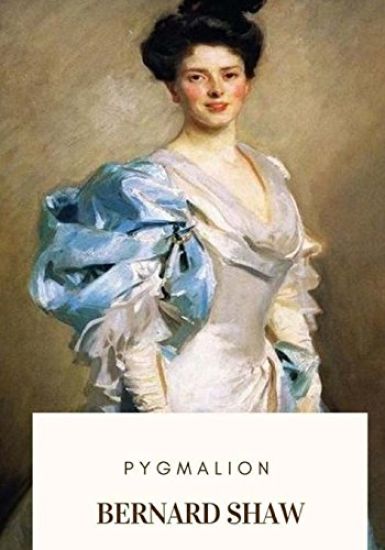
In George Bernard Shaw's play Pygmalion a phonetician believes the power of speech is such that he can introduce a Cockney flower girl to polite society after careful language and etiquette training, and no one will discern her true roots. The professor and the flower girl grown close, but after her successful debut she rejects the professor and his overbearing ways for a poor gentleman.
Read the controversial play that caused an international sensation when it was first performed. George Bernard Shaw's Mrs. Warren's Profession takes a frank and matter-of-fact look at the world's oldest profession and makes an explicit link between the second-class citizenship that has been foisted upon women for thousands of years and the persistence of prostitution as an occupation.
In George Bernard Shaw's play Pygmalion a phonetician believes the power of speech is such that he can introduce a Cockney flower girl to polite society after careful language and etiquette training, and no one will discern her true roots. The professor and the flower girl grown close, but after her successful debut she rejects the professor and his overbearing ways for a poor gentleman.
Arms and the Man was George Bernard Shaw's first commercially successful play. It is a comedy about idealized love versus true love. A young Serbian woman idealizes her war-hero fiance and thinks the Swiss soldier who begs her to hide him a terrible coward. After the war she reverses her opinions, though the tangle of relationships must be resolved before her ex-soldier can conclude the last of everyone's problems with Swiss exactitude. The play premiered to an enthusiastic reception. Only one man booed Shaw at the end, to which Shaw replied: "My dear fellow, I quite agree with you, but what are we two against so many?"
Read the controversial play that caused an international sensation when it was first performed. George Bernard Shaw's Mrs. Warren's Profession takes a frank and matter-of-fact look at the world's oldest profession and makes an explicit link between the second-class citizenship that has been foisted upon women for thousands of years and the persistence of prostitution as an occupation.
The Shewing-Up of Blanco Posnet
Bernard Shaw
Createspace Independent Publishing Platform
2017
nidottu
This collection of literature attempts to compile many of the classic works that have stood the test of time and offer them at a reduced, affordable price, in an attractive volume so that everyone can enjoy them.
Bernard Shaw's Preface to Androcles and the Lion
Bernard Shaw
Createspace Independent Publishing Platform
2017
nidottu
The question seems a hopeless one after 2000 years of resolute adherence to the old cry of "Not this man, but Barabbas." Yet it is beginning to look as if Barabbas was a failure, in spite of his strong right hand, his victories, his empires, his millions of money, and his moralities and churches and political constitutions. "This man" has not been a failure yet; for nobody has ever been sane enough to try his way. But he has had one quaint triumph. Barabbas has stolen his name and taken his cross as a standard. There is a sort of compliment in that. There is even a sort of loyalty in it, like that of the brigand who breaks every law and yet claims to be a patriotic subject of the king who makes them. We have always had a curious feeling that though we crucified Christ on a stick, he somehow managed to get hold of the right end of it, and that if we were better men we might try his plan. There have been one or two grotesque attempts at it by inadequate people, such as the Kingdom of God in Munster, which was ended by crucifixion so much more atrocious than the one on Calvary that the bishop who took the part of Annas went home and died of horror. But responsible people have never made such attempts. The moneyed, respectable, capable world has been steadily anti-Christian and Barabbasque since the crucifixion; and the specific doctrine of Jesus has not in all that time been put into political or general social practice.