Kirjojen hintavertailu – 12 859 819 kirjaa ja 27 kauppaa

Kirjailija

C. G. Jung

Kirjat ja teokset yhdessä paikassa: 359 kirjaa, julkaisuja vuosilta 1954–2026, suosituimpiin kuuluu Kalojen aika. Vertaile teosten hintoja ja tarkista saatavuus suomalaisista kirjakaupoista.

Nimi esiintyy myös muodoissa: C.G. Jung, C G Jung, C.G Jung, C. G Jung

359 kirjaa

Kirjojen julkaisuvuodet: 1954–2026.

Psychology of Yoga and Meditation

Psychology of Yoga and Meditation

C. G. Jung

PRINCETON UNIVERSITY PRESS
2023
pokkari
Jung's illuminating lectures on the psychology of Eastern spiritualityBetween 1933 and 1941, C. G. Jung delivered a series of public lectures at the Swiss Federal Institute of Technology (ETH) in Zurich. Intended for a general audience, these lectures addressed a broad range of topics, from dream analysis to the psychology of alchemy. Here for the first time are Jung's illuminating lectures on the psychology of yoga and meditation, delivered between 1938 and 1940. In these lectures, Jung discusses the psychological technique of active imagination, seeking to find parallels with the meditative practices of different yogic and Buddhist traditions. He draws on three texts to introduce his audience to Eastern meditation: Patañjali's Yoga Sûtra, the Amitâyur-dhyâna-sûtra from Chinese Pure Land Buddhism, and the Shrî-chakra-sambhâra Tantra, a scripture related to tantric yoga. The lectures offer a unique opportunity to encounter Jung as he shares his ideas with the general public, providing a rare window on the application of his comparative method while also shedding light on his personal history and psychological development. Featuring an incisive introduction by Martin Liebscher as well as explanations of Jungian concepts and psychological terminology, Psychology of Yoga and Meditation provides invaluable insights into the evolution of Jung's thought and a vital key to understanding his later work.
Jung on Ignatius of Loyola’s Spiritual Exercises

Jung on Ignatius of Loyola’s Spiritual Exercises

C. G. Jung

PRINCETON UNIVERSITY PRESS
2023
sidottu
Jung’s lectures on the psychology of Jesuit spiritual practice—unabridged in English for the first timeBetween 1933 and 1941, C. G. Jung delivered a series of public lectures at the Swiss Federal Institute of Technology (ETH) in Zurich. Intended for a general audience, these lectures addressed a broad range of topics, from yoga and meditation to dream analysis and the psychology of alchemy. Here for the first time are Jung’s complete lectures on Ignatius of Loyola’s Spiritual Exercises, delivered in the winter of 1939–1940. These illuminating lectures are the culmination of Jung’s investigation into traditional forms of meditation and their parallels to his psychotherapeutic method of active imagination. Jung presents Loyola’s exercises as the prime example of a Christian practice comparable to yoga and Eastern meditation, and gives a psychological interpretation of the visions depicted in the saint’s autobiographical writings. Offering a unique opportunity to encounter the brilliant psychologist as he shares his ideas with the general public, the lectures reflect Jung’s increasingly positive engagement with Roman Catholicism, a development that would lead to his fruitful collaborations after the war with eminent Catholic theologians such as Victor White, Bruno de Jésus-Marie, and Hugo Rahner. Featuring an authoritative introduction by Martin Liebscher along with explanations of Jungian concepts and psychological terminology, this splendid book provides an invaluable window on the evolution of Jung’s thought and a vital key to understanding his later work.
On Theology and Psychology

On Theology and Psychology

C. G. Jung; Adolf Keller

PRINCETON UNIVERSITY PRESS
2022
pokkari
Jung's correspondence with one of the twentieth century's leading theologians and ecumenicistsOn Theology and Psychology brings together C. G. Jung's correspondence with Adolf Keller, a celebrated Protestant theologian who was one of the pioneers of the modern ecumenical movement and one of the first religious leaders to become interested in analytical psychology. Their relationship spanned half a century, and for many years Keller was the only major religious leader to align himself with Jung and his ideas. Both men shared a lifelong engagement with questions of faith, and each grappled with God in his own distinctive way. Presented here in English for the first time are letters that provide a rare look at Jung in dialogue with a theologian. Spanning some fifty years, these letters reveal an extended intellectual and spiritual discourse between two very different men as they exchange views on the nature of the divine, the compatibility of Jungian psychology and Christianity, the interpretation of the Bible and figures such as Jesus and Job, and the phenomenon of National Socialism. Although Keller was powerfully attracted to Jung's ideas, his correspondence with the famed psychiatrist demonstrates that he avoided discipleship. Both men struggled with essential questions about human existence, spirituality, and well-being, and both sought common ground where the concerns of psychologists and theologians converge. Featuring an illuminating introduction by Marianne Jehle-Wildberger, On Theology and Psychology offers incomparable insights into the development of Jung's views on theology and religion, and a unique window into a spiritual and intellectual friendship unlike any other.
Psychological Types

Psychological Types

C. G. Jung

Routledge
2022
nidottu

Halvin toimitettuna 33,50 €

Psychological Types is one of Jung's most important and most famous works. First published by Routledge (Kegan Paul) in the early 1920s it appeared after Jung's so-called fallow period, during which he published little, and it is perhaps the first significant book to appear after his own confrontation with the unconscious. It is the book that introduced the world to the terms 'extravert' and 'introvert'. Though very much associated with the unconscious, in Psychological Types Jung shows himself to be a supreme theorist of the conscious. In putting forward his system of psychological types Jung provides a means for understanding ourselves and the world around us: our different patterns of behaviour, our relationships, marriage, national and international conflict, organizational functioning. Appearing in paperback for the first time this central volume from Jung's Collected Works will be essential to anyone requiring a proper understanding of Jung's psychology.
Psychological Types

Psychological Types

C. G. Jung

Routledge
2022
sidottu
Psychological Types is one of Jung's most important and most famous works. First published by Routledge (Kegan Paul) in the early 1920s it appeared after Jung's so-called fallow period, during which he published little, and it is perhaps the first significant book to appear after his own confrontation with the unconscious. It is the book that introduced the world to the terms 'extravert' and 'introvert'. Though very much associated with the unconscious, in Psychological Types Jung shows himself to be a supreme theorist of the conscious. In putting forward his system of psychological types Jung provides a means for understanding ourselves and the world around us: our different patterns of behaviour, our relationships, marriage, national and international conflict, organizational functioning. Appearing in paperback for the first time this central volume from Jung's Collected Works will be essential to anyone requiring a proper understanding of Jung's psychology.
Psykologiske typer

Psykologiske typer

C. G. Jung

Gyldendal
2022
nidottu
Hvad er C. G. Jungs hovedværk? Svaret afhænger naturligvis af synsvinklen. Men anlægger man en filosofisk og bevidsthedspsykologisk synsvinkel – spørger man nemlig, hvor Jung grundigst har gjort rede for bevidsthedens struktur og dynamik og har sat dette syn i forhold til den vestlige og østlige filosofiske tradition – så er Psykologiske typer fra 1921 afgjort hans hovedværk. Vist handler værket om psykologiske typer, om de typiske forskelle mellem menneskers bevidsthedsorientering, som giver anledning til så umådelig megen tiltrækning og især frastødning og fjendskab mennesker imellem. Men med hele sin indkredsning af modsætningernes forening på en mulig midtervej bryder værket med dagsaktualitetens selvtilstrækkelighed og tager læseren med ind i en formidabel samtale med dem i fortiden, der vidste bedre. Værket er i sig selv en proces. Bortset fra et enkelt afsnit udkom Psykologiske typer for første gang på dansk i 1994 og genudgives nu i Hans Reitzels Forlags serie Klassikere.
Jeg'et og det ubevidste

Jeg'et og det ubevidste

C. G. Jung

Gyldendal
2022
nidottu
Mens C. G. Jung i sin første bog Det ubevidste anlagde sine betragtninger i tværsnit for at anskueliggøre de begreber, der knytter sig til de dybere psykologiske kræfter, så påviser han i denne bog, at den individuelle kontakt med ’det ubevidste’ er forudsætningen for en udvidelse af bevidstheden. Anskuelsen, tænkningen og opfattelsen er blot vejvisere. Den aktive medleven og personlige oplevelse af ’det ubevidste’, som det manifesterer sig i vores drømme og fantasier, er betingelsen for den egentlige forvandling af Jeg’et. Jeg’et og det ubevidste udkom første gang på dansk i 1962 og genudgives nu i Hans Reitzels Forlags serie Klassikere.
Det ubevidste

Det ubevidste

C. G. Jung

Gyldendal
2022
nidottu
Det er C. G. Jungs opfattelse, at nutidsmennesket i sine bestræbelser for en dybere selverkendelse og forståelse af andre mennesker alt for ofte nægter at vedkende sig den side af sjælelivet, der ikke er under kontrol af bevidstheden: Det ubevidste – instinktnaturen – der ved siden af meget værdifuldt også rummer meget forfærdende. Efter en fremstilling af Freuds psykoanalytiske og Adlers individuelpsykologiske forklaringsprincip gøres der i denne bog ved praktiske eksempler rede for teori og metode i C. G. Jungs analytiske psykologi. Det ubevidste er en klassiker inden for psykologien og genudgives nu i Hans Reitzels Forlags Klassikere-serie.
Consciousness and the Unconscious

Consciousness and the Unconscious

C. G. Jung

PRINCETON UNIVERSITY PRESS
2022
sidottu
Jung’s lectures on consciousness and the unconscious—in English for the first timeBetween 1933 and 1941, C. G. Jung delivered a series of public lectures at the Swiss Federal Institute of Technology (ETH) in Zurich. Intended for a general audience, these lectures addressed a broad range of topics, from dream analysis and yoga to the history of psychology. They are at the center of Jung’s intellectual activity in this period and provide the basis of his later work. Here for the first time in English is Jung’s introduction to his core psychological theories and methods, delivered in the summer of 1934. With candor and wit, Jung shares with his audience the path he himself took to understanding the nature of consciousness and the unconscious. He describes their respective characteristics using examples from his clinical experience as well as from literature, his travels, and everyday life. For Jung, consciousness is like a small island in the ocean of the unconscious, while the unconscious is part of the primordial condition of humankind. Jung explains various methods for uncovering the contents of the unconscious, in particular talk therapy and dream analysis. Complete with explanations of Jungian concepts and terminology, Consciousness and the Unconscious painstakingly reconstructs and translates these talks from detailed shorthand notes by attendees, making a critical part of Jung’s work available to today’s readers.
Dream Symbols of the Individuation Process

Dream Symbols of the Individuation Process

C. G. Jung

Princeton University Press
2021
pokkari

Halvin toimitettuna 33,20 €

Jung’s legendary American lectures on dream interpretationIn 1936 and 1937, C. G. Jung delivered two legendary seminars on dream interpretation, the first on Bailey Island, Maine, the second in New York City. Dream Symbols of the Individuation Process makes these lectures widely available for the first time, offering a compelling look at Jung as he presents his ideas candidly and in English before a rapt American audience. The dreams presented here are those of Nobel Prize–winning physicist Wolfgang Pauli, who turned to Jung for therapeutic help because of troubling personal events, emotional turmoil, and depression. Linking Pauli’s dreams to the healing wisdom found in many ages and cultures, Jung shows how the mandala—a universal archetype of wholeness—spontaneously emerges in the psyche of a modern man, and how this imagery reflects the healing process. He touches on a broad range of themes, including psychological types, mental illness, the individuation process, the principles of psychotherapeutic treatment, and the importance of the anima, shadow, and persona in masculine psychology. He also reflects on modern physics, the nature of reality, and the political currents of his time. Jung draws on examples from the Mithraic mysteries, Buddhism, Hinduism, Chinese philosophy, Kundalini yoga, and ancient Egyptian concepts of body and soul. He also discusses the symbolism of the Catholic Mass, the Trinity, and Gnostic ideas in the noncanonical Gospels. With an incisive introduction and annotations, Dream Symbols of the Individuation Process provides a rare window into Jung’s interpretation of dreams and the development of his psychology of religion.
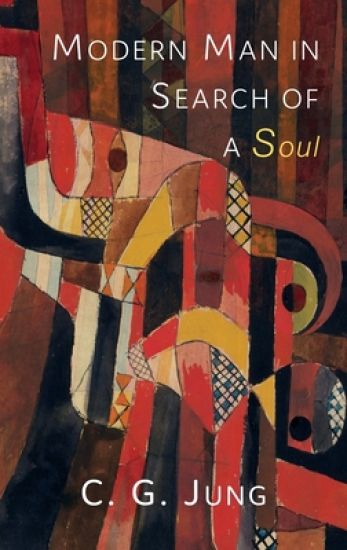
Modern Man in Search of a Soul

Modern Man in Search of a Soul

C G Jung; Cary F Baynes

Martino Fine Books
2021
sidottu

Halvin toimitettuna 27,70 €

2021 Hardcover Reprint of the 1933 U. S. Edition. Full facsimile of the original edition, not reproduced with Optical Recognition software. Considered by many to be one of the most important books in the field of psychology, Modern Man in Search of a Soul is a comprehensive introduction to the thought of Carl Gustav Jung. The writing covers a broad array of subjects such as gnosticism, theosophy, Eastern philosophy and spirituality in general. The first part of the book deals with dream analysis in its practical application, the problems and aims of modern psychotherapy, and also his own theory of psychological types. The middle section addresses Jung's beliefs about the stages of life and Archaic man. He also contrasts his own theories with those of Sigmund Freud. In the latter parts of the book Jung discusses psychology and literature and devotes a chapter to the basic postulates of analytical psychology. The last two chapters are devoted to the spiritual problem of modern man in aftermath of World War I. He compares it to the flowering of gnosticism in the 2nd century and investigates how psychotherapists are like the clergy.
Psychology of Yoga and Meditation

Psychology of Yoga and Meditation

C. G. Jung

PRINCETON UNIVERSITY PRESS
2021
sidottu
Jung's illuminating lectures on the psychology of Eastern spiritualityBetween 1933 and 1941, C. G. Jung delivered a series of public lectures at the Swiss Federal Institute of Technology (ETH) in Zurich. Intended for a general audience, these lectures addressed a broad range of topics, from dream analysis to the psychology of alchemy. Here for the first time are Jung's illuminating lectures on the psychology of yoga and meditation, delivered between 1938 and 1940. In these lectures, Jung discusses the psychological technique of active imagination, seeking to find parallels with the meditative practices of different yogic and Buddhist traditions. He draws on three texts to introduce his audience to Eastern meditation: Patañjali's Yoga Sûtra, the Amitâyur-dhyâna-sûtra from Chinese Pure Land Buddhism, and the Shrî-chakra-sambhâra Tantra, a scripture related to tantric yoga. The lectures offer a unique opportunity to encounter Jung as he shares his ideas with the general public, providing a rare window on the application of his comparative method while also shedding light on his personal history and psychological development. Featuring an incisive introduction by Martin Liebscher as well as explanations of Jungian concepts and psychological terminology, Psychology of Yoga and Meditation provides invaluable insights into the evolution of Jung's thought and a vital key to understanding his later work.
Analytical Psychology

Analytical Psychology

C G Jung

Alpha Edition
2020
pokkari
This book has been considered by academicians and scholars of great significance and value to literature. This forms a part of the knowledge base for future generations. So that the book is never forgotten we have represented this book in a print format as the same form as it was originally first published. Hence any marks or annotations seen are left intentionally to preserve its true nature.