Kirjojen hintavertailu – 12 859 819 kirjaa ja 27 kauppaa

Kirjailija

C. G. Jung

Kirjat ja teokset yhdessä paikassa: 359 kirjaa, julkaisuja vuosilta 1954–2026, suosituimpiin kuuluu Kalojen aika. Vertaile teosten hintoja ja tarkista saatavuus suomalaisista kirjakaupoista.

Nimi esiintyy myös muodoissa: C.G. Jung, C G Jung, C.G Jung, C. G Jung

359 kirjaa

Kirjojen julkaisuvuodet: 1954–2026.

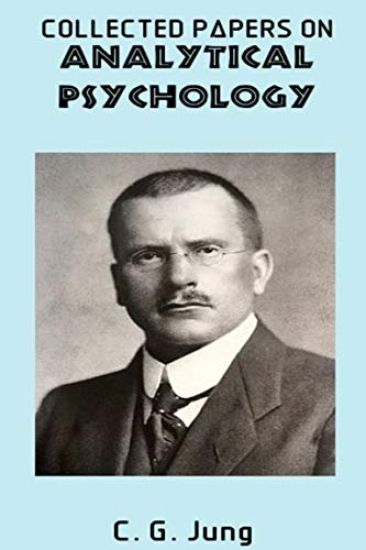
Collected Papers on Analytical Psychology
he Collected Works of C. G. Jung is a book series containing the first collected edition, in English translation, of the major writings of Swiss psychiatrist Carl Gustav Jung. The volumes were edited and translated from the original German by Gerhard Adler and R. F. C. Hull, occasionally with assistance from others. Most were not written by Jung as books, but are collections of papers, essays, lectures, letters, etc. written by Jung from 1902 until his death in 1961, and compiled by editors from 1945 onward. The series contains revised versions of works previously published, works not previously translated, and new translations of many of Jung's writings. Several of the volumes are extensively illustrated; each contains an index and most contain a bibliography. Prior to Jung's death he supervised the revisions of the text, some of which were extensive. An enormous body of Jung's work still remains unpublished.
Jung on Astrology

Jung on Astrology

C. G. Jung

Routledge
2017
sidottu
Jung on Astrology brings together C. G. Jung’s thoughts on astrology in a single volume for the first time, significantly adding to our understanding of Jung’s work. Jung’s Collected Works, seminars, and letters contain numerous discussions of this ancient divinatory system, and Jung himself used astrological horoscopes as a diagnostic tool in his analytic practice. Understood in terms of his own psychology as a symbolic representation of the archetypes of the collective unconscious, Jung found in astrology a wealth of spiritual and psychological meaning and suggested it represents the "sum of all the psychological knowledge of antiquity." The selections and editorial introductions by Safron Rossi and Keiron Le Grice address topics that were of critical importance to Jung—such as the archetypal symbolism in astrology, the precession of the equinoxes and astrological ages, astrology as a form of synchronicity and acausal correspondence, the qualitative nature of time, and the experience of astrological fate—allowing readers to assess astrology’s place within the larger corpus of Jung’s work and its value as a source of symbolic meaning for our time. The book will be of great interest to analytical psychologists, Jungian psychotherapists and academics and students of depth psychology, Jungian and post-Jungian studies, as well as to astrologers and therapists of other orientations, especially transpersonal.
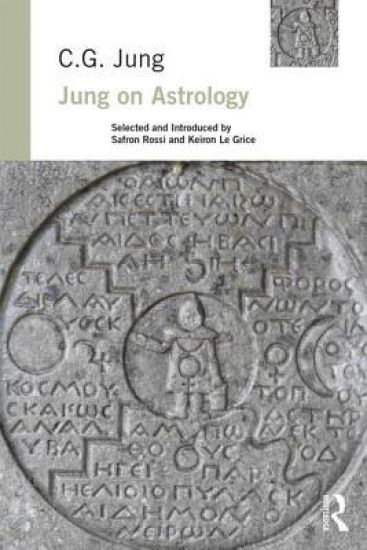
Jung on Astrology

Jung on Astrology

C. G. Jung

Routledge
2017
nidottu

Halvin toimitettuna 74,90 €

Jung on Astrology brings together C. G. Jung’s thoughts on astrology in a single volume for the first time, significantly adding to our understanding of Jung’s work. Jung’s Collected Works, seminars, and letters contain numerous discussions of this ancient divinatory system, and Jung himself used astrological horoscopes as a diagnostic tool in his analytic practice. Understood in terms of his own psychology as a symbolic representation of the archetypes of the collective unconscious, Jung found in astrology a wealth of spiritual and psychological meaning and suggested it represents the "sum of all the psychological knowledge of antiquity." The selections and editorial introductions by Safron Rossi and Keiron Le Grice address topics that were of critical importance to Jung—such as the archetypal symbolism in astrology, the precession of the equinoxes and astrological ages, astrology as a form of synchronicity and acausal correspondence, the qualitative nature of time, and the experience of astrological fate—allowing readers to assess astrology’s place within the larger corpus of Jung’s work and its value as a source of symbolic meaning for our time. The book will be of great interest to analytical psychologists, Jungian psychotherapists and academics and students of depth psychology, Jungian and post-Jungian studies, as well as to astrologers and therapists of other orientations, especially transpersonal.
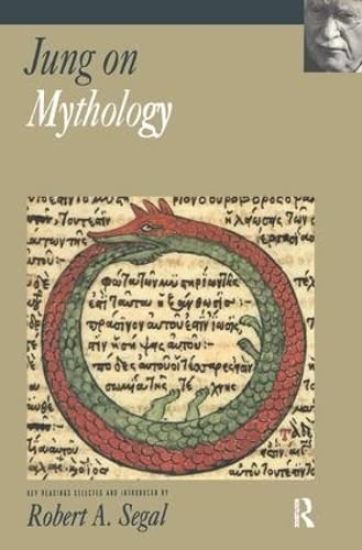
Jung on Mythology

Jung on Mythology

C. G. Jung

Routledge
2017
sidottu
At least three major questions can be asked of myth: what is its subject matter? What is its origin? What is its function? Theories of myth may differ in the answers they give to any of these questions, but more basically they may also differ on which of the questions they ask. C. G. Jung's theory is one of the few that purports to answer fully all three questions. This volume collects and organizes the key passages on myth by Jung himself and by some of the most prominent Jungian writers after him: Erich Neumann, Marie-Louise von Franz and James Hillman. The book synthesizes the discovery of myth as a way of thinking, where it becomes a therapeutic tool providing an entrance to the unconscious.
Four Archetypes

Four Archetypes

C.G. Jung

Routledge
2017
sidottu
The concept of the archetype is crucial to Jung's radical interpretation of the human mind. Jung believed that every person partakes of a universal or collective unconscious that persists through generations. The origins of the concept can be traced to his very first publication in 1902 and it remained central to his thought throughout his life. As well as explaining the theoretical background behind the idea, in Four Archetypes Jung describes the four archetypes that he considers fundamental to the psychological make-up of every individual: mother, rebirth, spirit and trickster. Exploring their role in myth, fairytale and scripture, Jung engages the reader in discoveries that challenge and enlighten the ways we perceive ourselves and others.
Mandala Symbolism

Mandala Symbolism

C. G. Jung

Princeton University Press
2017
pokkari
Contents: * Mandalas.* I. A Study in the Process of Individuation.* II. Concerning Mandala Symbolism* Index Originally published in 1972. The Princeton Legacy Library uses the latest print-on-demand technology to again make available previously out-of-print books from the distinguished backlist of Princeton University Press. These editions preserve the original texts of these important books while presenting them in durable paperback and hardcover editions. The goal of the Princeton Legacy Library is to vastly increase access to the rich scholarly heritage found in the thousands of books published by Princeton University Press since its founding in 1905.
Mandala Symbolism

Mandala Symbolism

C. G. Jung

Princeton University Press
2017
sidottu
Contents: * Mandalas.* I. A Study in the Process of Individuation.* II. Concerning Mandala Symbolism* Index Originally published in 1972. The Princeton Legacy Library uses the latest print-on-demand technology to again make available previously out-of-print books from the distinguished backlist of Princeton University Press. These editions preserve the original texts of these important books while presenting them in durable paperback and hardcover editions. The goal of the Princeton Legacy Library is to vastly increase access to the rich scholarly heritage found in the thousands of books published by Princeton University Press since its founding in 1905.
Psychology and Western Religion
Jung's principle interest was in the psychology of Western men and women. The son of a pastor, he was also deeply interested in their religious life and development. This selection of his writings enables us to understand his interpretation of Western religion as central to his psychological thought. The topics he covers include the Trinity, transformation symbolism in the Mass, the relationship between psychotherapy and religious healing, and resurrection.
Dream Interpretation Ancient and Modern

Dream Interpretation Ancient and Modern

C. G. Jung

Princeton University Press
2016
pokkari

Halvin toimitettuna 30,70 €

From 1936 to 1941, C. G. Jung gave a four-part seminar series in Zurich on children's dreams and the historical literature on dream interpretation. This book completes the two-part publication of this landmark seminar, presenting the sessions devoted to dream interpretation and its history. Here we witness Jung as both clinician and teacher: impatient and sometimes authoritarian but also witty, wise, and intellectually daring, a man who, though brilliant, could be vulnerable, uncertain, and humbled by life's mysteries. These sessions open a window on Jungian dream interpretation in practice, as Jung examines a long dream series from the Renaissance physician Girolamo Cardano. They also provide the best example of group supervision by Jung the educator. Presented here in an inspired English translation commissioned by the Philemon Foundation, these sessions reveal Jung as an impassioned teacher in dialogue with his students as he developed and refined the discipline of analytical psychology. An invaluable document of perhaps the most important psychologist of the twentieth century at work, this splendid book is the fullest representation of Jung's interpretations of dream literatures, filling a critical gap in his collected works.
Jung on Alchemy

Jung on Alchemy

C.G. Jung

Routledge
2016
sidottu
Jung realized that the fantastic images of alchemy - fire-breathing dragons, hermaphrodites, lions giving birth to the sun - are not so far from our daily lives. He made sense of such seemingly incomprehensible symbols and showed how, in fact, such images represent a usually unseen level that has immense power over how we feel, think and imagine our existence. Nathan Schwartz-Salant, a leading Jungian analyst with a special interest in alchemy, has brought together a key selection of Jung's writings on alchemy. His lucid introduction provides a clear account of the basics of alchemy and explains to the reader Jung's ideas on alchemical studies. Jung on Alchemy provides an excellent introduction to one of Jung's most exciting, yet most challenging, fields of study.
Jung on the East

Jung on the East

C.G. Jung

Routledge
2016
sidottu
Jung's interest in the East was deep-rooted and life-long, and the traditional teachings of China and India played an important role in his personal and intellectual development, as well as in the formations of the ideas and practices that are central to Jungian psychology. Jung on the East brings together key selections from his work on Buddhism, yoga and Taoism, and on such classic texts as the I Ching and The Tibetan Book of the Dead. It also includes accounts on his own journey to India. The clear and perceptive introduction sets the context for Jung's encounter with the East, and provides an excellent framework that will enable the reader to get the most out of Jung's writings in this area. The book will be of interest to everyone seeking to further their understanding both of Jung, and of Eastern thought and spirituality.
Jung on Evil

Jung on Evil

C.G Jung

Routledge
2016
sidottu
Evil became a central issue for Jung as he grew older. His early investigations of the place of evil in the mental processes of the severely disturbed led him to consider the concept of evil in greater depth when exploring the role of analysis in ethical and cultural transformation. Jung on Evil brings together his important writings on good and evil. It includes his attempts to comprehend the worst excesses of the Second World War, as well as discussions about moral choices, conscience and the continual ethical reflection that is necessary for all of us. Leading analyst Murray Stein provides a clear and concise introduction that gives an accessible account of Jung's ideas about evil. It will be invaluable to all those interested in the problems of ethics, religion and psychology in the modern world.
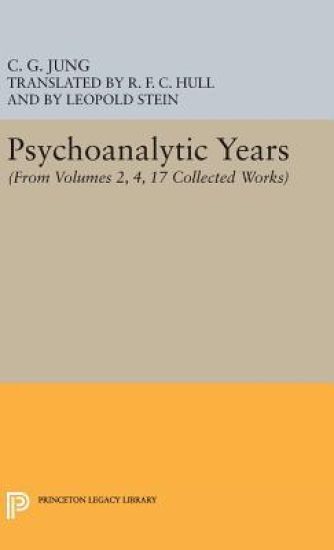
Psychoanalytic Years

Psychoanalytic Years

C. G. Jung

Princeton University Press
2016
sidottu
Between the years 1906 and 1912, Jung practiced as a psychoanalyst, and his association with Freud was very close. Though their personal relationship became strained after the publication of Jung's book, Wandlungen und Symbole der Libido (1911-12), Jung continued to serve as president of the International Psychoanalytic Association until 1914. The present volume covers the period of Jung's close and enthusiastic collaboration with Freud and includes one of Jung's famous studies in word association which demonstrates Freud's influence even before they were working together. Originally published in 1975. The Princeton Legacy Library uses the latest print-on-demand technology to again make available previously out-of-print books from the distinguished backlist of Princeton University Press. These editions preserve the original texts of these important books while presenting them in durable paperback and hardcover editions. The goal of the Princeton Legacy Library is to vastly increase access to the rich scholarly heritage found in the thousands of books published by Princeton University Press since its founding in 1905.
Psychology of Dementia Praecox

Psychology of Dementia Praecox

C. G. Jung

Princeton University Press
2016
sidottu
Jung began his career as a psychiatrist in 1900, when he was 25, as an assistant working under Dr. Eugen Bleuler at the Burgholzli Hospital in Zurich. In 1906, after he had become senior staff physician and before his first meeting with Freud in Vienna in 1907, Jung wrote his famous monograph "On the Psychology of Dementia Praecox." Ernest Jones described it as "a book that made history in psychiatry and extended many of Freud's ideas into the realm of the psychoses proper." A. A. Brill (whose introduction to his 1936 translation is included here) has called this work indispensable for every student of psychiatry--"the work which firmly established Jung as a pioneer and scientific contributor to psychiatry." Originally published in 1974. The Princeton Legacy Library uses the latest print-on-demand technology to again make available previously out-of-print books from the distinguished backlist of Princeton University Press. These editions preserve the original texts of these important books while presenting them in durable paperback and hardcover editions. The goal of the Princeton Legacy Library is to vastly increase access to the rich scholarly heritage found in the thousands of books published by Princeton University Press since its founding in 1905.
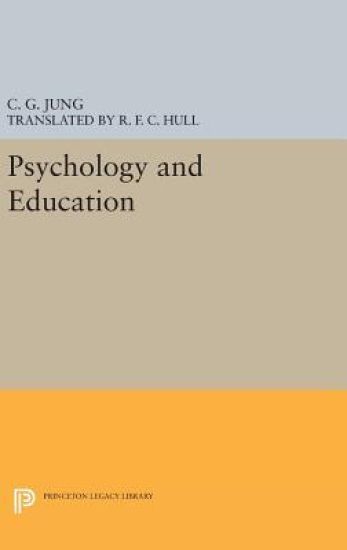
Psychology and Education

Psychology and Education

C. G. Jung

Princeton University Press
2016
sidottu
Extracted from The Development of the Personality, Vol. 17, Collected Works, Jung's early study "Psychic Conflicts in a Child" (1910) with later papers on child development and education including "The Gifted Child" (1946). Originally published in 1969. The Princeton Legacy Library uses the latest print-on-demand technology to again make available previously out-of-print books from the distinguished backlist of Princeton University Press. These editions preserve the original texts of these important books while presenting them in durable paperback and hardcover editions. The goal of the Princeton Legacy Library is to vastly increase access to the rich scholarly heritage found in the thousands of books published by Princeton University Press since its founding in 1905.