Kirjojen hintavertailu – 12 859 819 kirjaa ja 27 kauppaa

Kirjailija

C. G. Jung

Kirjat ja teokset yhdessä paikassa: 359 kirjaa, julkaisuja vuosilta 1954–2026, suosituimpiin kuuluu Kalojen aika. Vertaile teosten hintoja ja tarkista saatavuus suomalaisista kirjakaupoista.

Nimi esiintyy myös muodoissa: C.G. Jung, C G Jung, C.G Jung, C. G Jung

359 kirjaa

Kirjojen julkaisuvuodet: 1954–2026.

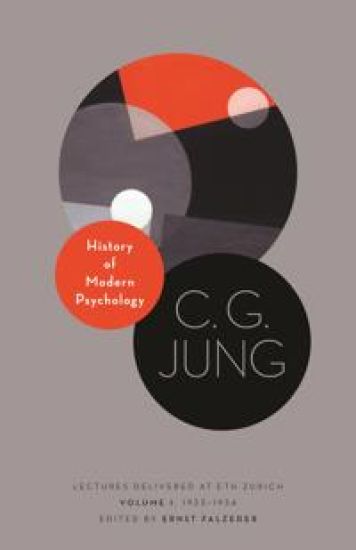
History of Modern Psychology

History of Modern Psychology

C. G. Jung; Ulrich Hoerni

Princeton University Press
2020
pokkari

Halvin toimitettuna 32,70 €

Jung’s lectures on the history of psychology—in English for the first timeBetween 1933 and 1941, C. G. Jung delivered a series of public lectures at the Swiss Federal Institute of Technology (ETH) in Zurich. Intended for a general audience, these lectures addressed a broad range of topics, from dream analysis to yoga and meditation. Here for the first time in English are Jung’s lectures on the history of modern psychology from the Enlightenment to his own time, delivered in the fall and winter of 1933–34. In these inaugural lectures, Jung emphasizes the development of concepts of the unconscious and offers a comparative study of movements in French, German, British, and American thought. He also gives detailed analyses of Justinus Kerner’s The Seeress of Prevorst and Théodore Flournoy’s From India to the Planet Mars. These lectures present the history of psychology from the perspective of one of the field’s most legendary figures. They provide a unique opportunity to encounter Jung speaking for specialists and nonspecialists alike and are the primary source for understanding his late work. Featuring cross-references to the Jung canon and explanations of concepts and terminology, History of Modern Psychology painstakingly reconstructs and translates these lectures from manuscripts, summaries, and recently recovered shorthand notes of attendees. It is the first volume of a series that will make the ETH lectures available in their entirety to English readers.

The Black Books

The Black Books

C. G. Jung

WW Norton Co
2020
sidottu
In 1913, C. G. Jung started a self-experiment that he called his “confrontation with the unconscious”: an engagement with his fantasies, which he charted in a series of notebooks referred to as The Black Books. The Red Book drew on material recorded therein to 1916 but Jung continued to write in them for decades. The Black Books shed light on the elaboration of Jung’s personal cosmology and his attempts to embody insights from his self-investigation into his life and relationships. Magnificently presented, featuring a revelatory essay by Sonu Shamdasani, and both translated and facsimile versions of each notebook, these "unmistakably Holy Books" (Times Literary Supplement) offer a unique portal into Jung’s mind and the origins of analytical psychology.
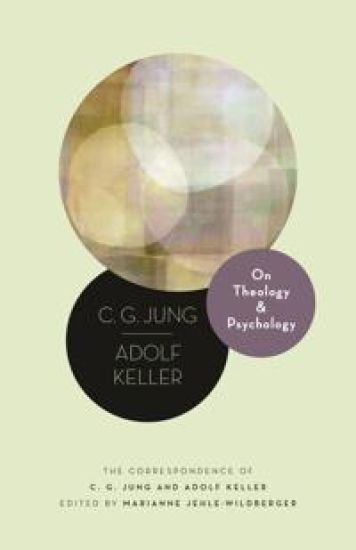
On Theology and Psychology

On Theology and Psychology

C. G. Jung; Adolf Keller

PRINCETON UNIVERSITY PRESS
2020
sidottu
Jung's correspondence with one of the twentieth century's leading theologians and ecumenicistsOn Theology and Psychology brings together C. G. Jung's correspondence with Adolf Keller, a celebrated Protestant theologian who was one of the pioneers of the modern ecumenical movement and one of the first religious leaders to become interested in analytical psychology. Their relationship spanned half a century, and for many years Keller was the only major religious leader to align himself with Jung and his ideas. Both men shared a lifelong engagement with questions of faith, and each grappled with God in his own distinctive way. Presented here in English for the first time are letters that provide a rare look at Jung in dialogue with a theologian. Spanning some fifty years, these letters reveal an extended intellectual and spiritual discourse between two very different men as they exchange views on the nature of the divine, the compatibility of Jungian psychology and Christianity, the interpretation of the Bible and figures such as Jesus and Job, and the phenomenon of National Socialism. Although Keller was powerfully attracted to Jung's ideas, his correspondence with the famed psychiatrist demonstrates that he avoided discipleship. Both men struggled with essential questions about human existence, spirituality, and well-being, and both sought common ground where the concerns of psychologists and theologians converge. Featuring an illuminating introduction by Marianne Jehle-Wildberger, On Theology and Psychology offers incomparable insights into the development of Jung's views on theology and religion, and a unique window into a spiritual and intellectual friendship unlike any other.
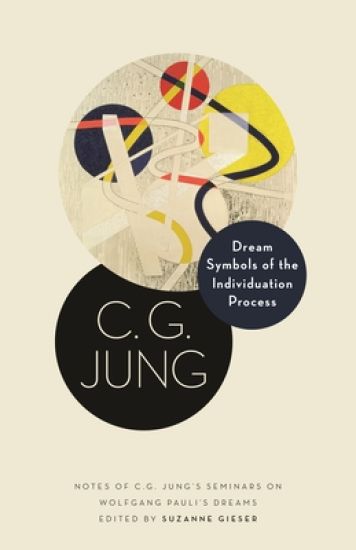
Dream Symbols of the Individuation Process

Dream Symbols of the Individuation Process

C. G. Jung

PRINCETON UNIVERSITY PRESS
2019
sidottu
Jung’s legendary American lectures on dream interpretationIn 1936 and 1937, C. G. Jung delivered two legendary seminars on dream interpretation, the first on Bailey Island, Maine, the second in New York City. Dream Symbols of the Individuation Process makes these lectures widely available for the first time, offering a compelling look at Jung as he presents his ideas candidly and in English before a rapt American audience. The dreams presented here are those of Nobel Prize–winning physicist Wolfgang Pauli, who turned to Jung for therapeutic help because of troubling personal events, emotional turmoil, and depression. Linking Pauli’s dreams to the healing wisdom found in many ages and cultures, Jung shows how the mandala—a universal archetype of wholeness—spontaneously emerges in the psyche of a modern man, and how this imagery reflects the healing process. He touches on a broad range of themes, including psychological types, mental illness, the individuation process, the principles of psychotherapeutic treatment, and the importance of the anima, shadow, and persona in masculine psychology. He also reflects on modern physics, the nature of reality, and the political currents of his time. Jung draws on examples from the Mithraic mysteries, Buddhism, Hinduism, Chinese philosophy, Kundalini yoga, and ancient Egyptian concepts of body and soul. He also discusses the symbolism of the Catholic Mass, the Trinity, and Gnostic ideas in the noncanonical Gospels. With an incisive introduction and annotations, Dream Symbols of the Individuation Process provides a rare window into Jung’s interpretation of dreams and the development of his psychology of religion.
History of Modern Psychology

History of Modern Psychology

C. G. Jung; Ulrich Hoerni

Princeton University Press
2018
sidottu
Jung’s lectures on the history of psychology—in English for the first timeBetween 1933 and 1941, C. G. Jung delivered a series of public lectures at the Swiss Federal Institute of Technology (ETH) in Zurich. Intended for a general audience, these lectures addressed a broad range of topics, from dream analysis to yoga and meditation. Here for the first time in English are Jung’s lectures on the history of modern psychology from the Enlightenment to his own time, delivered in the fall and winter of 1933–34. In these inaugural lectures, Jung emphasizes the development of concepts of the unconscious and offers a comparative study of movements in French, German, British, and American thought. He also gives detailed analyses of Justinus Kerner’s The Seeress of Prevorst and Théodore Flournoy’s From India to the Planet Mars. These lectures present the history of psychology from the perspective of one of the field’s most legendary figures. They provide a unique opportunity to encounter Jung speaking for specialists and nonspecialists alike and are the primary source for understanding his late work. Featuring cross-references to the Jung canon and explanations of concepts and terminology, History of Modern Psychology painstakingly reconstructs and translates these lectures from manuscripts, summaries, and recently recovered shorthand notes of attendees. It is the first volume of a series that will make the ETH lectures available in their entirety to English readers.

The Quotable Jung

The Quotable Jung

C. G. Jung

Princeton University Press
2018
pokkari
The definitive one-volume collection of Jung quotationsC. G. Jung (1875–1961) was a preeminent thinker of the modern era. In seeking to establish an interdisciplinary science of analytical psychology, he studied psychiatry, religion, mysticism, literature, physics, biology, education, and criminology. He introduced the concepts of extraversion and introversion, and terms such as complex, archetype, individuation, and the collective unconscious. He stressed the primacy of finding meaning in our lives. The Quotable Jung is the single most comprehensive collection of Jung quotations ever assembled. It is the essential introduction for anyone new to Jung and the Jungian tradition. It will also inspire those familiar with Jung to view him in an entirely new way. The Quotable Jung presents hundreds of the most representative selections from the vast array of Jung's books, essays, correspondence, lectures, seminars, and interviews, as well as the celebrated Red Book, in which Jung describes his own fearsome confrontation with the unconscious. Organized thematically, this collection covers such topics as the psyche, the symbolic life, dreams, the analytic process, good and evil, creativity, alchemical transformation, death and rebirth, the problem of the opposites, and more. The quotations are arranged so that the reader can follow the thread of Jung’s thought on these topics while gaining an invaluable perspective on his writings as a whole. Succinct and accessible, The Quotable Jung also features a preface by Judith Harris and a detailed chronology of Jung’s life and work. The single most comprehensive collection of Jung quotations ever assembledFeatures hundreds of quotesCovers such topics as the psyche, dreams, good and evil, death and rebirth, and moreIncludes a detailed chronology of Jung’s life and workServes as the ideal introduction to Jung and the Jungian tradition
Psychological Types: General Description of the Types

Psychological Types: General Description of the Types

C. G. Jung

Createspace Independent Publishing Platform
2018
nidottu
In the book Jung categorized people into primary types of psychological function. He proposed four main functions of consciousness: Two perceiving functions: Sensation and IntuitionTwo judging functions: Thinking and FeelingThe functions are modified by two main attitude types: extraversion and introversion. Jung theorized that the dominant function characterizes consciousness, while its opposite is repressed and characterizes unconscious behavior