Kirjojen hintavertailu – 12 859 819 kirjaa ja 27 kauppaa

Kirjailija

C. G. Jung

Kirjat ja teokset yhdessä paikassa: 359 kirjaa, julkaisuja vuosilta 1954–2026, suosituimpiin kuuluu Kalojen aika. Vertaile teosten hintoja ja tarkista saatavuus suomalaisista kirjakaupoista.

Nimi esiintyy myös muodoissa: C.G. Jung, C G Jung, C.G Jung, C. G Jung

359 kirjaa

Kirjojen julkaisuvuodet: 1954–2026.

Critique of Psychoanalysis

Critique of Psychoanalysis

C. G. Jung

Princeton University Press
2016
sidottu
Until 1912 the association of Jung and Freud was very close, and Jung was regarded as one of the leading practitioners of psychoanalysis. Subsequently, however, Jung began to differ with Freud, and his public criticism of psychoanalysis led to a formal rupture between them. The papers in this volume contain the essentials of that criticism, especially "The Theory of Psychoanalysis," a lecture series given at Fordham University in 1912. Two later papers--"Freud and Jung: Contrasts" and the introduction to a book by W. M. Kranefeldt--together form a basis for further study of Jung's reassessment of psychoanalysis. Originally published in 1976. The Princeton Legacy Library uses the latest print-on-demand technology to again make available previously out-of-print books from the distinguished backlist of Princeton University Press. These editions preserve the original texts of these important books while presenting them in durable paperback and hardcover editions. The goal of the Princeton Legacy Library is to vastly increase access to the rich scholarly heritage found in the thousands of books published by Princeton University Press since its founding in 1905.
Selected Letters of C.G. Jung, 1909-1961

Selected Letters of C.G. Jung, 1909-1961

C. G. Jung

Princeton University Press
2016
sidottu
This one-volume edition allows the general reader to appreciate Jung's ideas and personality, as they reveal themselves in his comments to his colleagues and to those who approached him with genuine problems of their own, as well as in his communication with personal friends. The correspondence supplies a variety of insights into the genesis of Jung's theories and a running commentary on their development. Originally published in 1984. The Princeton Legacy Library uses the latest print-on-demand technology to again make available previously out-of-print books from the distinguished backlist of Princeton University Press. These editions preserve the original texts of these important books while presenting them in durable paperback and hardcover editions. The goal of the Princeton Legacy Library is to vastly increase access to the rich scholarly heritage found in the thousands of books published by Princeton University Press since its founding in 1905.
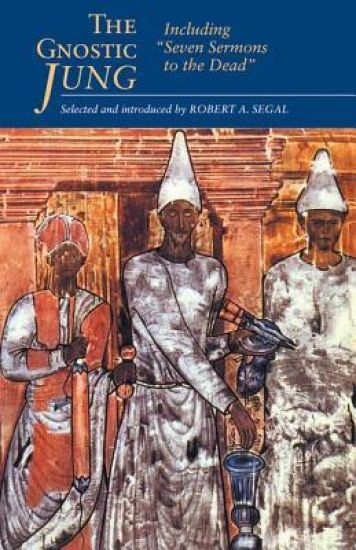
The Gnostic Jung

The Gnostic Jung

C.G. Jung

Routledge
2016
sidottu
Gnosticism was for C. G. jung the chief prefiguration of his analytical psychology. In this volume Robert Segal, an authority on theories of myth and Gnosticism, has searched the Jungian corpus for Jung's main discussions of this ancient form of spirituality. The progression in Gnosticism from sheer bodily existence to the release of the immaterial spark imprisoned in the body - and the reunion of that spark with the godhead - represents for Jung the psychological progression from ego consciousness to the ego's rediscovery of the unconscious, and the ego's integration with the unconscious to forge the self. Included in this volume are both Jung's sole work devoted entirely to Gnosticism, "Gnostic Symbols of the Self," and his own Gnostic myth, "Seven Sermons to the Dead." The book also contains key essays by Father Victor White and Gilles Quispel, whose "C. G. Jung und die Gnosis" is here translated for the first time. In his extensive introduction Segal discusses the parallel for Jung between ancient Gnostic and contemporary Jungian patients, the Jungian meaning of Gnostic myths and of the Seven Sermons, Jung's possible misinterpretation of Gnosticism, and the common characterization of Jung himself as a Gnostic.
Essays on Contemporary Events

Essays on Contemporary Events

C. G. Jung

Princeton University Press
2016
sidottu
A discussion of the psychological and philosophical implications of events in Germany during and immediately following the Nazi period. The essays--"The Fight with the Shadow," "Wotan," "Psychotherapy Today," "Psychotherapy and a Philosophy of Life," "After the Catastrophe," and an Epilogue--are extracted from Volumes 10 and 16. Originally published in 1989. The Princeton Legacy Library uses the latest print-on-demand technology to again make available previously out-of-print books from the distinguished backlist of Princeton University Press. These editions preserve the original texts of these important books while presenting them in durable paperback and hardcover editions. The goal of the Princeton Legacy Library is to vastly increase access to the rich scholarly heritage found in the thousands of books published by Princeton University Press since its founding in 1905.
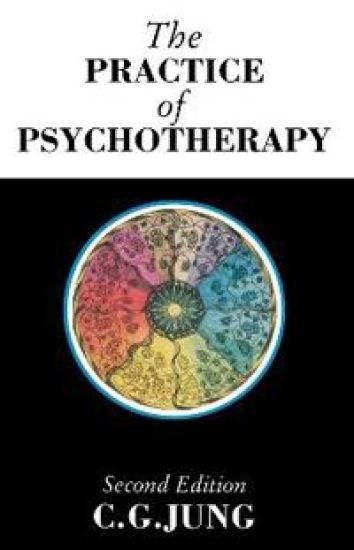
The Practice of Psychotherapy
The Practice of Psychotherapy brings together Jung's essays on general questions of analytic therapy and dream analysis. It also contains his profoundly interesting parallel between the transference phenomena and alchemical processes. The transference is illustrated and interpreted by means of a set of symbolic pictures, and the bond between psychotherapist and patient is shown to be a function of the kinship libido. Far from being pathological in its effects, kinship libido has an essential role to play in the work of individuation and in establishing an organic society based on the psychic connection of its members with one another and with their own roots.
Psychology and Education

Psychology and Education

C. G. Jung

Princeton University Press
2015
pokkari
Extracted from The Development of the Personality, Vol. 17, Collected Works, Jung's early study "Psychic Conflicts in a Child" (1910) with later papers on child development and education including "The Gifted Child" (1946). Originally published in 1969. The Princeton Legacy Library uses the latest print-on-demand technology to again make available previously out-of-print books from the distinguished backlist of Princeton University Press. These editions preserve the original texts of these important books while presenting them in durable paperback and hardcover editions. The goal of the Princeton Legacy Library is to vastly increase access to the rich scholarly heritage found in the thousands of books published by Princeton University Press since its founding in 1905.
The Spirit in Man, Art and Literature
The Spirit in Man, Art and Literature offers unique and penetrating insights into the lives and opinions of some of the most significant players in the cultural life of the twentieth century. Carl Gustav Jung was at the heart of that cultural life, pioneering, along with Freud, a new interpretation of what it meant to be human in the modern age. This volume reveals the full range of Jung's involvement in this process, from his famous analysis of 'Psychology and Literature' to his landmark texts on Joyce's Ulysses and Picasso's paintings. Jung writes of Freud from the perspective of one who was "permitted a deep glimpse into the mind of this remarkable man," and through the memories and opinions recorded in The Spirit in Man, Art and Literature, the reader is offered a similar privilege.
Aion

Aion

C.G. Jung

Routledge
2015
sidottu
Aion is one of a number of major works that Jung wrote during his seventies that were concerned with the relations between psychology, alchemy and religion. He is particularly concerned in this volume with the rise of Christianity and with the figure of Christ. He explores how Christianity came about when it did, the importance of the figure of Christ and the identification of the figure of Christ with the archetype of the Self. A matter of special importance to Jung in his seventies - the problem of opposites, particularly good and evil - is further discussed and the importance of the symbolism of the fish, which recurs as a symbol of both Christ and the devil, is examined. As a study of the archetype of the self, Aion complements The Archetypes and the Collective Unconscious, which is also published in paperback.
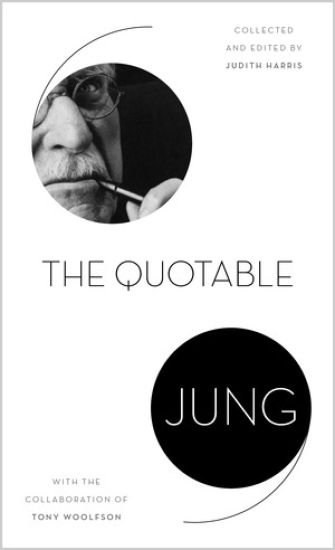
The Quotable Jung

The Quotable Jung

C. G. Jung

Princeton University Press
2015
sidottu
C. G. Jung (1875-1961) was a preeminent thinker of the modern era. In seeking to establish an interdisciplinary science of analytical psychology, he studied psychiatry, religion, mysticism, literature, physics, biology, education, and criminology. He introduced the concepts of extraversion and introversion, and terms such as complex, archetype, individuation, and the collective unconscious. He stressed the primacy of finding meaning in our lives. The Quotable Jung is the single most comprehensive collection of Jung quotations ever assembled. It is the essential introduction for anyone new to Jung and the Jungian tradition. It will also inspire those familiar with Jung to view him in an entirely new way. The Quotable Jung presents hundreds of the most representative selections from the vast array of Jung's books, essays, correspondence, lectures, seminars, and interviews, as well as the celebrated Red Book, in which Jung describes his own fearsome confrontation with the unconscious. Organized thematically, this collection covers such topics as the psyche, the symbolic life, dreams, the analytic process, good and evil, creativity, alchemical transformation, death and rebirth, the problem of the opposites, and more. The quotations are arranged so that the reader can follow the thread of Jung's thought on these topics while gaining an invaluable perspective on his writings as a whole. Succinct and accessible, The Quotable Jung also features a preface by Judith Harris and a detailed chronology of Jung's life and work. * The single most comprehensive collection of Jung quotations ever assembled* Features hundreds of quotes* Covers such topics as the psyche, dreams, good and evil, death and rebirth, and more* Includes a detailed chronology of Jung's life and work* Serves as the ideal introduction to Jung and the Jungian tradition
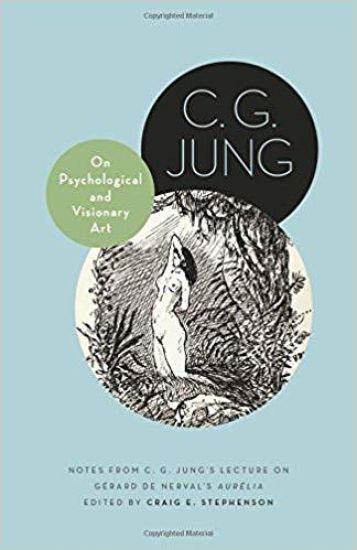
On Psychological and Visionary Art

On Psychological and Visionary Art

C. G. Jung

PRINCETON UNIVERSITY PRESS
2015
sidottu
In 1945, at the end of the Second World War and after a long illness, C. G. Jung delivered a lecture in Zurich on the French Romantic poet Gerard de Nerval. The lecture focused on Nerval's visionary memoir, Aurelia, which the poet wrote in an ambivalent attempt to emerge from madness. Published here for the first time, Jung's lecture is both a cautionary psychological tale and a validation of Nerval's visionary experience as a genuine encounter. Nerval explored the irrational with lucidity and exquisite craft. He privileged the subjective imagination as a way of fathoming the divine to reconnect with what the Romantics called the life principle. During the years of his greatest creativity, he suffered from madness and was institutionalized eight times. Contrasting an orthodox psychoanalytic interpretation with his own synthetic approach to the unconscious, Jung explains why Nerval was unable to make use of his visionary experiences in his own life. At the same time, Jung emphasizes the validity of Nerval's visions, differentiating the psychology of a work of art from the psychology of the artist. The lecture suggests how Jung's own experiments with active imagination influenced his reading of Nerval's Aurelia as a parallel text to his own Red Book. With Craig Stephenson's authoritative introduction, Richard Sieburth's award-winning translation of Aurelia, and Alfred Kubin's haunting illustrations to the text, and featuring Jung's reading marginalia, preliminary notes, and revisions to a 1942 lecture, On Psychological and Visionary Art documents the stages of Jung's creative process as he responds to an essential Romantic text.
Aspects of the Masculine

Aspects of the Masculine

C.G. Jung

Routledge
2015
sidottu
The concept of masculinity was crucial not only to Jung's revolutionary theories of the human psyche, but also to his own personal development. If, as Jung believed, "modern man is already so darkened that nothing beyond the light of his own intellect illuminates his world," then it is essential to show every man the limits of his understanding and how to overcome them. In Aspects of the Masculine Jung does this by revealing his most significant insights concerning the nature and motivations of masculinity, both conscious and unconscious, and explaining how this affects the development of the personality. Offering a unique perspective on the masculine, based upon both his personal and clinical experiences, Jung asks questions that remain as insistent as ever. He offers answers that--whether they surprise, shock or edify--challenge us to re-examine our contemporary understanding of masculinity.
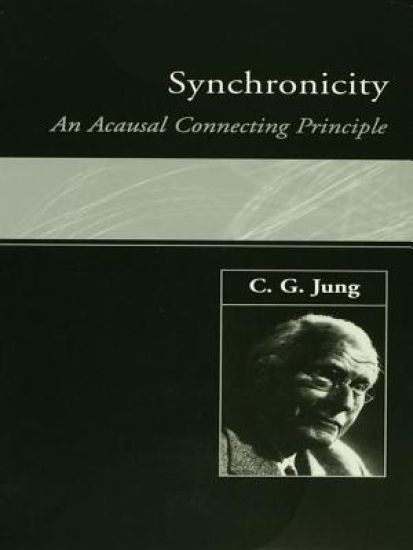
Synchronicity

Synchronicity

C. G. Jung

Routledge
2015
sidottu
To Jung, synchonicity is a meaningful coincidence in time, a psychic factor which is independant of space and time. This revolutionary concept of synchronicity both challenges and complements the physicist's classical view of casualty. It also forces is to a basic reconsideration of the meaning of chance, probability, coincidence and the singular events in our lives.
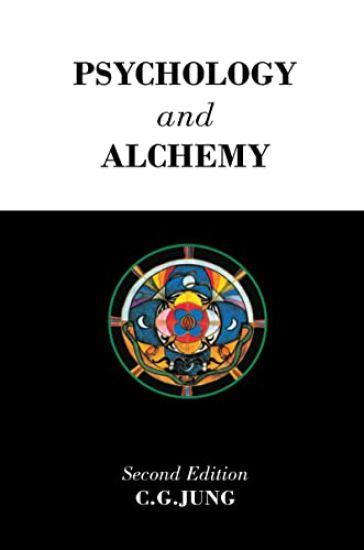
Psychology and Alchemy

Psychology and Alchemy

C. G. Jung

Routledge
2015
sidottu
Alchemy is central to Jung's hypothesis of the collective unconscious. In this volume he begins with an outline of the process and aims of psychotherapy, and then moves on to work out the analogies between alchemy, Christian dogma and symbolism and his own understanding of the analytic process. Introducing the basic concepts of alchemy, Jung reminds us of the dual nature of alchemy, comprising both the chemical process and a parallel mystical component. He also discusses the seemingly deliberate mystification of the alchemists. Finally, in using the alchemical process as providing insights into individuation, Jung emphasises the importance of alchemy in relating to us the transcendent nature of the psyche.
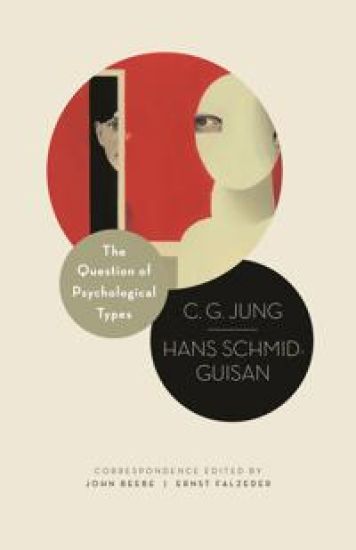
The Question of Psychological Types

The Question of Psychological Types

C. G. Jung; Hans Schmid-Guisan

Princeton University Press
2015
pokkari
In 1915, C. G. Jung and his psychiatrist colleague, Hans Schmid-Guisan, began a correspondence through which they hoped to codify fundamental individual differences of attention and consciousness. Their ambitious dialogue, focused on the opposition of extraversion and introversion, demonstrated the difficulty of reaching a shared awareness of differences even as it introduced concepts that would eventually enable Jung to create his landmark 1921 statement of the theory of psychological types. That theory, the basis of the widely used Myers-Briggs Type Indicator and similar personality assessment tools, continues to inform not only personality psychology but also such diverse fields as marriage and career counseling and human resource management. This correspondence reveals Jung fielding keen theoretical challenges from one of his most sensitive and perceptive colleagues, and provides a useful historical grounding for all those who work with, or are interested in, Jungian psychology and psychological typology.
Aspects of the Feminine

Aspects of the Feminine

C.G. Jung

Routledge
2015
sidottu
'Love is a force of destiny whose power reaches from heaven to hell.' So Jung advises while reflecting on 'The Love Problem of a Student', an essay contained in this volume. But it is not just love that Jung speaks of in this book. Taking as its theme Jung's interpretation of the feminine principle in his hugely influential theories about the inner world of the individual, it guides the reader from the mythological archetype of the mother-figure to the experience of women in twentieth-century Europe, explaining along the way concepts crucial to Jung's understanding of the personality, such as animus and anima. Many of his contentions have become the assumptions of the generations growing up in the twenty-first century. Aspects of the Feminine is a provocative, controversial book which offers readers the opportunity to discover at first hand just how radical Jung's arguments were.
Psychology and the Occult

Psychology and the Occult

C.G. Jung

Routledge
2015
sidottu
A fifteen-year-old girl who claimed regular communications with the spirits of her dead friends and relatives was the subject of the very first published work by the now legendary psychoanalyst C. G. Jung. Collected here, alongside many of his later writings on such subjects as life after death, telepathy and ghosts, it was to mark just the start of a professional and personal interest—even obsession—that was to last throughout Jung’s lifetime. Written by one of the greatest and most controversial thinkers of the twentieth century, Psychology and the Occult represents a fascinating trawl through both the dark, unknown world of the occult and the equally murky depths of the human psyche. Carl Gustav Jung (1875–1961). Founded the analytical school of psychology and developed a radical new theory of the unconscious that has made him one of the most familiar names in twentieth-century thought.
Psychology and the East

Psychology and the East

C.G. Jung

Routledge
2015
sidottu
'These writings of his are strongly alive; in most instances Jung does not present us with final solutions and last words about any of the great East-West problems, but rather with suggestions for a deeper kind of approach, thus opening up new planes of investigation.' - Journal of Analytical Psychology“My own world of European consciousness had become peculiarly thin… it is quite possible that India is the real world and that the white man lives in a madhouse of abstractions.” C. G. Jung was inspired to write these words after his very first visit to India. Long concerned with the hold that myth and archetype had on the human psyche, it was inevitable that the legendary psychoanalyst would turn his attention to Eastern modes of thought. Psychology and the East collects together many of Jung’s most memorable writings on the subject, including his Psychological commentaries on the I Ching and The Tibetan Book of the Dead, his thoughts on Buddhism and Islam and a full travelogue of that fateful first encounter with India in 1936.