Kirjojen hintavertailu – 12 903 725 kirjaa ja 27 kauppaa

Kirjailija

Cass R. Sunstein

Kirjat ja teokset yhdessä paikassa: 114 kirjaa, julkaisuja vuosilta 1993–2027, suosituimpiin kuuluu Ruido: Un Fallo En El Juicio Humano / Noise: A Flaw in Human Judgment. Vertaile teosten hintoja ja tarkista saatavuus suomalaisista kirjakaupoista.

Nimi esiintyy myös muodoissa: Cass R Sunstein

114 kirjaa

Kirjojen julkaisuvuodet: 1993–2027.

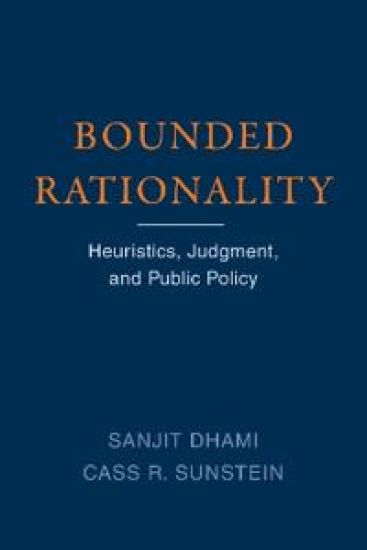
Bounded Rationality

Bounded Rationality

Sanjit Dhami; Cass R. Sunstein

MIT PRESS LTD
2022
nidottu
Two leaders in the field explore the foundations of bounded rationality and its effects on choices by individuals, firms, and the government. Bounded rationality recognizes that human behavior departs from the perfect rationality assumed by neoclassical economics. In this book, Sanjit Dhami and Cass R. Sunstein explore the foundations of bounded rationality and consider the implications of this approach for public policy and law, in particular for questions about choice, welfare, and freedom. The authors, both recognized as experts in the field, cover a wide range of empirical findings and assess theoretical work that attempts to explain those findings. Their presentation is comprehensive, coherent, and lucid, with even the most technical material explained accessibly. They not only offer observations and commentary on the existing literature but also explore new insights, ideas, and connections. After examining the traditional neoclassical framework, which they refer to as the Bayesian rationality approach (BRA), and its empirical issues, Dhami and Sunstein offer a detailed account of bounded rationality and how it can be incorporated into the social and behavioral sciences. They also discuss a set of models of heuristics-based choice and the philosophical foundations of behavioral economics. Finally, they examine libertarian paternalism and its strategies of "nudges."
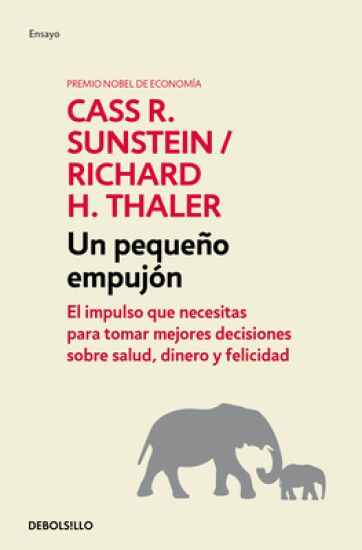
Nudge: Un Pequeño Empujón / The Final Decision

Nudge: Un Pequeño Empujón / The Final Decision

Richard H. Thaler; Cass R. Sunstein

Debolsillo
2022
nidottu
El impulso que necesitas para tomar mejores decisiones sobre salud, dinero y felicidad. Una nueva edici n imprescindible --revisada y actualizada de cabo a rabo-- de uno de los libros m s importantes de las ltimas dos d cadas, del premio Nobel Richard H. Thaler y Cass R. Sunstein Desde la publicaci n original de Nudge hace m s de una d cada, el t tulo ha entrado en el vocabulario de empresarios, legisladores, ciudadanos comprometidos y consumidores de todo el mundo. El libro ha dado lugar a m s de 400 "unidades de empuj n" en gobiernos de todo el mundo e innumerables grupos de cient ficos del comportamiento en cada parte de la econom a. Nos ha ense ado c mo usar una "arquitectura de elecci n" reflexiva, un concepto que inventaron los autores, para ayudarnos a tomar mejores decisiones para nosotros, nuestras familias y nuestra sociedad. Ahora, los autores han reescrito el libro de cabo a rabo, haciendo uso de sus experiencias dentro y fuera del gobierno durante los ltimos doce a os, as como una explosi n de nuevas investigaciones en numerosas disciplinas acad micas. Para comprometerse a nunca volver a emprender esta tarea abrumadora, la llaman la "edici n final". Ofrece una gran cantidad de nuevos conocimientos, tanto para sus fan ticos declarados como para los reci n llegados al campo, sobre una amplia variedad de problemas que enfrentamos en nuestra vida diaria: COVID-19, salud, finanzas personales, ahorros para la jubilaci n, deuda de tarjetas de cr dito, vivienda. hipotecas, atenci n m dica, donaci n de rganos, cambio clim tico y "lodo" (papeleo y otras molestias que no queremos y que nos impiden obtener lo que queremos), todo mientras respetamos una de las reglas cardinales de empujar: hacer es divertido ENGLISH DESCRIPTION Since the original publication of Nudge more than a decade ago, the title has entered the vocabulary of businesspeople, policy makers, engaged citizens, and consumers everywhere. The book has given rise to more than 400 "nudge units" in governments around the world and countless groups of behavioral scientists in every part of the economy. It has taught us how to use thoughtful "choice architecture"--a concept the authors invented--to help us make better decisions for ourselves, our families, and our society. Now, the authors have rewritten the book from cover to cover, making use of their experiences in and out of government over the past dozen years as well as an explosion of new research in numerous academic disciplines. To commit themselves to never undertaking this daunting task again, they are calling this the "final edition." It offers a wealth of new insights, for both its avowed fans and newcomers to the field, about a wide variety of issues that we face in our daily lives--COVID-19, health, personal finance, retirement savings, credit card debt, home mortgages, medical care, organ donation, climate change, and "sludge" (paperwork and other nuisances we don't want, and that keep us from getting what we do want)--all while honoring one of the cardinal rules of nudging: make it fun

Noise

Noise

Daniel Kahneman; Olivier Sibony; Cass R. Sunstein

William Collins
2022
nidottu

Halvin toimitettuna 19,90 €

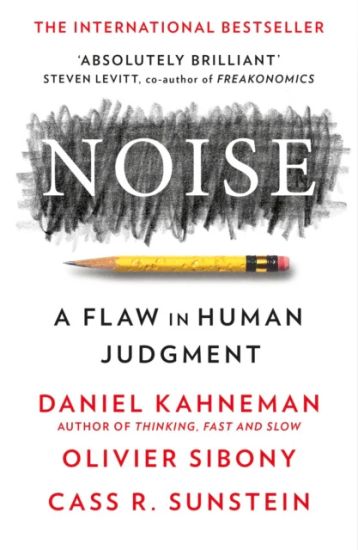
THE INTERNATIONAL BESTSELLER ‘A monumental, gripping book … Outstanding’ SUNDAY TIMES ‘Noise may be the most important book I've read in more than a decade. A genuinely new idea so exceedingly important you will immediately put it into practice. A masterpiece’ Angela Duckworth, author of Grit ‘An absolutely brilliant investigation of a massive societal problem that has been hiding in plain sight’ Steven Levitt, co-author of Freakonomics From the world-leaders in strategic thinking and the multi-million copy bestselling authors of Thinking Fast and Slow and Nudge, the next big book to change the way you think. We like to think we make decisions based on good reasoning – and that our doctors, judges, politicians, economic forecasters and employers do too. In this groundbreaking book, three world-leading behavioural scientists come together to assess the last great fault in our collective decision-making: noise. We all make bad judgements more than we think. Noise shows us what we can do to make better ones.
Noise

Noise

Daniel Kahneman; Olivier Sibony; Cass R. Sunstein

HARPERCOLLINS PUBLISHERS
2022
nidottu

Halvin toimitettuna 15,90 €

The Sunday Times bestseller'A monumental, gripping book ... Outstanding' Sunday Times Wherever there is human judgement, there is noise. 'Noise may be the most important book I've read in more than a decade. A genuinely new idea so exceedingly important you will immediately put it into practice. A masterpiece' Angela Duckworth, author of Grit 'An absolutely brilliant investigation of a massive societal problem that has been hiding in plain sight'Steven Levitt, co-author of Freakonomics From the world-leaders in strategic thinking and the multi-million copy bestselling authors of Thinking Fast and Slow and Nudge, the next big book to change the way you think. Imagine that two doctors in the same city give different diagnoses to identical patients - or that two judges in the same court give different sentences to people who have committed matching crimes. Now imagine that the same doctor and the same judge make different decisions depending on whether it is morning or afternoon, or Monday rather than Wednesday, or they haven't yet had lunch. These are examples of noise: variability in judgements that should be identical. In Noise, Daniel Kahneman, Olivier Sibony and Cass R. Sunstein show how noise produces errors in many fields, including in medicine, law, public health, economic forecasting, forensic science, child protection, creative strategy, performance review and hiring. And although noise can be found wherever people are making judgements and decisions, individuals and organizations alike commonly ignore its impact, at great cost. Packed with new ideas, and drawing on the same kind of sharp analysis and breadth of case study that made Thinking, Fast and Slow and Nudge international bestsellers, Noise explains how and why humans are so susceptible to noise and bias in decision-making. We all make bad judgements more than we think. With a few simple remedies, this groundbreaking book explores what we can do to make better ones.
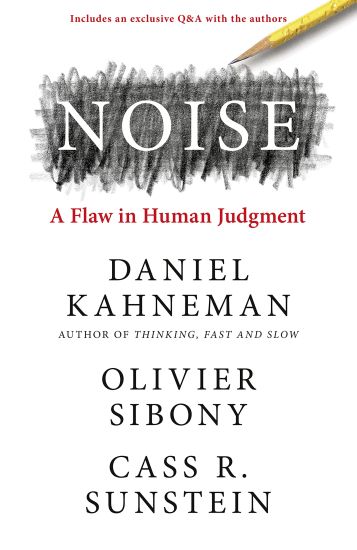
Noise: A Flaw in Human Judgment

Noise: A Flaw in Human Judgment

Daniel Kahneman; Olivier Sibony; Cass R. Sunstein

Little, Brown Spark
2022
nidottu

Halvin toimitettuna 26,20 €

NEW YORK TIMES BESTSELLER From the Nobel Prize-winning author of Thinking, Fast and Slow and the coauthor of Nudge, a revolutionary exploration of why people make bad judgments and how to make better ones--"a tour de force" (New York Times). Imagine that two doctors in the same city give different diagnoses to identical patients--or that two judges in the same courthouse give markedly different sentences to people who have committed the same crime. Suppose that different interviewers at the same firm make different decisions about indistinguishable job applicants--or that when a company is handling customer complaints, the resolution depends on who happens to answer the phone. Now imagine that the same doctor, the same judge, the same interviewer, or the same customer service agent makes different decisions depending on whether it is morning or afternoon, or Monday rather than Wednesday. These are examples of noise: variability in judgments that should be identical. In Noise, Daniel Kahneman, Olivier Sibony, and Cass R. Sunstein show the detrimental effects of noise in many fields, including medicine, law, economic forecasting, forensic science, bail, child protection, strategy, performance reviews, and personnel selection. Wherever there is judgment, there is noise. Yet, most of the time, individuals and organizations alike are unaware of it. They neglect noise. With a few simple remedies, people can reduce both noise and bias, and so make far better decisions. Packed with original ideas, and offering the same kinds of research-based insights that made Thinking, Fast and Slow and Nudge groundbreaking New York Times bestsellers, Noise explains how and why humans are so susceptible to noise in judgment--and what we can do about it.
Noise: A Flaw in Human Judgment

Noise: A Flaw in Human Judgment

Daniel Kahneman; Olivier Sibony; Cass R. Sunstein

Little, Brown Spark
2022
pokkari

Halvin toimitettuna 18,70 €

From the Nobel Prize-winning author of Thinking, Fast and Slow and the coauthor of Nudge, a revolutionary exploration of why people make bad judgments and how to make better ones--"a tour de force" (New York Times). Imagine that two doctors in the same city give different diagnoses to identical patients--or that two judges in the same courthouse give markedly different sentences to people who have committed the same crime. Suppose that different interviewers at the same firm make different decisions about indistinguishable job applicants--or that when a company is handling customer complaints, the resolution depends on who happens to answer the phone. Now imagine that the same doctor, the same judge, the same interviewer, or the same customer service agent makes different decisions depending on whether it is morning or afternoon, or Monday rather than Wednesday. These are examples of noise: variability in judgments that should be identical. In Noise, Daniel Kahneman, Olivier Sibony, and Cass R. Sunstein show the detrimental effects of noise in many fields, including medicine, law, economic forecasting, forensic science, bail, child protection, strategy, performance reviews, and personnel selection. Wherever there is judgment, there is noise. Yet, most of the time, individuals and organizations alike are unaware of it. They neglect noise. With a few simple remedies, people can reduce both noise and bias, and so make far better decisions. Packed with original ideas, and offering the same kinds of research-based insights that made Thinking, Fast and Slow and Nudge groundbreaking New York Times bestsellers, Noise explains how and why humans are so susceptible to noise in judgment--and what we can do about it.
Too Much Information

Too Much Information

Cass R. Sunstein

MIT PRESS LTD
2022
nidottu
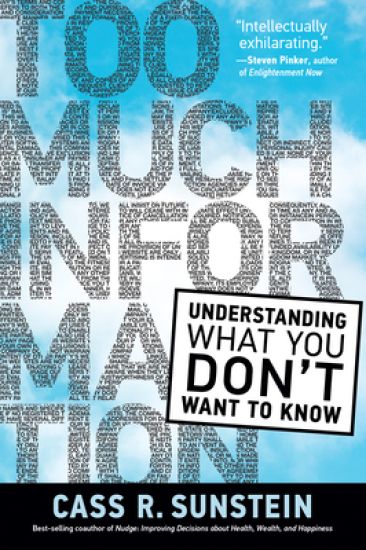
The bestselling author and recipient of the 2018 Holberg Prize, Cass R. Sunstein, explores how more information can make us happy or miserable, and why we sometimes avoid it--but sometimes seek it out. How much information is too much? Do we need to know how many calories are in the giant vat of popcorn that we bought on our way into the movie theater? Do we want to know if we are genetically predisposed to a certain disease? Can we do anything useful with next week's weather forecast for Paris if we are not in Paris? In Too Much Information, Cass Sunstein examines the effects of information on our lives. Policymakers emphasize "the right to know," but Sunstein takes a different perspective, arguing that the focus should be on human well-being and what information contributes to it. Government should require companies, employers, hospitals, and others to disclose information not because of a general "right to know" but when the information in question would significantly improve people's lives. Sunstein argues that the information on warnings and mandatory labels is often confusing or irrelevant, yielding no benefit. He finds that people avoid information if they think it will make them sad (and seek information they think will make them happy). Our information avoidance and information seeking is notably heterogeneous--some of us do want to know the popcorn calorie count, others do not. Of course, says Sunstein, we are better off with stop signs, warnings on prescription drugs, and reminders about payment due dates. But sometimes less is more. What we need is more clarity about what information is actually doing or achieving.
Administrative Law and Regulatory Policy: Problems, Text, and Cases [Connected eBook with Study Center]

Administrative Law and Regulatory Policy: Problems, Text, and Cases [Connected eBook with Study Center]

Stephen G. Breyer; Richard B. Stewart; Cass R. Sunstein

Aspen Publishing
2022
sidottu
Buy a new version of this textbook and receive access to the Connected eBook with Study Center on Casebook Connect, including lifetime access to the online ebook with highlight, annotation, and search capabilities. Access also includes practice questions, an outline tool, and other helpful resources. Connected eBooks provide what you need most to be successful in your law school classes. The ninth edition of this classic casebook Administrative Law and Regulatory Policy: Problems, Text, and Cases is streamlined and updated while retaining the previous editions' rigor, comprehensiveness, and contextual approach. Outstanding authorship, rich and varied materials, and comprehensive coverage remain the hallmarks of the ninth edition of the acclaimed Administrative Law and Regulatory Policy: Problems, Text, and Cases. Administrative procedure is examined in the context of substantive policy debates regarding regulation in a wide range of areas. Extensive notes, questions, and problems support thoughtful reading and analysis. The presentation acknowledges complexity and contradictions in the material while still providing explanations and guideposts along the way. Problems interspersed throughout provide an opportunity to explore the doctrine in more depth and test one's understanding of it. New to the Ninth Edition: A thorough updating of cases, notes, and questions A more streamlined and user-friendly presentation. Despite significant additions, the 9th edition is shorter than the 8th. Inclusion of important recent judicial decisions, including Gundy v. United States, 139 S. Ct. 2116 (2019) (nondelegation) Lucia v. SEC, 138 S. Ct. 2044 (2018) (officers of the U. S.) Seila Law LLC v. CFPB, 140 S. Ct. 2183 (2020) (president's removal authority) Oil States Energy Services, LLC v. Greene's Energy Group, LLC, 138 S. Ct. 1365 (2018) (agency adjudication) Kisor v. Wilkie, 139 S. Ct. 2400 (2019) (deference to an agency's interpretation of its own regulation) DHS v. Regents of the University of California, 140 S. Ct. 1891 (2020) (DACA rescission) Department of Commerce v. State of New York, 139 S. Ct. 2551 (2019) (pretextual justifications and arbitrary and capricious review) Little Sisters of the Poor v. Pennsylvania, 140 S. Ct. 2367 (2020) (interim final rulemaking) Professors and students will benefit from: Thorough coverage of the processes of agency rulemaking and adjudication Illuminating discussion of doctrines that may be on the cusp of major change, including Chevron deference, Auer deference, and the nondelegation doctrine Attention to the underlying justifications for, and possible criticisms of, the regulatory initiatives that are the subject of the cases studied. Extensive notes and questions that both explain and challenge A completely new website that provides Additional materials for possible assignment (including an introductory case study and materials on enforcement) Illustrative agency documents (rulemaking preambles, an administrative complaint, FOIA requests and denials, etc.) Extensive links to material on the web, including on agency websites, that provide examples of or help students situate the topics in the casebook Photographs of people, places, and things that are the subject of the cases in the book Updates on new decisions, statutes, and regulatory initiatives
Liberties Journal of Culture and Politics

Liberties Journal of Culture and Politics

Mamtimin Ala; Richard Thompson Ford; Jaroslaw Anders; Sean Wilentz; Ange Mlinko; Benjamin Moser; Jonathan Zimmerman; Leonard Cohen; Cass R. Sunstein; Mark Lilla; Helen Vendler; Holly Brewer; Shaul Tchernikhovsky; David Thomson

Liberties Journal Foundation
2021
pokkari
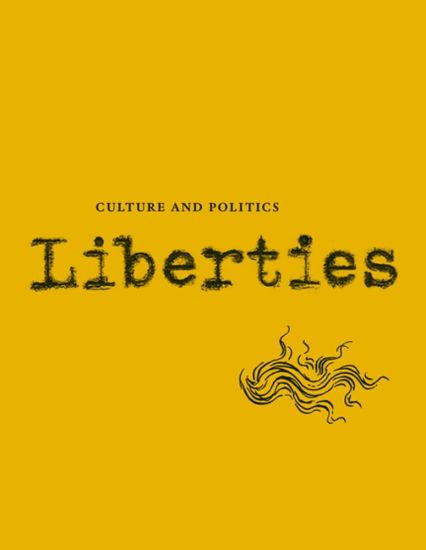
“A Meteor of Intelligent Substance”“Something was Missing in our Culture, and Here It Is”"Liberties is THE place to be. Change starts in the mind." Liberties, a journal of Culture and Politics, is essential reading for those engaged in the cultural and political issues and causes of our time. Liberties features serious, independent, stylish, and controversial essays by significant writers and leaders throughout the world; new poetry; and, introduces the next generation of writers and voices to inspire and impact the intellectual and creative lifeblood of today’s culture and politics. This issue of Liberties includes: new work from Nobel Prize winner Mario Vargas Llosa; drawings by Leonard Cohen published for the first time; Mamtimin Ala’s essay on China’s genocide of the Uyghurs; Jaroslaw Anders’ analysis of the crisis in Belarus; Cass R. Sunstein on liberalism inebriated; Richard Thompson Ford on what slavery does and does not explain; Sean Wilentz on the historical strategy of the Republican Party; Benjamin Moser writes about translation as a form of tourism in literary life; Jonathan Zimmerman on the scandal of college teaching; Mark Lilla on cults of innocence and their victims; Helen Vendler on Adrienne Rich; Holly Brewer on race and enlightenment; David Thomson asks, What shall we watch now?; Celeste Marcus (managing editor) on the legend of Alice Neel; Leon Wieseltier (editor) on Zionism’s beautiful stubbornness of survival; and new poetry from Ange Mlinko and Shaul Tchernikhovsky, translated by Robert Alter.
Ruido: Un Fallo En El Juicio Humano / Noise: A Flaw in Human Judgment

Ruido: Un Fallo En El Juicio Humano / Noise: A Flaw in Human Judgment

Daniel Kahneman; Olivier Sibony; Cass R. Sunstein

Debate
2021
sidottu
PARA ENTENDER C MO PENSAMOS Y PENSAR MEJOR, HAY QUE LEER A KAHNEMAN. --Premio Nobel de Econom a Dos m dicos en la misma ciudad pueden dar diagn sticos diferentes a pacientes id nticos; dos jueces pueden dictar sentencias distintas ante delitos similares; nosotros mismos podemos decidir una cosa u otra seg n sea por la ma ana o por la tarde, o seg n se acerque o no la hora de comer. Estos son ejemplos de ruido: el sesgo que conlleva variabilidad en juicios que deber an ser iguales. El ruido est presente en todas las decisiones individuales y colectivas, y produce errores en innumerables terrenos, desde la medicina hasta la econom a, pasando por el derecho, la sanidad, la protecci n infantil y la contrataci n. Adem s, tambi n nos importuna e influye a la hora de tomar muchas de nuestras decisiones cotidianas. Daniel Kahneman, uno de los psic logos m s importantes del mundo, junto con Cass R. Sunstein y Olivier Sibony, dos eminencias mundiales en pensamiento estrat gico, nos ense an a escuchar ese ruido, cuyo impacto tendemos a ignorar, y a reducirlo para mejorar nuestros juicios. Basado en el mismo tipo de an lisis agudo e ingeniosos ejemplos que convirti Pensar r pido, pensar despacio en un best seller internacional, Ruido ofrece una serie de remedios originales, pr cticos y sencillos para pensar mejor. ENGLISH DESCRIPTION From the Nobel Prize-winning author of Thinking, Fast and Slow and the coauthor of Nudge, a revolutionary exploration of why people make bad judgments and how to make better ones--"a tour de force" (New York Times). Imagine that two doctors in the same city give different diagnoses to identical patients--or that two judges in the same courthouse give markedly different sentences to people who have committed the same crime. Suppose that different interviewers at the same firm make different decisions about indistinguishable job applicants--or that when a company is handling customer complaints, the resolution depends on who happens to answer the phone. Now imagine that the same doctor, the same judge, the same interviewer, or the same customer service agent makes different decisions depending on whether it is morning or afternoon, or Monday rather than Wednesday. These are examples of noise: variability in judgments that should be identical. In Noise, Daniel Kahneman, Olivier Sibony, and Cass R. Sunstein show the detrimental effects of noise in many fields, including medicine, law, economic forecasting, forensic science, bail, child protection, strategy, performance reviews, and personnel selection. Wherever there is judgment, there is noise. Yet, most of the time, individuals and organizations alike are unaware of it. They neglect noise. With a few simple remedies, people can reduce both noise and bias, and so make far better decisions. Packed with original ideas, and offering the same kinds of research-based insights that made Thinking, Fast and Slow and Nudge groundbreaking New York Times bestsellers, Noise explains how and why humans are so susceptible to noise in judgment--and what we can do about it.
Sludge

Sludge

Cass R. Sunstein

MIT Press
2021
sidottu
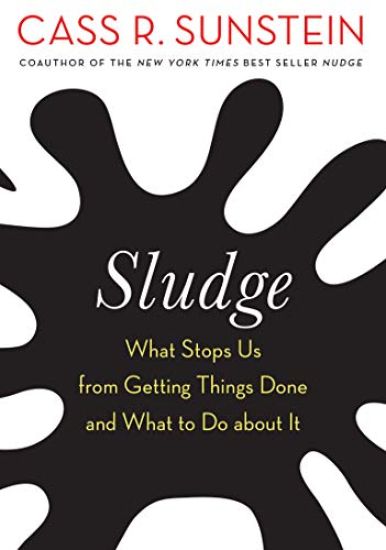
How we became so burdened by red tape and unnecessary paperwork, and why we must do better. We've all had to fight our way through administrative sludge--filling out complicated online forms, mailing in paperwork, standing in line at the motor vehicle registry. This kind of red tape is a nuisance, but, as Cass Sunstein shows in Sludge, it can also also impair health, reduce growth, entrench poverty, and exacerbate inequality. Confronted by sludge, people just give up--and lose a promised outcome: a visa, a job, a permit, an educational opportunity, necessary medical help. In this lively and entertaining look at the terribleness of sludge, Sunstein explains what we can do to reduce it. Because of sludge, Sunstein, explains, too many people don't receive benefits to which they are entitled. Sludge even prevents many people from exercising their constitutional rights--when, for example, barriers to voting in an election are too high. (A Sludge Reduction Act would be a Voting Rights Act.) Sunstein takes readers on a tour of the not-so-wonderful world of sludge, describes justifications for certain kinds of sludge, and proposes Sludge Audits as a way to measure the effects of sludge. On balance, Sunstein argues, sludge infringes on human dignity, making people feel that their time and even their lives don't matter. We must do better.
Nudge

Nudge

Richard H. Thaler; Cass R. Sunstein

Yale University Press
2021
sidottu

Halvin toimitettuna 34,60 €

An updated and refreshed edition of the groundbreaking book that shows how people can be nudged toward decisions that will improve their lives “If you’ve read Nudge and think you fully grasp the concept and its uses, you are mistaken. The new edition significantly deepened my understanding of what nudges are and how they can be employed. It truly is a must-read.”-Robert Cialdini, New York Times bestselling author of Influence “Few books can be said to have changed the world, but Nudge did. The Final Edition is marvelous: funny, useful, and wise.”-Daniel Kahneman, #1 New York Times bestselling author of Thinking, Fast and Slow Since the original publication of Nudge more than a decade ago, the word “nudge” has entered the vocabulary of businesspeople, policymakers, engaged citizens, and consumers everywhere. The book has given rise to more than 200 “nudge units” in governments around the world and countless groups of behavioral scientists in every part of the economy. It has taught us how to use thoughtful “choice architecture”—a concept the authors invented—to help us make better decisions for ourselves, our families, and our society. Now, the authors have rewritten the book from cover to cover, making use of their experiences in and out of government over the past dozen years as well as the explosion of new research in numerous academic disciplines. It offers a wealth of new insights, for both its avowed fans and newcomers to the field, about a wide variety of issues that we face in our daily lives—COVID-19, health, personal finance, retirement savings, credit card debt, home mortgages, medical care, organ donation, climate change, and “sludge” (paperwork and other nuisances that we don’t want and keep us from getting what we do want)—all while honoring one of the cardinal rules of nudging: make it fun!
Støy; når dømmekraften svikter

Støy; når dømmekraften svikter

Daniel Kahneman; Olivier Sibony; Cass R. Sunstein

Pax
2021
sidottu
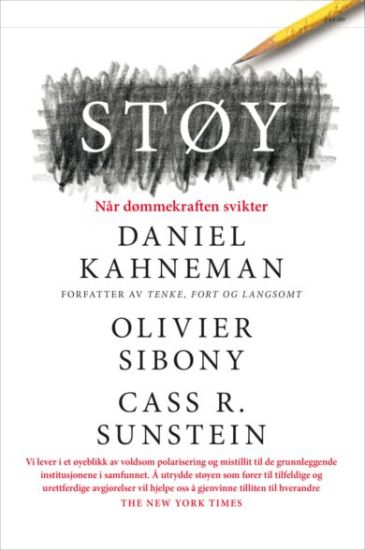
Se for deg at to leger i samme by gir totalt ulike diagnoser til identiske pasienter - eller at to dommere ved samme domstol idømmer helt ulike straffer til folk som har begått nøyaktig samme type kriminalitet. Sett at når et selskap behandler klager fra kundene, avhenger utfallet av hvilken kundebehandler som får jobben. Forestill deg videre at den samme legen, den samme dommeren eller kundebehandleren kommer til ulike resultater avhengig av om det er før eller etter lunsj, eller mandag fremfor fredag. Dette er eksempler på «støy»: variabilitet i avgjørelser som burde vært identiske. Våre vurderinger, og det inkluderer de såkalte ekspertenes, er mye mer preget av tilfeldigheter enn vi er klar over. Men både enkeltmennesker og organisasjoner er som regel helt uvitende om i hvor stor grad tilfeldighetene herjer. I hvilken grad folk vil motsi sine egne tidligere avgjørelser når de presenteres for samme problemstilling på nytt, er en indikator på mengden støy. Fenomenet reduserer kvaliteten på vurderinger og beslutninger over alt, i næringslivet, i privatlivet og i samfunnet for øvrig. Denne boken presenterer systemer for å måle støy. Det viser seg dessverre at det ikke blir mindre støy av at beslutningstakerne er erfarne. En mulig løsning er i større grad å erstatte menneskelig vurdering med algoritmer, men også andre effektive metoder finnes - når man først har blitt klar over problemet.
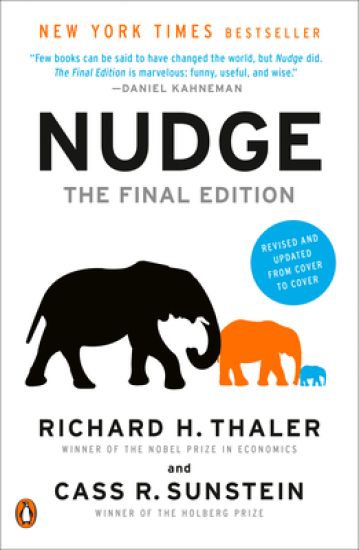
Nudge: The Final Edition

Nudge: The Final Edition

Richard H. Thaler; Cass R. Sunstein

PENGUIN BOOKS
2021
nidottu

Halvin toimitettuna 22,20 €

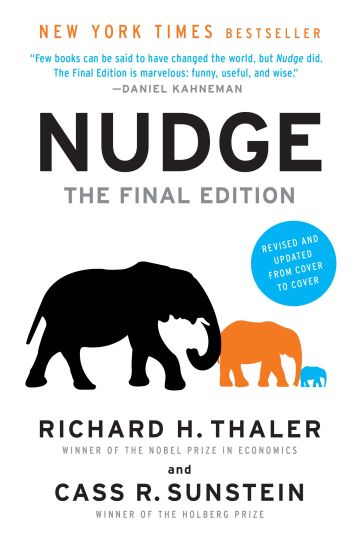
*Once again a New York Times bestseller First the original edition, and now the new Final Edition* An essential new edition―revised and updated from cover to cover―of one of the most important books of the last two decades, by Nobel Prize winner Richard H. Thaler and Cass R. Sunstein More than 2 million copies sold Since the original publication of Nudge more than a decade ago, the title has entered the vocabulary of businesspeople, policy makers, engaged citizens, and consumers everywhere. The book has given rise to more than 400 "nudge units" in governments around the world and countless groups of behavioral scientists in every part of the economy. It has taught us how to use thoughtful "choice architecture"--a concept the authors invented--to help us make better decisions for ourselves, our families, and our society. Now, the authors have rewritten the book from cover to cover, making use of their experiences in and out of government over the past dozen years as well as an explosion of new research in numerous academic disciplines. To commit themselves to never undertaking this daunting task again, they are calling this the "final edition." It offers a wealth of new insights, for both its avowed fans and newcomers to the field, about a wide variety of issues that we face in our daily lives--COVID-19, health, personal finance, retirement savings, credit card debt, home mortgages, medical care, organ donation, climate change, and "sludge" (paperwork and other nuisances we don't want, and that keep us from getting what we do want)--all while honoring one of the cardinal rules of nudging: make it fun
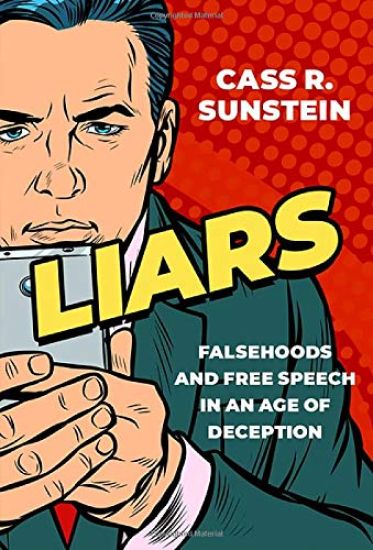
Liars

Liars

Cass R. Sunstein

Oxford University Press Inc
2021
sidottu
A powerful analysis of why lies and falsehoods spread so rapidly now, and how we can reform our laws and policies regarding speech to alleviate the problem. Lying has been with us from time immemorial. Yet today is different-and in many respects worse. All over the world, people are circulating damaging lies, and these falsehoods are amplified as never before through powerful social media platforms that reach billions. Liars are saying that COVID-19 is a hoax. They are claiming that vaccines cause autism. They are lying about public officials and about people who aspire to high office. They are lying about their friends and neighbors. They are trying to sell products on the basis of untruths. Unfriendly governments, including Russia, are circulating lies in order to destabilize other nations, including the United Kingdom and the United States. In the face of those problems, the renowned legal scholar Cass Sunstein probes the fundamental question of how we can deter lies while also protecting freedom of speech. To be sure, we cannot eliminate lying, nor should we try to do so. Sunstein shows why free societies must generally allow falsehoods and lies, which cannot and should not be excised from democratic debate. A main reason is that we cannot trust governments to make unbiased judgments about what counts as "fake news." However, governments should have the power to regulate specific kinds of falsehoods: those that genuinely endanger health, safety, and the capacity of the public to govern itself. Sunstein also suggests that private institutions, such as Facebook and Twitter, have a great deal of room to stop the spread of falsehoods, and they should be exercising their authority far more than they are now doing. As Sunstein contends, we are allowing far too many lies, including those that both threaten public health and undermine the foundations of democracy itself.
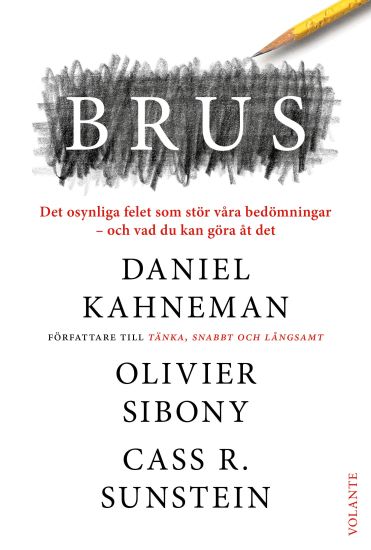
Brus : det osynliga felet som stör våra bedömningar - och vad du kan göra åt det

Brus : det osynliga felet som stör våra bedömningar - och vad du kan göra åt det

Daniel Kahneman; Cass R. Sunstein; Olivier Sibony

Volante
2021
sidottu
VARJE GÅNG DU GÖR EN BEDÖMNING ELLER FATTAR ETT BESLUT, PÅVERKAS DU AV BRUSET. Nobelprisbelönade Daniel Kahneman, en av världens främsta tänkare, är tillbaka med ett nytt storverk Brus (på engelska Noise) om hur vår hjärna och beslutsförmåga fungerar. Vilka är faktorerna som stör och hur kan vi minimera dem? Daniel Kahnemans forskning har haft stort inflytande inom en rad olika områden från ekonomi och psykologi till medicin och politik. Sin nya bok har han skrivit tillsammans med Olivier Sibony och Cass R. Sunstein, medförfattare till Nudge ihop med Richard Thaler. Brus bygger på lika omsorgsfull och djuplodande forskning som gjorde Tänka, snabbt och långsamt till en bästsäljare över hela världen. I en perfekt värld skulle samtliga skott träffa mitt i prick. På samma sätt skulle inga bedömningar störas av oönskade och felaktiga skillnader. Men i stället påverkas vi av ett osynligt problem: brus. Slumpmässiga störningar i mänskligt tänkande som orsakar felbedömningar på många områden: medicinska diagnoser, rättsliga påföljder, ekonomiska och finansiella prognoser, politiska beslut och strategiska vägval för företag. Effekterna kan ibland bli chockerande stora för både individer och organisationer. Till enorma kostnader. Vi gör dåliga bedömningar oftare än vad vi tror. Den här banbrytande boken visar vad vi kan göra åt det, med några enkla verktyg och regler. Boken avslutas med konkreta och specifika förslag på analyser, checklistor och justeringar som hjälper oss att göra bättre bedömningar. »Brus är nog den viktigaste boken jag har läst de senaste tio åren. Ett genuint nytt sätt att tänka av sådan dignitet att du får lust att omsätta det i praktiken med en gång.« Angela Duckworth, författare till Grit. »I Brus applicerar författarna skarpsinnigt sina unika och nya insikter om felen i våra bedömningar på de mest skilda områden En mästerlig bedrift och ett landmärke på psykologins område.« Philip E. Tetlock, medförfattare till Superforecasting »Spänn fast dig och låt några av världens skarpaste hjärnor förklara hur du kan bedöma människor, fatta beslut och lösa problem på ett nytt sätt.« Adam Grant, författare till Think again »Brus är en fullkomligt lysande redogörelse för ett jättelikt samhällsproblem som vi förbisett trots att det legat i öppen dager.« Steven Levitt, medförfattare till Freakonomics »Kahneman, Sibony och Sunstein har upptäckt ett problem stort som en elefant: brus. I den här viktiga boken visar de varför brus måste tas på allvar, varför det finns mer av det än vi tror och hur det kan minskas. Om vi följde deras råd skulle vi få lönsammare företag, friskare befolkning, rättvisare domar och lyckligare liv.« Jonathan Haidt, författare till The righteous mind
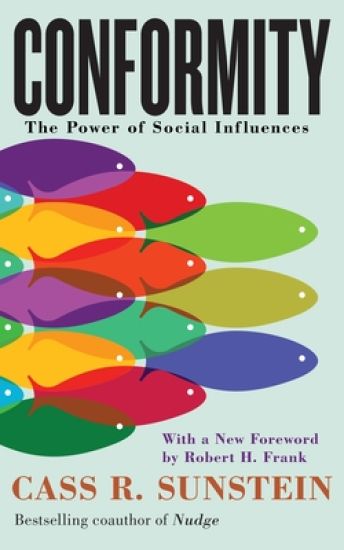
Conformity

Conformity

Cass R. Sunstein; Robert H. Frank

New York University Press
2021
pokkari

Halvin toimitettuna 21,80 €

Bestselling author Cass R. Sunstein reveals the appeal and the danger of conformity We live in an era of tribalism, polarization, and intense social division—separating people along lines of religion, political conviction, race, ethnicity, and sometimes gender. How did this happen? In Conformity, Cass R. Sunstein argues that the key to making sense of living in this fractured world lies in understanding the idea of conformity—what it is and how it works—as well as the countervailing force of dissent. An understanding of conformity sheds new light on many issues confronting us today: the role of social media, the rise of fake news, the growth of authoritarianism, the success of Donald Trump, the functions of free speech, debates over immigration and the Supreme Court, and much more. Lacking information of our own and seeking the good opinion of others, we often follow the crowd, but Sunstein shows that when individuals suppress their own instincts about what is true and what is right, it can lead to significant social harm. While dissenters tend to be seen as selfish individualists, dissent is actually an important means of correcting the natural human tendency toward conformity and has enormous social benefits in reducing extremism, encouraging critical thinking, and protecting freedom itself. Sunstein concludes that while much of the time it is in the individual’s interest to follow the crowd, it is in the social interest for individuals to say and do what they think is best. A well-functioning democracy depends on it.
Noise

Noise

Daniel Kahneman; Olivier Sibony; Cass R. Sunstein

HARPERCOLLINS PUBLISHERS
2021
nidottu
The Sunday Times bestseller'A monumental, gripping book ... Outstanding' Sunday TimesWherever there is human judgement, there is noise.
Noise: A Flaw in Human Judgment

Noise: A Flaw in Human Judgment

Daniel Kahneman; Olivier Sibony; Cass R. Sunstein

Little, Brown Spark
2021
sidottu

Halvin toimitettuna 30,40 €

NEW YORK TIMES BESTSELLER From the Nobel Prize-winning author of Thinking, Fast and Slow and the coauthor of Nudge, a revolutionary exploration of why people make bad judgments and how to make better ones--"a tour de force" (New York Times). Imagine that two doctors in the same city give different diagnoses to identical patients--or that two judges in the same courthouse give markedly different sentences to people who have committed the same crime. Suppose that different interviewers at the same firm make different decisions about indistinguishable job applicants--or that when a company is handling customer complaints, the resolution depends on who happens to answer the phone. Now imagine that the same doctor, the same judge, the same interviewer, or the same customer service agent makes different decisions depending on whether it is morning or afternoon, or Monday rather than Wednesday. These are examples of noise: variability in judgments that should be identical. In Noise, Daniel Kahneman, Olivier Sibony, and Cass R. Sunstein show the detrimental effects of noise in many fields, including medicine, law, economic forecasting, forensic science, bail, child protection, strategy, performance reviews, and personnel selection. Wherever there is judgment, there is noise. Yet, most of the time, individuals and organizations alike are unaware of it. They neglect noise. With a few simple remedies, people can reduce both noise and bias, and so make far better decisions. Packed with original ideas, and offering the same kinds of research-based insights that made Thinking, Fast and Slow and Nudge groundbreaking New York Times bestsellers, Noise explains how and why humans are so susceptible to noise in judgment--and what we can do about it.
Noise: A Flaw in Human Judgment

Noise: A Flaw in Human Judgment

Daniel Kahneman; Olivier Sibony; Cass R. Sunstein

Little, Brown Spark
2021
sidottu

Halvin toimitettuna 28,70 €

NEW YORK TIMES BESTSELLER From the Nobel Prize-winning author of Thinking, Fast and Slow and the coauthor of Nudge, a revolutionary exploration of why people make bad judgments and how to make better ones--"a tour de force" (New York Times). Imagine that two doctors in the same city give different diagnoses to identical patients--or that two judges in the same courthouse give markedly different sentences to people who have committed the same crime. Suppose that different interviewers at the same firm make different decisions about indistinguishable job applicants--or that when a company is handling customer complaints, the resolution depends on who happens to answer the phone. Now imagine that the same doctor, the same judge, the same interviewer, or the same customer service agent makes different decisions depending on whether it is morning or afternoon, or Monday rather than Wednesday. These are examples of noise: variability in judgments that should be identical. In Noise, Daniel Kahneman, Olivier Sibony, and Cass R. Sunstein show the detrimental effects of noise in many fields, including medicine, law, economic forecasting, forensic science, bail, child protection, strategy, performance reviews, and personnel selection. Wherever there is judgment, there is noise. Yet, most of the time, individuals and organizations alike are unaware of it. They neglect noise. With a few simple remedies, people can reduce both noise and bias, and so make far better decisions. Packed with original ideas, and offering the same kinds of research-based insights that made Thinking, Fast and Slow and Nudge groundbreaking New York Times bestsellers, Noise explains how and why humans are so susceptible to noise in judgment--and what we can do about it.