
Kirjailija
Charles A Eastman
Kirjat ja teokset yhdessä paikassa: 126 kirjaa, julkaisuja vuosilta 1977–2026, suosituimpiin kuuluu The Charles A. Eastman Collection. Vertaile teosten hintoja ja tarkista saatavuus suomalaisista kirjakaupoista.
Nimi esiintyy myös muodoissa: Charles A. Eastman
126 kirjaa
Kirjojen julkaisuvuodet: 1977–2026.

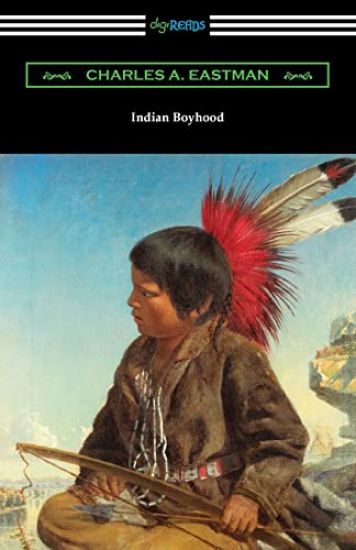
Charles A. Eastman, of Santee Sioux and Anglo-American heritage, was a passionate advocate for the rights of American Indians. He took an active role in national politics, in addition to his work as a physician, writer, and lecturer. He served on the founding committee of the YMCA, establishing 32 Native American chapters, worked as agency physician for the Bureau of Indian Affairs, and represented the American Indian at the Universal Races Congress in London, 1911. He was invited by the Coolidge administration to the Committee of One Hundred, the group responsible for the Meriam report, which eventually served as the basis for Roosevelt's New Deal policies for Native Americans. "Indian Boyhood" is Eastman's first publication, a memoir, which chronicles his first 15 years of life. It gives fascinating insight into the Santee Sioux culture, including hunter and warrior training, religious practices, medicine men, and life before acclimation into the white man's world. This edition is printed on premium acid-free paper.
Memories of an Indian Boyhood (1902) is a memoir by Charles Eastman. Recognized for his achievements as a pioneering Native American physician, Eastman was also a prolific writer whose personal stories, powerful meditations, and in-depth studies of indigenous culture continue to be read and appreciated today. In this memoir, his debut literary work, he recalls a youth marked by tragedy and perseverance that earned him the name Ohíye S'a, Dakota for “always wins.” “What boy would not be an Indian for a while when he thinks of the freest life in the world? This life was mine.” Although his birth and youth were marked by tragedy—the death of his mother, his separation from his father and siblings during the Dakota War of 1862—Eastman was able to experience the joys of Dakota Sioux life with his maternal grandmother and her family. “Every day there was a real hunt. There was real game. Occasionally there was a medicine dance away off in the woods where no one could disturb us […]” Immersed in the traditions of his people, Eastman—whose birthname was Hakadah—developed an identity grounded in the wisdom of his elders, yet open to the world outside. Nostalgic and full of gorgeous detail, Memories of an Indian Boyhood is a story of one boy’s youth that resonates with all who read it. With a beautifully designed cover and professionally typeset manuscript, this edition of Charles Eastman’s Memories of an Indian Boyhood is a classic work of Native American literature reimagined for modern readers.
Indian Boyhood, a classic since it was first published. Has been considered important throughout the human history, and so that this work is never forgotten we have made efforts in its preservation by republishing this book in a modern format for present and future generations. This whole book has been reformatted, retyped and designed. These books are not made of scanned copies and hence the text is clear and readable.
Indian Child Life, a classic since it was first published. Has been considered important throughout the human history, and so that this work is never forgotten we have made efforts in its preservation by republishing this book in a modern format for present and future generations. This whole book has been reformatted, retyped and designed. These books are not made of scanned copies and hence the text is clear and readable.
The Indian Today; The Past and Future of the First American
Charles A Eastman
ALPHA EDITION
2021
pokkari
The Indian Today; The Past and Future of the First American, a classic since it was first published. Has been considered important throughout the human history, and so that this work is never forgotten we have made efforts in its preservation by republishing this book in a modern format for present and future generations. This whole book has been reformatted, retyped and designed. These books are not made of scanned copies and hence the text is clear and readable.
The Soul of the Indian: An Interpretation (1911) is a work of nonfiction by Charles Eastman. Recognized for his achievements as a pioneering Native American physician, Eastman was also a prolific writer whose personal stories, powerful meditations, and in-depth studies of indigenous culture continue to be read and appreciated today. In this ethnographic work, he describes the cultures and traditions of indigenous Americans in order to dispel prejudice, foster understanding, and reconcile Christianity with the religious beliefs of his people. “The original attitude of the American Indian toward the Eternal, the ‘Great Mystery’ that surrounds and embraces us, was as simple as it was exalted. To him it was the supreme conception, bringing with it the fullest measure of joy and satisfaction possible in this life.” Raised among the Dakota Sioux, Charles Eastman knew firsthand the reverence with which the American Indian experienced the world. Despite converting to Christianity as an adult, Eastman recognized a need to right the record on indigenous American cultures, much of which had been written by missionaries and government officials sent to erase the very traditions they claimed to describe. While far from perfect, The Soul of the Indian: An Interpretation is an honest attempt to correct the course of history, fostering peace and understanding between the religions of his past and present: “I believe that Christianity and modern civilization are opposed and irreconcilable, and that the spirit of Christianity and of our ancient religion is essentially the same.” With a beautifully designed cover and professionally typeset manuscript, this edition of Charles Eastman’s The Soul of the Indian: An Interpretation is a classic work of Native American literature reimagined for modern readers.
Memories of an Indian Boyhood (1902) is a memoir by Charles Eastman. Recognized for his achievements as a pioneering Native American physician, Eastman was also a prolific writer whose personal stories, powerful meditations, and in-depth studies of indigenous culture continue to be read and appreciated today. In this memoir, his debut literary work, he recalls a youth marked by tragedy and perseverance that earned him the name Ohíye S'a, Dakota for “always wins.” “What boy would not be an Indian for a while when he thinks of the freest life in the world? This life was mine.” Although his birth and youth were marked by tragedy—the death of his mother, his separation from his father and siblings during the Dakota War of 1862—Eastman was able to experience the joys of Dakota Sioux life with his maternal grandmother and her family. “Every day there was a real hunt. There was real game. Occasionally there was a medicine dance away off in the woods where no one could disturb us […]” Immersed in the traditions of his people, Eastman—whose birthname was Hakadah—developed an identity grounded in the wisdom of his elders, yet open to the world outside. Nostalgic and full of gorgeous detail, Memories of an Indian Boyhood is a story of one boy’s youth that resonates with all who read it. With a beautifully designed cover and professionally typeset manuscript, this edition of Charles Eastman’s Memories of an Indian Boyhood is a classic work of Native American literature reimagined for modern readers.
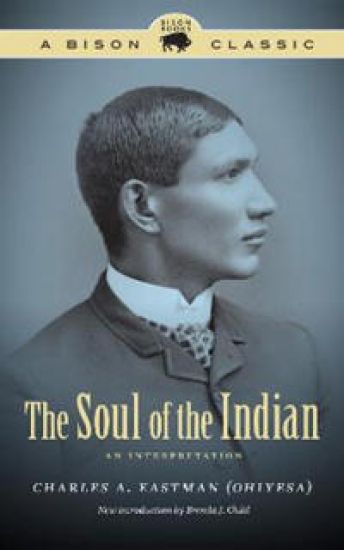
The Soul of the Indian is Charles A. Eastman’s exploration and documentation of religion as he experienced it during the late nineteenth century. A Dakota physician and writer who sought to bring understanding between Native and non-Native Americans, Eastman (1858–1939) became one of the best-known Native Americans of his time and a significant intellectual figure whose clarity of vision endures today. In a straightforward manner Eastman emphasizes the universal quality and personal appeal of his Dakota religious heritage. First published in 1911, The Soul of the Indian draws on his childhood teaching and ancestral ideals to counter the research written by outsiders who treated the Dakotas’ ancient worldviews chiefly as a matter of curiosity. Eastman writes with deep respect for his ancestors and their culture and history, including a profound reverence for the environment, animals, and plants. Though written more than a century ago, Eastman could be speaking to our own time with its spiritual confusion and environmental degradation. The new introduction by Brenda J. Child grounds this important book in contemporary studies.
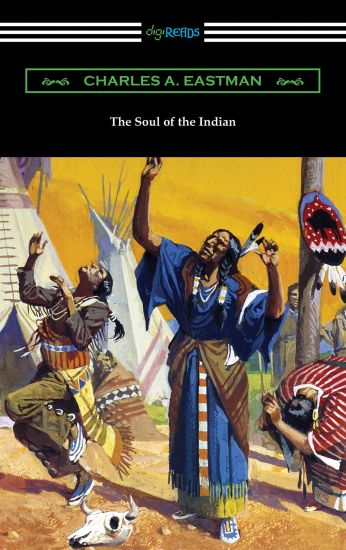
Charles Alexander Eastman (Ohiyesa) wrote "The Soul of the Indian" to examine the spiritual history of Native American's before European settlement in America. Born of Minnesota Sioux parents in South Dakota, Charles Eastman spent his life working with Natives and Europeans to bridge cultural divides. Born into and raised by a traditional Sioux family, Eastman developed a deep connection to the life of American Indians. Yet at the age of 15 Eastman's father persuaded him to adopt a European lifestyle. Consequently he graduated from Dartmouth in 1887 and continued medical studies at Boston University. Becoming one of the most traditionally educated Native Americans in the country, Eastman began writing works exploring the changing identities of Native Americans in the early 20th century. In 1902 he published "Indian Boyhood." He followed with several books including "Old Indian Days", and "Indian Stories Retold." His 1911 work "The Soul of the Indian" vividly depicts Native spiritual and religious practices and beliefs, bringing their rich cultural origins to life. His career as an author led him into the sphere of political and cultural activism, making him an effective champion of Native American's rights. Eastman's lifelong work of mediation between two seemingly disparate cultures made him one of the most influential American Indians of his day. "The Soul of the Indian" is not to be missed by anyone interested in the diverse fabric of the American identity. This edition is printed on premium acid-free paper.
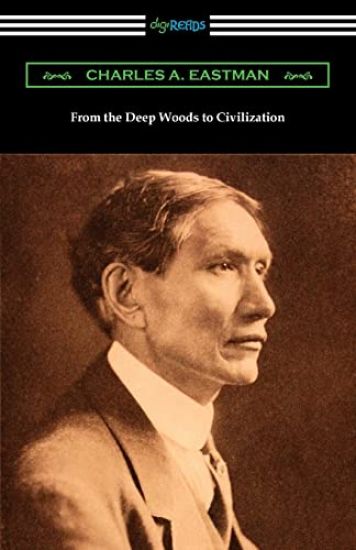
CHARLES EASTMAN Premium Collection: Indian Boyhood, Indian Heroes and Great Chieftains, The Soul of the Indian & From the Deep Woods to Civilization
Charles A. Eastman
E-Artnow
2019
nidottu
Charles Alexander Eastman (1858-1939) was a physician writer, national lecturer, and reformer. Eastman was of Santee Dakota, English and French ancestry. After working as a physician on reservations in South Dakota, he became increasingly active in politics and issues on Native American rights, he worked to improve the lives of youths, and founded thirty-two Native American chapters of the Young Men's Christian Association. He also helped found the Boy Scouts of America. He is considered the first Native American author to write American history from the Native American point of view. Contents: Indian Boyhood Indian Heroes and Great Chieftains The Soul of the Indian From the Deep Woods to Civilization