
Kirjailija
Charles A Eastman
Kirjat ja teokset yhdessä paikassa: 126 kirjaa, julkaisuja vuosilta 1977–2026, suosituimpiin kuuluu The Charles A. Eastman Collection. Vertaile teosten hintoja ja tarkista saatavuus suomalaisista kirjakaupoista.
Nimi esiintyy myös muodoissa: Charles A. Eastman
126 kirjaa
Kirjojen julkaisuvuodet: 1977–2026.
Reproduction of the original: Indian Heroes and Great Chieftains by Charles A. Eastman
Reproduction of the original: The Indian Today by Charles A. Eastman
Reproduction of the original: The Soul of the Indian by Charles A. Eastman
Reproduction of the original: Indian Boyhood by Charles A. Eastman
Reproduction of the original: Indian Boyhood by Charles A. Eastman
Reproduction of the original: Indian Heroes and Great Chieftains by Charles A. Eastman
Reproduction of the original: The Indian Today by Charles A. Eastman
Reproduction of the original: Old Indian Days by Charles A. Eastman
Reproduction of the original: Old Indian Days by Charles A. Eastman
Reproduction of the original: The Soul of the Indian by Charles A. Eastman
This work has been selected by scholars as being culturally important and is part of the knowledge base of civilization as we know it. This work is in the public domain in the United States of America, and possibly other nations. Within the United States, you may freely copy and distribute this work, as no entity (individual or corporate) has a copyright on the body of the work. Scholars believe, and we concur, that this work is important enough to be preserved, reproduced, and made generally available to the public. To ensure a quality reading experience, this work has been proofread and republished using a format that seamlessly blends the original graphical elements with text in an easy-to-read typeface. We appreciate your support of the preservation process, and thank you for being an important part of keeping this knowledge alive and relevant.
The author aims "to paint the religious life of the typical American Indian as it was before he knew the white man." A valuable contribution to our data for a real understanding of the Indian character. Notice: This Book is published by Historical Books Limited (www.publicdomain.org.uk) as a Public Domain Book, if you have any inquiries, requests or need any help you can just send an email to [email protected] This book is found as a public domain and free book based on various online catalogs, if you think there are any problems regard copyright issues please contact us immediately via [email protected]
Excerpt from The Indian to-Day: The Past and Future of the First American Animal People Old Indian Days Wigwam Evenings The Soul of the Indian and Indian Scout Talks All have been successful, and some have been brought out in school editions, and translated into French, German, Danish. About the Publisher Forgotten Books publishes hundreds of thousands of rare and classic books. Find more at www.forgottenbooks.com This book is a reproduction of an important historical work. Forgotten Books uses state-of-the-art technology to digitally reconstruct the work, preserving the original format whilst repairing imperfections present in the aged copy. In rare cases, an imperfection in the original, such as a blemish or missing page, may be replicated in our edition. We do, however, repair the vast majority of imperfections successfully; any imperfections that remain are intentionally left to preserve the state of such historical works.
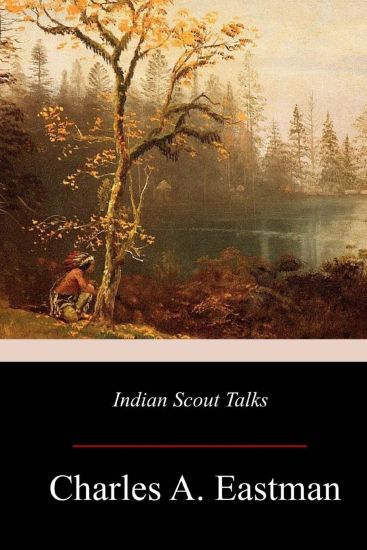
Excerpt from Indian Scout Talks: A Guide for Boy Scouts, and Camp Fire Girls We will follow the Indian method, for the American Indian is the only man I know who accepts natural things as lessons in themselves, direct from the Great Giver of life. About the Publisher Forgotten Books publishes hundreds of thousands of rare and classic books. Find more at www.forgottenbooks.com This book is a reproduction of an important historical work. Forgotten Books uses state-of-the-art technology to digitally reconstruct the work, preserving the original format whilst repairing imperfections present in the aged copy. In rare cases, an imperfection in the original, such as a blemish or missing page, may be replicated in our edition. We do, however, repair the vast majority of imperfections successfully; any imperfections that remain are intentionally left to preserve the state of such historical works.
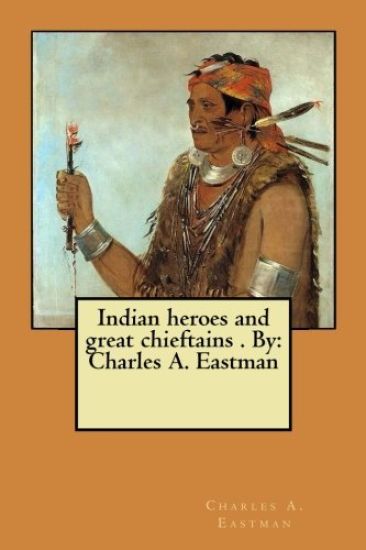
Indian heroes and great chieftains . By: Charles A. Eastman
Charles A. Eastman
Createspace Independent Publishing Platform
2017
nidottu
Charles Alexander Eastman (born Hakadah and later named Oh ye S'a; February 19, 1858 - January 8, 1939) was a Santee Dakota physician educated at Boston University, writer, national lecturer, and reformer. In the early 20th century, he was "one of the most prolific authors and speakers on Sioux ethnohistory and American Indian affairs." 1] Eastman was of Santee Dakota, English and French ancestry. After working as a physician on reservations in South Dakota, he became increasingly active in politics and issues on Native American rights, he worked to improve the lives of youths, and founded thirty-two Native American chapters of the Young Men's Christian Association (YMCA). He also helped found the Boy Scouts of America. He is considered the first Native American author to write American history from the Native American point of view.
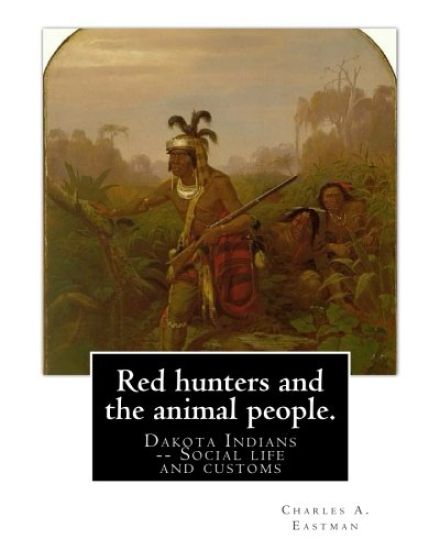
Red hunters and the animal people. By: Charles A. Eastman: Dakota Indians -- Social life and customs Fiction, Indians of North America
Charles A. Eastman
Createspace Independent Publishing Platform
2016
nidottu
Charles Alexander Eastman (born Hakadah and later named Oh ye S'a; February 19, 1858 - January 8, 1939) was a Santee Dakota physician educated at Boston University, writer, national lecturer, and reformer. In the early 20th century, he was "one of the most prolific authors and speakers on Sioux ethnohistory and American Indian affairs." 1] Eastman was of Santee Dakota, English and French ancestry. After working as a physician on reservations in South Dakota, he became increasingly active in politics and issues on Native American rights, he worked to improve the lives of youths, and founded thirty-two Native American chapters of the Young Men's Christian Association (YMCA). He also helped found the Boy Scouts of America. He is considered the first Native American author to write American history from the Native American point of view.
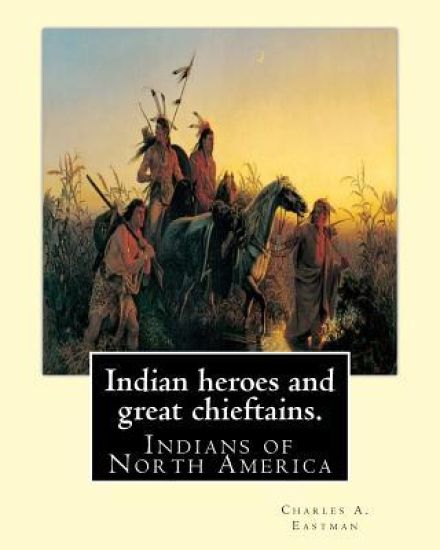
Indian heroes and great chieftains. By: Charles A. Eastman: Indians of North America
Charles A. Eastman
Createspace Independent Publishing Platform
2016
nidottu
INDIAN HEROES AND GREAT CHIEFTAINS provides biographical sketches of 15 great Native American leaders, mostly Sioux, including portraits of Crazy Horse, Sitting Bull, and Spotted Tail. Eastman traces their historical importance to both white and Native peoples. Charles Eastman (Ohiyesa) was born in 1858 of Dakota (Minnesota Sioux) parents on the Santee Reservation near Redwood Falls, Minnesota. After his mother died and his father was captured during the Minnesota Sioux Uprising, his grandparents raised Eastman. His father found him when Charles was 15 years old and he began school. Graduating from Dartmouth in 1887 he continued on and got his MD from Boston University." Charles Alexander Eastman (born Hakadah and later named Oh ye S'a; February 19, 1858 - January 8, 1939) was a Santee Dakota physician educated at Boston University, writer, national lecturer, and reformer. In the early 20th century, he was "one of the most prolific authors and speakers on Sioux ethnohistory and American Indian affairs." 1] Eastman was of Santee Dakota, English and French ancestry. After working as a physician on reservations in South Dakota, he became increasingly active in politics and issues on Native American rights, he worked to improve the lives of youths, and founded thirty-two Native American chapters of the Young Men's Christian Association (YMCA). He also helped found the Boy Scouts of America. He is considered the first Native American author to write American history from the Native American point of view. Eastman was named Hakadah at his birth in Minnesota; his name meant "pitiful last" in Dakota. Eastman was so named because his mother died following his birth. He was the last of five children of Wakantakawin, a mixed-race woman also known as Winona (meaning "First-Born Daughter" in the Dakota language) or Mary Nancy Eastman. 1] She and Eastman's father, a Santee Dakota named Wak-anhdi Ota (Many Lightnings), lived on a Santee Dakota reservation near Redwood Falls, Minnesota.