Kirjojen hintavertailu – 12 903 727 kirjaa ja 27 kauppaa

Kirjailija

Charles River

Kirjat ja teokset yhdessä paikassa: 4 673 kirjaa, julkaisuja vuosilta 2013–2022, suosituimpiin kuuluu William Powell and Myrna Loy: The Lives and Careers of One of Classical Hollywood's Most Iconic Duos. Vertaile teosten hintoja ja tarkista saatavuus suomalaisista kirjakaupoista.

4 673 kirjaa

Kirjojen julkaisuvuodet: 2013–2022.

The Greatest Civil War Battles: The Battle of North Anna

The Greatest Civil War Battles: The Battle of North Anna

Charles River

Createspace Independent Publishing Platform
2018
nidottu
*Includes pictures of the battle's important generals. *Includes several maps of the battle. *Includes accounts of the fighting written by generals and soldiers. *Includes a Bibliography for further reading. The Overland Campaign that pitted Robert E. Lee against Ulysses S. Grant is one of the most famous campaigns of the Civil War, but one of the most overlooked aspects of the entire campaign was the action around the North Anna River between the fighting at Spotsylvania Court House and Cold Harbor. In fact, it represented Lee's last great chance to destroy the Army of the Potomac. At the Battle of the Wilderness (May 5-7, 1864), Ulysses S. Grant and Robert E. Lee had fought to a standstill in their first encounter, failing to dislodge each other despite incurring nearly 30,000 casualties between the Union Army of the Potomac and the Confederate Army of Northern Virginia. Despite the fierce fighting, Grant continued to push his battered but resilient army south, hoping to beat Lee's army to the crossroads at Spotsylvania Court House, but Lee's army beat Grant's to Spotsylvania and began digging in, setting the scene for on and off fighting from May 8-21 that ultimately inflicted more casualties than the Battle of the Wilderness. In fact, with over 32,000 casualties among the two sides, it was the deadliest battle of the Overland Campaign. After Spotsylvania, Grant and Lee both raced to the next natural defensive line, the North Anna River. Ironically, before Lee blocked him in the Wilderness, Grant had anticipated the Overland Campaign starting with fighting around the North Anna, but once they arrived in the vicinity on May 23, Lee was unsure of Grant's intentions and didn't immediately have his army dig in. The Confederates blocked two attempted river crossings by separate wings of the Army of the Potomac in the first day's fighting, but the battle is best known for Lee's ingenious defensive line along the river. Springing a trap for Grant, Lee established an inverted V as a defensive line, with the salient touching the North Anna River, which would allow the Army of Northern Virginia to use interior lines to fall upon the separate wings of the Union army if it tried to cross the river. As fate would have it, Grant would fall into Lee's trap, only for Lee to be debilitated by illness at the crucial moments, allowing Grant to realize the potential mistake and avoid a major pitched battle. Grant would swing his army southeast toward the crossroads at Cold Harbor convinced that Lee's army was on the verge of collapse, while Lee was uncharacteristically fiery and ornery as a result of the missed chance at the North Anna. The Greatest Civil War Battles: The Battle of North Anna comprehensively covers the campaign and the events that led up to the battle, the fighting itself, and the aftermath of the battle. Accounts of the battle by important participants are also included, along with maps of the battle and pictures of important people, places, and events. You will learn about the Battle of North Anna like you never have before, in no time at all.
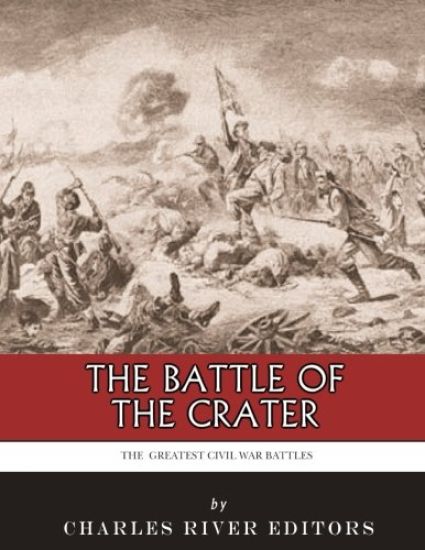
The Greatest Civil War Battles: The Battle of the Crater

The Greatest Civil War Battles: The Battle of the Crater

Charles River

Createspace Independent Publishing Platform
2018
nidottu
*Includes pictures of the battle's important generals. *Includes several maps. *Includes accounts of the fighting written by generals and soldiers. *Includes a Bibliography for further reading. "It was the saddest affair I have witnessed in the war." - Ulysses S. Grant After the last major pitched battle of the Overland Campaign was fought at Cold Harbor in early June, Ulysses S. Grant and the Army of the Potomac nearly captured Richmond in mid-June by stealing a march on Robert E. Lee's Army of Northern Virginia. The fog of war, poor luck, and a skillful impromptu defense by P. G. T. Beauregard stopped Grant from taking Petersburg, which was a critical railroad hub and supply line for Richmond, before Lee's army could confront, thereby saving the Confederacy for the time being. The two armies began to dig in around Petersburg, but at the end of June, Pennsylvania coal miners in the Army of the Potomac came up with an idea. They offered to dig a mine over 500 feet long underneath the lines between the Union and Confederate armies and fill it with gunpowder, which would detonate just 20 feet below where the Confederate soldiers were positioned. Through skillful work, the mine was packed with 8,000 pounds of gunpowder and set to detonate on the morning of July 30. The ensuing explosion would rip a giant hole in the Confederate line, allowing a Union attack to rush through the breached Confederate line and into Petersburg itself. Ulysses S. Grant later said, "Such an opportunity for carrying fortifications I have never seen and do not expect again to have." Sure enough, the detonation of the mine produced one of the most amazing scenes of the entire Civil War. The force of the explosion created a crater that was nearly 200 feet long, 100 feet wide, and 30 feet deep. Remnants of the crater can still be seen today. But through a mix of bad luck, fog of war, and incompetent leadership, the Union assault that followed the explosion was badly bungled. Instead of capturing Petersburg, the Battle of the Crater was a Union debacle that left more than 4,000 Union soldiers killed, wounded, or captured. The Confederates lost about 1,500, with nearly 300 of them being casualties of the initial explosion. The Battle of the Crater didn't help the Confederates much in front of Petersburg, but it remains the most memorable and controversial battle of the entire siege. There were charges that the Confederates slaughtered black soldiers after they had surrendered, and the botched operation cost several Union generals their careers, including one of the most important and controversial generals of the entire Civil War. As Grant noted, it was the Union's last great chance to end the war before they ultimately won in April 1865. The Greatest Civil War Battles: The Battle of the Crater comprehensively covers the events that led up to the crucial battle, the fighting itself, and the aftermath of the battle. Accounts of the fighting by important participants are also included, along with maps and pictures of important people, places, and events. You will learn about the Battle of the Crater like you never have before, in no time at all.
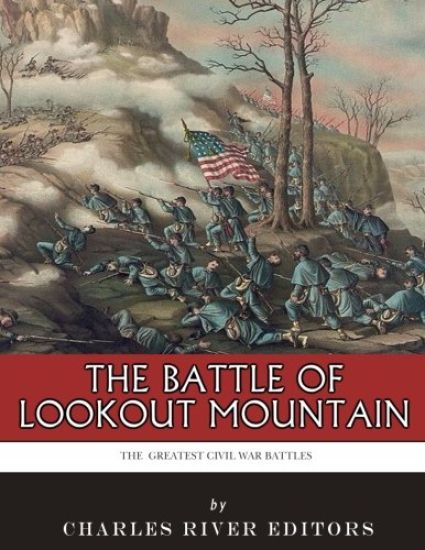
The Greatest Civil War Battles: The Battle of Lookout Mountain

The Greatest Civil War Battles: The Battle of Lookout Mountain

Charles River

Createspace Independent Publishing Platform
2018
nidottu
*Includes pictures of the battle's important generals. *Includes accounts of the fighting written by important generals like Grant, Sherman, Bragg, Longstreet, and more. *Includes a Bibliography for further reading. In late September 1863, the Confederates began laying siege to the Union Army of the Cumberland around Chattanooga in what would be their last gasp for supremacy in the West. Following the devastating Union defeat at the Battle of Chickamauga on September 20, the army and its shaken commander, General William S. Rosecrans, began digging in around the city and waiting for reinforcements to arrive. Meanwhile, the Confederate Army of Tennessee, under General Braxton Bragg, took the surrounding heights, including Missionary Ridge to the east and Lookout Mountain to the southwest, allowing them control over the vital rail and river supply lines needed by the Union forces in the city. Bragg planned to lay siege to the city and starve the Union forces into surrendering. Having lost faith in Rosecrans after Chickamauga, Washington delegated Ulysses S. Grant with the task of lifting the siege by placing him in command of nearly the entire theater. Grant replaced Rosecrans with George H. Thomas, who had saved the army at Chickamauga, and ordered him to "hold Chattanooga at all hazards." Thomas replied, "We will hold the town till we starve." Meanwhile, President Lincoln detached General Hooker and two divisions from the Army of the Potomac and sent them west to reinforce the garrison at Chattanooga. What followed were some of the most remarkable operations of the entire Civil War. Hooker and his reinforcements helped open up a vital supply line known as the "cracker line", effectively ensuring that enough supplies could reach Knoxville. With that, preparations turned to a pitched battle between the two sides, and in a series of actions in late November, Grant sought to lift the siege and drive back Bragg's Confederate army by attacking their positions on high ground. Although the Chattanooga Campaign is mostly remembered for the Battle of Missionary Ridge, that climactic battle was preceded by the Battle of Lookout Mountain, which witnessed some of the most unique fighting of the war. Also known as the "Battle Above the Clouds", on November 24, 1863, the Union and Confederate soldiers fought each other on mountainous terrain in heavy fog that obscured the battle lines throughout the battle, leading one soldier to call it "undoubtedly the roughest battle field of the war." By mid-afternoon, the heavy clouds had actually made the field dark, and with Confederate and Union commanders literally in the dark, Union soldiers under the command of Fighting Joe Hooker seized the summit of Lookout Mountain on their own initiative and compelled the Confederates to withdraw from what had seemed a daunting and impregnable defensive line. The Union victory at Lookout Mountain would completely alter the dispositions of the two armies and change Grant's battle plan, all of which inadvertently helped produce the Battle of Missionary Ridge the following day. The successes at Lookout Mountain and Missionary Ridge would save the day for Grant, and his victory in the Chattanooga Campaign is considered the last good chance the South had in the West during the Civil War. The Greatest Civil War Battles: The Battle of Lookout Mountain comprehensively covers the campaign and the events that led up to the crucial battle, the fighting itself, and the aftermath of the battle. Accounts of the fighting by important participants are also included, along with maps and pictures of important people, places, and events. You will learn about the Battle of Lookout Mountain like you never have before, in no time at all.
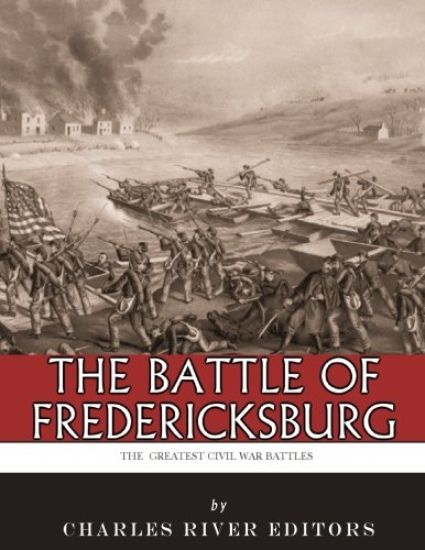
The Greatest Civil War Battles: The Battle of Fredericksburg

The Greatest Civil War Battles: The Battle of Fredericksburg

Charles River

Createspace Independent Publishing Platform
2018
nidottu
*Includes pictures of important people, places, and events. *Includes maps of the battle. *Analyzes the generalship of the battle's most important leaders, including Lee, Longstreet, Burnside and others. *Includes descriptions of the fighting from the post-battle reports and memoirs of some of the leading generals, including Meade, Burnside, Longstreet, and others. *Includes a Bibliography for further reading. "It is good that war is so terrible; otherwise we should grow too fond of it." - Robert E. Lee The Army of the Potomac had pushed Robert E. Lee's army out of Maryland in September 1862 after the Battle of Antietam, but President Lincoln and his War Department wanted the army to continue going after the Army of Northern Virginia after it retreated back into Virginia. When George B. McClellan refused to do it, Lincoln fired him and installed Ambrose E. Burnside as the new commander. Burnside, who didn't believe himself capable of commanding the Army of the Potomac, only took the job because he was told Fighting Joe Hooker would get the spot if he refused. With Washington urging Burnside to advance against Lee, Burnside launched an ill fated operation across the Rappahannock River near Fredericksburg in December 1862. From December 12-13, Burnside struggled to get his army across the river while it was under fire from Confederates in Fredericksburg, and things only got worse when they did. Although the Union almost broke the Confederate lines in the south on December 13, they were ultimately repulsed, and the battle is mostly remembered for the piecemeal attacks the Union army made on heavily fortified positions Longstreet's men took up on Marye's Heights. As they threw themselves at Longstreet's heavily fortified position along the high ground, the Northern soldiers were mowed down again and again. General Longstreet compared the near continuous fall of soldiers on the battlefield to "the steady dripping of rain from the eaves of a house." During the battle, Lee turned to Longstreet and commented, "It is well that war is so terrible, otherwise we should grow too fond of it." As injured Northern soldiers lay freezing and dying on the field that night, the Northern Lights made a rare appearance. Southern soldiers interpreted it as a favorable omen from God and mentioned them frequently in their diaries, while Northern soldiers who saw something far less divine sparsely mentioned them. The following morning, Burnside extricated his army back behind the river, ending the fighting in 1862. The Greatest Civil War Battles: The Battle of Fredericksburg comprehensively covers the campaign and the events that led up to the battle, the fighting itself, and the aftermath of the battle. Accounts of the battle by important participants are also included, along with maps of the battle and pictures of important people, places, and events. You will learn about the Battle of Fredericksburg like you never have before, in no time at all.
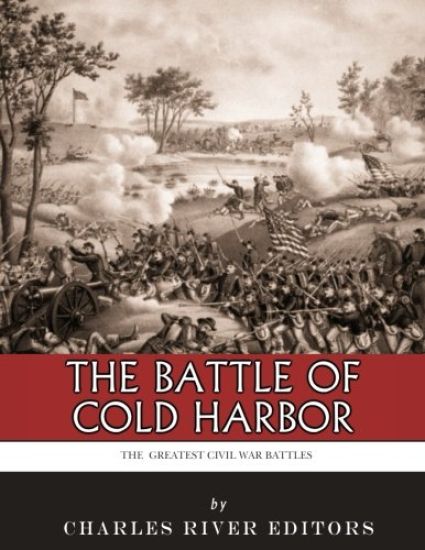
The Greatest Civil War Battles: The Battle of Cold Harbor

The Greatest Civil War Battles: The Battle of Cold Harbor

Charles River

Createspace Independent Publishing Platform
2018
nidottu
*Includes pictures of the battle's important generals. *Includes several maps of the battle. *Includes accounts of the fighting written by generals and soldiers. *Includes a Bibliography for further reading. "Every corpse I saw was as black as coal. It was not possible to remove them. They were buried where they fell. ... I saw no live man lying on this ground. The wounded must have suffered horribly before death relieved them, lying there exposed to the blazing southern sun o' days, and being eaten alive by beetles o' nights." - Frank Wilkeson, Union artillery officer The Overland Campaign that pitted Robert E. Lee against Ulysses S. Grant is one of the most famous campaigns of the Civil War, and May 1864 witnessed the Civil War's greatest chess match as Lee skillfully blocked Grant's attempts to destroy the Army of Northern Virginia only to watch his tenacious opponent keep advancing south toward Richmond. Lee and Grant fought to a standstill in the Wilderness, Spotsylvania, and along the North Anna, inflicting about 30,000 casualties on each other's armies. By the time the two armies reached Cold Harbor near the end of May 1864, Grant incorrectly thought that Lee's army was on the verge of collapse. Though his frontal assaults had failed spectacularly at places like Vicksburg, Grant believed that Lee's army was on the ropes and could be knocked out with a strong attack. The problem was that Lee's men were now masterful at quickly constructing defensive fortifications, including earthworks and trenches that made their positions impregnable. While Civil War generals kept employing Napoleonic tactics, Civil War soldiers were building the types of defensive works that would be the harbinger of World War I's trench warfare. On June 3, 1864, sensing he could break Lee's army, Grant ordered a full out assault at dawn in the hopes of catching the rebels before they could fully entrench. Although the story of Union soldiers pinning their names on the back of their uniforms in anticipation of death at Cold Harbor is apocryphal, the frontal assault on June 3 inflicted thousands of Union casualties in about half an hour. In just minutes, 7,000 Union soldiers were killed or wounded as 30,000 Confederate soldiers successfully held the line against 50,000 Union troops, losing just 1,500 men in the process. With another 12,000-15,000 casualties suffered at Cold Harbor, Grant had suffered about as many casualties in a month as Lee had in his entire army at the start of the campaign. Grant later admitted, "I have always regretted that the last assault at Cold Harbor was ever made... No advantage whatever was gained to compensate for the heavy loss we sustained." But even though Cold Harbor is remembered almost solely for that futile charge, the armies were in that vicinity for nearly 2 weeks, and most importantly, Lee once again failed to stop Grant's advance. Grant's casualties may have stunned Americans in 1864, but Cold Harbor would be the last major battle of the Overland Campaign because Grant would reach his objective by stealing a march on Lee to cross the James River, beginning the actions that would lead to the siege of Petersburg. The Greatest Civil War Battles: The Battle of Cold Harbor comprehensively covers the campaign and the events that led up to the battle, the fighting itself, and the aftermath of the battle. Accounts of the battle by important participants are also included, along with maps of the battle and pictures of important people, places, and events. You will learn about the Battle of Cold Harbor like you never have before, in no time at all.
The Greatest Civil War Battles: The Battle of Chickamauga

The Greatest Civil War Battles: The Battle of Chickamauga

Charles River

Createspace Independent Publishing Platform
2018
nidottu
*Includes pictures of the battle's important generals. *Includes several maps of the battle. *Includes accounts of the fighting written by important generals like Bragg, Rosecrans, Longstreet, George H. Thomas, D. H. Hill, and more. *Includes a Bibliography for further reading. "I know Mr. Davis thinks he can do a great many things other men would hesitate to attempt. For instance, he tried to do what God failed to do. He tried to make a soldier of Braxton Bragg." - General Joseph E. Johnston Americans have long been fascinated by the Civil War and its biggest battles, particularly Gettysburg, Antietam, and Shiloh, all of which involved Robert E. Lee or Ulysses S. Grant. But the second biggest battle of the entire war mostly gets overlooked among casual readers, despite the fact it represented the last great chance for the Confederates to salvage the Western theater. In mid-September, the Union Army of the Cumberland under General William Rosecrans had taken Chattanooga, but rather than be pushed out of the action, Army of Tennessee commander Braxton Bragg decided to stop with his 60,000 men and prepare a counterattack south of Chattanooga at a creek named Chickamauga. To bolster his fire-power, Confederate President Jefferson Davis sent 12,000 additional troops under the command of Lieutenant General James Longstreet, whose corps had just recently fought at Gettysburg in July. On the morning of September 19, 1863, Bragg's men assaulted the Union line, which was established in a wooded area thick with underbrush along the river. That day and the morning of the next, Bragg continue to pummel Union forces, with the battle devolving from an organized succession of uncoordinated assaults into what one Union soldier described as "a mad, irregular battle." Late that second morning, Rosecrans was misinformed that a gap was forming in his front line, so he responded by moving several units forward to shore it up. What Rosecrans didn't realize, however, was that in doing so he accidentally created a quarter-mile gap in the Union line, directly in the path of Longstreet's men. Described by one of Rosecrans' own men as "an angry flood," Longstreet's attack was successful in driving one-third of the Union Army off the field, with Rosecrans himself running all the way to Chattanooga, where he was later found weeping and seeking solace from a staff priest. As the Confederate assault continued, George H. Thomas led the Union left wing against heavy Confederate attack even after nearly half of the Union army abandoned their defenses and retreated from the battlefield, racing toward Chattanooga. Thomas rallied the remaining parts of the army and formed a defensive stand on Horseshoe Ridge, with more units spontaneously rallying to the new defensive line. Thomas and his men managed to hold until nightfall, when they made an orderly retreat to Chattanooga. Dubbed "The Rock of Chickamauga", Thomas's heroics ensured that Rosecrans' army was able to successfully retreat back to Chattanooga. In the aftermath of the Battle of Chickamauga, several Confederate generals blamed the number of men lost during what would be the bloodiest battle of the Western Theater on Bragg's incompetence, also criticizing him for refusing to pursue the escaping Union army. General Longstreet later stated to Jefferson Davis, "Nothing but the hand of God can help as long as we have our present commander." The Greatest Civil War Battles: The Battle of Chickamauga comprehensively covers the campaign and the events that led up to the battle, the fighting itself, and the aftermath of the battle. Accounts of the battle by important participants are also included, along with maps of the battle and pictures of important people, places, and events. You will learn about the Battle of Chickamauga like you never have before, in no time at all.
The Greatest Civil War Battles: The Battle of Chancellorsville

The Greatest Civil War Battles: The Battle of Chancellorsville

Charles River

Createspace Independent Publishing Platform
2018
nidottu
*Includes pictures of important people, places, and events. *Includes maps of the battle. *Analyzes the generalship of the battle's most important leaders, including Robert E. Lee, Joe Hooker, JEB Stuart, Stonewall Jackson, and others. *Includes descriptions of the fighting from the post-battle reports and memoirs of some of the leading generals, including Lee, Hooker, Darius Couch, JEB Stuart, and others. *Includes a Bibliography for further reading. "My God It is horrible--horrible; and to think of it, 130,000 magnificent soldiers so cut the pieces by less than 60,000 half-starved ragamuffins " - Horace Greeley, Editor of the New York Tribune Of all the Civil War battles fought, and of all the victories achieved by Robert E. Lee at the command of the Confederate Army of Northern Virginia, the Battle of Chancellorsville is considered the most tactically complex and ultimately the most brilliant Confederate victory of the war. In early May 1863, the Army of the Potomac was at the height of its power as it bore down on Robert E. Lee's Army of Northern Virginia near Fredericksburg, where the Confederates had defeated them the previous December. The Union behemoth had spent most of the winter season being reorganized and drilled by "Fighting Joe" Hooker, an aggressive commander who had fought hard at places like Antietam. With an army nearing 130,000 men, Hooker's Army of the Potomac was twice the size of the Army of Northern Virginia. With that advantage, Hooker proposed a daring and aggressive two pronged attack that aimed to keep Lee's army occupied in front of Fredericksburg while marching around its left. Meanwhile a cavalry raid well in the rear was intended to cut Lee's lines of supplies and possibly retreat. Hooker's plan initially worked perfectly, with the division of his army surprising Lee. At the end of May 1, Lee was outnumbered 2-1 and now had to worry about threats on two fronts. Incredibly, Lee once again decided to divide his forces in the face of the enemy, sending Stonewall Jackson to turn the Union army's right flank while the rest of the army maintained positions near Fredericksburg. The Battle of Chancellorsville is one of the most famous of the Civil War, and the most famous part of the battle was Stonewall Jackson's daring march across the Army of the Potomac's flank, surprising the XI Corps with an attack on May 2, 1863. Having ignored warnings of Jackson's march, the XI Corps was quickly routed. The surprise was a costly success, however, as Jackson was mortally wounded after being mistakenly fired upon by his own men. Having seized the initiative, half of Lee's army launched desperate attacks on Hooker's forces near the Wilderness over the next 2 days, while simultaneously defending against Union attacks around Fredericksburg that pushed the other half of his army back several miles on May 3. Ultimately, Hooker, who may have suffered a concussion during the battle, decided to pull both parts of his army back across the Rappahannock River on May 4, requiring a careful extrication over the next few days as Lee's army tried to destroy them while they were still on the southern bank of the river. Lee's heavily outnumbered army had just won the most stunning victory of the war, but it cost them Stonewall Jackson. Moreover, the reorganization of the armies and the battle itself played an influential role in the way the Pennsylvania Campaign and the Battle of Gettysburg unfolded later that summer. The Greatest Civil War Battles: The Battle of Chancellorsville comprehensively covers the campaign and the events that led up to the battle, the fighting itself, and the aftermath of the battle. Accounts of the battle by important participants are also included, along with maps of the battle and pictures of important people, places, and events. You will learn about the Battle of Chancellorsville like you never have before, in no time at al
The Greatest Civil War Battles: The Atlanta Campaign

The Greatest Civil War Battles: The Atlanta Campaign

Charles River

Createspace Independent Publishing Platform
2018
nidottu
*Includes pictures of the battle's important generals. *Includes several maps of the battle. *Includes accounts of the fighting written by important generals. *Includes a Bibliography for further reading. After successfully breaking the Confederate siege at Chattanooga near the end of 1863, William Tecumseh Sherman united several Union armies in the Western theater for the Atlanta Campaign, forming one of the biggest armies in American history. After detaching troops for essential garrisons and minor operations, Sherman assembled his nearly 100,000 men and in May 1864 began his invasion of Georgia from Chattanooga, Tennessee, where his forces spanned a line roughly 500 miles wide. Sherman set his sights on the Confederacy's last major industrial city in the West and General Joseph E. Johnston's Army of Tennessee, which aimed to protect it. Atlanta's use to the Confederacy lay in its terminus for three major railroad lines that traveled across the South: the Georgia Railroad, Macon and Western, and the Western & Atlantic. U. S. Lieutenant General Ulysses S. Grant knew this, sending Major General William Tecumseh Sherman's Division of the Mississippi towards Atlanta, with specific instructions, "get into the country as far as you can, inflicting all the damage you can against the war revenues." The city's ability to send supplies to Lee's Army of Northern Virginia made Atlanta all the more important. The people of Atlanta clearly identified their own role in the struggle, as the Atlanta Daily Appeal noted, "The greatest battle of the war will probably be fought in the immediate vicinity of Atlanta. Its results determines that of the pending Northern Presidential election. If we are victorious the Peace party will triumph; Lincoln's Administration is a failure, and peace and Southern independence are the immediate results." It would fall upon Sherman's forces in the West to deliver the necessary victory. Johnston's army of 50,000 found itself confronted by almost double its numbers, and General Johnston began gradually retreating in the face of Sherman's forces, despite repulsing them in initial skirmishes at Resaca and Dalton. The cautious Johnston was eventually sacked and replaced by the more aggressive John Bell Hood once the Confederate army was back in Atlanta. Taking command in early July 1864, Hood lashed out at Sherman's armies with several frontal assaults on various portions of Sherman's line, but the assaults were repulsed, particularly at Peachtree Creek on July 20, where Thomas's defenses hammered Hood's attack. At the same time, Sherman was unable to gain any tactical advantages when attacking north and east of Atlanta. In August, Sherman moved his forces west across Atlanta and then south of it, positioning his men to cut off Atlanta's supply lines and railroads. When the Confederate attempts to stop the maneuvering failed, the writing was on the wall. On September 1, 1864, Hood and the Army of Tennessee evacuated Atlanta and torched everything of military value. On September 3, 1864, Sherman famously telegrammed Lincoln, "Atlanta is ours and fairly won." Two months later, so was Lincoln's reelection. The Greatest Civil War Battles: The Atlanta Campaign comprehensively covers the campaign, including the fighting and the aftermath of the results. Accounts of the battle by important participants are also included, along with maps of the battle and pictures of important people, places, and events. You will learn about the Atlanta Campaign like you never have before.
The Greatest Battles in History: The Siege of Leningrad

The Greatest Battles in History: The Siege of Leningrad

Charles River

Createspace Independent Publishing Platform
2018
nidottu
*Includes pictures. *Includes accounts of the siege by citizens, soldiers and important generals. *Includes a bibliography for further reading. "The city is dead. There is no electricity, no trams. Warm rooms are rare. No water. Almost the only form of transport is sleds, carrying corpses in plain coffins, covered with rags or half clothed. Daily six to eight thousand die. The city is dying as it has lived for the last half year - clenching its teeth." - Nikolai Markevich's diary entry on January 24, 1942. The casualties inflicted on all sides during World War II nearly defy belief, and even today estimates of the number of dead differ by tens of millions of people. Amid all of the destruction and carnage, perhaps nothing symbolizes the war quite like the Siege of Leningrad, one of the longest sieges in history and by far the deadliest. When the Soviet-Nazi non-aggression pact of 1939 was broken by a German offensive against Russia, the surprised Red Army was quickly driven eastward away from the border with Poland, and Russian forces found themselves in a desperate attempt to defend major Russian cities from the Germany invaders. Leningrad, which had a population of roughly three million on the eve of the German attack, was one of the victims of the Russian unpreparedness, but once the siege began in the fall of 1941, the Soviets knew they were in a desperate struggle to the death. In fact, the Russians wouldn't have even been given a chance to surrender if they had wanted to, because the orders to the German forces instructed them to completely raze the city: "After the defeat of Soviet Russia there can be no interest in the continued existence of this large urban center... Following the city's encirclement, requests for surrender negotiations shall be denied, since the problem of relocating and feeding the population cannot and should not be solved by us. In this war for our very existence, we can have no interest in maintaining even a part of this very large urban population." The Russians managed to barely supply the encircled city through a small corridor of land that connected to Lake Ladoga, with transports crossing the lake when it froze over in winter. This euphemistically became known as the Road of Life, but the precarious conditions and the Luftwaffe also left many referring to it as the Road of Death. And even though the Nazis never managed to entirely cut off that supply route, during the nearly 900 day siege, which lasted from September 1941 - January 1944, at least 750,000 civilians starved to death, one out of every three or four members of the pre-siege population. The siege was so devastating that estimates of civilian dead from all causes were estimated at over a million. To put the massive death toll of the siege of Leningrad in perspective, roughly 35 times more civilians died at Leningrad than in the London Blitz, and 4 times more died than in the bombings of Nagasaki and Hiroshima combined. Of course, the civilians were hardly the only ones struggling around Leningrad during the siege, because soldiers on both sides had to deal with combat and terrible weather conditions over the course of nearly 28 months. By the time the siege was lifted, the Germans had suffered an estimated 1 million casualties, while the Soviets suffered an estimated 1 million dead or missing and over 2 million wounded. Not surprisingly, the city itself was a hollow shell of itself, with over 11,000 buildings destroyed and wreckage strewn everywhere. The Greatest Battles in History: The Siege of Leningrad comprehensively covers the entire military situation that led up to the siege, analyzes the decisions made by important leaders, and explains the aftermath of the Soviet victory. Along with a bibliography and pictures of important people and places, you will learn about the Siege of Leningrad like never before, in no time at all.
The Greatest Battles in History: The Battle of Waterloo

The Greatest Battles in History: The Battle of Waterloo

Charles River

Createspace Independent Publishing Platform
2018
nidottu
*Covers the events preceding the battle through the end of the Napoleonic Era. *Analyzes the command decisions made during the day. *Includes pictures of important generals and artwork depicting the fighting. *Includes a Bibliography for further reading. "Believe me, nothing except a battle lost can be half so melancholy as a battle won." - Duke of Wellington, at Waterloo The names of history's most famous battles still ring in our ears today, their influence immediately understood by all. Marathon lent its name to the world's most famous race, but it also preserved Western civilization during the First Persian War. Saratoga, won by one of the colonists' most renowned war heroes before he became his nation's most vile traitor. Hastings ensured the Normans' success in England and changed the course of British history. Waterloo, which marked the reshaping of the European continent and Napoleon's doom, has now become part of the English lexicon. In Charles River Editors' Greatest Battles in History series, readers can get caught up to speed on history's greatest battles in the time it takes to finish a commute, while learning interesting facts long forgotten or never known. It is late in the evening of 18th June, 1815. The scene is a coaching inn on the road between Charleroi and Brussels, a few miles south of the village of Mont St. Jean, in what is now Belgium. The inn is located on a crossroad, and for 100 yards either side of it men are strewn, dead or dying. These are elements of Napoleon's elite Imperial Guard, three battalions of which had retreated towards the inn at the end of the battle. With the rest of the Armee du Nord streaming past him, Napoleon had taken personal command. Yet before long even these grizzled veterans had joined the rout. Now he too has left the field, fated to head for Paris, captivity, exile and an early death. Across the rolling countryside a mile or two in either direction, a further 40,000 lie dead or injured. Night has fallen on one of the continent's most cataclysmic battles. At the inn, the two exhausted but victorious allied commanders meet for the first time that day. Marshal Blucher and the Duke of Wellinton shake hands and speak briefly, in broken French. Their close co-operation has ensured the final defeat of Napoleonic France and will put an end to 23 years of almost constant warfare across the continent. Appropriately, the inn is called "La Belle Alliance". Waterloo is the most famous battle in modern history if not all of history, and appropriately so. Gathering an army of 100,000 men, Napoleon marched into what is now Belgium, intent on driving his force between the advancing British army under the Duke of Wellington and the Prussian forces under Marshal Blucher. It was the kind of daring strategy that only Napoleon could pull off, as he had at places like Jena and Austerlitz. At Waterloo, however, it would end disastrously, as Napoleon's armies were unable to dislodge Wellington and unable to keep the Prussians from linking up with the British. The battle would end with the French suffering nearly 60% casualties, the end of Napoleon's reign, and the restructuring of the European map. Simply put, the next 200 years of European history can be traced back to the result of the battle that day in 1815. The Greatest Battles in History: The Battle of Waterloo comprehensively covers the entire campaign, analyzes the decisions made by the battle's most important leaders, and explains the aftermath of the Allies' victory and the legacies that were made and tarnished by the battle. Along with a bibliography, maps of the battle, and pictures of important people and places, you will learn about the Battle of Waterloo like you never have before, in no time at all.
The Greatest Battles in History: The Guadalcanal Campaign

The Greatest Battles in History: The Guadalcanal Campaign

Charles River

Createspace Independent Publishing Platform
2018
nidottu
*Includes pictures *Includes accounts of the fighting *Includes a bibliography for further reading "You ran a fever of 106 degrees. And you still had to try to stay, and stay with your position. You had dengue fever, which is even worse than malaria. Men that were scratched with coral became infected with a rundown condition. It was a war of attrition, mostly, for the Marines." - Major Vincent Kramer, 5th Defense Battalion, US Marines The names of history's most famous battles still ring in our ears today, with their influence immediately understood by all. Marathon lent its name to the world's most famous race, but it also preserved Western civilization during the First Persian War. Saratoga, won by one of the colonists' most renowned war heroes before he became his nation's most vile traitor. Hastings ensured the Normans' success in England and changed the course of British history. Waterloo, which marked the reshaping of the European continent and Napoleon's doom, has now become part of the English lexicon. In Charles River Editors' Greatest Battles in History series, readers can get caught up to speed on history's greatest battles in the time it takes to finish a commute, while learning interesting facts long forgotten or never known. The Guadalcanal Campaign, which ran from August 1942 to February 1943, was a bitter and protracted struggle that also happened to be a strange and transitional confrontation quite unlike any other in the long Pacific War. In conjunction with the American victory at the Battle of Midway, Guadalcanal represented the crucial moment when the balance of power in the Pacific tipped in favor of the Allies, but the idea that Guadalcanal would be such a significant battle would have come as a surprise to military strategists and planners on both sides. Nonetheless, by the time the Guadalcanal campaign was underway, it was a confrontation that neither side actively sought, but that both sides came to believe they could not afford to lose. When Allied forces landed on the island, it was an effort to deny the Japanese the use of the island and other nearby islands, but the Japanese defenders fought bitterly in an effort to push them off the island, resulting in a rather unique battle that consisted mostly of a Japanese offensive against Americans that invaded amphibiously and dug in. While the Americans closed the campaign with a substantial material advantage, the American garrison on Guadalcanal was initially undermanned and terribly undersupplied. Eventually, nearly 100,000 soldiers fought on the island, and the ferocity with which the Japanese fought was a fitting prelude to campaigns like Iwo Jima and Okinawa. The campaign would include six separate naval battles, three large-scale land clashes, and almost daily skirmishing and shelling. Not surprisingly, the campaign exacted a heavy toll, with more than 60 ships sunk, more than 1200 aircraft destroyed, and more than 38,000 dead. While the Japanese and Americans engaged at sea and in the skies, of the 36,000 Japanese defenders on the ground, over 30,000 of them would be dead by the end of the Guadalcanal campaign, while the Americans lost about 7,000 killed. By the end of the fighting, the Guadalcanal Campaign had unquestionably become a turning point in the Pacific War, representing both the last gasp of the Japanese offensive and the first stirrings of the American onslaught. In the wake of the Japanese defeat, Major General Kiyotake Kawaguchi asserted, "Guadalcanal is no longer merely a name of an island in Japanese military history. It is the name of the graveyard of the Japanese army." The Greatest Battles in History: The Guadalcanal Campaign comprehensively covers the entire military situation that led up to the campaign, analyzes the decisions made by the battle's most important leaders, and explains the aftermath of the American victory.
The Firebombing of Tokyo: The History of the U.S. Air Force's Most Controversial Bombing Campaign of World War II
*Includes pictures *Includes accounts of the firebombing by both Americans and Japanese civilians in Tokyo *Includes online resources and a bibliography for further reading *Includes a table of contents "Maj. Gen. Curtis E. LeMay, commander of the B-29s of the entire Marianas area, declared that if the war is shortened by a single day, the attack will have served its purpose." - The New York Times As American forces pushed the Japanese back across the Pacific from 1942-1944, their island-hopping campaign ultimately made it possible for the Air Force to conduct bombing runs over the Japanese mainland. The first serious air raids came in November 1944, after the Americans had captured the Marianas Islands, and through February 1945, American bombers concentrated on military targets at the fringes of the city, particularly air defenses. However, the air raids of March 1945, and particularly on the night of March 9, were a different story altogether. In what is generally referred to as strategic or area bombing, waves of bombers flew low over Tokyo for over two and a half hours, dropping incendiary bombs with the intention of producing a massive firestorm. The American raids intended to produce fires that would kill soldiers and civilians, as well as the munitions factories and apartment buildings of those who worked in them. 325 B-29s headed toward Tokyo, and nearly 300 of them dropped bombs on it, destroying more than 267,000 buildings and killing more than 83,000 people, making it the deadliest day of the war. The firebombing that night and morning left 25% of Tokyo charred, with the damage spread out over 20 miles of the metropolis. In fact, the damage was so extensive that casualty counts range by over 100,000. Additional raids, this time largely on the north and west, came in April, and in May, raids hit Ginza and the south. Altogether, American bombers flew more than 4,000 missions over Tokyo before surrender. The damage was spread widely, but it was worst in the low city, where some neighborhoods were virtually depopulated as survivors fled to the relative safety of the countryside. Honjo and Fukagawa each lost roughly 95% of their pre-raid populations. In 1940, Tokyo was a city of perhaps 6.8 million, but two years after the end of the war, when the population had already begun to increase again, it was still no more than 4.1 million. As with dropping the atomic bombs on Hiroshima and Nagasaki, the firebombing of Tokyo has remained controversial since the end of World War II. Japan had wisely spread out its industrial facilities across Tokyo so that one concerted attack could not deal a severe blow to its military capabilities. However, by spreading everything out, as the Germans had also done, Allied planes hit targets in residential zones, greatly increasing the casualties. Thus, by destroying as much of Tokyo's wartime manufacturing as possible, the American air force also destroyed half the city. Of course, it's far easier with the advantage of hindsight for people to call the campaign disproportionate, especially since the bombing campaign came at a time when the United States still faced the dreadful prospect of invading Japan's mainland. In 2007, Japanese Prime Minister Abe Shinzo took responsibility for Japan's refusal to surrender when defeat was inevitable, thus placing the blame for the firebombing on Japan itself. Shinzo announced that Japan would financially compensate survivors and bereaved family members of those killed, and shortly after the announcement, 112 survivors filed a lawsuit seeking damages for damage done during the campaign. The Firebombing of Tokyo: The History of the U. S. Air Force's Most Controversial Bombing Campaign of World War II chronicles the background of the campaign, its destruction, and its notorious legacy. Along with pictures of important people, places, and events, you will learn about the firebombing of Tokyo like never before, in no time at all.
The Explosion of the USS Maine: The Controversial Event That Led to the Spanish-American War
*Includes pictures *Includes accounts of the explosion by the captain and surviving crew members *Includes a bibliography for further reading "Remember the Maine, to Hell with Spain " The USS Maine is one of the most famous ships in American history, but for all the wrong reasons. A symbol of naval strength in the late 19th century, the Maine's tragic fate is taught to students across the nation, not just because it was a disaster but because it is associated with the most notorious examples of yellow journalism in the country's history and ultimately brought about a war, despite the fact it's still unclear what caused the ship's explosion. In 1898, one of Spain's last possessions in the New World, Cuba, was waging a war for independence against Spain. Though Cuba was technically exempted from the United States' Monroe Doctrine since Cuba was already a possession of Spain when the Monroe Doctrine was issued, many Americans believed that the United States should side with Cuba against Spain. At the same time, however, President William McKinley wanted to avoid getting tangled in a war between outsiders, while Spain also wanted to avoid any conflict with United States and its powerful navy. Despite leaders hoping to stay above the fray, American economic interests were being harmed by the ongoing conflict between Cuban nationalists and Spain, as merchants' trading with Cuba was suffering now that the island was undergoing conflict. Furthermore, the American press capitalized on the ongoing Cuban struggle for independence, which had been flaring up time and again since 1868. In an effort to sell papers, the press frequently sensationalized stories, which came to be known as yellow journalism, and during the run-up to war, yellow journalism spread false stories about the Cuban conflict in order to sell newspapers in the competitive New York City market. Despite President McKinley's wishes to avoid a war, he was forced to support a war with Spain after the USS Maine suffered an explosion in Havana's harbor in February 1898. McKinley had sent the ship to help protect American citizens in Cuba from the violence that was taking place there, but the explosion devastated the USS Maine, which had to be towed to harbor and eventually scuttled, but only after 266 American sailors aboard the ship were killed. Although the cause of the explosion was never determined, yellow journalists in the American press blamed Spain, claiming the USS Maine was sabotaged. President McKinley was unable to resist popular pressure after a U. S. Navy report also claimed that the ship had been subjected to an explosion outside of its hull, which subsequently ignited its powder magazines inside the ship. Later investigations proved inconclusive, but President McKinley was now forced to accept war with Spain, bringing about the Spanish-American War. The Explosion of the USS Maine chronicles the controversial explosion, tracing the history of the ship from its glorious beginning to its ignominious end, as well as the critical aftermath. Along with pictures of important people, places, and events, you will learn about the USS Maine like never before, in no time at all.
The French Invasion of Russia and the Battle of Leipzig: The History and Legacy of the Defeats that Forced Napoleon into Exile at Elba
*Includes pictures *Includes accounts of the fighting written by soldiers and generals *Includes a bibliography for further reading *Includes a table of contents French emperor Napoleon Bonaparte was not a man made for peacetime. By 1812, he had succeeded in subduing most of his enemies - though in Spain, the British continued to be a perpetual thorn in his flank that drained the Empire of money and troops - but his relationship with Russia, never more than one of mutual suspicion at best, had now grown downright hostile. At the heart of it, aside from the obvious mistrust that two huge superpowers intent on dividing up Europe felt for one another, was Napoleon's Continental blockade. Russia had initially agreed to uphold the blockade in the Treaty of Tilsit, but they had since taken to ignoring it altogether. Napoleon wanted an excuse to teach Russia a lesson, and in early 1812 his spies gave him just that: a preliminary plan for the invasion and annexation of Poland, then under French control. Napoleon wasted no time attempting to defuse the situation. He increased his Grande Armee to 450,000 fighting men and prepared it for invasion. On July 23rd, 1812, he launched his army across the border, despite the protestations of many of his Marshals. The Russian Campaign had begun, and it would turn out to be Napoleon's biggest blunder. Russia's great strategic depth already had a habit of swallowing armies, a fact many would-be conquerors learned the hard way. Napoleon, exceptional though he was in so many regards, proved that even military genius can do little in the face of the Russian winter and the resilience of its people. Napoleon's Russian adventure gutted his veteran army, depriving him of the majority of his finest and most loyal soldiers. Those who remained formed the hard core of his new armies, but the Russian fiasco damaged their health and embittered their previously unquestioning loyalty. Napoleon raised vast new armies, but circumstances compelled him to fill the ranks with raw recruits, whose fighting skills did not equal their undoubted bravery and whose dedication to the Napoleonic cause was shaky, and in many cases due solely to coercion. The tough, experienced, faithful veteran found himself outnumbered by unwilling, sketchily trained amateurs. These factors set the stage for the second setback, which essentially sealed the fate of Napoleon's empire. The four-day Battle of Leipzig in October 1813, romantically but accurately dubbed the "Battle of the Nations," proved the decisive encounter of the War of the Sixth Coalition and essentially determined the course the Napoleonic Wars took from that moment forward. All the belligerents showed awareness that the European conflict's climax was at hand: "There was keen determination in Prussia to exact revenge for the humiliation visited by Napoleon, but enthusiasm for armed struggle that would bring the eviction of the French found enthusiastic response throughout the German states. ...] To minimize his army's exposure and purchase time to rebuild, Napoleon might have stood on the defensive, but he followed his standard strategy of deciding the campaign with a bold advance to achieve decisive victory in one stroke." (Tucker, 2011, 302). The resultant collision was the single largest field action of the Napoleonic Wars, dwarfing Waterloo in size, complexity, and overall importance. The Battle of Leipzig was probably the combat which involved the highest concentration of men on a single extended battlefield on the planet up to that point in history, and would not be exceeded until the vast struggles of the First World War almost precisely a century later. The French Invasion of Russia and the Battle of Leipzig details the background leading up to the campaign, the fighting, and the aftermath of France's catastrophic defeat. Along with pictures of important people, places, and events, you will learn about the Battle of Leipzig like never before.
The Eruption of Mount St. Helens: The Deadliest Volcanic Eruption in American History

The Eruption of Mount St. Helens: The Deadliest Volcanic Eruption in American History

Charles River

Createspace Independent Publishing Platform
2018
nidottu
*Includes pictures *Includes eyewitness accounts of the eruption *Includes a bibliography for further reading "One big 'Aha ' for geologists was that an entire mountain could collapse." - Peter Frenzen "Mount St. Helens certainly reminds us of the power of nature, and we can certainly see that in the evidence of the 1980 eruption that's all around us. And here we just have an opportunity to see sort of another chapter in its history and to understand the forces that lie beneath our feet." - Peter Frenzen In 1980, the United States suffered the deadliest and most destructive volcanic eruption in its history when Mount St. Helens literally blew its lid off, the result of seismic activity during the eruption. What made the eruption all the more remarkable is that a fair amount of preparations had gone into anticipating it after an earthquake in the area a few months earlier alerted federal geologists to the possibility of activity there. In fact, Mount St. Helens had been the cause of the earthquake itself, the result of its own lava flows under the surface. Despite the warning signs, the volcanic eruption wound up being so powerful that it devastated hundreds of square miles around it, along with spewing volcanic ash in a giant plume that managed to scatter and deposit ash across 11 different states. Furthermore, another earthquake on May 18 managed to make the north face of the mountain collapse, shocking observers and scientists as it created the largest landslide ever recorded. Taken together, Mount St. Helens ultimately inflicted over $1 billion in damage and killed 57 people, including U. S. scientists studying the volcano on the day it exploded. When President Carter saw the area, he remarked, "Someone said this area looked like a moonscape. But the moon looks more like a golf course compared to what's up there." The 1980 eruption is why so many Americans are familiar with Mount St. Helens today, but it remains an active volcano and was known for volcanic activity back when the Native Americans lived around it. In fact, Native Americans had oral legends to explain the origins of Mount St. Helens, and European explorers and settlers also observed its eruptions in the 19th century. As scientist Peter Frenzen noted, "There's absolutely no question that Mount St. Helens will erupt again. The question is when." The Eruption of Mount St. Helens chronicles the history of America's most famous volcano and the destruction it wreaked in 1980. Along with pictures of important people, places, and events, you will learn about the volcano like never before, in no time at all.
The Assassination of President William McKinley: The History and Legacy of the President's Death
*Includes pictures *Includes accounts of the assassination *Includes online resources and a bibliography for further reading *Includes a table of contents "It was in my heart, there was no escape for me. I could not have conquered it had my life been at stake. There were thousands of people in town on Tuesday. I heard it was President's Day. All those people seemed bowing to the great ruler. I made up my mind to kill that ruler." - Leon Czolgosz In September 1901, the city of Buffalo was full of celebration. The Pan-American Exposition was ongoing, and it brought notable figures to northern New York, including President William McKinley, who had been reelected less than a year earlier. But also in Buffalo was Leon Czolgosz, a young man who had turned to anarchy years earlier after losing his job, Embracing his philosophy wholeheartedly, Czolgosz believed it was his mission to take down a powerful leader he considered oppressive, and McKinley's attendance gave him the chance. President James Garfield had been assassinated just 20 years earlier, but McKinley didn't worry about presidential security or his own safety, and that was the case in Buffalo. McKinley's insistence on greeting the public and shaking hands allowed Czolgosz to walk up to him on September 6, 1901 at a public reception in the Temple of Music on the expo grounds and shoot him point blank, with one bullet grazing the president and another lodging in his abdomen. In the aftermath of the shooting, as Czolgosz was beaten and seized by the crowd, he uttered, "I done my duty." For his part, McKinley said, "He didn't know, poor fellow, what he was doing. He couldn't have known." Despite being president, McKinley's medical services were shoddy, and given the still primitive medical standards of the early 20th century, gunshots to the abdomen often brought death. One of the best known aspects of the assassination is that Thomas Edison's x-ray machine was on hand and may have been used to try to locate the bullet that doctors couldn't find, but for reasons that remain unknown, the x-ray machine was not used. Nevertheless, McKinley seemed to improve over the next few days, and people became optimistic he would be all right. As H. Wayne Morgan, one of McKinley's biographers, noted, "His hearty constitution, everyone said, would see him through. The doctors seemed hopeful, even confident ... It is difficult to understand the cheer with which they viewed their patient. He was nearly sixty years old, overweight, and the wound itself had not been thoroughly cleaned or traced. Precautions against infections, admittedly difficult in 1901, were negligently handled." Ultimately, McKinley's wounds became gangrenous a week after he was shot, and after he took a turn for the worse, he died on the morning of September 14, nearly 8 days after he was shot. The Assassination of President William McKinley: McKinley was the 3rd president to be assassinated, and today he is often remembered as one of the presidents to die in office after being elected every 20 years after William Henry Harrison's 1840 election. However, the most notable consequence of the assassination is who it brought to power. Ironically, New York Governor Theodore Roosevelt's political enemies hoped to rid the state of their progressive governor by elevating him to national prominence. At the Republican National Convention in Philadelphia, the New York machine leaders decided to promote Roosevelt for the vice presidency, and in so doing, remove him from New York. At the time, the vice president was notoriously insignificant in national politics, so the political machinists thought that making Roosevelt the vice president would turn him into a nobody. The History and Legacy of the President's Death chronicles the tumultuous chain of events that led to McKinley's death and Roosevelt's presidency. Along with pictures and a bibliography, you'll learn about the assassination of McKinley like never
The Assassination of President James Garfield: The History and Legacy of the President's Death
*Includes pictures *Includes accounts of the assassination and trial *Includes online resources and a bibliography for further reading *Includes a table of contents "This is not murder. It is a political necessity. It will make my friend Arthur president, and save the republic. ... I leave my justification to God and the American people." - Charles Guiteau In 1880, Civil War veteran James Garfield was running as a Republican for president, and one of his supporters was a man named Charles Guiteau, who wrote and circulated a speech called "Garfield vs. Hancock" that aimed to rally support for the Republican candidate. Though few knew it, Guiteau's family had already deemed him insane and attempted to keep him committed in an asylum, only to have him manage an escape from confinement. Garfield went on to narrowly edge Winfield Scott Hancock in the election, and Guiteau, harboring delusions of grandeur, believed he had helped tip the scales in Garfield's favor. As such, he believed that he was entitled to a post in Garfield's nascent administration, perhaps even an ambassadorship, and he continued to rack up debts while operating under the assumption that he would soon have the government salary to pay them back. However, despite lobbying around Republican headquarters in New York City and even approaching Cabinet members, no post was forthcoming for the troubled man. Eventually, in May 1881, Secretary of State James Blaine told him to never show up again. Enraged by the perceived slight, Guiteau bought a revolver and plotted to kill the president. He got his chance on July 2, 1881 at a railroad station, shooting Garfield in the back twice and bragging to the authorities, "I am a Stalwart of the Stalwarts... Arthur is president now " In reality, Garfield would live for nearly 3 more months, and the poor standards of medical care in the 1880s would end up being responsible for the fact he did not survive wounds that he would've survived at the end of the 19th century. Indeed, Guiteau would cite medical malpractice at trial, stating, "I deny the killing, if your honor please. We admit the shooting." Those kinds of statements and his generally odd behavior helped ensure Guiteau's lawyers would claim he was insane, one of the first high profile attempts to use that as a defense against a crime. However, that never had much chance of succeeding, and claims of insanity were heartily rejected by prosecutors. George Corkhill, a D. C. district attorney and member of the prosecuting team, insisted, He's no more insane than I am. There's nothing of the mad about Guiteau: he's a cool, calculating blackguard, a polished ruffian, who has gradually prepared himself to pose in this way before the world. He was a deadbeat, pure and simple. Finally, he got tired of the monotony of deadbeating. He wanted excitement of some other kind and notoriety... and he got it." Throughout his trial, which was all but a foregone conclusion, Guiteau kept up the bizarre antics, including singing in the court, passing notes back and forth with members of the crowd watching the trial, and even openly planning his own 1884 presidential campaign. Of course, those plans were all for naught, because after he was convicted in January 1882, Guiteau was hanged on June 30 of that year. To the end, Guiteau acted oddly, including dancing his way up to the scaffold and reciting a poem he had written as his last words before he met his fate at the gallows. Garfield was the 2nd president to be assassinated after Abraham Lincoln, and today he is often remembered as one of the presidents to die in office after being elected every 20 years starting with William Henry Harrison's 1840 election through John F. Kennedy's 1960 election. The Assassination of President James Garfield: The History and Legacy of the President's Death chronicles the shooting and its aftermath.
The Apache Wars: The History and Legacy of the U.S. Army's Campaigns against the Apaches

The Apache Wars: The History and Legacy of the U.S. Army's Campaigns against the Apaches

Sean McLachlan; Charles River

Createspace Independent Publishing Platform
2018
nidottu
*Includes pictures *Includes accounts of the fighting described by American soldiers *Includes online resources and a bibliography for further reading *Includes a table of contents "Even if we should be able to dislodge them from the rough mountain ridges and impenetrable woods which cover the immense territories of these frontiers, they would seek better asylum in the vastness of the Sierra Madre. . . They] know how to surprise and destroy our troops in the mountains and on the plains. They are not ignorant of the use and power of our arms; they manage their own with dexterity; and they are as good or better horsemen than the Spaniards, and having no towns, castles, or temples to defend they may only be attacked in their dispersed and movable rancherias." - Bernardo de Galvez, Instructions for Governing the Interior Provinces of New Spain, 1787 (The Quivera Society, Berkeley) The Apache of the American Southwest have achieved almost legendary status for their fierceness and their tenacity in fighting the U. S. Army. Names like Nana, Cochise, and Geronimo are synonymous with bravery and daring, and the tribe had that reputation long before the Americans arrived. Indeed, among all the Native American tribes, the Spanish, Mexicans, and Americans learned the hard way that the warriors of the Apache were perhaps the fiercest in North America. Based in the Southwest, the Apache fought all three in Mexico and the American Southwest, engaging in seasonal raids for so many centuries that the Apache struck fear into the hearts of all their neighbors. Given the group's reputation, it's fitting that they are inextricably associated with one of their most famous leaders, Geronimo. Descendants of people killed by "hostile" Apache certainly considered warriors like Geronimo to be murderers and thieves whose cultures and societies held no redeeming values, and even today, many Americans associate the name Geronimo with a war cry. The name Geronimo actually came about because of a battle he fought against the Mexicans. Over time, however, the historical perception of the relationship between America and Native tribes changed drastically. With that, Geronimo was viewed in a far different light, as one of a number of Native American leaders who resisted the U. S. and Mexican governments when settlers began to push onto their traditional homelands. Like the majority of Native American groups, the Apache were eventually vanquished and displaced by America's westward push, and Geronimo became an icon for eluding capture for so long. The Apache Wars: The History and Legacy of the U. S. Army's Campaigns against the Apaches analyzes the history of the campaigns that stretched over decades. Along with pictures of important people, places, and events, you will learn about the Apache Wars like never before, in no time at all.
The Ancient World's Most Influential Philosophers: The Lives and Works of Confucius, Socrates, Plato, Aristotle, and Cicero
*Includes pictures Many people argue that Confucius is the most influential person of all time, and if having a significant effect on the greatest number of people is the criterion, he may very well be. China is one of the largest and oldest civilizations on earth, and Confucius has been influential there from almost the beginning: the first Chinese dynasty was founded around 1600 BCE and Confucius lived from 551-479 BCE. There is little evidence that he thought of himself as a harbinger of any kind, but shortly after his death, writings, sayings, and theories based on his life and ideas spread throughout China and even took hold of the imperial court of one of the most powerful and important dynasties, the Han (206 BCE-220 CE). It was during the Han Dynasty that Confucianism became closely tied to state affairs. None of Socrates' works survived antiquity, so most of what is known about him came from the writings of his followers, most notably Plato. What is known about Socrates is that he seemed to make a career out of philosophy, and Plato was intent on following in his footsteps. Yet for all of the influence of Socrates' life on his followers, it was Socrates' death around 399 B. C. that truly shaped them. Plato was so embittered by Socrates' trial in Athens that he completely soured on Athenian democracy, and Aristotle would later criticize politicians who relied on rhetoric; when Aristotle's own life was threatened, he fled Greece and allegedly remarked, "I will not allow the Athenians to sin twice against philosophy." Since Socrates wrote nothing down, or at least nothing that survived antiquity, there has been a wealth of scholarship ever since attempting to determine the person to whom the philosophical positions of the various (and genuine) Socratic dialogues of Plato's should be attributed. Even though Aristotle insisted that Socrates only cared about ethics and held no metaphysical theory of the kind that Plato propounded, the attempt to read the ugly but wise Socrates via the Platonic dialogues continued up to the 20th century. About a decade after Socrates' death, Plato returned to Athens and founded his famous Platonic Academy around 387 B. C., which he oversaw for 40 years until his death. One of Plato's philosophical beliefs was that writing down teachings was less valuable than passing them down orally, and several of Plato's writings are responses to previous writings of his, so Plato's personally held beliefs are hard to discern. However, Plato educated several subsequent philosophers, chief among them Aristotle, and his writings eventually formed the backbone of Western philosophy. Aristotle's influence on Western philosophical thought is marked by an extensive list of crucial issues that both signaled the way forward but at the same time boggled philosophers' minds throughout the centuries. Aristotle's reflections on Being, as well as his rigorous Logic, were his most important philosophical legacy, but he was also an intellectual in the broadest sense of the word. His interests went beyond metaphysical questions and into practical life and practical knowledge, from ethics to politics, rhetoric and the sciences, all of which left a profound impact on Western political thought and ethics. Naturally, this has also made him one of the foundations of knowledge and philosophical thought that subsequent philosophers relied on when forming and refining their own philosophies. Marcus Tullius Cicero (106-43 B. C.) was one of the most famous Romans in his day, and posterity has been even kinder to him. Cicero was a legend in his own time for his oratory abilities, which he used to persuade fellow Senators and denounce enemies like Catiline and Mark Antony, but he was also one of Rome's most prodigious writers and political philosophers. Alongside Pericles, Cicero was one of antiquity's greatest politicians, and he has remained one of the most influential statesmen.
The Ancient Roman Sieges of Jerusalem and Masada: The History of the First Jewish-Roman War's Most Famous Battles
*Includes pictures *Includes ancient accounts of the battles *Includes a bibliography for further reading The Siege of Jerusalem in 70 CE is arguably the most important event in Jewish history. First, it was the central battle in the First Jewish-Roman war. Second, the failure of the siege on the Jewish side resulted in the destruction of the Second Temple of Jerusalem, a disaster that would eventually prove both permanent and catastrophic, since it was never rebuilt. Third, it permanently altered the diaspora of Judaism in the Ancient World. Fourth, because it was indecisive in breaking the power of the Jewish revolt permanently, it was also inconclusive and led to further, inevitable revolts that broke Judean identity completely. . It was not the first time the Romans had conquered the capital of the kingdom, nor was it the first time Jerusalem had been sacked by a foreign power. It was unusual for the Romans, however, because it was not the final act that such a conquest generally was. With few exceptions, such as the Carthaginians and the Celts, the Romans had not encountered an opponent who refused to remain defeated. Roman generals and governors found this stubborn resistance unnerving and that may have contributed to an increased cruelty toward the local Jewish population, not that the Romans generally required an excuse to be brutal. To the Romans' bewilderment, the Jews were absolutely, adamantly opposed to worshiping any deity above God (in the universal form of Yahweh), or even alongside or beneath God. At this point in their theological history, the Jews had become strict monotheists. Worshiping the Emperor as a deity would imperil their immortal souls. Therefore, they absolutely refused to do this and were willing to die for their faith. The Jewish refusal to tolerate the Cult of the Emperor in their main place of worship was a direct challenge to Roman political power. The Roman refusal to recognize Jewish monotheism was a direct challenge to Jewish theology. The clash of ideologies would result in many casualties. Josephus, a primary source for the revolt, would calculate the death toll at over 1,000,000. The Siege of Masada was the final battle in a long series of fights that constituted the First Jewish-Roman War. However, what made this battle qualitatively different from most was not just the difficulty Rome had in retaking control of it with incredibly disproportional military equipment and numbers, but also the actions of the Judean defenders. In the final hours of the battle, just as the Romans were about to breach the walls of the city, the defenders gathered together and committed mass suicide, rather than being killed or taken captive by the Romans. Many Westerners have never heard of the Siege of Masada, and those who have may simply know it as an obscure reference to a minor battle fought in a remote location of the Roman world. By contrast, virtually all Israeli school children know the story of Masada as a premier example of nationalistic pride. The heroic story of a small band of fighters facing incalculable odds has many elements that are reminiscent of both the Battle of Thermopylae and the Battle of the Alamo. The refrain "Masada shall not fall again," coined in a poem on the subject by Yitzak Lamdan, became a cry of resolve in battle for Israeli soldiers in the 20th century, just as the cry of "Remember the Alamo" had galvanized Americans. For decades the Israelite military used the site of Masada as the location for swearing in their new recruits; the choice of the site was designed to evoke within the new soldiers a deep sense of connection with their national history.