Kirjojen hintavertailu – 12 903 727 kirjaa ja 27 kauppaa

Kirjailija

Charles River

Kirjat ja teokset yhdessä paikassa: 4 673 kirjaa, julkaisuja vuosilta 2013–2022, suosituimpiin kuuluu William Powell and Myrna Loy: The Lives and Careers of One of Classical Hollywood's Most Iconic Duos. Vertaile teosten hintoja ja tarkista saatavuus suomalaisista kirjakaupoista.

4 673 kirjaa

Kirjojen julkaisuvuodet: 2013–2022.

The Oklahoma City Bombing: The History of the Deadliest Domestic Terrorist Attack in American History
*Includes pictures *Includes primary accounts of the attack *Includes online resources and a bibliography for further reading *Includes a table of contents "Think about the people as if they were storm troopers in Star Wars. They may be individually innocent, but they are guilty because they work for the Evil Empire." - Timothy McVeigh Two days after Ramzi Yousef's attack on the World Trade Center in 1993, federal agents from the Bureau of Alcohol, Tobacco and Firearms (ATF), the FBI and the Texas National Guard surrounded the Mount Carmel Center compound outside of Waco, Texas. They were there to search the property of the Branch Davidians, a religious cult, due to allegations that cult members were sexually abusing children and had assault weapons. When they began searching, the Branch Davidians, led by David Koresh, fired on them, starting a firefight and a nearly two month long siege of the compound. The siege of the compound ended on April 19, 1993 with the deaths of over 75 cult members, including children, and in the wake of the event there was a lot of soul searching, but in addition to influencing how the government approached potential future conflicts with other groups, Waco's most important legacy was that it enraged people who already had an anti-government bent. As it turned out, the most notable was a young Gulf War veteran named Timothy McVeigh, who came to Waco during the siege and shouted his support for gun rights. After the siege ended, McVeigh was determined to strike back at the federal government. In 1994, McVeigh and an old Army buddy, Michael Fortier, decided they would bomb the Alfred P. Murrah Federal Building in Oklahoma City because several federal agencies had offices inside, including the ATF. With the help of Terry Nichols, McVeigh constructed a bomb out of fertilizer that weighed over two tons and placed it in a rented Ryder truck, the same company Ramzi Yousef had rented a van from. At about 9:00 a.m. on April 19, 1995, the second anniversary of the end of the siege in Waco, McVeigh's bomb exploded with a force so powerful that it registered seismic readings across much of Oklahoma and could be heard 50 miles away. The explosion killed 168 people, including young children in the building's day-care center. McVeigh was captured shortly after the explosion, and he never displayed remorse for his actions. When he later learned about the day-care center, McVeigh called the children "collateral damage." At the time, the bombing was the deadliest terrorist attack on American soil in history, and McVeigh was executed on June 11, 2001, three months before the bombing became the second deadliest terrorist attack on American soil in history. The Oklahoma City Bombing: The History of the Deadliest Domestic Terrorist Attack in American History chronicles the notorious terrorist attack. Along with pictures of important people, places, and events, you will learn about the Oklahoma City bombing like never before.

Jedediah Smith: The Life and Legacy of the Famous Mountain Man

Jedediah Smith: The Life and Legacy of the Famous Mountain Man

Charles River

Createspace Independent Publishing Platform
2018
nidottu
*Includes pictures *Includes contemporary accounts *Includes online resources and a bibliography for further reading By the golden age of the mountain man in the mid-19th-century, there were perhaps only 3,000 living in the West. Their origins were disparate, although they included many Anglo-Americans. A good number hailed from wilderness regions of Kentucky and Virginia and throughout the newly purchased Louisiana Territory, which occupied the entire central section of the continent. French Canadians traveled from the north to work in the fur trade, while Creole-Europeans represented approximately 15% of the men known to be living the isolated mountain life. Others were of M tis, Spanish, American, Black, Indian, and mixed-blood origin, most often Iroquois or Delaware. Most came to the West in their late adolescent years, the oldest learning the trade in their 30s. Many roamed the west for as long as their constitutions would hold up under constant attacks on their health and personal safety. Some stayed too long and failed to survive the experience. Among the most famous, Jim Bridger arrived at the age of 16, while Edward Robinson was eventually killed in his 60s by what were known as "bad snakes," a reference to the Snake tribe in Idaho country. Jim Beckwourth left the mountains at 68 and Old Bill Williams died at the age of 62 when a band of Utes "made him to come." Regardless of their motivations for entering the western forests, fur trapping was a central component of the lifestyle in order to satisfy the east coast and European fashion industries. The quest for fur of several varieties, particularly beaver, peaked in the 1840s, but many of the trappers continued for decades longer. Those laboring in the lower positions of the trade lasted an average of only 2.7 years in duration, while mid-level positions, such as traders and clerks, averaged 6.3. Directors and factory owners generally continued for approximately 15 years. Eventually, fashion moved on to other resources, but for the better part of a century, the frontiersman was the only worker able to survive the rigors of wilderness life while maintaining prosperity. Historians believe that even Jim Bridger's prodigious travels were eclipsed by that of New York-born Jedediah Strong Smith, whose uncharacteristic personal life set him apart from the rough-edged mountain man reputation. Smith, who developed into a master cartographer through a regimen of self-study, left a legacy of surprisingly accurate maps of the western continent for military and immigrant groups, so accurate as to remain in use far beyond his death. Early experiences as a clerk for a Lake Erie freighter company aroused a sense for business that would serve him well in the west. A capable hunter and trapper, his urge to explore and develop the western third of the continent led him to virtually every area from the Rockies to the length of the Pacific coast. Outdoing even Bridger, Smith roamed the central Rockies, traveled the southwest through Arizona, roamed much of the Oregon Country, and led two expeditions across the Mojave Desert to California, the first American to reach the vast region traveling overland. That he was the first white man to preach the Christian gospel beyond the "shining mountains" is well-corroborated. In time, what contemporary accounts described as a "devout, peace-loving, Christian teetotaler who rarely imbibed alcohol, never smoked tobacco, never cursed" became known as one of "The Twelve Apostles of California," known then as Alta (North) Mexico. Many hailed Smith as a missionary, but his passion for Scripture was mostly relegated to small gatherings when the immediate work was complete. But despite his lack of formal education, almost any map of the western continent made in the following century was based on or influenced by Smith's models.
The Greatest Generals of the Civil War: The Lives and Legends of Robert E. Lee, Stonewall Jackson, Ulysses S. Grant, and William Tecumseh Sherman
*Includes pictures of each general and important people, places, and events in their lives. *Includes an introduction for each general. *Includes bibliographies for each general. Despite the fact that the Civil War began over 150 years ago, it remains one of the most widely discussed topics in America today, with Americans arguing over its causes, reenacting its famous battles, and debating which general was better than others. Americans continue to be fascinated by the Civil War icons who made the difference between victory and defeat in the war's great battles. Within the pantheon of Civil War greats are the Confederacy's Robert E. Lee and Stonewall Jackson, and the Union's Ulysses S. Grant and William Tecumseh Sherman. With the exception of George Washington, perhaps the most famous general in American history is Robert E. Lee (January 19, 1807 - October 12, 1870), despite the fact he led the Confederate Army of Northern Virginia against the Union in the Civil War. Lee is remembered today for constantly defeating the Union's Army of the Potomac in the Eastern theater from 1862-1865, considerably frustrating Lincoln and his generals. His leadership of his army led to him being deified after the war by some of his former subordinates, especially Virginians, and he came to personify the Lost Cause's ideal Southern soldier. His reputation was secured in the decades after the war as a general who brilliantly led his men to amazing victories against all odds. Thomas Jonathan Jackson is one of the most famous generals of the Civil War, but many of the people he continues to fascinate probably don't remember his whole name. That's because Jackson earned his famous "Stonewall" moniker at the First Battle of Manassas or Bull Run, when Brigadier-General Bee told his brigade to rally behind Jackson, whose men were standing like a stone wall. Ironically, it's still unclear whether that was a compliment for standing strong or an insult for not moving his brigade, but the nickname stuck for the brigade and the general itself. Many still wonder how the outcome of Gettysburg or the Civil War itself may have changed if Jackson had not been mortally wounded at Chancellorsville. While all eyes were fixed on the Eastern theater at places like Manassas, Richmond, the Shenandoah Valley and Antietam, Ulysses S. Grant went about a steady rise up the ranks through a series of successes in the West. His victory at Fort Donelson, in which his terms to the doomed Confederate garrison earned him the nickname "Unconditional Surrender" Grant, could be considered the first major Union victory of the war, and Grant's fame and rank only grew after that at battlefields like Shiloh and Vicksburg. William Tecumseh Sherman (February 8, 1820 - February 14, 1891) holds a unique position in American history. Synonymous with barbarity in the South, Sherman is lauded as a war hero in the North, and modern historians consider him the harbinger of total war. As a General in the Union Army during the American Civil War (1861-65), Sherman was recognized for his outstanding command of military strategy but criticized for the harshness of the "scorched earth" policies that he implemented in conducting total war against the Confederate States, especially in 1864 and 1865. Military historian B. H. Liddell Hart famously declared that Sherman was "the first modern general." Along with pictures of the generals and important people, places, and events in their lives, you will learn about the Civil War's greatest generals like you never have before, in no time at all.
The My Lai Massacre: The History of the Vietnam War's Most Notorious Atrocity

The My Lai Massacre: The History of the Vietnam War's Most Notorious Atrocity

Charles River

Createspace Independent Publishing Platform
2018
nidottu
*Includes pictures *Includes accounts of the massacre made by participants *Includes online resources and a bibliography for further reading *Includes a table of contents "I walked up and saw these guys doing strange things... Setting fire to the hootches and huts and waiting for people to come out and then shooting them...going into the hootches and shooting them up...gathering people in groups and shooting them... As I walked in you could see piles of people all through the village... all over. They were gathered up into large groups. I saw them shoot an M79 grenade launcher] into a group of people who were still alive. But it was mostly done with a machine gun. They were shooting women and children just like anybody else. We met no resistance and I only saw three captured weapons. We had no casualties. It was just like any other Vietnamese village-old papa-sans, women and kids. As a matter of fact, I don't remember seeing one military-age male in the entire place, dead or alive." - PFC Michael Bernhardt The Vietnam War could have been called a comedy of errors if the consequences weren't so deadly and tragic. In 1951, while war was raging in Korea, the United States began signing defense pacts with nations in the Pacific, intending to create alliances that would contain the spread of Communism. As the Korean War was winding down, America joined the Southeast Asia Treaty Organization, pledging to defend several nations in the region from Communist aggression. One of those nations was South Vietnam. Before the Vietnam War, most Americans would have been hard pressed to locate Vietnam on a map. South Vietnamese President Diem's regime was extremely unpopular, and war broke out between Communist North Vietnam and South Vietnam around the end of the 1950s. Kennedy's administration tried to prop up the South Vietnamese with training and assistance, but the South Vietnamese military was feeble. A month before his death, Kennedy signed a presidential directive withdrawing 1,000 American personnel, and shortly after Kennedy's assassination, new President Lyndon B. Johnson reversed course, instead opting to expand American assistance to South Vietnam. The Vietnam War remains one of the most controversial events in American history, and it bitterly divided the nation in 1968, but it could have been far worse. That's because, unbeknownst to most Americans that year, American forces had carried out the most notorious mass killing of the war that March. On March 16, perhaps as many as 500 Vietnamese villagers in the Son My village complex - men, women, and children - were killed by American soldiers in Task Force Barker. The worst of the violence, carried out by members of Charlie Company, 1st Battalion, 11th Infantry, occurred in a small village known locally as Xom Lang. On American maps, the location was marked as My Lai (4), and when news of the killings leaked into the American press over a year and a half later in November 1969, it was under that name that the incident became infamous as the "My Lai Massacre." The My Lai Massacre was possibly the single worst atrocity committed by American forces during the long and sometimes brutal Vietnam War, and it has been called "the most shocking episode of the Vietnam War." It became a touchstone not only for the controversial conflict but for the manner in which the American government had covered up the truth, which many felt was emblematic of the government's behavior throughout much of the war itself. Moreover, it damaged the nation's credibility, as well as the military's; as Reinhold Neibuhr put it, "I think there is a good deal of evidence that we thought all along that we were a redeemer nation. There was a lot of illusion in our national history. Now it is about to be shattered." The My Lai Massacre: The History of the Vietnam War's Most Notorious Atrocity traces the history of one of the American military's darkest days.
The Roman Colosseum: The History of the World's Most Famous Arena

The Roman Colosseum: The History of the World's Most Famous Arena

Charles River

Createspace Independent Publishing Platform
2018
nidottu
*Includes pictures. *Explains how the Romans designed and built the Colosseum. *Includes ancient accounts of games held in the Colosseum. *Includes a bibliography for further reading. "Let barbarous Memphis speak no more of the wonder of its pyramids, nor Assyrian toil boast of Babylon; nor let the soft Ionians be extolled for Trivia's temple; let the altar of many horns say nothing of Delos; nor let the Carians exalt to the skies with extravagant praises the Mausoleum poised on empty air. All labors yield to Caesar's Amphitheatre. Fame shall tell of one work instead of all." - Martial When the Colosseum was built in the late 1st century A. D., the Romans, a people known for their architectural acumen, managed to amaze themselves. Martial, a Roman poet writing during the inauguration of the Colosseum, clearly believed the Colosseum was so grand a monument that it was even greater than the other Wonders of the Ancient World, which had been written about and visited endlessly by the Romans and Greeks in antiquity. Indeed, although the Wonders were wondrous to behold, the Colosseum was a spectacular achievement in architecture, something new and innovative, and therefore an amazing "Wonder" in its own way. The Colosseum was designed to be both a symbol and show of strength by the famous Flavian emperors, most notably Vespasian and his sons Titus and Domitian. Vespasian had started the construction of the Colosseum shortly after becoming emperor in 69 A. D., but he died before he could present any spectacles in his giant amphitheatre. That honor went to his son Titus, who celebrated the inaugural opening in 80 A. D. with 100 days of games, despite the fact that the Colosseum was not completely finished. When his brother Domitian came to power in 81 A. D., he finished the amphitheatre, but not without making some changes to the overall design. By the time it was truly finished, the Colosseum stood about 150 feet tall, with the oval in the center stretching nearly two football fields long and over 500 feet across. The Colosseum is a large stadium even by today's standards, and its great size conveys the power of the empire as it dominates the landscape and towers over nearby buildings. Nearly 2,000 years later, the Colosseum still amazes millions of people who come to visit it, and when asked to visualize a monument that represents the Roman Empire, many conjure up an image of the large amphitheater. As Keith Hopkins and Mary Beard put it, the Colosseum is "the most famous, and instantly recognizable, monument to have survived from the classical world." At the same time, the Colosseum also represents the Roman games and spectacles, particularly the gladiatorial combats that so many people today find both abhorrent yet fascinating. Given its massive size and the architectural ingenuity involved, the Colosseum played host to all sorts of games, including massive hunts of exotic animals and even sea battles. The Roman Colosseum: The History of the World's Most Famous Arena comprehensively covers the history and construction of Rome's largest amphitheater. Along with a bibliography and pictures, you will learn about the Colosseum like you never have before, in no time at all.
A Confederate Cannoneer at Gettysburg: The Life and Career of Edward Porter Alexander

A Confederate Cannoneer at Gettysburg: The Life and Career of Edward Porter Alexander

Charles River

Createspace Independent Publishing Platform
2018
nidottu
*Includes pictures of Porter Alexander and other Civil War generals, as well as maps of important battles. *Includes Alexander's descriptions of important battles, including Gettysburg, and his analysis of them from his memoirs. *Includes a Bibliography for further reading. In the narrative of the Civil War, Edward Porter Alexander has loomed larger in death than in life. Just 25 years old when the war broke out, Porter Alexander had already served as an engineer and officer in the U. S. Army, but the native Georgian resigned his commission in May 1861 and joined the Confederacy after his home state seceded. Porter Alexander spent 1861 as an intelligence officer, and he served as part of a signal guard, but he soon became chief of ordnance for Joseph Johnston's army near Richmond. Half a year later, Johnston would be injured during the Peninsula Campaign at the Battle of Seven Pines, after which he was replaced by Robert E. Lee. Over the course of 1862, Porter Alexander took on more roles in the Army of Northern Virginia's artillery branch, particularly under James Longstreet's 1st Corps. Though he participated in several battles, he played his biggest role at the Battle of Gettysburg. On the third day, Lee decided to make a thrust at the center of the Union's line with about 15,000 men spread out over three divisions. Though it is now known as Pickett's Charge, named after division commander George Pickett, the assignment for the charge was given to Longstreet, whose 1st Corps included Pickett's division. Lee's decision necessitated a heavy artillery bombardment of the Union line in an attempt to knock out the Union's own artillery before beginning the charge that would cover nearly a mile of open space from Seminary Ridge to the Union line on Cemetery Ridge. Lee tasked Porter Alexander, in charge of the 1st Corps' guns, to conduct the artillery bombardment. What resulted was the largest sustained bombardment of the Civil War, with over 150 Confederate cannons across the line firing incessantly at the Union line for nearly 2 hours. Unfortunately for Porter Alexander and the Confederates, the sheer number of cannons belched so much smoke that they had trouble gauging how effective the shells were. As it turned out, most of the artillery was overshooting the target, landing in the rear of the Union line. Reluctant to order the charge, Longstreet commanded Porter Alexander to order the timing for the charge. As Longstreet and Alexander anticipated, the charge was an utter disaster, incurring a nearly 50% casualty rate and failing to break the Union line. Porter Alexander would continue to serve under Longstreet's corps for most of the rest of the war, and he famously suggested to Lee at Appomattox that the Confederate army should disband and melt away instead of surrender. Porter Alexander would later regret the suggestion, and Lee scolded him for it anyway. Though he had served with distinction during the Civil War, it was Porter Alexander's memoirs that have kept his name alive today. While many prominent officers on both sides wrote memoirs, Porter Alexander's were among the most insightful and often considered by historians as the most evenhanded. With a sense of humor and a good narrative, Porter Alexander skillfully narrated the war, his service, and what he considered the successes and faults of others, including Lee, when he thought they had made good decisions or mistakes. As a result, historians continue to rely heavily on his memoirs as a source for Civil War history. A Confederate Cannoneer at Gettysburg profiles the life, career, and legacy of the man in charge of the Confederate guns before Pickett's Charge. Along with pictures of important people, places, and events, you will learn about Porter Alexander like you never have before, in no time at all.
The Greatest Battles in History: The Battle of Verdun

The Greatest Battles in History: The Battle of Verdun

Charles River

Createspace Independent Publishing Platform
2018
nidottu
*Includes pictures *Includes a bibliography for further reading *Includes a table of contents "On ne Passe Pas " ("They Shall Not Pass ") - Marshal Petain "Like Auschwitz, Verdun marks a transgression of the limits of the human condition." - Antoine Prost "Humanity is mad. It must be mad to do what it is doing. What a massacre What scenes of horror and carnage I cannot find words to translate my impressions. Hell cannot be so terrible. Men are mad " - French Lieutenant at Verdun The names of history's most famous battles still ring in our ears today, their influence immediately understood by all. Marathon lent its name to the world's most famous race, but it also preserved Western civilization during the First Persian War. Saratoga, won by one of the colonists' most renowned war heroes before he became his nation's most vile traitor. Hastings ensured the Normans' success in England and changed the course of British history. Waterloo, which marked the reshaping of the European continent and Napoleon's doom, has now become part of the English lexicon. In Charles River Editors' Greatest Battles in History series, readers can get caught up to speed on history's greatest battles in the time it takes to finish a commute, while learning interesting facts long forgotten or never known. It is difficult to overemphasize the importance of the Battle of Verdun. For the French, it possesses a grim significance which endures to this day - the churned, furrowed earth of the battlefield still visible a century later a stark reminder of waste of life, strategic failure and tactical inadequacy on a monumental scale. For the German people, had it not been eclipsed by the shame and horror of Nazism and the Holocaust, it would doubtless carry equal importance. Yet even to outsiders, the grim field of Verdun casts a shadow that is difficult to ignore. Quite simply, it is one of the greatest battles ever fought. In terms of ferocity of fighting, number of casualties, men and materiel committed, and prolonged duration of the conflict, only other World War I battles such as the Somme and the utter destruction visited by the Third Reich and Soviet Russia upon each other during World War II are of comparable scale. By the battle's end on December 16th (ignoring subsequent operations which took place in Verdun later on in the war), almost two and a half million French and German soldiers had borne arms at Verdun, an area of operations roughly 550 square miles in size - approximately a third of the size of Rhode Island. The battle, according to some estimates, accounted for almost a million men killed, captured, or wounded. The battle was to last for almost ten months. These figures mean that a soldier serving at Verdun, on either side, had a roughly one-in-ten chance of being killed outright, and an approximately even chance of suffering some other mishap, be it injury, illness or capture. Verdun is a classic example of the bloody stalemate that occurred at the apogee of World War I, when armies screeched to a halt in the wake of an opening stage of maneuver warfare. With defensive destructive capability vastly outweighing offensive capacity, Generals were unable to find a solution other than feeding more men into the meat-grinder in an attempt to break the deadlock. It was only after the widespread deployment of tanks, man-portable light machine guns, and aircraft that the belligerents were finally able to find an answer to the killing power of emplaced defense and achieve breakthroughs on the battlefield - something that was aided by the fact that Germany, at this point, was running out of bodies to put into uniform. The Battle of Verdun chronicles one of the deadliest battles in human history, from its origins to its deadly climax. Along with pictures of important people, places, and events, you will learn about Verdun like never before.
The Philippines Campaign of 1941-1942: The First Major Campaign in the Pacific Theater
*Includes pictures *Includes quotes from soldiers and generals *Includes a bibliography for further reading Those who had decoded and seen the Japanese communications in early December 1941 would not be surprised when they heard about an attack on December 7, 1941. They would, however, be astonished when they heard where that attack took place. Posted on the other side of the world, it was early on the morning of December 8 in the Philippines when American general Douglas MacArthur received news of the Japanese attack on Pearl Harbor hours earlier. With that, it could only be a matter of time before the Japanese attacked the Philippines. Although MacArthur and Allied forces tried to hold out, they could only fight a delaying action, and the Japanese managed to subdue all resistance by the spring of 1942. However, in the aftermath of Japan's successful invasion, as the nation's military strategists began preparations for the next phase of military actions in the theater, their forces had to deal with a critical logistical problem they had not foreseen. The Japanese had to deal with large numbers of Filipino and American soldiers who had surrendered after a lengthy defense in the Bataan peninsula, but they were not prepared for so many prisoners of war because their own military philosophy emphasized rigid discipline and fighting until the end. They could not imagine a situation in which Japanese soldiers would willingly surrender, so they assumed that no other combatants would do so either. On the night of March 12, 1942, MacArthur, his family and closest advisors were smuggled out of Corregidor on PT boats. From there they surged across the black ocean to Mindanao and were picked up by American B-17 bombers. They stealthily flew to northern Australia, a dangerous flight over Japanese-held territory, during which MacArthur casually remarked to General Sutherland, "It was close; but that's the way it is in war. You win or lose, live or die, and the difference is just an eyelash." At Adelaide on March 18, 1942 that MacArthur met the assembled press and told them, "I came through and I shall return." The words would go down in history, and MacArthur would eventually fulfill the vow. Before then, however, prisoners had to contend with the infamous Bataan Death March. Japanese plans to move the POWs from Bataan to prisoner camps in the interior of Luzon estimated that 40,000 American and Filipino soldiers would need to be transported out of the peninsula, but there were actually 78,000 POWs at Bataan, consisting of 66,000 Filipinos and 12,000 Americans. These soldiers were also suffering from disease and malnutrition after fighting on less than 1,000 calories per day toward the end of their defense of Bataan. In essence, the Japanese not only miscalculated the size of the force they would need to move, they also failed to realize the condition of the soldiers as well. Although the Bataan Death March would become synonymous with brutality and are still widely viewed as an atrocity, Japanese plans called for an orderly removal of the prisoners by foot, truck and rail into central Luzon so that they could quickly use Bataan as a launching point to attack the island of Corregidor, thus clearing the entrance to Manila Bay and gaining a key location for naval operations in the Pacific. In fact, Japanese plans did not call for any sort of brutality toward the prisoners; orders coming down from military leaders described potential interactions between Japanese soldiers and POWs as occurring with a "friendly spirit." The Philippines Campaign of 1941-1942: The First Major Campaign in the Pacific Theater chronicles the campaign from the start to its notorious aftermath. Along with pictures of important people, places, and events, you will learn about the Battle of the Philippines like never before.
Martin Luther: The Life of the Man and the Legacy of the Reformer

Martin Luther: The Life of the Man and the Legacy of the Reformer

Charles River

Createspace Independent Publishing Platform
2018
nidottu
*Includes pictures of historic artwork depicting Luther and important people, places, and events in his life. *Explains Luther's theological beliefs and his break with the Catholic Church. *Includes passages from Luther's writings and sermons. *Includes a Bibliography for further reading. "All who call on God in true faith, earnestly from the heart, will certainly be heard, and will receive what they have asked and desired." - Martin Luther As one of the most influential and recognizable religious figures in history, Martin Luther (1483-1546) continues to impact the world over 550 years after his death. Luther was a German priest and theologian whose writings and teachings sparked the Protestant Reformation in the early 16th century, creating one of the greatest schisms in the history of the Catholic Church and touching off religious turmoil and bloodshed that would engulf Europe for the next 2 centuries. Born shortly after the invention of the printing press, Luther became one of Europe's best selling authors, along with others like Erasmus, and his theology was mass produced across Europe. He strongly disputed the claim that freedom from God's punishment of sin could be purchased with money, known as indulgences, and he confronted indulgence salesman Johann Tetzel with his Ninety-Five Theses in 1517, one of the most important religious writings of all time. His refusal to retract all of his writings at the demand of Pope Leo X in 1520 and the Holy Roman Emperor Charles V at the Diet of Worms in 1521 resulted in his excommunication by the Pope and condemnation as an outlaw by the emperor. Luther, of course, did not back down. Although the story about him nailing 95 Theses to a church door is almost surely apocryphal, Luther continued that salvation is not earned by good deeds but received only as a free gift of God's grace through faith in Jesus Christ as redeemer from sin. His theology also continued to directly challenge the Pope's authority by teaching that the Bible is the only source of divinely revealed knowledge. Like anybody whose life was so influential, Luther's legacy has been the subject of many myths and legends, all of which have come to obscure the man himself, even while they maximize the importance of his accomplishments. Martin Luther: The Life of the Man and the Legacy of the Reformer provides an objective and comprehensive overview of Luther's life while thoroughly contextualizing both the figure of the Man and the legacy of the Reformer. Along with excerpts of his writings, a bibliography, and pictures depicting Luther and important people, places, and events, you will learn about Martin Luther like you never have before, in no time at all.
Religions of the World: The History and Beliefs of Hinduism

Religions of the World: The History and Beliefs of Hinduism

Charles River

Createspace Independent Publishing Platform
2018
nidottu
*Explains the history and origins of Hinduism. *Discusses important figures and teachings among different Hindu sects. *Includes pictures. *Includes Book 1 of the Hymns of the Sama Veda A lot of ink has been spilled covering the lives of history's most influential figures, but how much of the forest is lost for the trees? Throughout time, people have been religious by nature, and billions today adhere to unique faiths across the world. In Charles River Editors' Religions of the World, readers can get caught up to speed on today's religions and yesterday's religions in the time it takes to finish a commute, while learning interesting facts long forgotten or never known. In the West, Hinduism is a religion that everyone has heard of but one that few non-practitioners truly understand. Today it is widely regarded as one of the world's great religions and considered the indigenous religion of India, with practices and beliefs stretching back thousands of years. However, many of these so-called facts are actually erroneous. Hinduism as it is conceived of today is a conglomerate of a number of indigenous Indian religions; in fact, prior to the migration of Islam and the corporate invasion of the British, Hinduism may not have existed at all. Rather, a number of local religious traditions had very old belief systems dating back hundreds or thousands of years, depending on the tradition, and many worshiped gods that are no longer worshiped today. In essence, it was only through the non-indigenous populations in India, namely the Turks and later the British, who defined what Hinduism was. The British in particular asked only a certain subset of native informants from Bengal "what their religion was" and got a very particular answer, giving rise to the West's perception of a singular religious Indian tradition known as Hinduism. If the British had not centered their investments in Calcutta, they may have asked a different group of Indians what their religion was and received a different answer, thus changing the popular conception of Hinduism altogether. In other words, Hinduism is as much defined by the non-native "Other" as it is by the so-called native. Hinduism as a religion spans more than 3,000 years, and today it includes nearly 1 billion people. At the same time, it is not a specific term, since there are clear sectarian boundaries, the same way there are differences between Protestantism and Catholicism, and even differences between the various Protestant sects and the various Catholic sects, Hinduism may be broken down into many major sub-groupings that may or may not have much in common at all. Additionally, in the same way Christianity contains many smaller, spirituality heterodox groups like Gnostic Christianity (which are sometimes called cults), Hinduism also contains many groups that have beliefs that do not fit easily within the common corpus of Hindu belief systems. All of these divisions came well after the time of the Aryans, and Hinduism likely began to divide around the 1st century A. D., about 1,000 years after the arrival of the Aryans into the Indian subcontinent. Religions of the World: The History of Hinduism examines the history and main tenets of Hinduism, explaining the way the religion has evolved over time, the similarities it shares with other religions and the differences that make it unique. Along the way, it clears up some of the common misconceptions about the religion, and it includes pictures of important figures and places that will help you learn about Hinduism like you never have before, in no time at all.
Nathan Hale and the Culper Ring: The History of the Continental Army's Most Famous Spy and Spy Ring during the American Revolution
*Includes pictures *Includes contemporary accounts *Includes a bibliography for further reading For over 230 years, American schoolchildren have been taught about the story of Nathan Hale, or at least a legend of it, and in the process the myth of Hale and his apocryphal final words have immortalized the young man as America's most famous spy, despite his failed mission. After the siege of Boston forced the British to evacuate that city in March 1776, Continental Army commander George Washington suspected that the British would move by sea to New York City, the next logical target in an attempt to end a colonial insurrection. He thus rushed his army south to defend the city. In the summer of 1776, the British conducted the largest amphibious expedition in North America's history at the time, landing over 20,000 troops on Long Island. Washington's army would ultimately be pushed west all the way through New Jersey the rest of the year, but he nonetheless maintained intelligence operations around New York City, and one of the early spies was young Nathan Hale. A young officer in the Continental Army from Connecticut, Hale was asked by Washington to go behind British lines on Long Island and bring back information on what the British were up to there. Unfortunately, Hale was quickly identified by Loyalists, found with incriminating papers on his body, and executed. Hale's name may have very well been lost to history but for propaganda efforts to make him a martyr to the cause, most notably the reports of his last words about regretting that he had but one life to lose for his country. If Hale said anything like the quote he's best known for, he was likely reciting an exchange in the play Cato by Joseph Addison or playing off of it, but regardless of what he actually said, the story and the legend of Hale aimed to cover up the fact that his mission was an abject failure, due both to bad luck and ineptitude. Hale's death made good grist for legends, and Hale's legacy has since been wrapped up in his final comments, but the execution also convinced Washington of the need to develop a more properly-prepared body of secret service agents that could bring him the information he needed to make good military decisions. Thus, if anything, Hale's lasting legacy, at least from a concrete perspective, lay in Washington's formation of the Culper Ring after his execution. While in the Continental Army's winter quarters at Morristown, New Jersey, over the winter of 1776-1777, Washington began to more thoroughly organize what he thought would be needed. The Culper Ring became one of the colonists' first major intelligence efforts during the Revolution. The ring consisted mostly of a group of civilians in and around New York City who spied on the British forces and Loyalist Americans and reported what they saw and overheard ultimately to Washington, who took a personal, hands-on approach to their management. And though they were overlooked for generations, the relatively little-known clandestine actions of the patriotic men and women who participated in the Culper Ring unquestionably contributed to the eventual victory in the long struggle for American independence. In recent times, several good books have covered part or all of the history of the Culper Ring, but the main sources still consist of the ring's correspondence, much of which has somehow survived, between the members of the ring and their military handlers. After modern histories brought their story more fully to light, the members of the Culper Ring have since become subjects (albeit with the historical facts somewhat dramatized and altered) of a recent hit television show, Turn: Washington's Spies. Nathan Hale and the Culper Ring: The History of the Continental Army's Most Famous Spy and Spy Ring during the American Revolution profiles the life of the young spy and the spy ring Washington organized after his execution.
Mahatma Gandhi: The Life and Legacy of the Father of India

Mahatma Gandhi: The Life and Legacy of the Father of India

Charles River

Createspace Independent Publishing Platform
2018
nidottu
*Includes pictures *Includes Gandhi's own quotes about his life and career *Includes footnotes and a bibliography for further reading "In judging myself I shall try to be as harsh as truth, as I want others also to be." - Gandhi "I am not pleading for India to practice nonviolence because it is weak. I want her to practice nonviolence being conscious of her strength and power." - Gandhi Mohandas Karamchand Gandhi, or Mahatma Gandhi as he is more popularly known, was called "Mahatma," or "Great Soul" not only because of his extraordinary achievements as leader of the Indian independence movement, but also because of his beliefs, practices, and principles that demonstrated to the world the depths that one's soul could have. Widely considered the father of India, the preeminent leader of the Indian struggle against British imperialism, and one of the most influential minds of the 20th century, Gandhi emerged to become one of the greatest advocates of peace and nonviolent resistance that the world has known. By leading a life of austerity and integrity, Gandhi became one of those rare leaders who preached through his own practices, motivating millions of people - rich and poor, men and women, adults and children, Hindus, Muslims, and Christians - to follow his principles of freedom and peace. Gandhi saw with his own eyes the negative impact of British colonialism on the Indian economy, culture, and identity, as did millions of other Indians. What made Gandhi unique was the fact that he also saw the enormously negative impact the diversity of the Indian population had on the struggle for Indian independence; divisions were rife between Hindus, Muslims, and dozens of other faiths, and the population was divided into hundreds of different ethnic groups, each with its own traditions and culture, and each unwilling to unite with other groups for the common cause of a free India. The caste system in India, as a long-standing social stratification system that placed severe and often permanent social restrictions on individuals according to which social classes they were born into, also played a large role in dividing Indian society. Gandhi recognized that these divisions were what weakened India's chances to effectively oppose British imperialism and establish independence. As nationalism and independence movements began forming and spreading in the mid and late 1800s, Gandhi was able to unite these various ethnic groups, religious groups, and social groups and lead a unified Indian independence movement. The impact that Gandhi made was lasting, and his legacy can still be seen today. Gandhi was not a theorist or scholar in the traditional sense, and never professed to be one; he prided himself on instead being a reformer and a true activist, for he famously stated that "I am not built for academic writings... Action is my domain." And yet, the action that Gandhi spoke of was not the violent and terror-invoking action that many other resistance movements took elsewhere in the world; Gandhi was guided by strict values, principles, and ideas of peace and nonviolence that remained remarkably enduring throughout his life. Mahatma Gandhi: The Life and Legacy of the Father of India chronicles the life and career of the man who shaped civil disobedience in the 20th century and led his country to independence. Along with pictures of important people, places, and events, you will learn about Gandhi like never before, in no time at all.
Native American Tribes: The History and Culture of the Utes

Native American Tribes: The History and Culture of the Utes

Charles River

Createspace Independent Publishing Platform
2018
nidottu

Halvin toimitettuna 18,90 €

*Includes pictures *Includes a bibliography for further reading *Includes a table of contents From the "Trail of Tears" to Wounded Knee and Little Bighorn, the narrative of American history is incomplete without the inclusion of the Native Americans that lived on the continent before European settlers arrived in the 16th and 17th centuries. Since the first contact between natives and settlers, tribes like the Sioux, Cherokee, and Navajo have both fascinated and perplexed outsiders with their history, language, and culture. In Charles River Editors' Native American Tribes series, readers can get caught up to speed on the history and culture of North America's most famous native tribes in the time it takes to finish a commute, while learning interesting facts long forgotten or never known. The Utes are a Native American people who live today in Colorado, New Mexico and Utah, and they currently have the second largest Indian reservation in the United States: the 1.2 million acre Uintah and Ouray Reservation located in northeastern Utah. The Southern Ute Reservation in southwestern Colorado takes in another 681,000 acres, while the Ute Mountain Ute Reservation mostly in southwestern Colorado and northeastern New Mexico has 553,000 acres. However, these holdings are relatively small fragments of the original Ute land base; before the arrival of whites and the taking of the Utes' land, they stretched from the Great Basin of Utah through the Colorado Plateau and Rocky Mountains of Colorado and northern New Mexico and into the Great Plains. The Utes were a fierce warrior people who fought hard to defend their land against Spaniards and later the Americans, but they remain much less well-known among the American public than the Navajo (holders of the biggest reservation today) and many other Native American nations. Native American Tribes: The History and Culture of the Utes comprehensively covers the history and legacy of one of the Southwest's most famous Native American groups. Along with pictures and a bibliography, you will learn about the Utes like never before, in no time at all.
Real Pirates of the Caribbean: Blackbeard, Sir Francis Drake, Captain Morgan, Black Bart, Calico Jack, Anne Bonny, Mary Read, and Henry Every
*Examines the lives, legends and legacies of the Caribbean's most famous and successful pirates. *Explains how the myths and legends of pirates like Blackbeard created the instantly recognizable pirate stereotypes today. *Includes pictures depicting the pirates and important people, places, and events in their lives. *Includes contemporary accounts of the pirates written by Captain Charles Johnson. *Includes Bibliographies Over the past decade, few movie franchises have been as successful as Pirates of the Caribbean, starring Johnny Depp as the stereotypical pirate Jack Sparrow, a flamboyant, colorful and cunning pirate of questionable morality. The popularity of the movies and the character Jack Sparrow demonstrate how the people who have lived outside the boundaries of normal societies and refused to play by the rules have long fascinated the world. Nowhere is this more evident than the continuing interest in the pirates of centuries past. As the subjects of books, movies, and even theme park rides, people continue to let their imaginations go when it comes to pirates, with buried treasure, parrots, and walking the plank all ingrained in pop culture's perception of them. While there is no question that the myths and legends surrounding history's most famous pirates are colorful, in some instances their actual lives made for even better stories. Before the Golden Age of Piracy, men like Sir Francis Drake straddled the line between pirate and privateer, and Drake was knighted for fighting the Spanish. While Captain Morgan's ruthless piracy has actually been overlooked due to his association with the spiced rum company using his name, he was a remarkably successful pirate, and one of history's best documented pirates. The Golden Age of Piracy generally refers to the era when history's most famous pirates roamed the seas of the West Indies from 1670-1720, and it is no coincidence that the beginning of it was marked by the rise of Henry Every. In his day Every was the "King of Pirates", and in addition to popularizing the famous skull and crossbones logo that would become the most famous pirate flag, Every conducted what is considered the most profitable pirate raid in history, leading to what is considered the first worldwide manhunt in history when the English put a large bounty on his head. It would be an understatement to say that pop culture's perception of piracy and pirates has been primarily influenced by Captain Edward Teach, known to the world as Blackbeard. Blackbeard is remembered today based more on myths than reality. People continue to let their imaginations go when it comes to Blackbeard, picturing a pirate who captured more booty than any other pirate, hid buried treasure, and lit his hair on fire before battle. People have long claimed that his ghost still haunts the Atlantic Ocean, and his contemporaries were so scared of him that they claimed to have seen his headless body swim around his pirate boat three times. Fittingly, some of history's most famous pirates sailed together. Black Bart Roberts is considered the most successful pirate in history, managing to capture about 500 ships before meeting his fate, but he learned the tricks of the trade from Howell Davis, whose cunning and courage led to some of the most spectacular acts of piracy in history. Then there are history's two most famous female pirates, Anne Bonny and Mary Read, who actually sailed together on Calico Jack's pirate ship. Together the three became history's most famous pirate crew and had one of the most colorful years of the Golden Age of Piracy before being captured. Real Pirates of the Caribbean looks at all of these notorious pirates, examining their careers and analyzing their legacies. Along with pictures, contemporary accounts, bibliographies, and a Table of Contents, you will learn about these famous pirates like never before.
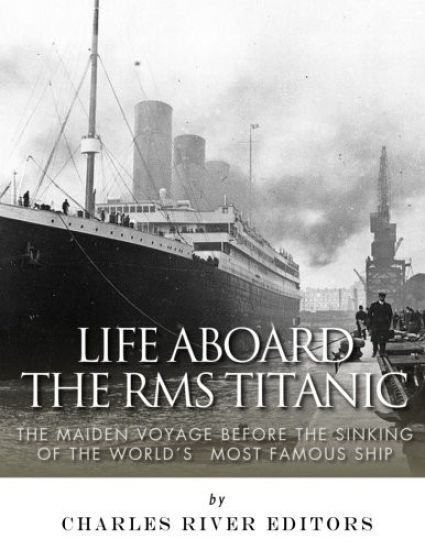
Life Aboard the RMS Titanic: The Maiden Voyage Before the Sinking of the World's Most Famous Ship
*Includes pictures *Includes accounts by passengers describing what life on the Titanic was like *Includes a bibliography for further reading "Titanic started a voyage through history when it sailed away. One century later, there is still no port at sight." - Marina Tavares Dias Just before midnight on April 14, 1912, the RMS Titanic, the largest ship in the world, hit an iceberg, starting a chain of events that would ultimately make it history's most famous, and notorious, ship. In the over 100 years since it sank on its maiden voyage, the Titanic has been the subject of endless fascination, as evidenced by the efforts to find its final resting spot, the museums full of its objects, and the countless books, documentaries, and movies made about the doomed ocean liner. Thanks to the dramatization of the Titanic's sinking and the undying interest in the story, millions of people are familiar with various aspects of the ship's demise, and the nearly 1,500 people who died in the North Atlantic in the early morning hours of April 15, 1912. The sinking of the ship is still nearly as controversial now as it was over 100 years ago, and the drama is just as compelling. However, the Titanic was neither the first nor last big ship to sink, so it's clear that much of its appeal stems from the nature of ship itself. Indeed, the Titanic stands out not just for its end but for its beginning, specifically the fact that it was the most luxurious passenger ship ever built at the time. In addition to the time it took to come up with the design, the giant ship took a full three years to build, and no effort or cost was spared to outfit the Titanic in the most lavish ways. Given that the Titanic was over 100 feet tall, nearly 900 feet long, and over 90 feet wide, it's obvious that those who built her and provided all of its famous amenities had plenty of work to do. The massive ship was carrying thousands of passengers and crew members, each with their own experiences on board, and the various amenities offered among the different classes of passengers ensured that life on some decks of the ship was quite different than life on others. Life Aboard the RMS Titanic: The Maiden Voyage Before the Sinking of the World's Most Famous Ship chronicles the ship's journey across the Atlantic, profiling what life was like on board for the crew and different classes of passengers. Along with pictures of important people, places, and events, you will learn about the voyage of the Titanic like never before, in no time at all.
Revisiting the Titanic: The Exploration of the Wreck and Current Controversies Surrounding the World's Most Famous Ship
*Includes pictures *Includes descriptions of various explorations of the wreck and lawsuits surrounding the ship *Includes accounts written by participants of the dive *Includes a bibliography for further reading "The deep sea is the largest museum of the world, and as the Titanic goes so go the many lost chapter of human history that lie undiscovered beneath the waves. If we cannot protect the Titanic, then what can we protect? Modern technology is allowed easier and easier physical access to underwater wreck sites. Do we use this access to appreciate what lies there or to plunder it?" - Robert Ballard Just before midnight on April 14, 1912, the RMS Titanic, the largest ship in the world, hit an iceberg, setting in motion a chain of events that would ultimately make it history's most famous, and notorious, ship. In the over 100 years since it sank on its maiden voyage, the Titanic has been the subject of endless fascination, as evidenced by the efforts to find its final resting spot, the museums full of its objects, and the countless books, documentaries, and movies made about the doomed ocean liner. Thanks to the dramatization of the Titanic's sinking and the undying interest in the story, millions of people are familiar with various aspects of the ship's demise, and the nearly 1,500 people who died in the North Atlantic in the early morning hours of April 15, 1912. The sinking of the ship is still nearly as controversial now as it was over 100 years ago, and the drama is just as compelling. In the century since the Titanic sank, public interest in the ship and its history has waxed and waned on a regular basis. There was a flurry of activity right after it went down, as people tried to wrap their minds around what happened, but the World Wars pushed attention elsewhere. Then, during the 1950s, scientists had the time and money to become interested in it again. While there were numerous attempts to find that ship during the 1970s, the mighty ship still kept her secrets, her dead and their possessions safely at the bottom of the sea, where only strange creature comfortable in the depths could disturb them. As it turned out, the most famous wreck in the world would not be located until 1985, over 70 years after the ship sank that fateful April night. The discovery ignited a new flurry of interest in Titanic, including an interest in what the wreck still held, who those items belonged, to and what should be done with them. The 1997 blockbuster movie about the ship only stirred up more interest and controversy, both of which continue to this day. Revisiting the Titanic chronicles the underwater explanation of the wreck, the attempts to bring artifacts back up to the surface, and the legal controversies still brewing today. Along with pictures of important people, places, and events, you will learn about the discovery of the Titanic like never before.
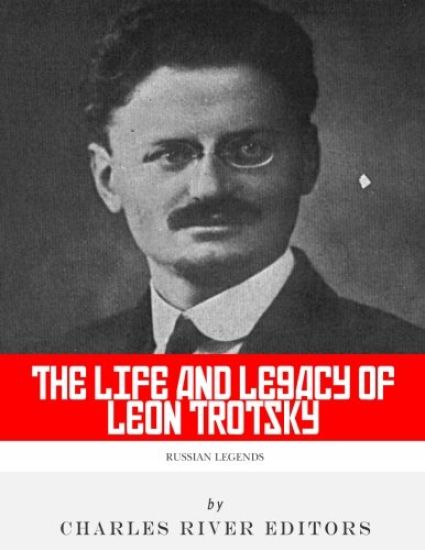
Russian Legends: The Life and Legacy of Leon Trotsky

Russian Legends: The Life and Legacy of Leon Trotsky

Charles River

Createspace Independent Publishing Platform
2018
nidottu
*Includes pictures of Trotsky and important people, places, and events in his life. *Explains Trotsky's role in the Bolshevik Revolution and how he was squeezed out by Stalin. *Includes a Bibliography for further reading. A lot of ink has been spilled covering the lives of history's most influential figures, but how much of the forest is lost for the trees? In Charles River Editors' Russian Legends series, readers can get caught up to speed on the lives of Russia's most important men and women in the time it takes to finish a commute, while learning interesting facts long forgotten or never known. For much of the 20th century, the struggle between capitalism and communism was one of the central dramas, and the figure of Leon Trotsky stood for many on the political left as a reminder of a road not taken. Along with Vladimir Lenin, Trotsky led the October Bolshevik Revolution of 1917 and held crucial posts in the early Soviet governments, but after Lenin's death Trotsky was exiled, persecuted and finally murdered at the behest of his arch-rival, Joseph Stalin. For the final decade of his life, Trotsky was a man trapped in between two worlds. A communist seeking refuge in the capitalist West, Trotsky was deemed a secret agent of the capitalist powers by Stalin's propaganda, but the Soviet Union's enemies also viewed him with suspicion. In the initial aftermath of Lenin's death, Trotsky had been his ally's heir apparent, and for those inclined to believe the Soviet experiment had started promisingly but gone astray, Trotsky became the embodiment of the betrayed promise of the early Bolshevik revolution. There were certain ironies in this widespread sympathetic interpretation of Trotsky's legacy. For the Marxists and Marxist sympathisers appalled by Stalin's paranoid police state, Gulag concentration camps, and strict suppression of dissent, Trotsky was viewed as a humane and cosmopolitan opposite to Stalin. But Trotsky himself had overseen and spearheaded campaigns of persecution against Russians suspected of "counterrevolutionary" leanings, and he had written a long tract defending these "terroristic" measures as necessary safeguards of the revolution. Other sympathetic observers asserted that while Stalin took refuge in a chauvinistic Russian nationalism, Trotsky's political goals were always international in scope, but Trotsky's internationalist perspective envisioned a state of cataclysmic international conflict on a global scale as a necessary precursor to the victory of communism. One reason Trotsky is remembered so differently is that he had a greater intellectual and cultural sophistication than Stalin, including a positive disposal toward the avant-garde movements of the 20th century arts and a strong interest in Einstein's physics and Freud's psychoanalysis. In the early post-revolutionary Soviet Union, avant-garde art, literature, and cinema flourished, but under Stalin artists were obliged to hew to the tenets of "socialist realism," which in practice often let to kitschy, idealized paintings and films celebrating collective farm workers operating tractors and combine harvesters. Ultimately, Stalin's mastery of propaganda and his willingness to tap into traditional Russian mythologies of religious nationalism keyed his political success, while Trotsky's more cosmopolitan refinement and sympathy for "Western" artistic and intellectual trends lent itself to insinuations that he was a Western capitalist sleeper agent and something less than a true Russian. Trotsky's Jewish origins provided further cause for suspicion among Russian nationalists. Russian Legends: The Life and Legacy of Leon Trotsky explores Trotsky's life and work before the Bolshevik Revolution, as well as the crucial role he played in establishing the Soviet Union and his rivalry with Stalin.
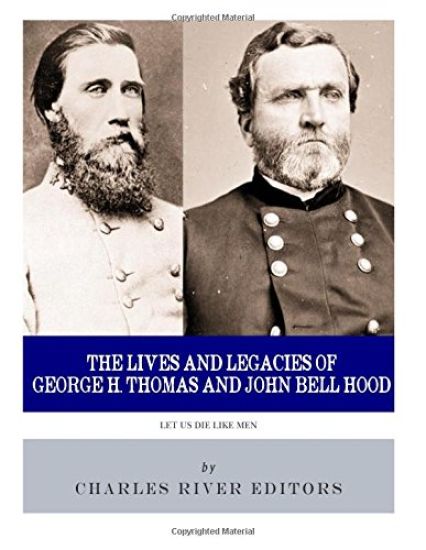
Let Us Die Like Men: The Lives and Legacies of George H. Thomas and John Bell Hood

Let Us Die Like Men: The Lives and Legacies of George H. Thomas and John Bell Hood

Charles River

Createspace Independent Publishing Platform
2018
nidottu
*Includes maps and pictures of Hood, Thomas, and important people, places, and events. *Includes quotes from Hood's memoir describing his fighting in major battles like Antietam and Gettysburg. *Discusses the relationship between Thomas and Hood. " Ulysses S. Grant and George H. Thomas deserve] monuments like those of Nelson and Wellington in London, well worthy to stand side by side with the one which now graces our capitol city of 'George Washington.'" - William Tecumseh Sherman "It could scarcely be said that any of the officers in Longstreet's corps] ... save one had by this date displayed qualities that would dispose anyone to expect a career of eminence. The exception was Hood. ... Anyone who had followed the operations of the Army after Gaines's Mill would have said that of all the officers under Longstreet, the most likely to be a great soldier was Hood." - Douglas Southall Freeman, Lee's Lieutenants The lives and legacies of George H. Thomas and John Bell Hood have been tied to each other for nearly 150 years, and no two Civil War generals could provide a more stark juxtaposition. Hood was an adopted son and a popular figure in the South, where he was widely viewed as both gallant and chivalrous (Mary Chesnut wrote in her famous diary that he was "a beau-ideal of the wild Texans"). Thomas, a Native Virginian, was disowned by his own family and reviled throughout the South for staying with the Union. The intimidating Hood began to make a name for himself as a brigade commander in the Army of Northern Virginia under new commander Robert E. Lee during the Seven Days Battles in 1862, after which he was promoted to division command. For the next several campaigns, he distinguished himself while leading a division under General James Longstreet's I Corps., fighting at places like Antietam, Gettysburg and Chickamauga. Ultimately, Hood's reputation would be undone by his former artillery instructor and antebellum superior: George H. Thomas. Thomas scored almost inconceivable successes at Missionary Ridge, Franklin, and Nashville, and he also skillfully fought at Perryville, Stones River, and in Sherman's Atlanta Campaign. Despite all of those successes, however, Thomas is best remembered as "The Rock of Chickamauga" for an impromptu defensive stand on Horseshoe Ridge that prevented the destruction of the Union army and allowed it to successfully retreat to Chattanooga. Franklin and Nashville would come at Hood's expense. In 1864, Joseph E. Johnston continued to move in the face of Sherman's armies back toward Atlanta, eventually leading to Hood's promotion to command of the Army of Tennessee. Hood aggressively led a series of offensive attacks, failing to dislodge Sherman and only damaging his own army. Sherman eventually took Atlanta anyway. Hood's leadership only got worse during the final months of 1864, culminating in the Franklin-Nashville campaign in which he ordered a massive frontal attack at the Battle of Franklin that left many of his top officers, like Patrick Cleburne, dead on the field. Civil War historian Wiley Ford noted of the campaign, "Never had there been such an overwhelming victory during the Civil War-indeed, never in American military history." After his disgraceful finish, Hood managed to write an account of his service in the Civil War, most of which sought to defend his record while pinning the blame for the Atlanta campaign on General Johnston. Conversely, Thomas eschewed self-promotion and aggrandizement, burning his papers and thus letting his record (and others) determine his legacy. Let Us Die Like Men chronicles the amazing lives and careers of the two commanding generals who fought together before they fought against each other, and it analyzes how the two generals ultimately determined each other's legacy in 1864. Along with pictures, you will learn about Hood and Thomas like you never have before.
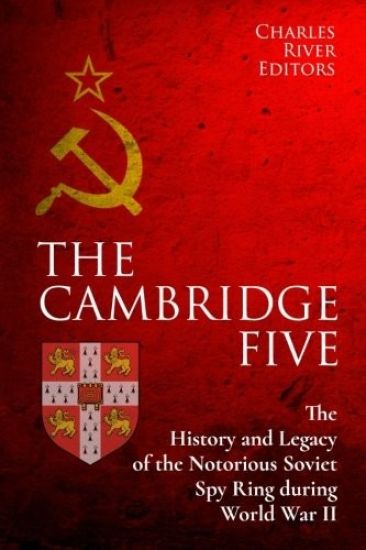
The Cambridge Five: The History and Legacy of the Notorious Soviet Spy Ring in Britain during World War II and the Cold War

The Cambridge Five: The History and Legacy of the Notorious Soviet Spy Ring in Britain during World War II and the Cold War

Charles River

Createspace Independent Publishing Platform
2018
nidottu

Halvin toimitettuna 16,70 €

*Includes pictures *Includes online resources and a bibliography for further reading The spy novel emerged from the intrigues of the mid-20th century for good reason. The war with the Third Reich involved an unseen cloak and dagger struggle between the participants, but beyond that, an even larger and longer contest took place in the shadows. Communism gained its first major foothold in statehood with the success of the Russian Revolution at the end of World War I, a success bizarrely assisted by the massive funding provided to the revolutionaries by some Western businessmen. Armand Hammer's father Julius, for instance, gave the new Soviet Union $50,000 in gold to back their new currency. In exchange he received asbestos mining and oil concessions, plus a pencil manufacturing monopoly in the USSR lasting until the Stalin era. Soviet Russia followed a philosophy demanding international, global revolution - which, in practice, often resembled conquest by any means available, direct or indirect. While the Soviets never hesitated to use naked force when it seemed advisable, or when compelled to it by outside attack, they made intensive use of covert operations - spying, assassination, bribery, infiltration of governments and educational systems, the deployment of agents provocateur and "agitprop" - in an effort to weaken other nations from within or possibly cause takeover by a friendly revolutionary regime. Soviet agents operated in all European countries and others, but their main efforts naturally focused on the strongest potential rivals - Germany, the United States, and Great Britain. Intelligent, persistent, and ruthless, the Soviets succeeded in recruiting a considerable number of agents, including men from the British ruling class. Their activities enabled the Soviets to capture and execute hundreds, if not thousands, of the opponents of their regime along with numbers of British agents. The men responsible for this unprecedented leaking of life-or-death information would enter history as the Cambridge Five - though in fact, they may have been only the core of a much larger group. The Cambridge Five: The History and Legacy of the Notorious Soviet Spy Ring in Britain during World War II and the Cold War chronicles the war's most infamous spy ring and its activities. Along with pictures of important people, places, and events, you will learn about the Cambridge Five like never before.