Kirjojen hintavertailu – 12 903 727 kirjaa ja 27 kauppaa

Kirjailija

Charles River

Kirjat ja teokset yhdessä paikassa: 4 673 kirjaa, julkaisuja vuosilta 2013–2022, suosituimpiin kuuluu William Powell and Myrna Loy: The Lives and Careers of One of Classical Hollywood's Most Iconic Duos. Vertaile teosten hintoja ja tarkista saatavuus suomalaisista kirjakaupoista.

4 673 kirjaa

Kirjojen julkaisuvuodet: 2013–2022.

The Circus Maximus and the Colosseum: The History of Ancient Rome's Most Famous Sports Venues
*Includes pictures *Includes ancient accounts *Includes online resources and a bibliography for further reading The ambitious and fearless emperors that built the legendary Roman Empire from scratch, the broad-shouldered and bronzed gladiators with their iconic plume helmets and glinting swords, and elaborate parties attended by toga-wearing Romans fueled by alcohol, violence, orgies, and other godless acts all paint a picture of Roman life. At the Circus Maximus, the guttural cheers of the spectators reverberated across the enormous open space, but their cries could hardly be heard over the rumble of the ground. On the ellipse-shaped track, 5 charioteers would skew their bodies and steer their magnificent vehicles around the curves. Gusts of sand and dirt flew up from the whizzing wheels and encircled the pounding hooves of the stunning stallions. Distracted personnel and guards dragging their feet were considered fair game. As one chariot careened to the side, preparing to collide with another chariot, a row of guards might have to try to duck out of the way in the nick of time. Some would be trampled by hooves. Chariot races were dangerous for participants too. A charioteer could become disoriented and fail to position himself as his horses moved instinctively, sending his body catapulting forward out of the chariot. Needless to say, chariot racing in Rome was a nail-biting spectacle. When the Colosseum was built in the late 1st century A. D., the Romans, a people known for their architectural acumen, managed to amaze themselves. Martial, a Roman poet writing during the inauguration of the Colosseum, clearly believed the Colosseum was so grand a monument that it was even greater than the other Wonders of the Ancient World, which had been written about and visited endlessly by the Romans and Greeks in antiquity. Indeed, although the Wonders were wondrous to behold, the Colosseum was a spectacular achievement in architecture, something new and innovative, and therefore an amazing "Wonder" in its own way. The Colosseum was designed to be both a symbol and show of strength by the famous Flavian emperors, most notably Vespasian and his sons Titus and Domitian. Vespasian had started the construction of the Colosseum shortly after becoming emperor in 69 A. D., but he died before he could present any spectacles in his giant amphitheatre. That honor went to his son Titus, who celebrated the inaugural opening in 80 A. D. with 100 days of games, despite the fact that the Colosseum was not completely finished. When his brother Domitian came to power in 81 A. D., he finished the amphitheatre, but not without making some changes to the overall design. By the time it was truly finished, the Colosseum stood about 150 feet tall, with the oval in the center stretching nearly two football fields long and over 500 feet across. The Colosseum is a large stadium even by today's standards, and its great size conveys the power of the empire as it dominates the landscape and towers over nearby buildings. Nearly 2,000 years later, the Colosseum still amazes millions of people who come to visit it, and when asked to visualize a monument that represents the Roman Empire, many conjure up an image of the large amphitheater. As Keith Hopkins and Mary Beard put it, the Colosseum is "the most famous, and instantly recognizable, monument to have survived from the classical world." At the same time, the Colosseum also represents the Roman games and spectacles, particularly the gladiatorial combats that so many people today find both abhorrent yet fascinating. Given its massive size and the architectural ingenuity involved, the Colosseum played host to all sorts of games, including massive hunts of exotic animals and even sea battles.
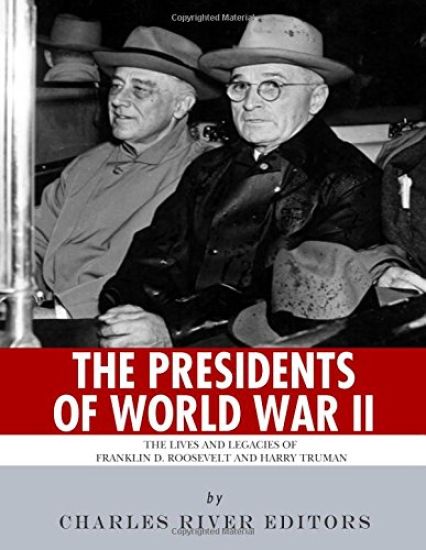
The Presidents of World War II: The Lives and Legacies of Franklin D. Roosevelt and Harry Truman
*Includes pictures of Truman, FDR, and important people, places, and events in their lives. *Includes Truman's most colorful quotes about politics, the Republican Party, and Richard Nixon. Franklin Delano Roosevelt might be America's greatest 20th century president, but there's no question that he was the most unique. A well-connected relative of Theodore Roosevelt, FDR was groomed for greatness until he was struck down by polio. Nevertheless, he persevered, rising through New York politics to reach the White House just as the country faced its greatest challenge since the Civil War, beginning his presidency with one of the most iconic lines ever spoken during an inaugural address. For over a decade, President Roosevelt threw everything he had at the Great Depression, and then threw everything the country had at the Axis powers during World War II. Ultimately, he succumbed to illness in the middle of his fourth term, just before the Allies won the war. When President Franklin Roosevelt died in April 1945, Vice President Truman, somewhat unprepared for the Presidency, now had to fill some of the biggest shoes in American history. Incredibly, Truman had not been informed of the country's secret attempt to build atomic bombs, confiding in his diary after learning about it, "We have discovered the most terrible bomb in the history of the world. It may be the fire destruction prophesied in the Euphrates Valley Era, after Noah and his fabulous Ark." The new president had to usher America through victory in Europe in his first month and decide to drop atomic bombs on Hiroshima and Nagasaki a few months later, but the end of World War II produced only the first of many consequential decisions Truman would face during his nearly 8 years in office. As president, Truman would lay the groundwork for the next 50 years of American foreign policy, as the architect of Cold War containment, the man who signed off on the Marshall Plan, and the commander-in-chief during much of the Korean War. He would also be the president who finally integrated the military, a crucial step on the way to full civil rights for the country's minorities. The Presidents of World War II chronicles the lives and presidencies of the two men who successfully led America through the war, but it also humanizes the aristocratic Roosevelt and the no-nonsense Midwesterner Truman. Along with pictures of important people, places, and events, you will learn about FDR and Truman like you never have before.
The Brooklyn Bridge: The History of New York City's Most Famous Bridge

The Brooklyn Bridge: The History of New York City's Most Famous Bridge

Charles River

Createspace Independent Publishing Platform
2018
nidottu
*Includes pictures *Includes descriptions of the bridge's construction by workers and officials *Includes a bibliography for further reading *Includes a table of contents "Spring and fall in New York are the best seasons here to get out and about. I like the little park in Dumbo between the Manhattan and Brooklyn bridge. I like Prospect Park.." - Paul Dano New York City has countless landmarks and tourist spots, but few are as old or as associated with the city as the Brooklyn Bridge, the giant suspension bridge that spans nearly 1,600 feet as it connects lower Manhattan to Brooklyn. Indeed, the bridge is so old that Manhattan and Brooklyn represented the largest and third largest cities in America at the time of its construction, and the East River posed a formidable enough challenge that taking a ferry across could be dangerous. Originally known as the New York and Brooklyn Bridge and then later as the East River Bridge, the iconic bridge wasn't formally dubbed the Brooklyn Bridge until about 30 years after it was completed in the early 1880s. As the first steel suspension bridge built in America, it represented an enormous engineering feat that claimed the lives of several workers, including its original designer, but by the time it was finished, the Brooklyn Bridge towered nearly 300 feet above the water at over 80 feet wide. With those dimensions, it was over 50% larger than any suspension bridge to date. From its inception, the Brooklyn Bridge has been celebrated as one of the things that makes New York City unique. President Chester Arthur attended its opening, and P. T. Barnum famously walked Jumbo the Elephant across the bridge as a publicity stunt. Yet despite its age and the fact that so many contemporary bridges have fallen into disrepair or were destroyed, the Brooklyn Bridge continues to be not just an instantly identifiable landmark in New York City but also a crucially valuable one that is still used by thousands of people a day. The Brooklyn Bridge chronicles the story of how one of America's most famous bridges was built. Along with pictures of important people, places, and events, you will learn about the Brooklyn Bridge like never before, in no time at all.
The Punic Wars: The History of the Conflict that Destroyed Carthage and Made Rome a Global Power
*Includes pictures *Includes ancient accounts about the wars *Includes online resources and a bibliography for further reading *Includes a table of contents "Ceterum autem censeo Carthaginem esse delendam." ("Furthermore, I consider it imperative that Carthage be destroyed.") - Cato the Elder Carthage was one of the great ancient civilizations, and at its peak, the wealthy Carthaginian empire dominated the Mediterranean against the likes of Greece and Rome, with commercial enterprises and influence stretching from Spain to Turkey. In fact, at several points in history it had a very real chance of replacing the fledgling Roman empire or the failing Greek poleis (city-states) altogether as master of the Mediterranean. Although Carthage by far preferred to exert economic pressure and influence before resorting to direct military power (and even went so far as to rely primarily on mercenary armies paid with its vast wealth for much of its history, it nonetheless produced a number of outstanding generals, from the likes of Hanno Magnus to, of course, the great bogeyman of Roman nightmares himself: Hannibal. However, the Carthaginians' foreign policy had one fatal flaw; they had a knack over the centuries of picking the worst enemies they could possibly enter into conflict with. The first serious clash of civilizations which Carthage was involved with was Greece, which rapidly became hostile when the Carthaginians began pushing to spread their influence towards the colonies known as Magna Graecia ("Great Greece"), which had been established in southern Italy and Sicily by several Greek poleis. These territories would become a casus belli of the First Punic War. Certain foreign policy decisions led to continuing enmity between Carthage and the burgeoning power of Rome, and what followed was a series of wars which turned from a battle for Mediterranean hegemony into an all-out struggle for survival. Although the Romans gained the upper hand in the wake of the First Punic War, Hannibal brought the Romans to their knees for over a decade during the Second Punic War. While military historians are still amazed that he was able to maintain his army in Italy near Rome for nearly 15 years, scholars are still puzzled over some of his decisions, including why he never attempted to march on Rome in the first place. After the serious threat Hannibal posed during the Second Punic War, the Romans didn't wait much longer to take the fight to the Carthaginians in the Third Punic War, which ended with Roman legions smashing Carthage to rubble. As legend has it, the Romans literally salted the ground upon which Carthage stood to ensure its destruction once and for all. Despite having a major influence on the Mediterranean for nearly five centuries, little evidence of Carthage's past might survives. The city itself was reduced to nothing by the Romans, who sought to erase all physical evidence of its existence, and though its ruins have been excavated, they have not provided anywhere near the wealth of archaeological items or evidence as ancient locations like Rome, Athens, Syracuse, or even Troy. Today, Carthage is a largely unremarkable suburb of the city of Tunis, and though there are some impressive ancient monuments there for tourists to explore, the large majority of these are the result of later Roman settlement. The Punic Wars: The History of the Conflict that Destroyed Carthage and Made Rome a Global Power chronicles the three wars and the decisive impact they had on the history of Western Europe. Along with pictures of important people, places, and events, you will learn about the Punic Wars like never before, in no time at all.
Benedict Arnold & Ethan Allen: The Revolutionary War's Most Controversial Leaders

Benedict Arnold & Ethan Allen: The Revolutionary War's Most Controversial Leaders

Charles River

Createspace Independent Publishing Platform
2018
nidottu
*Includes pictures *Includes contemporary accounts *Includes online resources and a bibliography for further reading The story of Ethan Allen and his Green Mountain Boys is one of those delightful tales that American schoolchildren hear about in school, but it is also one that is much more interesting to read about in older age. Unlike revered Founding Fathers such as George Washington and Thomas Jefferson, who came from Virginian plantations, Allen was a rough and tumble frontiersman more likely to fight than talk. And yet, he was in no way a dullard, but instead as well-read as many of his contemporaries and more so than the average man of his day. His family story reads almost like a cheap novel, from his heretic father to his hotheaded brothers and his shrewish first wife. By the time he was 30 years old, Allen had run up a significant list of skirmishes with law, something most of his fellow Revolutionary War heroes managed to avoid. Unlike Washington, who received his military training as a soldier in the famous British Army, Allen learned to fight in the backwoods of what is now Vermont, struggling alongside others for independence years before Jefferson wrote the Declaration of Independence. While Ethan Allen's potential treachery is still a subject for debate, that is certainly not the case for American history's most infamous traitor. On October 7, 1777, Benedict Arnold rode out against orders and led an American assault against British forces led by General John Burgoyne in one of the climactic battles and ultimate turning point of the war at Saratoga. Near the end of the most important American victory of the Revolution, Arnold's leg was shattered by a volley that also hit his horse, which fell on the leg as well. Arnold would later remark that he wish the shot had hit him in the chest. If it had, he would be remembered as one of America's greatest war heroes, and probably second only to George Washington among the generals of the Revolution. In fact, when Arnold was injured at the height of his success in October 1777, he had been the most successful leader of American forces during the war to date. Arnold had been instrumental in the seizure of Fort Ticonderoga in 1775, he constructed the first makeshift American navy to defend Lake Champlain and delay British campaigning in 1776, and he was the principal leader at Saratoga in 1777. Even his unsuccessful campaign to Quebec in the winter of 1775 is remembered primarily for the amazing logistical feats undertaken by Arnold and his men to even reach the target. History has accorded Arnold his fair share of credit for the fighting he participated in from 1775-1777. The problem is his contemporaries did not. Arnold was better on the field than any other American general in those years, but his mercurial personality rubbed some the wrong way, and other self-promoting generals, from Ethan Allen to Horatio Gates, credited themselves with success at Arnold's expense. Meanwhile, the Second Continental Congress frequently if inadvertently slighted Arnold, failing to duly promote him in a timely fashion and failing to pay him four years of back pay even as he spent his own private fortune training, equipping, and feeding his army and navy. Historian William Sterne Randall estimates Congress shorted Arnold out of the equivalent of $275,000. Today, of course, all of that has been overshadowed by Arnold's treacherous plot to turn over West Point to the British in 1780. As every American knows, Arnold's plot was uncovered, and he barely escaped to the British side, where he was just as distrusted and nearly as despised. Though he would serve as a brigadier-general for the British through the end of the war, his personal fortune and reputation were permanently tarnished. The man who could have been one of his country's greatest heroes became its most despised traitor.
The Greatest Civil War Battles: The Battle of Franklin

The Greatest Civil War Battles: The Battle of Franklin

Charles River

Createspace Independent Publishing Platform
2018
nidottu
*Includes pictures *Includes accounts of the fighting by soldiers and generals *Includes online resources and a bibliography for further reading *Includes a table of contents "'Pickett's charge at Gettysburg' has come to be a synonym for unflinching courage in the raw. The slaughter-pen at Franklin even more deserves the gory honor." - Stanley F. Horn, The Army of Tennessee As Sherman began his infamous march to the sea, Lincoln instructed Grant to redirect General George H. Thomas' efforts back to Tennessee to protect Union supply lines and stop the offensive mounted by Confederate general John Bell Hood. Hood had broken away from Atlanta and was trying to compel Sherman to follow him, thus diverting him from his intended path of destruction. With Sherman marching east toward the sea, he directed Thomas to try to block Hood around Nashville. In late November, the Army of the Ohio, being led by Thomas' principal subordinate John Schofield, all but blindly stumbled into Hood's forces, and it was only through luck that some of them had not been bottled up before they could regroup together. Receiving word of Union troop movement in the Nashville area, General Hood sent for his generals while attempting to hold off Schofield's advance. Hood knew that if Schofield reached Thomas' position, their combined armies would number more than twice his. Though the Confederates successfully blocked Schofield's route to Nashville, the Union general managed to execute an all-night maneuver that brought him to Franklin, about 18 miles south of Nashville. On November 30, the Union army began digging in around Franklin, and that afternoon Hood ordered a frontal assault on the dug in Union army which deeply upset his own officers. Hood stressed the necessity of defeating Schofield's forces before Thomas could arrive, though some historians believe his decision to mount a frontal attack was a rash decision made out of fury at the fact Schofield had escaped his grasp. Patrick Cleburne, known as the "Stonewall of the West," was perhaps the most vocally outspoken opponent of the plan, and he suggested a plan to flank the Union position. Hood refused to consider it, and as Cleburne mounted his horse and acknowledged his duty, Cleburne rallied his men and promised Hood, "We will take the works or fall in the attempt " In a more private remark to one of his brigadier generals, Daniel Govan, Cleburne said, "Well, Govan, if we are to die, let us die like men." After repeated frontal assaults failed to create a gap in the Union lines, Schofield withdrew his men across the river on the night of November 30, successfully escaping Hood's army. Meanwhile, Hood had inflicted nearly 8,000 casualties upon his army (men the Confederacy could scarcely afford to lose), while the Union lost about a quarter of that. Despite practically wrecking his army, which was now only about 25,000 strong, Hood marched his battered army to a position outside Nashville, Tennessee, where he took up defensive positions while awaiting reinforcements from Texas. About two weeks later, at the Battle of Nashville, Thomas effectively destroyed Hood's command, inflicting over 6,000 more Confederate casualties while losing less than half that. Civil War historian Wiley Ford noted of the campaign, "Never had there been such an overwhelming victory during the Civil War - indeed, never in American military history." Upon reaching his headquarters at Tupelo, Mississippi, General Hood requested to be relieved of command rather than be removed in disgrace. The Greatest Civil War Battles: The Battle of Franklin analyzes the events leading up to the important Union victory and the climactic fighting itself. Along with pictures of important people, places, and events, you will learn about the Battle of Franklin like never before.
The Greatest Battles in History: The Battle of Berlin and the End of World War II in Europe
*Includes pictures *Includes accounts of the fighting by Berlin residents and Soviet soldiers *Includes footnotes and a bibliography for further reading *Includes a table of contents "On the walls of the houses we saw Goebbels' appeals, hurriedly scrawled in white paint: 'Every German will defend his capital. We shall stop the Red hordes at the walls of our Berlin.' Just try and stop them Steel pillboxes, barricades, mines, traps, suicide squads with grenades clutched in their hands-all are swept aside before the tidal wave. Drizzling rain began to fall. Near Bisdorf I saw batteries preparing to open fire. 'What are the targets' I asked the battery commander. 'Centre of Berlin, Spree bridges, and the northern and Stettin railway stations, ' he answered. Then came the tremendous words of command: 'Open fire on the capital of the Fascist Germany.' I noted the time. It was exactly 8:30 a.m. on 22 April. Ninety-six shells fell in the centre of Berlin in the course of a few minutes." - A Soviet war correspondent While much has been written of the Battle of the Bulge, Okinawa, Midway, Stalingrad, and many other conflicts of the Second World War, the Battle for Berlin has remained in the shadows for many historians. Its importance in toppling Hitler cannot be denied, despite the fact that some thought its strategic value unnecessary to the war itself. The capture of the city and the red Soviet banner hanging victorious over the Reichstag is one of history's most famous (an ominous) images. In the weeks it took for the Battle of Berlin to be fought, an American president passed away, a British Prime Minister had to make concessions he did not desire, a Russian leader fought his way into Western Europe to stay, and a German one took his own life. The battle's implications would be felt for the next 50 years. In April 1945, the Allies were within sight of the German capital of Berlin, but Hitler refused to acknowledge the collapsed state of the German military effort even at this desperate stage, and he confined himself to his Berlin bunker where he met for prolonged periods only with those that professed eternal loyalty, even to the point of death. In his last weeks, Hitler continued to blame the incompetence of military officers for Germany's apparent failings, and he even blamed the German people themselves for a lack of spirit and strength. As their leader dwelled in a state of self-pity, without remorse or mercy but near suicide, the people of Berlin were simply left to await their fate as Russians advanced from the east and the other Allies advanced from the west. Most Berliners had given up hope of a win, and few cared for anything but relief from their circumstances, but Berliners did have a deep fear of which of the victor nations would arrive in Berlin first. The Soviets, closing in from hard fought battles in the east, had lost millions of men in the war already, and with an invasion force 2.5 million strong, they longed for revenge and a chance to right the wrongs of not only this war but the last. Even for Berliners too exhausted to be saddened by a German loss, "liberation" by the Soviets was unthinkable. At the same time, though most believed it would not happen, the Americans and British suddenly appeared to shift priorities regarding the need to take the actual capital city. Since it was "no longer a military objective", according to Eisenhower, it would be left for the Soviet armies to arrive in Berlin first, bringing to fruition many Germans' worst fears. The battle would technically begin on April 16, 1945, and though it ended in a matter of weeks, it produced some of the war's most climactic events and had profound implications on the immediate future. In the wake of the war, the European continent was devastated, leaving the Soviet Union and the United States as uncontested superpowers and ushering in nearly half a century of Cold War.
Sophia Loren: The Life of Italy's Greatest Actress

Sophia Loren: The Life of Italy's Greatest Actress

Charles River

Createspace Independent Publishing Platform
2018
nidottu
*Includes pictures. *Includes Loren's quotes about her life and career. *Includes a bibliography for further reading. "Getting ahead in a difficult profession requires avid faith in yourself. That is why some people with mediocre talent, but with great inner drive, go so much further than people with vastly superior talent." - Sophia Loren Among all the stars in Hollywood, there are few alive who have achieved as iconic a status as Sophia Loren, a stunning beauty whose career started because of an appearance in a beauty pageant in Italy but quickly ascended to the top of the profession. Loren has won every kind of major award, from an Oscar to a Golden Globe, and she has too many lifetime achievements to count. Alongside Shirley Temple and Lauren Bacall, Loren is the only living actress who made the American Film Institute's list as one of the Top 50 actresses of the 20th century, and as one of just 13 on the list born outside the U. S., she is unquestionably Italy's most acclaimed and famous actresses. Loren's glamorous appearances have been seen by millions of viewers over the last 50 years, but few are familiar with what a stark contrast there was between her status as a sex symbol and her difficult childhood. Born in Italy in 1934, Loren's family wasn't well to do, and she came of age during World War II, and being in Italy, her family constantly had to deal with Allied bombing campaigns. In fact, one bombing raid left Loren injured by shrapnel as she attempted to reach shelter. She would later note, "The facts of life are that a child who has seen war cannot be compared with a child who doesn't know what war is except from television." Nevertheless, shortly after the war, she entered a beauty pageant at the age of 14 and was discovered there, leading to a career spanning about 60 years. Sophia Loren: The Life of Italy's Most Famous Actress examines the life and work of one of the world's most famous actresses. Along with pictures of important people, places, and events, you will learn about Loren like never before.
World War II in 1944: The History of the War's Penultimate Year

World War II in 1944: The History of the War's Penultimate Year

Charles River

Createspace Independent Publishing Platform
2018
nidottu
*Includes pictures *Includes accounts of fighting With Allied forces firmly established in Italy, the British and Americans began to plot a much more massive invasion to liberate Western Europe from the Nazis. In December 1943, President Roosevelt appointed General Dwight Eisenhower Supreme Allied Commander for the upcoming invasion, with General Montgomery as the top British commander coordinating with Eisenhower. During the first half of 1944, the Americans and British began a massive buildup of men and resources in England, while the military leaders devised an enormous and complex amphibious invasion of Western Europe. Though the Allies used misinformation to try deceiving the Germans, the sensible place for an invasion was just across the narrow English Channel. The Germans had built coastal fortifications throughout France to protect against just such an invasion, requiring the Allies to use an elaborate battle plan that would include naval and air bombardment, paratroopers, and even inflatable tanks that would be able to fire on fortifications from the coastline, all while landing nearly 150,000 men across nearly 70 miles of French beaches. The Allies would then use their beachhead to create an artificial dock, eventually planning to land nearly 1 million men in France. In June 1944, the Allies waited for the right weather to stage the largest, most complex invasion in military history. On June 6, 1944, General Eisenhower, who had already written a letter apologizing for the failure of the invasion and was carrying it in his coat, commenced the D-Day invasion. From the very beginning of June 6, 1944, events were not going as the Allies had planned. Though the weather was good enough to carry out the amphibious invasion, low cloud-cover caused the Allies' planes to mostly miss German fortifications on their bombing runs. Furthermore, the plan called for tens of thousands of paratroopers to land directly behind German lines, but bad visibility caused many of them to be dropped out of place. And basically none of the operations on the integral Omaha Beach went according to plan. Allied leaders would have likely been astounded to hear that victory in Europe would be achieved in 11 months. Despite the problems, by nightfall the Allies had managed to accomplish their objectives in every landing point, at the cost of about 10,000 casualties. Throughout the summer, Allied forces advanced east along a wide front, liberating vast swaths of France and Western Europe. On August 25, 1944, the Allies finally liberated Paris. While the British, Canadians and Americans pushed east, the Red Army pushed west. During their nearly three year stay in Russia, the Germans had completely burned and destroyed thousands of Russian villages and murdered millions of Russian citizens. The Red Army was seeking revenge by the end of 1944. Facing imminent defeat, Hitler ordered one last desperate offensive against the Allies in December 1944 in the Ardennes, where the Nazis had surprised the French 4 years earlier. Known as the Battle of the Bulge, the Nazis bent but could not break the Allies' advancing lines. Realizing that the Germans were nearing their end, the Allies in the west and the Soviets in the east began the race to Berlin. World War II in 1944: The History of the War's Penultimate Year chronicles the seminal events of 1944. Along with pictures of important people, places, and events, you will learn about World War II in 1944 like never before.
Mozart and Beethoven: The Lives and Legacies of History's Most Famous Composers

Mozart and Beethoven: The Lives and Legacies of History's Most Famous Composers

Charles River

Createspace Independent Publishing Platform
2018
nidottu
*Analyzes the themes and progression of the composers' most famous works, comparing and contrasting them to each other and other composers' great works. *Includes pictures of important people and places. *Includes a bibliography on each composer for further reading. *Includes a list of both composers' works. Wolfgang Amadeus Mozart (1756-1791), baptized Johannes Chrysostom Wolfgangus Theophilus Mozart, is widely considered to be the culminating figure of the Classical Period in music, which spanned much of the 18th to early 19th centuries. As such, he is remembered as one of Western Civilization's most prodigious and spontaneous natural talents, on par with Leonardo da Vinci and Johann Sebastian Bach. Mozart once called music "my life", and indeed few were as naturally gifted at it. Mozart's memory and genius for music allowed him to compose lengthy works, even full-length operas, without transferring them to paper until he had fully visualized and retained them. He regarded copying as a tedious task, and this caused no small amount of consternation among performers, in particular the orchestra, some of whom received their parts minutes before curtain. This was said to be the case for the premiere of Don Giovanni, where Mozart was furiously scrawling and handing out parts to the overture with the audience in attendance. Surprisingly, these entire works, sometimes hundreds of pages, not penned until they were complete in his mind, usually arrived to the manuscript without a single blemish or change of heart. Mozart's eccentricities are remembered centuries after his death, to the point that much of his life, illnesses and death have been mythologized, and today a lot of his legacy has been shaped by the manner in which his personality has been depicted in biographical works like Amadeus. Among all of history's greatest musicians, few have been as admired or influential as Ludwig van Beethoven, whose name remains synonymous with composing. Works like his Fifth and Ninth symphonies remain instantly recognizable over 200 years after they were composed, and their sweeping and grandiose nature are made all the more amazing by the fact that their author was gradually going deaf and couldn't hear music very well by the time he was composing them. Similarly, the "Moonlight Sonata" and "F r Elise" are renowned across the world and are some of the most famous piano pieces of all time. At the same time, Beethoven's work ushered in a new era in art, helping the transition from the Classical era to the Romantic era. In the 180 years since his death, Beethoven has been enshrined by modern society as one of the most esteemed classical composers in the history of civilization, but he had a profound and immediate influence on the German musical lineage that would pass through Robert Schumann, Richard Wagner, Gustav Mahler and Richard Strauss all the way to composers of the 20th and early 21st centuries. At a time when music was very much viewed as science, Beethoven was a giant in the field, and as such he was viewed as a genius. As Beethoven himself once put it, "Music is the one incorporeal entrance into the higher world of knowledge which comprehends mankind but which mankind cannot comprehend." Mozart and Beethoven comprehensively analyzes the themes and revolutionary advancements of both composers' music, looking at their most famous works and comparing and contrasting them. Along with pictures of important people, places, and events, you will learn about Mozart and Beethoven like never before, in no time at all.
Tenochtitlan: The History of the Aztec's Most Famous City

Tenochtitlan: The History of the Aztec's Most Famous City

Jesse Harasta; Charles River

Createspace Independent Publishing Platform
2018
nidottu
*Includes pictures. *Explains the history of Tenochtitlan from its founding to its destruction by Cortes and the Spanish. *Includes descriptions of Tenochtitlan by Spanish conquistadors, including Cortes' 1520 letter to Holy Roman Emperor Charles V. *Describes the layout of Tenochtitlan and its important structures. *Includes footnotes and a bibliography for further reading. "When we saw so many cities and villages built in the water and other great towns on dry land... we were amazed and said that it was like the enchantments they tell of in the legend of Amadis, on account of the great towers and buildings rising from the water and all built of masonry. And some of our soldiers even asked whether the things that we saw were not a dream... I do not know how to describe it, seeing things as we did that had never been heard of or seen before, not even dreamed about." - Bernal D az del Castillo Mexico City is now easily the largest city in the Western Hemisphere, trailing only Tokyo internationally, but unlike the other great cities of the Americas, Mexico City is not a new place. Mexico City instead has much in common with cities like London, Delhi or Cairo in the East in that it is an ancient city dating back centuries before the arrival of Colombus in Hispa ola. For, while much (including the name) has changed, Mexico City is the mighty Tenochtitlan, capital of the Aztec Empire and the great American metropolis of the Spanish Empire. There has been no break in occupation, and despite much devastation in the Conquest, the city was never fully destroyed. Indeed, from the moment Spanish conquistador Hernan Cort s first found and confronted them, the Aztecs have fascinated the world, and they continue to hold a unique place both culturally and in pop culture. Nearly 500 years after the Spanish conquered their mighty empire, the Aztecs are often remembered today for their major capital, Tenochtitlan, as well as being fierce conquerors of the Valley of Mexico who often engaged in human sacrifice rituals. But thanks to the Spanish conquest, even though the Aztecs continue to interest people across the world centuries after their demise, it has fallen on archaeologists and historians to try to determine the actual history, culture, and lives of the Aztecs from the beginning to the end, relying on excavations, primary accounts, and more. Much of what is known today does come from the Conquistadores, and what those men encountered was entirely unexpected: one of the world's greatest cities, teeming with over 200,000 people, built on an island on a lake and connected to the shore by a number of long, broad stone causeways. On the water itself were remarkable floating gardens, on surrounding shorelines were sprawling suburbs, and behind them was a dramatic wall of mountain peaks. Tenochtitlan: The History of the Aztec's Most Famous City comprehensively covers the history of the city, examining what life was like in the great city, who ruled the city, and what the day-to-day existence of all sorts of Tenocha (people of the city) was like. Along with pictures and a bibliography, you will learn about Tenochtitlan like you never have before, in no time at all.
The Battle of Tippecanoe: The History and Legacy of the American Victory That Ended Tecumseh's War
*Includes pictures *Explains the roles played by Tecumseh and William Henry Harrison before, during, and after the battle *Includes various accounts of what happened at the battle according to both sides *Includes a bibliography for further reading *Includes a table of contents The Battle of Tippecanoe, fought on November 7, 1811 near present-day Lafayette, Indiana, involved forces of fewer than 2,000 Native American warriors and white soldiers, and only about 300 men were killed or wounded on both sides. Given those numbers, it's apparent that the battle was far from being a Saratoga or a Gettysburg in terms of its scale or significance as an historical turning point, yet it was one of the most important battles in shaping American history during the early 19th century. The battle also involved an epic confrontation between two important American figures: William Henry Harrison, who would become the 9th president of the United States by running on his success in the battle, and the Shawnee war chief Tecumseh, arguably the most famous Native American leader in American history. From the American Revolution up through the Battle of Tippecanoe, Native Americans in the Old Northwest (today's Midwestern states) had been putting up stout resistance to that region's settlement by white land speculators and settlers. Things came to a head when Tecumseh and his brother, the Prophet Tenskwatawa, spearheaded a movement in the region that greatly influenced the area's Native Americans. In 1806, Harrison began to publicly denounce Tenskwatawa to other tribal leaders, calling him a fraud and charlatan, but the Shawnee Prophet responded by accurately predicting a solar eclipse, which embarrassed Governor Harrison, and after this event, which tribal leaders took as a sign of Tenskwatawa's authenticity, his movement grew even more rapidly. By 1808, Tenskwatawa and his followers had moved west and founded a large, multi-tribal settlement near the confluence of the Tippecanoe and Wabash Rivers, called Prophetstown or Tippecanoe. Assisted by his brother Tecumseh, Tenskwatawa's settlement grew tremendously and eventually became the largest Native American settlement in the region. It also served as a Native American cultural center and provided a steady cadre of warriors ready to hear the Prophet's message that they should return to their ancestral lifestyles and force the white settlers and their culture out of their territory. Although accounts of the battle conflict, all agree that sentinels aroused the main body of the American troops when they detected Native American warriors attacking the Americans' perimeter from the south. The initial Native American attack struck the southern point of the defensive perimeter around 4:30 a.m. on November 7, 1811, and almost immediately the warriors rushed in among the American defenders manning that sector. Soldiers defending the southern side of the perimeter suffered the highest casualties, with the Yellow Jackets suffering a 30% casualty rate, but in fighting lasting about two hours Harrison's force of roughly 1,000, suffered only 62 dead and about 120 wounded. As the sun rose, the warriors began running low on ammunition, and the light revealed their small numbers, leading them to break off the attack and retreat towards Prophetstown. The battle was hardly a decisive victory, but at the end of the fighting the Americans still held their perimeter, allowing them to claim victory. While Tippecanoe was clearly not a total victory, and Native American resistance would continue through the War of 1812, the battle is widely considered the end of Tecumseh's War and did help bring about the decline of Native American ascendancy in the region. The Battle of Tippecanoe: The History and Legacy of the American Victory That Ended Tecumseh's War analyzes the background that led up to the battle and its aftermath.
The Most Important Meetings of the Allies during World War II: The History of the Tehran Conference, Yalta Conference, and Potsdam Conference
*Includes pictures *Includes eyewitness accounts of the conferences *Includes online resources and a bibliography for further reading Separated by vast gulfs of political, cultural, and philosophical divergence, the three chief Allied nations of World War II - the United States, the Soviet Union, and Great Britain - attempted to formulate a joint policy through a series of three conferences during and immediately after the conflict. The first meeting took place in Tehran in late 1943, while the fate of World War II still hung in the balance. The fate of World War II hung in the balance in 1943. On the Eastern Front, the opposed juggernauts of the Wehrmacht, army of Adolf Hitler's Third Reich, and the Red Army, the military force of Josef Stalin's Soviet Union, grappled in a nearly apocalyptic battle. Black smoke rose into the steppe air from burning vehicles strewing the landscape, while millions of men maneuvered, fought, and died in a series of brutal encounters. Meanwhile, the Western Allies succeeded in ousting the Germans from North Africa, then took Sicily with Operation Husky and landed in Italy. There, the tough, hardened warriors of the German military turned the Italian peninsula into a vast fortress; these seasoned fighters made the determined Anglo-American forces pay a bitter price for each mountain ridge, river crossing, and stony valley swept by cunningly-placed gun emplacements. Adolf Hitler's Third Reich had scant time remaining when the "Big Three" met at the Yalta Conference in February 1945 to discuss the future of Germany, Europe, and the postwar world as a whole. No doubt existed regarding the war's outcome; the Americans had shattered the Wehrmacht's desperate last throw in the west, the Ardennes Offensive, during the Battle of the Bulge in the weeks immediately preceding Yalta, and the Soviet front lay just 50 miles east of Berlin, with the Red Army preparing for its final push into the Reich's capital after a successful surprise winter campaign. Among the agreements, the Conference called for Germany's unconditional surrender, the split of Berlin, and German demilitarization and reparations. Stalin, Churchill and Roosevelt also discussed the status of Poland, and Russian involvement in the United Nations. By this time Stalin had thoroughly established Soviet authority in most of Eastern Europe and made it clear that he had no intention of giving up lands his soldiers had fought and died for. The best he would offer Churchill and Roosevelt was the promise that he would allow free elections to be held. He made it clear, though, that the only acceptable outcome to any Polish election would be one that supported communism. Though it came so shortly after Yalta, the Potsdam Conference also highlighted a turnover of leadership on the world stage. British Prime Minister Winston Churchill, who gave his nation hope in the darkest days of World War II, had suffered a stunning defeat at the hands of the Labor candidate Clement Attlee, who replaced him towards the end of the Conference. President Franklin Delano Roosevelt died prior to the meeting, leading to his replacement by the new president Harry S. Truman, a keen-minded pragmatist whose intense focus on America's advantage contrasted with Roosevelt's internationalism. Only General Secretary Josef Stalin, dictator of the Soviet Union, remained unchanged from the earlier summit. World War II was so horrific that in its aftermath, the victorious Allies sought to address every aspect of it to both punish war criminals and attempt to ensure that there was never a conflict like it again. World War II was unprecedented in terms of the global scale of the fighting, the number of both civilian and military casualties, the practice of total war, and war crimes. World War II also left two undisputed, ideologically opposed superpowers standing, shaping global politics over the last 65 years.
The Stasi: The History and Legacy of East Germany's Secret Police Agency

The Stasi: The History and Legacy of East Germany's Secret Police Agency

Charles River

Createspace Independent Publishing Platform
2018
nidottu
*Includes pictures *Includes online resources and a bibliography for further reading " T]he Stasi often used a method which was really diabolic. It was called Zersetzung, and it's described in another guideline. The word is difficult to translate because it means originally "biodegradation". But actually, it's a quite accurate description. The goal was to destroy secretly the self-confidence of people, for example by damaging their reputation, by organizing failures in their work, and by destroying their personal relationships. Considering this, East Germany was a very modern dictatorship. The Stasi didn't try to arrest every dissident. It preferred to paralyze them, and it could do so because it had access to so much personal information and to so many institutions." - Hubertus Knabe, German historian The history of East Germany was closely intertwined with the development of its security services, specifically the Stasi. In an era of totalitarian countries dominated by repressive state agencies, the Stasi stood out for its size, and the sheer breadth and depth of its surveillance. Films such as Das Leben der Anderen ("The Lives of Others") encapsulated post-unification attitudes and conceptions of both life in East Germany and the activities of the Stasi. Despite its notoriety, the legacy of the Stasi is contested in modern Germany. Former West Germans, and Westerners more generally, closely align the East German state and the Stasi, framing a "Stasi State." Those in the former East Germany, however, resent the patronizing attitudes and conflation of the two institutions, preferring to focus on the social elements of the East German state. Uwe Spiekermann, of the German Historical Institute, succinctly sets out the impressions of many when considering East Germany and its culture of surveillance: "In retrospect, the Stasi has become a symbol for the GDR East Germany]." The East German State Security Service, or Staatssicherheitsdienst in German (abbreviated to Stasi) was formed in 1950. It purported to be the state's "shield and sword" and closely monitored much of the population for the next 40 years. Some of the figures are startling. By the end of the 1980s, Stasi files were kept on six million out of 18 million inhabitants. When the Stasi archives were opened in the 1990s, files were discovered that stretched for 178 kilometers. Over the course of East Germany's existence, up to two million people acted as spies, and 90,000 people worked at the Ministry, not to mention the numerous "unofficial" informers. East Germany also had a much-feared foreign intelligence arm of its intelligence services, the HV A (German: Hauptverwaltung A or central department), which proved expert at infiltrating West German society and running operations in numerous other countries. But why did the Stasi form, and how did it prove so effective? Answering those questions requires understanding the unique circumstances in which East Germany was formed, as well as politics in Germany at the end of World War II and the start of the Cold War. The Stasi: The History and Legacy of East Germany's Secret Police Agency examines the history of one of the most notorious agencies in history. Along with pictures depicting important people, places, and events, you will learn about the Stasi like never before.
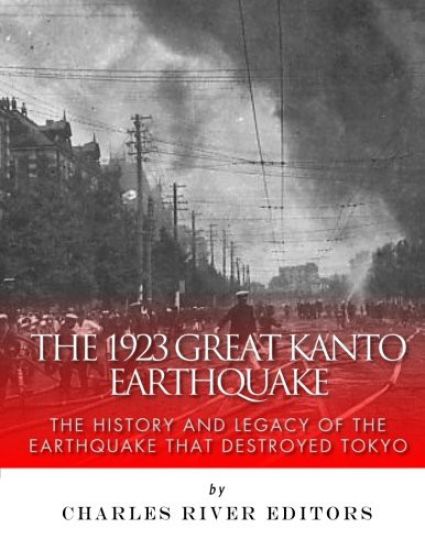
The 1923 Great Kanto Earthquake: The History and Legacy of the Earthquake That Destroyed Tokyo
*Includes pictures *Includes accounts of the earthquake and subsequent fires by survivors *Includes a bibliography for further reading *Includes a table of contents Of the numerous disasters, both natural and man-made, to strike Japan during the 20th century, the Great Kanto Earthquake was among the worst, and the most significant. The massive earthquake struck the Japanese capital region, including the cities of Tokyo and Yokohama, shortly before noon on Saturday, September 1, 1923, causing immense physical destruction. Buildings collapsed, crushing their occupants, and a tsunami assaulted miles of coastline, depositing boats well inland and dragging people, structures, and debris out to sea. In both Tokyo and Yokohama, the tremors set off firestorms that raged for days across the dense, wooden cityscapes. In all, the earthquake left perhaps 140,000 dead and more than 2 million homeless, transforming East Asia's most prosperous and modern urban area into a scorched, burned-out wasteland. On the day of the earthquake, according to the Buddhist figure Takashima Beiho, "Nature raged all at once, collapsing the pillars of the sky and snapping the axis of the earth. The big city of Tokyo, the largest in the Orient, at the zenith of its prosperity, burned down and melted away over two days and three nights." Together, the earthquake and firestorm killed somewhere between 100,000 and 150,000, left more than a million homeless, and destroyed billions of yen worth of property. The best estimates are that up to 75% of all buildings in Tokyo were destroyed or seriously damaged, and while all of Tokyo was afflicted, the low city especially suffered. The five city wards in which damage was greatest (90% or more) were all located in the low city. The proud neighborhoods around Nihonbashi and Kyobashi were particularly gutted, and many symbols of the Mieji-era shitamachi, such as the original Shinbashi Station, the Mitsukoshi Department Store, the Asakusa Twelve-Stories, were destroyed in the conflagration. A few other emblematic buildings survived, most notably the Asakusa Kannon and, famously, Frank Lloyd Wright's Imperial Hotel, but the earthquake truly marked the beginning of the end of the low city's preeminence as a center for culture and entertainment. Of course, the significance of the Great Kanto Earthquake was not restricted to the material destruction it caused. In the immediate wake of the disaster, anarchy reigned through the streets of Tokyo, and before the last of the firestorms had even been extinguished, panicked residents spread rumors and gathered into armed vigilante groups, ultimately leading to thousands of deaths by mob violence. Police and municipal authorities found themselves powerless in the face of this chaos, and order was only restored when the Japanese government declared martial law and sent in the army to occupy the nation's own capital. Thus, the unrest following the Great Kanto Earthquake served at once to exacerbate tensions between Japan and its Korean colony, and it also burnished the reputation of the Japanese military as the one national institution upon which a troubled people could depend in a time of crisis. These developments would ultimately serve the nation poorly as it headed towards World War II. The 1923 Great Kanto Earthquake: The History and Legacy of the Earthquake That Destroyed Tokyo chronicles the earthquake and its aftermath. Along with pictures of important people, places, and events, you will learn about the earthquake like never before, in no time at all.
Anne Bradstreet: The Life and Legacy of the Famous Puritan Poet in the American Colonies
*Includes pictures *Includes contemporary accounts *Includes online resources and a bibliography for further reading "And when I could no longer look, I blest His grace that gave and took, That laid my goods now in the dust. Yea, so it was, and so 'twas just. It was his own; it was not mine. Far be it that I should repine." - Anne Bradstreet, "Upon the Burning of Our House July 10th, 1666" One of the greatest dangers of any generation is to see those who came before as one-dimensional characters with little to nothing to offer in the way of understanding of modern life. For instance, it is assumed by many that the Puritans who founded Massachusetts were a grim, dour lot devoted to spreading their strict, religious views across society. To some extent, this is true, but of course, not all Puritans were the same; there were outliers who made their own way within their culture and yet remained true to their own sense of self. Anne Bradstreet and her husband, Simon, were two of these people. Anne Bradstreet was born into an unusual family that, in the early years of the 17th century, believed in educating daughters as well as sons. She then moved to the American wilderness as a young bride and proceeded to produce children and poetry at nearly equal speed in the years that followed. Historian Theodore Stanton observed, "The most of her poems were produced between 1630 and 1642, that is, before she was thirty years old; and during these years she had neither leisure, nor elegant surroundings, nor freedom from anxious thoughts, nor even abounding health. Somehow, during her busy lifetime, she contrived to put upon record compositions numerous enough to fill a royal octavo volume of 400 pages, - compositions which entice and reward our reading of them, two hundred years after she lived." Anne also had the dubious honor of being the daughter of one governor of Massachusetts colony, the wife of another, and the sister of a third. This repeatedly put her in a unique position to shape, no matter how subtly, the culture of the early colony, and New England's early openness to at least basic education stems in part from her influence. On top of all this, she was the first published poet from the North American colonies, beating out the men who would follow her by a number of years. Anne Bradstreet: The Life and Legacy of the Famous Puritan Poet in the American Colonies examines Bradstreet's influential work. Along with pictures depicting important people, places, and events, you will learn about Anne Bradstreet like never before.
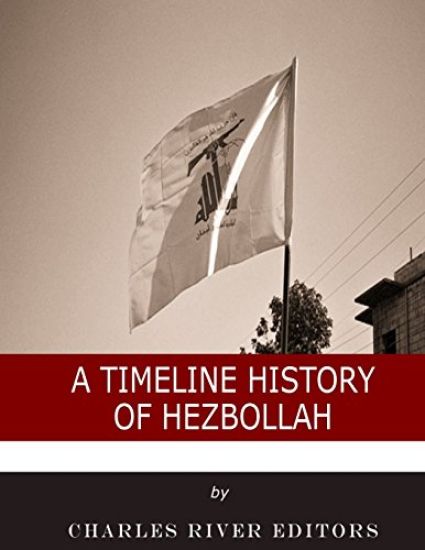
A Timeline History of Hezbollah

A Timeline History of Hezbollah

M. Clement Hall; Charles River

Createspace Independent Publishing Platform
2018
nidottu
*Discusses the origins of Hezbollah and important leaders like Nasrallah. *Explains Hezollah's regional relationships with various nations in the MIddle East. The phrase "east meets west" is a worn clich , but it is entirely appropriate for Lebanon, which is situated at the western end of the trade routes from Asia and the eastern end of the sea routes to Europe through the Mediterranean. It has thus bred seafarers and traders, and even today there is a widespread Diaspora of Lebanese merchants. As one of the most diverse nations in the Middle East, Lebanon has at times enjoyed a strong reputation for its cultural history (with Beirut often being compared to Paris), but it has also experienced destructive conflicts sown by social, political and religious divides, both within itself and among its neighbors. All of these factors would ultimately contribute to the formation of Hezbollah ("The Party of God"), the Shi'ite militia that is now widely considered one of the most powerful non-state groups in the world. Though their name is instantly recognizable across much of the globe, the history of Hezbollah is extremely complex. The various interests in Lebanon led to the eruption of civil war in the country in 1975, which included the participation of Syria, and the fighting was compounded when Israel invaded and occupied the southern part of Lebanon to combat members of the Palestine Liberation Organization and other Palestinians who had taken refuge in camps there. The result was a witch's brew of inter-connected alliances between forces in Lebanon, which consisted of Shiite militias, Sunni militias, Christian militias, Druze militias, Syria and Israel. In the early 1980s, Hezbollah formed with the goal of ending Israeli occupation of Lebanon, which would not fully occur until 1999, when Israel began a unilateral withdrawal from the security zone in southern Lebanon. Hezbollah filled in the vacuum in southern Lebanon and took credit for forcing Israel out, thus bolstering their standing in Lebanon, especially among the Shiite community. Far from being a local militia, however, Hezbollah has spent the past decade expanding its geopolitical influence across the Middle East. In addition to playing an important role in Lebanese politics (and recently becoming part of the government), Hezbollah cultivated ties with Syria, Iran and Hamas in opposition to Israel, which fought a controversial and deadly summer war against Hezbollah in southern Lebanon in 2006 but failed in their mission to destroy or severely damage them. And with the Arab Spring having consequences across the region and particularly in Syria, the ties between the different state and non-state actors are constantly evolving. A Timeline History of Hezbollah chronicles this complex state of affairs, charting the rise of the organization to power, the influential leaders behind it, the group's fighting against Israel, and what the future might hold. Along with pictures of important people, places, and events, This history will bring readers up to speed on one of the world's most important groups today.
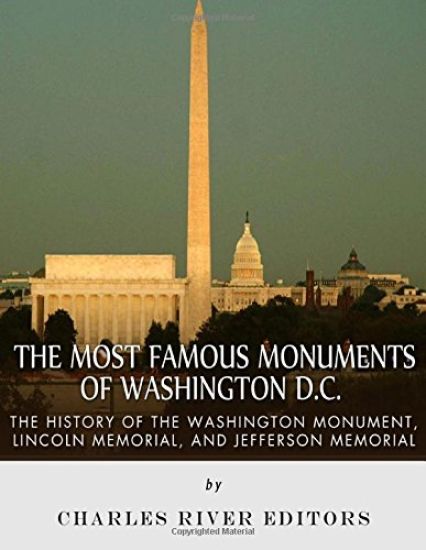
The Most Famous Monuments of Washington D.C.: The History of the Washington Monument, Lincoln Memorial, and Jefferson Memorial
*Includes pictures *Includes accounts of the origins and construction of the monuments written by people who worked on them *Includes bibliographies for further reading *Includes a table of contents People have always loved symbols and monuments, and monumental architecture has always been as much symbolic as functional. The pyramids of ancient Egypt were artificial mountains expressing the link of the pharaoh to the gods, and mountains have always been associated with the divine in the human imagination. The Colossus of Rhodes, the Roman Senate House and Temple of Capitoline Jove, the Grand Teocalli and Tzompantli or skull-rack of the Aztec capital Tenochtitlan, the Forbidden City of Peking, the Parisian Arc de Triomphe de l'Etoile and the Brandenburg Gate of Berlin, all provide or provided material focuses for national ideals, beliefs, and culture. There are countless ways that Washington, remembered as "first in war, first in peace, and first in the hearts of his countrymen," has been commemorated across America, but the most famous is the Washington Monument. Congress had actually called for establishing a monument to Washington as far back as 1783, but it would not be until the 1830s that work on the world's tallest obelisk began in earnest. In fact, while the Washington Monument is taken as a given today, and it was designed to be "unparalleled in the world, and commensurate with the gratitude, liberality, and patriotism of the people by whom it is to be erected," there were several issues that nearly prevented it from being a reality, including political arguments, costs, and lack of progress. Though it may be hard to believe, the Washington Monument was not dedicated until the 1880s, nearly half a century after it was first proposed. By the time it was finished, however, it was clear that the wait was worth it. Soaring nearly 550 feet into the air, the Washington Monument was the tallest structure in the world upon its completion, and it immediately began drawing hundreds of thousands of visitors, who could either climb stairs to the top or ride an elevator. The monument has remained one of the most instantly recognizable structures in the world ever since. There are countless ways that the Great Emancipator has been commemorated across America, but the most famous is the Lincoln Memorial, which would not be completed until well over half a century after his death. Lincoln had called upon Americans to bind up their wounds in his Second Inaugural Address, and in many ways the memorial was the result of the country's sectional reconciliation, making it all the more fitting. In the end, the time it took to complete the memorial was worth the wait, as the finished product included a masterfully sculpted statue of Lincoln sitting in the middle of a giant structure that immediately brings to mind an Ancient Greek or Roman temple. Situated across the National Mall from the Washington Monument, the Lincoln Memorial is perfectly positioned, and thanks to Lincoln's presidency and freeing of the slaves, the memorial has become a poignant symbol for protests, especially at the height of the Civil Rights Movement when Martin Luther King, Jr. gave his "I Have a Dream" speech. Jefferson's life and career are still sometimes fiercely debated today. As a result, it's only fitting that the Jefferson Memorial would also be majestic and controversial. A tranquilly elegant neoclassical building fronted by slender pillars and topped by a gently domed roof, the Jefferson Memorial stands among other American monuments near the shores of the Tidal Basin in Washington D. C. Housing a five-ton, nineteen foot tall statue of Thomas Jefferson, the building looks as though it could be as long-established as the White House itself, but it is actually much newer. Facing opposition on several fronts when it was first proposed, including outcries from those who objected to its neoclassical style.
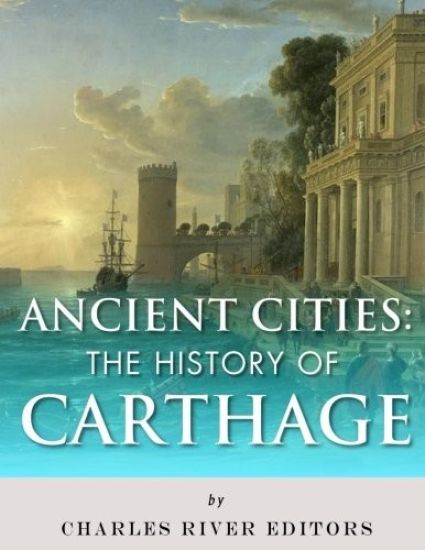
Ancient Cities: The History of Carthage

Ancient Cities: The History of Carthage

Charles River

Createspace Independent Publishing Platform
2018
nidottu
*Includes pictures depicting important people and places. *Comprehensively covers Carthage's rise and fall, including the Punic Wars. *Includes a bibliography for further reading. "Ceterum autem censeo Carthaginem esse delendam." ("Furthermore, I consider it imperative that Carthage be destroyed.") - Cato the Elder At its peak, the wealthy Carthaginian empire dominated the Mediterranean against the likes of Greece and Rome, with commercial enterprises and influence stretching from Spain to Turkey, and at several points in history it had a very real chance of replacing the fledgling Roman empire or the failing Greek poleis (city-states) altogether as master of the Mediterranean. Although Carthage by far preferred to exert economic pressure and influence before resorting to direct military power (and even went so far as to rely primarily on mercenary armies paid with its vast wealth for much of its history, it nonetheless produced a number of outstanding generals, from the likes of Hanno Magnus to, of course, the great bogeyman of Roman nightmares himself: Hannibal. Through clever use of force projection, both by maintaining a large and very active navy to dominate the seaborne routes along which most of their vast trading empire's lifeblood flowed and by paying allies with gold or recruiting mercenary armies to fight for them, Carthage was able to go from a minor Phoenician settlement to one of the most powerful trading empires of antiquity. However, the Carthaginians' foreign policy had one fatal flaw; they had a knack over the centuries of picking the worst enemies they could possibly enter into conflict with. The first serious clash of civilizations which Carthage was involved with was Greece. Unfortunately for the Carthaginians, it would not endure the next major confrontation. Certain foreign policy decisions led to continuing enmity between Carthage and the burgeoning power of Rome, and what followed was a series of wars which turned from a battle for Mediterranean hegemony into an all-out struggle for survival, with Hannibal crossing the Alps and threatening Rome itself during the Second Punic War and Roman legions smashing Carthage to rubble at the end of the Third Punic War. As legend has it, the Romans literally salted the ground upon which Carthage stood to ensure its destruction once and for all. Despite having a major influence on the Mediterranean for nearly five centuries, little evidence of Carthage's past might survives. The city itself was reduced virtually to nothing by the Romans, who sought to erase all physical evidence of its existence, and though its ruins have been excavated they have not provided anywhere near the wealth of archaeological items or evidence as ancient locations like Rome, Athens, Syracuse, or even Troy. Today, Carthage is a largely unremarkable suburb of the city of Tunis, and though there are some impressive ancient monuments there for tourists to explore, the large majority of these are the result of later Roman settlement. Ancient Cities: The History of Carthage comprehensively covers the history of Rome's famous rival, analyzing the rise and fall of the Carthaginian empire. Along with pictures and a bibliography, you will learn about Carthage like you never have before, in no time at all.