Kirjojen hintavertailu – 12 903 727 kirjaa ja 27 kauppaa

Kirjailija

Charles River

Kirjat ja teokset yhdessä paikassa: 4 673 kirjaa, julkaisuja vuosilta 2013–2022, suosituimpiin kuuluu William Powell and Myrna Loy: The Lives and Careers of One of Classical Hollywood's Most Iconic Duos. Vertaile teosten hintoja ja tarkista saatavuus suomalaisista kirjakaupoista.

4 673 kirjaa

Kirjojen julkaisuvuodet: 2013–2022.

The Ancient Olympic Games: The History and Legacy of Ancient Greece's Most Famous Sports Event
*Includes pictures. *Includes ancient accounts about the Games. *Includes a bibliography for further reading. "The most important thing in the Olympic Games is not winning but taking part; the essential thing in life is not conquering but fighting well."- Epictetus "Many are the sights to be seen in Greece, and many are the wonders to be heard; but on nothing does Heaven bestow more care than on the Eleusinian rites and the Olympic games." - Pausanias While they are still well-known, the Olympic Games of Ancient Greece are more relevant today than most people know, and the ways in which athletic sports pervade contemporary culture is comparable only to the spirit of athleticism in Hellenic Greece. Today, a large section of the media industry is devoted exclusively to sports, and in some nations, sports even figures as a critical component of their identity. In America, the Super Bowl could be considered a holiday of sorts, and of course, today's Olympic Games capture the attention of millions and millions of people around the world for two weeks. The Ancient Olympic Games were all these things and then some. It was a ritualized spectacle of great cultural importance in Greece, as well as an international communion that celebrated both diversity and unity, but most importantly, it was an ode to the strength of the human body and a paean to the vigor of the human spirit. For over a thousand years, from the 8th century BC to the 4th century AD, competitors and spectators traveled from all over Europe and Asia Minor to attend the legendary contests, bringing with them not only their passion for athletics but also their poetry, music, arts, and ideas. The ancient historian Strabo captured the spirit well when he described the Olympics: "... the glory of the temple persisted ... on account both of the festal assembly and of the Olympian Games, in which the prize was a crown and which were regarded as sacred, the greatest games in the world. The temple was adorned by its numerous offerings, which were dedicated there from all parts of Greece." Despite their international character, the Ancient Olympic Games belonged exclusively to the Greeks, even though prior to Alexander the Great, Ancient Greece consisted mostly of small city-states that warred constantly with each other. The Olympic Games served to assemble them and allow them to appreciate the commonality of their customs, gods, language, and other cultural characteristics, the very things that made them Greek. The historian Pausanias explained just how important the games were to the Greeks and their sense of pride by discussing one of the Olympics' best athletes: "Sotades at the ninety-ninth Festival was victorious in the long race and proclaimed a Cretan, as in fact he was. But at the next Festival he made himself an Ephesian, being bribed to do so by the Ephesian people. For this act he was banished by the Cretans." The Ancient Olympic Games: The History and Legacy of Antiquity's Most Famous Sports Competitions examines the origins of the games, highlights the competitions, and looks at the history and legacy of the events that spawned today's modern Olympics. Along with pictures depicting important people, places, and events, you will learn about the Ancient Olympics like never before, in no time at all.
The Ancient Lydians: The History and Legacy of the Iron Age Kingdom of Lydia

The Ancient Lydians: The History and Legacy of the Iron Age Kingdom of Lydia

Charles River

Createspace Independent Publishing Platform
2018
nidottu
*Includes pictures *Includes accounts of the Lydians from ancient historians and contemporary records *Includes footnotes, online resources and a bibliography for further reading *Includes a table of contents "When all these nations had been added to the Lydian empire, and Sardis was at the height of her wealth and prosperity, all the great Greek teachers of that epoch, one after another, paid visits to the capital." - Herodotus Of all the empires and kingdoms in the ancient world, few could compare with the Lydians in terms of wealth and opulence. From the early 7th century BCE until the middle of the 6th century BCE, the Lydians played an important role in the history of the eastern Mediterranean region as they took on the role of middleman between the empires of the Near East and the emerging Hellenic civilization in Greece. From their capital in Sardis, the Lydian kings traded and made alliances and war with numerous kings, tyrants, and generals, which ultimately cemented their role as a brief but historically important people and kingdom in the ancient world. An examination of the Lydian people and their kingdom reveals that their power did not materialize overnight, but was instead a long process, dependent upon several factors. The primary factor contributing to Lydia's success was its wealth. The Lydians were fortunate enough to possess large deposits of precious metals within in their territory, but how they exploited and utilized those resources is what truly made them successful. They were the first people to invent a currency which not only allowed them to create a thriving economy within their own territory, but gave them tool with which to influence both their friends and enemies abroad. The wealth of Lydia impressed non-Lydians to the point that even the most sublime Greek philosophers who generally eschewed wealth, praised the high culture of Lydia and the Lydian people in general and the greatness of their capital city of Sardis in particular. Lydia was also successful because its kings were shrewd, politically savvy men who knew the supreme art of diplomacy. The Lydian kings would make alliances based not only on their immediate interests, but also with a view to the future, as they would often play one kingdom against another. Ultimately, despite their wealth and guile, the Lydians found themselves the victims of the Achaemenid Persian juggernaut, which consumed their kingdom, along with many others, in the mid-6th century BCE. But even after Lydia was conquered by the Persians, the Lydian people, and especially the city of Sardis, continued to play an important role in the history of the region. The Ancient Lydians: The History and Legacy of the Iron Age Kingdom of Lydia looks at the history of one of the most influential empires to ever take root in Anatolia. Along with pictures depicting important people, places, and events, you will learn about the Vandals like never before, in no time at all.
The Amish: The History and Legacy of One of America's Oldest and Most Unique Communities
*Includes pictures *Includes Amish proverbs and descriptions of Amish life *Includes online resources and a bibliography for further reading "We live simply so others may simply live." - Amish Proverb Back in the 16th century, the Protestant Reformation took Europe by storm. The havoc wreaked saw the split of churches and the emergence of the Amish, led by Jakob Ammann. By the 18th century, a group of Amish had crossed the seas to the United States, where they made their home, and today the Amish are now one of the fastest-growing populations in the world. Buggies, straw hats, long and plain dresses in shades of blue and black, charming log cabins reminiscent of the Little House on the Prairie - this is often the mental image that comes to mind when one thinks of the Amish. Nowadays, many have become accustomed to being within a 10 foot radius of at least 3 pieces of technology every hour of the day. World news and current events has never been more readily available, accessible by just a touch of a fingertip. Yet there exists a collection of cultures worldwide that steer clear of contemporary society for a range of reasons. These communities, which also come in various forms dispersed around the world, are the descendants of the Swiss Anabaptist movement. The Amish are famed for their simple living, commitment to sanctity, and being a community that seems to be at a standstill in time. What is less known about them is the deep culture, tradition, and faith, making them one of the most unique in the constellation of communities that have ever graced civilization. Americans have heard of the Amish, but most know little about them. They are often seen as unconventional and strictly religious, but quiet, calm folk who keep to themselves. Those who have heard of them know of their rejection of electricity and most, if not all modern aspects of life. Those who have taken a gander at the dozens of "reality shows" that have sprung up over recent years may have even heard of the ever-so-famous - but often inaccurately depicted - Rumspringa. But beyond the buggies and prayer bonnets lies an intriguing culture that has remained strictly loyal to its roots. The Amish: The History and Legacy of One of America's Oldest and Most Unique Communities explores the history, customs, and inner-workings of the Amish communities, as well as the criticisms and controversies associated with them over the years.. Along with pictures of important people, places, and events, you will learn about the Amish like never before.
The Al-Nusra Front: The History of the Syrian Rebel Group Formerly Affiliated with Al-Qaeda
*Includes pictures *Explains the group's ideology and differences with the Islamic State *Includes online resources, footnotes, and a bibliography for further reading *Includes a table of contents Since the Arab Spring uprising of 2011, reports of terrorist attacks around the world have flooded international media. Syria, a country about one and half times the size of Texas, has become the central battleground for many terrorist groups; those the world often focuses on and has heard much of--such as the Islamic State of Iraq and the Levant (also known as ISIS and Da'ash, but from here on referred to as ISIL)--and those the world rarely hears about and is unable to make distinctions between others--such as Jabhat Al-Nusra. Despite the lack of focused attention on its activities, Jabhat Al-Nusra (or, the Nusra Front as it is sometimes referred to) has built quite a reputation in Syria and the greater Middle East for its seemingly endless supply of weapons, ability to ally with strategic partners, and its peculiar mix of international, albeit notorious, supporters inside the country. Jabhat Al-Nusra's formal name is, "Jabhat Al-Nusra li-Ahl al-Sham," or, the "Victorious Support Front for the People of Sham (or, Syria)" and the group first emerged on the international scene in early 2012 as a localized Syrian affiliate of Al-Qaeda in Iraq. The group has carried out numerous terrorist attacks and kidnappings, and has been involved in a variety of battles against Bashar Assad's Syrian government forces as well as against other anti-government factions such as ISIL. The complexity of the Syrian Civil War is most definitely reflected in the complexity of the groups fighting for power within and around its borders; Jabhat Al-Nusra is no exception. The group's relationship with ISIL, Al-Qaeda, and the other militant factions within Syria is complicated and appears often conflictual: as of the time of this writing, Jabhat Al-Nusra had announced its split from Al-Qaeda in Iraq (AQI) but analysts believe this is nothing more than a re-branding technique to attract all fighting elements in Syria to be under its own umbrella of control. The international community's response to the Syria Civil War has been quite disorganized. The United States was quick to support the protester movements across the region during the Arab Spring which put Syrian President Bashar Assad on high alert. As the war commenced inside Syria, Russia was quick to rush to Assad's defense and aid both inside the country and to the international community more generally. This situation pitted the U. S. and Russia against each other once again which left the Syrian people in between. Jabhat Al-Nusra took this as an opportunity to fill in the gap where the world's superpowers failed them. Not only is Al-Nusra attempting to gain legitimacy within the country, they want to show the world they are the only force fighting for the Sunnis of Syria. From the summer of 2014 to 2016, the U. S.-led coalition has focused much of its effort on destroying the brutal ISIL whose territory encompasses parts of both Iraq and Syria. Al-Nusra has capitalized on ISIL's time in the spotlight and carved its own niche among Syrians, developing relationships and carrying out small scale battles against the Assad regime and rival rebel militant groups around the country. This has been particularly attractive to countries like Turkey and Qatar, whose feel their own position in the region may shift depending on the outcome of the war and the United States' changing relationship with Iran. Al-Nusra certainly appears more appealing than ISIL. In late July 2016, Al-Nusra evolved once more by changing its name to Jabhat Fatah Al-Sham and officially cutting ties with Al-Qaeda. According to analysts, this move is just another step in a long-term effort for Al-Nusra to make itself seem different than the other groups it competes with in the region.
The Age of Tyrants: The History of the Early Tyrants in Ancient Greece

The Age of Tyrants: The History of the Early Tyrants in Ancient Greece

Charles River

Createspace Independent Publishing Platform
2018
nidottu
*Includes pictures *Includes ancient accounts of the tyrants *Includes a bibliography for further reading "States are as the men are; they grow out of human characters. Like State, like man." - Plato, The Republic Tyranny in ancient Greece was not a phenomenon limited to any particular period. Tyrants could be found in power throughout Greece, ruling poleis from the 7th century B. C. right through to the 2nd century B. C., when Roman domination effectively put an end to this form of government throughout the Hellenistic world. That said, the heyday of tyranny was undoubtedly the 7th and 6th centuries B. C., and it is in this period, known as the "Age of Tyrants," that large numbers of tyrannies arose, particularly in the Peloponnese. The "Age of Tyrants" ended on the Greek mainland with the expulsion of the Peisistratidai in 510 B. C., but it continued in other parts of the Greek world, particularly in the Greek cities of Sicily, where tyranny did not finally end until the removal of Dionysius II of Syracuse in 344 B. C. In Asia Minor, tyranny survived the Persian conquest until the days of the Roman conquest. The governments of the majority of the Greek states in the Archaic and Classical periods were in the hands of local aristocrats, and it is a modern preoccupation with the Athenian democracy or Sparta's unique system that has tended to obscure this fact. Oligarchy was the norm, and political power derived from wealth and birth. As the wealth of city states grew, so, too, did the number of citizens who, despite personal wealth, found themselves outside the very limited aristocratic elite that conspired to maintain the political power of the few. These disenfranchised "new" men came, more and more, to resent their lack of political influence, and this dissatisfaction was fueled by the increasing use of the hoplite as the main weapon of the period, which brought all male citizens closer to each other and emphasized the interdependence that existed between individuals. The sense of camaraderie engendered a growing understanding of the potential power of the armed citizen. With that realization came the emergence of individuals who were not prepared to accept the status quo but instead were willing to exploit the discontent and the power of the citizen body to seize power for themselves. Aristotle noted that tyrants generally combined the role of a general with that of a popular leader, demagogos. To the ruling elites such a usurper was known as turannos or tyrant. The Age of Tyrants: The History of the Early Tyrants in Ancient Greece looks at the various people, places, and reigns during a crucial part of Ancient Greek history. Along with pictures depicting important people, places, and events, you will learn about tyrants in Greece like never before.
The Adams Family: The Lives and Legacies of Samuel, John, Abigail and John Quincy Adams
*Weaves the lives and work of the Adams family into one entertaining and educational narrative. *Includes several quotes and writings from Samuel, John, John Quincy and Abigail. *Includes pictures of the Adams family and important people, places, and events in their lives. *Includes a Bibliography for further reading. "The liberties of our Country, the freedom of our civil constitution are worth defending at all hazards: And it is our duty to defend them against all attacks." - Samuel Adams "A Constitution of Government once changed from Freedom, can never be restored. Liberty, once lost, is lost forever." - John Adams "Remember the Ladies, and be more generous and favourable to them than your ancestors. Do not put such unlimited power into the hands of the Husbands." - Abigail Adams "My toast would be, may our country always be successful, but whether successful or otherwise, always right." - John Quincy Adams The American Revolution had no shortage of compelling characters with seemingly larger than life traits, including men like the multi-talented Benjamin Franklin, the wise Thomas Jefferson, the mercurial John Adams and the stoic George Washington. But no Revolutionary leader has been as controversial as Samuel Adams, who has been widely portrayed over the last two centuries as America's most radical and fiery colonist. Among his contemporaries, Samuel Adams was viewed as one of the most influential colonial leaders, a man Thomas Jefferson himself labeled "truly the Man of the Revolution" and the one who the Boston Gazette eulogized as the "Father of the American Revolution." Samuel was an outspoken opponent of British taxes in the 1760s, one of Boston's hardest working writers and orators, a leader of the Boston Caucus, active in the Sons of Liberty, and a political leader who organized large gatherings in settings like Faneuil Hall and the Old South Meeting House. When cousin John Adams was an Ambassador to France during the Revolution, he had to explain that he was not the "famous" Adams. John Adams remained a celebrated figure in Boston for all the work he did in Massachusetts before and after the Revolution, but his national reputation has experienced quite a renaissance over the past decade, beginning with David Mccullough's best selling biography in 2001, followed in 2008 by the popular HBO series based on it. While her time as First Lady was important, Abigail Adams remains one of the most recognized and respected First Ladies in American history due to her voluminous correspondence with John when they were separated throughout the American Revolution, as she remained in Massachusetts while John found himself in the thick of politics during his time in the Continental Congress and over in France. In addition to providing a comprehensive account of the inner workings of both politics and the home front during that important chapter in history, the letters also demonstrated the strong intellectual and emotional bond the two of them shared, allowing historians a glimpse of just how influential Abigail was on her husband's ideology and decision making. John Quincy Adams set a lot of firsts for his country. In addition to being the first son of a president to become president himself, John Quincy Adams also managed to be a U. S. Senator, a U. S. House Representative, a Secretary of State, and an ambassador to several countries. Though he is known primarily for his presidential races against Andrew Jackson, there is a general consensus among historians that he is one of America's greatest and most skilled diplomats, responsible for successes such as the Treaty of Ghent (which ended the War of 1812), the annexation of Florida from Spain, and the Monroe Doctrine. The Adams Family chronicles the lives, work and writings of one of the nation's most important families, analyzing their relationships with each other and their lasting legacies.
The 1968 Democratic National Convention: The History of America's Most Controversial Political Convention
*Includes pictures *Profiles the race for the nomination in 1968 *Includes accounts of the riots and some of the turmoil inside the convention hall *Includes online resources and a bibliography for further reading *Includes a table of contents "This is fantastic and it's only Sunday night. They might declare martial law in this town." - Jerry Rubin, one of the Yippie leaders, August 25, 1968 "Law and order will be maintained." - Chicago Mayor Richard Daley In 1968, the Republican Convention was a display of congeniality and unity, despite the various factions each supporting a separate candidate. Choosing Spiro Agnew as his running mate, Richard Nixon won the nomination on the first ballot, with Ronald Reagan moving to make it unanimous. Conservatives such as Barry Goldwater and Strom Thurmond immediately joined in the support. From that moment, the results of Nixon's work since the 1962 defeat took effect, and he demonstrated himself to be a far more thoughtful and careful candidate than in the past. The image of a "New Nixon" emerged, "more statesmanlike, less combative, more mature and presidential." The Democrats, on the other hand, were in terrible disarray. The Vietnam War raged with no honorable end in sight, President Kennedy had been assassinated several years before, and public unrest at home grew by the day. Even still, when Senator Eugene McCarthy decided to throw his hat into the ring in 1968, it was a surprise, but it was an even greater one when he was only narrowly defeated in the first primary in New Hampshire on March 12th. Though President Lyndon B. Johnson had won the primary, the close margin made him appear vulnerable, an unusual position for a sitting president, and after McCarthy's close shave in New Hampshire, Senator Bobby Kennedy judged the time was right to enter the race. With "Camelot" still fresh in America's minds, he declared his candidacy for the Presidency of the United States, and Bobby announced his candidacy from the same location where his brother had announced his own 8 years earlier: the Russell Senate Office Building in Washington. The McCarthy campaign charged that he was an opportunist, relying on McCarthy's initial candidacy before declaring its own, but regardless, the Kennedy name continued to attract Americans across the country, and Bobby seemingly represented another chance at Camelot. Kennedy seemed to be on the rise during the summer, only to be assassinated by Sirhan Sirhan on the night he won the California primary. At this point, Johnson's own vice president, Hubert Humphrey, entered the race despite having not competed at all during the first half of the year. In 1968, the process of electing a nominee was not as well established as it is today. In fact, far from today's process, not all states held a primary; at the time, only 13 states held primaries. At the convention, the anti-war faction did not fully line up behind McCarthy as expected, and Humphrey won the nomination in one of the ugliest convention displays in American history. Today, the 1968 Democratic National Convention is less known for its results - Vice President Humphrey was nominated and Maine's Edmund Muskie was chosen as his running mate - and much better known for the protests that culminated with riots in Chicago outside of the convention hall. Police intervention on the convention floor and the violence outside were all witnessed on live television, and the fiasco left the Democratic Party shattered and running from far behind. In an additional twist, Alabaman George Wallace mounted a national campaign as the candidate for the American Independent Party, receiving significant support in the Deep South. As a result, Republican candidate Richard Nixon, who had been all but banished from political life after the loss in 1960 to John F. Kennedy, won the 1968 election by almost half a million votes, good enough to create an electoral landslide.
The 1936 North American Heat Wave: The History of America's Deadly Heat Wave during the Dust Bowl and Great Depression
*Includes pictures *Includes newspaper accounts and individual accounts of the heat wave *Includes online resources and a bibliography for further reading "People caught in their own yards grope for the doorstep. Cars come to a standstill, for no light in the world can penetrate that swirling murk.... The nightmare is deepest during the storms. But on the occasional bright day and the usual gray day we cannot shake from it. We live with the dust, eat it, sleep with it, watch it strip us of possessions and the hope of possessions." - Avis D. Carlson While farmers were planting crops, the seeds were also being sown for a natural disaster once a severe drought hit the prairie land in the 1930s. Due to a lack of proper dryland farming methods, wind erosion and the drought combined to create horrific dust storms that devastated wide swathes of Great Plains and even reached cities on the East Coast like New York City and Washington, D. C. It's estimated that the dust storms affected about 100 million acres during the decade, uprooting not just soil but tens of thousands of people as their farms and families suffered. With farms failing across vast portions of Texas, Oklahoma, New Mexico Colorado and Kansas, those who could no longer support themselves became migrants, moving to other states like California, but the country was still in the throes of the Great Depression. As a result, there was a unique class of suffering that was documented not only in pictures but in graphically realistic novels like John Steinbeck's The Grapes of Wrath. Pictures of abandoned farms that looked like post-apocalyptic ghost towns helped drive the crisis home. At the height of the Dust Bowl came a heat wave in 1936, and ironically, the weather early that year did not exactly suggest that heat would be a problem. December 1935 was seasonably cold, and February 1936 was downright frigid. In fact, February was the coldest month in the nation's history, with a number of cities recording record low temperatures. As a result, when the weather began to warm up in March and April, people breathed a sigh of relief, but it kept getting warmer, and rain ceased to fall in some areas. By May, there was a crisis building, even as people maintained hope that each rainstorm would end the heat wave. They were wrong. June saw temperatures rise to unseasonably warm levels across the American West, as even the normally cool Rocky Mountains became uncharacteristically warm. The end of the month saw the heat wave spread south, as normally warm states grew unbearably hot, setting record high temperatures in excess of 110 degrees. Eight record highs that registered in June 1936 still stand today, and July saw no improvement in the temperatures. The heat was bad in the Plains, and at the same time, a sudden heat wave hit the rest of the nation, driving temperatures through the roof along the East Coast. 13 states in the nation recorded temperatures over 110, with some places in Kansas, North Dakota, South Dakota, and Oklahoma passing 120. To make matters worse, many areas failed to cool off in the evenings, driving some residents to sleep outside on their lawns to find relief. August saw hotspots shift slightly south, as Arkansas, Oklahoma and Texas recorded temperatures in excess of 120. By the end of the summer, the heat wave had killed thousands across the nation, and it was still far from over. Humidity remained low, making the heat somewhat more bearable, but it exacerbated the nationwide drought that kept killing crops. The heat and drought became front page news that even President Roosevelt had to address on a regular basis. The 1936 North American Heat Wave: The History of America's Deadly Heat Wave during the Dust Bowl and Great Depression looks at one of the toughest years in American history. Along with pictures of important people, places, and events, you will learn about the heat wave like never before.
The Cathars: The History and Legacy of the Gnostic Christian Sect During the Middle Ages
*Includes pictures *Includes medieval accounts *Includes online resources and a bibliography for further reading "The Roman Church... says] that the heretics they persecute are the church of wolves. But this is absurd, for the wolves have always pursued and killed the sheep, and today it would have to be the other way around for the sheep to be so mad as to bite, pursue, and kill the wolves, and for the wolves to be so patient as to let the sheep devour them " - Excerpt from the alleged writings of the Cathars The unique, copper-red hue of the naturally cracked earth on the foothills of the French Pyrenees is obviously stunning, but if the rumors are to be believed, they, too, are rich with medicinal properties. For centuries, locals have been scooping up and bottling the precious dirt and turning them into an array of poultices, salves, and even tonics. This land is also home to several legends and local traditions. When the earth is drenched by heavy storms, the crumbling red soil drifts into the River Aude, staining the water with crimson. This beautiful, yet haunting phenomenon, which the locals call the "blood of the Cathars," is a symbolic reminder of the blood shed by these "heretics" at the hands of the Catholic Church. Despite the controversial events, and their supposed heresy, it seemed that the fall of the Cathars brought an everlasting curse upon the region. As one unnamed farmer, documented by French medievalist Jean Duernoy, put it, "Since the heretics were chased away from Sabartes, there is no longer good weather in this area." Another notary from Tarn echoed his sentiments, asserting, "When the heretics lived in these lands, we did not have so many storms and lightning. Now that we are with Franciscans and Dominicans, the lightning strikes more frequently..." But who were these Cathars, and why was the Catholic Church so committed to getting rid of them? The Cathars: The History and Legacy of the Gnostic Christian Sect During the Middle Ages examines the origins of the cult, their fascinating belief system, their gradual development over the years, and the events that contributed to their epic downfall. Along with pictures depicting important people, places, and events, you will learn about the Cathars like never before.
The House Un-American Activities Committee: The History and Legacy of Congress' Most Notorious Investigative Committee
*Includes pictures *Profiles the Alger Hiss case before Committee *Includes testimony from various Hollywood actors before the Committee *Includes online resources and a bibliography for further reading *Includes a table of contents "I've said many a time that I think the Un-American Activities Committee in the House of Representatives was the most un-American thing in America " - Harry Truman, 1960 In 1947, at the start of the Cold War, President Truman tried to assure Americans who were worried about Communists in government that he was "not worried about the Communist Party taking over the Government of the United States, but I am against a person, whose loyalty is not to the Government of the United States, holding a Government job. They are entirely different things. I am not worried about this country ever going Communist. We have too much sense for that." Nonetheless, shortly after World War II, Congress' House Committee on Un-American Activities (HUAC) began investigating Americans across the country for suspected ties to Communism. The most famous victims of these witch hunts were Hollywood actors, such as Charlie Chaplin, whose "Un-American activity" was being neutral at the beginning of World War II, but at the beginning of the Cold War, many Americans had the Red Scare. In a similar vein, Wisconsin Senator Joseph McCarthy would make waves in 1950 by telling the Republican Women's Club in Wheeling, West Virginia that he had a list of dozens of known Communists working in the State Department. Among the people called before HUAC, perhaps none are as controversial as Alger Hiss. Hiss had graduated from Harvard Law, after which he worked as a clerk for Supreme Court Justice Oliver Wendell Holmes, worked in the Roosevelt administration for the Agricultural Adjustment Association, and was Head of the Carnegie Endowment for International Peace. That background didn't exactly sound like one held by a Soviet spy, let alone a Communist, but Elizabeth Bentley, a former Communist, notified the Committee about a suspected spy ring and named several names, including Hiss. More notably, Hiss was also accused of being a Communist and Soviet spy by an admitted Communist, Whittaker Chambers. With the Communist threat at the fore during the early '50s, HUAC became one of the most influential governmental bodies in America, but when McCarthyism was discredited during the McCarthy-Army hearings in the middle of the decade, the anti-Communist crusaders fell into disrepute. In 1969, Thomas Geogheghan wrote in the Harvard Crimson, "In the fifties, the most effective sanction was terror. Almost any publicity from HUAC meant the 'blacklist.' Without a chance to clear his name, a witness would suddenly find himself without friends and without a job. But it is not easy to see how in 1969 a HUAC blacklist could terrorize an SDS activist. Witnesses like Jerry Rubin have openly boasted of their contempt for American institutions. A subpoena from HUAC would be unlikely to scandalize Abbie Hoffman or his friends." As Geogheghan's assertions suggest, HUAC was well in decline by the time the '60s dawned, a fact so obvious that HUAC actually tried to restore its reputation by changing its name to the Internal Security Committee in 1969. Nevertheless, a few years later, the committee's authority was rolled into the House Judiciary Committee's, bringing to an end one of Congress' most controversial chapters. The House Un-American Activities Committee: The History and Legacy of Congress' Most Notorious Investigative Committee chronicles the origins of the Committee and its work during World War II and the Cold War. Along with pictures of important people, places, and events, you will learn about HUAC like never before.
The Special Air Service: The History of the Secret British Special Forces Unit from World War II to Today
*Includes pictures *Includes online resources and a bibliography for further reading "The passive resistance to war, in which we have acquitted ourselves so well, must come to an end." - Prime Minister Winston Churchill Europe's attempts to appease Adolf Hitler, most notably at Munich in 1938, failed, as Nazi Germany swallowed up Austria and Czechoslovakia by 1939. Italy was on the march as well, invading Albania in April of 1939. The straw that broke the camel's back, however, was Germany's invasion of Poland on September 1 of that year. Two days later, France and Great Britain declared war on Germany, and World War II had begun in earnest. Of course, as most people now know, the invasion of Poland was merely the preface to the Nazi blitzkrieg of most of Western Europe, which would include Denmark, Belgium, and France by the summer of 1940. The resistance put up by these countries is often portrayed as weak, and the narrative is that the British stood alone in 1940 against the Nazi onslaught, defending the British Isles during the Battle of Britain and preventing a potential German invasion. At the beginning of 1941, it was unclear whether the Allies would be able to remain in the war for much longer. British Prime Minister Winston Churchill had already immortalized the men of the Royal Air Force with one of the West's most famous war-time quotes, but the potential of a German invasion of Britain still loomed. With the comfort of hindsight, historians now suggest that the picture was actually more complex than that, but the Battle of Britain, fought throughout the summer and early autumn of 1940, was unquestionably epic in scope. The largest air campaign in history at the time, the vaunted Nazi Luftwaffe sought to smash the Royal Air Force, but thankfully, the RAF stood toe to toe with the Luftwaffe and ensured Hitler's planned invasion was permanently put on hold. The Allied victory in the Battle of Britain inflicted a psychological and physical defeat on the Luftwaffe and Nazi regime at large, and as the last standing bastion of democracy in Europe, Britain would provide the toehold for the June 1944 invasion of Europe that liberated the continent. For those reasons alone, the Battle of Britain was one of the decisive turning points of history's deadliest conflict. Of course, that was all in the future, and things still looked bleak in 1941. Traditionally, defeated armies resorted to guerrilla warfare, at least those unwilling to acknowledge defeat, but the British were certainly not prepared to do that just yet. What the situation produced was one of the most storied covert special forces units in military history, one that influenced several other Western nations. The Special Air Service: The History of the Secret British Special Forces Unit from World War II to Today chronicles the major events and the hidden history of the SAS. Along with pictures of important people, places, and events, you will learn about the British SAS like never before.
The Hittites and Lydians: The History and Legacy of Ancient Anatolia's Most Influential Civilizations
*Includes pictures *Includes ancient accounts and passages about the civilizations *Includes a bibliography for further reading "Whoever after me becomes king resettles Hattusas, let the Stormgod of the Sky strike him " - A Hittite inscription found at the capital city of Hattusa The pages of world history textbooks contain a litany of "lost" empires and civilizations, but usually, upon further review, it is revealed that these so called lost empires are often just lesser known cultures that had a less apparent impact on history than other more well-known civilizations. When one scours the pages of history for a civilization that was inexplicably lost, but had a great impact during its time, very few candidates can be found, but the Hittites are a notable example. In fact, the Hittites are an ancient people who remain somewhat enigmatic, and perhaps little known to most people, but their influence on the ancient Near East is undeniable. From high on their capital of Hattusa in central Anatolia, the Hittites were able to conquer and control a kingdom that roughly comprised the area of the modern nation-states of Turkey, Syria, and parts of Iraq and Lebanon through a combination of brute military force and shrewd diplomatic machinations. Compared to some of their contemporaries - including the Egyptians, Assyrians, and Babylonians - the Hittites were somewhat distant both culturally and geographically. With that said, the influence of the Hittites on the politics, economy, and overall situation of the ancient Near East cannot be understated; the Hittites were a force to be reckoned with while they existed. The sources used to reconstruct Hittite history and chronology are many and varied, and since the Hittites were a literate people who developed a fairly sophisticated corpus of literature, ancient Hittite archives can be used to reconstruct events. The Egyptian sources also provide excellent details on events that either the Hittites refused to mention in their own texts, have not been discovered yet, or have been lost to the ages. Of course, modern archaeology has also helped to fill in the knowledge about Hittite civilization, especially in regards to palace and religious life in the ancient capital of Hattusa. Of all the empires and kingdoms in the ancient world, few could compare with the Lydians in terms of wealth and opulence. From the early 7th century BCE until the middle of the 6th century BCE, the Lydians played an important role in the history of the eastern Mediterranean region as they took on the role of middleman between the empires of the Near East and the emerging Hellenic civilization in Greece. From their capital in Sardis, the Lydian kings traded and made alliances and war with numerous kings, tyrants, and generals, which ultimately cemented their role as a brief but historically important people and kingdom in the ancient world. The Lydians were fortunate enough to possess large deposits of precious metals within in their territory, but how they exploited and utilized those resources is what truly made them successful. They were the first people to invent a currency which not only allowed them to create a thriving economy within their own territory, but gave them tool with which to influence both their friends and enemies abroad. The wealth of Lydia impressed non-Lydians to the point that even the most sublime Greek philosophers who generally eschewed wealth, praised the high culture of Lydia and the Lydian people in general and the greatness of their capital city of Sardis in particular. Lydia was also successful because its kings were shrewd, politically savvy men who knew the supreme art of diplomacy. But ultimately, despite their wealth and guile, the Lydians found themselves the victims of the Achaemenid Persian juggernaut, which consumed their kingdom, along with many others, in the mid-6th century BCE.
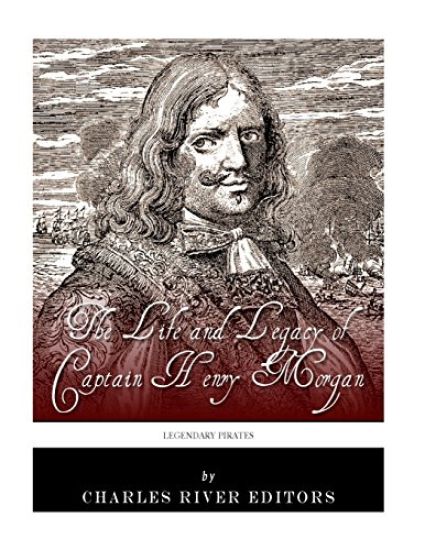
Legendary Pirates: The Life and Legacy of Captain Henry Morgan

Legendary Pirates: The Life and Legacy of Captain Henry Morgan

Charles River

Createspace Independent Publishing Platform
2018
nidottu
*Includes historic illustrations depicting Morgan and important events in his life. *Includes excerpts from an account of Morgan's piracy written by his ship's surgeon. *Analyzes Morgan's legacy and current efforts to find some of his sunken pirate ships. *Includes a Bibliography for further reading. The people who have lived outside the boundaries of normal societies and refused to play by the rules have long fascinated the world, and nowhere is this more evident than the continuing interest in the pirates of centuries past. As the subjects of books, movies, and even theme park rides, people continue to let their imaginations go when it comes to pirates, with buried treasure, parrots, and walking the plank all ingrained in pop culture's perception of them. Charles River Editors' Legendary Pirates series covers the lives, piracy, legends, myths, and legacies of history's most famous pirates. Although Captain Morgan has become somewhat synonymous with spiced rum in the 21st century, Henry Morgan has been one of the best known pirates and privateers for centuries, long before an alcohol was named after him. The swashbuckling captain, who fought nearly as hard as he drank, has long been a favorite among authors looking to write exciting novels about pirates, beginning with Captain Blood, written by Rafael Savtinin during the late 1800s. John Steinbeck wrote about him in Cup of Gold in 1929, and Berton Braley composed a poem about him, aptly titled This is the ballad of Henry Morgan, a few years later. James Michner devoted a chapter to Morgan in his 1989 hit Caribbean, and he inspired Michael Crichton's character in Pirate Latitudes, Charles Hunter. Of course, few young people reach adulthood without drinking too much Captain Morgan spiced rum at least once in their lives, and most people are instantly familiar with a "Captain and Coke", but Morgan's name is all over the Western hemisphere too. Those who have partied and vacationed in the Caribbean Islands are also familiar with Morgan, and many have stayed at the Hotel Henry Morgan in Honduras or at the Port Morgan resort in Haiti. Some of the wealthiest may have stayed at Captain Morgan's Retreat and Vacation Club in Belize. Even gamers have met Morgan in Sid Meier's Pirates and the Age of Pirates 2. In addition to being one of the most famous pirates, there is more of a historical record about Morgan than most, in no small part due to the fact that Morgan had certain advantages many subsequent pirates did not enjoy. Morgan was a Welshman born into aristocracy, subsequently served in the Royal Navy, and viewed piracy as more of a way to serve his country than it was to line his own pockets (though he did plenty of that too.) As a result, Morgan acted with the approval and support of the Crown, which was only too happy to have Morgan and others sail to the Americas and steal from archenemies like Spain. Morgan would go on to have a daring and lucrative career, engaging in adventurous attacks that were legendary in their own time for their success. Legendary Pirates: The Life and Legacy of Captain Henry Morgan looks at the life and legacy of the famous pirate, attempting to separate fact from fiction. Along with pictures depicting Captain Morgan and important people, places, and events in his life, you will learn about the captain like you never have before, in no time at all.

Spain's Explorers in the Age of Discovery: The Lives and Legacies of Christopher Columbus, Hernán Cortés, Francisco Pizarro and Ferdinand Magellan
*Includes extracts from Columbus's journal of his first voyage. *Includes Cortes's letter to King Charles V describing Tenochtitlan and the Aztec Empire. *Includes passages from Antonio Pigafetta, a member of Magellan's crew. *Includes descriptions of both the Aztec and Inca Empires. *Includes pictures of the explorers and important people and places in their lives. *Includes a Bibliography for further reading. "At two o'clock in the morning the land was discovered... As I saw that they were very friendly to us, and perceived that they could be much more easily converted to our holy faith by gentle means than by force, I presented them with some red caps, and strings of beads to wear upon the neck, and many other trifles of small value, wherewith they were much delighted, and became wonderfully attached to us." - Christopher Columbus's diary, October 11-12, 1492 "Friends and comrades On that side south] are toil, hunger, nakedness, the drenching storm, desertion, and death; on this side ease and pleasure. There lies Peru with its riches; here, Panama and its poverty. Choose, each man, what best becomes a brave Castilian. For my part, I go to the south." - Francisco Pizarro "Among these temples there is one which far surpasses all the rest, whose grandeur of architectural details no human tongue is able to describe; for within its precincts, surrounded by a lofty wall, there is room enough for a town of five hundred families." - Hern n Cort s "Most versed in nautical charts, he knew better than any other the true art of navigation, of which it is certain proof that he by his genius, and his intrepidity, without anyone having given him the example, how to attempt the circuit of the globe which he had almost completed... The glory of Magellan will survive him." - Antonio Pigafetta The most seminal event of the last millennium might also be its most controversial. As schoolchildren have been taught for over 500 years, "In 1492 Columbus sailed the ocean blue." In October of that year, the Italian Christopher Columbus immortalized himself by landing in the New World and beginning the process of European settlement in the Americas for Spain, bringing the Age of Exploration to a new hemisphere with him. Ironically, the Italian had led a Spanish expedition, in part because the Portugese rejected his offers in the belief that sailing west to Asia would take too long. If Columbus and Cort s were the pioneers of Spain's new global empire, Pizarro consolidated its immense power and riches, and his successes inspired a further generation to expand Spain's dominions to unheard of dimensions. Furthermore, he participated in the forging of a new culture: like Cort s, he took an indigenous mistress with whom he had two mixed-race children, and yet the woman has none of the lasting fame of Cort s's Do a Marina. With all of this in mind, it is again remarkable that Pizarro remains one of the less well-known and less written about of the explorers of his age. Today Ferdinand Magellan is remembered as the first man to circumnavigate the globe, an ironic legacy given that he died half a world away from completing that journey. But though it ended catastrophically for Magellan and most of his crew, his expedition accomplished its objective, and in economic terms, the opening up of new trade routes with Asia was a more significant development than the conquest of the Americas for the Europeans of the early 16th century. Spain's Explorers in the Age of Discovery looks at the lives of the explorers, the lands they discovered, the empires they conquered, and the legacies they left. Along with pictures of important people, places, and events, you will learn about Columbus, Magellan, Cortes and Pizarro like you never have before.
The Battle of Palmito Ranch: The History of the Last Battle of the Civil War

The Battle of Palmito Ranch: The History of the Last Battle of the Civil War

Charles River

Createspace Independent Publishing Platform
2018
nidottu
*Includes pictures *Includes accounts of the fighting from soldiers on both sides *Covers the events of April 1865, Jefferson Davis' capture, and the aftermath of the battle *Includes online resources and a bibliography for further reading *Includes a table of contents By the close of 1864, Abraham Lincoln had been reelected, the Union army had taken Nashville from General Hood, and Sherman had concluded his total war, "slash-and-burn" march of destruction to Savannah, Georgia, offering it as a Christmas present to Lincoln. Nevertheless, with everything seemingly falling to pieces, the South still held out hope of some sort of miracle, and Davis even attempted to send a peace delegation to meet with Lincoln in the early months of 1865. On January 28, 1865 as Union General Ulysses S. Grant was continuing to lay siege to Lee's army at Petersburg, Virginia, Davis sent three commissioners headed by Vice-President Stephens to initiate informal peace talks with Lincoln. By February 3, however, the talks, known as the Hampton Roads Conference, came to a stalemate as Lincoln would accept nothing less than total union, while Davis would only accept Southern independence. Even at that point, the South was clearly on its last legs. General George H. Thomas destroyed John Bell Hood's Confederate army at the battles of Nashville and Franklin, leaving only two large Confederate armies still in the field. Lee's army was weakened by desertion, lack of supplies and casualties, and Joseph E. Johnston's army could barely resist against Sherman's army as it was advancing north toward Virginia. To most observers, the South was clearly reaching its end, but Davis had no intention of quitting the war. Even while he was fleeing, he attempted to order Confederate generals in the field to keep fighting. On April 9, 1865, Lee formally surrendered his weary army to Grant at Appomattox. Appomattox is frequently cited as the end of the Civil War, but there still remained several Confederate armies across the country, mostly under the command of Johnston, the same commander who arrived with reinforcements by rail during the First Battle of Bull Run and gave the South hope with victory in the first major battle. But on April 26, 1865, Johnston defied Davis's orders and surrendered all of his forces to General Sherman. Over the next month, the remaining Confederate forces would surrender or quit. Thus, by May, millions of Americans were breathing a collective sigh of relief that the Civil War was finally over. General Lee had surrendered his Army of Northern Virginia in April, followed quickly by all other commanders of major armies. Besides a few diehards in places like Missouri and the Indian Territory, there was no armed resistance to Federal control. The long, hard road to Reconstruction had begun, or so everyone had thought. West of the Mississippi, in places like Western Louisiana and Texas, the rebels still dreamed of holding out. It was here that the final chapter of the Civil War was written, a chapter that is strange and completely unnecessary. It was here, more than a month after the South lost the Civil War, that the South won the last battle of that war. The last skirmish between the two sides technically took place May 12-13, ending ironically with a Confederate victory at the Battle of Palmito Ranch in Texas. As fate would have it, the last fighting of the Civil War took place two days after President Davis had been captured in Georgia. The Battle of Palmito Ranch: The History of the Last Battle of the Civil War looks at the last battle of the Civil War between organized armies on both sides. Along with pictures of important people, places, and events, you will learn about the Battle of Palmito Ranch like never before.
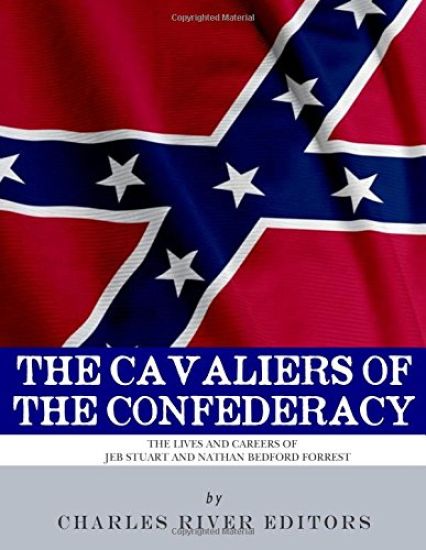
The Cavaliers of the Confederacy: The Lives and Careers of JEB Stuart and Nathan Bedford Forrest
*Includes pictures of Forrest, Stuart, and important people, places, and events in their lives. *Includes Bibliographies on each man for further reading. Despite the fact that the Civil War was fought nearly 150 years ago, it remains a polarizing topic for the country to this day. While the Lost Cause celebrates the chivalry and virtue of men like Robert E. Lee, other Southerners celebrate the swagger, courage, and toughness of others. No two men represent the dichotomy more than the Confederacy's two greatest cavalry leaders, JEB Stuart and Nathan Bedford Forrest. Indeed, just about the only thing the two men had in common was successful but controversial Civil War careers, Stuart in the East and Forrest in the West. Alongside Lee, no one epitomized the chivalry and heroism celebrated by the Lost Cause more than JEB Stuart (1833-1864), the most famous cavalry officer of the Civil War. Stuart was equal parts great and grandiose, leading the cavalry for the Confederacy in Lee's Army of Northern Virginia until his death at the Battle of Yellow Tavern in May 1864. Stuart was a throwback to the past, colorfully dressing with capes, sashes, and an ostrich plumed hat, while sporting cologne and a heavy beard. But he was also brilliant in conducting reconnaissance, and he proved capable of leading both cavalry and infantry at battles like Chancellorsville. As the eyes and ears of Robert E. Lee's army, none were better, despite the fact that he was only in his late 20s and early 30s during the Civil War, far younger than most men of senior rank. However, Stuart's role at Gettysburg was far more controversial. Given great discretion in his cavalry operations before the battle, Stuart's cavalry was too far removed from the Army of Northern Virginia to warn Lee of the Army of the Potomac's movements. Lee's army inadvertently stumbled into the Union army at Gettysburg, walking blindly into what became the largest battle of the war. Stuart has been heavily criticized ever since. When the war broke out, Nathan Bedford Forrest enlisted in the army and was instructed to raise a battalion of cavalry. A self-made man with no formal military training, Forrest spent the entire war fighting in the Western theater, becoming the only individual in the war to rise from the rank of Private to Lieutenant General. By the end of the war, Forrest was known throughout the South as the "Wizard of the Saddle," and anecdotes of his prowess in battle were legendary. In addition to being injured multiple times in battle, Forrest has been credited with having killed 30 Union soldiers in combat and having 29 horses shot out from under him. But Forrest was also at the head of Confederate troops accused of massacring a Union garrison comprised mostly of black soldiers at Fort Pillow, and he was also a prominent slave trader, an overt racist, and likely a leader of the Ku Klux Klan after the Civil War. When he died in 1877, in part due to various war wounds, he was the nation's most notorious unreconstructed rebel. John E. Stanchack, an editor of the Civil War Times Illustrated, aptly noted in 1993, "Everything...about Forrest] is bent to fit some political or intellectual agenda." Ashdown and Caudill, authors of The Myth of Nathan Bedford Forrest, write that the story of Forrest "embraces violence, race, realism, sectionalism, politics, reconciliation, and repentance." The Cavaliers of the Confederacy addresses the controversies and battles that made these two leaders famous and infamous. Along with pictures of the two generals and other important people, places and events in their lives, you will learn about the Confederacy's greatest cavaliers like you never have before, in no time at all.

Tiberius: The Life and Legacy of Ancient Rome's Second Emperor

Tiberius: The Life and Legacy of Ancient Rome's Second Emperor

Charles River

Createspace Independent Publishing Platform
2018
nidottu
*Includes pictures *Includes ancient accounts *Includes online resources and a bibliography for further reading "His character too had its distinct periods... Again, while his mother lived, he was a compound of good and evil; he was infamous for his cruelty, though he veiled his debaucheries, while he loved or feared Sejanus. Finally, he plunged into every wickedness and disgrace, when fear and shame being cast off, he simply indulged his own inclinations." - A description of Tiberius written by the ancient historian Tacitus Throughout the history of the Roman Empire, many rulers held the reins of ultimate power. Some of them, like Octavian, Trajan, Hadrian, Constantine, and Marcus Aurelius, are still celebrated and considered among antiquity's great statesmen, generals and thinkers. Conversely, the Roman Empire also had its fair share of notorious villains, from the sadistic Nero to the debauched Commodus, and all of Rome's poor rulers pale in comparison to the record and legacy of Gaius Julius Caesar Augustus Germanicus, a young man remembered by posterity as Caligula. One of the most overlooked emperors was also one of the first, and he lived in chaotic times. Tiberius was born in 42 BCE, just as the Roman Republic was dissolving and a new Roman imperial power structure emerged under Octavian, who became Rome's first emperor as Caesar Augustus. Tiberius's life soon became caught up with Augustus's as the emperor worked to found and establish a dynasty, but it is unclear if Tiberius ever really wanted to be part of Augustus's plans or inherit imperial power - Tiberius was known as a man who schemed and planned, but he was also a scholar and showed a marked desire throughout his life to retreat and escape the demands of power. Partially due to this continual tension, Tiberius's life is enigmatic in many ways. Tiberius championed the Republic and seemed to desire its return, yet his acceptance of imperial power and his reign solidified Rome's transition to an empire. He was a skilled general who showed concern for the well-being of his troops, and he displayed a remarkable patience as a military tactician. After he rose to become emperor in 14 CE, he ruled for over 22 years, which would be the longest reign of a Roman emperor over the next 100 years, but he remained suspicious of everyone and eventually chose the wrong person to trust, being eventually misled and betrayed by a man whom he thought was his closest friend. When he finally died, aged and lonely, he had become so hated that crowds celebrated his death. Not surprisingly, given Tiberius's lack of popularity, especially at the end of his life, many of the primary sources present a view of Tiberius that is skewed in one direction or other, usually negatively. For example, Tacitus explicitly aimed to display examples of morally good and evil characters for his audience, and described Tiberius as a man who undergoes moral decline to become a hypocritical leader and a cruel tyrant, an enemy of freedom and justice. Suetonius, likewise, is concerned with tying the story together under a moral theme, and he depicts Tiberius as a man with problems such as cruelty and hatred toward his family. Cassius Dio wrote later than the other authors, and his account has many similarities with Suetonius's and Tacitus's. On the other hand, the account of Velleius Paterculus, a contemporary of Tiberius's, gives a more positive viewpoint; Velleius celebrated the peace that was achieved under Augustus and the continuation of the benefits of Augustus's reign under Tiberius, as well as lauding Tiberius as a careful, brilliant, and courageous leader. Tiberius: The Life and Legacy of Ancient Rome's Second Emperor examines the history of one of the most famous fighting forces in the world. Along with pictures depicting important people, places, and events, you will learn about the emperor like never before.
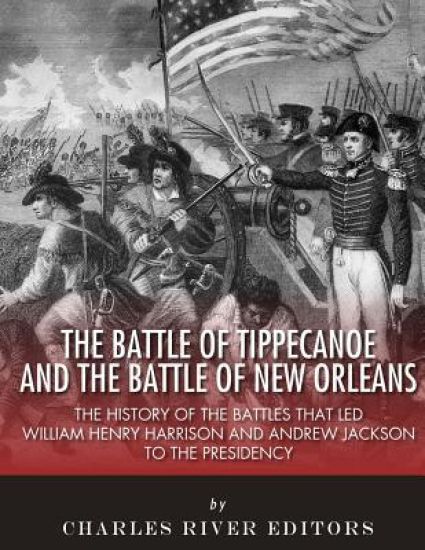
The Battle of Tippecanoe and the Battle of New Orleans: The History of the Battles that Led William Henry Harrison and Andrew Jackson to the Presidenc
*Includes pictures *Includes accounts of the battles written by participants *Includes bibliographies for further reading *Includes a table of contents The Battle of Tippecanoe, fought on November 7, 1811 near present-day Lafayette, Indiana, involved forces of fewer than 2,000 Native American warriors and white soldiers, and only about 300 men were killed or wounded on both sides. Given those numbers, it's apparent that the battle was far from being a Saratoga or a Gettysburg in terms of its scale or significance as an historical turning point, yet it was one of the most important battles in shaping American history during the early 19th century. The battle also involved an epic confrontation between two important American figures: William Henry Harrison, who would become the 9th president of the United States by running on his success in the battle, and the Shawnee war chief Tecumseh, arguably the most famous Native American leader in American history. The initial Native American attack struck the southern point of Harrison's defensive perimeter around 4:30 a.m. on November 7, 1811, and almost immediately the warriors rushed in among the American defenders manning that sector. Soldiers defending the southern side of the perimeter suffered the highest casualties, with the Yellow Jackets suffering a 30% casualty rate, but in fighting lasting about two hours Harrison's force of roughly 1,000, suffered only 62 dead and about 120 wounded. As the sun rose, the warriors began running low on ammunition, and the light revealed their small numbers, leading them to break off the attack and retreat towards Prophetstown. The battle was hardly a decisive victory, but at the end of the fighting the Americans still held their perimeter, allowing them to claim victory. While Tippecanoe was clearly not a total victory, and Native American resistance would continue through the War of 1812, the battle is widely considered the end of Tecumseh's War and did help bring about the decline of Native American ascendance in the region. There are countless examples of battles that take place in wars after a peace treaty is signed. The last battle of the Civil War was a skirmish in Texas that Confederate forces won, nearly a month after Lee's surrender at Appomattox. But it's certainly rare for the most famous battle of a war to take place after the peace treaty is signed. Luckily for Andrew Jackson, the War of 1812 was that unique exception. Less than a year after his victory in the Battle of Horseshoe Creek, Jackson led his forces into a more important battle at the Battle of New Orleans. The British hoped to grab as much of the land on the western frontier as they could, especially New Orleans, which had a prominent position on the Mississippi River for trading. With more than 8,000 soldiers aboard a British fleet sailing in from Jamaica in early January 1815, the attack on New Orleans promised to be a significant one, while Jackson's men defended New Orleans with about half that number. This went on despite the fact that the two sides had signed the Treaty of Ghent on Christmas Eve 1814, which was supposed to end the war. However, the slow nature of bringing news from England to America ensured that the battle would take place anyway. Though it was an enormous victory for Jackson and the Americans - the most important of the entire war - it proved to be a completely unnecessary one. The Treaty of Ghent had officially ended the war by keeping the status quo ante bellum. Regardless, the nation much appreciated Jackson's skills and the Battle of New Orleans was forever christened as one of the greatest in American history. Jackson was honored with a "Thanks from Congress," which was then the nation's highest military honor. Jackson would subsequently become one of the 19th century's most influential presidents. This book analyzes both battles and their legacies.
The Burning of Atlanta in 1864: The History of One of the Civil War's Most Controversial Events
*Includes pictures *Includes accounts of the fighting and burning by Sherman and Union soldiers *Includes online resources and a bibliography for further reading *Includes a table of contents "We rode out of Atlanta by the Decatur road, filled by the marching troops and wagons of the Fourteenth Corps; and reaching the hill, just outside of the old rebel works, we naturally paused to look back upon the scenes of our past battles. We stood upon the very ground whereon was fought the bloody battle of July 22d, and could see the copse of wood where McPherson fell. Behind us lay Atlanta, smouldering and in ruins, the black smoke rising high in air, and hanging like a pall over the ruined city." - William Tecumseh Sherman William Tecumseh Sherman has earned fame and infamy for being the one to bring total war to the South, and it started at Atlanta. Once his men entered the city, Sherman ordered the 1,600 citizens remaining in Atlanta to evacuate the city as he, in Grant's words, set out to "destroy Atlanta] so far as to render it worthless for military purposes," with Sherman himself remaining a day longer to supervise the destruction himself "and see that it was well done." Then on November 14, 1864, Sherman abandoned the ravaged city, taking with him thirteen thousand mules and horses and all the supplies the animals could carry. One of the most famous movies of all time, Gone With The Wind, depicts the burning of Atlanta after Sherman occupied it in 1864. Over time, history came to view Sherman as a harbinger of total war, and in the South, Sherman is still viewed as a brutal warmonger. Considerable parts of Atlanta and Columbia did burn when Sherman occupied them in 1864 and 1865 respectively, but how responsible was Sherman for the initial fires? To this day, there is no definitive answer. As part of its retreat out of Atlanta, Confederate forces were ordered to burn anything of military value to keep it from falling into the hands of Sherman's army. Inevitably, those fires did not stay contained, damaging more than their intended targets. In November, preparing for the March to the Sea, Sherman similarly ordered everything of military value burned. Those fires also spread, eventually burning much of Atlanta to the ground. When Sherman's men left, only 400 buildings were left standing in the city. Due in large part to his actions in Georgia, Sherman remains controversial across much of the United States today. He was unquestionably instrumental at battles like Shiloh, his victory in the Atlanta Campaign reassured Lincoln's reelection, and his March to the Sea revolutionized total warfare. At the same time, the South considered him akin to a terrorist and adamantly insisted that he was violating the norms of warfare by targeting civilians. In many ways, Sherman is still the scourge of the South over 150 years after he vowed to make Georgia howl. The Burning of Atlanta in 1864: The History of One of the Civil War's Most Controversial Events chronicles the battle for Atlanta, the Union occupation, and the subsequent destruction of the city. Along with pictures of important people, places, and events, you will learn about Atlanta like never before, in no time at all.