Kirjojen hintavertailu – 12 903 727 kirjaa ja 27 kauppaa
Kirjailija
Charles River
Kirjat ja teokset yhdessä paikassa: 4 673 kirjaa, julkaisuja vuosilta 2013–2022, suosituimpiin kuuluu William Powell and Myrna Loy: The Lives and Careers of One of Classical Hollywood's Most Iconic Duos. Vertaile teosten hintoja ja tarkista saatavuus suomalaisista kirjakaupoista.
*includes pictures *Includes ancient descriptions of magicians and magical practices *Includes online resources and a bibliography for further reading "Whether true or not, men had trusted in and believed these things." - Strabo Magic today is the stuff of fairy tales and illusionists, something to titillate and perplex perhaps. But the prospect of "taking magic seriously" - despite the best efforts of occult movements in recent years, from the O. T. O. to the Chaos magicians in the 1980s - is still a very difficult pill for most people to swallow in the 21st century. This is not to say to disparage nor denigrate the efforts made by illusionists such as Penn & Teller or Derren Brown, who openly declare that what they do is to perform tricks, utilizing psychology and misdirection in order to entertain a willing crowd. These "magical practitioners" are artists well deserving of the name. In this case, taking magic seriously meant to actually believe in magic and take it at its word, outlined best in Owen Davies" summary of the anthropologist Max Weber"s thoughts on the matter: " Magic] promised to give humans control over a natural world governed by spirits." This view of Weber"s could be (and has been) seen as some kind of definition of what "magic" is, or at least what it was to the ancient Greeks. Many scholars have tried and failed to isolate a clear definition of what "magic" is or was. Magic - as opposed to religion, personal or otherwise - is a notoriously difficult concept to pin down. In ancient Greece, "magic was not distinct from religion, rather an unwelcome, improper expression of it." In other words, it's important not to think of it as a different definition of magic but to instead understand how the ancient Greeks believed certain aspects of magic functioned in their world. Since there are no surviving accounts of any full, contemporary hypothesis of what magic was, creating a picture of their belief in magic requires exploring what cultural factors shaped their beliefs. Often, the best surviving evidence of those beliefs comes from magic's biggest critics. Most sources hail from the Archaic and Classical Periods of ancient Greece. It is in the Archaic Period that the ancient Greek culture, as people today know it, formed itself from the broken shards of the Mycenaean Palace Period scattered across the country after its collapse some 400 years earlier. Out of this formation came some early attempts at defining magic and magical practitioners as the liminal folk who were able to transgress the boundaries of the natural world in order to bring prized knowledge back to their mundane communities. In the same vein, it's worth analyzing the main critics of contemporary magic, namely the philosophers and medical practitioners of the time, since those individuals were not above "in-house" rivalries. The writings of philosophers like Plato indicate how magical terminology gained some of the pejorative connotations associated with it, and how those connotations were levied at rivals who, at least to the casual observer, appear to have conducted their business in a very similar way to their critics. Magic in Ancient Greece: The History and Legacy of the Religious Rituals Practiced by the Greeks looks at the various people, places, and rituals performed over the centuries in ancient Greece. It offers a picture of an almost impossibly foggy aspect of ancient Greek scholarship. Along with pictures depicting important people, places, and events, you will learn about magic in Greece like never before.
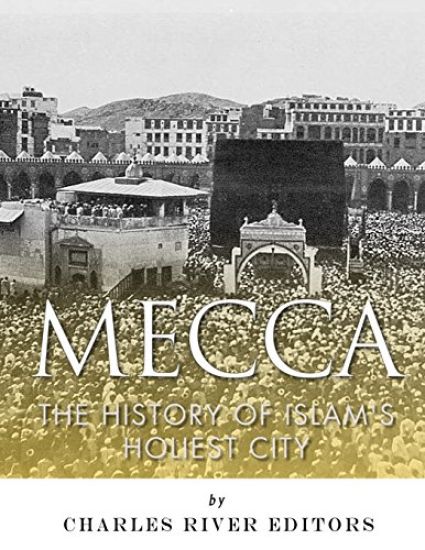
*Includes pictures *Includes footnotes and a bibliography for further reading *Includes a table of contents "There is no doubt in the sanctity of Mecca, but a donkey won't become a Hajj pilgrim by just going through the motions." - Rahman Baba The reason for the existence of most of the world's cities is obvious to the student of geography. New York and Shanghai control deep ports and straddle great rivers bringing trade from the interior; Paris and London are at the crossing points of major cross-country rivers; Johannesburg sits atop a great mountain of gold ore; and Moscow and Madrid are at the heart of their great nations, easily able to control even the more distant corners of the land. Mecca, however, is different, as the city exists solely because it is holy. Even centuries before the birth of the Prophet Muhammad, the leaders of Mecca established that their city was the pre-eminent holy site in western Arabia and established a truce for pilgrims to the city. In the process, one effect of this was that Mecca became a center for might today be described as tourism, as even ancient visitors needed places for food, water, and sleep. At the same time, they could make offerings in the temples and leave with mementos of their time in Mecca. Many also found it convenient to bring their trade goods to the markets of Mecca, where they could find visitors bringing interesting wares from across the region, and the city also enjoyed the status of a trade center. Of course, Mecca is now best known for being Islam's holiest city, revered as the birthplace of Muhammad and the site where Allah first revealed the Qu'ran to him. Within Mecca is the Ka'aba, a building housed within the Al-Masjid al-Haram (Great Mosque) that is considered the holiest site, and wherever they are in the world, Muslims face in the direction of the Ka'aba while praying. A pilgrimage to Mecca is considered a necessity for devout Muslims at some point in their lives, and the city itself is off limits to non-Muslims. Indeed, Mecca is so integral to Islam that the name of the city has entered the English lexicon and is a commonplace reference to any area closely associated with something (such as Paris often being called the mecca of fashion). Mecca has always been central to the faith, but it has had a somewhat turbulent geopolitical history, both because of conflicts within Islam and among neighboring nations in the Middle East. As a result, its history is often overlooked, even as most people are quite familiar with the city. Mecca: The History of Islam's Holiest City traces the history of the most important site in Islam. Along with pictures depicting important people, places, and events, you will learn about Mecca like never before, in no time at all.
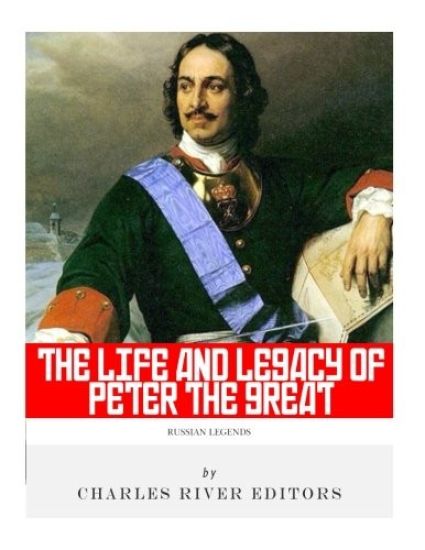
*Includes pictures of Peter and important people, places, and events. *Includes a Bibliography for further reading. "I have conquered an empire, but have not been able to conquer myself." - Peter the Great A lot of ink has been spilled covering the lives of history's most influential figures, but how much of the forest is lost for the trees? In Charles River Editors' Russian Legends series, readers can get caught up to speed on the lives of Russia's most important men and women in the time it takes to finish a commute, while learning interesting facts long forgotten or never known. For anyone trying to understand the origins of modern Russia, the search should begin with Tsar Peter I (1672-1725), who titled himself Peter the Great during his lifetime. The moniker is fitting, considering the manner in which Peter brought Russia out of the Middle Ages and into the 18th century. Through a series of campaigns, Peter turned Russia into a formidable empire that would subsequently become a major force on the European continent, while also emulating Western Europe and turning Russia into an international state that interacted with the other continental powers. By revolutionizing and modernizing Russian arms, including the creation of Russia's first naval force, Peter was able to pursue an aggressive and expansionist foreign policy that set the stage for the way the European map would be redrawn again and again over the coming centuries. Perhaps more remarkably, as Peter was stretching Russia's borders, he was transforming Russia from the inside as well. Fond of the cultures to the west, Peter embraced technology, science and the arts, developing a new educational system for his people and supporting a number of institutions of higher learning in Russia. He built a European-style capital at St. Petersburg and also established new ports and access to the Baltic Sea for the purposes of opening up trade with the west. At the same time, if Peter was responsible for the modernization of Russia, he can also be held responsible for some of its more unsavory features. Though he accomplished a great many achievements during his reign, he also formally defined the status of Russian serfs for more than 200 years and bankrupted the Russian state with his navy, wars and building campaigns in St. Petersburg. Remedying the situations left by Peter would fall upon his successors, and not all of them would prove up to the challenges. Russian Legends: The Life and Legacy of Peter the Great chronicles the life of the Russian Tsar and the profound historical legacy he left. Along with pictures of important people, places, and events, you will learn about Peter the Great like you never have before, in no time at all.
*Includes pictures of important people and places. *Discusses the origins, history, religion, and social structure of the Natchez. *Explains the Natchez's association with the Ancient Moundbuilders. *Includes a Bibliography for further reading. From the Trail of Tears to Wounded Knee and Little Bighorn, the narrative of American history is incomplete without the inclusion of the Native Americans that lived on the continent before European settlers arrived in the 16th and 17th centuries. Since the first contact between natives and settlers, tribes like the Sioux, Cherokee, and Navajo have both fascinated and perplexed outsiders with their history, language, and culture. In Charles River Editors' Native American Tribes series, readers can get caught up to speed on the history and culture of North America's most famous native tribes in the time it takes to finish a commute, while learning interesting facts long forgotten or never known. Though they are not as well known as tribes like the Sioux or Cherokee, the Creek are one of the oldest and most important Native American tribes in North America. With roots that tie them to the Ancient Moundbuilders, the Natchez were one of the most established groups in the Southeastern United States, and came to be known as one of the Five Civilized Tribes. It's also believed that they were among the first natives encountered by Spanish explorer Hernando De Soto's historic expedition in the mid-16th century. Like various other indigenous groups, the Natchez quickly found themselves in conflict with European powers, most notably the French, who they engaged in a series of battles with during the early 18th century. The French decimated the tribe and led to the dispersal of their dwindling numbers, but the Natchez continue to occupy popular imaginations because of several unique features that make them stand out from other groups. Despite counting so many well-known tribes among their neighbors, the Natchez managed to maintain a distinctly different culture, most notably the fact that their language was so different that it is actually considered its own isolated language. Furthermore, they had a unique chieftain social structure, and for the past 80 years, scholars and archaeologists have been excavating a settlement known as the Grand Village of the Natchez that dates back about 1500 years. Native American Tribes: The History and Culture of the Natchez comprehensively covers the culture and history of the famous group, profiling their origins, their history, and the debates and mysteries surrounding their famous settlement. Along with pictures of important people, places, and events, you will learn about the Natchez like you never have before, in no time at all.
*Includes pictures of important people, places, and events. *Explains several Lakota Sioux oral legends, as well as the origins of the names of each Native American icon. *Explains the Battle of the Little Bighorn, the Nez Perce War, and Geronimo's final campaign Five of the best known Native American legends in history are Geronimo, Sitting Bull, Crazy Horse, Chief Joseph and Red Cloud, celebrated by Americans today for the very reason they were reviled by Americans of their own day. Americans have always appreciated plucky, persistent, and dogged individuals, and there are few examples in the nation's history that represent the fighting spirit better than these Native American leaders. The name "Geronimo" evokes a number of different emotions. Those who believed in 19th century America's "Manifest Destiny" viewed Geronimo and all Native Americans as impediments to God's will for the nation. Even today, many Americans associate the name Geronimo with a war cry, and the name Geronimo itself only came about because of a battle he fought against the Mexicans. Over time, however, those who empathized with the fate of the Native Americans saw Geronimo as one of a number of Native American leaders who resisted the U. S. and Mexican governments as their lands were being appropriated, often eluding large numbers of soldiers pursuing them. Around the same time, Sitting Bull and Crazy Horse became legends at the Battle of the Little Bighorn, during which an estimated 2,000 Sioux and Cheyenne warriors inspired by one of Sitting Bull's visions routed and then annihilated the 7th U. S. Cavalry led by George Custer. That disaster led the American government to double down on its efforts to "pacify" the Sioux, and by the end of the decade many of them had surrendered and been moved onto a reservation. Sitting Bull and Crazy Horse were two of the last Sioux leaders to surrender, and both suffered controversial deaths on reservations. Though he has not been remembered as vividly as another member of the Oglala Lakota, Crazy Horse, Red Cloud led the group for 40 years, in war, in peace, and on a reservation, becoming so esteemed and influential that Americans began to mistakenly take him for the leader of the entire Sioux tribe. When he died in 1904, most Americans who knew his people's story considered Chief Joseph, whose Nez Perc name is Himahtooyahlatkekt ("Thunder Rolling Down from the Mountains"), a military genius and an "Indian Napoleon." This assessment of the Native American leader was based on a 1,500-mile odyssey during which he and his people left their reservation in the hopes of escaping to Canada, where the Nez Perc intended to join Sitting Bull and his Hunkpapa Sioux band. The real Chief Joseph was a gifted speaker and more diplomat than war leader. It's not surprising that Chief Joseph was misunderstood and misrepresented by Americans because his people's name was as well; Nez Perc literally means "pierced nose" in French, but it is unclear whether the tribe ever used nose piercing as a form of ornament. Native American Icons profiles the amazing lives of the 5 Native American leaders, from their origins to their legendary confrontations with the U. S. Army, while also analyzing their lasting legacies. Along with pictures of the Native American icons and other important people, places, and events in their lives, you will learn about Geronimo, Sitting Bull, Crazy Horse, Chief Joseph and Red Cloud like you never have before.
*Includes pictures *Includes spectator accounts of Seabiscuit's most famous races *Includes online resources and a bibliography for further reading *Includes a table of contents "In 1938... the year's #1 newsmaker was not FDR, Hitler, or Mussolini. Nor was it Lou Gehrig or Clark Gable. The subject of the most newspaper column inches in 1938 wasn't even a person. It was an undersized, crooked-legged racehorse named Seabiscuit." - Laura Hillenbrand, Seabiscuit: An American Legend Of all the things that a nation, or even an individual, need to survive a crisis, none is perhaps as necessary as hope. That feeling that somehow one can survive, win even, though the odds are stacked against them and the outlook is grim. Throughout its history, the United States has been blessed, often when most needed, with hope from a strange place. In 1778 it came when the French joined the American Revolution, and in 1980, it was brought home with Olympic Gold by the men's hockey team. But in the late 1930s, during the midst of the Great Depression, it came in the form of a horse named Seabiscuit. Americans have always loved animals, and those living prior to World War II were still close enough to their pioneer roots to feel a special affection for horses. After all, it was these noble animals that had carried soldiers and pulled plows and milk wagons alike. A horse was more than just a pet; it was a partner in the fight for survival. Just as many Americans had known special, unforgettable individuals, so they had known special horses. Seabiscuit was one of these, and even the animal's name spoke to the heart of those struggling. A sea biscuit was a piece bread baked for so long in such a low oven that it was completely dry and would never mold. It was so tough that it had to be soaked in water, sometimes even rainwater, before it could be eaten. But it was nutritious and would allow a sailor to do his duty for one more hour, helping keep him alive until he reached a safe harbor. Seabiscuit was in many ways like his cracker namesake, for he was cultivated in many small races until he was ready for the big league. He was also at his best when soaked in the affection and attention given to him by his owners, trainer, and jockeys. Most of all, his wins and even his losses came to nourish a desperate nation and inspire its citizens to keep going until they reached a safer harbor of financial stability. He was also a friend, an inspiring leader who would rank in popularity and respect along with men like Roosevelt and Churchill. It is possible, perhaps even likely, that had he been born in another place and time, his name might never have been known outside of the racing world, but as one Horatio Alger story appealing to a nation full of them, his name became a household word and helped secure him a legacy as perhaps the most famous horse in history. Seabiscuit: The Life of the Most Famous Horse in American History looks at the life and career of the famous thoroughbred. Along with pictures of important people, places, and events, you will learn about Seabiscuit like never before, in no time at all.
El peligro merode bajo las aguas fr as y grises del Mar del Norte y tambi n bajo las brillantes olas azules del Atl ntico tropical durante la Segunda Guerra Mundial, cuando el Tercer Reich de Hitler intentaba estrangular las l neas de suministro de los Aliados con ataques de U-Boot (abreviatura del alem n Unterseeboot - plural U-Boote). Submarinos alemanes y brit nicos peinaban el vasto campo de batalla oce nico en busca de presas, mientras los cient ficos desarrollaban nuevas tecnolog as y contramedidas. La guerra submarina comenz tentativamente durante la Guerra Civil estadounidense (aunque los Pa ses Bajos e Inglaterra hab an hecho peque os prototipos siglos atr s, y el sargento estadounidense Ezra Lee pilot en vano el monoplaza Turtle contra el HMS Eagle cerca de Nueva York en 1776). La invenci n del torpedo por parte del brit nico Robert Whitehead introdujo el arma que ser a luego usada con m s frecuencia por los submarinos. Mejoramientos continuos al dise o de Whitehead conllevaron a los torpedos militares que fueron desplegados contra las rutas mar timas de env o durante ambas Guerras Mundiales. La Primera Guerra Mundial fue testigo de la Primera Batalla del Atl ntico, cuando el Imperio Alem n (Kaiserreich) desat sus U-Boote contra Inglaterra. A lo largo de los 52.5 meses que dur la guerra, los submarinos alemanes enviaron buena parte de la marina mercante brit nica al fondo del oc ano. De hecho, la dependencia alemana en los U-Boote tanto en la Primera como en la Segunda Guerra Mundial proven a principalmente de la geograf a de su naci n. Los alemanes finalmente reconocieron la superioridad de la Marina Real brit nica (Royal Navy) y su capacidad de bloquear la corta costa alemana en el evento de una guerra. Mientras que los brit nicos pod an interceptar buques de superficie f cilmente, los submarinos sal an subrepticiamente de sus ancladeros en Kiel o Hamburgo sin ser detectados, capaces as de atacar los barcos mercantes de Inglaterra. Durante la I Guerra Mundial los U-Boote alemanes operaron en solitario, excepto en una ocasi n. Inicialmente, los brit nicos y las naciones que supl an a Inglaterra de alimentos y materiales dispersaban nav os individualmente a trav s del oc ano, lo que los hac a m s vulnerables ante los submarinos solitarios. Sin embargo, la re-adopci n generalizada m s adelante en la guerra del sistema de convoyes inclin las probabilidades a favor de los buques de superficie, como lo describiera un capit n de U-Boot: "Los oc anos enseguida se tornaron vac os y desiertos; por largos per odos de tiempo a la vez los U-Boote, operando individualmente, no ve an nada en absoluto, y entonces de pronto aparec a un gran despliegue de embarcaciones, treinta o cincuenta o m s de ellas, rodeadas por una fuerte escolta de acorazados de todo tipo". (Blair, 1996, 55). La Primera Guerra Mundial comprob el valor de los submarinos y asegur su amplia utilizaci n en el siguiente conflicto. Adem s de Gran Breta a y Alemania, Jap n y los Estados Unidos tambi n construyeron extensas flotas submarinas antes y/o durante la guerra. Una innovaci n crucial en las operaciones de U-Boot en el Atl ntico durante la II Guerra Mundial consisti en las t cticas de "manada de lobos" (Rudeltaktik en alem n), en las que el Almirante Karl D nitz deposit su fe: "Mientras mayor sea el n mero de U-Boote que puedan participar simult neamente en el ataque, m s favorables ser n las oportunidades ofrecidas a cada atacante individual. (...) Resultaba obvio que, en t rminos t cticos estrat gicos y generales, los ataques a convoyes deben llevarse a cabo por un grupo de U-Boote actuando al un sono". (D nitz, 1990, 4).
En t rminos de geopol tica, quiz s el acontecimiento m s importante de la Edad Media fue el exitoso asedio otomano a Constantinopla en 1453. La ciudad hab a sido una capital imperial ya en el siglo IV, cuando Constantino el Grande cambi el centro de poder del Imperio Romano, estableciendo efectivamente dos mitades casi igualmente poderosas del imperio m s grande de la antig edad. Constantinopla seguir a siendo la capital del Imperio Bizantino incluso despu s de que la mitad occidental del Imperio Romano se derrumbara a finales del siglo V. Naturalmente, el Imperio Otomano tambi n usar a a Constantinopla como capital de su imperio despu s de que su conquista terminara efectivamente con el Imperio Bizantino, y gracias a su ubicaci n estrat gica, ha sido un centro comercial durante a os y sigue siendo uno de ellos hoy en d a bajo el nombre turco de Estambul. El fin del Imperio Bizantino tuvo un profundo efecto no s lo en el Medio Oriente sino tambi n en Europa. Constantinopla hab a jugado un papel crucial en las Cruzadas, y la ca da de los bizantinos signific que los otomanos ahora compart an frontera con Europa. El imperio isl mico fue visto como una amenaza por el continente predominantemente cristiano en el oeste, y tom poco tiempo para que diferentes naciones europeas empezaran a chocar con los poderosos turcos. De hecho, los otomanos chocar an con rusos, austr acos, venecianos, polacos y m s, antes de colapsar como resultado de la Primera Guerra Mundial, cuando formaban parte de los poderes centrales. La conquista otomana de Constantinopla tambi n desempe un papel decisivo en el fomento del Renacimiento en Europa occidental. La influencia del Imperio Bizantino hab a ayudado a asegurar que era el guardi n de varios textos antiguos, sobre todo de los antiguos griegos, y cuando Constantinopla cay , los refugiados bizantinos acudieron en masa al oeste para refugiarse en Europa. Esos refugiados trajeron libros que ayudaron a despertar el inter s por la antig edad, que aliment el renacimiento italiano y esencialmente puso fin a la Edad Media. El surgimiento del Imperio Otomano: La Historia del Establecimiento del Imperio Turco en el Medio Oriente y Europa del Este narra el surgimiento de uno de los imperios m s influyentes de la historia. Junto con fotos de personas importantes, lugares y eventos, usted aprender sobre el ascenso del Imperio Otomano como nunca antes.
*Includes pictures of Machiavelli and important people and places. *Explains the historical background of Machiavelli's life and the political context within which he wrote The Prince. *Discusses lingering controversies surrounding Machiavelli and his work, including whether The Prince was intended as a satire or an effort to spark a rebellion. *Includes a Bibliography for further reading. "The assumptions of the entire western political tradition from Plato onwards were called into question by a generation of radical thinkers, of whom the greatest and most radical was Niccol Machiavelli." - James Hankins "No epitaph can match so great a name," reads the inscription on Niccol Machiavelli's tomb in the church of Santa Croce in Florence. Such praise of the notorious author of The Prince, the "teacher of evil," according to Leo Strauss, may seem misplaced to those with only a passing knowledge of one of history's most famous political philosophers and theorists. Ever since Machiavelli penned his 1513 treatise on princely rule and the politics of reality, a work that infamously advises rulers to abandon virtue and morality when necessary, his name has been synonymous with deceit, duplicity and amoral pragmatism. In 1559, the text was unsurprisingly registered to the Index Librorum Prohibitorum, the Catholic Church's list of banned books, on the grounds of immorality, and Shakespeare dubbed him the "murderous Machiavel" in the 1590s, a mere six decades after his death in 1527. Since then, a sinister reputation has posthumously plagued the controversial Florentine, and the accusation of being "Machiavellian," an overused and typically misapplied adjective, is a charge of behaving in a cunning, scheming and unscrupulous way. But is this depiction of Machiavelli as wicked and immoral accurate? Like most historical figures, Machiavelli was a creature of his time, and his works have distinct historical identities - written for a particular culture in a particular time. Machiavelli was a public servant during the Republic who lost his office when the Medicis returned to power, yet Machiavelli dedicated The Prince to the ruling Medici of the time, leading many over the centuries to speculate that The Prince was a satire. 20th century French philosopher Maurice Merleau-Ponty went so far as to assert, "Machiavelli is the complete contrary of a machiavellian, since he describes the tricks of power and 'gives the whole show away.' The seducer and the politician, who live in the dialectic and have a feeling and instinct for it, try their best to keep it hidden." Regardless, The Prince remains one of the most influential political philosophies of history, and Machiavelli himself will forever be associated with the "ends justify the means" philosophy that he wrote about. Either way, understanding the significance of his writings and their place in the history of political theory requires exploring the world in which Machiavelli lived and worked, tracing his diplomatic career, his encounters with some of Italy's most influential rulers, and the financial desperation and ignominy he suffered in exile from his native city. Legends of the Renaissance: The Life and Legacy of Niccolo Machiavelli chronicles the famous artist's life and work, as well as his lasting legacy. Along with pictures of important people, places, and events in his life, you will learn about Raphael like you never have before, in no time at all.
*Includes pictures *Includes online resources and a bibliography for further reading It almost goes without saying that Westminster Abbey is one of the foremost sites in Europe when it comes to being steeped in history. Dating back to the reign of William the Conqueror and the Norman conquest, Westminster Abbey has traditionally been the site of royal coronations, royal weddings, and royal burials, and anyone who enters can instantly feel that they are walking in the footsteps of some of the most influential figures in history, from Henry III to Queen Elizabeth I. Of course, Westminster Abbey is also far more than a place for royalty. As the English became to more intimately associate the site with their history and culture, luminaries from all walks of life have also been interred there, from Charles Darwin and Isaac Newton to Rudyard Kipling and Charles Dickens. Along with effigies, plaques, and various other monuments, walking through Westminster Abbey offers its own sort of crash course on England over the centuries. The Tower of London is one of the most historic sites in all of England, and still one of the most popular. All around is the modern City of London, one of the world's most prosperous and power financial districts, but the Tower is still a daunting structure that looms across the landscape. Not a single structure but a vast network of medieval and early modern fortifications, it anchors the southeastern end of the old City and controls access to the River Thames and, through it, London's connection to the sea. While the both the City and the Thames are often obscured by the walls once visitors are inside the Tower, they are inextricably tied to the building, giving the Tower its entire reason for existence. When people think of the British Royal family, and more specifically where they live, the first image that often pops into mind is that of stately Buckingham Palace, with its changing of the guard and the occasional royal coach leaving or entering. Others may think of the royal country estate of Windsor Castle, a favorite of both Britain's longest-reigning and second longest-reigning monarchs. And there was a time when both royal residences played second fiddle to a much better known home, the elegant Kensington Palace. Big Ben is one of the most recognizable symbols of Britain, and indeed one of the most famous structures in the world. A quintessential part of London, every movie set in London features an establishing shot of Big Ben, and many guidebooks of London have the clock tower as its cover photo. London and Big Ben are forever linked in the consciousness of the Western world. As it turns out, now is the time to admire and learn about Big Ben, because some believe it is likely to fall over. Since 2012, several sources have reported about the cracks appearing in walls all over the Palace of Westminster. This building houses Parliament and the House of Lords, which comprise the legislative bodies of the British Government. The building has stood in the same location since 1288, although it has not always been the same building. The palace and the tower have gone through renovation, rebuilding, fire, and more rebuilding, over the course of the last 720 years. The tall bridge that symbolizes not just the city but the nation is Tower Bridge, and while it is among the oldest major bridges in London, it is hardly the first to have been built on the Thames, or even on that spot. In actuality, the first men to build a bridge on that spot probably spoke Latin as their first language. As time passed, technology changed, and with it, the nature of bridge building. Wood gave way to stone, which in turn gave way to iron and steel. At the same, London grew on both land and water, with more people living in and near the city, and more people plying the river in bigger and bigger ships.
*Includes pictures *Includes Villa's quotes about his own life *Includes online resources and a bibliography for further reading *Includes a table of contents "My sole ambition is to rid Mexico of the class that has oppressed her and given the people a chance to know what real liberty means. And if I could bring that about today by giving up my life, I would do it gladly." - Pancho Villa "Pancho Villa," people whispered at the beginning of the 20th century, "can march 100 miles without stopping, live 100 days without food, go 100 nights without sleep, and kill 100 men without remorse." The legend of Francisco Villa is full of heroism, tragedy and romance. It is the story of a poor farmer boy who became a bandit out of necessity, after avenging an injustice on his family; a military genius who flew from an oppressive government to lead the largest revolutionary army in his country's history, and defeated dictatorship to become Mexico s liberator, only to fall again in disgrace when his troops abandoned him or were massacred by the enemy. Pancho Villa and his cavalry, Mexicans point out with a certain amount of pride, invaded the United States, and although they came and tried to capture him, they never found him. This is, at least, the version that most of them know, but it's certainly not the same as in their textbooks. The story of Francisco Villa bypassed official censorship from generation to generation, like leaves sailing at full speed on the surface of a stream. But the historical reconstruction is full of nuances. Was he a freedom fighter, or a bandit? Was he a Mexican Robin Hood, or a thief and a murderer? Was he present when his troops invaded U. S. territory? Was the advance of his famous "Dorados" (the "golden ones," the name of his troops) the cause for joy, or terror among the people as they passed the countryside towards Mexico City? Pancho Villa s personality has been controversial since the very beginning of his career as a General of the revolutionary army. Many biographies have been written about him, the first of which dates back to only a few years after his death. Counting the number books who take one of those two sides-butcher or freedom fighter-would be impossible, but they would probably form two piles of equal size. Through them, readers can learn divergent tales about one of the most widely known Mexicans, both in his country and abroad. For many Mexicans, he is a hero. In schools, teachers still speak cautiously about him to new generations of children, who are amazed by the tough guy with hat and pistols. And the old, those who had heard about his exploits from their parents, declare that Villa himself will ride again through the mountains of Mexico, on the day when the poor can no longer stand and a new revolution explodes. As Octavio Paz eloquently put it, "The brutality and uncouthness of many of the revolutionary leaders has not prevented them from becoming popular myths. Villa still gallops through the north, in songs and ballads; Zapata dies at every popular fair. ... It is the Revolution, the magical word, the word that is going to change everything, that is going to bring us immense delight and a quick death." Pancho Villa: The Legendary Life of the Mexican Revolution's Most Famous General chronicles the controversial life of one of Mexico's most legendary fighters. Along with pictures of important people, places, and events, you will learn about Pancho Villa like never before, in no time at all.
*Includes pictures *Includes a history of the region and religion before Islam *Includes footnotes and a bibliography for further reading *Includes a table of contents "There is no doubt in the sanctity of Mecca, but a donkey won't become a Hajj pilgrim by just going through the motions." - Rahman Baba "Whenever the Prophet...returned from a journey and observed the walls of Madinah, he would make his Mount go fast, and if he was on an animal (i.e. a horse), he would make it gallop because of his love for Madinah." - Sahih Bukhari - Book 30: Hadith 110 The reason for the existence of most of the world's cities is obvious to the student of geography. New York and Shanghai control deep ports and straddle great rivers bringing trade from the interior; Paris and London are at the crossing points of major cross-country rivers; Johannesburg sits atop a great mountain of gold ore; and Moscow and Madrid are at the heart of their great nations, easily able to control even the more distant corners of the land. Mecca is quite different, as the city exists solely because it is holy. Even centuries before the birth of the Prophet Muhammad, the leaders of Mecca established that their city was the pre-eminent holy site in western Arabia and established a truce for pilgrims to the city. In the process, one effect of this was that Mecca became a center for might today be described as tourism, as even ancient visitors needed places for food, water, and sleep. At the same time, they could make offerings in the temples and leave with mementos of their time in Mecca. Many also found it convenient to bring their trade goods to the markets of Mecca, where they could find visitors bringing interesting wares from across the region, and the city also enjoyed the status of a trade center. Of course, Mecca is now best known for being Islam's holiest city, revered as the birthplace of Muhammad and the site where Allah first revealed the Qu'ran to him. Within Mecca is the Ka'aba, a building housed within the Al-Masjid al-Haram (Great Mosque) that is considered the holiest site, and wherever they are in the world, Muslims face in the direction of the Ka'aba while praying. A pilgrimage to Mecca is considered a necessity for devout Muslims at some point in their lives, and the city itself is off limits to non-Muslims. Indeed, Mecca is so integral to Islam that the name of the city has entered the English lexicon and is a commonplace reference to any area closely associated with something (such as Paris often being called the mecca of fashion). Mecca has always been central to the faith, but it has had a somewhat turbulent geopolitical history, both because of conflicts within Islam and among neighboring nations in the Middle East. As a result, its history is often overlooked, even as most people are quite familiar with the city. Even centuries before the birth of the Prophet Muhammad, Jews settled in the area that became Medina to escape persecution at the hands of the Babylonians and Romans, meaning the area and its arid environment brought inhabitants precisely because it wasn't an attractive or resource rich area. In fact, the city fated to become the second holiest city in Islam earned that spot simply by straddling trade routes to the religious city of Mecca, which brought traders and pilgrims in large enough numbers to make it a trade center. While Mecca was Muhammad's birthplace, the Prophet spent a great deal of time in Medina, especially when he and his supporters found themselves in conflict with the Meccans. Using Medina as a base, Muhammad eventually took Mecca, and both cities became integral parts of the Caliphate that followed. This meant that even as history brought geopolitical changes, Medina remained a city of religious significance for all Muslims. Mecca and Medina: The History of Islam's Holiest Cities traces the history of the second most important cities in Islam.
Inglaterra es una antigua tierra llena de historia y tradici n, llena de ruinas prehist ricas, majestuosos castillos, y un paisaje esculpido de milenios de vida humana... Su paisaje ondulado est salpicado de t mulos funerarios prehist ricos y c rculos de piedra. Los castillos inquietantes cuentan historias de derramamiento de sangre y honor. Las iglesias medievales han elaborado vitrales y esculturas horripilantes, reflejando una mezcla de esperanza y oscuridad. Cada aldea y pueblo tiene historias que se remontan a siglos atr s, y fiestas populares con ra ces paganas. Por lo tanto, no es sorprendente que muchos crean que Inglaterra es una tierra llena de fantasmas. Durante siglos, la gente ha contado historias de fantasmas que han acechado sus edificios hist ricos, extra as criaturas acechando en sus bosques primitivos y caminos inexplicables que unen sus antiguos sitios. Los Fantasmas de Inglaterra: Una Colecci n de Historias de Fantasmas a trav s de la Naci n Inglesa ofrece una muestra de las muchas historias extra as de fantasmas y fen menos inexplicables que hacen de Inglaterra un lugar tan intrigante. Adem s de fotos de personas importantes, lugares y eventos, aprender s sobre los fantasmas de Inglaterra como nunca antes.
*Includes pictures *Includes accounts of the negotiations and fighting *Includes online resources and a bibliography for further reading *Includes a table of contents One of the most famous people in the world came to tour the city of Paris for the first time on June 28, 1940. Over the next three hours, he rode through the city's streets, stopping to tour L'Op ra Paris. He rode down the Champs- lys es toward the Trocadero and the Eiffel Tower, where he had his picture taken. After passing through the Arc de Triomphe, he toured the Pantheon and old medieval churches, though he did not manage to see the Louvre or the Palace of Justice. Heading back to the airport, he told his staff, "It was the dream of my life to be permitted to see Paris. I cannot say how happy I am to have that dream fulfilled today." Four years after his tour, Adolf Hitler would order the city's garrison commander, General Dietrich von Choltitz, to destroy Paris, warning his subordinate that the city "must not fall into the enemy's hand except lying in complete debris." The fact that Hitler set foot in Paris in June 1940 was remarkable in its own right and the culmination of Nazi Germany's lightning advance across most of Western Europe, beginning even before the war with the annexations of lands, some of which was made possible by the now widely reviled Munich agreement. Other negotiations with the Soviet Union allowed Germany to invade Poland with few consequences in September 1939, and the military superiority built up over the two decades between the world wars made it possible for the Germans to push aside their opponents when they found them. Of course, Paris was not destroyed before the Allies liberated it, but it would take more than 4 years for them to wrest control of France from Nazi Germany after they took the country by storm in about a month in 1940. That said, it's widely overlooked today given how history played out that as the power of Nazi Germany grew alarmingly during the 1930s, the French sought means to defend their territory against the rising menace of the Thousand-Year Reich. As architects of the most punitive measures in the Treaty of Versailles following World War I, France was a natural target for Teutonic retribution, so the Maginot Line, a series of interconnected strongpoints and fortifications running along much of France's eastern border, helped allay French fears of invasion. The true flaw in French military strategy during the opening days of World War II lay not in reliance on the Maginot fortifications but in the army's neglect to exploit the military opportunities the Line created. In other words, the border defense performed as envisioned, but the other military arms supported it insufficiently to halt the Germans. The French Army squandered the opportunity not because the Maginot Line existed but because they failed to utilize their own defensive plan properly; the biggest problem was that the Germans simply skirted past the intricate defensive fortifications by invading neutral Belgium and swinging south, thereby avoiding the Maginot Line for the most part. Nazi Germany's Conquest of Western Europe: The Negotiations and Campaigns that Let Hitler Conquer the Continent Before and During World War II chronicles the background leading up to World War II and Germany's quick success in the first year of it. Along with pictures of important people, places, and events, you will learn about Nazi Germany's conquest of Western Europe like never before, in no time at all.
*Includes pictures of important people, places, and events. *Explains the origins of the Gunfight and the controversial details that continue to be debated today. *Includes witness accounts and newspaper accounts of the gunfight. *Includes a Bibliography for further reading. "The 26th of October, 1881, will always be marked as one of the crimson days in the annals of Tombstone, a day when blood flowed as water, and human life was held as a shuttle cock, a day to be remembered as witnessing the bloodiest and deadliest street fight that has ever occurred in this place, or probably in the Territory." - The Tombstone Nugget Space may be the final frontier, but no frontier has ever captured the American imagination like the "Wild West", which still evokes images of dusty cowboys, outlaws, gunfights, gamblers, and barroom brawls over 100 years after the West was settled. A constant fixture in American pop culture, the 19th century American West continues to be vividly and colorful portrayed not just as a place but as a state of mind. In Charles River Editors' Legends of the West series, readers can get caught up to speed on the lives of America's most famous frontier figures in the time it takes to finish a commute, while learning interesting facts long forgotten or never known. The Wild West has made legends out of many men through the embellishment of their stories, but one of the most colorful stories of them all is the fateful Gunfight at the O. K. Corral. The West's most famous gunfight, the Gunfight at the O. K. Corral involved two of the West's most legendary figures, and though the gunfight lasted less than a minute, it is still widely remembered as the climactic event of the period, representing lawlessness and justice, vendettas, and a uniquely Western moral code. Fought in the middle of Tombstone, Arizona, the gunfight pitted Wyatt Earp, his brothers Morgan and Virgil, and Doc Holliday against Billy Clanton, Tom McLaury and Frank McLaury. By the time the 30 second gunfight was over, the McLaury brothers were dead in the street and Billy Clanton had suffered a painful and fatal gunshot wound to the chest. Virgil and Morgan Earp were wounded, as was Holliday. Though it is the West's most famous gunfight, it is also one of the West's most controversial events. In Tombstone, the initial reaction after the gunfight was that the Earps and Holliday were heroes. The Tombstone Epitaph's described the shootout, "Wyatt Earp stood up and fired in rapid succession, as cool as a cucumber, and was not hit." The San Francisco Examiner suggested that Tombstone's residents be grateful to have the Earps on their side of the law. However, plenty of people in Tombstone believed that the three dead men were murdered in cold blood, and they wondered why the Earps would ever ask a hothead like Doc Holliday to help them disarm the McLaurys and the Clantons. The local undertaker displayed the three corpses in their coffins in his window with a sign that read, "Murdered in the Streets of Tombstone." To this day, the motives behind the gunfight, and exactly how it all went down, remain heavily debated, but the aftermath of the gunfight is much better known. For Wyatt Earp, the aftermath led to assassination attempts on his brothers, one of which was successful, touching off the "Earp Vendetta Ride". It also ensured that Doc Holliday would become a legend of the Wild West. Legends of the West: The Gunfight at the O. K. Corral comprehensively covers the fight, including the origins behind the feud, theories over what happened, and the aftermath and legacy of it all. Along with pictures of important people, places, and events, you will learn about the Gunfight at the O. K. Corral like you never have before, in no time at all.
*Includes famous artwork depicting Jesus, Saints, and more. *Discusses the most well known Lost Books of The Bible, including what is discussed in them and their relation to canonical texts. *Discusses historians' theories as to who wrote these books, where they were written, and when. *Includes a Bibliography for further reading. The Bible is the most famous book in the world, read by a countless number of Christians and others over the centuries. Even those who aren't Christian or remotely religious can rattle off Matthew, Mark, Luke, and John as the first four gospels of the New Testament, and books like Genesis and Exodus include some of the most famous stories in human history. Of course, the Bible is composed of dozens of different texts that collectively combined to form it, and the process of establishing which texts were canonical and included in the Bible took centuries of fierce debate among early Christians. Even today, not every branch of the Christian church agrees on which writings should be regarded as "canonical" and which are "apocryphal", even though some apocryphal texts often have noticeable links with books regarded as "canonical". It was only in the late 4th century A. D. that a proposed list of texts for the Bible was even put forward. The New Testament Apocrypha refers to texts written by early Christians that were not included in the Bible used by the main branches of Christianity today. These texts vary in subject matter, with some being accounts of Jesus, others being about the nature of God, and still others being accounts and teachings of Jesus' apostles. What makes them fascinating is not just the history behind why they are considered non-canonical, but what they tell us about the early Church and early Christianity. Moreover, they offer insight into what sources were used to write them, and whether they shared the same sources as the texts that comprise the Bible today. Given their historical and religious importance, there is still a fierce debate over the authenticity of many of these texts. Lost Books of The Bible: The New Testament Apocrypha explores the history behind the non-canonical texts, analyzes the subject matter contained within them, and looks at the debates over these texts both then and now. Along with classic artwork of Jesus and more, you will learn about the Lost Books of The Bible like you never have before, in no time at all.
*Includes pictures*Includes accounts of the rescue efforts by the captain of the Carpathia and others*Includes a bibliography for further reading"We sighted the lights of the big steamer, the Carpathia. All the women got into a terrible commotion and jumped around. They were hallooing and the sailors were trying to keep them sitting down, and they would not do it. They were standing up all the time." - Daniel Buckley, a survivor of the TitanicJust before midnight on April 14, 1912, the RMS Titanic, the largest ship in the world, hit an iceberg, setting in motion a chain of events that would ultimately make it history's most famous, and notorious, ship. In the over 100 years since it sank on its maiden voyage, the Titanic has been the subject of endless fascination, as evidenced by the efforts to find its final resting spot, the museums full of its objects, and the countless books, documentaries, and movies made about the doomed ocean liner. Thanks to the dramatization of the Titanic's sinking and the undying interest in the story, millions of people are familiar with various aspects of the ship's demise, and the nearly 1,500 people who died in the North Atlantic in the early morning hours of April 15, 1912. The sinking of the ship is still nearly as controversial now as it was over 100 years ago, and the drama is just as compelling. The Titanic was neither the first nor last big ship to sink, so it's clear that much of its appeal stems from the nature of ship itself. Indeed, the Titanic stands out not just for its end but for its beginning, specifically the fact that it was the most luxurious passenger ship ever built at the time. In addition to the time it took to come up with the design, the giant ship took a full three years to build, and no effort or cost was spared to outfit the Titanic in the most lavish ways. Given that the Titanic was over 100 feet tall, nearly 900 feet long, and over 90 feet wide, it's obvious that those who built her and provided all of its famous amenities had plenty of work to do. The massive ship was carrying thousands of passengers and crew members, each with their own experiences on board, and the various amenities offered among the different classes of passengers ensured that life on some decks of the ship was quite different than life on others. Much has been made through the years about the failures of those designing the Titanic to take proper safety precautions, and how these failings led to the disaster and huge loss of life. In fact, the number of lives lost was so great that it can be hard to believe that the death toll might have been higher. Nonetheless, it's true that many more would have died without the courageous efforts of those on the ships who responded to the Titanic's distress calls and sailed through the same dangerous conditions that brought down the "unsinkable" ship itself. Rescuing the Survivors of the RMS Titanic chronicles the rescue and recovery efforts made by several ships to save the Titanic's remaining survivors and the completion of their trip to New York. Along with pictures of important people, places, and events, you will learn about the recovery efforts like never before, in no time at all.
*Includes pictures *Includes accounts of the estates' histories and construction made by Washington and Jefferson *Includes online resources and bibliographies for further reading *Includes a table of contents For about as long as George Washington has been famous, so has his most famous residence, the spacious Virginian plantation known as Mount Vernon. Washington lived in a smaller structure on the land as a teen, and ironically, tradition and inheritance suggested that George would never be the one to own the land. Of course, fate would intervene, and Washington would not only come into possession of the 10,000 acres in 1761 but build and renovate the property to create one of the most famous private residences in the nation. Washington would live at Mount Vernon before the Revolution and retire there after the war and after his presidency. Indeed, he would die there and be buried there as well. By 1760, Washington was one of Virginia's wealthiest and most influential citizens, in large measure due to Mount Vernon's success as a tobacco plantation. However, to make that happen, Washington used hundreds of slaves, and though he mandated that his slaves be freed upon his death, the estate continued to employ slave labor until his widow's death years later. Thus, while Mount Vernon remains a hallowed tourist spot, it also underscores the most divisive and controversial issue of the post-Revolution era. Few Presidents are remembered for their homes, but Jefferson's Monticello is the greatest exception to that rule, and to this day it remains one of the nation's most instantly recognizable landmarks. When Jefferson's father died in 1757, his father's estate was split between Thomas and his brother, Randolph. Jefferson's share equated to about 5,000 acres of land and between 20-40 slaves. Because his father died when Thomas was only 14, he was not able to legally take hold of this estate until he was 21. Once Jefferson took formal control of the land, he began constructing his personal estate. Having received the schooling befitting of a gentleman during the late Enlightenment, Jefferson had a broad liberal arts education. This gave him some knowledge of architecture. Jefferson himself thus designed Monticello in a neoclassical mold. He avidly studied the Italian architect Andrea Palladio, and Jefferson's style can therefore be broadly characterized as Palladian. The construction of Monticello began in 1768, but it remained an ongoing project for many years. He formally moved into Monticello in 1770, and his wife Martha joined him there in 1772 after they were married. The time Jefferson subsequently spent in Europe also affected Monticello. He marveled at the architectural arts of the continent and studied them closely, which only strengthened his love for classical architecture and gave him ideas on how to expand his own estate. Ironically, although he had been wealthy all his life (or perhaps even because of it), Jefferson was a notorious spender who never learned how to operate a budget. During the twilight of his life, debt was a recurring issue, in large part due to expenses incurred by his work on Monticello and the University were enormous, and they ultimately depleted his considerable wealth. Mount Vernon and Monticello tells the story of the residence most associated with the first president, and the controversial nature of the slave labor used there. Along with pictures of important people, places, and events, you will learn about Mount Vernon like never before, in no time at all.
*Includes pictures. *Includes Nixon's most notorious quotes. *Includes footnotes for further reading. Best known as the 37th President of the United States, and the only president in American history to resign his office, Richard Nixon's lengthy political career would put him, during various times, at the center of regional, national and international politics for several decades. It was to be a career filled with unexpected twists and turns, high-profile defeats and unlikely resurrections, in which he made exhaustive efforts to reinvent himself in the public eye. From humble beginnings filled with disparate influences, Nixon's extraordinary intellect, strategic brilliance and imposing style of confrontation saw him through a stellar academic career at Duke Law School to seats in both the House and Senate, the vice-presidency and finally, the presidency, where he was and is considered by many to be among the strongest foreign policy presidents in the history of the United States. By 1972, Nixon appeared to be well on his way to reelection, and sure enough, he enjoyed one of the biggest landslides against George McGovern that year. However, despite the fact that Nixon's reelection seemed a cinch, the seeds of his destruction were being sown in the months leading up to the election. Increasingly and mistakenly viewed as a single scandal within the United States government, what is commonly referred to as the Watergate scandal serves as an overarching term for a series of scandals beginning in 1971 and extending through 1974, although more than any other, it refers to the specific break-in at the Watergate Hotel and office complex in Washington, D. C. The crisis, originating in a secretive battle between the two major political parties, the Nixon White House's paranoia, and the ensuing conflict concerning the release of confidential information to the public, induced senior government officials into committing crimes (most notoriously petty burglary) and coverups for the purposes of character assassination and inter-political espionage. Ultimately, Watergate resulted in the first and only resignation of a sitting American president, but only after Nixon had tried at seemingly every turn to hinder investigations and coverup crimes committed by senior officials in his own administration. Watergate has since become so synonymous with scandal that "gate" is typically added to the end of words associated with scandals even today. For the last 40 years, President Nixon has been mostly reviled, and understandably, he's ranked among the country's worst presidents, but this view of the President and the Watergate scandal was not and still is not necessarily unanimous. A growing number of Republicans, led by conservatives such as former Nixon speechwriter Pat Buchanan, describe the bringing down of the president as a quasi-coup generated by the press and liberal social forces from within the anti-war movement, which gravitated to the release of information on Vietnam, an increasingly unpopular war, and tapping the widespread campus unrest throughout the country. Paul Johnson, in his book, Modern Times: A History of the World from the 1920s to the Year 2000, referred to the whole affair as nothing more than "this Watergate witch hunt." Richard Nixon and Watergate examines the life and legacy of America's most controversial president, and provides a comprehensive analysis of the country's most famous political scandal. Along with pictures of important people, places, and events, you will learn about Nixon and Watergate like never before, in no time at all.
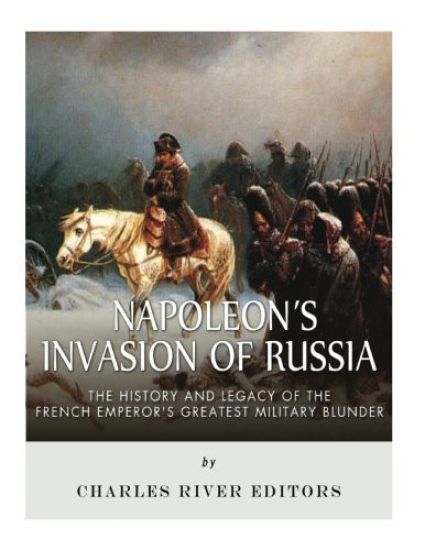
*Includes pictures *Includes accounts of the campaign written by French soldiers *Includes a bibliography for further reading *Includes a table of contents "The thunderstorms of the 24th turned into other downpours, turning the tracks--some diarists claim there were no roads in Lithuania--into bottomless mires. Wagon sank up to their hubs; horses dropped from exhaustion; men lost their boots. Stalled wagons became obstacles that forced men around them and stopped supply wagons and artillery columns. Then came the sun which would bake the deep ruts into canyons of concrete, where horses would break their legs and wagons their wheels." - Richard K. Riehn French emperor Napoleon Bonaparte was not a man made for peacetime. By 1812, he had succeeded in subduing most of his enemies - though in Spain, the British continued to be a perpetual thorn in his flank that drained the Empire of money and troops - but his relationship with Russia, never more than one of mutual suspicion at best, had now grown downright hostile. At the heart of it, aside from the obvious mistrust that two huge superpowers intent on dividing up Europe felt for one another, was Napoleon's Continental blockade. Russia had initially agreed to uphold the blockade in the Treaty of Tilsit, but they had since taken to ignoring it altogether. Napoleon wanted an excuse to teach Russia a lesson, and in early 1812 his spies gave him just that: a preliminary plan for the invasion and annexation of Poland, then under French control. Napoleon wasted no time attempting to defuse the situation. He increased his Grande Armee to 450,000 fighting men and prepared it for invasion. On July 23rd, 1812, he launched his army across the border, despite the protestations of many of his Marshals. The Russian Campaign had begun, and it would turn out to be Napoleon's biggest blunder. Russia's great strategic depth already had a habit of swallowing armies, a fact many would-be conquerors learned the hard way. Napoleon, exceptional though he was in so many regards, proved that even military genius can do little in the face of the Russian winter and the resilience of its people. From a purely military standpoint, much of the campaign seemed to be going in Napoleon's favor since he met with little opposition as he pushed forwards into the interior with his customary lightning speed, but gradually this lack of engagements became a hindrance more than a help; Napoleon needed to bring the Russians to battle if he was to defeat them. Moreover, the deeper Napoleon got his army sucked into Russia, the more vulnerable their lines of supply, now stretched almost to breaking point, became. The Grande Armee required a prodigious amount of material in order to keep from breaking down, but the army's pace risked outstripping its baggage train, which was constantly being raided by Cossack marauders. Moreover, Napoleon's customary practice of subsisting partially off the land was proving to be ineffective: the Russians were putting everything along his line of advance, including whole cities, to the torch rather than offer him even a stick of kindling or sack of flour for his army. Napoleon was sure that taking Moscow would prompt the Russians to surrender. Instead, with winter on the way, the Russians appeared more bellicose than ever. Napoleon and his army lingered for several weeks in the burnt shell of Moscow but then, bereft of supplies and facing the very real threat of utter annihilation, Napoleon gave the order to retreat. By the time the Grande Armee had reached the Berezina, it had been decimated: of the over 450,000 fighting men that had invaded Russia that autumn, less than 40,000 remained. Napoleon's Invasion of Russia details the background leading up to the campaign, the fighting, and the aftermath of France's catastrophic defeat. Along with pictures of important people, places, and events, you will learn about the French invasion of Russia like never before.